Orange Nut Sedge
Machaerina rubiginosa
Last updated:
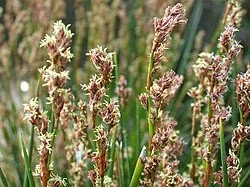
Orange nut sedge (Machaerina rubiginosa), also called soft twig rush, is a robust perennial sedge native to New Zealand, Australia and New Caledonia. It forms dense tufts or extensive mats through far-reaching rhizomes, with bluish to dark green, slightly flattened stems growing 0.3 to 1.2 metres tall. In summer it produces reddish-brown flowering spikes that develop into ellipsoid nuts, coloured pale red-brown to bright orange, which give the plant its common name. It grows almost exclusively in freshwater wetlands, including peat bogs and lake margins, and tolerates water up to 50 cm deep, making it valuable for wetland restoration. Explore more wetland native plants in our native plant guide.
Plant Description
Identification and Physical Characteristics
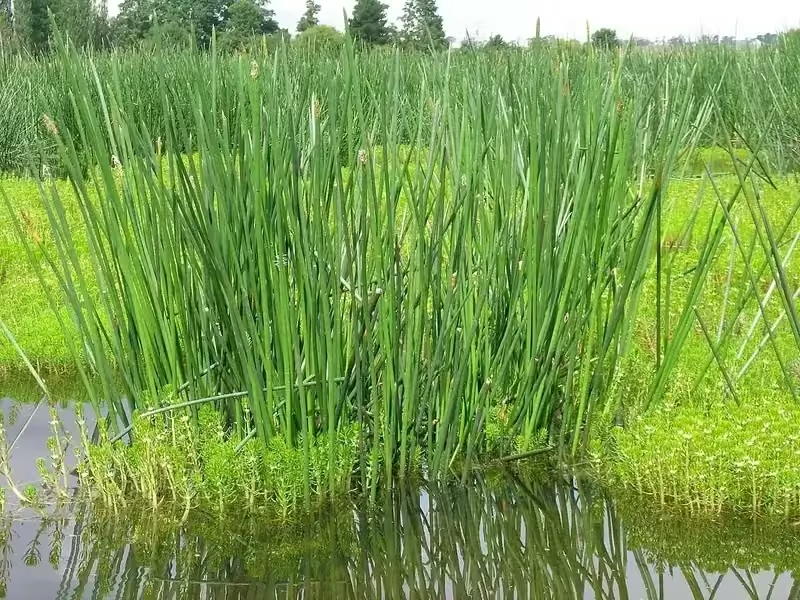
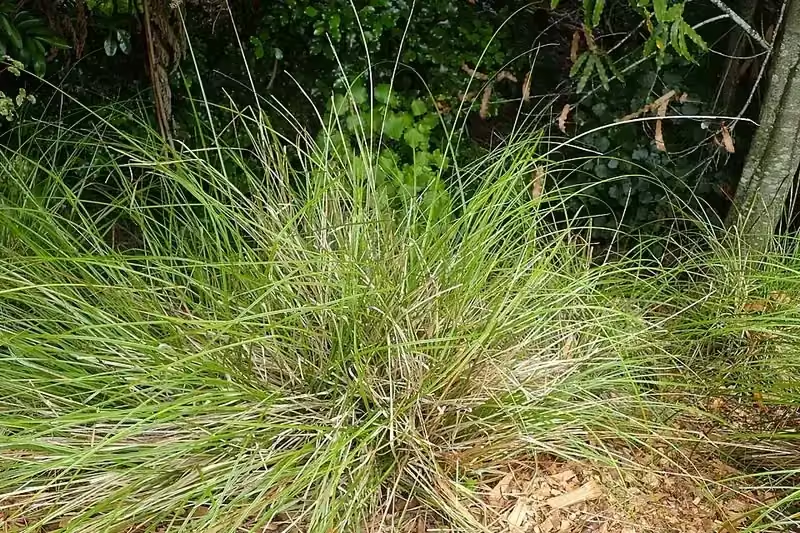
Machaerina rubiginosa , commonly known as Orange Nut Sedge, Soft Twig Rush, or Baumea, is a robust and vigorous perennial sedge native to New Zealand, Australia, and New Caledonia. It forms dense, tufted swards or extensive mats via its far-reaching underground rhizome system. The stems (culms) are bluish to dark green, slightly compressed, and can grow between 0.3 and 1.2 meters in height. The rush-like leaves are erect and provide a strong vertical element to the landscape. During summer, the plant produces reddish-brown flowering spikes that later develop into attractive, ellipsoid nuts. These nuts are a distinctive pale red-brown to bright orange colour, giving the plant its common name. Its dense growth habit makes it a prominent feature of New Zealand's freshwater ecosystems.
Quick Facts
| Scientific Name | Machaerina rubiginosa |
|---|---|
| Height | 0.3-1.2 m |
| Spread | Up to 1.5 m (extensive) |
| Water Needs | High; thrives in wet to saturated soil |
| Light | Full sun to light shade |
| Frost Tolerance | High |
| Salt Tolerance | Medium |
| Growth Rate | Fast (once established) |
| Lifespan | Perennial |
Climate Best Suited to
Orange Nut Sedge is a highly adaptable hydrophyte that flourishes in a wide range of New Zealand's climates. It is indigenous to the North, South, Stewart, and Chatham Islands, found in coastal, lowland, and montane wetlands up to 900 meters altitude. It is perfectly suited to regions with high rainfall and consistent soil moisture. It is very frost-hardy and can withstand the cooler temperatures of the South Island, provided its site remains wet. It does not perform well in arid, low-humidity environments without regular irrigation.
Regional Suitability
| City | Climate Suitability |
|---|---|
| Auckland | High |
| Wellington | High |
| Christchurch | High |
| Dunedin | High |
| Invercargill | High |
Plant Habitat
Natural Occurrence and Ecology
In its natural habitat, Machaerina rubiginosa is almost exclusively found in freshwater wetlands. It is a common inhabitant of low moor peat bogs, the margins of restiad bogs, and the edges of lakes and tarns. It also colonizes the banks of slow-flowing streams and drainage ditches. It can grow in water up to 50 cm deep, forming dense fringes that protect the shoreline from erosion. Its ability to thrive in acidic and nutrient-poor peat-based environments makes it a critical part of New Zealand's bog and swamp communities.
Growing Requirements
Soil Requirements
Requires acidic, permanently damp soil. It thrives in peaty or organic-rich substrates but can adapt to clay.
- Acidic (pH 4.5-6.0)
- Peaty/Boggy
- Consistently wet
Light Requirements
Best in full sun, which encourages vigorous growth and the development of the colourful orange nuts.
- Full Sun
- Light Partial Shade
Water Requirements
Extremely high water needs. It is adapted to "wet feet" and can grow in shallow standing water.
- Constant moisture
- Flood tolerant
Planting and Establishing
Establishment Guidance
When establishing Orange Nut Sedge, choose a site that is naturally boggy or create an artificial wetland area. Preparing the site with organic matter and ensuring it remains saturated is key to success. Space plants about 50-80 cm apart to allow for their spreading habit. If planting in a garden pond, ensure the pot is wide to accommodate the rhizomes and placed at a depth where the water level is no more than 20-30 cm above the crown. Water new transplants daily until they are firmly established.
Ecological Role
Biodiversity and Ecosystem Impact
Machaerina rubiginosa is a powerhouse of wetland ecology. Its dense rhizome and root systems are exceptionally effective at filtering water, trapping sediments, and absorbing excess nutrients (like nitrogen and phosphorus) from contaminated runoff. It provides significant erosion control for lake and stream margins. Furthermore, the thick swards offer critical nesting habitat and shelter for wetland birds such as the Australasian Bittern and various crake species, while the flowers and nuts support a range of native invertebrates.
Uses & Significance
Garden Uses
Ideal for large water features, pond borders, and bog gardens. Its vibrant orange nuts provide a unique seasonal highlight that is rare among native sedges.
- Pond fringes
- Wetland margins
- Structural water features
Ecological Value
A primary species for riparian restoration, stormwater treatment systems, and revegetation of degraded peatland habitats.
- Stormwater filtering
- Wildlife habitat
- Erosion mitigation
Landscaping Uses
Landscapers utilize Orange Nut Sedge for its vertical architectural form and its ability to cover large, difficult wet areas quickly. It is an excellent choice for modern rain gardens and swales where its aesthetic appeal is matched by its environmental function. Because of its vigorous nature, it is best used in larger-scale landscapes where it has room to express its natural spreading habit without crowding out smaller, less aggressive species.
Seasonal Care Calendar
Spring
Active growth begins. This is the optimal time for dividing existing clumps. Ensure no competing weeds establish in the saturated soil.
- Divide rhizomes
- Monitor growth
Summer
Flowering and nut production. Soil must remain constantly wet during this period. Check water levels in ponds and boggy areas.
- Intensive watering
- Observe orange nuts
Autumn
Growth slows as temperatures cool. Collect mature orange nuts if seed propagation is desired.
- Seed collection
- New planting
Winter
The plant is dormant but evergreen. Use this time to trim away any old, brown foliage to maintain a neat appearance for spring.
- Tidy foliage
- Check drainage
When to Prune and How Much
Trimming is only necessary to keep the plant looking tidy and to remove old, decaying material.
- Remove dead stems
- Annual tidy-up
In late winter, you can shear the entire mat back to about 15 cm above the soil surface to allow fresh new green growth to emerge unobstructed in spring.
How to Grow Orange Nut Sedge
Growing Orange Nut Sedge ( Machaerina rubiginosa ) is a highly effective way to add structural beauty and ecological functionality to any wet area of your New Zealand garden. Because this species is naturally adapted to thriving in waterlogged, acidic, and often nutrient-poor peat bogs, it is remarkably resilient once its basic need for "wet feet" is satisfied. It is a plant that truly thrives on the edges, where water meets land, and its fast-growing nature makes it an ideal candidate for those looking to establish a native wetland look in a relatively short timeframe.
The most successful way to multiply your Orange Nut Sedge is through the division of established clumps. The plant's extensive rhizome system makes it very easy to separate into new pieces. The best time for division is in early spring, just as the first signs of active growth appear. Use a sharp spade or knife to cut through the interconnected rhizome mat, ensuring that each new section has several healthy stems and a good portion of the underground rhizome and roots. Replant these sections immediately into saturated soil and keep the area consistently wet until you see new green shoots appearing.
From Seed
Seed propagation is also possible and is a great way to produce large quantities of plants for ecological restoration work. Collect the nuts once they have turned their characteristic bright orange or pale red-brown.
Sow the seeds onto the surface of a fine, pre-moistened peat-based seed-raising mix. They require light to germinate, so do not bury them; a very thin layer of grit is sufficient. Place the seed tray in a saucer of water to ensure the medium stays completely saturated. Keep the tray in a warm, bright position.
- Collect ripe orange nuts in autumn.
- Sow on the surface of moist peat mix.
- Maintain constant water saturation.
Seedlings can be slow to start, but once they reach about 15 cm in height, they can be moved into individual pots and grown on for a season before being planted out into their permanent wetland positions.
Pests & Diseases
Orange Nut Sedge is an incredibly tough plant with virtually no major pest or disease issues. Its fibrous and leathery foliage is deterrent to most browsers and common garden insects. The biggest threat to its health is allowing the soil to dry out completely, which will lead to rapid browning and decline. In stagnant or heavily polluted water, some fungal root issues may occur, but these are easily avoided by ensuring the site has some degree of natural water movement or oxygenation.
Cultural Significance
In New Zealand, Orange Nut Sedge represents the specialized flora of our ancient peatlands and lake margins. It is a significant species for cultural restoration projects that aim to heal and restore degraded wetland landscapes. While it does not have the same history of utility as Harakeke, it is respected for its role as a "cleaner" of the water and a provider of shelter for the "manu" (birds) of the swamp. Its vibrant orange nuts are a unique and treasured feature of our native sedge flora, serving as a seasonal marker in the quiet world of the peat bog.
- Essential for wetland bird habitat
- Key species for water cleansing
- Aromatic and seasonal botanical interest
Bonus Tip
For an extra splash of colour in your wetland area, plant Orange Nut Sedge alongside Bulbinella hookeri (Māori Lily). The yellow flowers of the Bulbinella and the orange nuts of the Machaerina will create a stunning warm-toned display that highlights the vibrancy of New Zealand's wetland plants.
Related Plants
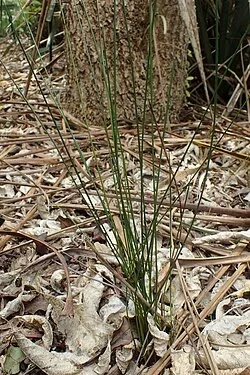
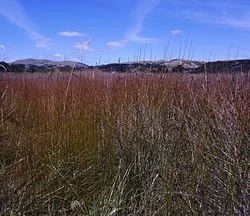
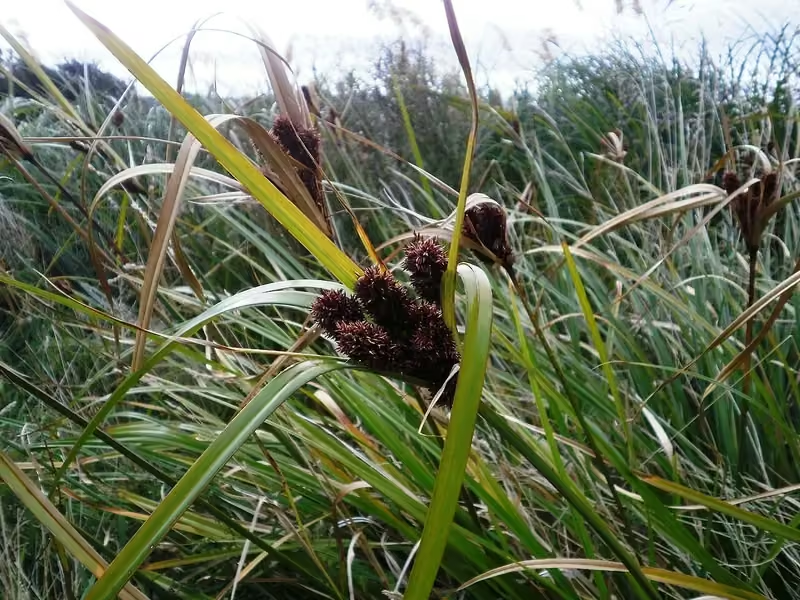
Explore other native plants that share similar characteristics or habitats with Orange Nut Sedge ( Machaerina rubiginosa ), offering further insights into New Zealand's diverse flora. These related species provide context and opportunities for complementary planting in your garden.


Plant Conservation
Conservation Status and Threats
Currently classified as 'Not Threatened', Machaerina rubiginosa is a successful and resilient member of the New Zealand flora. However, its long-term future is inextricably linked to the protection of our freshwater ecosystems. Continued efforts to protect peatlands and restore degraded wetlands ensure that the Orange Nut Sedge will continue to provide its essential filtration and habitat services for generations to come.
Frequently Asked Questions
How tall does orange nut sedge grow?
Orange nut sedge grows 0.3 to 1.2 metres tall in dense tufts or mats.
How fast does orange nut sedge grow?
It grows fast once established, spreading widely through its rhizome system.
Where does orange nut sedge grow naturally?
It grows in freshwater wetlands such as peat bogs and lake margins across New Zealand.
Why is it called orange nut sedge?
Its nuts ripen to a pale red-brown or bright orange colour, giving it the name.
Sources and Further Reading
The botanical, growing, and conservation details for Orange Nut Sedge (Machaerina rubiginosa) on this page draw on authoritative New Zealand plant references and citizen-science observation records. Consult the sources below for full technical records and the latest distribution data.