Machaerina
Machaerina arthrophylla
Last updated:
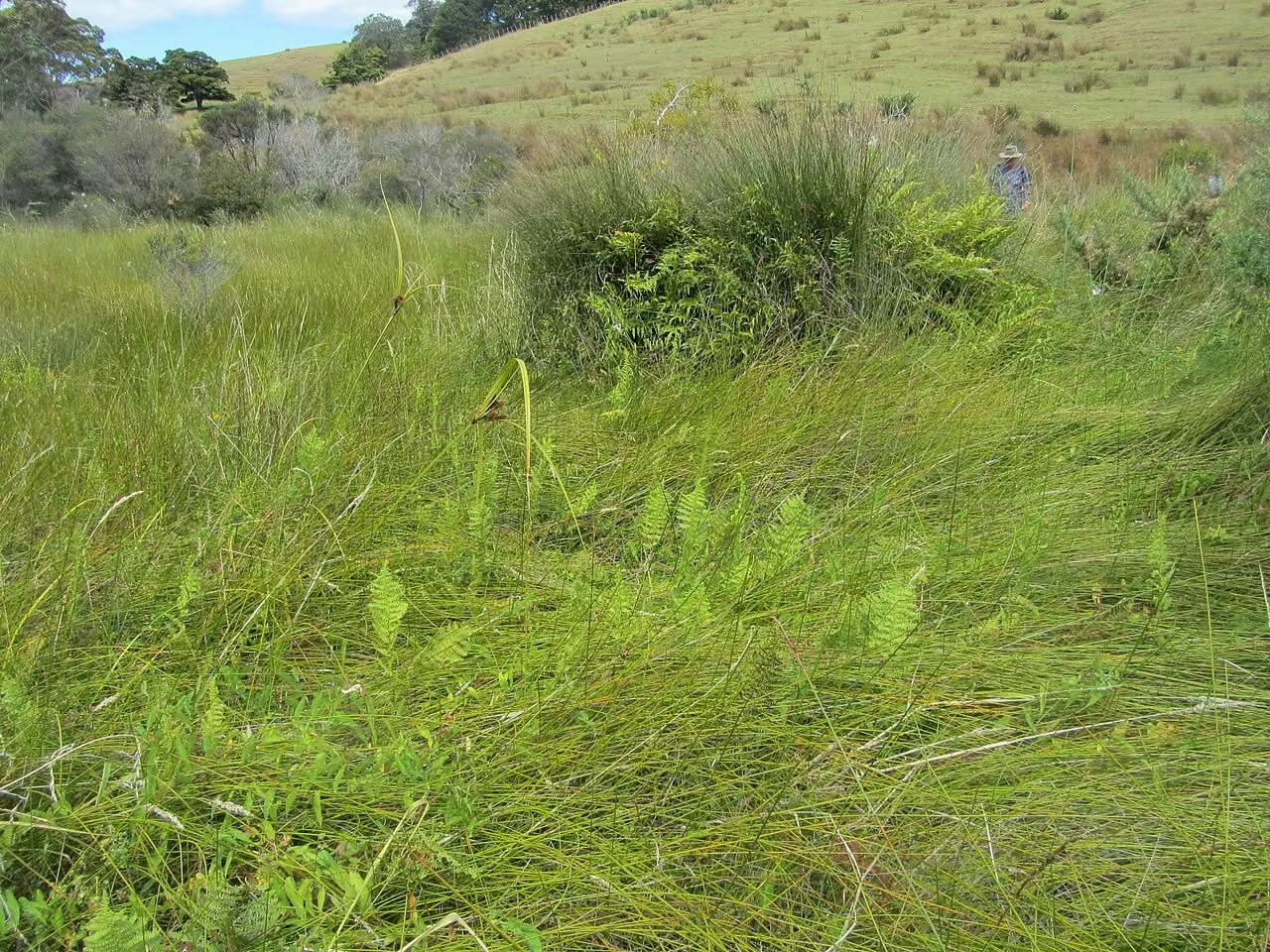
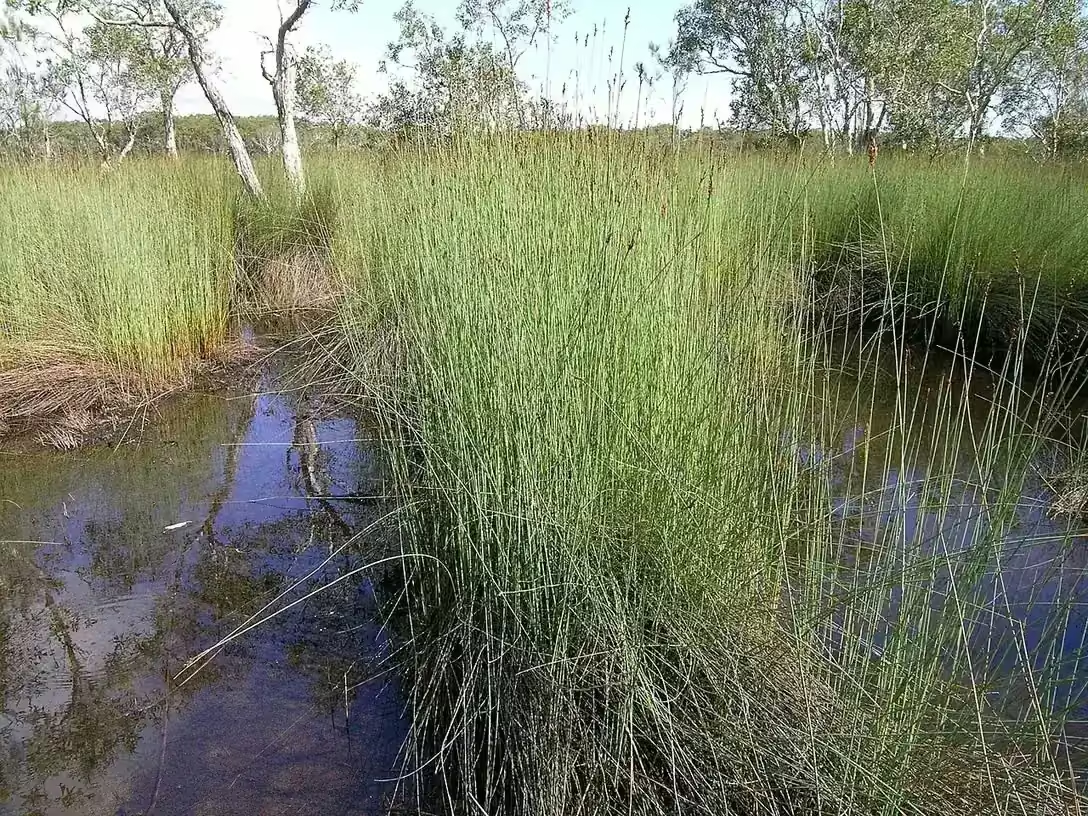
Baumea arthrophylla, now called Machaerina arthrophylla, is a native wetland sedge with slender, cylindrical, rush-like stems 0.5-1.3 m tall. Its upper leaves are terete and divided inside by cross-walls, giving the jointed appearance its name refers to. Loose, interrupted panicles of small brownish spikelets appear from October to December. It grows from the coast to 1200 m on lake and tarn margins, along slow streams and in burn pools within restiad bogs, from Waikato south to Southland and on the Chatham Islands. It also occurs in Australia, is Not Threatened, and is slow to establish in cultivation. Explore more native grasses and flaxes in our native plant guide.
Plant Description
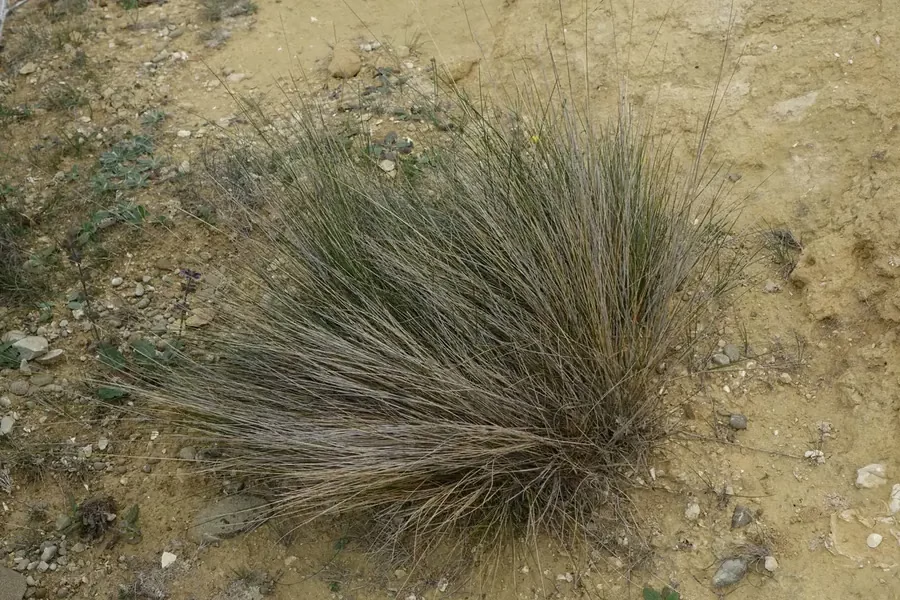
Machaerina arthrophylla is a dark green, rhizomatous sedge. Its rhizome is about 3 mm in diameter, horizontal, shortly creeping, hard and woody, and clothed in loose bracts. The culms (stems) are 0.5-1.3 m tall, only 1-2 mm thick and terete (round in cross-section).
The upper one to three leaves are also terete, like the stems, with acute tips. They are internally septate, meaning they have cross-walls inside at intervals, which can often be felt as slight joints when the leaf is run between the fingers. The flower head is a panicle 100-400 mm long, rounded at the tip and interrupted, with drooping branchlets and light greenish-brown bracts. The spikelets are 3-4.5 mm long with two to four flowers, usually only the lowest two fertile.
It is closely similar to Machaerina rubiginosa, which also has terete septate leaves but usually has somewhat larger (4.5-6 mm), rusty red-brown spikelets and pale or orange-yellow nuts. Careful examination of spikelets is the safest way to separate them.
Quick Facts
| Scientific Name | Machaerina arthrophylla |
|---|---|
| Height | 0.5-1.3 m |
| Spread | Slowly creeping clumps from a short rhizome |
| Water Needs | High; permanently wet ground or shallow water |
| Light | Full sun |
| Frost Tolerance | Hardy; grows to subalpine altitudes |
| Salt Tolerance | Low; a freshwater wetland plant |
| Growth Rate | Slow |
| Lifespan | Perennial |
Climate Best Suited to
Grows from warm lowland to cold subalpine climates in the central and southern North Island, the South Island and the Chatham Islands, provided the ground stays permanently wet.
Regional Suitability
| City | Climate Suitability |
|---|---|
| Auckland | Medium |
| Wellington | High |
| Christchurch | Medium |
| Dunedin | High |
Plant Habitat
This sedge is indigenous to New Zealand and Australia. In the North Island it is found from Waikato south to Waiouru, in the South Island on D'Urville Island, in Westland and in Southland, and it also grows on the Chatham Islands. It is regionally uncommon in Auckland and Wellington.
It grows from the coast to the subalpine zone at up to 1200 m, in freshwater wetlands, especially on the margins of lakes, tarns and slow-flowing streams. It also colonises burn pools within restiad bogs, the peat bogs dominated by wire rush and jointed rushes. It is classed as an obligate wetland plant, almost always found in wetlands.
Growing Requirements
Soil Requirements
It needs permanently saturated soils, typically peat or wet mineral silt at the edges of open water.
- Waterlogged peat or silty margins
- Acidic bog soils are well tolerated
- Low fertility is fine
Light Requirements
This is a plant of open wetlands and lake edges, where it receives full sun.
- Full sun
- Tolerates light shade from neighbouring sedges
- Avoid deeply shaded sites
Water Requirements
As an obligate wetland plant it must have constantly wet roots, and it grows naturally at the edge of standing water.
- Permanently wet soil or shallow water
- Lake, tarn and pond margins
- Not drought tolerant
Planting and Establishing
Plant into permanently wet ground at the margin of a pond or wetland restoration site. Because NZPCN notes that it resents root disturbance, use plants grown in deep containers and plant them with the root ball intact.
Plant in spring so that young plants have a full growing season to settle in, and keep surrounding weeds down while it slowly establishes.
Ecological Role
Like other sedges it is wind pollinated, and its nuts are wind dispersed. Its tall, slender stems add vertical structure to lake-edge vegetation and provide cover for wetland invertebrates and birds.
In restiad bogs it colonises burn pools, the hollows left after peat fires, making it part of the natural recovery of bogs after disturbance.
Uses & Significance
Garden Uses
It is mainly a plant for wetland restoration within its natural range, rather than general garden use, because of its slow establishment.
- Wetland and lake-margin restoration
- Natural pond edges
- Bog gardens with permanently wet peat
Ecological Value
As an obligate wetland sedge, it is part of the native vegetation of lake margins and peat bogs, ecosystems that have been greatly reduced in New Zealand.
- Structural cover at water margins
- Colonises burn pools in restiad bogs
- Supports wetland invertebrates
Landscaping Uses
Use it in drifts along the shallow edge of a natural pond, where its fine, upright stems and drooping brownish panicles create a soft vertical texture against open water.
It mixes well with other native wetland plants of similar habitats such as other Machaerina species and native rushes.
Seasonal Care Calendar
Spring
Flowering begins in October, with loose panicles rising above the stems through to December.
- Plant out new stock
- Weed around young plants
Summer
Fruiting starts in December. Water levels must stay high enough to keep the roots wet.
- Top up garden ponds in dry spells
- Begin collecting ripe nuts
Autumn
Nuts continue to ripen until May and are dispersed by wind.
- Sow fresh seed
- Leave seed heads for natural dispersal
Winter
Growth slows in cold months, but the evergreen stems remain standing.
- No action needed
- Avoid trampling wet margins
When to Prune and How Much
No pruning is required. Old, dead stems can be cut out at the base in late winter if a clump becomes untidy.
Avoid cutting the whole clump to the ground, which slows recovery in this slow-growing sedge.
How to Grow Machaerina
NZPCN describes propagation of Machaerina arthrophylla as difficult. It can be grown from fresh seed but is slow to establish, and it resents root disturbance, so division is risky and container-grown plants should be handled carefully. Fruiting runs from December to May, giving a long season for collecting ripe nuts. Because it is regionally uncommon in Auckland and Wellington, eco-sourced seed from the local area is best for restoration plantings, collected with landowner permission and without stripping wild plants.
From Seed
Fresh seed is the most reliable method, but seedlings grow slowly and may take a couple of seasons to reach planting size.
- Collect ripe nuts between December and May
- Sow fresh onto a moist peat-based or sandy seed mix
- Stand the tray in a saucer of water so the mix stays wet
- Prick out seedlings carefully into deep pots, handling them by the leaves and disturbing the roots as little as possible
- Grow on in full sun with constantly wet roots until well established
By Division
Division is possible because the plant has a short creeping rhizome, but because it resents root disturbance success is variable and divisions should be large.
- Divide in spring when growth resumes
- Cut large sections with several stems and plenty of rhizome
- Pot into a wet, peaty mix and keep standing in water
- Allow a full growing season for the division to re-establish before planting it out, and expect some losses
Pests & Diseases
No specific pests or diseases are recorded for this species in the sources consulted.
The main risks are drainage of wetlands, falling water levels and competition from invasive wetland weeds that can overgrow slow-establishing sedges.
Cultural Significance
No Māori name or traditional use is recorded for this species in the sources consulted.
The epithet arthrophylla means jointed leaf, from the Greek arthron (joint) and phyllon (leaf), referring to the internal cross-walls in its leaves. It was described by Nees and later transferred to Baumea by Boeckeler and to Machaerina by Koyama.
Bonus Tip
To confirm you have a septate-leaved twig rush, pinch a leaf and slide your fingers along it, or slit one lengthwise: you will see or feel the regular internal cross-walls. Then check the spikelet size and colour to tell M. arthrophylla from M. rubiginosa.
Related Plants
Explore other native plants that share similar characteristics or habitats with Machaerina (Machaerina arthrophylla), offering further insights into New Zealand's diverse flora. These related species provide context and opportunities for complementary planting in your garden.
Limestone Wheatgrass
Australopyrum calcis subsp. calcis
Canterbury Limestone Wheat Grass
Australopyrum calcis subsp. optatum
Shore Hard Fern
Austroblechnum banksii
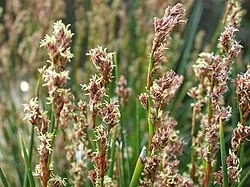
Bare Twig Rush
Bare Twig Rush
Orange Nut Sedge
Orange Nut Sedge
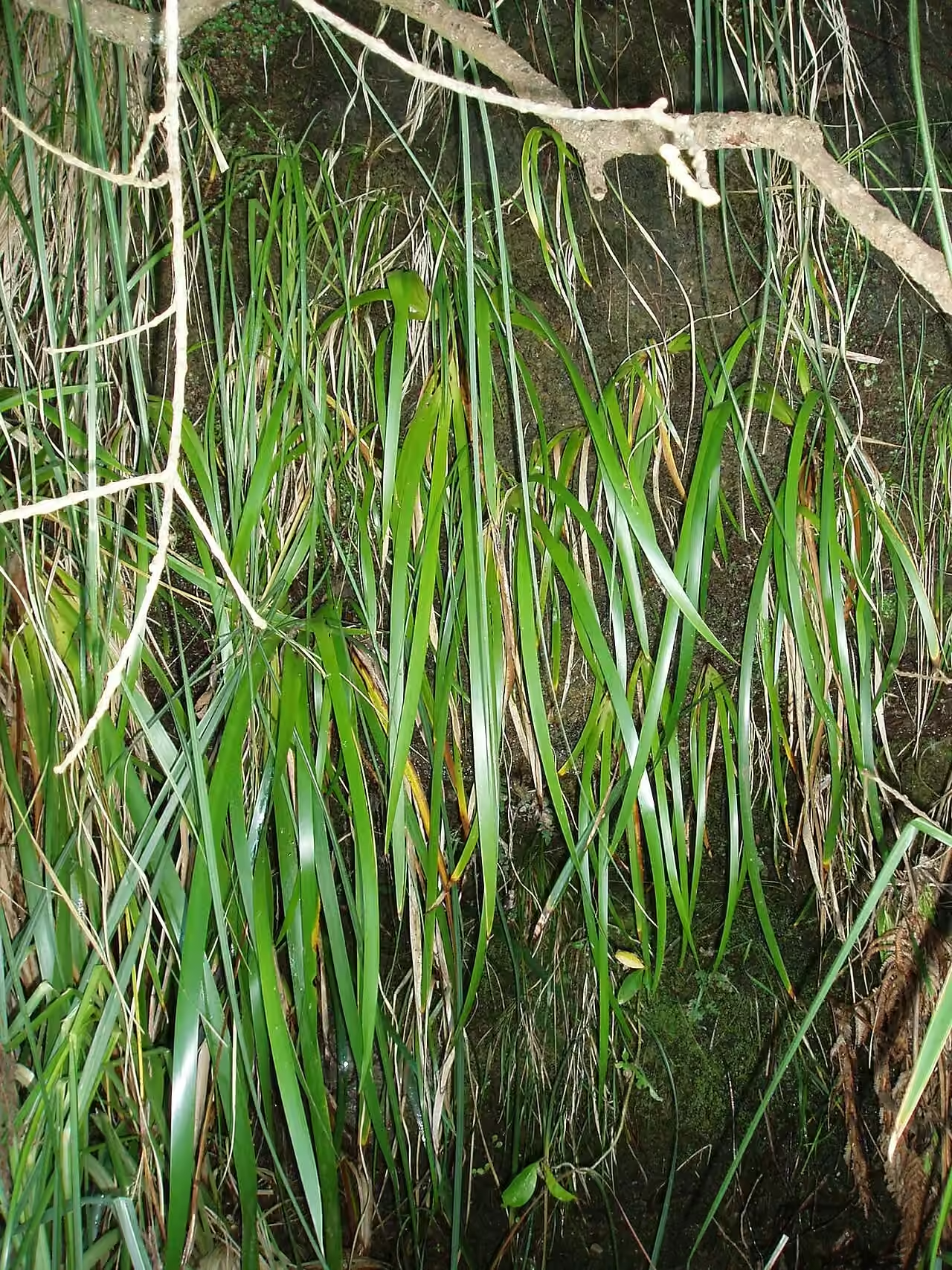
Pēpepe
Machaerina sinclairii
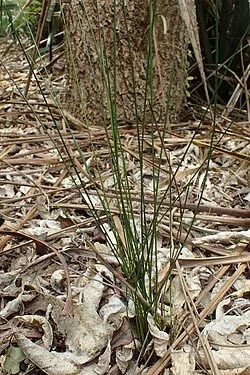
Pakihi / Nut Sedge
Pakihi / Nut Sedge
Petriei Grass
Achnatherum Petriei Grass
Plant Conservation
Machaerina arthrophylla is ranked Not Threatened nationally (2023) with the qualifier Secure Overseas. Regionally it is At Risk - Naturally Uncommon in Auckland and Wellington, and Not Threatened in Northland.
Loss and drainage of lake-margin wetlands and peat bogs are the main pressures. Protecting wetlands, maintaining natural water levels and controlling weeds help this and other wetland sedges.
Frequently Asked Questions
What is the current name for Machaerina arthrophylla?
It is now Machaerina arthrophylla. New Zealand was among the last places to use Baumea, and NZ botanists have since adopted Machaerina for these twig rushes.
Where does Machaerina arthrophylla grow in New Zealand?
In the North Island from Waikato south to Waiouru, in the South Island on D'Urville Island, Westland and Southland, and on the Chatham Islands, in freshwater wetlands up to 1200 m.
Is Machaerina arthrophylla easy to grow?
No. NZPCN describes it as difficult: it can be grown from fresh seed but is slow to establish and resents root disturbance.
Sources and Further Reading
The botanical, growing, and conservation details for Machaerina (Machaerina arthrophylla) on this page draw on the New Zealand plant references below. Consult them for full technical records and the latest distribution data.