Woodrush
Luzula leptophylla
Last updated:
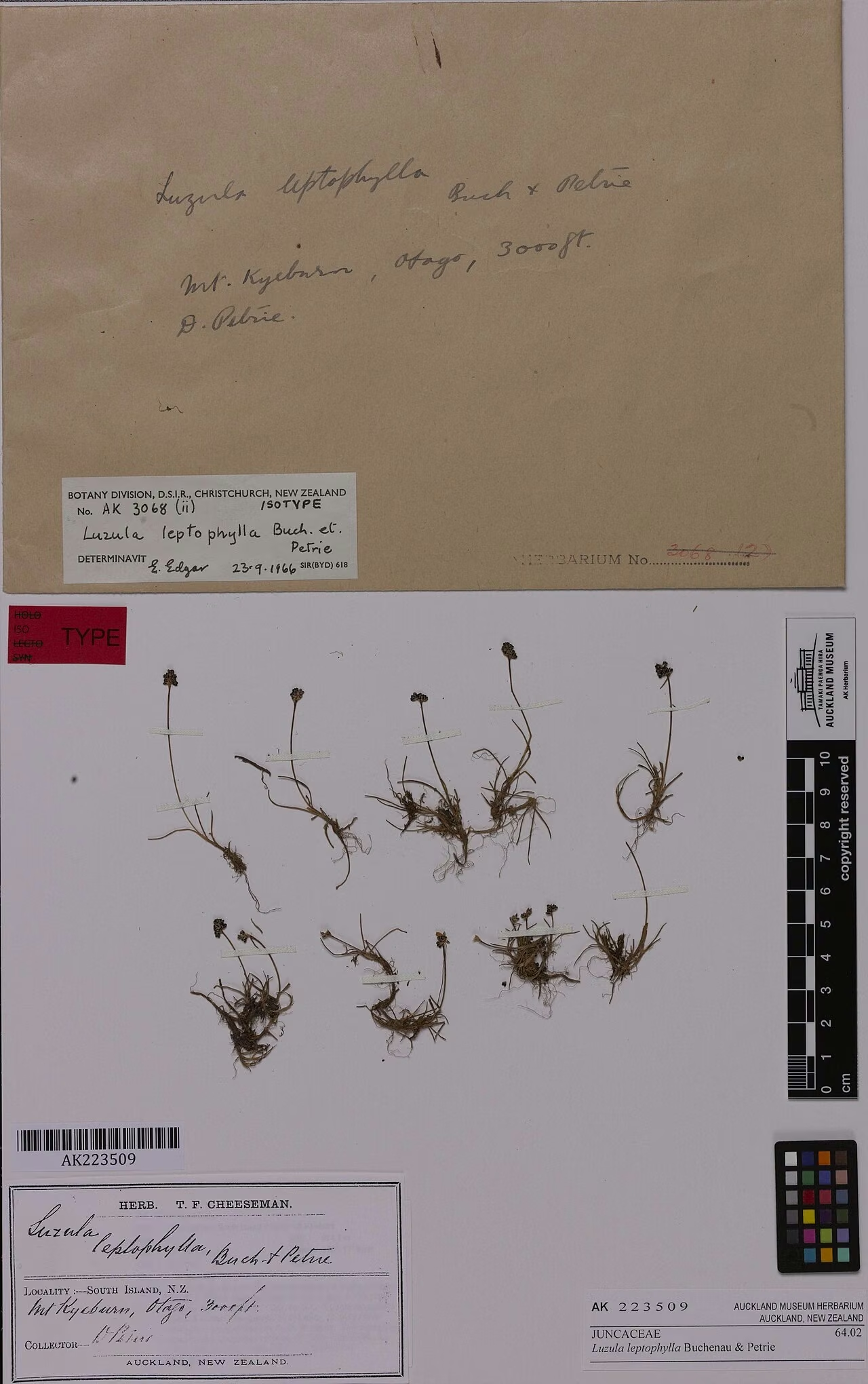
Luzula leptophylla is a very slender, grass-like woodrush endemic to New Zealand. It spreads by thin rhizomes and stolons, has almost thread-like leaves less than 0.5 mm wide, and holds small rounded heads of dark brown, silver-edged flowers on stems 4 to 12 cm tall. It grows along water courses and in damp places between about 750 and 1500 m, from the Ruahine and Kaimanawa Ranges in the North Island and from Mt Somers south through the mountains of Otago and Southland. It is ranked At Risk - Naturally Uncommon. No other New Zealand woodrush combines such narrow leaves, slender rhizomes and only three stamens. Explore more native grasses and flaxes in our native plant guide.
Plant Description
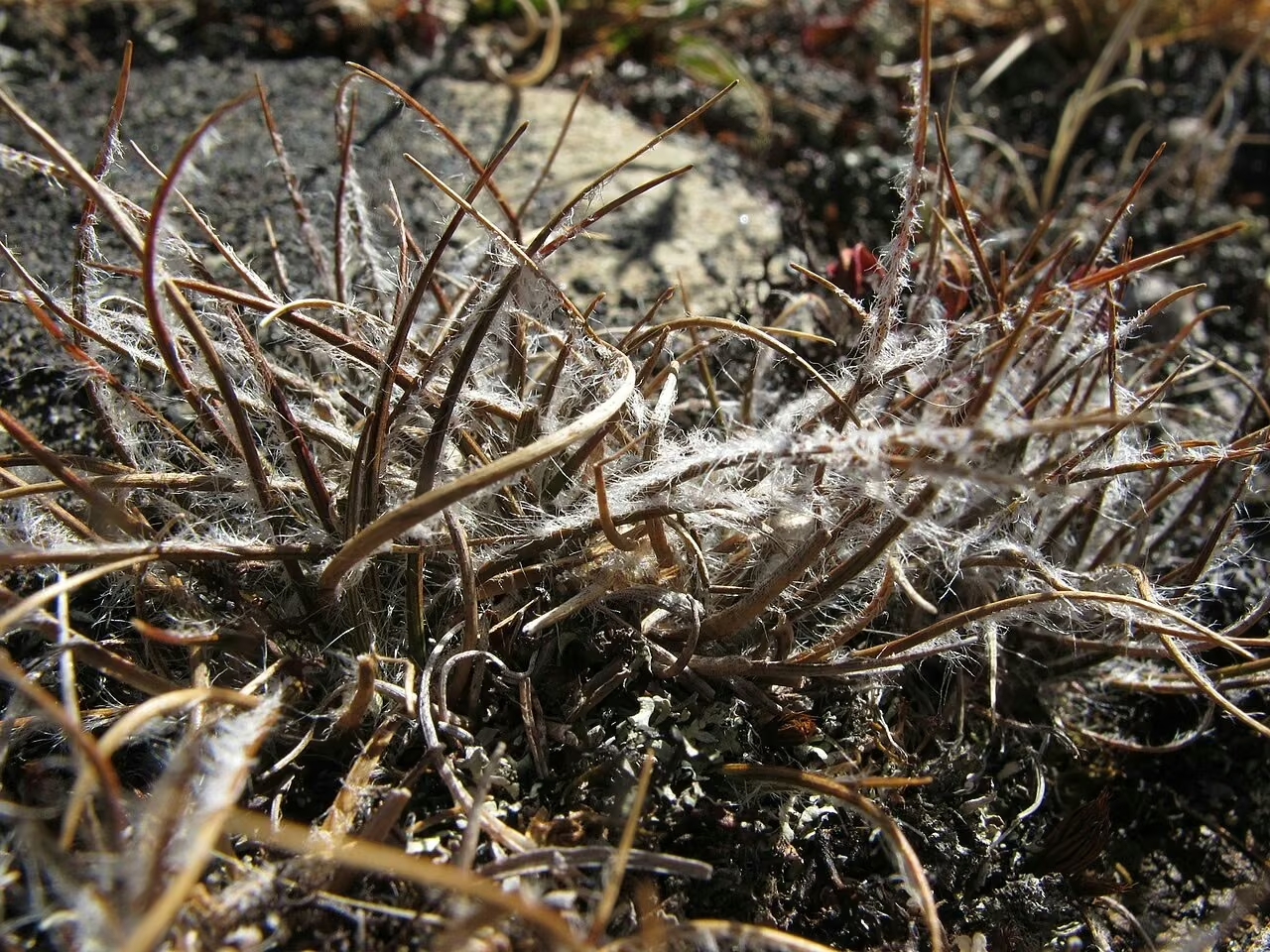
Luzula leptophylla is a very slender, stoloniferous, grass-like plant. Its leaves are less than 0.5 mm wide, almost filiform, with blunt tips, so a patch can look more like fine moss or a tiny sedge than a typical woodrush. The plant spreads by slender rhizomes.
The flowering stems are 4 to 8 cm tall, occasionally to 12 cm. Each carries a simple, spike-like, erect, rounded head of 4 to 6 flowers, sometimes up to 12. The flowers are less than 2 mm long, and the tepals are dark brown, almost black, at the centre with broad silver membranous margins. There are 3 stamens, rarely 6.
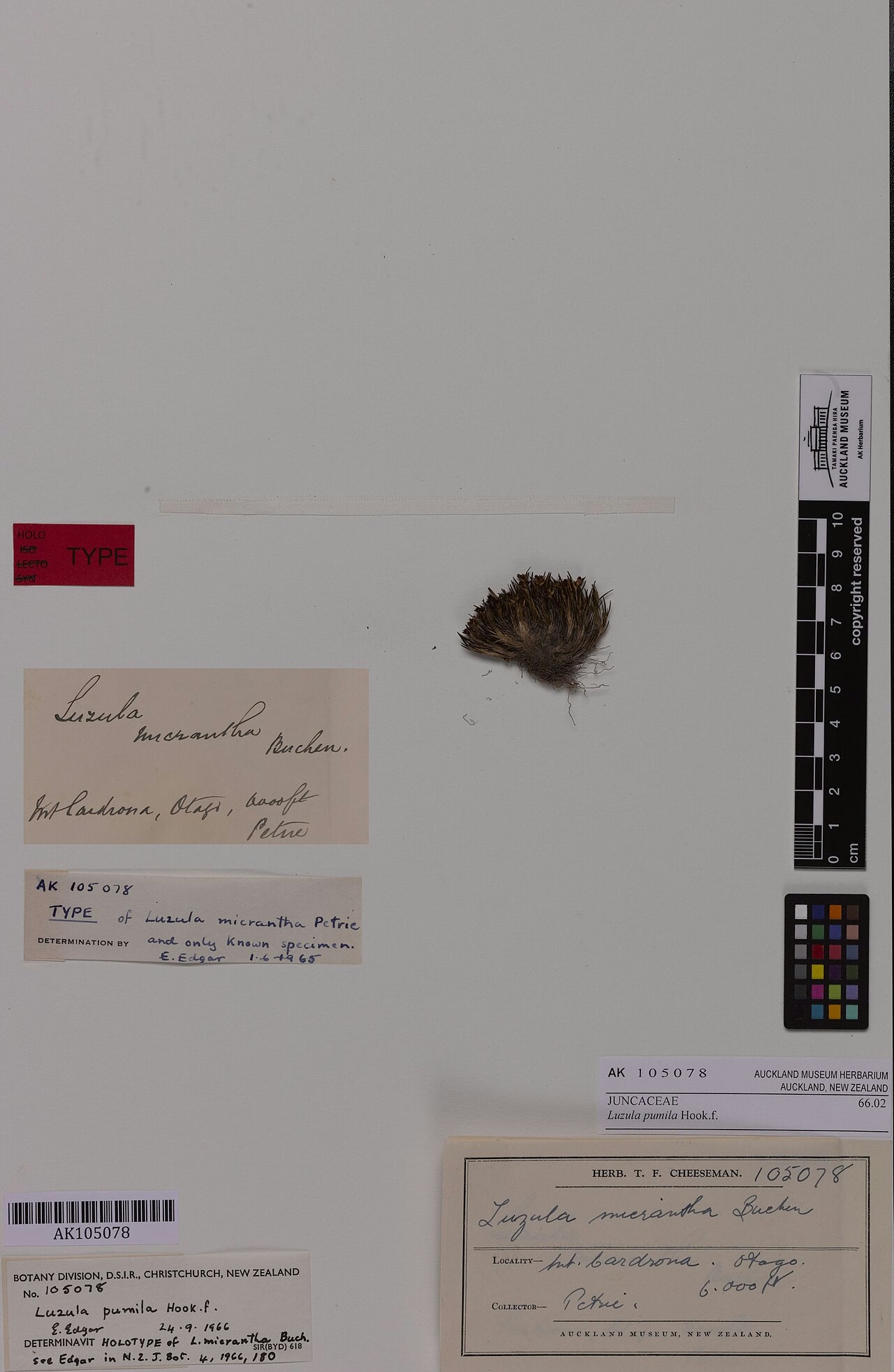
The Flora of New Zealand describes it as distinct from all other New Zealand Luzula species by its very narrow leaves, slender rhizomes and 3 stamens. The cushion species Luzula colensoi and Luzula pumila have broader leaves (0.7 mm or more) and usually 6 stamens, and they form compact cushions rather than creeping.
Quick Facts
| Scientific Name | Luzula leptophylla |
|---|---|
| Height | 0.04-0.12 m |
| Spread | Creeps by slender rhizomes; patch size not recorded |
| Water Needs | High; an obligate wetland plant |
| Light | Open, sunny wet ground |
| Frost Tolerance | High; a montane to subalpine plant |
| Salt Tolerance | No information available; an inland species |
| Growth Rate | Slow |
| Lifespan | Perennial |
Climate Best Suited to
Suits cool, moist montane and subalpine climates with cold winters, including the drier inland mountains of Otago where it relies on water courses rather than rainfall alone.
Regional Suitability
| City | Climate Suitability |
|---|---|
| Auckland | Low |
| Wellington | Low |
| Christchurch | Low |
| Dunedin | Low |
Plant Habitat
Luzula leptophylla is endemic to New Zealand. In the North Island it is known from the Ruahine and Kaimanawa Ranges. In the South Island it occurs from Mt Somers in South Canterbury south through the mountains of Otago and Southland. The type was collected by D. Petrie on Mt Kyeburn in Central Otago at about 3500 feet.
It grows along water courses and in damp places from 750 to 1500 m altitude. Herbarium labels mention damp channels on flats and damp hollows, and NZPCN classes it as an obligate wetland species that is almost always found in wet ground.
Growing Requirements
Soil Requirements
It roots into wet, often silty or peaty ground beside streams and in seepages and hollows.
- Permanently damp to wet soil
- Open, low-competition ground
- Low to moderate fertility
Light Requirements
Its habitats are open montane flats and stream edges with little overhead cover.
- Full sun to light shade
- Easily overgrown by taller sedges and grasses
Water Requirements
As an obligate wetland plant it needs moisture all year.
- Never let the ground dry out
- Moving or seeping water suits it better than stagnant pools
Planting and Establishing
Luzula leptophylla is not grown commercially and is unlikely to be available. It is a plant for restoration of montane wetlands within its natural range rather than for gardens.
If grown from legally sourced material, plant it in a shallow pan or bog garden of wet, gritty peat kept moist all year, in an open, cool position free of competing grasses.
Ecological Role
Like other woodrushes it is wind-pollinated. Its creeping rhizomes allow it to form small patches in wet channels and hollows, helping bind fine sediment.
No specific insect, bird or other animal associations are recorded for this species in the sources consulted. It is part of the small-statured wetland turf community of montane New Zealand.
Uses & Significance
Garden Uses
It has little practical garden use because it is so small and needs constant wet conditions.
- Possible subject for a specialist bog pan
- Restoration of montane seepages within its known range
Ecological Value
It contributes to the diversity of montane wetland turf and is one of New Zealand's naturally uncommon endemic rushes.
- Helps stabilise wet channels and hollows
- Indicator of intact montane seepage habitat
Landscaping Uses
This woodrush has no mainstream landscaping role. Its value is in natural wetland turf, where it grows among other small herbs and sedges.
For a fine-leaved rush effect in a lowland garden pond margin, choose a nursery-grown lowland native rush instead.
Seasonal Care Calendar
Spring
New growth starts from the rhizomes as montane ground thaws and stream flows rise with snowmelt.
- Wet ground is at its wettest
- Fresh thread-like leaves appear
Summer
The small, dark, silver-edged flower heads appear on short erect stems during summer.
- Flowers are under 2 mm long
- Keep cultivated plants constantly wet
Autumn
Capsules ripen and release seed onto the wet ground nearby.
- Seed falls close to the parent
- Rhizomes continue to creep
Winter
The plant is dormant under frost or snow through the montane winter.
- No action needed
- Snow and frost are normal in its habitat
When to Prune and How Much
No pruning is needed. The leaves are so fine that trimming would only damage the plant.
In a pot, remove any invading grasses or moss that threaten to smother it.
How to Grow Woodrush
No propagation protocol specific to Luzula leptophylla was found in the sources consulted, and it is not available commercially. Its natural spread by slender rhizomes and stolons suggests division is the most practical method, and seed should also work as it does for other woodrushes. Use only material already in cultivation or collected with appropriate permission, given its At Risk ranking. Keep everything wet at all times and in cool, bright conditions, and expect slow progress because the plant is very small. Label pots with the collection locality, as local provenance matters for any later restoration planting.
By Division of Rhizomes
Because the plant creeps by slender rhizomes, a cultivated patch can be separated into rooted pieces. This keeps the exact local form and is quicker than seed.
- Divide in spring when new growth begins
- Lift a small portion of the patch with its rhizomes and soil intact
- Replant into a wet, gritty peat mix in a shallow pot
- Stand the pot in a saucer of water so the mix never dries
- Keep in a cool, bright spot until new shoots appear
From Seed
Seed ripens in small capsules after summer flowering. Collect it as soon as the capsules turn brown and begin to open.
- Sow fresh seed on the surface of a wet peat and sand mix
- Do not cover deeply; a dusting of fine grit is enough
- Keep the pot permanently moist, ideally sitting in water
- Expose to winter cold outdoors if germination is slow
Pests & Diseases
No pests or diseases are recorded for this species. In cultivation, drying out and being overgrown by weeds are the most likely causes of loss.
In the wild, changes to montane wetlands such as drainage, trampling by stock and spread of weeds could affect its small habitat patches, although specific threats are not documented in the sources consulted.
Cultural Significance
No Māori name or traditional use is recorded for Luzula leptophylla in the sources consulted.
It was described in 1898 by the German botanist Franz Buchenau and the Otago botanist Donald Petrie, who collected the type on Mt Kyeburn in Central Otago. The epithet leptophylla means slender-leaved.
Bonus Tip
When searching wet montane flats for this species, look at the edges of small water channels for patches of hair-fine leaves with tiny dark heads on short stems. A hand lens showing only 3 stamens in the flower confirms the identification.
Related Plants
Explore other native plants that share similar characteristics or habitats with Woodrush (Luzula leptophylla), offering further insights into New Zealand's diverse flora. These related species provide context and opportunities for complementary planting in your garden.


Plant Conservation
Luzula leptophylla is ranked At Risk - Naturally Uncommon (2023), with the qualifiers Sparse and Range Restricted along with data-poor qualifiers (DPR, DPS, DPT). It was assessed as Not Threatened up to 2009 and moved to Naturally Uncommon from 2012. Otago lists it as Regionally Naturally Uncommon (2025).
The data-poor qualifiers show that more survey work is needed to understand its true abundance. Protecting montane wetlands and seepages from drainage, stock damage and weeds, and recording any sightings on iNaturalist NZ, are the most useful steps.
Frequently Asked Questions
Where does Luzula leptophylla grow?
It grows along water courses and in damp places at 750-1500 m, in the Ruahine and Kaimanawa Ranges of the North Island and from Mt Somers in South Canterbury south through the mountains of Otago and Southland.
How do you identify Luzula leptophylla?
Look for a tiny, creeping woodrush with almost thread-like leaves under 0.5 mm wide, slender rhizomes and a single erect rounded head of 4-6 dark brown flowers with broad silver margins and only 3 stamens.
Is Luzula leptophylla threatened?
It is ranked At Risk - Naturally Uncommon (2023) because it is sparse and range restricted. Before 2012 it was assessed as Not Threatened.
What does leptophylla mean?
Leptophylla means slender-leaved, from Greek, and refers to the hair-fine leaves that set this species apart from every other New Zealand woodrush.
Sources and Further Reading
The botanical, growing, and conservation details for Woodrush (Luzula leptophylla) on this page draw on the New Zealand plant references below. Consult them for full technical records and the latest distribution data.