
Dwarf Alpine Woodrush
Luzula colensoi
Last updated:
Dwarf alpine woodrush (Luzula colensoi) is a tiny cushion-forming woodrush endemic to New Zealand. It builds dense cushions only about 2.5 cm high from narrow, stiff, almost hairless leaves, and its flower clusters stay sunk among the leaves rather than rising above them. It grows at scattered localities along the centre and western side of the main ranges of the North and South Islands, between about 1200 and 2000 m, with the type collected beside snow tarns on the Ruahine Range. Nationally it is ranked Not Threatened, but it is regionally uncommon in Otago and Wellington. It is a plant for alpine botanists to find rather than gardeners to grow. Explore more native grasses and flaxes in our native plant guide.
Plant Description
Luzula colensoi forms dense, low cushions about 2.5 cm high. The leaves are narrow, only 0.7 to 1 mm wide, rigid, almost hairless and blunt at the tip. The plant has a neat, tight appearance quite different from the floppy, hairy-leaved woodrushes of lowland grassland.
The flowering stems remain sunken within the cushion of leaves and do not elongate as the fruit matures. Each inflorescence holds 6 to 8 small flowers 1.5 to 2 mm long. The outer tepals have a light brown centre and white membranous margins, and the inner tepals have even broader membranous margins. There are usually 6 stamens, occasionally only 3 or 4. The capsule is reddish-brown and about as long as the tepals.
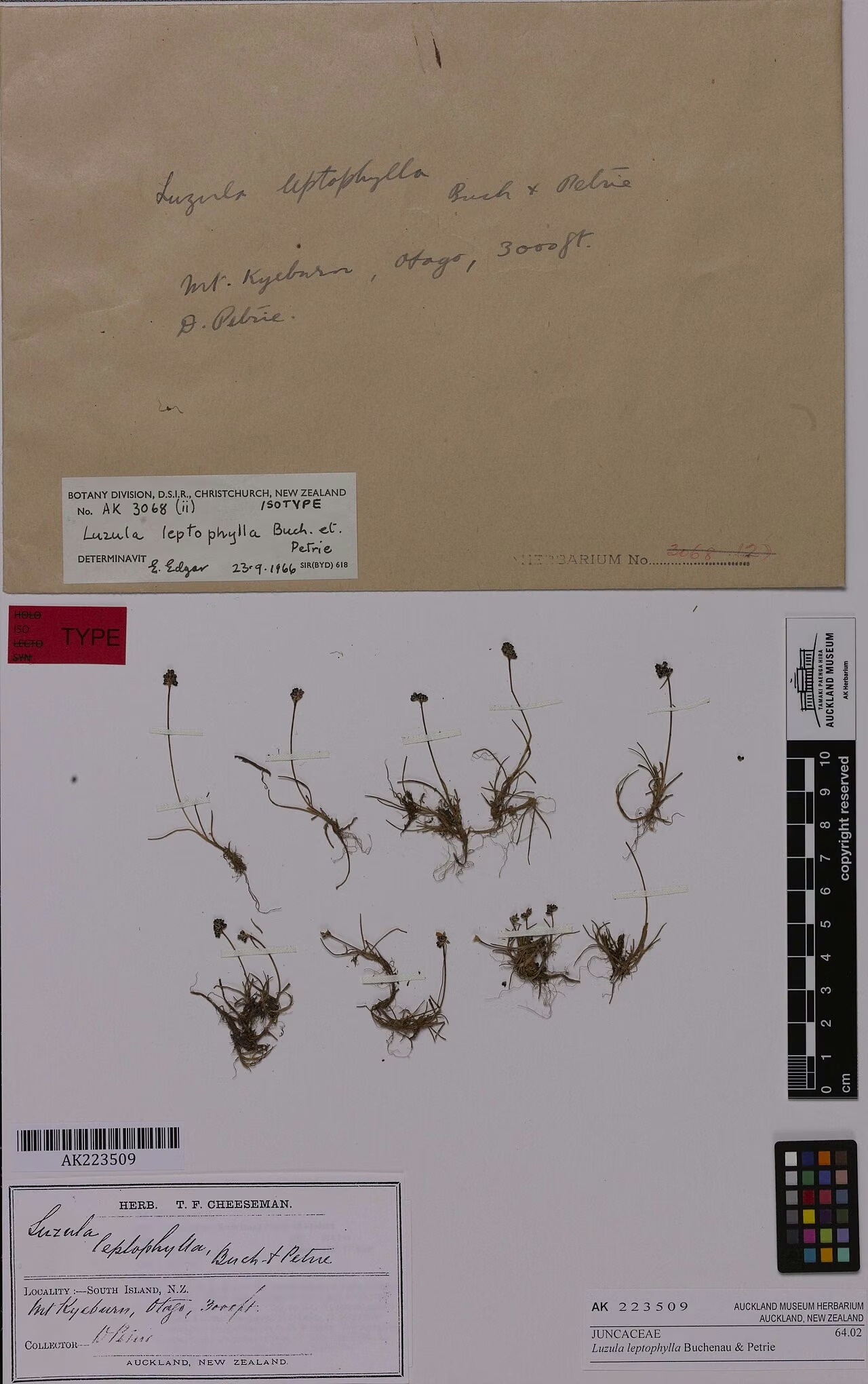
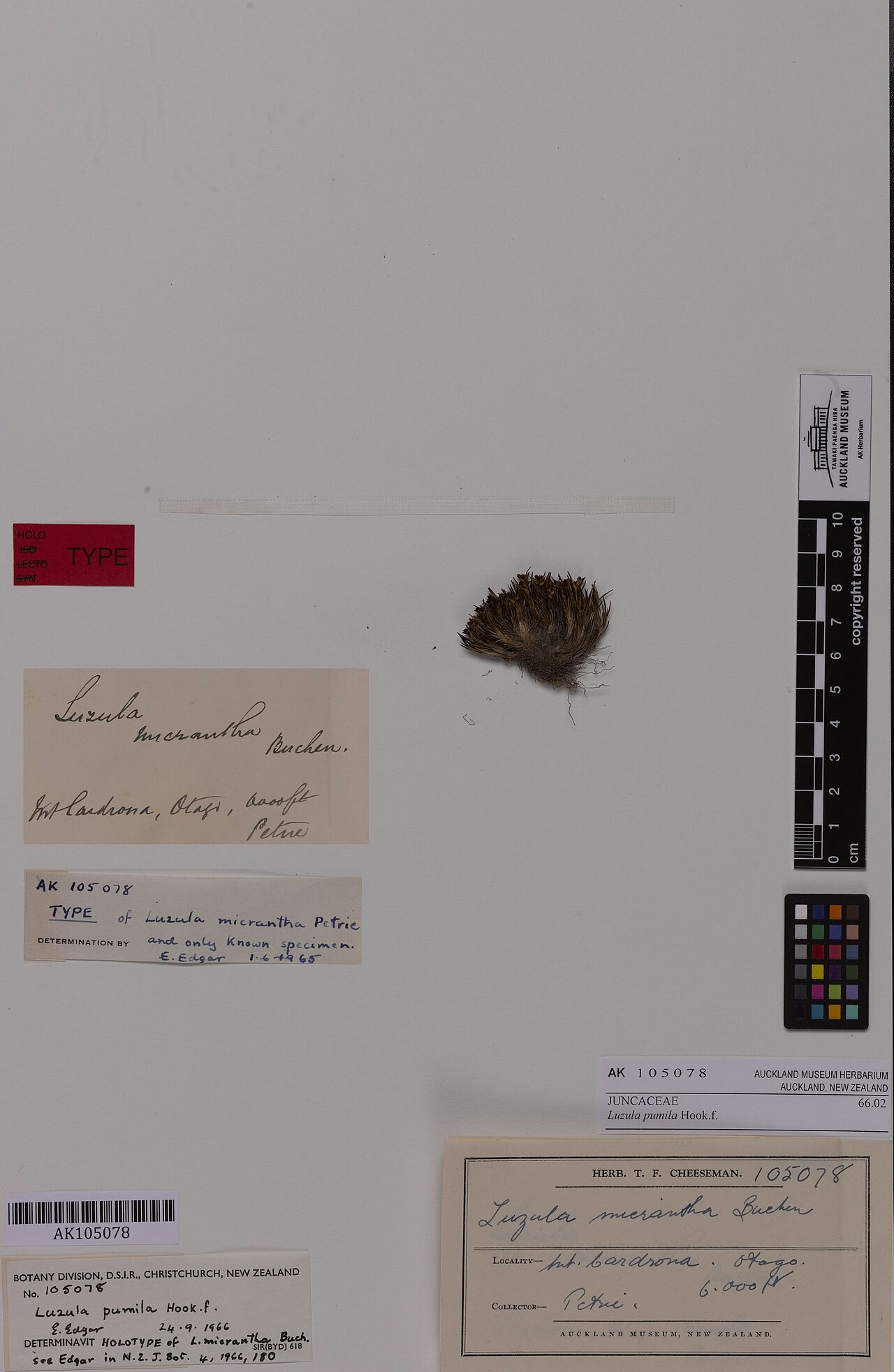
The best field character is the hidden, unelongated flower head. Luzula pumila, another small alpine cushion species, has flowering stems that reach or overtop the leaves and darker tepals, while Luzula leptophylla has hair-fine leaves under 0.5 mm wide and spreads by slender rhizomes.
Quick Facts
| Scientific Name | Luzula colensoi |
|---|---|
| Height | About 0.025 m (2.5 cm) |
| Spread | Small dense cushions; maximum size not recorded |
| Water Needs | Moist alpine sites; type locality beside snow tarns |
| Light | Full sun, open alpine ground |
| Frost Tolerance | High; grows at 1200-2000 m |
| Salt Tolerance | No information available; an inland alpine plant |
| Growth Rate | Slow |
| Lifespan | Perennial |
Climate Best Suited to
Suits a cold, wet alpine climate with long periods of snow cover and cool summers. It is not suited to lowland gardens anywhere in New Zealand.
Regional Suitability
| City | Climate Suitability |
|---|---|
| Auckland | Low |
| Wellington | Low |
| Christchurch | Low |
| Dunedin | Low |
Plant Habitat
Luzula colensoi is endemic to New Zealand and occurs in both the North and South Islands at scattered localities along the centre and western side of the main ranges, from about 1200 to 2000 m altitude. The type was collected by William Colenso at snow tarns on the summit of the Ruahine Range, and herbarium specimens also come from ranges such as the Owen Range in north-west Nelson.
Herbarium labels record it from damp alpine ground, rubble and rock outcrops in exposed fellfield. These open, high-altitude sites have little competition from taller plants, which suits such a small cushion.
Growing Requirements
Soil Requirements
It grows on thin alpine soils, often damp, among rock and rubble.
- Low-fertility, gritty or stony substrate
- Moisture from snowmelt and frequent rain
- Little organic build-up apart from in damp hollows
Light Requirements
It lives in open alpine country above the treeline where nothing taller shades it.
- Full exposure to sun and wind
- Would be smothered if taller herbs or grasses closed over it
Water Requirements
Damp ground near snow tarns and in alpine herbfield keeps the cushion moist through summer.
- Needs constant soil moisture
- Cool roots matter as much as water supply
Planting and Establishing
Dwarf alpine woodrush is not available in the nursery trade and is not a practical garden plant. Its home is cold, wet alpine ground, and lowland summers are far warmer than it is adapted to.
An alpine enthusiast with legally sourced material could try it in a deep pot or trough of gritty mix, kept cool and moist and shaded from hot afternoon sun. Plants should never be dug from the wild.
Ecological Role
Like other woodrushes, Luzula colensoi is wind-pollinated; its small brown and white flowers have no nectar or scent to attract insects. The seeds are released from the capsule close to the parent cushion.
Small cushions like this one help stabilise alpine soils and provide shelter for tiny invertebrates, but no specific animal associations have been recorded for this species in the sources consulted.
Uses & Significance
Garden Uses
This species has no real garden use. It is best appreciated in the wild.
- Possible trough subject for specialist alpine growers
- Not sold by native plant nurseries
Ecological Value
It is part of the endemic alpine cushion and herbfield flora of the central and western ranges.
- Contributes to ground cover on exposed alpine rubble and turf
- Regionally uncommon in Otago and Wellington, so each population matters locally
Landscaping Uses
Dwarf alpine woodrush has no role in mainstream landscaping. Its value is in natural alpine plant communities, where it forms one of many small cushions among rock and turf.
If a lowland gardener wants the look of a fine, tufted native rush, larger lowland Luzula or Juncus species are far better suited.
Seasonal Care Calendar
Spring
In its alpine home the cushion is still emerging from snow in spring and growth begins as the ground thaws.
- Snowmelt keeps the ground saturated
- Fresh leaves appear in the cushion
Summer
Flowering occurs during the short alpine summer, with the small brown and white flowers tucked down among the leaves.
- Look closely: the flowers barely show
- Avoid trampling cushions near tarns
Autumn
The reddish-brown capsules ripen within the cushion and release their seed.
- Capsules sit at about tepal length
- Seed falls close to the parent
Winter
The cushion is usually buried under snow, which insulates it from the coldest temperatures.
- No growth
- Snow cover protects from wind and frost
When to Prune and How Much
No pruning is needed or advisable. The cushion is built from tightly packed shoots, and cutting into it only creates gaps where rot can start.
In a cultivated plant, pick out any dead leaves gently with tweezers if they collect on the cushion.
How to Grow Dwarf Alpine Woodrush
No published propagation protocol for Luzula colensoi was found in the sources consulted, and the species is not grown commercially. The methods below are those generally used for small cushion woodrushes and should be treated as an informed starting point rather than a proven recipe. Work only with plants already held legally in cultivation or seed collected with permission, because wild plants should not be dug up. Expect slow growth and losses, particularly in warm lowland conditions, and keep everything cool, bright and evenly moist.
From Seed
Woodrush capsules open when ripe and drop small seeds. Because the capsules of this species sit down among the leaves, ripe seed has to be looked for carefully in late summer or early autumn.
- Collect seed from ripe reddish-brown capsules on cultivated plants
- Sow fresh on the surface of a fine, gritty, low-fertility mix
- Cover lightly with fine grit and keep the pot cool and moist
- Leave the pot outside over winter, as alpine seed often germinates after a cold spell
- Prick seedlings out only when they are large enough to handle
By Division
Established cushions in cultivation can sometimes be split into small pieces, each with its own roots. This is the quickest way to multiply a plant but carries a risk of losing both halves if conditions are too warm.
- Divide in early spring as growth starts
- Tease off a small rooted section from the edge of the cushion
- Pot into a gritty mix and keep shaded and moist until it re-establishes
- Grow on in a cool, airy spot before planting into a trough
Pests & Diseases
No specific pests or diseases are recorded for this species. In cultivation the main risk is rot or collapse when the cushion is kept too warm, too humid or in stagnant air.
In the wild, trampling around tarns and on alpine tracks can damage small cushions, which recover slowly.
Cultural Significance
No Māori name or traditional use is recorded for Luzula colensoi in the sources consulted.
Its name honours William Colenso, who explored the Ruahine Range in the 1840s and collected the type specimen from snow tarns on its summit. Joseph Hooker described the species from Colenso's material. The genus name Luzula is a Latinised form of an Italian vernacular name, lucciola.
Bonus Tip
If you are looking for this plant on an alpine trip, search damp ground near snow tarns and among rubble for a tight green cushion with no obvious flower stalks. Part the leaves gently and you may find the small brown and white flower heads hidden inside, which is the surest way to separate it from Luzula pumila.
Related Plants
Explore other native plants that share similar characteristics or habitats with Dwarf Alpine Woodrush (Luzula colensoi), offering further insights into New Zealand's diverse flora. These related species provide context and opportunities for complementary planting in your garden.
Plant Conservation
Luzula colensoi has been ranked Not Threatened in every national assessment from 2004 to 2023. Regionally, both Otago and Wellington list it as At Risk - Regionally Naturally Uncommon (2025), reflecting how few and scattered its sites are in those regions.
Most of its alpine habitat lies within conservation land. Staying on tracks around alpine tarns and never removing plants are the main ways visitors can help.
Frequently Asked Questions
What is dwarf alpine woodrush?
It is Luzula colensoi, a cushion-forming member of the rush family (Juncaceae) endemic to New Zealand. It grows only about 2.5 cm high in alpine sites between roughly 1200 and 2000 m.
How do you tell Luzula colensoi from Luzula pumila?
Both are small alpine cushion woodrushes, but in Luzula colensoi the flowering stems stay sunken within the leaf cushion and do not lengthen as the fruit ripens, whereas in Luzula pumila the flowering stems equal or exceed the leaves.
Who is Luzula colensoi named after?
The epithet honours William Colenso (1811-1899), the Cornish missionary, printer, botanist and explorer who collected the type specimen from snow tarns on the summit of the Ruahine Range.
Is dwarf alpine woodrush rare?
Nationally it is ranked Not Threatened (2023), but its localities are scattered and it is listed as Regionally Naturally Uncommon in both Otago and Wellington.
Sources and Further Reading
The botanical, growing, and conservation details for Dwarf Alpine Woodrush (Luzula colensoi) on this page draw on the New Zealand plant references below. Consult them for full technical records and the latest distribution data.