Scree Lobelia
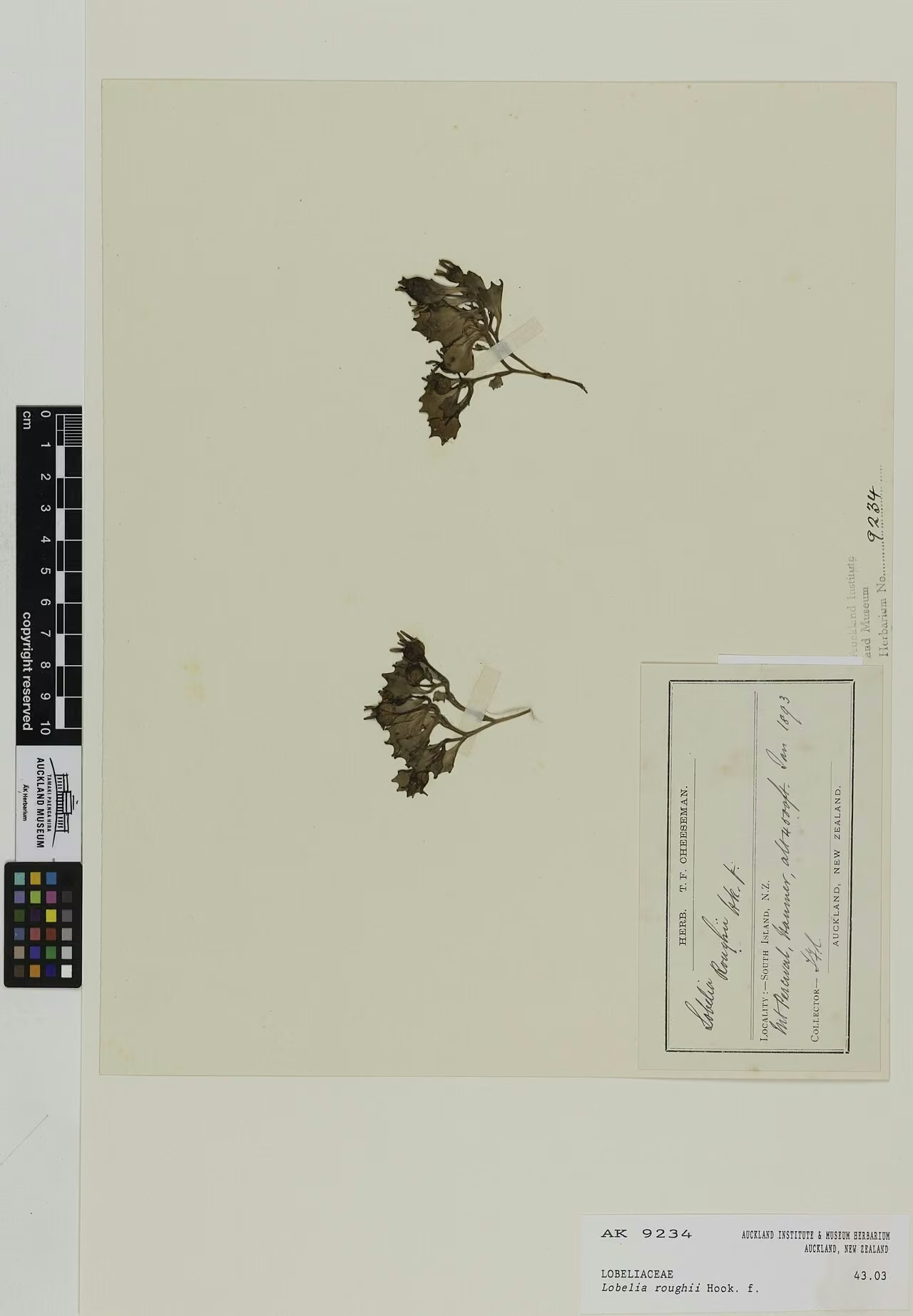
Lobelia roughii
Last updated:
Scree lobelia (Lobelia roughii) is a hairless perennial herb endemic to the South Island mountains of Marlborough, Canterbury and Otago. It is one of a select group of plants that live in loose rock screes: an extensive root system anchors it deep in the debris while tough, branching stems push up to about 10 cm above the surface. These carry thick, leathery, deeply toothed leaves and, in summer, white flowers about 10 mm long on stout stalks. Broken stems ooze a pale yellow, acrid sap. It grows in higher montane to subalpine stable and mobile screes, is Not Threatened, and is notoriously difficult to cultivate. Explore more native flowering plants in our native plant guide.
Plant Description
Lobelia roughii is a glabrous herb with pale yellow, acrid sap and an extensive root system. Its stems are tough, much branched and ascend through the rock debris, emerging up to about 100 mm above the surface. The leaves are thick and leathery, carried on flattened stalks, with blades 10 to 25 mm long and 10 to 20 mm wide. They are obovate to broadly oblong or elliptic and coarsely, deeply toothed.
The white flowers are about 10 mm long, with the corolla divided nearly to the base, and are borne on stout stalks up to 50 mm long. The fruit is a broadly ovoid to almost round capsule. NZPCN gives flowering as December to April, while the Flora of New Zealand gives October to February.
Its restriction to scree and rock debris, its much-branched stems, its thick, deeply cut leaves and its white flowers on stout stalks separate it from other New Zealand lobelias, most of which are low creeping herbs of damp ground.
Quick Facts
| Scientific Name | Lobelia roughii |
|---|---|
| Height | Up to 0.1 m above the scree surface |
| Spread | Patches of branching stems through rock debris |
| Water Needs | Moderate; deep, cool moisture beneath stones |
| Light | Full sun, open mountain screes |
| Frost Tolerance | High; montane to subalpine |
| Salt Tolerance | No information available; an inland mountain plant |
| Growth Rate | Slow |
| Lifespan | Perennial |
Climate Best Suited to
Suits the cold, dry to moderately wet mountain climate of the eastern South Island ranges, with hard frosts, snow and intense summer sun. It is unsuited to warm, humid lowland conditions.
Regional Suitability
| City | Climate Suitability |
|---|---|
| Auckland | Low |
| Wellington | Low |
| Christchurch | Low |
| Dunedin | Low |
Plant Habitat
Scree lobelia is endemic to the South Island, where it is recorded from Marlborough, Canterbury and Otago. The type specimen was collected by Rough from the 'Nelson Mts'.
It grows at higher montane to subalpine elevations in rock debris and in both stable and mobile screes. These habitats are hot and dry at the surface in summer but hold cool moisture beneath the stones, where its roots and lower stems are buried.
Growing Requirements
Soil Requirements
It roots into loose, coarse rock debris with very little fine soil, relying on moisture held among the stones.
- Deep, coarse scree or rubble
- Very free draining with cool moisture below
- Minimal organic matter
Light Requirements
Screes are open and fully exposed, so the plant receives full sun and wind.
- Full sun
- No overhead shade from shrubs
Water Requirements
The surface of the scree dries quickly, but meltwater and rain held deep among the rocks keep the roots supplied.
- Deep, cool moisture at the roots
- Dry surface around the stems to prevent rot
Planting and Establishing
Scree lobelia is not commercially available and wild plants must not be dug up; the long roots are almost impossible to remove intact anyway. Specialist growers with legitimately sourced plants should use a deep pot or a purpose-built scree bed of coarse gravel at least 30 cm deep.
Plant so the crown sits among the stones with gravel packed around the stems, and expect slow establishment, as NZPCN warns the plant is slow to establish and hard to maintain.
Ecological Role
Lobelia roughii is a scree specialist, one of the plants able to survive in mobile rock debris where few others can establish. Its tough, ascending stems allow it to grow back up through stones that slide over it, and its deep root system taps moisture held beneath the surface.
The insects that pollinate its white flowers and the way its seeds are dispersed are not documented in the sources consulted.
Uses & Significance
Garden Uses
A plant only for dedicated alpine growers with a proper scree bed or alpine house.
- Deep scree beds in cold districts
- Long tom pots in an alpine house
- Botanic garden displays of scree flora
Ecological Value
It is part of the specialised and largely endemic scree flora of the South Island mountains.
- Colonises unstable rock debris
- Endemic to the eastern South Island ranges
- Regionally naturally uncommon in Otago
Landscaping Uses
In an alpine garden, a scree bed of angular grey stones planted with scree lobelia and other scree specialists can recreate a fragment of high country, with the dark, toothed leaves and white flowers poking up between the rocks.
It does not suit conventional borders or rockeries with ordinary soil, where it will rot or fade away.
Seasonal Care Calendar
Spring
New shoots push up through the scree as snow melts.
- Check pots for winter rot
- Top up gravel around the crown
Summer
White flowers open on stout stalks; records span October to April across the two main sources.
- Water deeply but infrequently in pots
- Keep the surface gravel dry
Autumn
Capsules ripen as flowering finishes.
- Collect seed from cultivated plants
- Reduce watering
Winter
Above-ground growth is minimal under frost and snow.
- Protect pots from prolonged wet
- Leave wild plants undisturbed
When to Prune and How Much
Do not prune. Remove only dead stems or spent flower stalks, cutting cleanly to avoid tearing the tough stems.
Take care when handling, as broken stems release a pale yellow, acrid sap.
How to Grow Scree Lobelia
NZPCN describes scree lobelia as difficult to grow: it can be kept in a pot or rock garden but is slow to establish and hard to maintain, and it is not commercially available. No detailed propagation protocol for this species was found in the sources consulted, so the methods below follow general practice for alpine scree plants. The key is very deep, very free-draining containers, because the plant naturally builds an extensive root system deep in rock debris, and a cool, bright, airy growing environment.
From Seed
Seed from cultivated plants offers the best chance of raising young plants without harming wild populations. Many alpine seeds benefit from a period of winter cold before germinating, though this has not been confirmed for this species.
- Collect ripe capsules from cultivated plants in late summer or autumn
- Sow on a gritty mix of mostly fine gravel and a little sieved compost
- Cover with a thin layer of grit and leave outdoors over winter
- Move seedlings early into deep pots to protect their developing roots
From Cuttings
Short stem cuttings of non-flowering shoots may root in pure grit, but success rates for this species are not recorded.
- Take 4 to 6 cm shoot tips from a cultivated plant in spring
- Allow the cut ends to dry briefly, as the sap is acrid and copious
- Insert into clean, moist pumice or coarse sand
- Keep cool and lightly shaded until rooted, then pot into a deep container
Pests & Diseases
No specific pests or diseases are recorded. In cultivation, rot from wet, warm conditions around the crown is the most likely cause of loss.
In the wild, the main risk is physical disturbance of screes; the plant itself is adapted to natural scree movement.
Cultural Significance
No Māori name or traditional use is recorded for Lobelia roughii in the sources consulted.
Joseph Dalton Hooker described the species in 1864 from a specimen collected by Rough in the 'Nelson Mts', and named it after the collector. The genus name honours the sixteenth century botanist Matthias de l'Obel (Lobel).
Bonus Tip
When walking on screes in Canterbury or Marlborough, look for clumps of thick, deeply toothed leaves poking through the stones; that is likely scree lobelia. Avoid running or sliding down screes where it grows, and resist the urge to pull it up to see the roots, which can run a long way down.
Related Plants
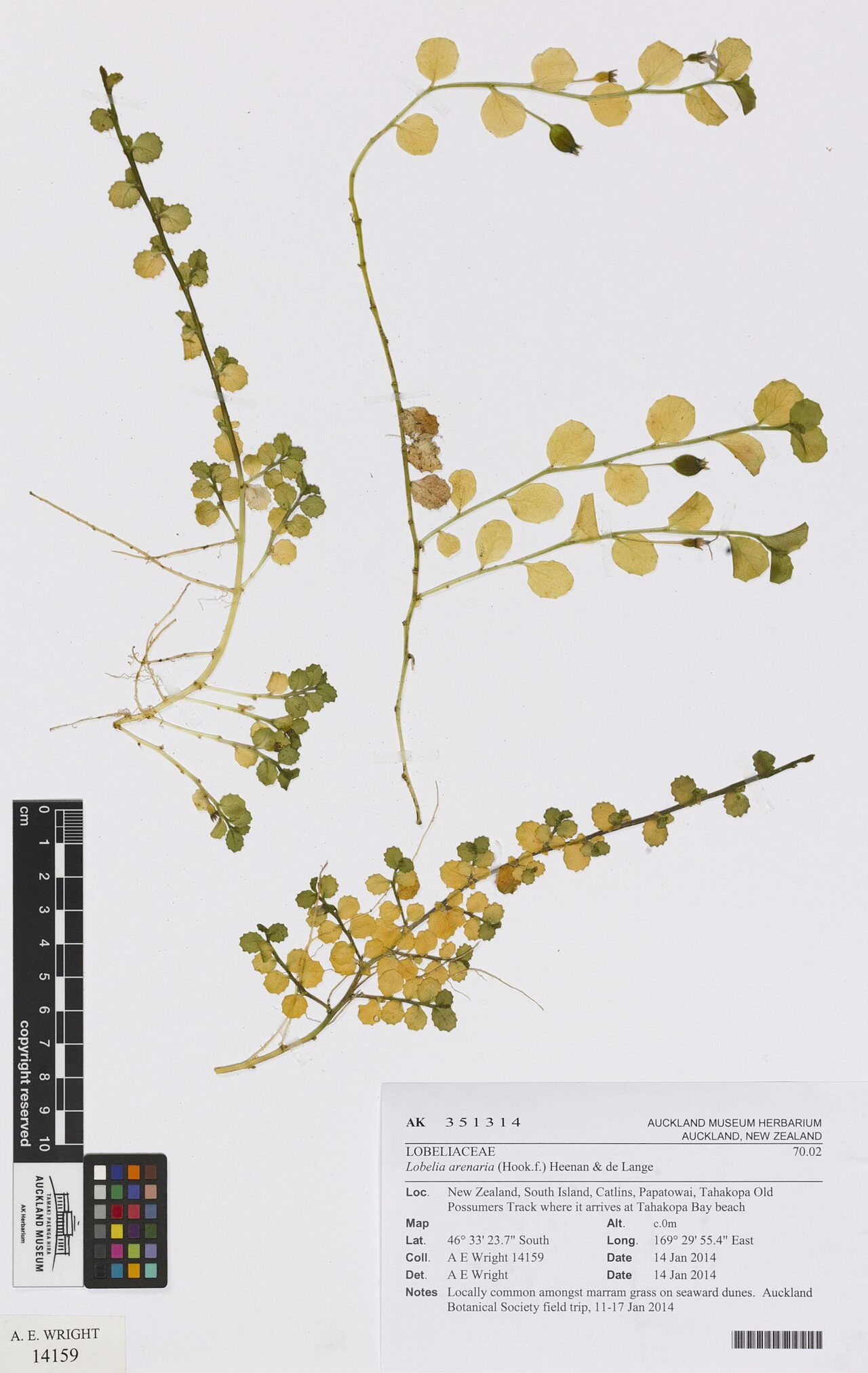
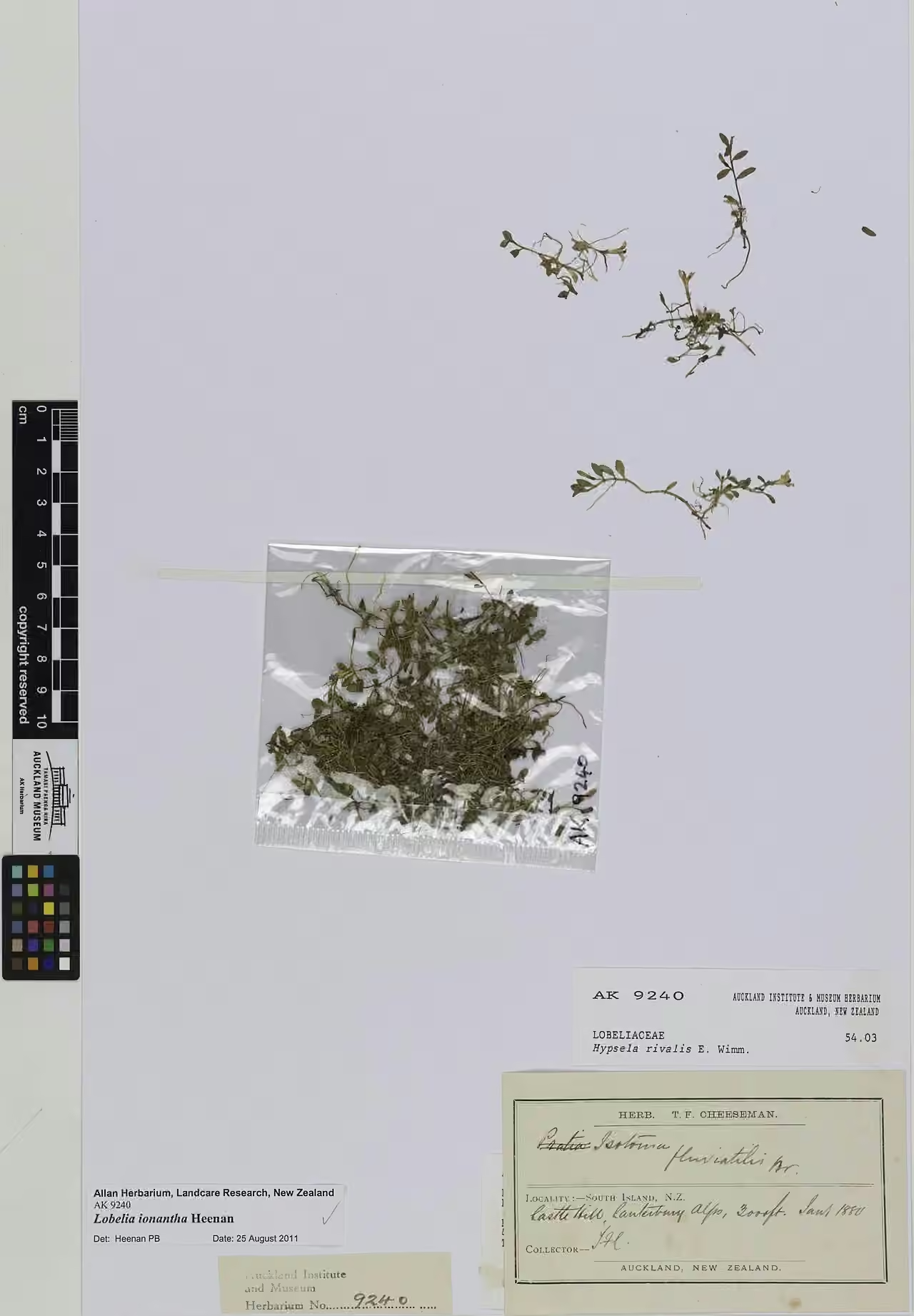
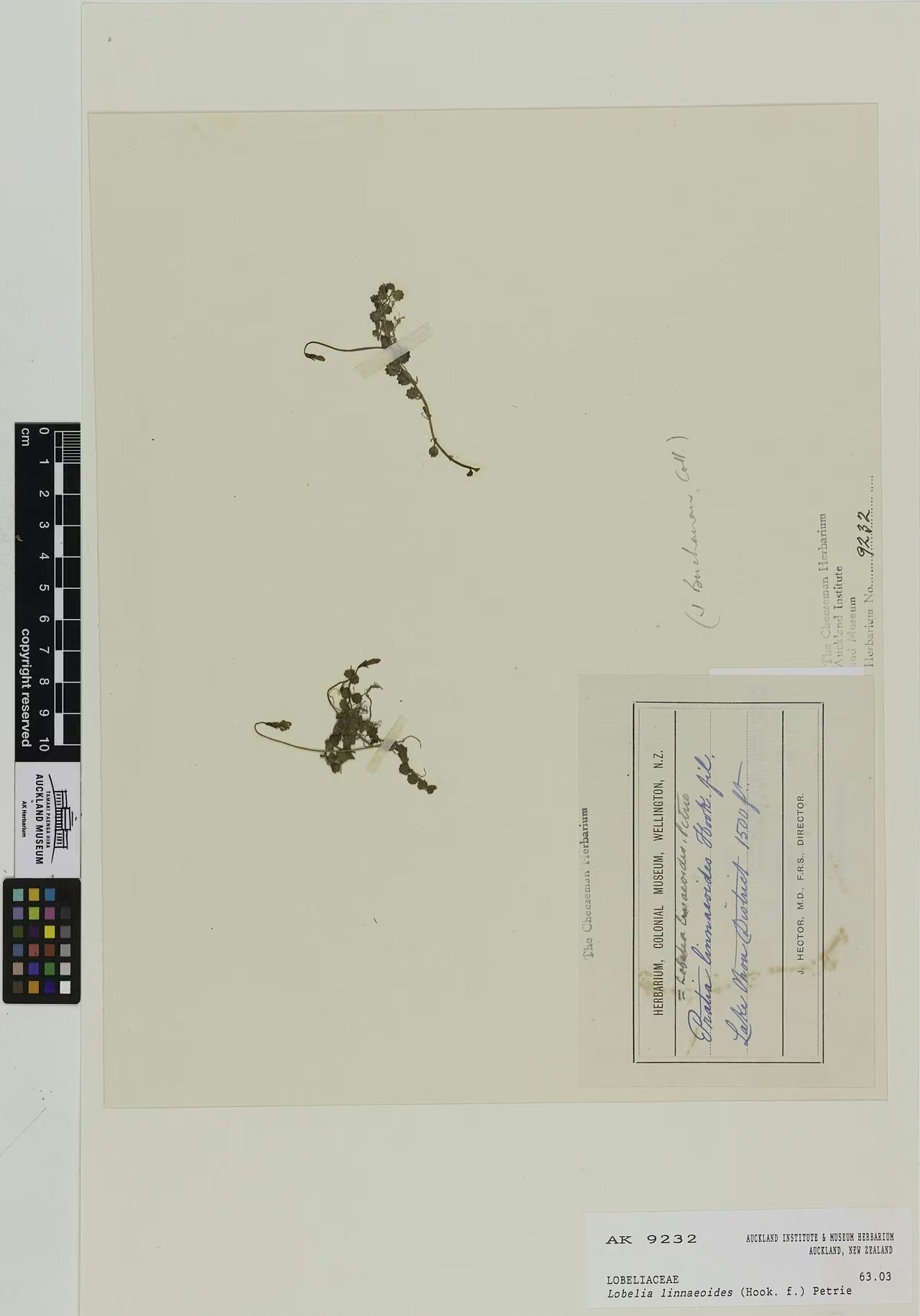
Explore other native plants that share similar characteristics or habitats with Scree Lobelia (Lobelia roughii), offering further insights into New Zealand's diverse flora. These related species provide context and opportunities for complementary planting in your garden.

Plant Conservation
Scree lobelia is ranked Not Threatened in the 2023 New Zealand Threat Classification and has held that ranking since 2004. In Otago, the 2025 regional assessment lists it as Regionally At Risk - Regionally Naturally Uncommon.
Much of its scree habitat lies in remote mountain areas and conservation land. Avoiding damage to scree plant communities from recreation and vehicles, and never collecting wild plants, helps keep it secure.
Frequently Asked Questions
What is scree lobelia?
Scree lobelia is Lobelia roughii, an endemic South Island herb that grows through rock debris and screes in the mountains of Marlborough, Canterbury and Otago.
How does scree lobelia survive on moving scree?
It has an extensive root system and tough stems that ascend through the rock debris, so only the leafy tips, up to about 100 mm, sit above the surface of the shifting stones.
Can you grow Lobelia roughii in a garden?
NZPCN describes it as difficult: it can be grown in a pot or rock garden but is slow to establish, hard to maintain, and not commercially available.
Is scree lobelia poisonous?
The plant contains a pale yellow, acrid sap that seeps from broken stems. Its toxicity has not been documented in the sources consulted, so it is best not handled carelessly or eaten.
Sources and Further Reading
The botanical, growing, and conservation details for Scree Lobelia (Lobelia roughii) on this page draw on the New Zealand plant references below. Consult them for full technical records and the latest distribution data.