Staghorn Clubmoss
Palhinhaea cernua
Last updated:
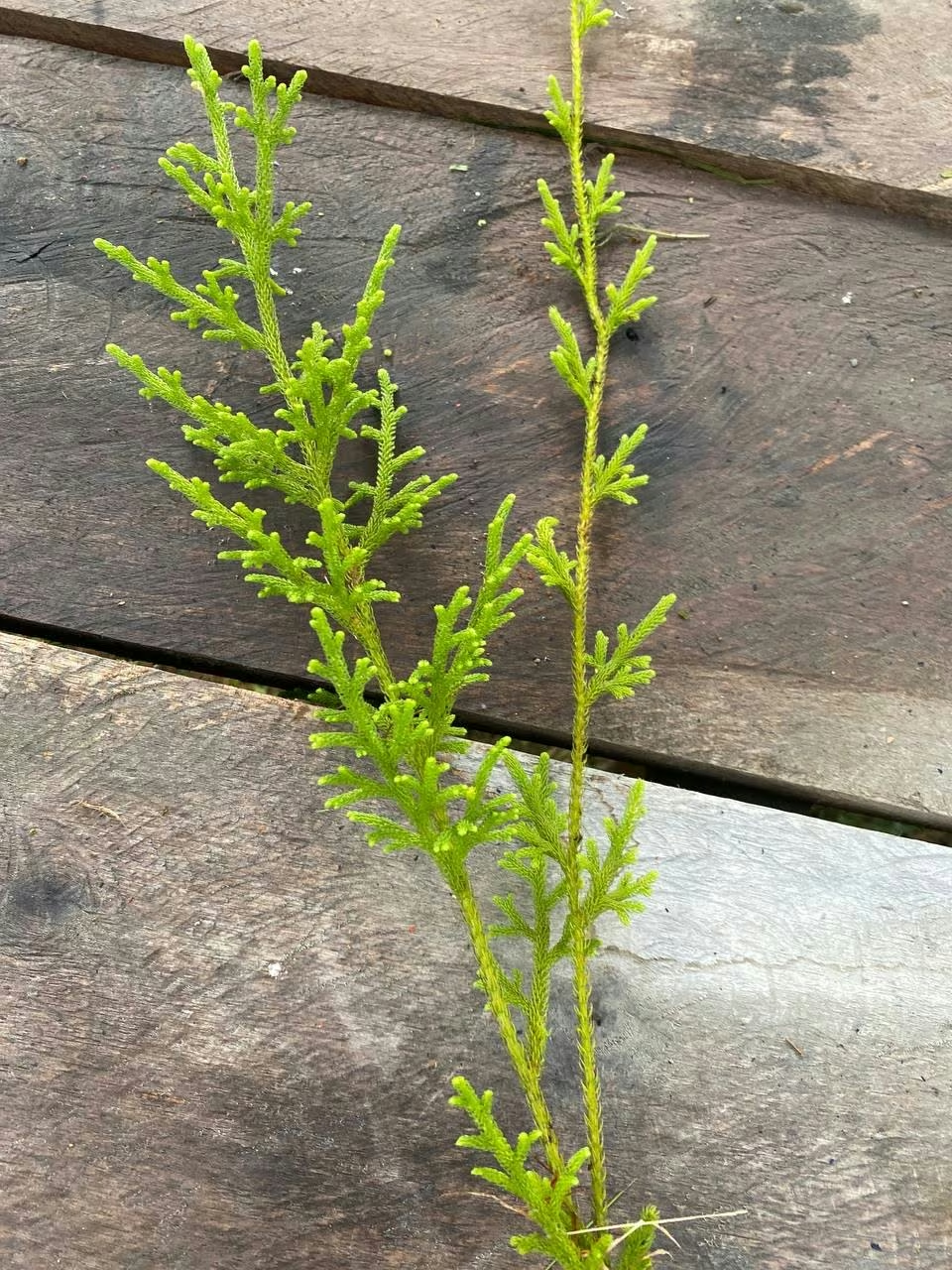
Staghorn clubmoss (Palhinhaea cernua, formerly Lycopodiella cernua) is the largest New Zealand clubmoss, a scrambling lycophyte whose main stems loop across the ground for up to several metres, rooting where they touch down. Between rooting points rise erect, much-branched, tree-like aerial stems usually 0.3 to 1 m tall with drooping tips and small yellow cones. It is common in the North Island from Te Paki to Lake Taupō, especially on clay banks, gumland and around hot springs and fumaroles, and reaches the West Coast of the South Island. It is native rather than endemic, being widespread through the tropics and subtropics. Explore more native ferns in our native plant guide.
Plant Description
Palhinhaea cernua is a terrestrial, occasionally epiphytic, scrambling clubmoss. Its main stem creeps or loops over the ground, rooting at points of contact, and NZPCN records it reaching up to 8 m long. Aerial stems arise between rooting points, usually one per loop, and are 0.3 to 1 m tall, occasionally 2 m. They are erect, dendroid (tree-like) and much branched, sometimes climbing through scrub, with the branch tips curled downwards.
The sterile leaves are spirally arranged and crowded, 1.5 to 5 mm long (NZ Flora gives up to 8 mm), linear to narrowly triangular, curved towards the shoot tips, and green to yellow-green or grey-green. Their density makes the stems look soft and furry. The strobili (cones) are numerous, solitary and stalkless at the branch tips, 5 to 15 mm long, yellow to yellow-brown, and hang downwards.
NZPCN notes it is easily distinguished from all other New Zealand clubmosses by its extensive looping main stems, furry aerial stems and drooping strobili. Lateristachys lateralis and Lateristachys diffusa are much smaller and carry chocolate-brown cones on the sides of their shoots.
Quick Facts
| Scientific Name | Palhinhaea cernua |
|---|---|
| Height | 0.3-1 m, occasionally to 2 m |
| Spread | Looping main stems up to several metres long |
| Water Needs | Moderate; drought tolerant once established |
| Light | Full sun to light shade |
| Frost Tolerance | Low; frost sensitive |
| Salt Tolerance | Some tolerance; recorded on consolidated coastal sand dunes |
| Growth Rate | Moderate once established |
| Lifespan | Perennial |
Climate Best Suited to
Suits warm-temperate to subtropical climates without hard frost. In New Zealand it is most at home in the frost-free north and in warm geothermal ground.
Regional Suitability
| City | Climate Suitability |
|---|---|
| Auckland | High |
| Wellington | Low |
| Christchurch | Low |
| Dunedin | Low |
Plant Habitat
Staghorn clubmoss is indigenous to New Zealand and widespread in the tropics and subtropics of Asia, Africa, the Americas, Australia and the Pacific. In New Zealand it occurs on the Kermadec and Three Kings Islands and in the North Island, where it is common from Te Paki south to Lake Taupō and then scarce. In the South Island it extends from northwest Nelson down the West Coast to about Okarito. NZPCN also lists the Chatham Islands. It ranges from sea level to about 1050 m.
It grows from coastal to montane sites on clay banks, gumland, consolidated sand dunes and kauri clay podzols, on road cuttings, track banks and cliffs, and in thermal scrub around active fumaroles, steam vents, hot springs and craters, often under mānuka, kānuka and Dracophyllum.
Growing Requirements
Soil Requirements
It favours poor, often acidic soils such as clays, gumland podzols and consolidated sands.
- Low-fertility clay or sandy soils
- Bare or disturbed banks with little competition
- Warm geothermal soils
Light Requirements
It grows in open ground and scrub margins, often colonising sunny roadside banks.
- Full sun to light shade under mānuka or kānuka
- Struggles under dense canopy
Water Requirements
NZPCN notes it is remarkably tolerant of dry conditions once established, despite often growing on damp clay banks.
- Keep moist while establishing
- Tolerates dry spells once settled
Planting and Establishing
NZPCN describes it as easily grown from rooted pieces, but it resents root disturbance, so transplants need careful handling. Plant into poor, free-draining clay or sandy soil on a bank in sun or light shade, in a frost-free site.
Keep it moist until new growth starts, then water only in long dry spells. Avoid fertiliser and rich soils, which favour weeds over this pioneer of poor ground.
Ecological Role
Like all clubmosses it reproduces by spores released from its cones, and it spreads vegetatively by its long looping stems that root where they touch the ground. It is a pioneer of bare, disturbed and impoverished ground, colonising clay banks and road cuttings and helping to bind them.
In geothermal areas it forms part of a distinctive thermal scrub community with mānuka, kānuka and Dracophyllum. No specific animal associations are recorded for this species in the sources consulted.
Uses & Significance
Garden Uses
It can be grown as a curiosity on a frost-free clay bank or in a warm native garden.
- Stabilising and greening poor clay banks
- Feature plant in a gumland or thermal garden theme
- Educational planting showing an ancient plant lineage
Ecological Value
It is a characteristic pioneer of northern gumlands and geothermal scrub.
- Colonises and binds bare clay banks
- Distinctive member of thermal plant communities
Landscaping Uses
On a sunny bank, the soft, tree-like aerial stems and nodding yellow cones make an unusual textural feature. Let it scramble between low mānuka or among rocks where its looping stems can root freely.
Because it dislikes root disturbance, place it where it can be left alone and not dug around during routine garden work.
Seasonal Care Calendar
Spring
New shoots extend from the looping stems as soils warm.
- Good time to plant rooted pieces
- Keep new plants moist
Summer
Growth is strongest in warm weather, and established plants cope with dry spells.
- Water only in long droughts
- Cones are conspicuous at branch tips
Autumn
Spores are shed from the yellow cones; NZPCN does not give a fixed sporing season.
- Cones turn yellow-brown as they mature
- Weed around the base
Winter
Growth slows, and plants outside warm districts can be damaged by frost.
- Protect from frost in cooler areas
- Avoid disturbing the roots
When to Prune and How Much
No pruning is needed. The plant's character comes from its looping stems and branched aerial shoots.
Remove any dead or frost-damaged aerial stems at their base, and avoid cutting the main creeping stems, which feed the rest of the plant.
How to Grow Staghorn Clubmoss
Staghorn clubmoss is most reliably propagated from rooted pieces of its looping main stems, which NZPCN describes as easy, provided the roots are disturbed as little as possible. Growing clubmosses from spores is much harder and rarely attempted outside research settings, because the spores develop into a tiny separate sexual generation (the gametophyte) that is slow and difficult to raise. Use only material from cultivated plants or from sites where removal is permitted, such as approved roadside works, and never dig plants from reserves or geothermal areas.
By Division of Rooted Stems
Where the looping main stem touches the ground it forms roots. Each rooted section with an aerial stem can become a new plant if moved carefully with its soil intact.
- Choose a rooting point with a healthy aerial stem above it
- Cut the main stem a little either side of the rooting point
- Lift with a generous ball of soil to avoid disturbing the roots
- Plant into poor, free-draining clay or sandy mix
- Keep moist and in light shade until new growth appears
From Spores
Spores are produced in the yellow cones at the branch tips. Raising them requires sterile conditions and patience, and success is not guaranteed.
- Collect mature cones and dry them on paper to release spores
- Sow on sterilised, low-nutrient peat or clay mix
- Cover with glass or plastic to keep humidity high
- Keep warm and in indirect light, watching for tiny green growth
- Grow on for a long period before young plants become visible
Pests & Diseases
No significant pests or diseases are recorded for this species. Frost damage and root disturbance during transplanting are the main causes of failure.
In the wild, it can be overgrown by weeds on roadside banks and is affected where thermal or gumland habitats are developed.
Cultural Significance
No Māori name or traditional use of this clubmoss was found in the sources consulted.
The epithet cernua means drooping, referring to the nodding cones and curled branch tips. It was formerly known in New Zealand as Lycopodium cernuum, and William Colenso described New Zealand material as Lycopodium polycephalum, now treated as a synonym. Its common names elsewhere include staghorn clubmoss and nodding clubmoss.
Bonus Tip
When transplanting staghorn clubmoss, move it in a single block of soil and plant it at exactly the same depth. NZPCN notes that it resents root disturbance, so a clean lift with intact soil makes the difference between success and failure, while protection from frost matters once it is planted.
Related Plants
Explore other native plants that share similar characteristics or habitats with Staghorn Clubmoss (Palhinhaea cernua), offering further insights into New Zealand's diverse flora. These related species provide context and opportunities for complementary planting in your garden.
Plant Conservation
Palhinhaea cernua is ranked Not Threatened (2023), with the qualifier SO (Secure Overseas), reflecting its wide distribution in the tropics and subtropics. In the Wellington region it is ranked Regionally Threatened - Regionally Critical (2025), since it is at the southern edge of its range there.
Its habitats include geothermal areas and gumlands, both of which have been reduced by development and weed invasion. Protecting thermal scrub and northern gumland remnants helps secure it.
Frequently Asked Questions
How do you identify staghorn clubmoss?
Look for looping main stems that root at intervals, upright tree-like aerial stems arising between the rooting points, soft furry-looking foliage with branch tips curling downwards, and small yellow cones that hang at the tips.
Where does Palhinhaea cernua grow in New Zealand?
It is common in the North Island from Te Paki south to about Lake Taupō, scarcer further south, and reaches northwest Nelson and the West Coast down to about Okarito. It also grows on the Kermadec Islands.
Why is it common around thermal areas?
Staghorn clubmoss is frost sensitive and likes warm, open ground. Geothermal areas around Rotorua and Taupō provide warm soils near steam vents and hot springs, where it is often abundant under mānuka and kānuka.
Is Palhinhaea cernua the same plant as Palhinhaea cernua?
Yes. Lycopodiella cernua and the older Lycopodium cernuum are synonyms; NZPCN now uses Palhinhaea cernua as the accepted name for this clubmoss.
Sources and Further Reading
The botanical, growing, and conservation details for Staghorn Clubmoss (Palhinhaea cernua) on this page draw on the New Zealand plant references below. Consult them for full technical records and the latest distribution data.