Woodrush
Luzula ulophylla
Last updated:
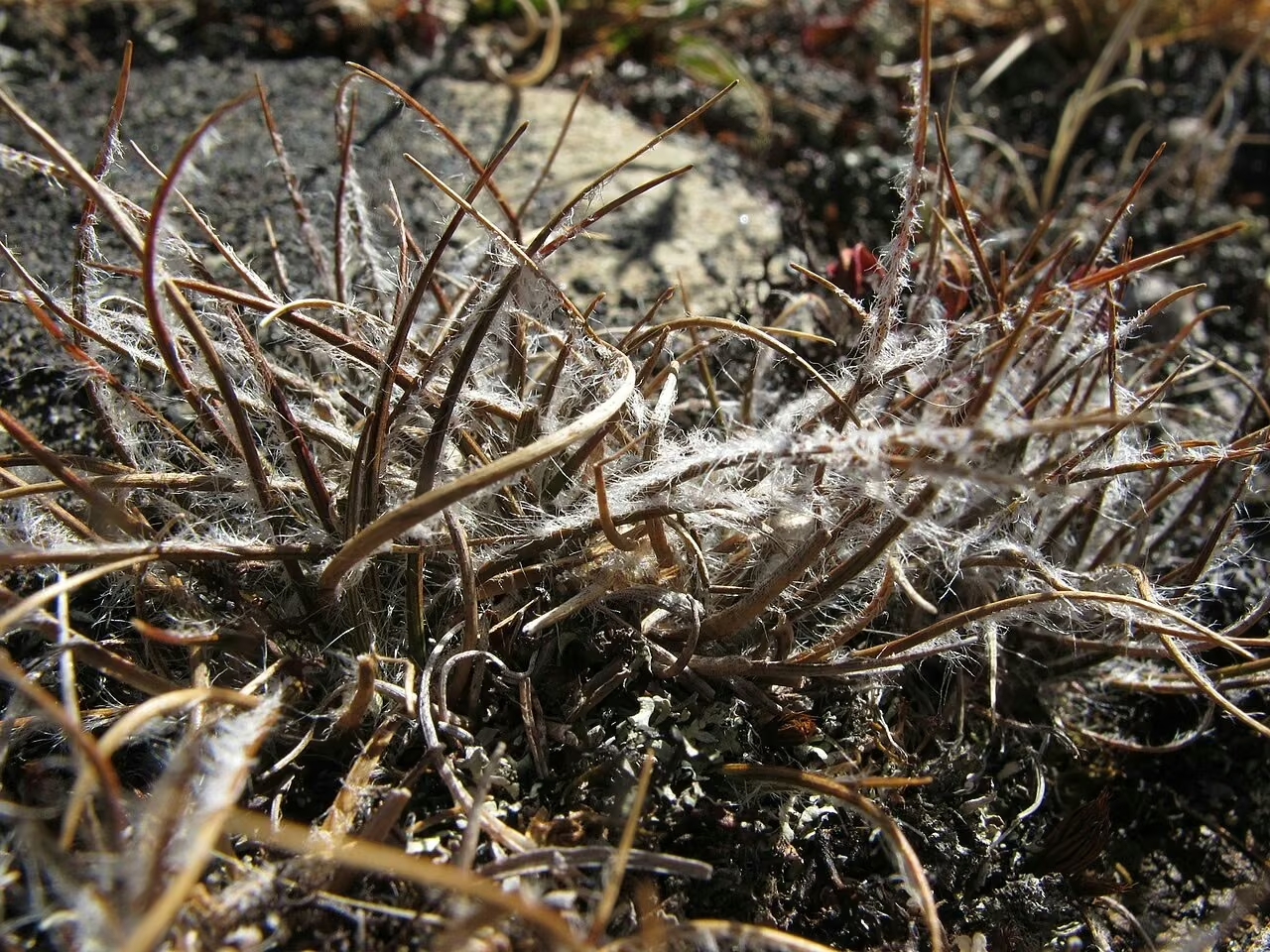
Luzula ulophylla is a woolly-leaved woodrush endemic to the South Island of New Zealand. It forms cushion-like patches usually 9 to 20 cm high, and its leaves are covered on the margins and back with tangled white hairs that give the plant a silvery, woolly look. The flowers are held in a spike-like inflorescence. It grows on dry or bare ground from the Clarence River and Reefton southwards, in tussock grassland and subalpine country. It was ranked Not Threatened until 2012 but has been assessed as At Risk - Declining since 2017, and Otago now lists it as Regionally Vulnerable. Explore more native grasses and flaxes in our native plant guide.
Plant Description
Luzula ulophylla forms woolly-leaved, cushion-like patches usually 9 to 20 cm high, ranging from 5 to 25 cm. The leaves are covered on their margins and backs with tangled white hairs, and their tips are acute. From a distance the patches look silvery grey rather than green.
The inflorescence is spike-like, with clustered small brown and white flowers. There are usually 3 stamens, sometimes 4 to 6. The plant was first described as a variety of Luzula racemosa, and its chromosome count (2n = 44, 48) is much higher than that of the small alpine cushion woodrushes.
The dense coat of tangled white hairs on the leaves is the best identification feature. Other New Zealand woodrushes may have hairy leaf margins, but few are as woolly overall, and the small alpine cushion species such as Luzula pumila and Luzula colensoi are much shorter.
Quick Facts
| Scientific Name | Luzula ulophylla |
|---|---|
| Height | 0.05-0.25 m, usually 0.09-0.2 m |
| Spread | Cushion-like patches; size not recorded |
| Water Needs | Low to moderate; grows on dry ground |
| Light | Full sun, open ground |
| Frost Tolerance | High; inland South Island grassland and subalpine sites |
| Salt Tolerance | No information available; an inland species |
| Growth Rate | Slow |
| Lifespan | Perennial |
Climate Best Suited to
Suits the dry, continental climate of the inland eastern South Island, with cold winters, hot dry summers and drying winds.
Regional Suitability
| City | Climate Suitability |
|---|---|
| Auckland | Low |
| Wellington | Low |
| Christchurch | Medium |
| Dunedin | Medium |
Plant Habitat
Luzula ulophylla is endemic to the South Island, ranging from the Clarence River and Reefton southwards. Historical type material came from the Castle Hill district of inland Canterbury.
It typically grows on dry or bare ground in tussock grassland and subalpine areas, in open places where competition from taller plants is low.
Growing Requirements
Soil Requirements
It grows on dry, thin, often stony or bare soils.
- Free-draining, low-fertility ground
- Open, sparsely vegetated surfaces
- Tolerates summer dryness
Light Requirements
It needs open, sunny ground and does poorly where taller grasses or weeds close over it.
- Full sun
- Low competition from surrounding vegetation
Water Requirements
Its woolly leaves are typical of plants from dry, exposed sites, and it grows naturally on dry ground.
- Water sparingly once established
- Avoid wet, heavy soils
Planting and Establishing
Luzula ulophylla is not widely available, but its dry-ground habitat makes it better suited to a gritty rock garden than the alpine woodrushes. Plant it in full sun in very free-draining, stony soil, ideally in Canterbury or Otago.
Keep weeds and vigorous grasses well away, as it depends on open ground. Use only nursery-propagated or legally sourced plants, given its declining status.
Ecological Role
Like other woodrushes, it is wind-pollinated. Its silvery woolly cover is part of the suite of features shown by many plants of dry inland South Island grasslands.
No specific animal associations are recorded for this species in the sources consulted. It forms part of the low inter-tussock vegetation, a layer that is sensitive to changes in grassland cover.
Uses & Significance
Garden Uses
It could be grown as a silvery accent in a dry rock garden or gravel bed in the eastern South Island.
- Gravel and scree gardens
- Conservation plantings within its natural range
Ecological Value
As a declining endemic of inland grasslands, every surviving population has conservation value.
- Part of the inter-tussock flora of eastern South Island grasslands
- Regionally Vulnerable in Otago
Landscaping Uses
In a dry native garden, its woolly grey-white patches contrast well with green cushions and the bronze of small tussocks. Place it among stones where its texture can be seen.
It needs space and open ground, so it suits a carefully maintained rock garden rather than mixed borders where it would be overrun.
Seasonal Care Calendar
Spring
New leaves emerge, and their white hairs give fresh growth a frosted appearance.
- Weed around plants while growth is soft
- Check drainage after winter rains
Summer
Spike-like flower heads appear above the woolly leaves.
- Plants tolerate dry spells
- Good time to photograph for identification
Autumn
Capsules ripen and seed is shed close to the parent patch.
- Collect seed from cultivated plants
- Remove competing grasses
Winter
Growth slows through cold inland winters with frosts and occasional snow.
- No action needed
- Avoid waterlogging in pots
When to Prune and How Much
No pruning is needed. Old dead leaves can be gently removed by hand to keep the patch tidy.
Do not cut back the foliage, as the woolly leaves protect the plant from drying winds and sun.
How to Grow Woodrush
No published propagation method specific to Luzula ulophylla was found in the sources consulted. The methods below follow the general practice used for perennial woodrushes and are offered as a reasonable starting point. Because the species is At Risk - Declining, propagate only from plants already in cultivation or from material collected with permission from landowners and the Department of Conservation. Use a gritty, free-draining mix throughout, keep young plants in full light, and avoid overwatering, which is more likely to kill this dry-ground species than drought. Record the source of every plant so that any future restoration plantings use stock from the same district.
From Seed
Seed is produced in small capsules after summer flowering. Fresh seed sown in autumn and left outside over winter usually gives the most natural germination pattern for South Island grassland plants.
- Collect ripe capsules in late summer or autumn
- Sow on the surface of a gritty seed mix
- Cover with a thin layer of fine grit
- Keep outdoors in a sunny, sheltered spot and just moist
- Pot seedlings individually once they have several leaves
By Division
Established cushion-like patches can be split in spring into rooted pieces, which establish more quickly than seedlings.
- Lift the patch in early spring
- Pull apart into sections each with healthy roots
- Pot into a free-draining mix and water once
- Keep in good light and water sparingly until growing
Pests & Diseases
No pests or diseases are recorded for this species in the sources consulted. In cultivation, rot in wet, heavy soils is the most likely problem.
In the wild, the specific causes of its decline have not been documented in published fact sheets. Inland South Island grasslands where it grows are known to have been altered by land development and invasive weeds such as hawkweeds, which reduce the open ground small plants depend on.
Cultural Significance
No Māori name or traditional use is recorded for Luzula ulophylla in the sources consulted.
It was first described by Franz Buchenau as Luzula racemosa var. ulophylla and later raised to species rank by Leonard Cockayne and Robert Laing. The epithet refers to its curly, woolly leaves.
Bonus Tip
The tangled white leaf hairs that identify this woodrush can be rubbed off by handling, so if you are checking a specimen, look at undamaged leaves on the side of the patch. Recording finds with photos on iNaturalist NZ helps fill the data gaps flagged in its threat assessment.
Related Plants
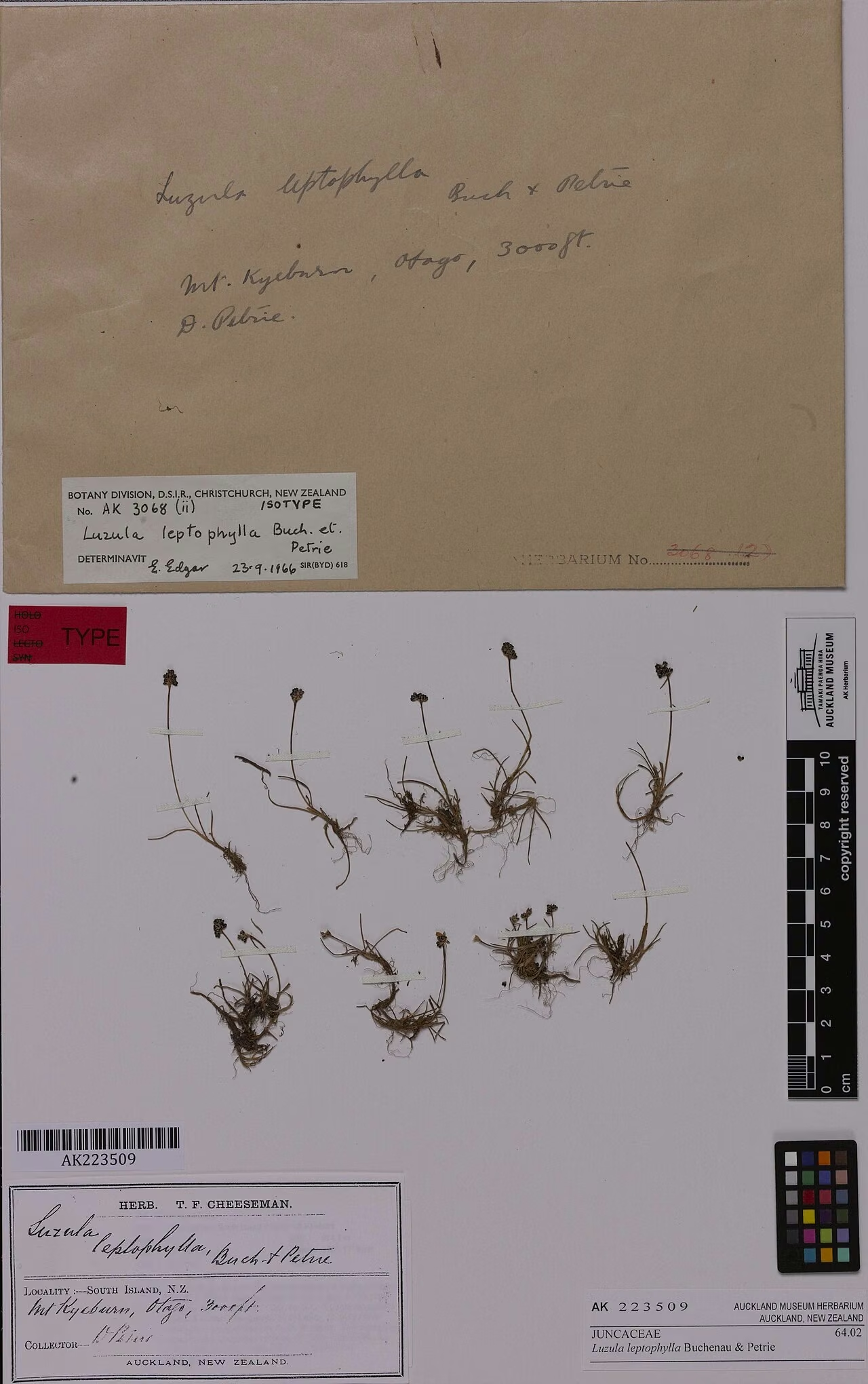
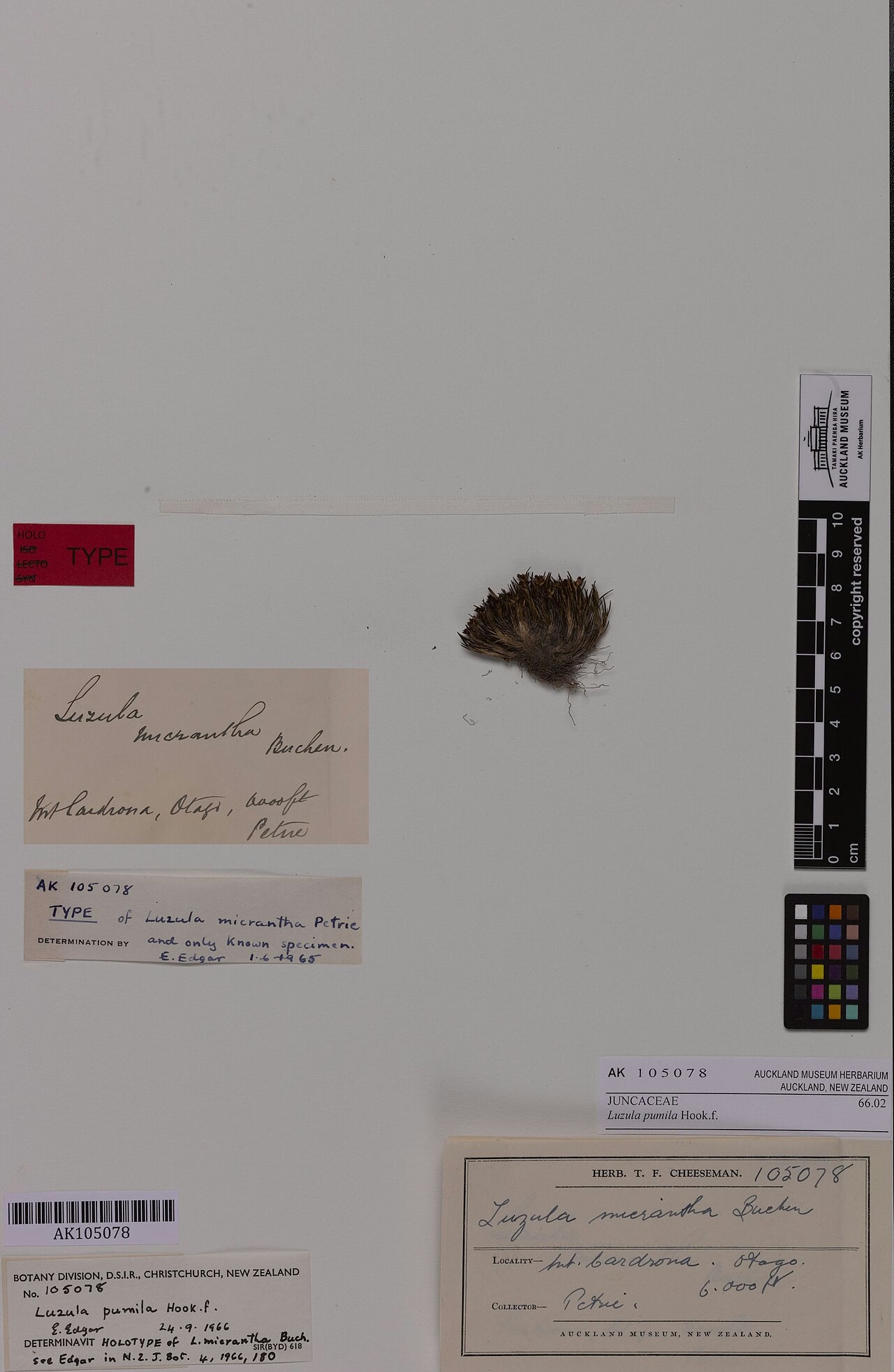
Explore other native plants that share similar characteristics or habitats with Woodrush (Luzula ulophylla), offering further insights into New Zealand's diverse flora. These related species provide context and opportunities for complementary planting in your garden.

Plant Conservation
Luzula ulophylla is ranked At Risk - Declining (2023) with the qualifiers DPS and DPT, indicating that the assessment is data-poor on population size and trend. It was Not Threatened until 2012. Otago lists it as Regionally Threatened - Regionally Vulnerable (2025).
Protecting remnant open tussock grassland and bare-ground habitats, controlling invasive weeds, and better survey data are the steps most likely to help. Growing it from legally sourced material also provides a safety net.
Frequently Asked Questions
How can you recognise Luzula ulophylla?
Look for a cushion-like patch 9-20 cm high whose leaves are thickly fringed and backed with tangled white hairs, with acute tips and a spike-like head of brown and white flowers usually with 3 stamens.
Where does Luzula ulophylla grow?
It is found only in the South Island, from the Clarence River and Reefton southwards, on dry or bare ground in tussock grassland and subalpine areas.
Why is Luzula ulophylla classed as declining?
It moved from Not Threatened to At Risk - Declining in 2017. The data-poor qualifiers on its 2023 listing show its population trend is not well measured, and the specific causes are not documented in published fact sheets.
What does ulophylla mean?
Ulophylla comes from Greek words meaning curly or woolly leaf, referring to the tangled white hairs that clothe its leaves.
Sources and Further Reading
The botanical, growing, and conservation details for Woodrush (Luzula ulophylla) on this page draw on the New Zealand plant references below. Consult them for full technical records and the latest distribution data.