Woodrush
Luzula pumila
Last updated:
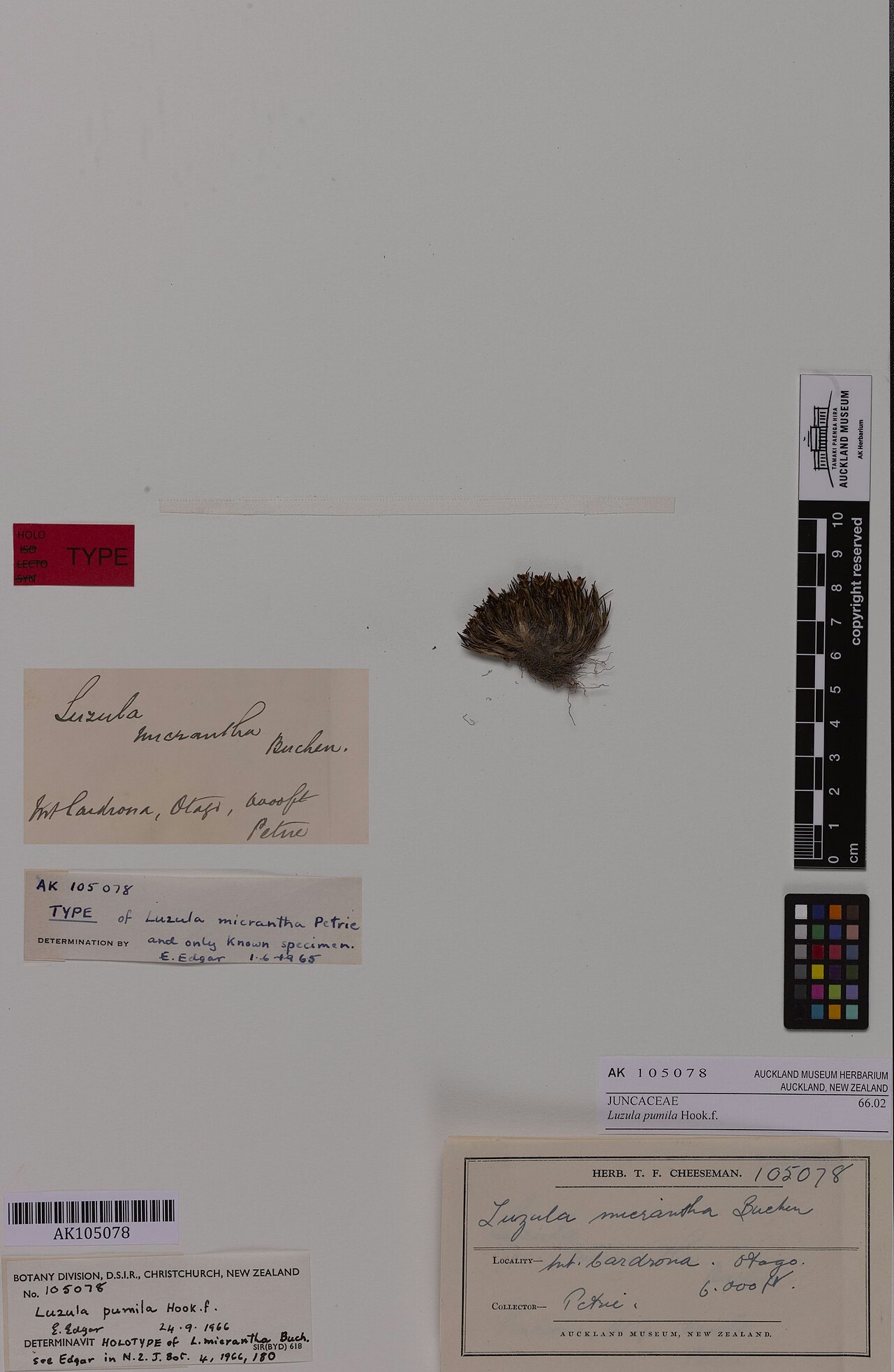
Luzula pumila is a small, compact cushion woodrush endemic to the South Island of New Zealand. Its cushions are 2 to 6 cm high, occasionally 8 cm, with short leaves crowded at the base of the stems that range from almost hairless to quite woolly. Dark brown flower clusters sit on stems that equal or overtop the leaves. It grows in fellfield, alpine herbfield and on shingle and rocky ground in the Southern Alps, usually on the eastern side, between about 1200 and 2000 m. It is ranked Not Threatened. Its name pumila simply means small, and it is one of several tiny alpine woodrushes in New Zealand. Explore more native grasses and flaxes in our native plant guide.
Plant Description
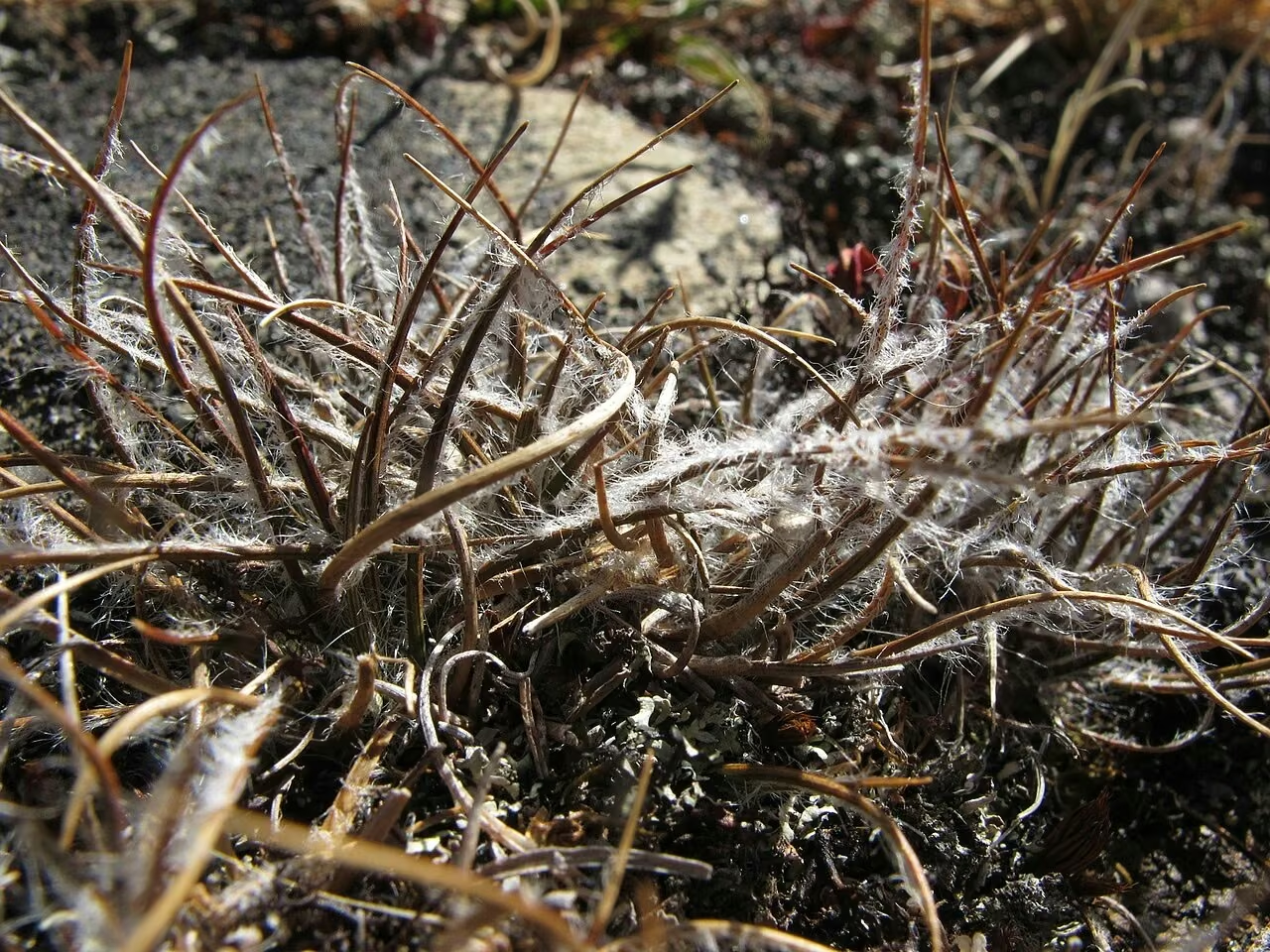
Luzula pumila forms compact cushions 2 to 6 cm high, sometimes up to 8 cm. The leaves are 1 to 4 cm long and 0.7 to 1.5 mm wide, crowded on the lower third of the stem, with blunt tips. Leaf hairiness varies a great deal, from almost glabrous to quite villous, which is partly why several former species names are now included within it.
The flowering stems equal or exceed the leaves when mature. The inflorescence is a single cluster of 4 to 10 flowers, or has up to 3 closely crowded, shortly stalked clusters, carrying from 2 to 12 or occasionally 20 flowers in all. The flowers are 2 to 3 mm long with acute tepals that are usually dark brown, with silver margins or none. There are usually 6 stamens, sometimes 3. The capsule is dark brown to almost black.
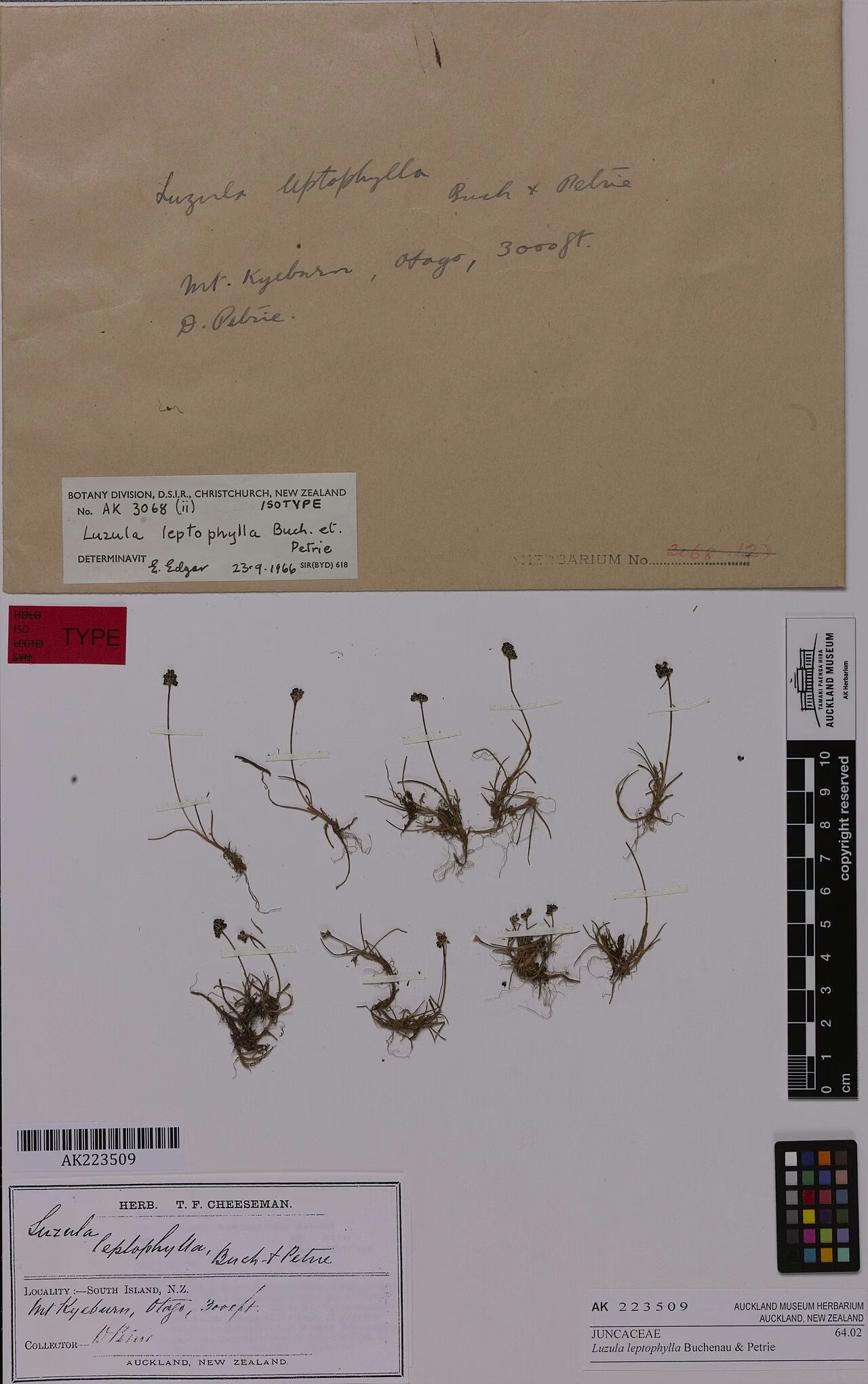
It is distinguished from Luzula colensoi by its exserted flower clusters and darker tepals, and from Luzula leptophylla by its broader leaves and cushion habit. Herbarium specimens show many intermediate forms in leaf hairiness and tepal margins.
Quick Facts
| Scientific Name | Luzula pumila |
|---|---|
| Height | 0.02-0.08 m |
| Spread | Compact cushions; size not recorded |
| Water Needs | Moderate; well-drained alpine ground with regular moisture |
| Light | Full sun |
| Frost Tolerance | High; grows at 1200-2000 m |
| Salt Tolerance | No information available; an inland alpine plant |
| Growth Rate | Slow |
| Lifespan | Perennial |
Climate Best Suited to
Suits the cold, often drier alpine climate east of the Main Divide, with snow cover in winter and short, cool summers.
Regional Suitability
| City | Climate Suitability |
|---|---|
| Auckland | Low |
| Wellington | Low |
| Christchurch | Low |
| Dunedin | Low |
Plant Habitat
Luzula pumila is endemic to New Zealand and confined to the South Island, in the mountains of the Southern Alps from about 1200 to 2000 m, usually on the eastern side. Herbarium specimens come from many ranges in Canterbury and Otago.
It grows in fellfield, alpine herbfield, on shingle slopes and on steep rocky ground within alpine turf, and it has also been collected from wet herbfield. NZPCN classes it as an obligate upland plant, meaning it is almost never a wetland species.
Growing Requirements
Soil Requirements
It roots into stony, gritty alpine soils with little organic matter.
- Free-draining shingle, scree margins and rocky turf
- Low fertility
- Stable ground among rocks suits it better than moving scree
Light Requirements
It is a plant of open alpine ground with full exposure to sun and wind.
- Full sun
- No tolerance of shading by taller plants
Water Requirements
Rain, mist and snowmelt keep its gritty soils moist while drainage stops them staying waterlogged.
- Regular moisture with sharp drainage
- Dislikes warm, humid, stagnant conditions
Planting and Establishing
Luzula pumila is not sold by nurseries and is not a practical garden plant. Lowland summer heat and humidity are very different from its alpine home.
An alpine specialist with legally sourced material could try it in a trough or scree bed of mostly grit, in full sun and cool air, watered regularly in summer. Never collect plants from the wild.
Ecological Role
Luzula pumila is wind-pollinated, like other woodrushes, and drops its seed close to the parent cushion. Its small cushions help hold fine soil on exposed fellfield and shingle.
No specific animal associations are recorded for this species in the sources consulted. It is one component of the diverse cushion and herb community of the eastern Southern Alps.
Uses & Significance
Garden Uses
It has very limited garden use and is best left to alpine specialists.
- Trough or alpine house subject
- Not available commercially
Ecological Value
It is a widespread, characteristic member of the eastern South Island alpine flora.
- Helps stabilise fellfield and shingle soils
- Adds to the diversity of alpine cushion vegetation
Landscaping Uses
This species has no mainstream landscaping role. In natural alpine plant communities it forms small dark-flowered tufts among rocks and other cushions.
Gardeners wanting a small native rush for a rock garden will have more success with lowland species grown by native plant nurseries.
Seasonal Care Calendar
Spring
Growth resumes as the alpine snow melts, often late in spring at higher sites.
- Cushions emerge from snow
- Soils are moist from melt water
Summer
Dark brown flower clusters appear on stems that lift to or above the leaves.
- Easiest time to identify
- Check stamen number and tepal margins with a lens
Autumn
Dark brown to almost black capsules ripen and release seed.
- Seed falls near the parent
- Cushions prepare for winter
Winter
The cushions lie dormant under snow through the alpine winter.
- No growth
- Snow protects from wind and extreme cold
When to Prune and How Much
No pruning is required. Cutting into the cushion would only damage it.
In cultivation, tidy away dead leaves by hand and remove any weeds seeding into the cushion.
How to Grow Woodrush
No published propagation method specific to Luzula pumila was found in the sources consulted, and it is not in commercial cultivation. The approaches below are those generally applied to small alpine woodrushes and should be treated as a starting point. Use only seed or plants already in cultivation or gathered with permission. Alpine plants like this one need cool roots, bright light and good air movement throughout propagation, and growers in warm lowland districts should expect high losses over summer. A cold frame or unheated alpine house with good ventilation gives young plants the best chance, and seedlings should be kept out of hot afternoon sun in their first summer.
From Seed
The capsules ripen in late summer to autumn and turn dark brown to almost black. Seed from alpine plants often benefits from a period of winter cold before it germinates.
- Collect seed as the capsules darken and begin to split
- Sow on the surface of a very gritty, low-fertility mix
- Top with a thin layer of fine grit
- Leave the pot outdoors over winter to experience cold
- Keep evenly moist and move seedlings on when large enough to handle
By Division
An established cultivated cushion can be split into small rooted pieces in early spring. Pieces with plenty of roots establish best.
- Lift the cushion as new growth starts
- Separate a rooted section from the edge
- Pot into gritty mix and water in
- Keep cool and lightly shaded until it re-establishes
Pests & Diseases
No pests or diseases are recorded for Luzula pumila. In cultivation, rot in warm humid weather and overwatering in poorly drained mixes are the main problems.
In the wild it faces few recorded threats, although trampling on popular alpine routes can damage small cushions.
Cultural Significance
No Māori name or traditional use is recorded for Luzula pumila in the sources consulted.
Joseph Hooker described the species, and the epithet pumila is Latin for small. Several later names, including Luzula cheesemanii, Luzula micrantha and Luzula triandra, described by Franz Buchenau, are now regarded as forms of this one variable species.
Bonus Tip
Leaf hairiness in this species varies from almost bare to quite woolly, so do not rely on hairiness alone to identify it. Instead check that the flower clusters are raised to at least the height of the leaves and that the tepals are dark brown, which separates it from Luzula colensoi.
Related Plants
Explore other native plants that share similar characteristics or habitats with Woodrush (Luzula pumila), offering further insights into New Zealand's diverse flora. These related species provide context and opportunities for complementary planting in your garden.

Plant Conservation
Luzula pumila has been ranked Not Threatened in every national assessment from 2004 to 2023, and Otago lists it as Regionally Not Threatened (2025).
Much of its habitat lies within national parks and conservation areas. Staying on tracks in fellfield and herbfield helps protect it and the many other small alpine plants growing alongside it.
Frequently Asked Questions
Where is Luzula pumila found?
It grows in the mountains of the South Island between about 1200 and 2000 m, usually on the eastern side of the Southern Alps, in fellfield, alpine herbfield, shingle slopes and rocky alpine turf.
What does Luzula pumila look like?
It forms compact cushions 2-8 cm high with leaves 1-4 cm long crowded near the base, and one to a few clusters of 2-3 mm dark brown flowers on stems that reach or exceed the leaves.
Is Luzula pumila the same as Luzula colensoi?
No. Both are small alpine cushion woodrushes, but Luzula colensoi keeps its pale brown and white flowers sunken in the cushion, while Luzula pumila raises dark brown flowers to or above leaf height.
Is Luzula pumila threatened?
No. It has been ranked Not Threatened in every national assessment from 2004 to 2023, and Otago also lists it as Regionally Not Threatened.
Sources and Further Reading
The botanical, growing, and conservation details for Woodrush (Luzula pumila) on this page draw on the New Zealand plant references below. Consult them for full technical records and the latest distribution data.