Lobelia
Lobelia perpusilla
Last updated:
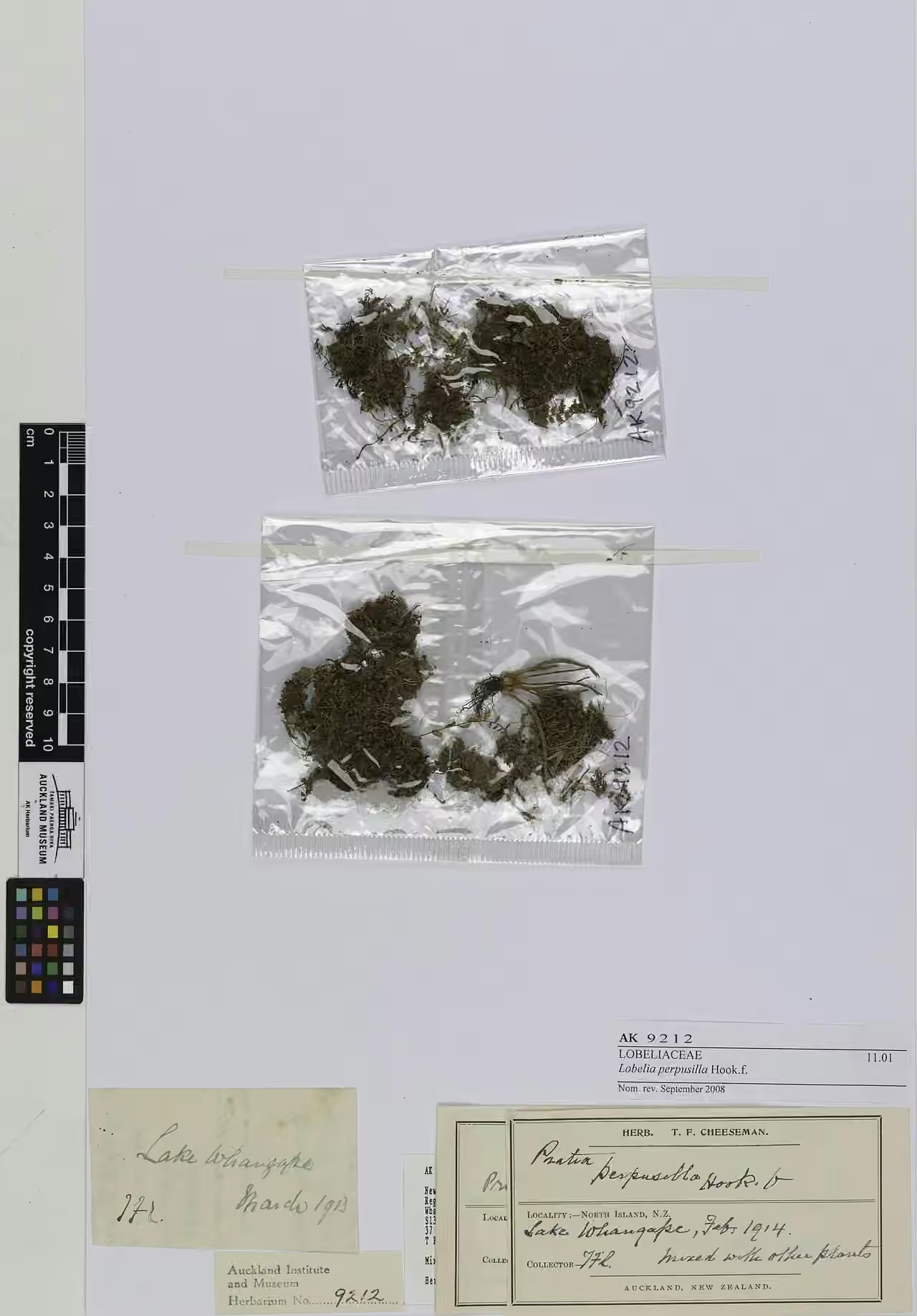
Lobelia perpusilla is one of New Zealand's smallest lobelias, a slender creeping herb whose name means very tiny. Its prostrate stems root at the nodes and carry minute toothed leaves only 1.5 to 4 mm long, forming low, inconspicuous patches. From October to March it produces relatively large white or cream flowers, often with dark veins. Endemic to New Zealand, it grows locally in damp coastal and lowland places, such as muddy ground and hollows in fixed dunes, in the North and South Islands from about the northern Waikato southward. Formerly called Pratia perpusilla, it is Not Threatened but sparse. Explore more native ground covers in our native plant guide.
Plant Description
Lobelia perpusilla is a slender herb, hairless or slightly hairy, with prostrate stems and branches that root at the nodes. The branchlets are very slender, either turning up at the tips or becoming long and sprawling. The leaves are tiny, 1.5 to 4 mm long, oblong to ovate-oblong, usually with deep narrow teeth but occasionally entire.
The flowers are surprisingly large for such a small plant. The corolla is usually 4 to 8 mm long, occasionally up to 11 mm, white, whitish or pale cream, and often dark-veined, with a tube that narrows towards the base. Fruit is a small, roughly globular berry about 3 mm across, green or purplish, holding numerous minute brown seeds. The Flora of New Zealand notes that it fruits only rarely and appears to be functionally dioecious, with male and female function on separate plants.
Its minute, deeply toothed leaves set it apart from the other creeping New Zealand lobelias formerly placed in Pratia, such as panakenake (Lobelia angulata), which have much larger leaves. A botanist, F. Duguid, described distinct North Island and South Island forms in 1976.
Quick Facts
| Scientific Name | Lobelia perpusilla |
|---|---|
| Height | Prostrate, a few centimetres at most |
| Spread | Small creeping patches |
| Water Needs | Moist to wet |
| Light | Full sun to light shade |
| Frost Tolerance | Moderate; coastal and lowland plant reaching Otago |
| Salt Tolerance | No specific information; grows in coastal dune hollows |
| Growth Rate | Moderate |
| Lifespan | Perennial |
Climate Best Suited to
Suits mild to cool, moist coastal and lowland climates from the central North Island to the south of the South Island. It needs ground that stays damp through summer.
Regional Suitability
| City | Climate Suitability |
|---|---|
| Auckland | Medium |
| Wellington | High |
| Christchurch | Medium |
| Dunedin | High |
Plant Habitat
Lobelia perpusilla is endemic to New Zealand and occurs in the North and South Islands from about latitude 38 degrees south, roughly the northern Waikato, southwards. It is local rather than common, which is reflected in its Sparse qualifier.
It is a plant of coastal to lowland damp places, including muddy ground and damp hollows within fixed sand dunes, and has been recorded at wetland margins such as lagoons and lake edges. It is rated a facultative wetland plant, usually growing in wet ground.
Growing Requirements
Soil Requirements
It grows in damp mud, silt and moist sand where taller vegetation is sparse.
- Damp silty, muddy or sandy soil
- Open ground with little competition
- Low to moderate fertility
Light Requirements
As a tiny plant of open wetland margins and dune hollows, it needs good light at ground level.
- Full sun to light shade
- Avoid being overtopped by grasses or rushes
Water Requirements
Moisture is essential; it is usually a wetland plant and quickly suffers in dry soil.
- Keep the soil consistently damp
- Tolerates brief inundation in hollows
Planting and Establishing
Lobelia perpusilla is rarely if ever offered in nurseries. If plants are available from cultivated sources, place them in a damp, open spot such as a pond edge or a moist hollow, or grow them in a shallow pot standing in water.
Because the plant is so small, it is easily lost among other plants; grow it in its own container or in bare, weeded ground.
Ecological Role
This tiny herb is part of the low turf vegetation of damp coastal and lowland places, where it creeps over bare, wet ground in dune hollows and around wetland margins. Flowering runs from October to March.
Because the species appears to be functionally dioecious and is a very shy fruiter, populations may rely heavily on spreading by rooting stems. Its pollinators and any seed dispersers are not documented in the sources consulted.
Uses & Significance
Garden Uses
A curiosity for enthusiasts of miniature natives and wetland plants rather than a general garden plant.
- Shallow pots kept wet
- Bog garden or pond margins kept free of weeds
- Collections of small wetland natives
Ecological Value
It contributes to the diversity of small herbs in coastal dune hollows and lowland wetland turfs, habitats that have been much reduced.
- Endemic species of damp coastal and lowland ground
- Indicator of intact dune hollow and wetland turf communities
- Sparse populations make each site worth protecting
Landscaping Uses
It is too small to make a landscape impact, but in a container wetland display it can carpet the surface between taller rushes or sedges, with its comparatively large white flowers standing out against the tiny leaves.
In a restoration planting of a dune hollow or damp lowland swale within its natural range, it can fill bare wet ground at the lowest level of the vegetation.
Seasonal Care Calendar
Spring
Flowering starts in October as stems extend over damp ground.
- Divide or pot up rooted pieces
- Clear competing weeds
Summer
Flowering continues, with white, dark-veined flowers.
- Keep the soil wet
- Protect from drying winds
Autumn
Flowering ends in March; occasional small berries may form.
- Collect any ripe berries for seed
- Weed around plants
Winter
Growth slows and plants persist as small creeping patches.
- No feeding needed
- Avoid smothering with leaf litter
When to Prune and How Much
No pruning is needed. If the patch becomes straggly, cut away the long sprawling branchlets and pot up any that have rooted.
Remove weeds by hand rather than with tools, as the fine stems are easily damaged.
How to Grow Lobelia
No propagation notes specific to Lobelia perpusilla were found in the sources consulted. Two features of the plant shape the approach: its stems root at every node, which makes division easy, and it is described as a very shy fruiter that appears to be functionally dioecious, so seed is rarely available and a single plant may never set fruit. Division of cultivated plants is therefore the practical method. Do not dig plants from the wild, as populations are sparse and Regionally Vulnerable in Otago.
By Division
Rooted stems can be separated from a cultivated plant at any time during the growing season, most reliably in spring. Even very short pieces with a single rooted node will usually grow away if they are kept constantly moist and out of hot sun.
- Cut small rooted sections from the edge of the patch
- Pot into a damp mix of fine sand and peat or fine bark
- Stand the pot in a saucer of water in bright, indirect light
- Grow on until the stems spread to the pot edge before planting out
From Seed
Berries are rarely produced. If any do form on cultivated plants, the numerous minute seeds can be sown fresh. Keeping several plants together may improve the chance of fruit, since male and female function appear to be on separate plants.
- Collect berries once they soften
- Crush them and spread the pulp and seed over a moist, fine seed mix
- Do not cover; keep the surface constantly damp
- Prick out seedlings carefully once large enough to handle
Pests & Diseases
No pests or diseases are recorded for this species. Slugs and snails could easily destroy a plant this small in cultivation.
In the wild, loss and drainage of damp lowland ground, and overgrowth by taller weeds and grasses, are the likely pressures on its sparse populations.
Cultural Significance
No Māori name or traditional use is recorded for Lobelia perpusilla in the sources consulted.
It was described by Joseph Dalton Hooker as Lobelia perpusilla in 1853, moved by him to Pratia, and returned to Lobelia when the New Zealand Pratia species were merged into that genus. The epithet perpusilla means tiny or very small.
Bonus Tip
When searching for this plant in damp dune hollows or lagoon edges, look for the flowers first. The leaves are so small they blend into the turf, but the white, dark-veined flowers up to 8 mm long stand out clearly in spring and summer.
Related Plants
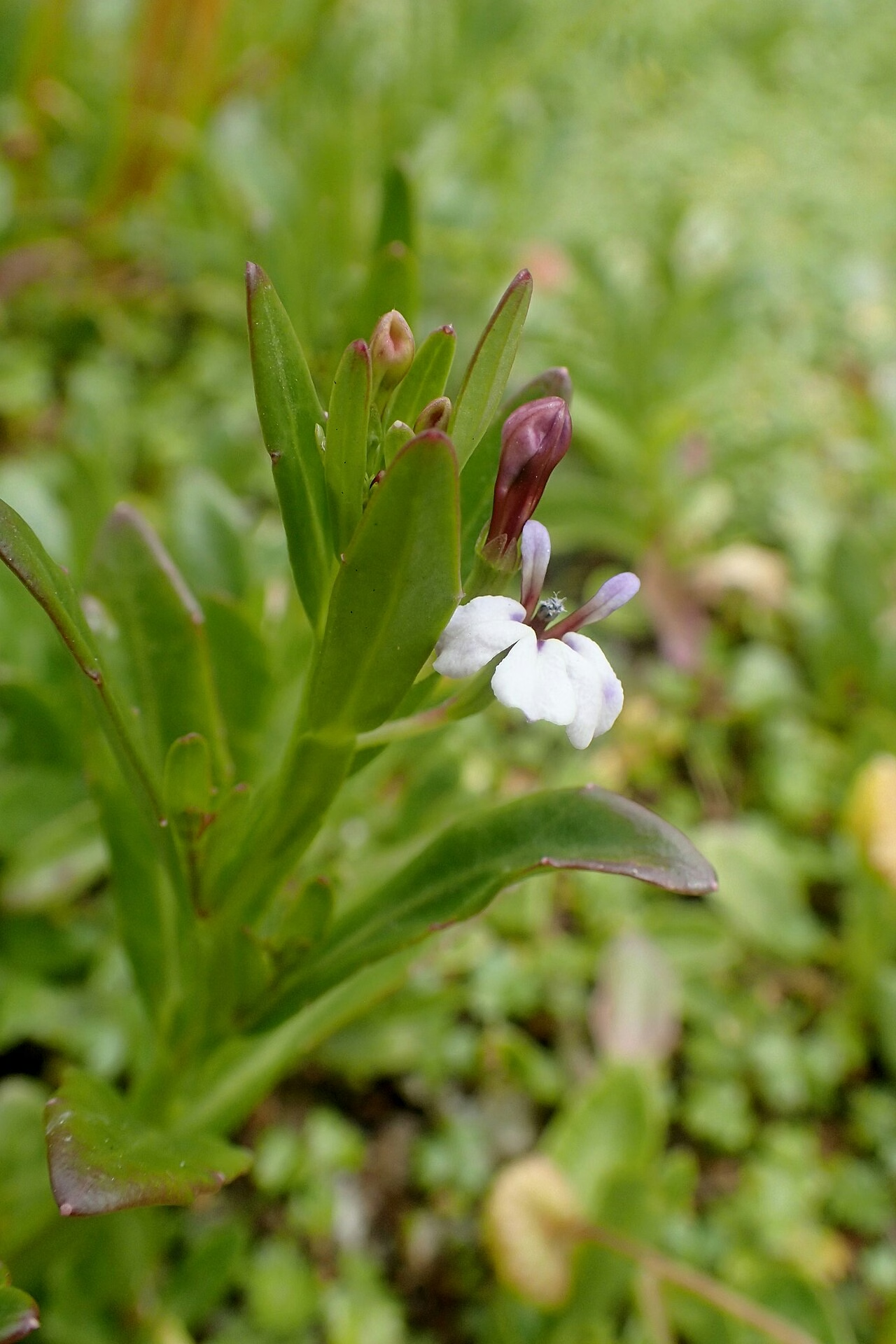
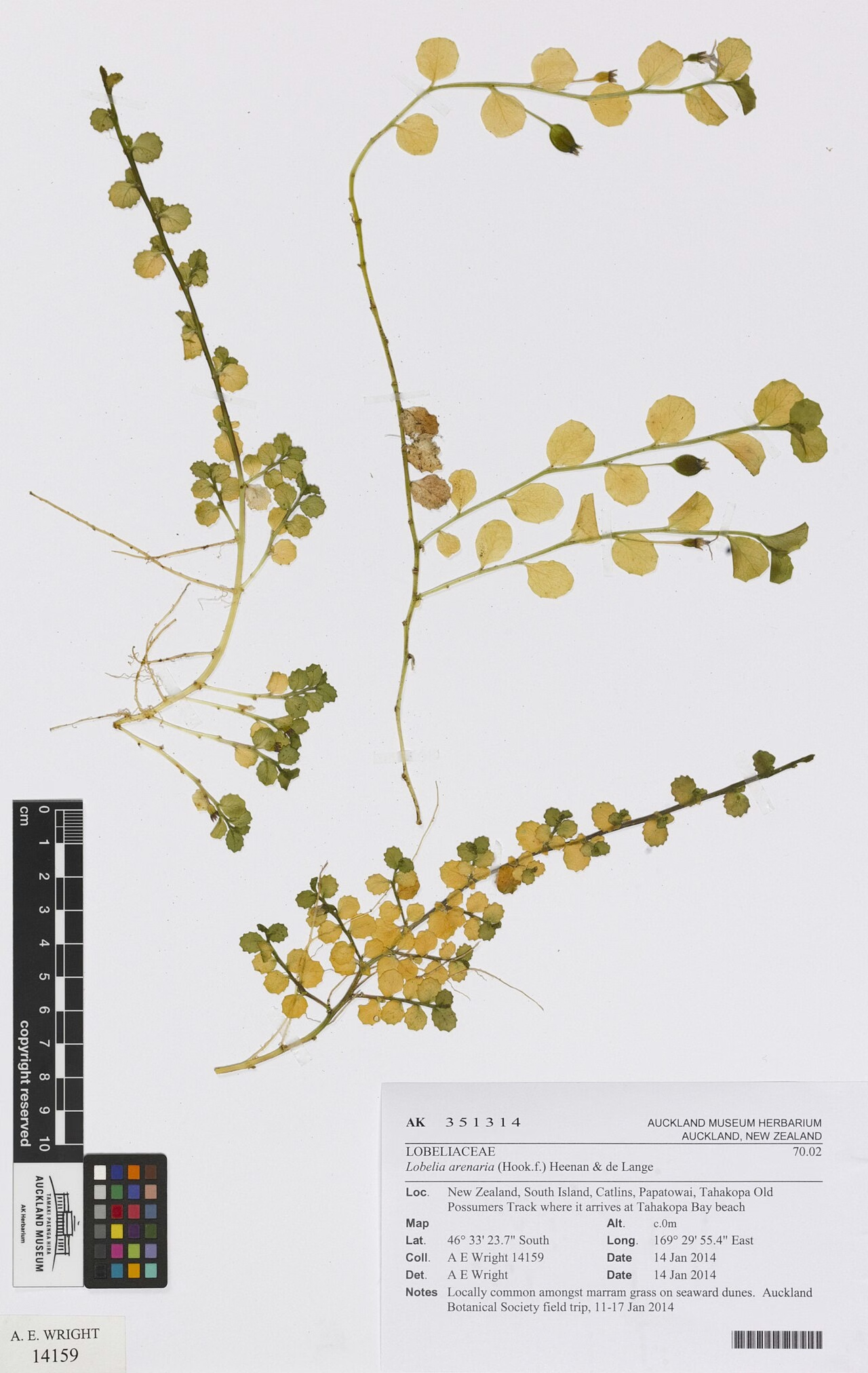
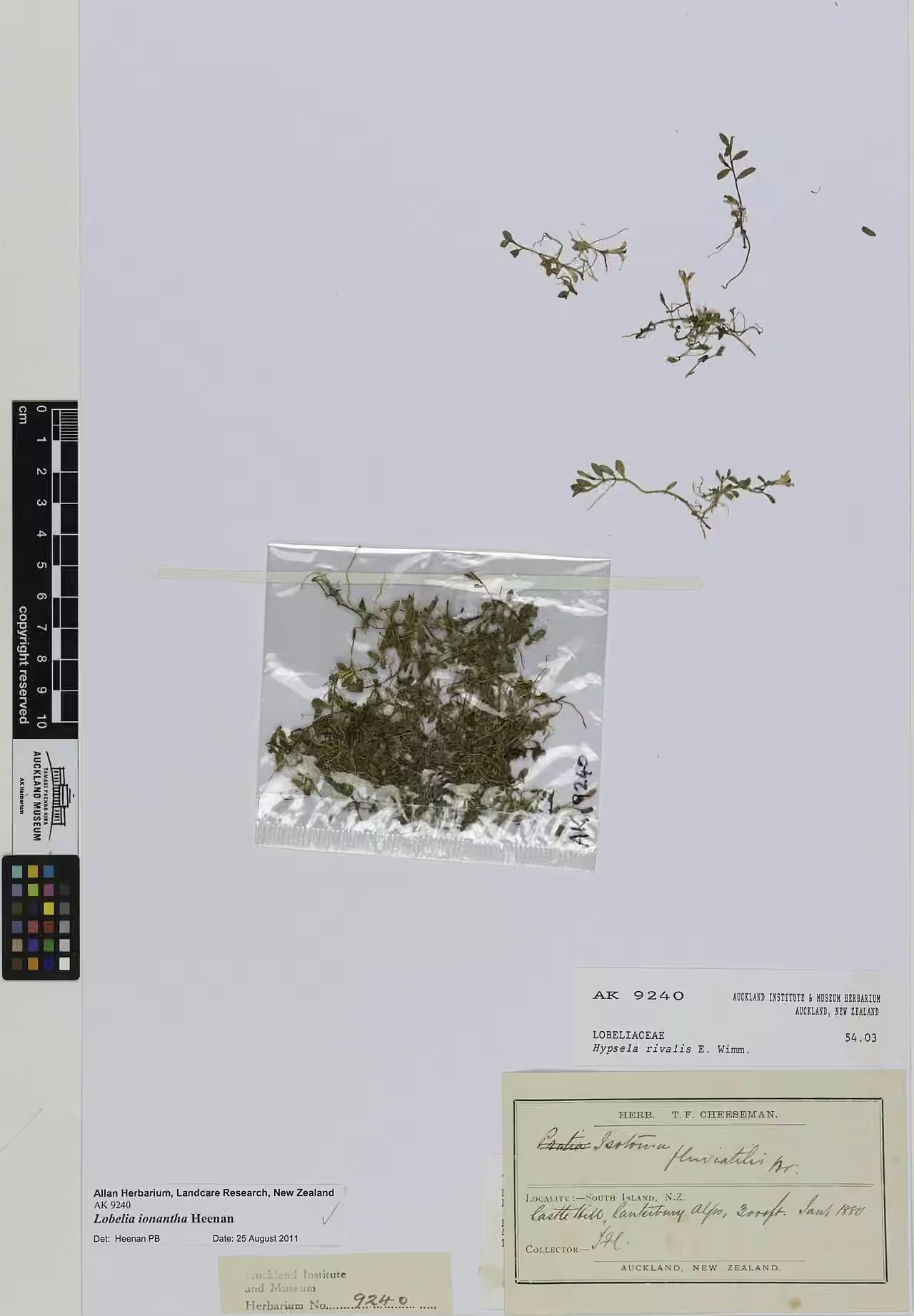
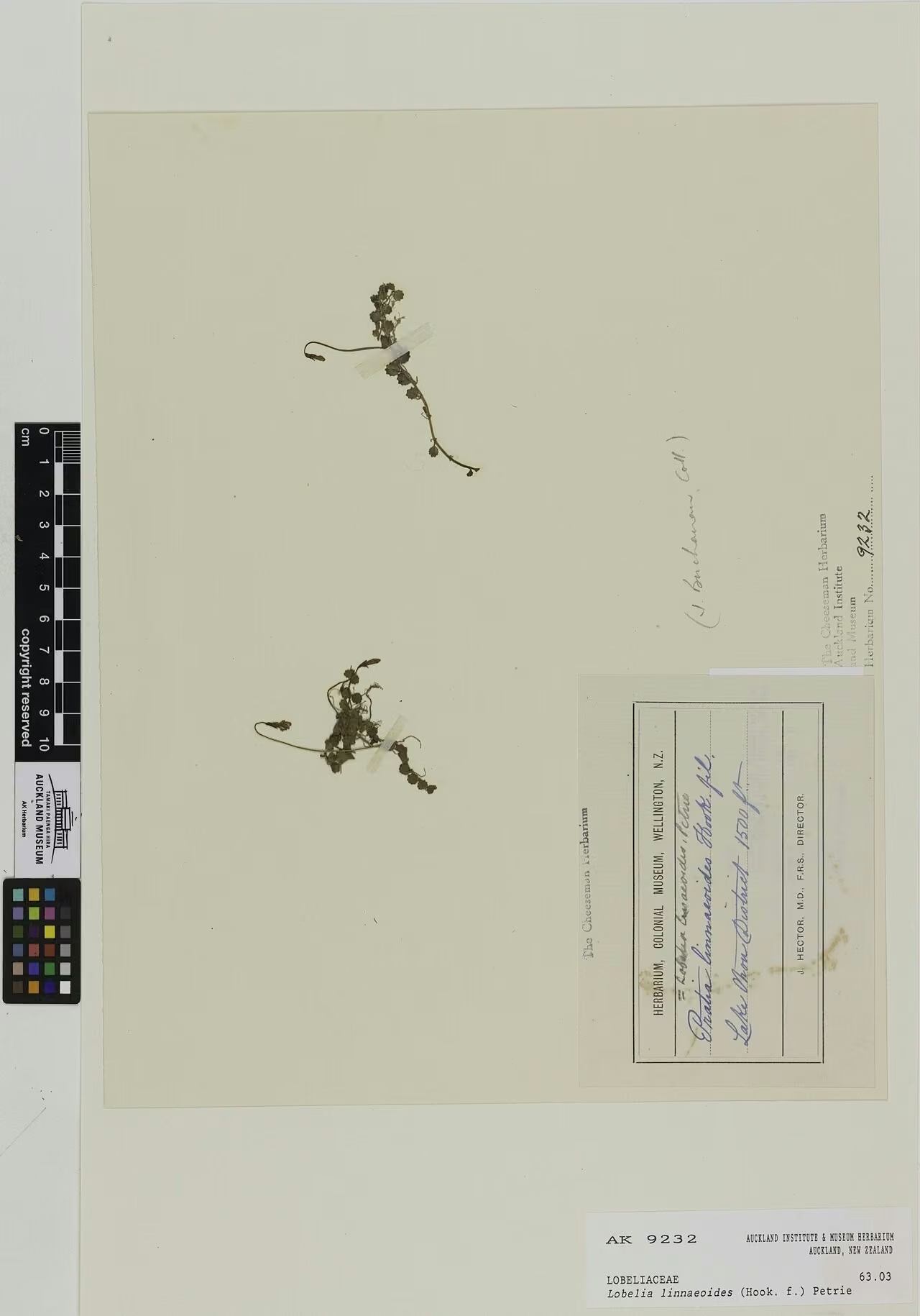
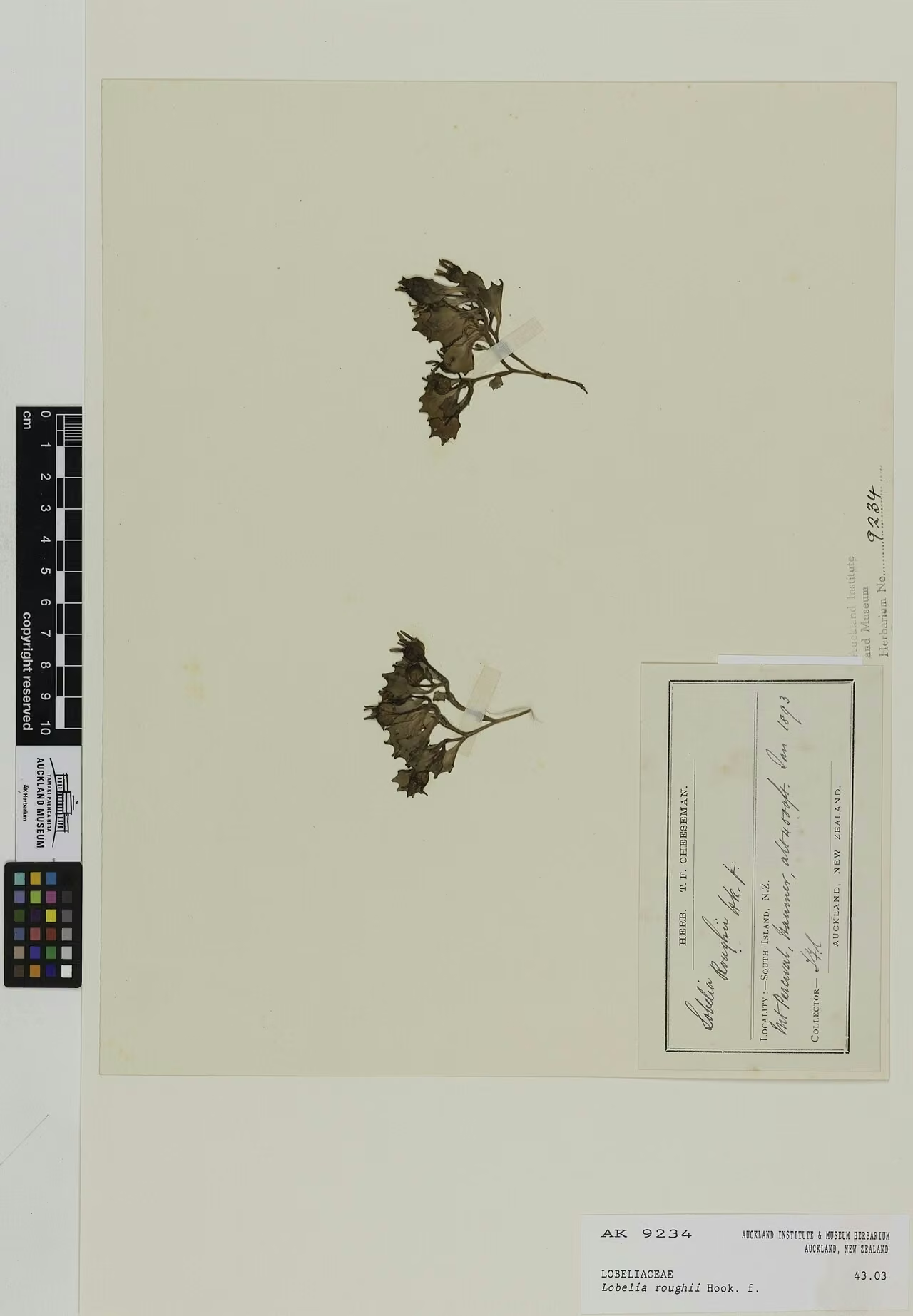
Explore other native plants that share similar characteristics or habitats with Lobelia (Lobelia perpusilla), offering further insights into New Zealand's diverse flora. These related species provide context and opportunities for complementary planting in your garden.

Plant Conservation
Lobelia perpusilla is ranked Not Threatened in the 2023 New Zealand Threat Classification with the qualifier Sparse, having been listed as At Risk - Naturally Uncommon in 2009. Regionally, it is ranked Regionally Vulnerable in Otago (2025) and Data Deficient in Northland.
Coastal dune hollows and lowland wetland margins have been heavily reduced by drainage, development and weeds. Protecting these damp habitats and controlling invasive vegetation are the most important actions for its future.
Frequently Asked Questions
How small is Lobelia perpusilla?
Very small: its leaves are only 1.5 to 4 mm long and its stems lie flat on the ground, although its white flowers, usually 4 to 8 mm long, are large for the size of the plant.
Where does Lobelia perpusilla grow?
It occurs locally in damp coastal and lowland places in the North and South Islands from the northern Waikato south, including muddy ground and damp hollows in fixed sand dunes.
Does Lobelia perpusilla produce berries?
It can, but the Flora of New Zealand describes it as a very shy fruiter. Its fruit is a small green or purplish berry about 3 mm across containing numerous minute brown seeds.
Sources and Further Reading
The botanical, growing, and conservation details for Lobelia (Lobelia perpusilla) on this page draw on the New Zealand plant references below. Consult them for full technical records and the latest distribution data.