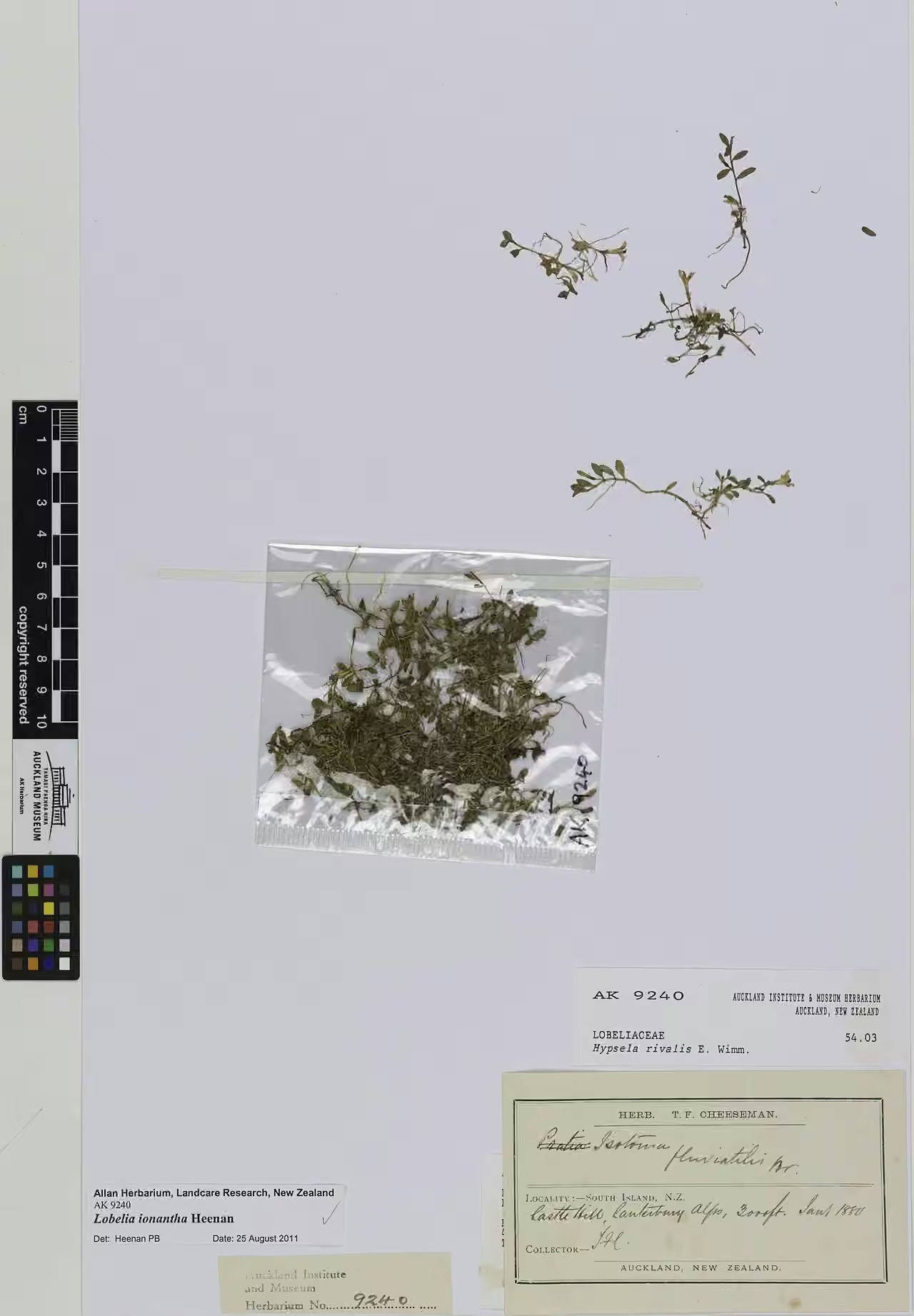
Hypsela
Lobelia ionantha
Last updated:
Lobelia ionantha, still widely known as hypsela from its former name Hypsela rivalis, is a tiny creeping herb endemic to the South Island. Its prostrate stems root at the nodes and carry small rounded leaves only 3 to 9 mm long, forming low carpets on wet ground. From October to April it bears small white to pale blue flowers with purple-violet blotches at the base of the three front petals. It grows from lowland to subalpine elevations around lake, tarn and ephemeral wetland margins, stream banks and seepages in tussock grassland. Wetland loss and weeds have made it At Risk - Declining, but it is easy to grow in a damp pot. Explore more native ground covers in our native plant guide.
Plant Description
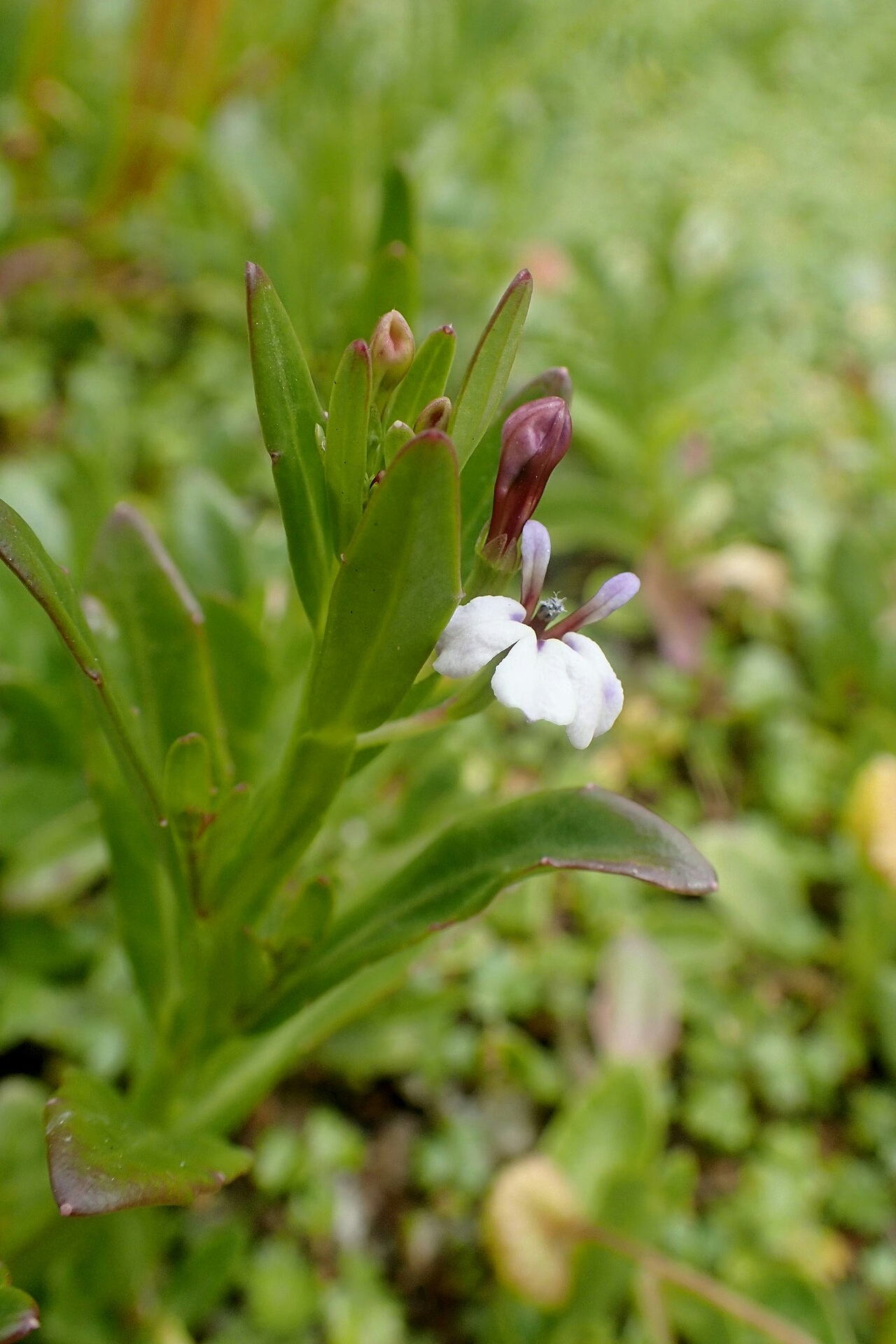
Lobelia ionantha is a creeping, prostrate, usually hairless herb whose stems root at the leaf nodes, building up small carpets over wet ground. The alternate leaves stand upright to spreading, with blades only 3 to 9 mm long and 2 to 7 mm wide, characteristically rounded to almost circular.
The small flowers are borne singly in the leaf axils. The corolla is white to pale blue, and the three front lobes have distinctive purple-violet blotches at their base, which give the plant its epithet ionantha, meaning violet-flowered. Flowering runs from October to April and fruiting from November to June.
Its hairless stems and characteristically round leaves help separate it from related small creeping lobelias. It is diploid, with a chromosome number of 2n = 14.
Quick Facts
| Scientific Name | Lobelia ionantha |
|---|---|
| Height | Prostrate, under 0.05 m |
| Spread | Creeping carpets; spreads by rooting stems |
| Water Needs | High; an obligate wetland plant |
| Light | Full sun to semi-shade |
| Frost Tolerance | High; grows to subalpine elevations |
| Salt Tolerance | No information available; an inland wetland plant |
| Growth Rate | Moderate to fast in damp conditions |
| Lifespan | Perennial |
Climate Best Suited to
Suits the cool to cold inland and eastern climates of the South Island, from lowland to subalpine, where wet ground is maintained by lakes, tarns, streams or seepage. Frost is not a problem, but drought is.
Regional Suitability
| City | Climate Suitability |
|---|---|
| Auckland | Low |
| Wellington | Medium |
| Christchurch | High |
| Dunedin | High |
Plant Habitat
Lobelia ionantha is endemic to the South Island, recorded from Marlborough, Canterbury, Otago and Southland. It grows from lowland to subalpine elevations.
It is a plant of wetland margins: the edges of lakes, tarns and ephemeral wetlands, stream banks, and seepages within tussock grassland. It is rated an obligate wetland plant, almost always found in wet ground.
Growing Requirements
Soil Requirements
In the wild it roots into permanently or seasonally wet mud, silt and turf at the water's edge.
- Wet, silty or peaty soil
- Tolerates seasonal flooding of ephemeral wetlands
- Low competition from taller plants
Light Requirements
It grows in open wetland turfs and tussock grassland seepages, and NZPCN recommends a sunny or semi-shaded site in cultivation.
- Full sun to semi-shade
- Avoid deep shade, which makes growth sparse
Water Requirements
Constant moisture is essential, since this is an obligate wetland species.
- Never let the soil dry out
- Stand pots in a shallow saucer of water in summer
- Ideal at the very edge of a pond
Planting and Establishing
Plant in spring into damp, open ground at the margin of a pond, bog garden or wet hollow, or grow it in a wide, shallow pot of moist mix. Small plugs spread outward as their stems root.
Keep surrounding plants low, as taller grasses and rushes will shade out and smother this tiny groundcover.
Ecological Role
Lobelia ionantha is a characteristic member of the low turf communities that fringe South Island lakes, tarns and ephemeral wetlands, where seasonal changes in water level keep taller vegetation at bay.
The insects that visit and pollinate its flowers are not documented in the sources consulted. The purple-violet blotches at the base of the front petals may act as guides for visiting insects, but this has not been confirmed for this species.
Uses & Significance
Garden Uses
A charming miniature for damp places, with a long flowering season.
- Pot plant kept moist in a saucer
- Pond and bog garden edges
- Damp troughs with other small wetland natives
Ecological Value
As a declining wetland endemic, it is a good indicator of intact lake and tarn turf communities.
- Part of the specialised flora of ephemeral wetlands
- Suitable for wetland restoration within its natural South Island range
- Forms low carpets on bare wet ground
Landscaping Uses
Use hypsela as a living carpet around stepping stones at the edge of a pond or in a bog garden, where its tiny round leaves and violet-marked flowers can be seen close up.
In a container display, plant it alone in a shallow bowl so it can fill the surface and spill slightly over the rim.
Seasonal Care Calendar
Spring
Flowering begins in October as new growth spreads.
- Plant or divide now
- Make sure pots are kept wet
Summer
Plants flower freely and the first fruits form.
- Keep the soil wet in hot weather
- Collect ripe fruit for seed
Autumn
Flowering tapers off in April while fruits continue to ripen until June.
- Weed out invading grasses
- Divide crowded pots
Winter
Growth is slow and plants persist as small evergreen carpets.
- No feeding needed
- Protect from being buried by fallen leaves
When to Prune and How Much
No pruning is required. If the carpet spreads beyond where it is wanted, simply pull up or cut away the outer rooted stems.
Thin, tired patches can be rejuvenated by lifting healthy pieces and replanting them into fresh, damp soil.
How to Grow Hypsela
NZPCN describes Lobelia ionantha as easily grown from fresh seed and rooted pieces, and calls it an excellent pot plant. Its creeping stems root at every leaf node, so a single potted plant can soon supply many divisions. Because it is At Risk - Declining, source starting material from nurseries or existing cultivated plants rather than wild wetlands, and if you are planting for restoration, use stock from the same district so local genetic variation is kept.
From Seed
Fruiting runs from November to June. Sow seed while fresh, as recommended by NZPCN. Seedlings are tiny at first, so keep them free of moss and competing weeds.
- Collect ripe fruits from cultivated plants
- Extract the small seeds and sow on the surface of a fine, moist mix
- Stand the pot in a saucer of water so the surface never dries
- Keep in bright light without hot afternoon sun
- Prick out seedlings into small pots once large enough to handle
By Division
Rooted pieces are the fastest way to multiply the plant and can be taken through most of the growing season. Because every node can root, even a short length of stem with a few leaves will usually establish if it is kept constantly wet, which makes this the simplest way to fill a new pot or bog garden edge.
- Cut small rooted sections of stem from the edge of the carpet
- Press each piece into a pot of damp mix or directly into wet ground
- Keep wet and lightly shaded for a week or two
- Plant out once new leaves appear
Pests & Diseases
No significant pests or diseases are recorded. Slugs and snails may graze young growth in pots.
The real threats are in the wild: changes in land use and invasion by naturalised plants modify the wetland margins where it grows.
Cultural Significance
No Māori name or traditional use is recorded for Lobelia ionantha in the sources consulted.
The plant was described as Hypsela rivalis by Wimmer and later transferred to Isotoma before Peter Heenan renamed it Lobelia ionantha in 2008. The old genus name survives as its common name, hypsela, and the new epithet refers to its violet-marked flowers.
Bonus Tip
Hypsela makes a superb miniature pot plant: grow it in a shallow bowl standing permanently in a saucer of water on a sunny deck. Within a season it will cover the surface, flowering for months, and every rooted piece you trim off can start another pot.
Related Plants
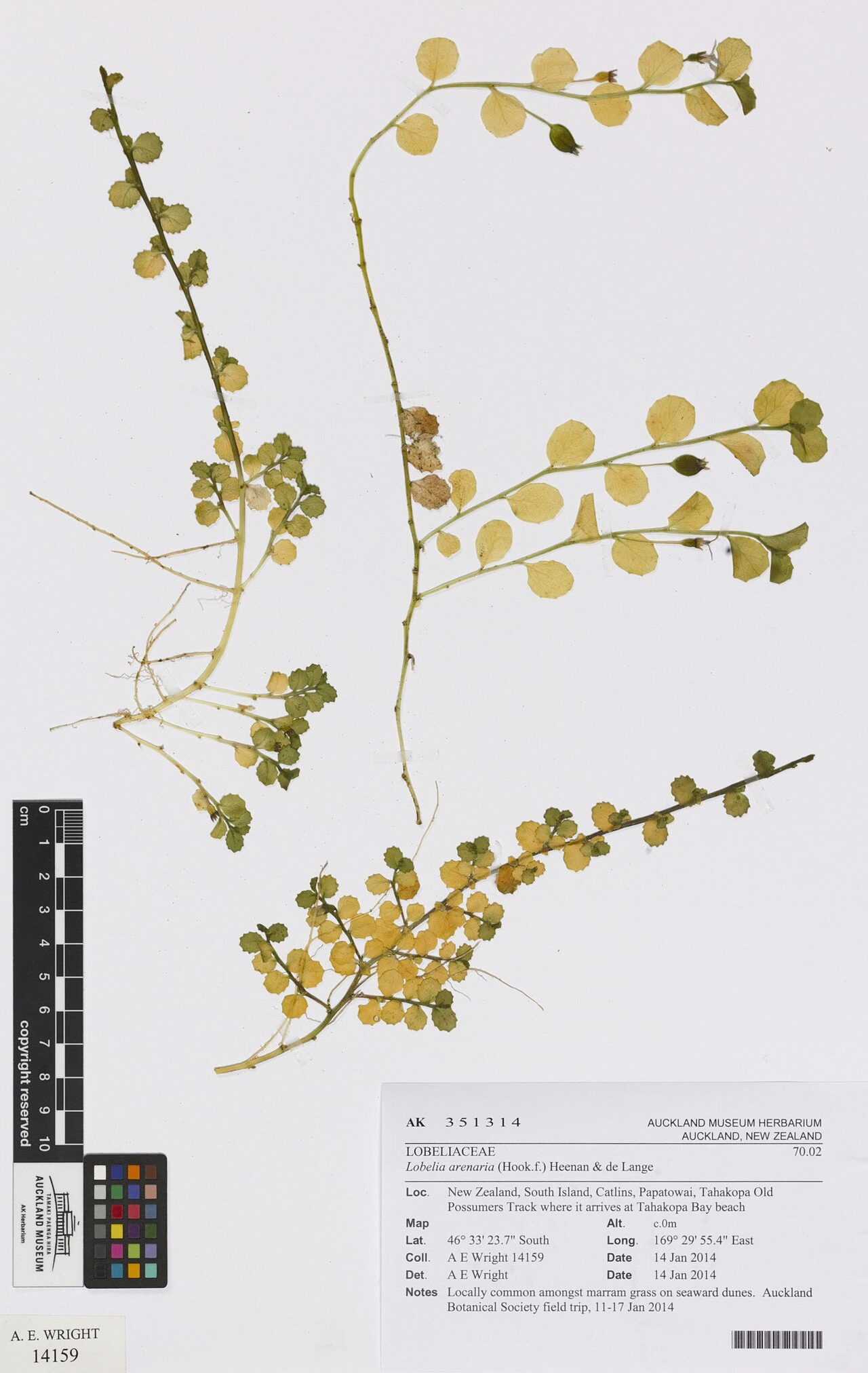
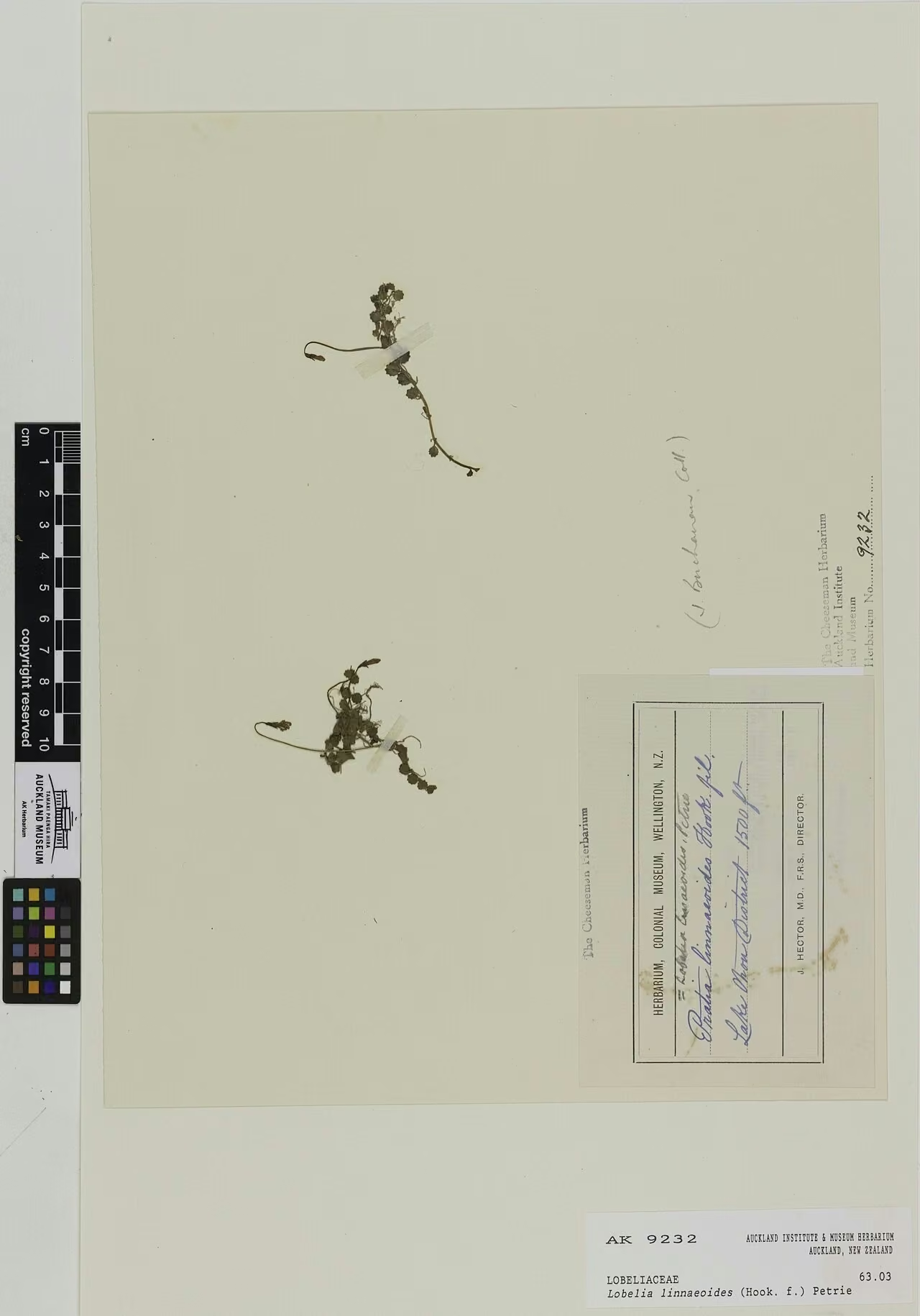
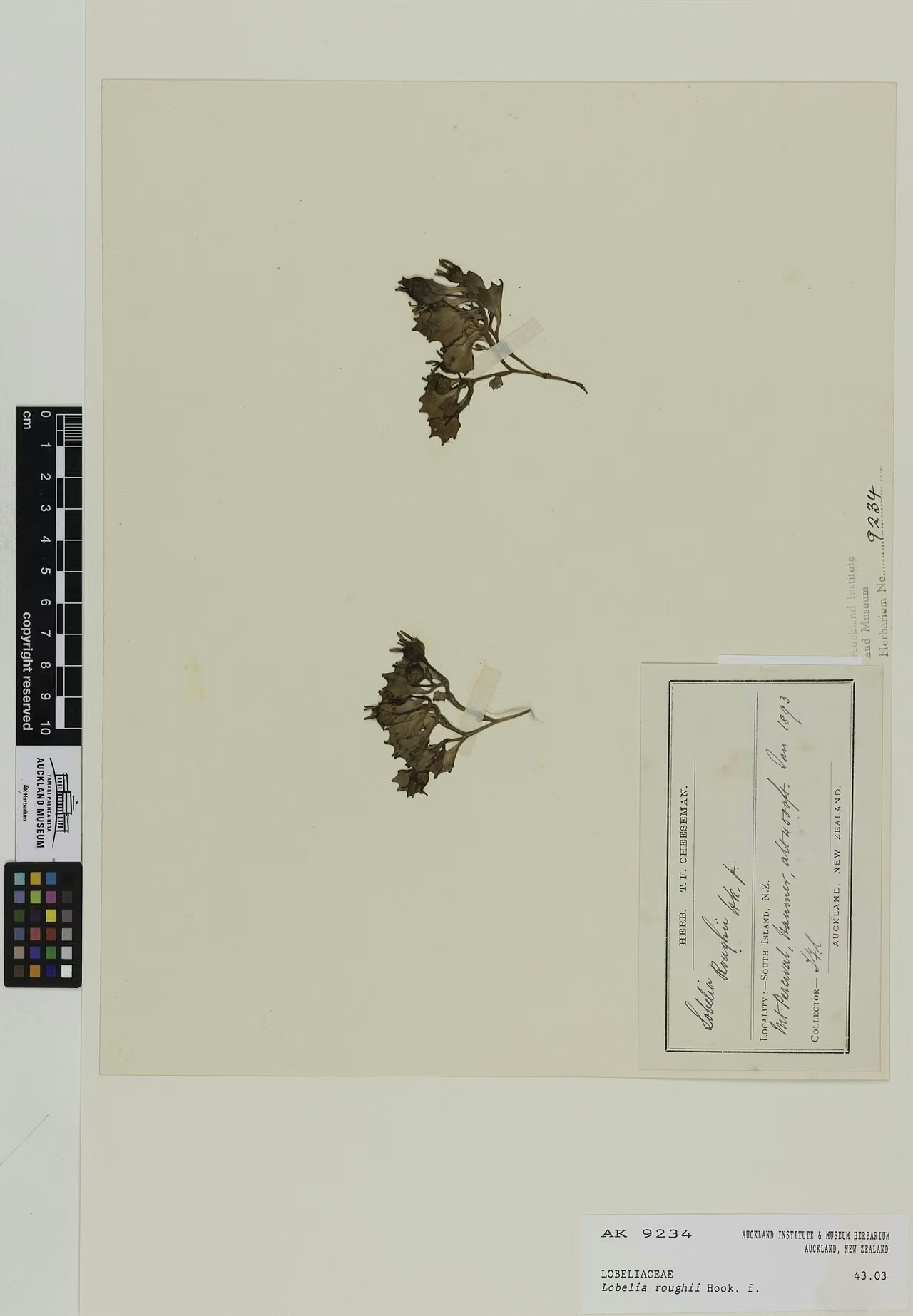
Explore other native plants that share similar characteristics or habitats with Hypsela (Lobelia ionantha), offering further insights into New Zealand's diverse flora. These related species provide context and opportunities for complementary planting in your garden.
Plant Conservation
Lobelia ionantha is ranked At Risk - Declining in the 2023 New Zealand Threat Classification, a status it has held since 2009. Otago's 2025 regional assessment ranks it Regionally Threatened - Regionally Endangered.
Its decline is driven by the modification of lake margins, ephemeral wetlands and seepages through land use change and invasion by naturalised plants. Protecting wetlands from drainage, stock trampling and weeds is the most effective way to help.
Frequently Asked Questions
What is the difference between Hypsela rivalis and Lobelia ionantha?
They are the same plant. Hypsela rivalis, later treated as Isotoma rivalis, was renamed Lobelia ionantha by Peter Heenan in 2008 when it was transferred to the genus Lobelia.
Where does Lobelia ionantha grow?
It is endemic to the South Island, in Marlborough, Canterbury, Otago and Southland, on the wet margins of lakes, tarns and ephemeral wetlands, on stream banks and in seepages within tussock grassland.
Can I grow hypsela in a pot?
Yes. NZPCN describes it as easily grown from fresh seed and rooted pieces, an attractive groundcover for a damp, sunny or semi-shaded site and an excellent pot plant.
Why is Lobelia ionantha declining?
The lake margins, ephemeral wetlands and seepages it depends on continue to be modified by changes in land use and invaded by naturalised plants.
Sources and Further Reading
The botanical, growing, and conservation details for Hypsela (Lobelia ionantha) on this page draw on the New Zealand plant references below. Consult them for full technical records and the latest distribution data.