Sand Lobelia
Lobelia arenaria
Last updated:
Sand lobelia (Lobelia arenaria) is a creeping, hairless, somewhat succulent herb endemic to New Zealand. Its rooting stems form mats that can reach about 1 m across, studded in summer with white, deeply lobed flowers that are followed by reddish to pinkish purple berries. On the mainland it is apparently restricted to coastal south-east Otago, but it also grows on the Chatham, Auckland, Campbell and Antipodes Islands, mostly in damp, sandy ground. Formerly known as Pratia arenaria, it is ranked At Risk - Naturally Uncommon and is considered Regionally Critical in Otago. Explore more native ground covers in our native plant guide.
Plant Description
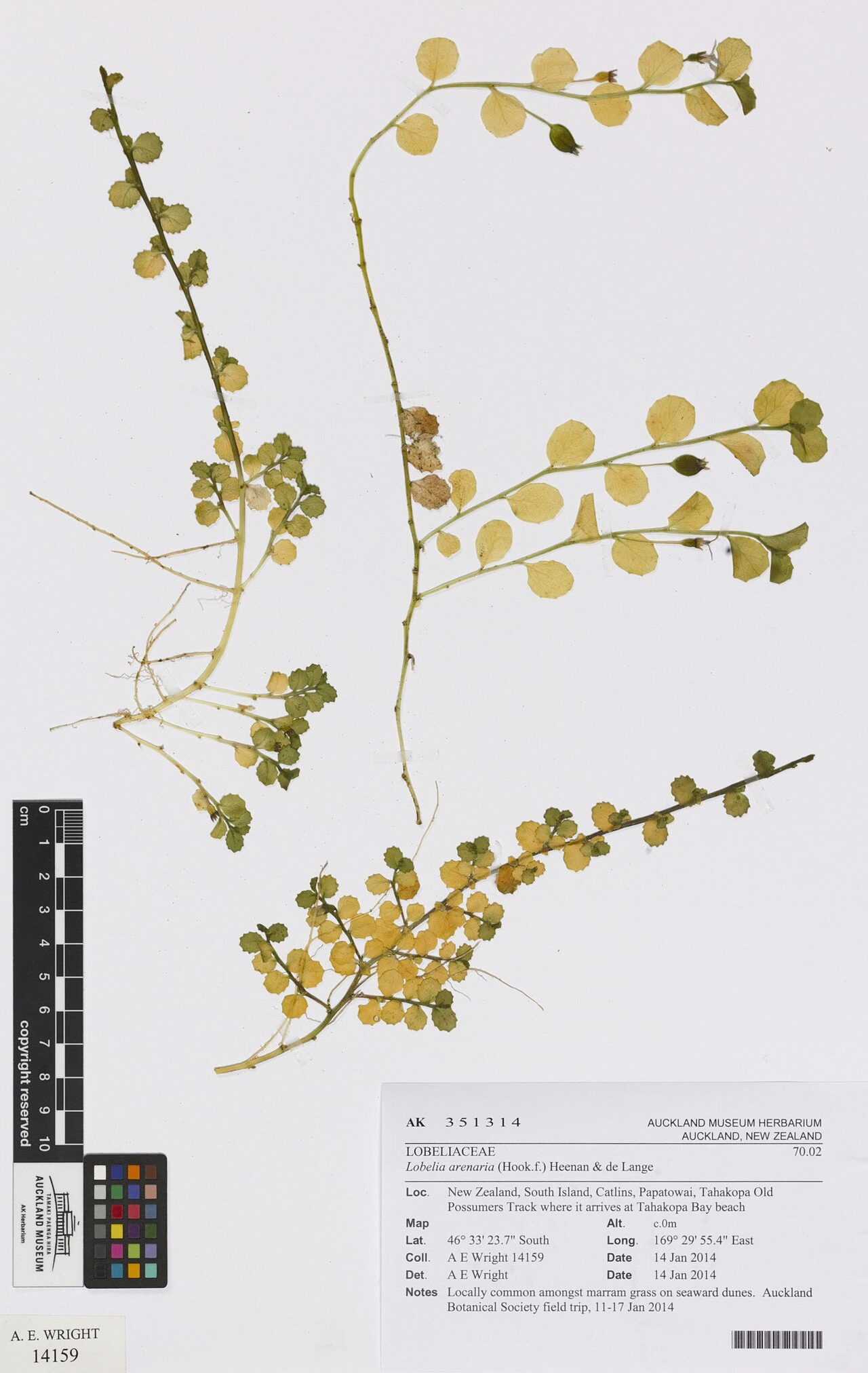
Lobelia arenaria is a glabrous, prostrate or semi-prostrate herb with creeping, somewhat succulent stems that root at the nodes. It often forms large mats up to about 1 m in diameter, which become compact in exposed situations. The leaves are 7 to 25 mm long, ranging from obovate-oblong to almost circular, with wavy or toothed margins.
The flowers are borne singly and are white, with deeply divided corolla lobes about 10 mm long; the lower lip spreads while the upper lobes ascend. NZPCN also lists violet or purple among its flower colours. The fruit is a somewhat flattened berry 6 to 10 mm long and 5 to 8 mm wide, reddish purple to pinkish purple, and obliquely ovoid to almost round.
It is one of the creeping lobelias formerly placed in Pratia, which bear fleshy berries rather than dry capsules. Compared with the widespread panakenake (Lobelia angulata), sand lobelia has thicker, somewhat succulent stems and larger, rounder leaves, and it is a polyploid with a chromosome number of 2n = 70.
Quick Facts
| Scientific Name | Lobelia arenaria |
|---|---|
| Height | Prostrate, a few centimetres tall |
| Spread | Mats up to about 1 m across |
| Water Needs | Moist; grows in damp ground |
| Light | Open, exposed sites |
| Frost Tolerance | High; grows on the cold subantarctic islands |
| Salt Tolerance | Likely good given its coastal and island habitat, though not formally recorded |
| Growth Rate | Moderate; spreads by rooting stems |
| Lifespan | Perennial |
Climate Best Suited to
Suits cool, windy, moist maritime climates, from the coast of south-east Otago to the cold, cloudy subantarctic Auckland, Campbell and Antipodes Islands. Hot, dry summers are unlike anything in its natural range.
Regional Suitability
| City | Climate Suitability |
|---|---|
| Auckland | Low |
| Wellington | Medium |
| Christchurch | Medium |
| Dunedin | High |
Plant Habitat
On the New Zealand mainland, sand lobelia appears to be restricted to coastal south-east Otago. It also occurs on the Chatham Islands and on the subantarctic Auckland, Campbell and Antipodes Islands.
Flora of New Zealand describes it as growing most commonly in damp and sandy ground, which its name arenaria (sand dweller) reflects, but on the Chatham Islands it occupies a wide range of habitats. It is rated a facultative wetland plant, growing in both wet and drier ground.
Growing Requirements
Soil Requirements
It favours damp, sandy soil near the coast, where its rooting stems can spread freely over open ground.
- Sandy or gritty soil that stays moist
- Open ground without dense grass cover
- Low to moderate fertility
Light Requirements
Its compact growth in exposed situations suggests it is adapted to open, sunny or windswept sites rather than shade.
- Full sun or bright open conditions
- Avoid sites overhung by shrubs or tall grasses
Water Requirements
As a plant of damp sandy ground, it needs consistent moisture but not stagnant water.
- Keep the soil moist, especially in summer
- Free drainage through sand prevents rot
Planting and Establishing
Sand lobelia is rarely available and wild plants should never be collected. If nursery-grown or conservation-sourced plants become available, plant them in spring into damp, sandy soil in an open position, ideally in a coastal garden in the south of the country.
Keep surrounding grasses and weeds clear, because a low creeping plant like this is easily smothered.
Ecological Role
Sand lobelia flowers from December to March and produces fleshy reddish purple berries. The specific pollinators and seed dispersers of this species are not documented in the sources consulted, although fleshy fruits in related lobelias are generally suited to dispersal by animals.
Its presence on the Chatham Islands and three groups of subantarctic islands, as well as coastal Otago, makes it part of the distinctive southern oceanic flora shared between these islands and the far south of the mainland.
Uses & Significance
Garden Uses
This is a conservation plant first and a garden plant second, but it suits specialist collections of southern coastal natives.
- Damp sandy beds in southern coastal gardens
- Pots or troughs in a cool, sunny spot
- Collections of Chatham Islands and subantarctic plants
Ecological Value
It is a naturally uncommon endemic of coastal and island habitats, so every surviving population contributes to its security.
- Part of the endemic flora of the Chatham and subantarctic islands
- Its few mainland sites are in coastal south-east Otago
- Forms large mats over damp sandy ground
Landscaping Uses
In a southern coastal garden, sand lobelia could be used as a low carpet between rocks or driftwood on a damp sandy patch, where the white flowers and coloured berries can be seen up close.
It is best grown alone or with other low, non-aggressive natives, as vigorous groundcovers or lawn grasses would quickly overrun it.
Seasonal Care Calendar
Spring
New growth extends the mats as the soil warms.
- Plant or divide now
- Clear grass from the edges of the mat
Summer
Flowering runs from December to March, with white flowers held just above the mat.
- Keep the soil moist
- Watch for berries forming
Autumn
Reddish purple berries ripen as flowering finishes.
- Collect ripe berries from cultivated plants for seed
- Weed around plants
Winter
Growth slows, though the mats remain evergreen.
- Avoid waterlogging
- No other care needed
When to Prune and How Much
No pruning is needed. The mat-forming stems can be trimmed back at the edges if they spread beyond their allotted space.
Remove any dead patches by hand and fill the gap with a rooted piece from the mat edge.
How to Grow Sand Lobelia
No propagation notes specific to Lobelia arenaria were found in the sources consulted, and plants are not normally sold. The methods below are those used successfully for the closely related creeping New Zealand lobelias formerly placed in Pratia, which NZPCN describes as easily grown from fresh seed and rooted pieces. Because sand lobelia is naturally uncommon and Regionally Critical in Otago, use only material already in cultivation or supplied through an authorised conservation programme, and never take plants or berries from wild populations.
From Seed
The fleshy berries contain many small seeds. Seed sown fresh, straight from ripe fruit, generally gives the best results with these lobelias.
- Pick reddish purple berries once fully coloured and soft
- Squash the fruit and rinse the seed free of pulp
- Sow on the surface of a moist, sandy seed mix and press in lightly
- Keep cool, moist and in good light until seedlings appear
- Prick out into small pots of sandy mix
By Division
Because the stems root at the nodes, small rooted pieces can be detached from the edge of a cultivated mat with little harm to the parent. This is usually the quickest and most reliable way to increase a creeping lobelia, and it keeps the plant true to its parent.
- Cut a few rooted stem sections from the edge of the mat in spring
- Pot them into damp, sandy mix
- Keep in a sheltered, bright spot and water regularly
- Plant out once they are growing strongly
Pests & Diseases
No specific pests or diseases are recorded for sand lobelia. Slugs and snails may damage young growth in cultivation.
In the wild, competition from weeds and exotic grasses, and disturbance of damp coastal sand, are more likely to affect it than insect pests, though specific threats are not listed in the NZPCN fact sheet.
Cultural Significance
No Māori name or traditional use is recorded for Lobelia arenaria in the sources consulted.
It was first described by Joseph Dalton Hooker as Pratia arenaria in 1844, and the epithet arenaria means sand dweller. It was later transferred to Lobelia by Heenan and de Lange when the New Zealand Pratia species were merged into that genus.
Bonus Tip
If you botanise along the south-east Otago coast, look closely at damp, sandy hollows for flat mats of rounded leaves with white flowers or purple berries. Report any sightings to iNaturalist NZ, since mainland records of this Regionally Critical plant are valuable to conservation staff.
Related Plants
Explore other native plants that share similar characteristics or habitats with Sand Lobelia (Lobelia arenaria), offering further insights into New Zealand's diverse flora. These related species provide context and opportunities for complementary planting in your garden.
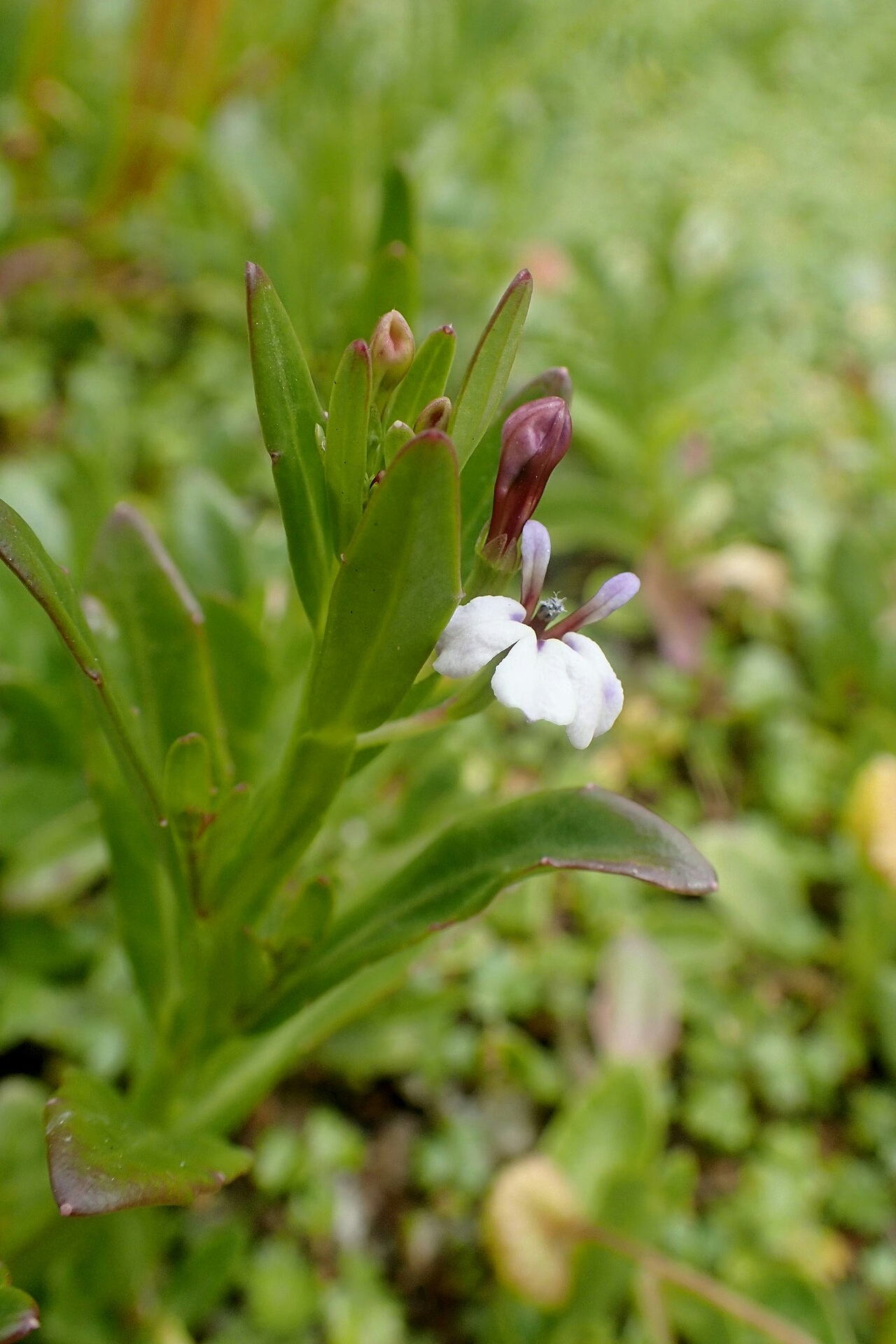
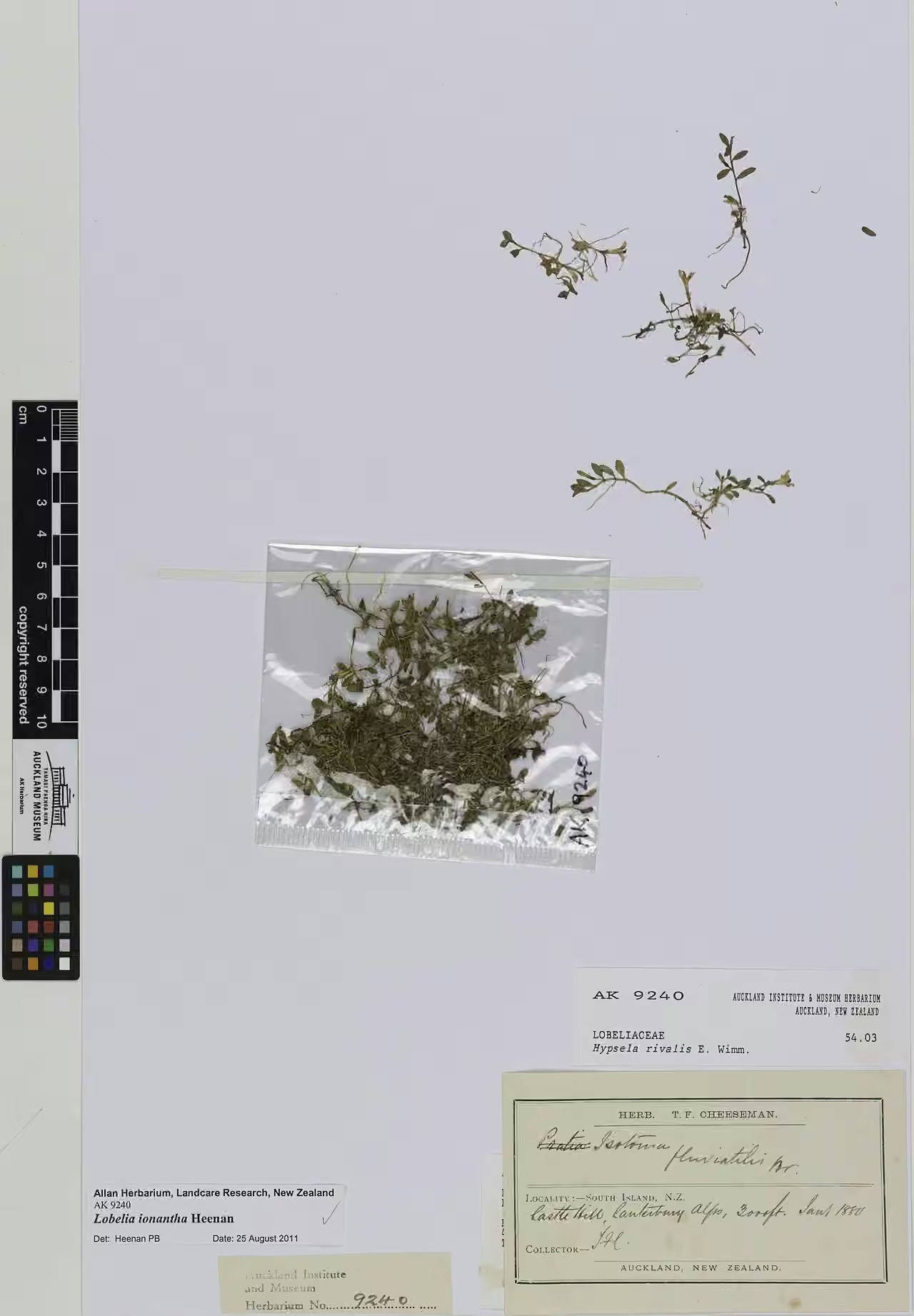
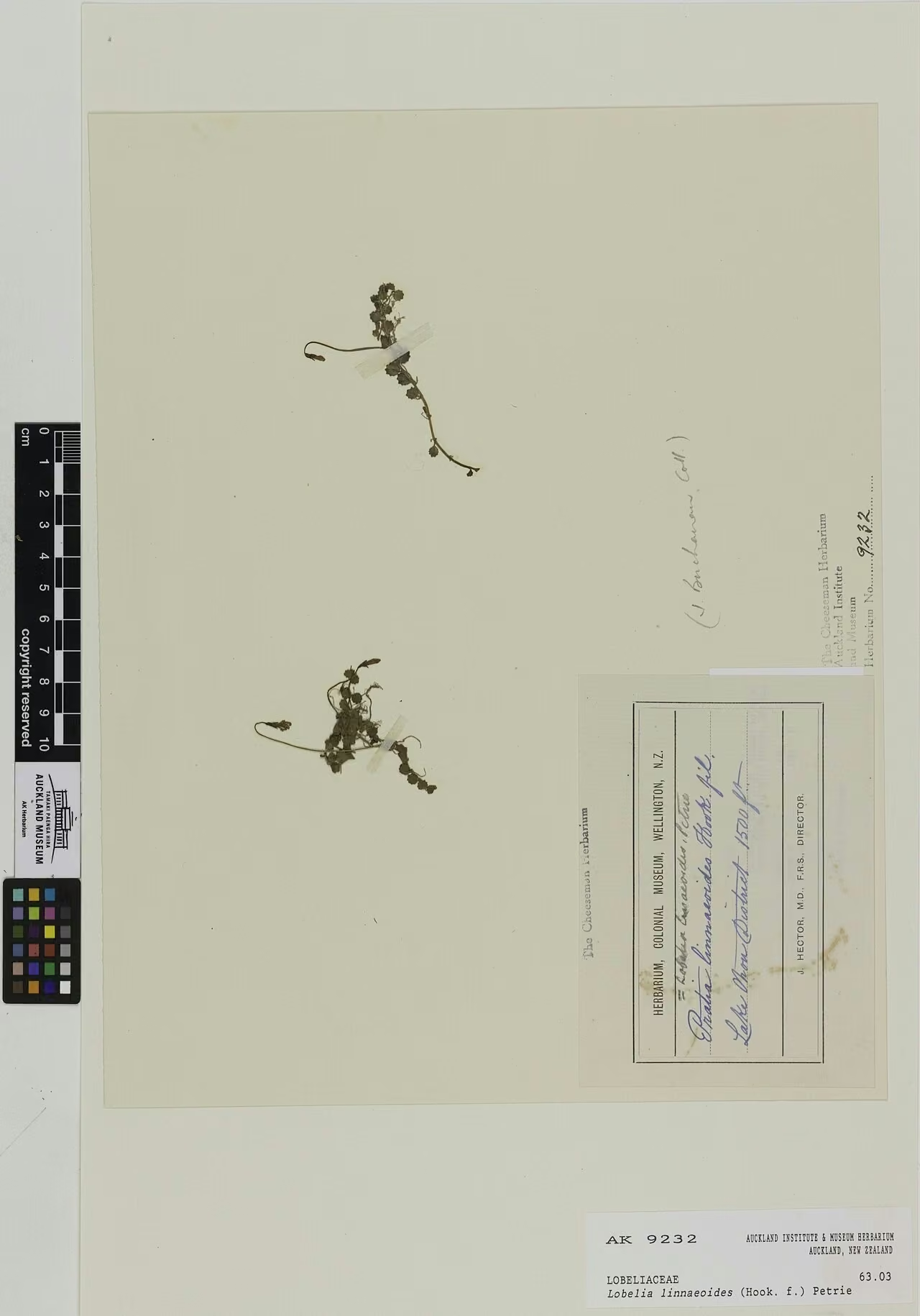
Plant Conservation
Sand lobelia is ranked At Risk - Naturally Uncommon in the 2023 New Zealand Threat Classification, with the qualifier DPT (Data Poor - Trend), meaning its population trend is uncertain. In the 2025 Otago regional assessment it is ranked Regionally Threatened - Regionally Critical.
Most of its range lies on protected outlying islands, but mainland coastal sites are vulnerable to development, weeds and disturbance. Surveying and protecting the Otago populations, and keeping cultivated stock as insurance, would help secure it.
Frequently Asked Questions
Where does sand lobelia grow in New Zealand?
Flora of New Zealand records it as apparently restricted on the mainland to coastal south-east Otago, with further populations on the Chatham, Auckland, Campbell and Antipodes Islands.
What is the old name for Lobelia arenaria?
It was long known as Pratia arenaria. The New Zealand Pratia species were transferred to Lobelia by Heenan and de Lange, giving the current name Lobelia arenaria.
Is sand lobelia rare?
It is ranked At Risk - Naturally Uncommon nationally, and the 2025 Otago regional assessment lists it as Regionally Critical, reflecting how few mainland sites it occupies.
Sources and Further Reading
The botanical, growing, and conservation details for Sand Lobelia (Lobelia arenaria) on this page draw on the New Zealand plant references below. Consult them for full technical records and the latest distribution data.