Pin Cushion
Colobanthus buchananii
Last updated:
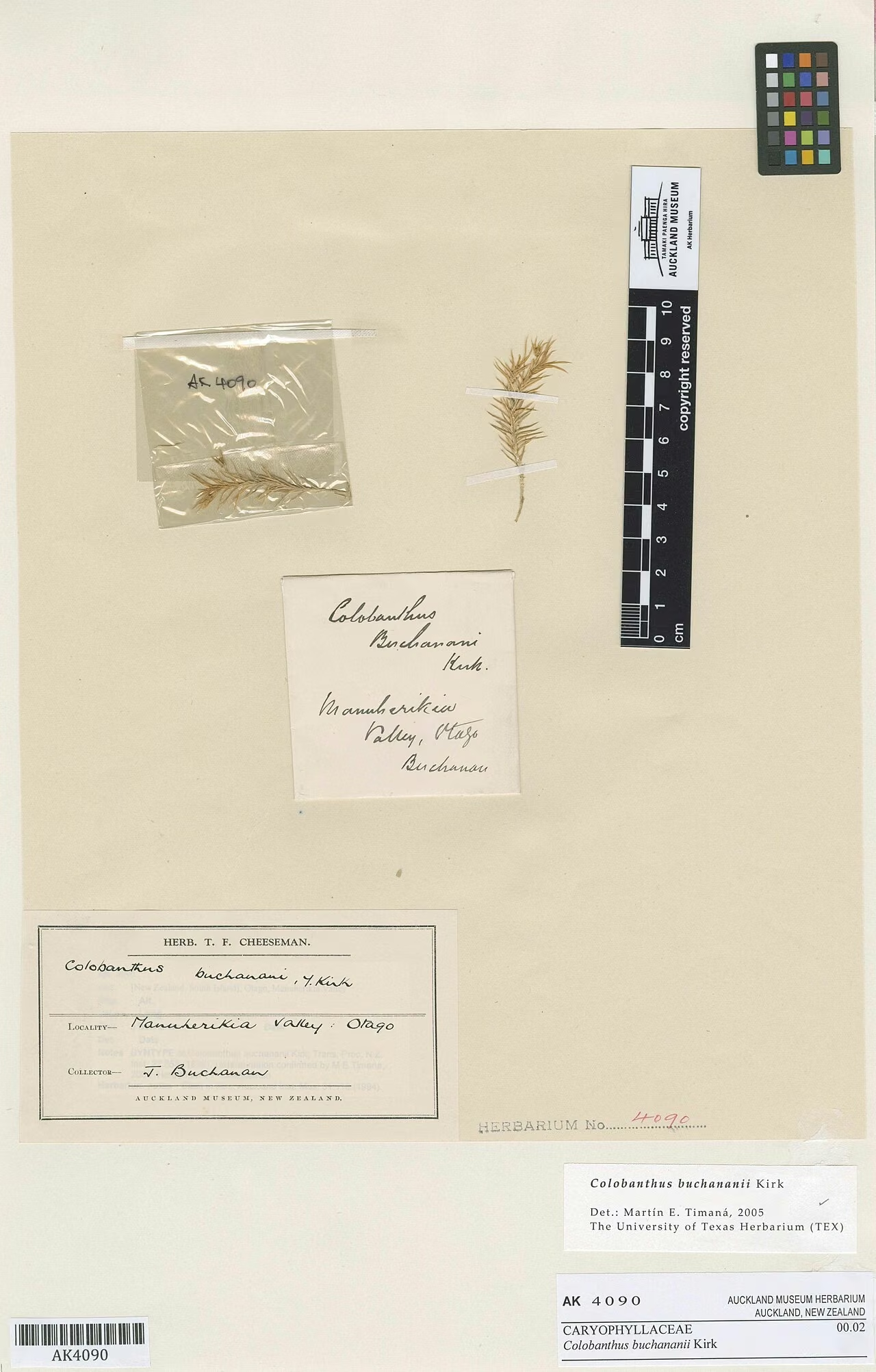
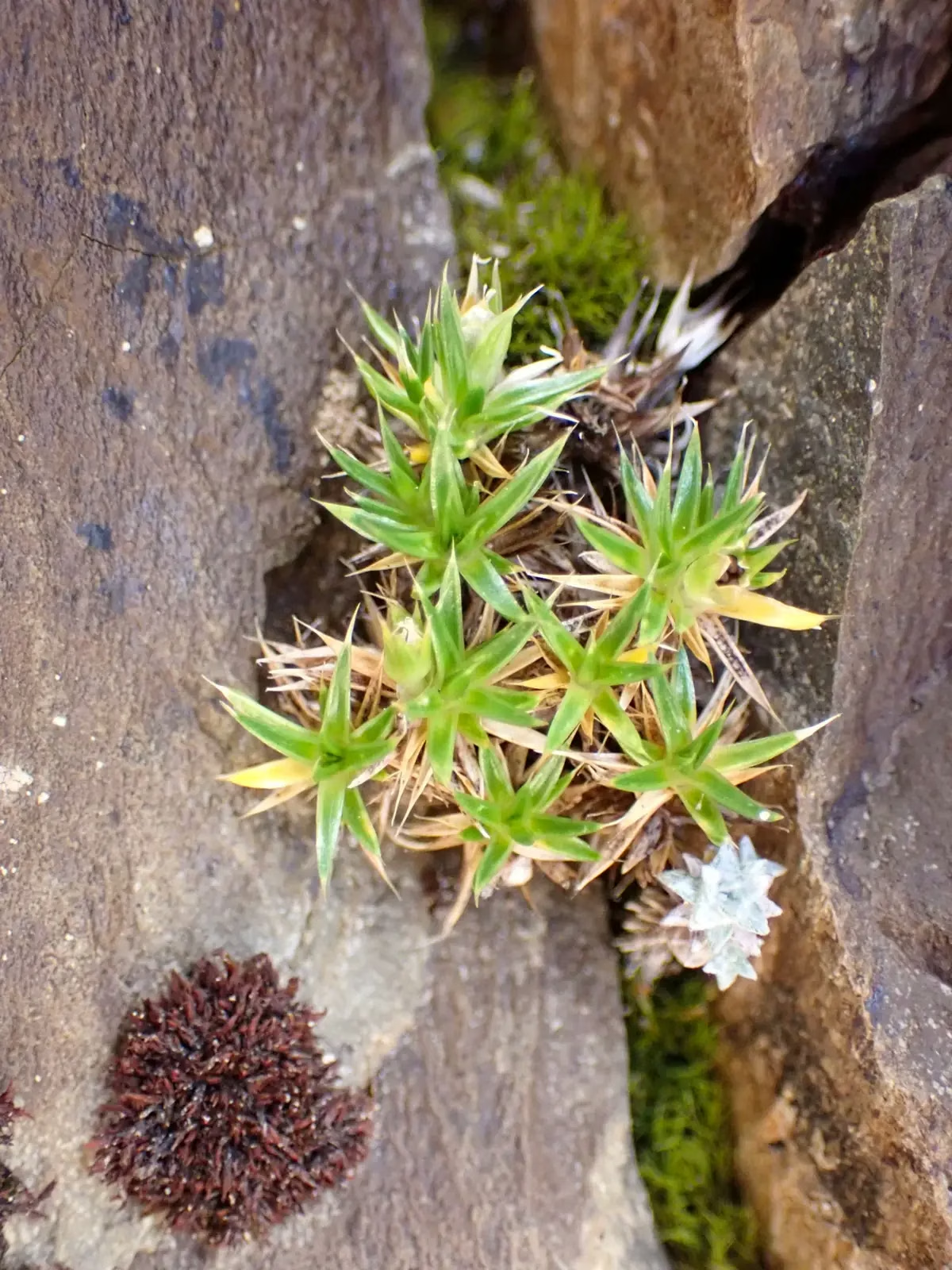
Pin cushion (Colobanthus buchananii) is a small, compact endemic herb in the carnation family that forms tight hummocks of short stems clothed in stiff, needle-tipped leaves 5 to 10 mm long. It grows in rocky and shingly places from about 500 to 1800 m in Nelson and east of the main divide in the South Island. Its flowers, 4 to 8 mm long, have no petals and are made up of five slender, needle-tipped sepals with a thickened midrib. In sheltered spots it grows looser and taller, but on exposed alpine sites it stays as a tight cushion. It is ranked Not Threatened. Explore more native ground covers in our native plant guide.
Plant Description
Colobanthus buchananii is usually of rather compact habit, with stems 1 to 3 cm long, though plants in sheltered habitats can grow longer and laxer. Herbarium specimens describe hummocks roughly 1.3 to 7.6 cm across. The leaves are closely spaced along the stems and spread outward; each has a short sheath and a linear-subulate blade 5 to 10 mm long that tapers to a long, needle-like tip. When dry, the leaves are noticeably bordered.
Flowers sit on short stalks, occasionally up to 1 cm long. They are 4 to 8 mm long and have no petals. The five sepals are awl-shaped from a broad base, thickened along the midrib and usually end in long needle tips. NZPCN records the flower colour as white. The fruit is a capsule that splits into five narrow valves, shorter and sometimes much shorter than the sepals.
It closely resembles Colobanthus acicularis but has shorter, more tightly grouped branches, more strongly bordered dry leaves and sepals with a broad thickened midrib. Stunted cushion forms can approach Colobanthus canaliculatus, which has broader sepals and shorter leaf tips.
Quick Facts
| Scientific Name | Colobanthus buchananii |
|---|---|
| Height | Stems 1-3 cm, longer in shelter |
| Spread | Hummocks about 1-8 cm across |
| Water Needs | Low to moderate; sharply drained sites |
| Light | Full sun, open rocky ground |
| Frost Tolerance | High; grows up to about 1800 m |
| Salt Tolerance | No reliable information available |
| Growth Rate | Slow |
| Lifespan | Perennial |
Climate Best Suited to
Suits cold mountain climates east of the main divide, with harsh frosts, snow and dry, sunny summers. It is not suited to warm, humid lowland climates.
Regional Suitability
| City | Climate Suitability |
|---|---|
| Auckland | Low |
| Wellington | Low |
| Christchurch | Medium |
| Dunedin | Medium |
Plant Habitat
Colobanthus buchananii is endemic to New Zealand. Allan's Flora records it from Nelson and the east side of the main divide in the South Island, with an unconfirmed record from the North Island. Herbarium specimens come from areas including Nelson, South Canterbury, Central Otago, Southland and Stewart Island/Rakiura.
It grows in rocky and shingly places from about 500 to 1800 m, including scree, gravel slopes with scattered tussock, limestone outcrops and other rocky ground. Plants from exposed alpine sites, such as above Lake Ohau, are compact, while those in sheltered places become laxer.
Growing Requirements
Soil Requirements
It grows on shingle, scree, gravel and rock, often with very little soil.
- Stony, gritty, sharply drained substrate
- Low fertility
- Tolerates limestone as well as greywacke and schist rock
Light Requirements
It occupies open, exposed ground where it receives full sun and little competition.
- Full sun for compact cushions
- Shelter produces looser, longer-stemmed growth
Water Requirements
Shingle and scree drain quickly, so its roots rarely sit in water even after rain or snowmelt.
- Water moderately and let excess drain freely
- Avoid wet foliage in humid weather
Planting and Establishing
Colobanthus buchananii is not available from general nurseries and is suited only to specialist alpine growers. Grow it in a pot, trough or scree bed of very gritty mix in full sun, with grit around the neck of the plant.
Raise plants from seed or from material already in cultivation rather than removing plants from the mountains.
Ecological Role
This is a pioneer of open shingle, scree and rock in South Island mountains, where its compact, needle-leaved hummocks withstand wind, frost and moving stones. NZPCN notes that Colobanthus seeds are winged and dispersed by water and possibly also by wind and ballistic projection.
Its pollinators and associated invertebrates have not been documented in the sources consulted.
Uses & Significance
Garden Uses
A plant for alpine specialists who enjoy tiny native cushion plants.
- Scree or gravel beds
- Troughs and alpine house pots
- Botanic garden collections of South Island mountain flora
Ecological Value
It is part of the specialised flora of South Island scree and shingle, one of the country's most distinctive habitats.
- Colonises unstable, open rocky ground
- Endemic to New Zealand
- Contributes to the diversity of mountain cushion plants
Landscaping Uses
Colobanthus buchananii is not used in general landscaping. In an alpine trough it can be set among stones alongside other small mountain plants to suggest a miniature scree slope.
Because exposure keeps it compact, give it an open, sunny position; in shade it becomes loose and loses its neat hummock form.
Seasonal Care Calendar
Spring
Plants begin growing as snow melts from their rocky sites.
- Top-dress pots with fresh grit
- Water as growth starts
Summer
Flowering is from December to January, with small needle-tipped flowers among the leaves.
- Look closely at the sepal midribs for identification
- Keep pots ventilated in hot weather
Autumn
Fruiting runs from January to March, when capsules split into five narrow valves.
- Collect ripe capsules for seed
- Reduce watering as growth slows
Winter
Plants sit dormant under frost and snow on their mountain sites.
- Keep potted plants nearly dry
- Protect from prolonged wet rather than cold
When to Prune and How Much
No pruning is required for this small cushion-forming herb.
Pick out any dead or rotting shoots with tweezers to keep the hummock healthy.
How to Grow Pin Cushion
No propagation method specific to Colobanthus buchananii was found in the sources consulted, and it is rarely cultivated. The methods below follow the approach used for its relatives: NZPCN reports that small divisions of the related Colobanthus brevisepalus can be grown in pots in an alpine house, and seed is the other practical option. Flowering is in December and January and fruit ripens from January to March, when the capsules split open to release their small winged seeds. Although it is not threatened, collect seed sparingly and with permission where required, and never dig plants from the wild.
From Seed
Seed gives the best chance of raising plants without disturbing wild populations. Grow seedlings in full light from the start, because plants raised in shade become lax and lose the compact form typical of exposed sites.
- Collect capsules as they begin to split in late summer
- Shake out the seed into a paper envelope
- Sow on the surface of a gritty, low-fertility seed mix
- Cover lightly with fine grit and keep cool and moist
- Prick out seedlings into individual small pots when large enough
By Division
Established cultivated hummocks can be divided by separating small groups of stems, which root best in a very open mix.
- Choose a vigorous cultivated plant in spring
- Separate a small cluster of stems with some roots attached
- Pot into pure pumice or very gritty mix
- Keep in a cool, bright, well-ventilated place until established
Pests & Diseases
No pests or diseases are recorded for Colobanthus buchananii in the sources consulted. In cultivation, rot from poor drainage or humid, still air is the most likely problem.
Its open mountain habitats can be invaded by introduced plants, although no specific threat to this species is documented.
Cultural Significance
No Māori name or traditional use for Colobanthus buchananii was found in the sources consulted.
The species honours John Buchanan (1819-1898), a botanist and scientific artist who illustrated and collected widely in New Zealand. It was described by Thomas Kirk, whose original type specimen came from a sheltered site and was unusually lax compared with typical plants.
Bonus Tip
If a Colobanthus you are trying to identify looks loose and leggy, check where it grew before ruling out C. buchananii: this species changes shape with shelter, and even its type specimen was a lax, shade-grown plant. Compare the sepals, which are more reliable than overall form.
Related Plants
Explore other native plants that share similar characteristics or habitats with Pin Cushion (Colobanthus buchananii), offering further insights into New Zealand's diverse flora. These related species provide context and opportunities for complementary planting in your garden.
Koru
Lobelia physaloides
Colobanthus apetalus
Colobanthus apetalus
Colobanthus brevisepalus
Colobanthus brevisepalus
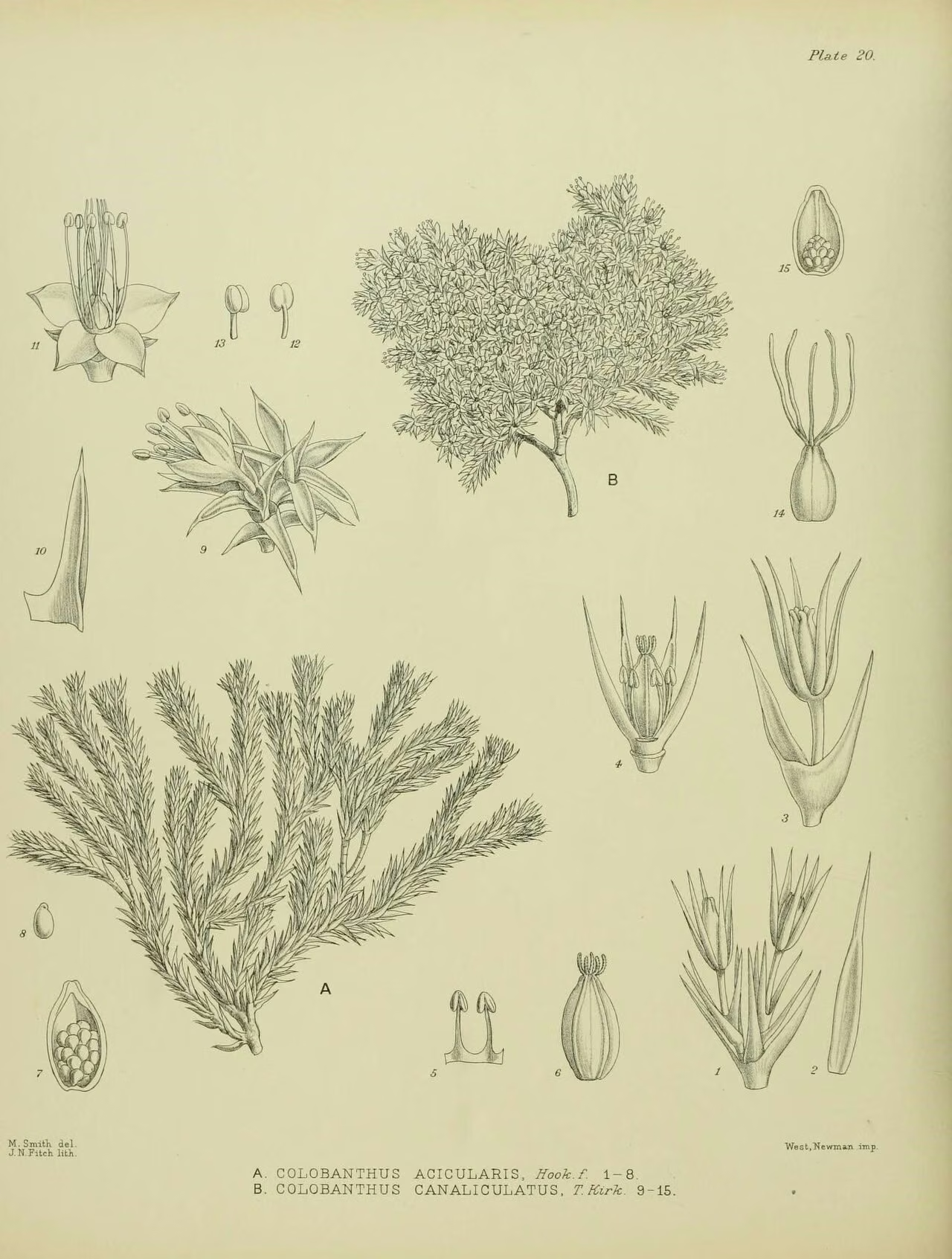
Colobanthus canaliculatus
Colobanthus canaliculatus
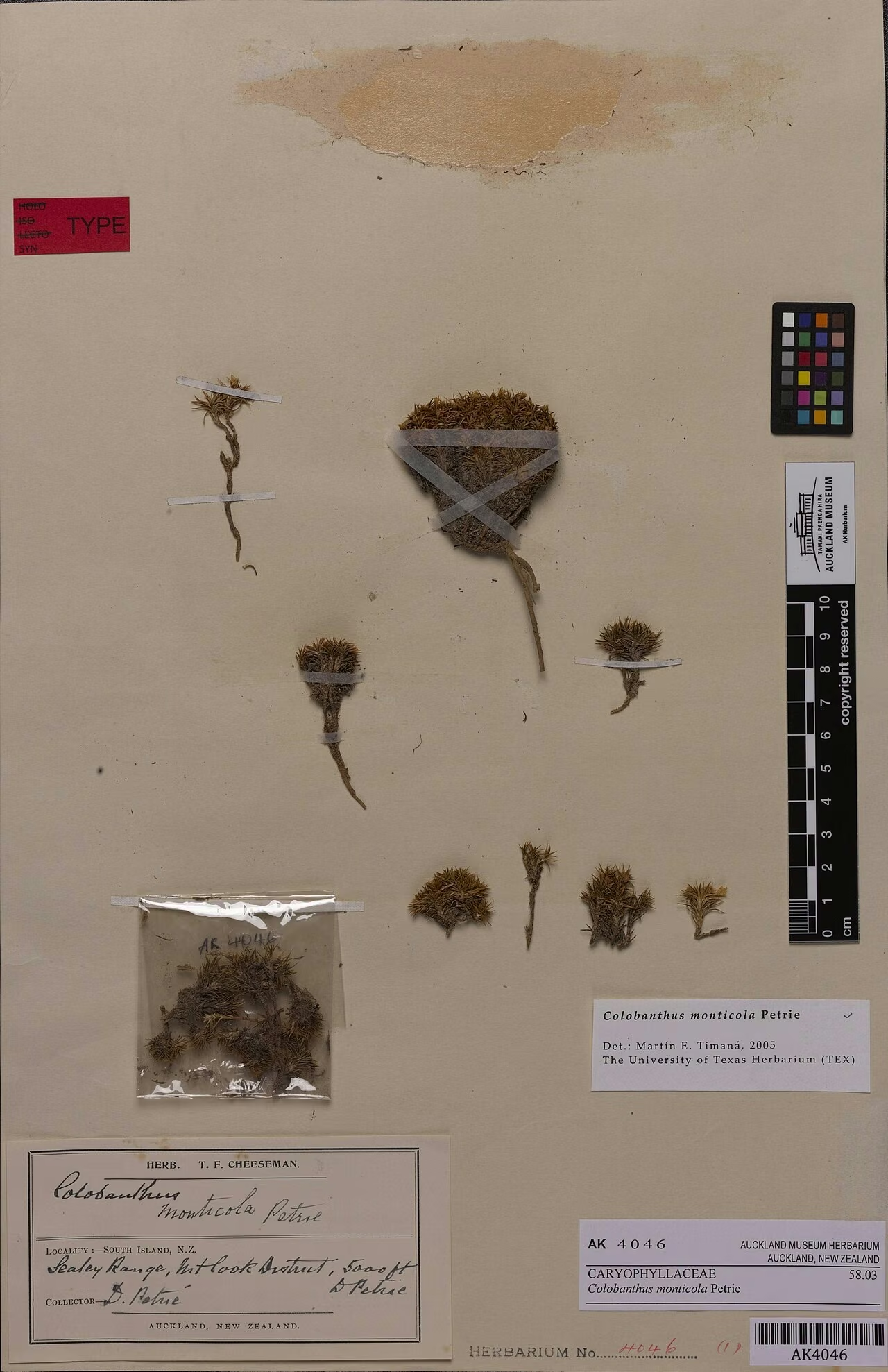
Colobanthus monticola
Colobanthus monticola
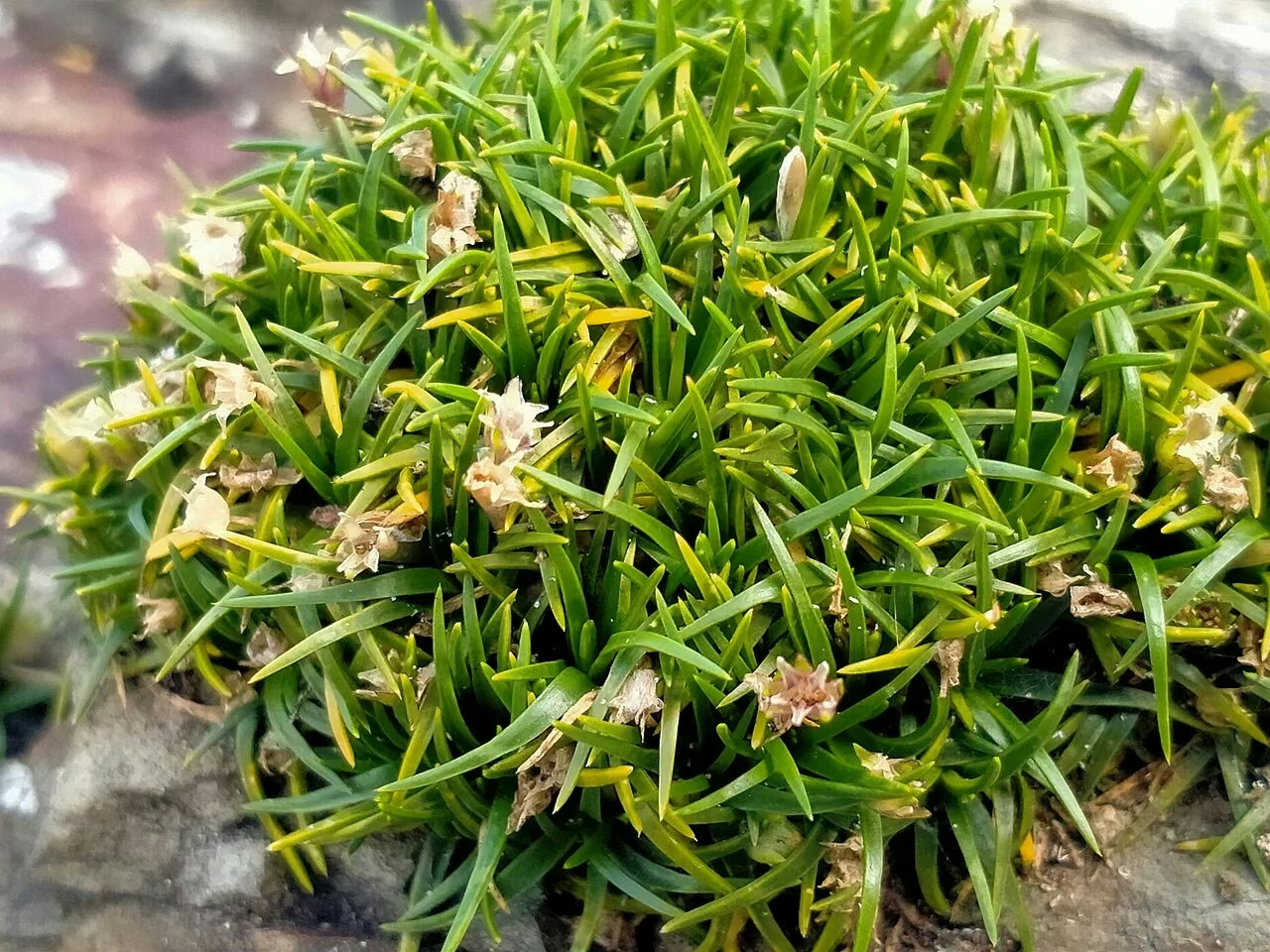
Colobanthus muelleri
Colobanthus muelleri
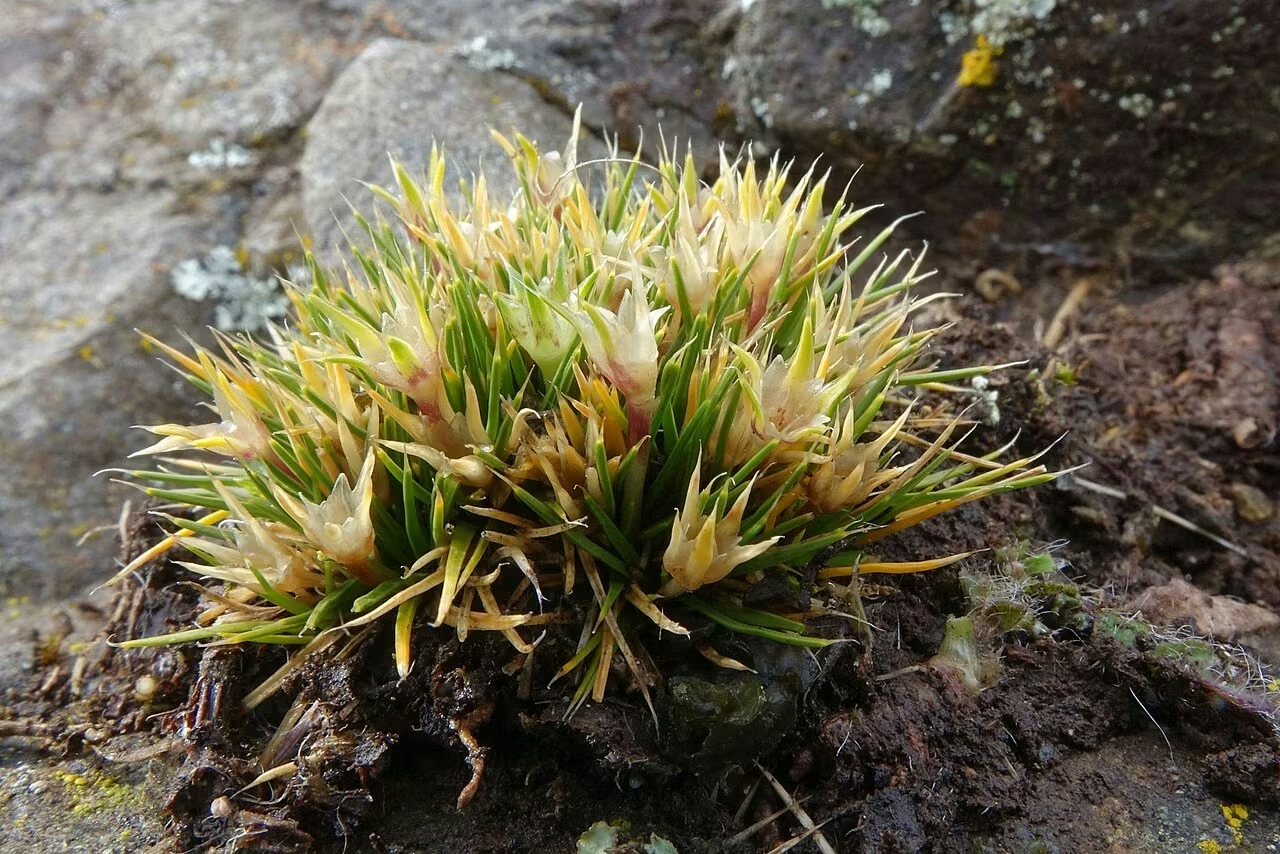
Colobanthus strictus
Colobanthus strictus
Colob. Acic.
Colobanthus Acicularis
Plant Conservation
Colobanthus buchananii is ranked Not Threatened (2023), and Otago lists it as Regionally Not Threatened (2025).
Its scree, shingle and rock habitats are generally less modified than lowland areas, but weed invasion of open mountain ground and disturbance from tracks could affect local populations. Recording sightings helps clarify its full distribution, including whether it occurs in the North Island.
Frequently Asked Questions
Who is Colobanthus buchananii named after?
It honours John Buchanan (1819-1898), a Scottish-born New Zealand botanist and scientific artist. Thomas Kirk named the species.
How do you tell Colobanthus buchananii from Colobanthus acicularis?
Both have needle-tipped leaves, but C. buchananii has shorter, more tightly grouped branches, leaves that are strongly bordered when dry, and sepals with a broad thickened midrib.
Where does pin cushion (Colobanthus buchananii) grow?
It grows in rocky and shingly places from about 500 to 1800 m in Nelson and on the east side of the main divide in the South Island, including scree, gravel slopes among tussock and limestone outcrops.
Sources and Further Reading
The botanical, growing, and conservation details for Pin Cushion (Colobanthus buchananii) on this page draw on the New Zealand plant references below. Consult them for full technical records and the latest distribution data.