Colobanthus
Colobanthus apetalus
Last updated:
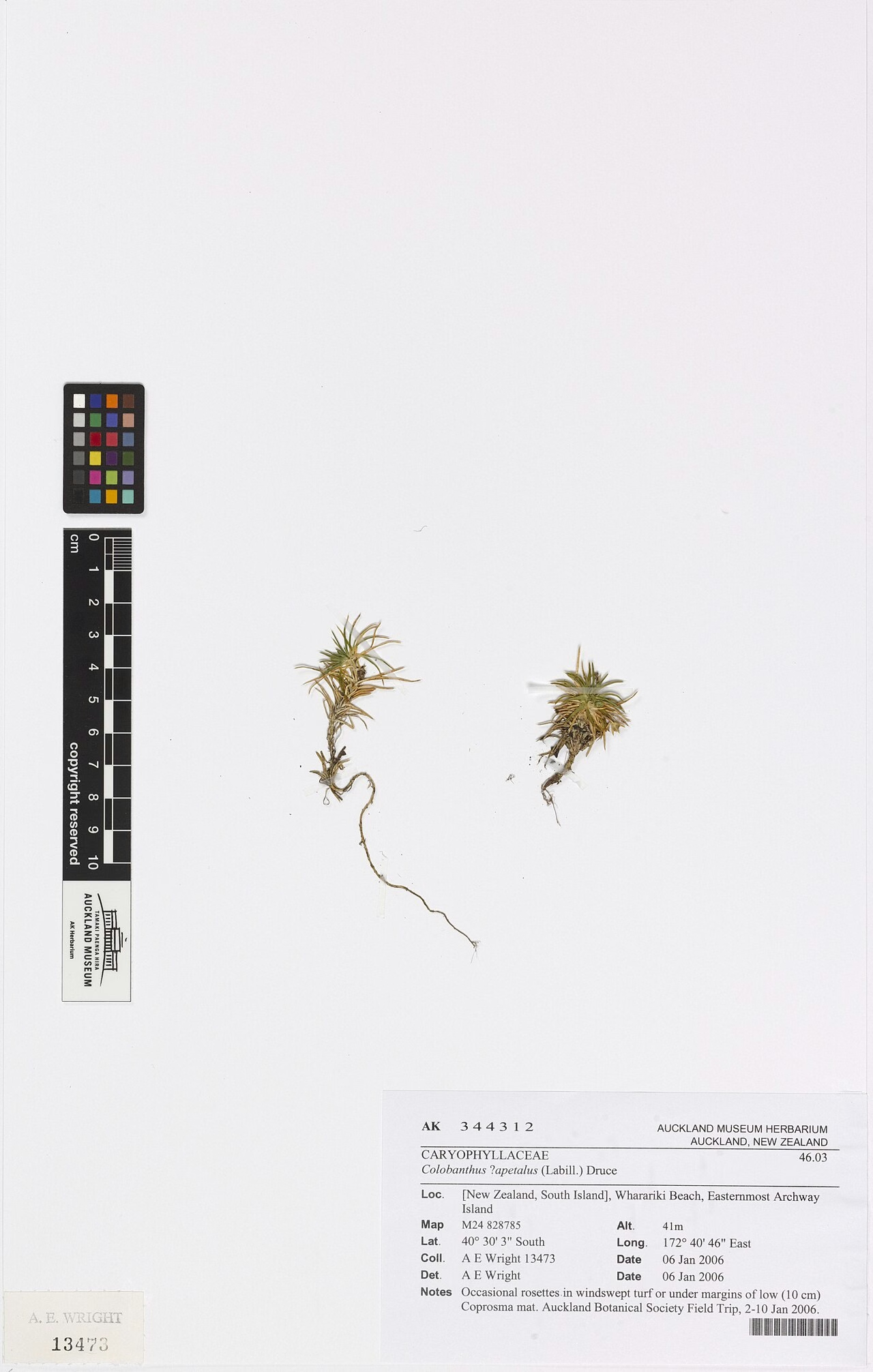
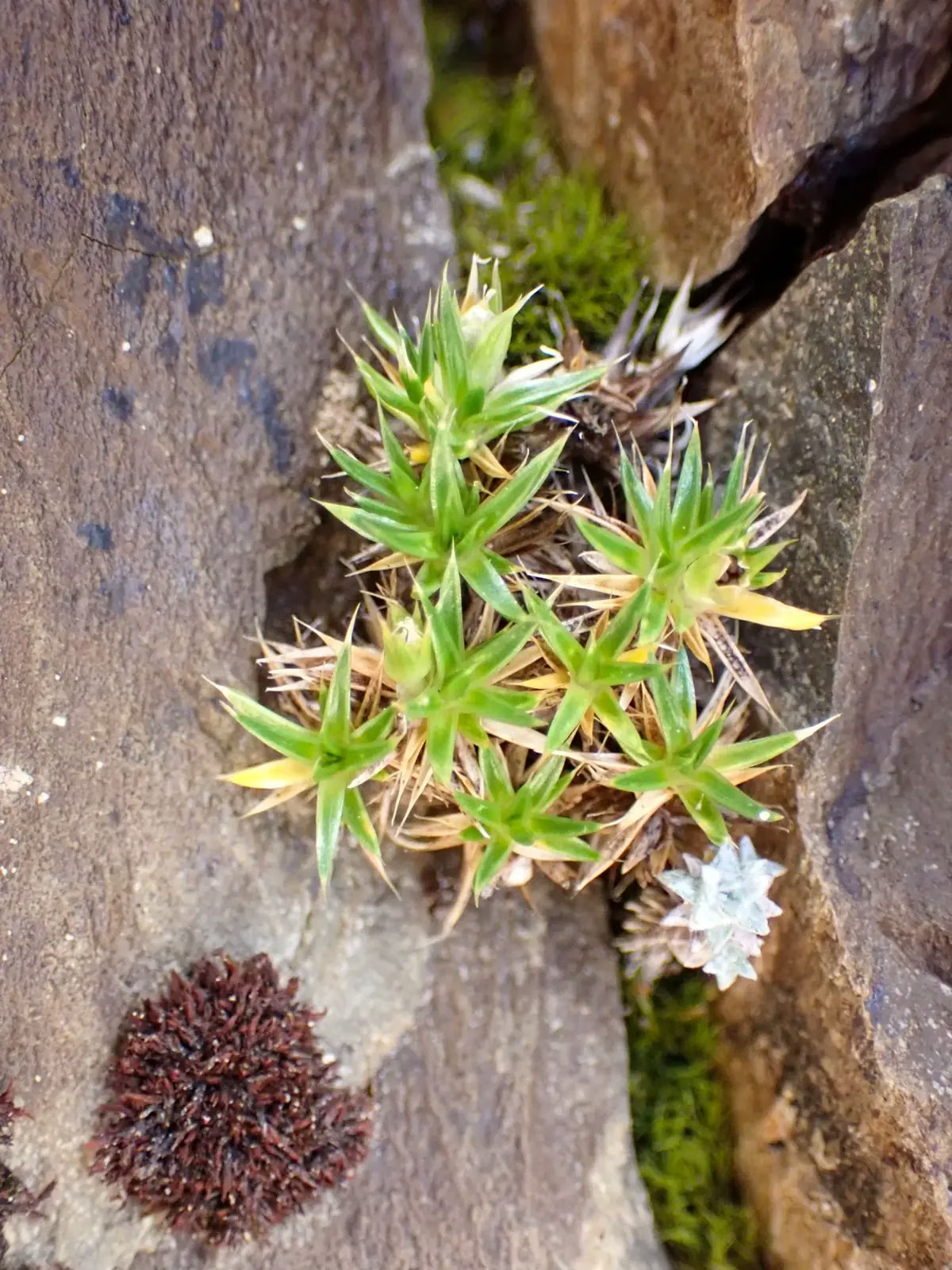
Colobanthus apetalus is a small, tufted herb of the carnation family (Caryophyllaceae) with narrow, grassy leaves 10 to 25 mm long and tiny green flowers that have sepals but no petals. It is indigenous to New Zealand, where it grows in sandy, peaty or muddy places from sea level to about 1200 m in the North Island ranges, the South Island and the subantarctic Auckland and Campbell Islands, and it also occurs in south-eastern Australia and on Macquarie Island. It is easily overlooked among other low plants. Nationally it is Not Threatened, but it is regionally uncommon in Otago and Wellington. Explore more native ground covers in our native plant guide.
Plant Description
Colobanthus apetalus grows as a single plant or as several to many tufts, with mostly very short branches. The leaves are grassy, erect, flexuous or recurved, linear to very narrowly linear, 10 to 25 mm long, and end in a short point (apiculus).
The flower stalks are about as long as the leaves at first and lengthen as the fruit matures. Each flower is fairly broad and has five sepals 3 to 4 mm long, broad and partly membranous at the base and tapering to a short point. There are no petals, and the flowers are green. The fruit is a capsule that splits into five valves almost as long as the sepals, releasing seeds covered in low rounded papillae.
Two varieties are recognised in New Zealand. Var. alpinus is consistently larger in its leaves, flower stalks and flowers and usually grows in damp, sheltered places. Vegetatively, C. apetalus is often impossible to separate from Colobanthus affinis, but the two differ consistently in their sepals, so flowering or fruiting material is needed to identify it.
Quick Facts
| Scientific Name | Colobanthus apetalus |
|---|---|
| Height | A few centimetres; leaves 10-25 mm long |
| Spread | Small tufts a few centimetres across |
| Water Needs | Moist; grows in sandy, peaty or muddy ground |
| Light | Open sites; var. alpinus favours damp, sheltered places |
| Frost Tolerance | High; reaches about 1200-1500 m |
| Salt Tolerance | No reliable information available |
| Growth Rate | No reliable information available |
| Lifespan | Small tufted herb; longevity not documented in sources consulted |
Climate Best Suited to
Tolerates cool, moist temperate to subalpine climates, from coastal flats to mountain ranges and the cold, wet subantarctic islands.
Regional Suitability
| City | Climate Suitability |
|---|---|
| Auckland | Low |
| Wellington | Medium |
| Christchurch | Medium |
| Dunedin | Medium |
Plant Habitat
In the North Island Colobanthus apetalus is known from Mount Hikurangi and Maungapōhatu and from the Kaimanawa, Ruahine and Tararua Ranges. It also occurs in the South Island and on the subantarctic Auckland and Campbell Islands. Var. alpinus is recorded mainly from the east side of the main divide in the South Island, plus the North Island ranges and the subantarctic islands. Outside New Zealand it grows in south-eastern Australia and on Macquarie Island.
It grows in sandy, peaty or muddy places from sea level to about 1200 m, while var. alpinus favours moist rocks and stream banks up to about 1500 m. NZPCN classes it as a facultative wetland plant, meaning it occurs both in wetlands and on drier ground.
Growing Requirements
Soil Requirements
It grows on open sandy, peaty or muddy ground, often where other vegetation is sparse.
- Sandy, peaty or silty substrates
- Moist ground, including seasonally wet margins
- Low competition from taller plants
Light Requirements
As a tiny plant it depends on open ground where it is not overtopped, though var. alpinus is typically found in sheltered spots.
- Open, unshaded ground for the typical variety
- Damp, sheltered sites for var. alpinus
Water Requirements
It is associated with moist substrates, including wetland margins and stream banks.
- Keep the growing medium consistently moist
- Tolerates both wet and drier ground as a facultative wetland plant
Planting and Establishing
Colobanthus apetalus is not grown commercially and has little garden use. Enthusiasts wanting to grow it should raise it from seed collected with permission and keep it in a small pot or trough of moist, gritty, sandy mix where larger plants will not swamp it.
In restoration, it is more likely to recolonise suitable bare, damp ground naturally than to be planted, so protecting such open sites matters more than planting.
Ecological Role
This is an inconspicuous colonist of open, damp ground, often growing among other small herbs. NZPCN notes that its winged seeds are dispersed by water and possibly also by wind and ballistic projection from the opening capsule.
Its pollination has not been documented in the sources consulted. Its tiny, petal-less green flowers are typical of plants that rely little on showy displays to attract pollinators.
Uses & Significance
Garden Uses
It is a botanical curiosity rather than a garden plant.
- Specialist trough or pot collections of small native herbs
- Bog garden margins with sandy or peaty mix
- Teaching collections showing the Caryophyllaceae
Ecological Value
It contributes to the diversity of small herbs in open wet and montane habitats.
- Colonises bare sandy, peaty or muddy ground
- Links New Zealand's flora with Australia and the subantarctic islands
- Regionally uncommon in Otago and Wellington
Landscaping Uses
Its tiny size makes it unsuitable for general landscaping. If grown at all, it belongs in a close-up setting such as a trough garden or the edge of a small bog garden, where it can be appreciated with a hand lens.
Planting it with other small native herbs, mosses and turf plants recreates the miniature communities of damp open ground where it naturally occurs.
Seasonal Care Calendar
Spring
Plants grow actively in moist spring conditions.
- Keep potted plants moist
- Remove weeds that could overtop it
Summer
Flowering is from December to January, with tiny green petal-less flowers.
- Use a hand lens to examine the sepals
- Do not let pots dry out
Autumn
Fruiting runs from January to March, when the capsules open into five valves.
- Collect ripe capsules for seed
- Note which variety you have from flower size
Winter
Plants persist through cold winters, including on high ranges and subantarctic islands.
- No special protection needed
- Avoid stagnant waterlogging in pots
When to Prune and How Much
No pruning is needed. It is a tiny tufted herb.
In cultivation, simply remove any competing weeds or mosses that threaten to smother the tufts.
How to Grow Colobanthus
No published propagation method specific to Colobanthus apetalus was found in the sources consulted, and it is not offered by nurseries. The notes below are based on its biology: it flowers in December and January and fruits from January to March, producing capsules that split into five valves to release small winged seeds. Because it is regionally uncommon in Otago and Wellington, seed should only be collected with appropriate permission and in small amounts, and cultivation is mainly of interest to botanists and specialist growers. Treat any attempt as experimental and record your results.
From Seed
Seed is the most practical method for a small tufted herb like this, and it allows plants to be raised without disturbing wild tufts. Label pots carefully, since seedlings of different Colobanthus species look alike until they flower.
- Collect capsules as they turn brown and begin to open in late summer
- Dry the capsules in a paper bag to release the seed
- Sow on the surface of a moist, sandy or gritty seed mix
- Keep cool, bright and evenly moist
- Grow seedlings on in small pots, keeping them free of competition
By Division
Where a cultivated plant has formed several tufts, these may be gently separated in spring.
- Lift a multi-tufted cultivated plant when growth begins
- Tease apart tufts, keeping some roots on each
- Pot into a moist, sandy mix
- Keep shaded and humid until new growth appears
Pests & Diseases
No pests or diseases are recorded for this species in the sources consulted.
Its main hazard in the wild is likely to be competition from taller vegetation and weeds on the open, damp ground it needs, though this is not specifically documented for the species.
Cultural Significance
No Māori name or traditional use for Colobanthus apetalus was found in the sources consulted.
The species was first described by Jacques Labillardière in 1804 as Spergula apetala, from a specimen collected in Tasmania during the French expedition he accompanied, and was later transferred to Colobanthus by George Claridge Druce.
Bonus Tip
To tell Colobanthus apetalus from the very similar Colobanthus affinis, do not rely on the leaves: the two often look identical. Wait for flowers or fruit and compare the sepals with a hand lens, since that is where the reliable differences lie.
Related Plants
Explore other native plants that share similar characteristics or habitats with Colobanthus (Colobanthus apetalus), offering further insights into New Zealand's diverse flora. These related species provide context and opportunities for complementary planting in your garden.
Clematis marata
Clematis marata
Clematis petriei
Clematis petriei
Koru
Lobelia physaloides
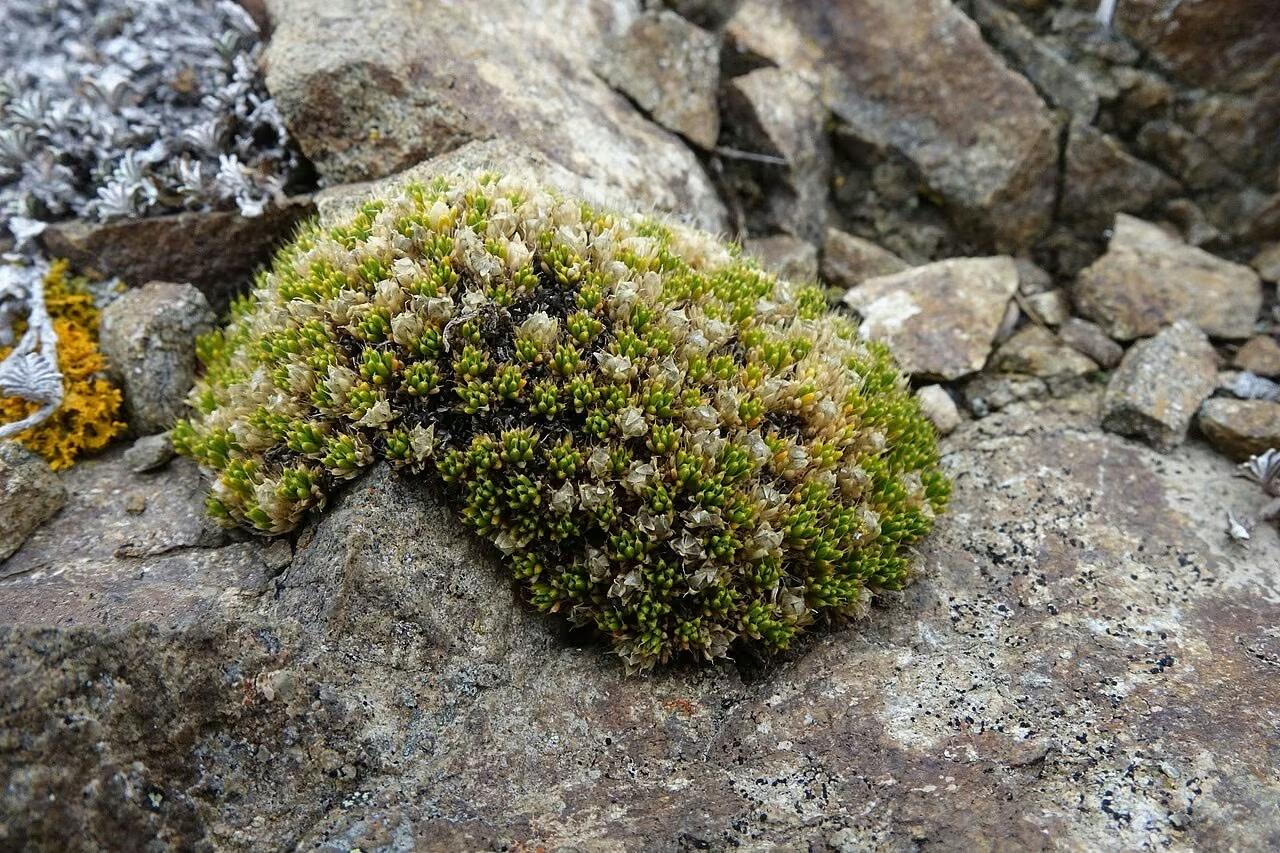
Colobanthus brevisepalus
Colobanthus brevisepalus
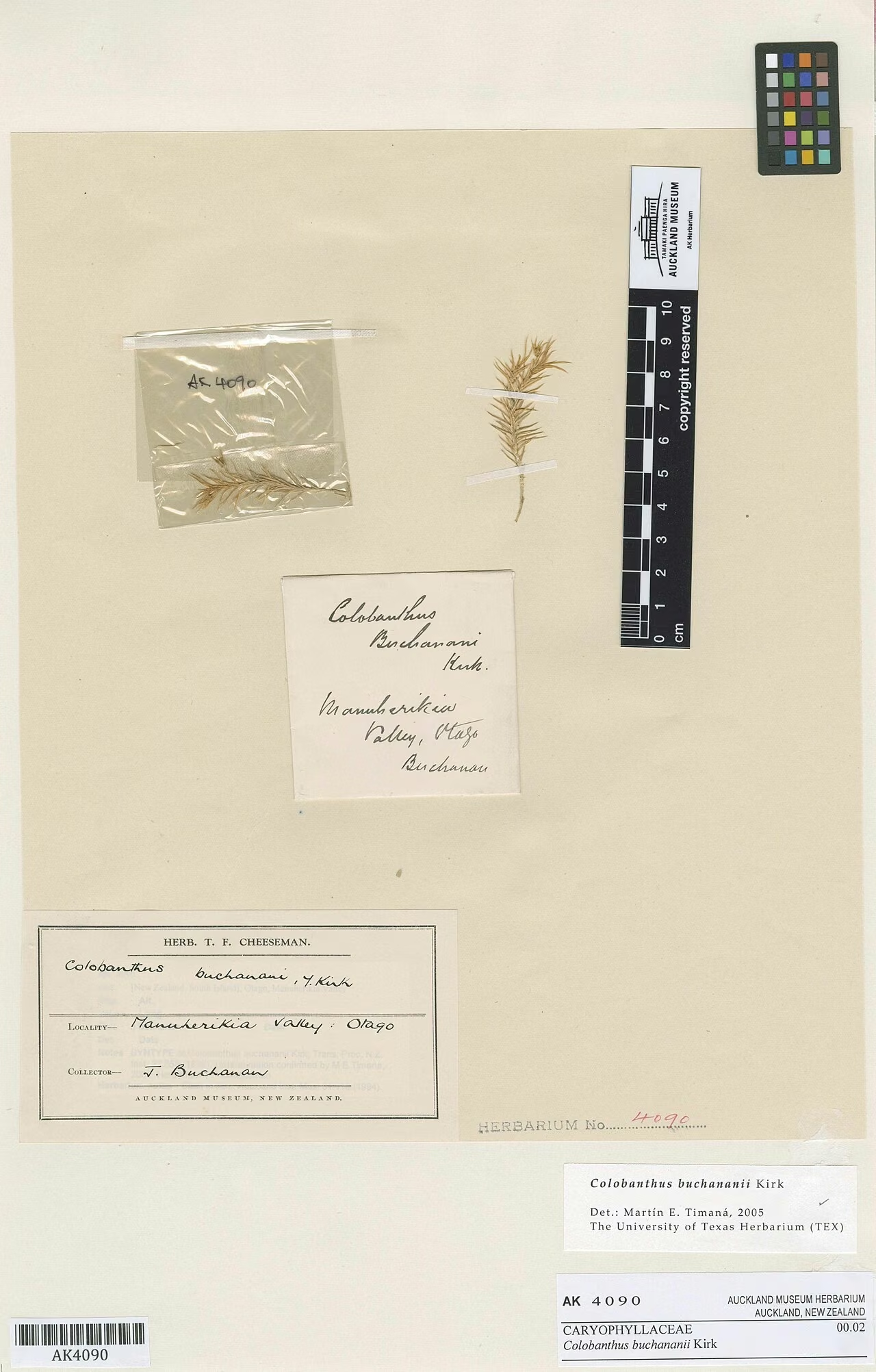
Colobanthus buchananii
Colobanthus buchananii
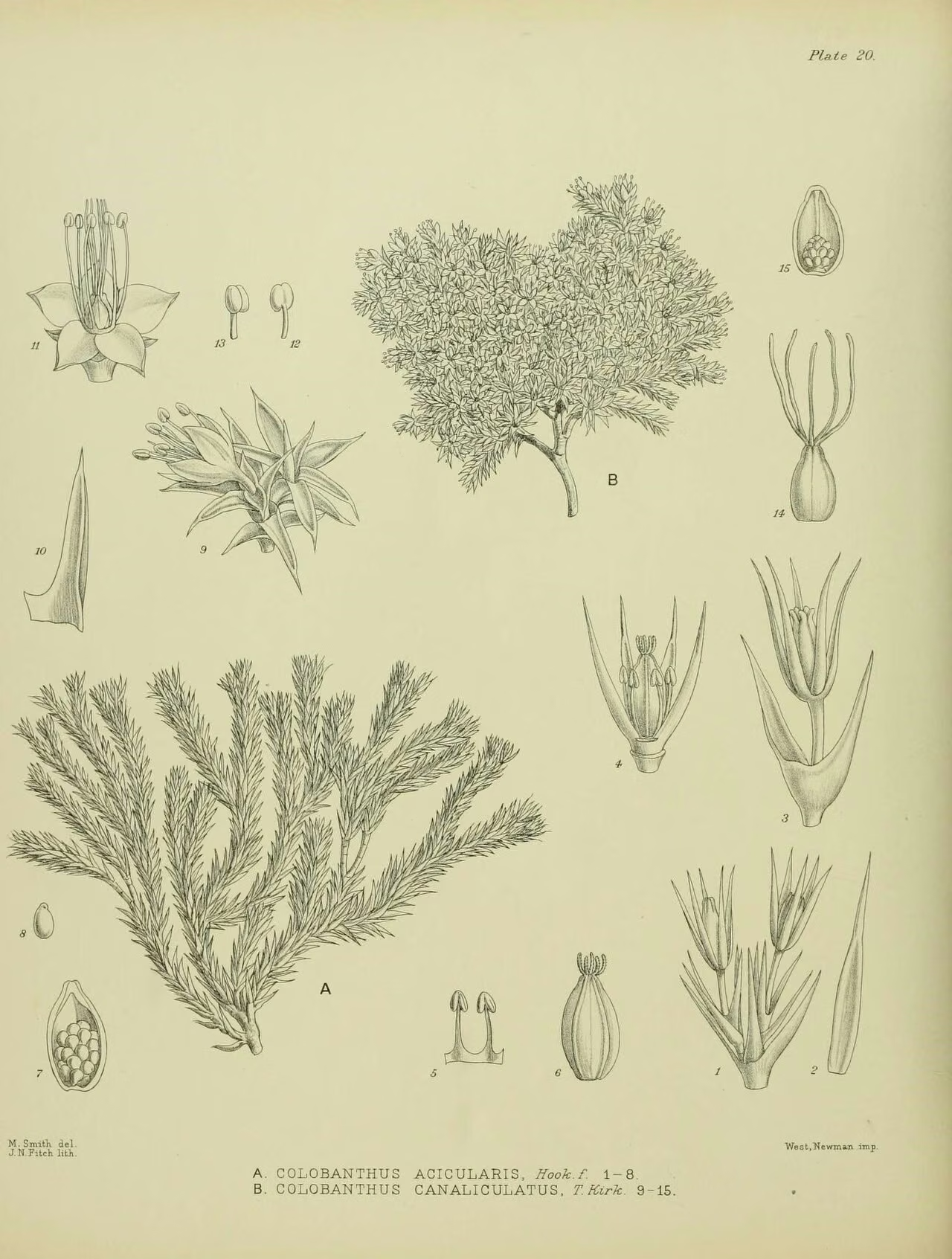
Colobanthus canaliculatus
Colobanthus canaliculatus
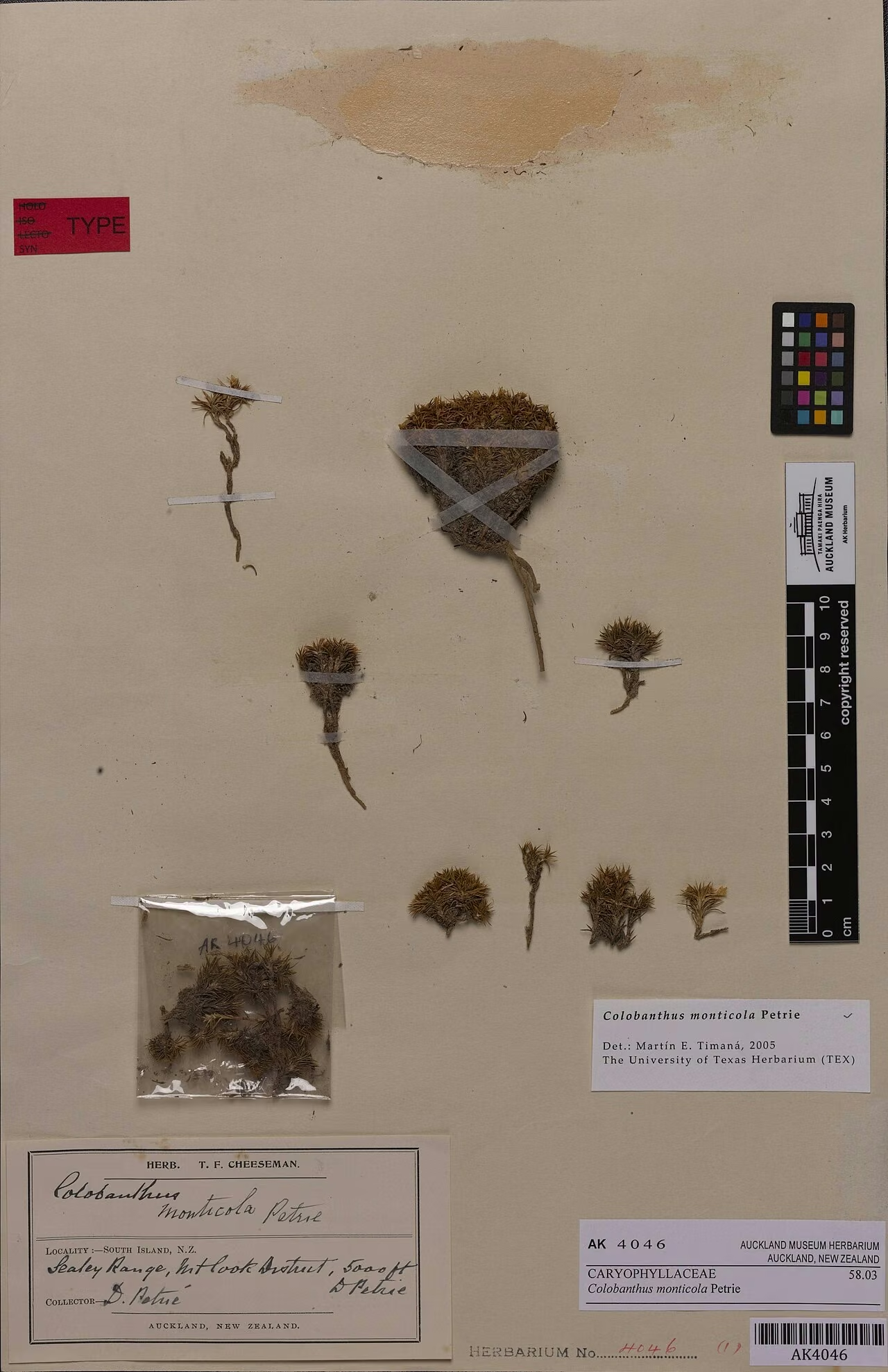
Colobanthus monticola
Colobanthus monticola
Colob. Acic.
Colobanthus Acicularis
Plant Conservation
Colobanthus apetalus is ranked Not Threatened (2023) with the qualifier Secure Overseas, reflecting its wider range in Australia and on Macquarie Island. Regionally, Otago and Wellington both list it as Regionally Naturally Uncommon (2025).
Because it is small and easily overlooked, it may be under-recorded. Protecting open, damp habitats such as wetland margins, sandy flats and montane stream banks from weeds and drainage is the best way to look after it.
Frequently Asked Questions
Why is it called Colobanthus apetalus?
Colobanthus means mutilated flower, because the flowers lack petals, and apetalus comes from the Latin a- (without) and petalum (petal). Both names point to its tiny green flowers made up only of sepals.
Where does Colobanthus apetalus grow in New Zealand?
In the North Island it is known from Mount Hikurangi, Maungapōhatu and the Kaimanawa, Ruahine and Tararua Ranges. It also grows in the South Island and on the Auckland and Campbell Islands, in sandy, peaty or muddy places up to 1200 m.
Is Colobanthus apetalus endemic to New Zealand?
No. It is indigenous to New Zealand but also native to south-eastern Australia and Macquarie Island. Its type specimen was collected in Tasmania and first named Spergula apetala by Labillardière in 1804.
Sources and Further Reading
The botanical, growing, and conservation details for Colobanthus (Colobanthus apetalus) on this page draw on the New Zealand plant references below. Consult them for full technical records and the latest distribution data.