Pin Cushion
Colobanthus brevisepalus
Last updated:
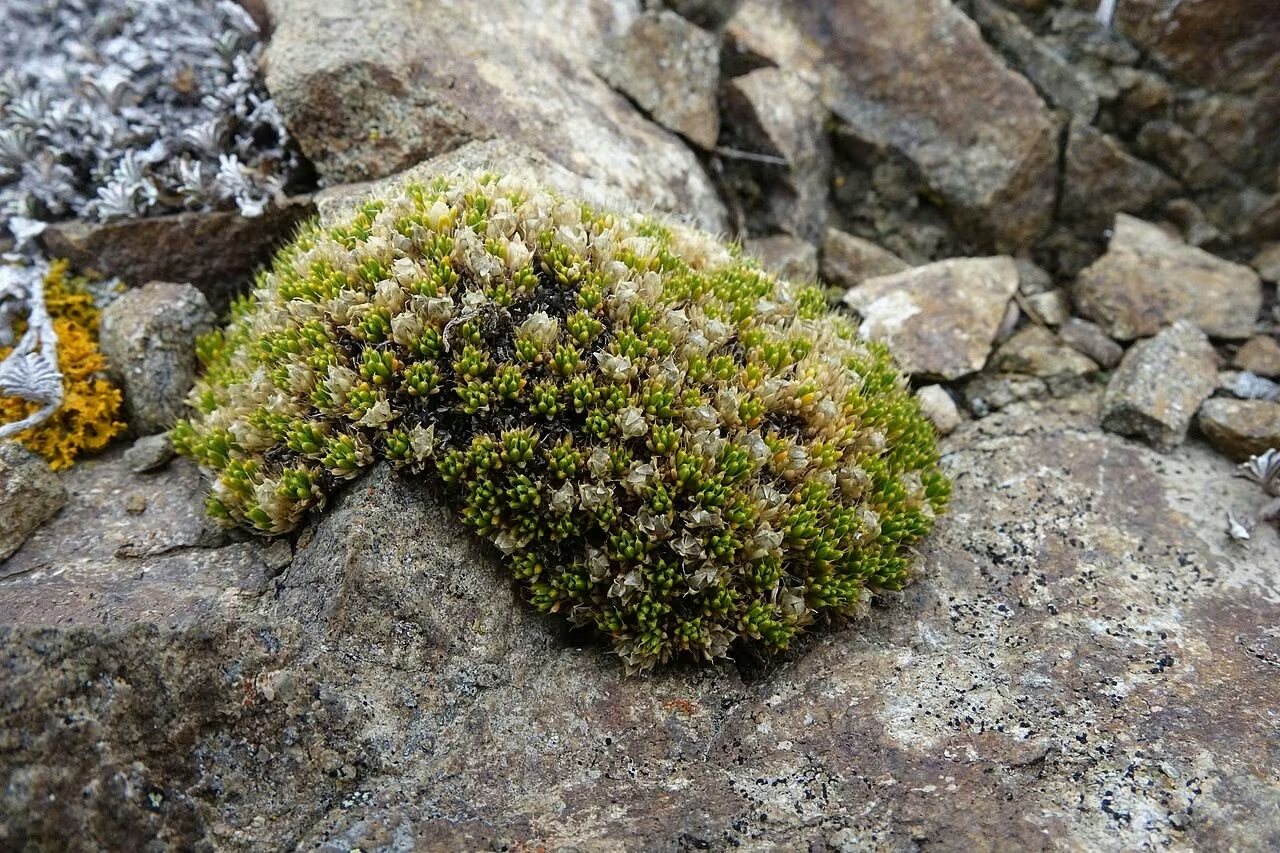
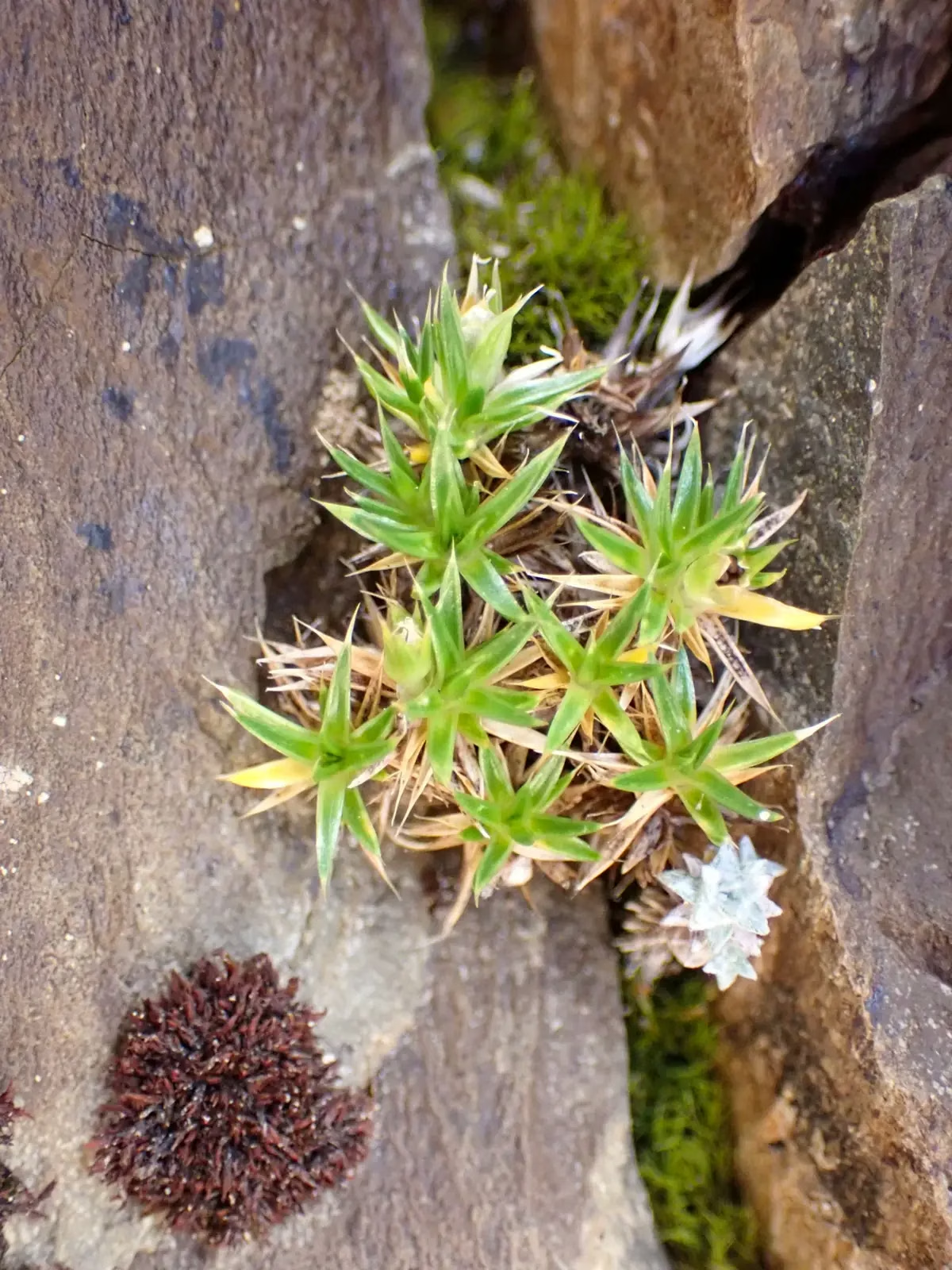
Pin cushion (Colobanthus brevisepalus) is a tiny cushion plant in the carnation family, endemic to the eastern South Island from Marlborough southwards. It forms hard, tight, often hemispherical cushions up to 8 cm across, made of many short stiff branches clothed in overlapping, needle-tipped leaves only 2 to 3 mm long. Small green flowers about 3 mm long sit among the leaves in spring. It grows on dry mountains, especially on limestone and its rendzina soils, and on schist outcrops, rocks, sandy banks and slopes. It is ranked At Risk - Declining, partly because aggressive introduced weeds have replaced it in parts of its range. Explore more native ground covers in our native plant guide.
Plant Description
Colobanthus brevisepalus forms a hard, tight, rigid cushion, often hemispherical, up to about 8 cm across. The cushion is built from many short, stiff, tightly packed branches that are closely covered with leaves.
The leaves curve in toward the stem and overlap densely. Each is 2 to 3 mm long, rounded on the back and ends in a fine, needle-like tip. The flowers are about 3 mm long and, like all Colobanthus, have no petals. They have five green sepals that are broader than the leaves, with a thickened midrib and a short needle-like tip. Flowering is in October and November, and capsules follow in December and January.
It is most likely to be confused with other cushion-forming Colobanthus. Colobanthus canaliculatus has longer, spreading leaves, whereas C. brevisepalus has shorter leaves pressed closely against the stems. The name brevisepalus means short sepals.
Quick Facts
| Scientific Name | Colobanthus brevisepalus |
|---|---|
| Height | A few centimetres |
| Spread | Cushions up to 8 cm across |
| Water Needs | Low; a plant of dry mountain sites |
| Light | Full sun, open rocky ground |
| Frost Tolerance | High; grows on frosty eastern mountains |
| Salt Tolerance | No reliable information available |
| Growth Rate | Very slow |
| Lifespan | Perennial cushion |
Climate Best Suited to
Suits dry, continental mountain climates east of the main divide, with cold winters, hot sunny summers and low rainfall. It dislikes humid, wet conditions.
Regional Suitability
| City | Climate Suitability |
|---|---|
| Auckland | Low |
| Wellington | Low |
| Christchurch | Medium |
| Dunedin | Medium |
Plant Habitat
Colobanthus brevisepalus is endemic to the South Island, east of the main divide from Marlborough southwards.
It grows on dry mountains, especially on limestone and the associated rendzina soils, and on schist outcrops, rocks, sandy banks and slopes. These are open, sunny, well-drained sites where low competition allows tiny cushion plants to persist.
Growing Requirements
Soil Requirements
It is closely associated with limestone and rendzina soils, and with schist rock and sandy banks.
- Very free-draining, gritty or rocky substrate
- Limestone chips suit it in cultivation
- Low fertility; rich soils encourage competitors
Light Requirements
It needs open, sunny ground, since taller plants easily shade out its small cushions.
- Full sun
- No overhanging vegetation or weeds
Water Requirements
As a plant of dry mountains, it is adapted to low rainfall and fast drainage.
- Water sparingly in cultivation
- Keep the cushion surface dry to avoid rot
- Water from below or at the edge of the pot
Planting and Establishing
This is a specialist plant for alpine house growers. NZPCN advises that it does best in pots in an alpine house, where moisture and humidity can be controlled.
Use a very gritty mix with added limestone chips and top-dress with grit around the neck of the cushion. Do not take plants from the wild; this is a declining species.
Ecological Role
Colobanthus brevisepalus belongs to the open rock and limestone herbfield communities of eastern South Island mountains, which hold a number of specialised small plants. NZPCN notes that Colobanthus seeds are winged and dispersed by water and possibly also by wind and ballistic projection.
Pollinators and other species associated with it are not documented in the sources consulted. Its persistence depends on keeping its open, rocky habitats free of taller introduced plants.
Uses & Significance
Garden Uses
It has no role in ordinary gardens, but it is a rewarding challenge for alpine plant specialists.
- Alpine house pots
- Tufa or limestone rock in a covered trough
- Conservation collections of declining dryland species
Ecological Value
It is part of the distinctive flora of eastern South Island limestone and schist outcrops.
- One of several endemic cushion Colobanthus
- Indicator of intact, weed-free rocky habitat
- A declining species that benefits from habitat protection
Landscaping Uses
Colobanthus brevisepalus is not a landscaping plant. In an alpine house it can be displayed in a shallow pan, tucked against a piece of limestone, where its neat, hard dome contrasts with the pale rock.
For the look of a tiny green cushion outdoors, gardeners are better choosing easier nursery-raised cushion or mat plants and leaving this species to specialists.
Seasonal Care Calendar
Spring
Flowering takes place in October and November, with tiny green petal-less flowers among the leaves.
- Inspect with a hand lens
- Increase watering slightly while in growth
Summer
Fruiting runs from December to January as capsules ripen.
- Shade alpine house plants from extreme heat
- Ensure good ventilation
Autumn
Growth slows as conditions cool.
- Top up grit around the cushion
- Check for rot or dead patches
Winter
The cushion rests through cold winters, as it would on frosty eastern mountains.
- Keep nearly dry
- Maximise airflow to prevent mould
When to Prune and How Much
Never prune. The cushion is a dense mass of short shoots and cutting it opens it to rot.
Remove any dead shoots with fine tweezers if brown patches appear.
How to Grow Pin Cushion
NZPCN notes that small divisions of Colobanthus brevisepalus can be grown but that the species is tricky and does best in pots within an alpine house. Because it is ranked At Risk - Declining, it should only be propagated from material already in cultivation or collected under appropriate authority, never dug from the wild. Seed is a second option: flowering is in October and November and capsules ripen in December and January, but no record of successful seed raising was found in the sources consulted, so treat it as experimental. Expect slow growth whichever method you use.
By Division
Divisions are small rosettes or shoot clusters separated from the edge of an established cultivated cushion. Taking only one or two small pieces at a time keeps the parent cushion intact and reduces the risk of rot spreading into it.
- Choose a healthy cultivated cushion in early spring
- Carefully detach a small cluster of shoots from the margin
- Insert into pure pumice or a very gritty limestone mix
- Keep cool, lightly moist and well ventilated in an alpine house
- Pot on only when roots fill the small pot
From Seed
Seed can be collected from capsules in early summer and sown fresh.
- Collect capsules as they turn brown in December or January
- Sow on the surface of a gritty mix with limestone chips
- Cover with a fine layer of grit
- Keep in a cool, bright, airy position
- Prick out seedlings very carefully once large enough
Pests & Diseases
No specific pests are recorded. In cultivation, rot in humid or wet conditions is the main cause of loss, which is why an alpine house is recommended.
In the wild, aggressive introduced weeds have replaced it in parts of its range by overgrowing the open ground it needs.
Cultural Significance
No Māori name or traditional use for Colobanthus brevisepalus was found in the sources consulted.
It was described by Thomas Kirk in 1895. The genus name Colobanthus means mutilated flower, referring to the lack of petals, and brevisepalus means short sepal.
Bonus Tip
If you botanise on eastern South Island limestone, look closely at small green domes on rock ledges and sandy banks: a cushion with short leaves pressed tightly to the stems may be this declining species. A photograph with a scale and location uploaded to iNaturalist NZ helps fill gaps, since few modern collections exist.
Related Plants
Explore other native plants that share similar characteristics or habitats with Pin Cushion (Colobanthus brevisepalus), offering further insights into New Zealand's diverse flora. These related species provide context and opportunities for complementary planting in your garden.
Clematis petriei
Clematis petriei
Koru
Lobelia physaloides
Colobanthus apetalus
Colobanthus apetalus
Colobanthus buchananii
Colobanthus buchananii
Colobanthus canaliculatus
Colobanthus canaliculatus
Colobanthus monticola
Colobanthus monticola
Colobanthus muelleri
Colobanthus muelleri
Colob. Acic.
Colobanthus Acicularis
Plant Conservation
Colobanthus brevisepalus is ranked At Risk - Declining (2023) with the qualifiers Sparse, Data Poor Size and Data Poor Trend. NZPCN considers it probably not seriously threatened, but in parts of its range it has been replaced by aggressive introduced weeds, and the scarcity of modern collections suggests it may be declining or overlooked.
Weed control on limestone and schist outcrops, protection of dryland habitat and better survey records are the actions most likely to help it.
Frequently Asked Questions
How do you identify Colobanthus brevisepalus?
Look for a hard, rigid, rounded cushion up to 8 cm across with leaves 2 to 3 mm long that curve in towards the stem and overlap densely. Its short sepals are broader than the leaves, with a thickened midrib and a short needle tip.
How is pin cushion different from Colobanthus canaliculatus?
Colobanthus brevisepalus has shorter leaves that overlap closely along the stem, while C. canaliculatus has longer leaves that spread outward, giving it a looser appearance.
Why is Colobanthus brevisepalus listed as declining?
In parts of its range on dry eastern hill country it has been replaced by aggressive introduced weeds. It has also been collected rarely in recent times, which may mean it is declining or simply overlooked.
Can you grow Colobanthus brevisepalus?
NZPCN says small divisions can be grown, but the species is tricky and does best in pots in an alpine house rather than in the open garden.
Sources and Further Reading
The botanical, growing, and conservation details for Pin Cushion (Colobanthus brevisepalus) on this page draw on the New Zealand plant references below. Consult them for full technical records and the latest distribution data.