Oval Wedge Fern
Lindsaea trichomanoides
Last updated:
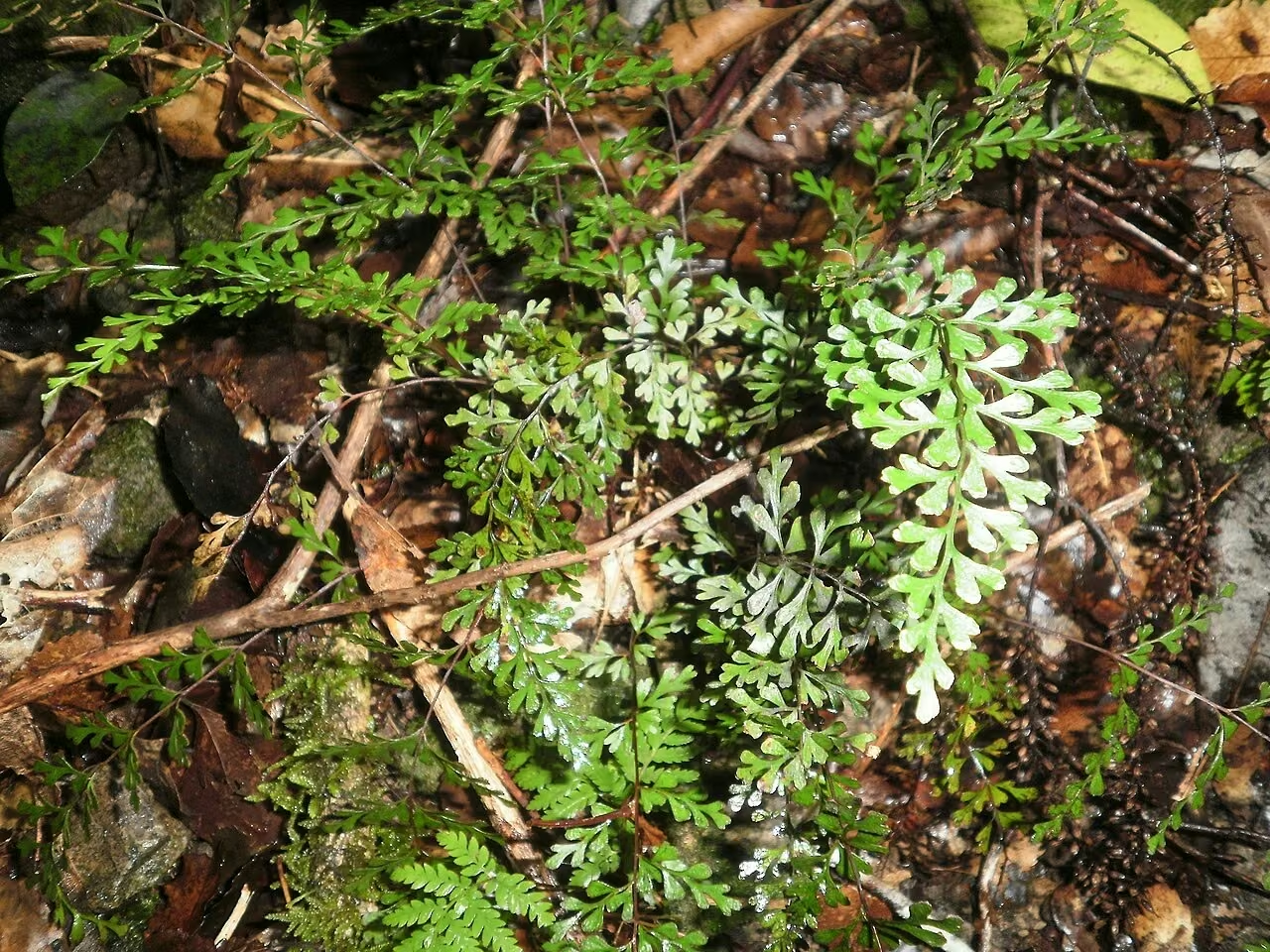
Lindsaea trichomanoides, sometimes called oval wedge fern, is a small tufted ground fern with upright, oval, bright green fronds usually 7 to 44 cm long. Its glossy red-brown stems carry finely divided blades made up of small fan-shaped to rounded segments, giving it a dainty, almost maidenhair-like look. In New Zealand it grows mainly in the west, from Te Paki in the far north through the North Island, and in the South Island from the Marlborough Sounds down the West Coast, reaching Stewart Island. It lives on the floor of kauri, podocarp, broadleaved and beech forest. It also occurs in eastern Australia and is ranked Not Threatened. Explore more native ferns in our native plant guide.
Plant Description
Lindsaea trichomanoides is a terrestrial, tufted fern with short- to long-creeping rhizomes up to about 20 cm long, clothed in reddish-brown scales. All the fronds look alike (monomorphic) and are held upright. The stipes and rachises are glossy and red-brown to dark brown, and the frond blade is oval to lance-shaped, usually 2-pinnate to 2-pinnate-pinnatifid, though occasionally only once-pinnate-pinnatifid or up to 3-pinnate.
The ultimate segments are small, ovate to obovate, asymmetric and fan-shaped with blunt or rounded tips and often irregular outer margins. The veins are free. Sori sit along the outer margins of the segments, protected by an indusium that curves around the margin and has a more or less entire free edge. Plants are highly variable in how finely the blade is divided.
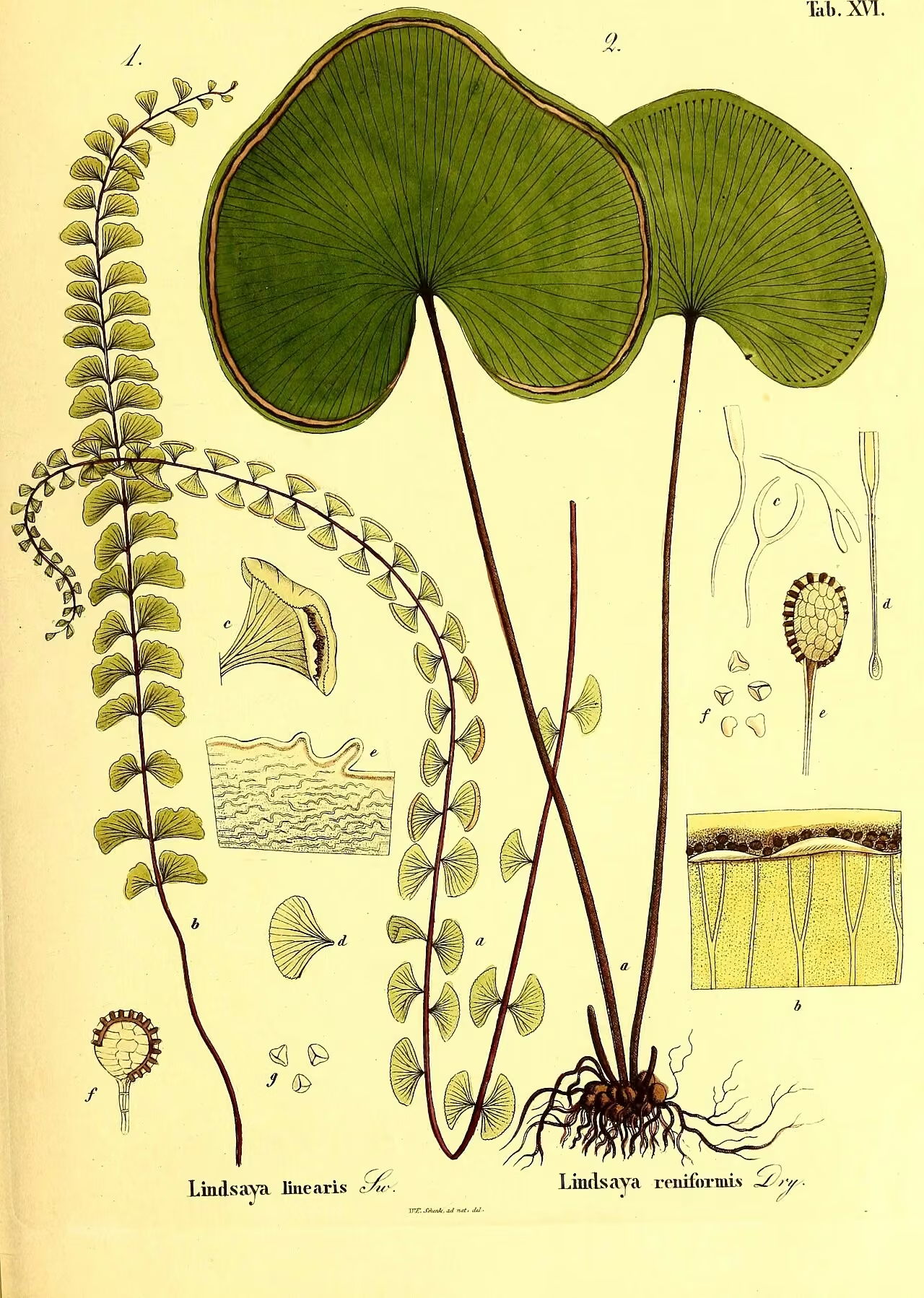
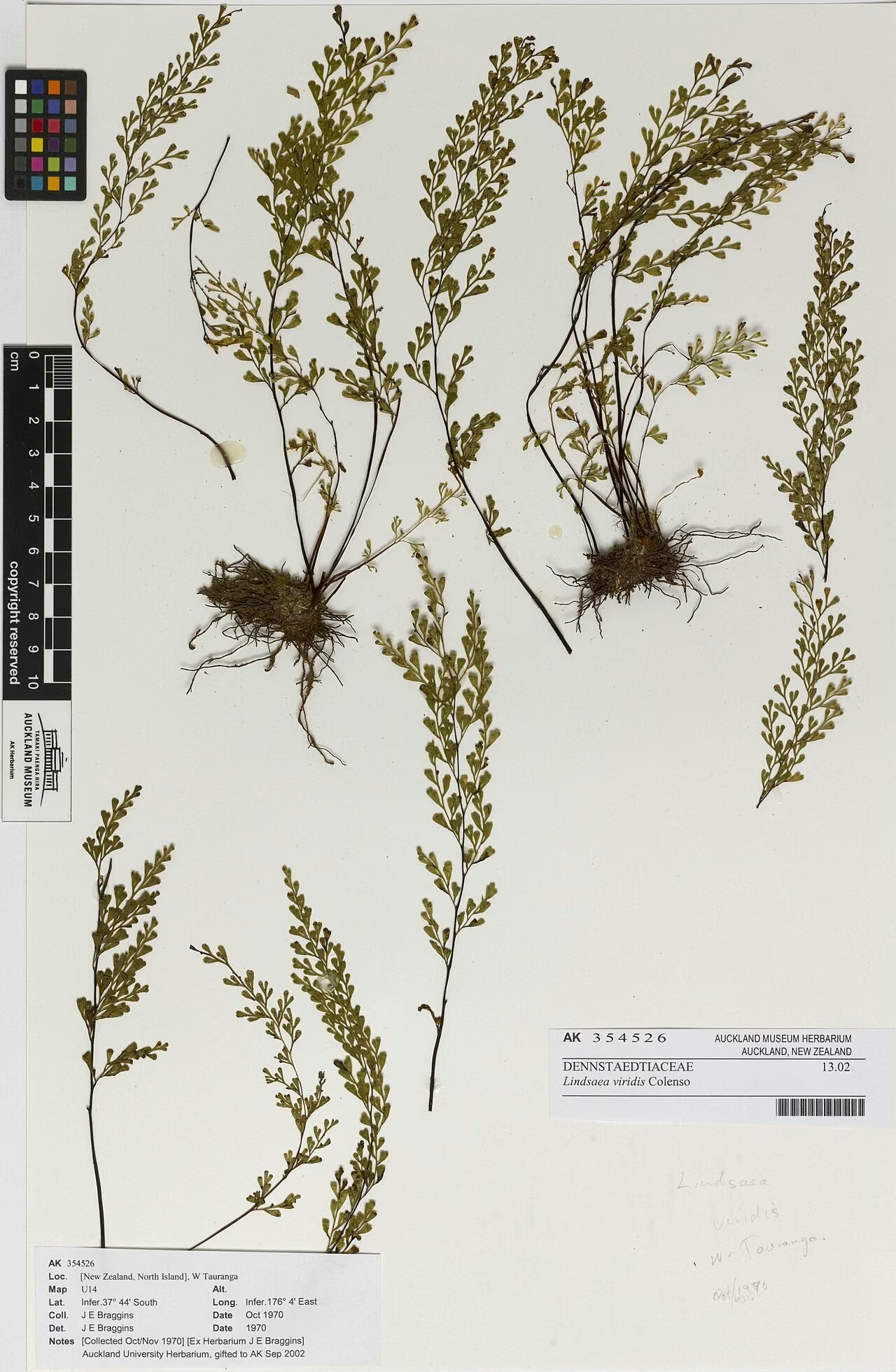
Of the other New Zealand Lindsaea species, L. linearis is a plant of open gumland and pakihi with narrow, once-pinnate fronds, and L. viridis grows on wet rocks with pendulous, narrower, more finely divided fronds whose segments have squared-off tips. The rounded segments and red-brown stems of L. trichomanoides can recall a small maidenhair (Adiantum), and the species was once named Adiantum cuneatum, but its sori are covered by a true indusium rather than a folded-over leaf margin.
Quick Facts
| Scientific Name | Lindsaea trichomanoides |
|---|---|
| Height | Fronds 0.07-0.44 m |
| Spread | Small tufts or patches from rhizomes up to 20 cm long |
| Water Needs | Evenly moist, humid forest floor |
| Light | Shade to filtered light under forest canopy |
| Frost Tolerance | Moderate; recorded to about 1050 m |
| Salt Tolerance | No reliable information available |
| Growth Rate | Slow |
| Lifespan | Perennial |
Climate Best Suited to
It suits mild, humid, high-rainfall forest climates, which is why it is concentrated in the wetter western half of the country from Northland to Stewart Island.
Regional Suitability
| City | Climate Suitability |
|---|---|
| Auckland | High |
| Wellington | Medium |
| Christchurch | Low |
| Dunedin | Low |
Plant Habitat
In the North Island it ranges from Te Paki southward and is common in western districts but scarcer in the east. In the South Island it occurs in the Marlborough Sounds and down the West Coast, with Flora of New Zealand recording it as far as Fiordland and Stewart Island/Rakiura. It extends from near sea level to about 1050 m on Mt Hauhungatahi, though it is rarely found above 750 m. Outside New Zealand it grows in New South Wales, Victoria and Tasmania.
It is a forest-floor fern of coastal to montane closed forest, sometimes scrub. It grows under kauri, podocarp, broadleaved and beech forest, or under mānuka and kānuka, on the ground or at the base of tree trunks, among roots, in leaf litter and humus hummocks, on logs, stream and track banks and in damp gullies, often in relatively open patches of the floor or among Carex sedges.
Growing Requirements
Soil Requirements
In the wild it roots into leaf litter, humus and decaying wood rather than mineral soil, typically on low-fertility forest ground.
- Free-draining, humus-rich, slightly acidic medium
- Leaf litter or decayed bark mixed into the surface
- Avoid fertiliser and heavy, compacted clay
Light Requirements
It grows under a closed canopy, usually in the brighter gaps of the forest floor rather than the deepest shade.
- Dappled or filtered light
- Shelter from direct afternoon sun, which scorches the thin fronds
Water Requirements
It needs a constantly humid setting with moist but not waterlogged litter.
- Keep the root zone evenly moist
- Protect from drying wind
- Do not let it sit in standing water
Planting and Establishing
NZPCN rates this fern as difficult to propagate and states it should not be removed from the wild, and it is rarely offered by nurseries. Where a nursery-raised plant is available, set it into a sheltered, shaded spot with deep leaf litter, such as under established native trees or beside a log in a fernery, at the same depth it was growing in its pot.
Water in gently and mulch with fine leaf litter rather than coarse bark. Disturb the rhizome as little as possible, as small forest ferns of this kind tend to sulk after root damage.
Ecological Role
Like all ferns it reproduces by wind-dispersed spores and does not need pollinators. Its spores are shed from marginal sori, and the tiny gametophytes need damp, sheltered ground to grow and produce new plants.
It is part of the low ground layer of mature and regenerating western forests, growing alongside sedges, mosses and other small ferns in leaf litter, and it also appears under mānuka and kānuka scrub, indicating it can establish as forest matures from scrub. Specific insect associations are not documented.
Uses & Significance
Garden Uses
This is a plant for specialist fern growers rather than general gardens, valued for its delicate texture.
- Shaded native fernery or woodland floor
- Terrarium or shade-house collection
- Underplanting beneath established native trees in humid gardens
Ecological Value
It contributes to the diverse ground flora of lowland and montane western forests.
- Indicator of intact, humid forest floor
- Helps bind leaf litter and humus on banks
- Part of New Zealand's small Lindsaeaceae flora of only four species
Landscaping Uses
In a planted forest restoration project in its natural range, it will often arrive by itself as spores blow in once canopy shade and litter have built up, so there is little need to plant it. In a home fernery its bright green, rounded segments contrast well with the dark leaves of kiokio or the coarse fronds of hard ferns.
Group it close to paths where the fine detail of the fronds can be appreciated, and keep larger ferns from smothering it.
Seasonal Care Calendar
Spring
New fronds unfurl as temperatures rise.
- Keep moisture steady while young fronds expand
- Watch for slugs on new growth
Summer
Fronds are fully expanded and sori develop on the segment margins.
- Water during dry spells
- Maintain shade and humidity
Autumn
Spores are released from the marginal sori.
- Collect fertile fronds for spore sowing if you have a cultivated plant
- Top up leaf litter mulch
Winter
Growth slows but the fronds remain green in mild areas.
- Avoid waterlogging
- Shelter from hard frost in cold districts
When to Prune and How Much
It needs no pruning. Remove only dead or damaged fronds at the base with fine scissors, taking care not to cut into the creeping rhizome.
Leave fallen leaf litter around the plant, as it acts as the natural mulch and nutrient source this fern relies on.
How to Grow Oval Wedge Fern
NZPCN describes Lindsaea trichomanoides as difficult to propagate and says it should not be removed from the wild, so propagation should only use spores or divisions from plants already in cultivation, or material collected under permission for a restoration project. Spores are the more reliable route, although germination and early growth are slow and the young plants need consistently high humidity. Division of the creeping rhizome is possible on a well-established cultivated clump but often sets the plant back.
From Spores
Sori are carried along the margins of the ultimate segments. Collect a fertile frond when the sori have darkened but not yet shed, and dry it on clean paper to release the fine spores.
- Place a mature fertile frond in a paper envelope for a few days to release spores
- Sterilise a fine, peat-free or peat-based seed mix by pouring boiling water through it, then let it cool
- Dust spores thinly over the surface without covering them
- Cover the pot with clear plastic or glass and stand it in a saucer of water in bright indirect light
- Keep sealed and moist while the green prothalli form over several weeks to months
- Mist once sporelings appear, then prick out small clumps into individual pots
- Grow on in shade and high humidity before slowly hardening off
By Division
Large cultivated clumps with several growing points along the rhizome can be divided carefully, ideally in spring as new growth begins.
- Lift the clump with plenty of its root ball and litter intact
- Cut the rhizome into sections, each with several fronds and roots
- Pot into a humus-rich, free-draining mix at the original depth
- Keep shaded and humid until new fronds appear
Pests & Diseases
No specific pest or disease problems are recorded for this species. In cultivation slugs and snails may graze young unfurling fronds, and drying out or direct sun is a more common cause of failure than any pest.
Overly wet, airless conditions in a shade house can encourage fungal rots on the rhizome, so combine humidity with good drainage and some air movement.
Cultural Significance
No Māori name or traditional Māori use is recorded for Lindsaea trichomanoides in the sources consulted. The common name oval wedge fern, used by some nurseries, refers to the oval outline of the frond and its wedge-shaped segments.
The genus honours John Lindsay, a British surgeon working in Jamaica who discovered how fern spores germinate. The species was once treated as Adiantum cuneatum, reflecting its resemblance to the maidenhair ferns.
Bonus Tip
If you are trying to tell this fern from a small maidenhair in the field, turn a fertile frond over: in maidenhair the sori sit under a folded-back flap of the leaf edge, while in Lindsaea trichomanoides they lie in a continuous line along the segment margin covered by a separate thin indusium that opens towards the edge.
Related Plants
Explore other native plants that share similar characteristics or habitats with Oval Wedge Fern (Lindsaea trichomanoides), offering further insights into New Zealand's diverse flora. These related species provide context and opportunities for complementary planting in your garden.
Plant Conservation
Lindsaea trichomanoides is ranked Not Threatened under the 2023 New Zealand Threat Classification System assessment, and it is also regionally Not Threatened in Northland, Auckland and Wellington. It is common in western North Island forests.
Its main requirement is intact, humid forest floor, so protecting forest from clearance, stock trampling and browsing by deer, goats and pigs, which disturb the litter layer, benefits it. Plants should not be dug from the wild.
Frequently Asked Questions
What does Lindsaea trichomanoides look like?
It forms small tufts of upright, oval, bright green fronds on glossy red-brown stipes, with blades usually twice divided into small rounded or fan-shaped segments.
How is it different from Lindsaea viridis?
Lindsaea viridis grows on wet rocks by streams and has pendulous, narrower, more finely divided fronds, while L. trichomanoides grows on the forest floor with upright, wider fronds and longer creeping rhizomes.
Where does Lindsaea trichomanoides grow in New Zealand?
It is a western fern, found from Te Paki through the western North Island, the Marlborough Sounds and the West Coast to Stewart Island, from near sea level to about 1050 m.
Is Lindsaea trichomanoides endemic to New Zealand?
No. It is indigenous but also grows in New South Wales, Victoria and Tasmania in eastern Australia.
Sources and Further Reading
The botanical, growing, and conservation details for Oval Wedge Fern (Lindsaea trichomanoides) on this page draw on the New Zealand plant references below. Consult them for full technical records and the latest distribution data.