Lignocarpa
Lignocarpa carnosula
Last updated:
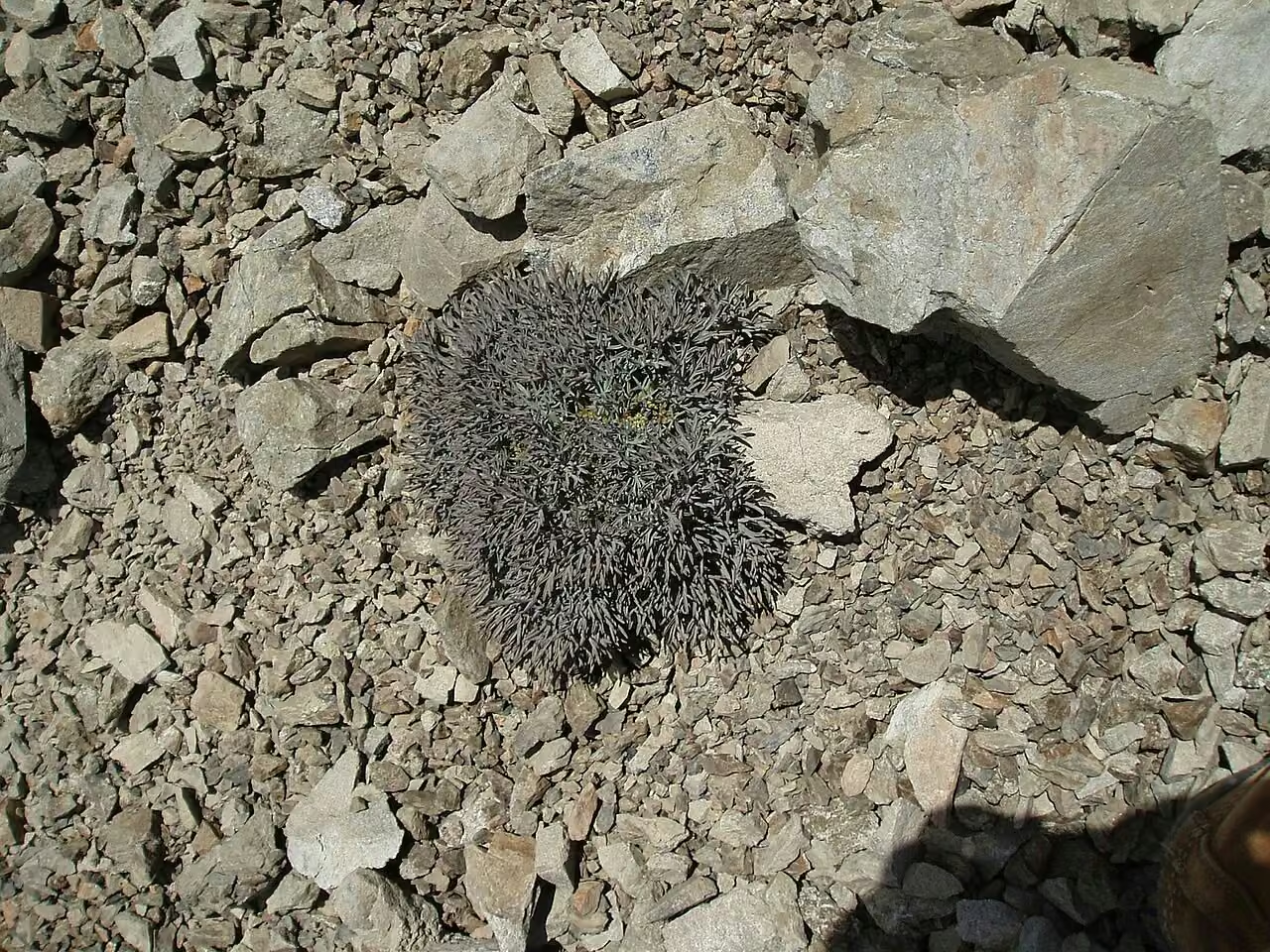
Lignocarpa carnosula is a small, fleshy alpine herb in the carrot family (Apiaceae) that grows on rocks and scree in the mountains of the South Island. It rarely reaches 15 cm tall, and its sprawling stems and finely divided leaves are thick, succulent and a dark slate to blue-grey colour that blends with the stones around it. In summer it bears white flowers in umbels up to 10 cm across. Lignocarpa is a genus found only in New Zealand, containing just two species, and this is the more southern of the pair. It is ranked Not Threatened. Explore more native flowering plants in our native plant guide.
Plant Description
Lignocarpa carnosula is a hairless perennial herb with a branching taproot. Every above-ground part is thick and fleshy, and the sprawling shoots are dark slate to blue-grey with a pronounced waxy (glaucous) bloom. It is small, hardly reaching 15 cm tall. There are few to many leaves on stalks 2 to 4 cm long, and the leaf blades are divided two or three times into threes, ending in narrow-linear segments.
The flowers are carried in solitary compound umbels, 5 to 10 cm across. The petals are white, 2 to 3 mm long and incurved. In this genus plants are either female, or carry male and hermaphrodite flowers together, so individual plants differ in their flowers. The fruit is small and oblong, roughly 3 to 6 mm long, with ribbed mericarps, and the genus name (meaning woody fruit) refers to its hard fruit.
The only other member of the genus, Lignocarpa diversifolia, looks very similar in size, colour and fleshiness. Wikipedia notes that L. diversifolia has simple secondary bracts, and its range lies further north, so locality is a useful first guide. Both could be mistaken for small Anisotome species, but their fleshy blue-grey foliage and scree habitat are distinctive.
Quick Facts
| Scientific Name | Lignocarpa carnosula |
|---|---|
| Height | Up to about 0.15 m |
| Spread | Sprawling; width not documented |
| Water Needs | Moist below, sharply drained on the surface |
| Light | Full sun on open scree |
| Frost Tolerance | High; an alpine species |
| Salt Tolerance | No information available; an alpine species |
| Growth Rate | Slow |
| Lifespan | Perennial |
Climate Best Suited to
Suits a cold alpine climate with snow cover, hard frosts, strong sun and cool summers. It is not suited to lowland or humid warm climates.
Regional Suitability
| City | Climate Suitability |
|---|---|
| Auckland | Low |
| Wellington | Low |
| Christchurch | Low |
| Dunedin | Low |
Plant Habitat
Lignocarpa carnosula is endemic to the South Island and is described as the Lignocarpa of the southern Southern Alps. A herbarium specimen in the Allan Herbarium comes from Miromiro in the Hanmer Range, Canterbury. Precise altitudinal limits and a full list of localities were not found in the sources consulted.
It grows on rocks and scree in alpine terrain. Scree plants such as this typically have long roots anchored in stable, moist layers below the loose surface stones, and fleshy, stone-coloured shoots that can survive being buried or battered as the scree moves.
Growing Requirements
Soil Requirements
Its home is loose, rocky scree with fine material and moisture beneath the surface stones.
- Deep, coarse, stony substrate
- Very low organic matter
- Perfect surface drainage with cool moisture below
Light Requirements
Screes are open, unshaded places with intense alpine light.
- Full sun
- No overhanging vegetation
Water Requirements
Moisture comes from snowmelt and rain held in the fine material deep among the stones, while the surface dries quickly.
- Keep the root run cool and moist
- Never allow water to sit around the crown
Planting and Establishing
This is a plant for specialist alpine growers only and it is not offered commercially. If grown at all, it needs a deep scree bed or tall pot of coarse grit with a little fine material, allowing its taproot to go down into cooler, moister layers.
Plant into its final position while small, because disturbing a taproot is usually fatal. Top-dress with stone chips so the crown stays dry. Wild plants should never be dug up.
Ecological Role
Little has been published about the ecology of this species. Its white umbels are open and accessible, the kind of flower visited by flies and other small alpine insects, but specific pollinators are not recorded. Because some plants bear only female flowers, cross-pollination between plants is needed for those individuals to set seed.
It is one of the specialised herbs that make up New Zealand's distinctive scree flora, a community of plants able to cope with moving stone, drought at the surface and intense sun.
Uses & Significance
Garden Uses
Its use is confined to alpine collections and scree gardens maintained by experienced growers.
- Specialist alpine house or scree bed
- Botanical collections of New Zealand Apiaceae
- Educational displays of scree adaptation
Ecological Value
As a member of an endemic genus restricted to New Zealand screes, it adds to the uniqueness of the South Island alpine flora.
- Flowers for alpine insects
- Part of the endemic scree plant community
- One of only two species in an endemic genus
Landscaping Uses
In a scree garden, place it among grey stones of similar colour, where its slate-blue foliage looks natural. It pairs well with other scree specialists in a deep, gritty bed.
It has no place in general landscaping; its value is botanical rather than ornamental.
Seasonal Care Calendar
Spring
Shoots emerge as snow melts from the screes.
- New growth appears
- Check drainage after snowmelt
Summer
Summer is the flowering season, with white umbels held above the fleshy leaves.
- Flowering
- Keep roots cool in hot weather
Autumn
Hard, ribbed fruits ripen on female and hermaphrodite plants.
- Collect ripe fruit for sowing
- Remove fallen leaves from the scree
Winter
The plant is dormant beneath snow in its natural habitat.
- Protect potted plants from winter wet
- No frost protection needed
When to Prune and How Much
No pruning is required. Remove spent flower stems after seed has been collected if they look untidy.
Any dead or rotting foliage should be cleared away from the crown to reduce the risk of fungal problems in a cultivated setting.
How to Grow Lignocarpa
No propagation information specific to Lignocarpa carnosula was found in NZPCN or the Flora of New Zealand, and the species is not in commercial cultivation. The notes below follow general practice for New Zealand alpine Apiaceae such as Anisotome and Aciphylla, which are usually raised from fresh seed. Because plants may be female or carry male and hermaphrodite flowers, seed will only form on plants that have been pollinated.
From Seed
Fresh seed of alpine umbellifers usually gives the best results, and a period of winter cold often helps germination. Sow seed from cultivated plants or seed collected with permission; do not collect from protected areas without authorisation.
- Collect the hard, ribbed fruits when they are dry and ripe in late summer or autumn
- Sow promptly in deep pots of gritty, low-fertility mix
- Cover with a thin layer of fine grit
- Leave the pots outdoors over winter so the seed receives natural chilling
- Keep the mix just moist and watch for germination in spring
- Transplant seedlings while very young into individual deep pots to protect the taproot
Division and Cuttings
Plants grow from a branching taproot, which makes division risky and cuttings unlikely to succeed. Seed remains the only practical method.
- Avoid lifting or dividing established plants
- If a crown has several separate shoots with their own roots, any separation should be done with great care in early spring
- Pot any separated piece into deep gritty mix and keep it cool and lightly shaded until it re-establishes
Pests & Diseases
No specific pests or diseases are recorded for this species. In cultivation the main dangers are rotting in winter wet and slugs and snails grazing on the succulent foliage.
In the wild, introduced browsing animals such as hares and chamois affect alpine herbfields, though no specific impacts on this species are documented.
Cultural Significance
No Māori name or traditional use is recorded for this plant. It is an inconspicuous scree herb, and nothing in the sources consulted connects it to customary use.
Its scientific history reflects changing ideas about New Zealand's carrot family: J.D. Hooker first described it in Ligusticum, it was later placed in Anisotome, and in 1967 J.W. Dawson created the endemic genus Lignocarpa for it and its northern relative.
Bonus Tip
If you come across a low, thick-leaved, blue-grey herb on scree in the southern Southern Alps, look at the flowers: plants of this species can carry only female flowers or a mix of male and hermaphrodite flowers, so comparing two neighbouring plants can reveal the difference.
Related Plants
Explore other native plants that share similar characteristics or habitats with Lignocarpa (Lignocarpa carnosula), offering further insights into New Zealand's diverse flora. These related species provide context and opportunities for complementary planting in your garden.
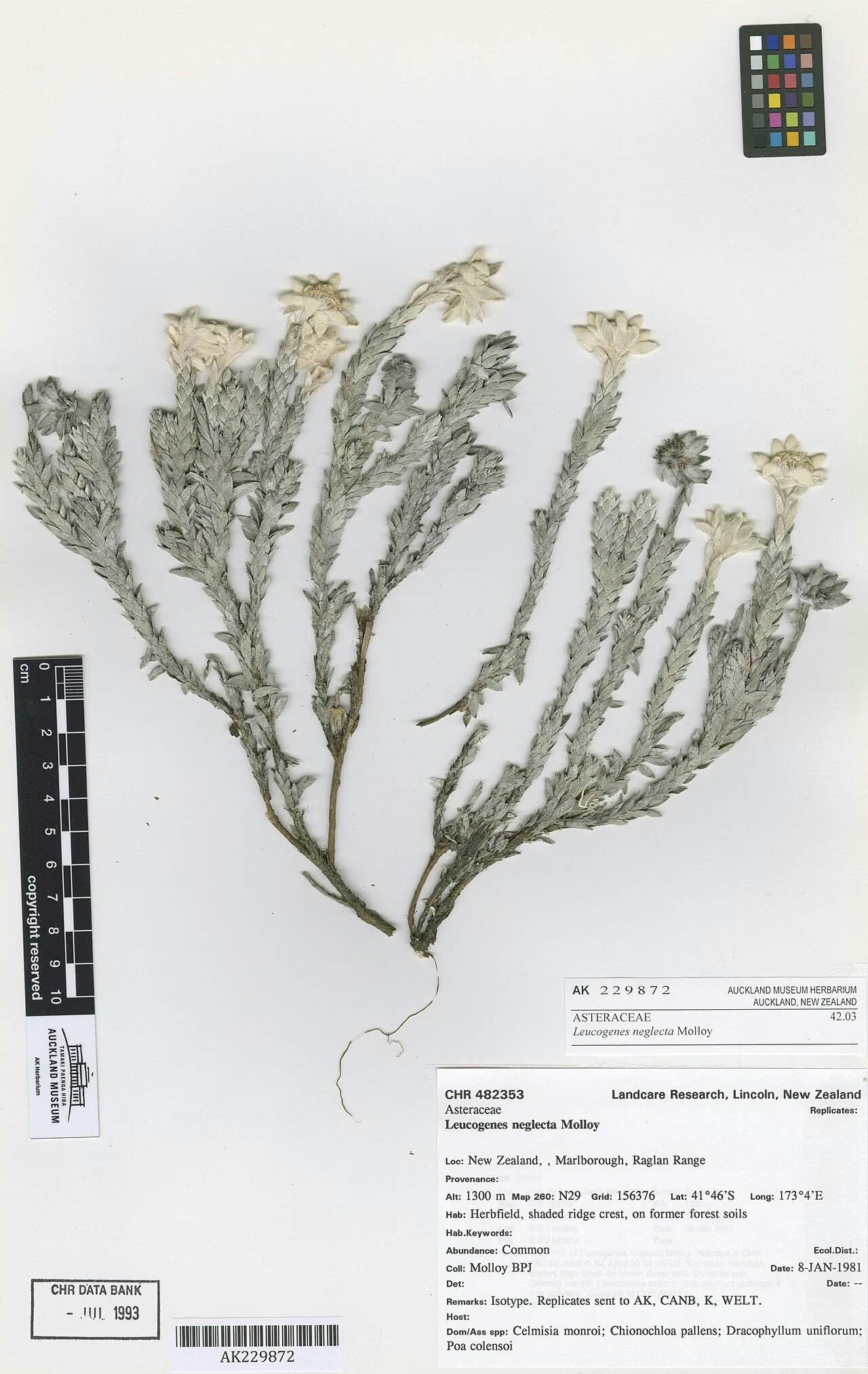
Marlborough Edelweiss
Leucogenes neglecta
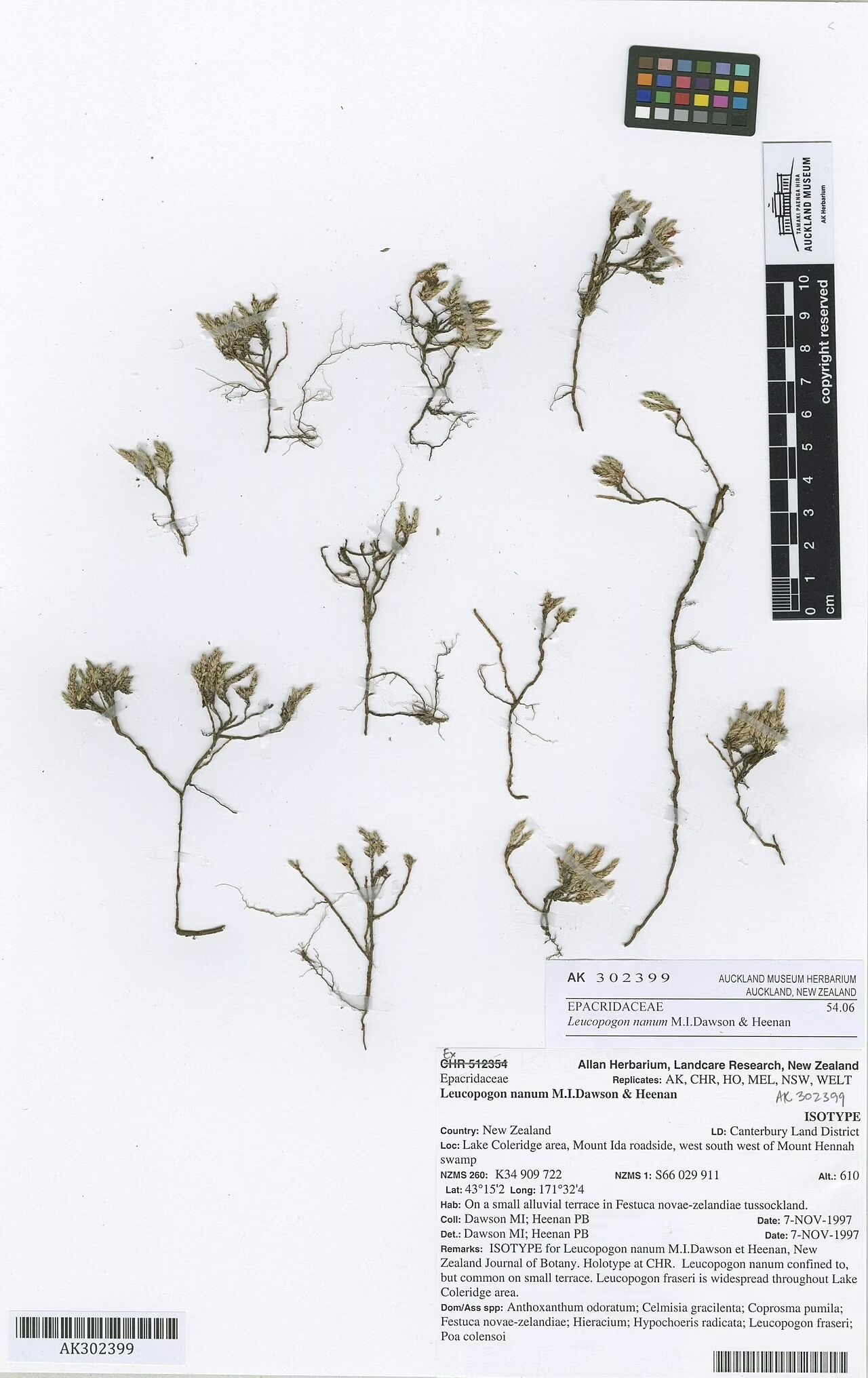
Styphelia nana
Styphelia nana
Surville Cliffs Mingimingi
Leucopogon xerampelinus
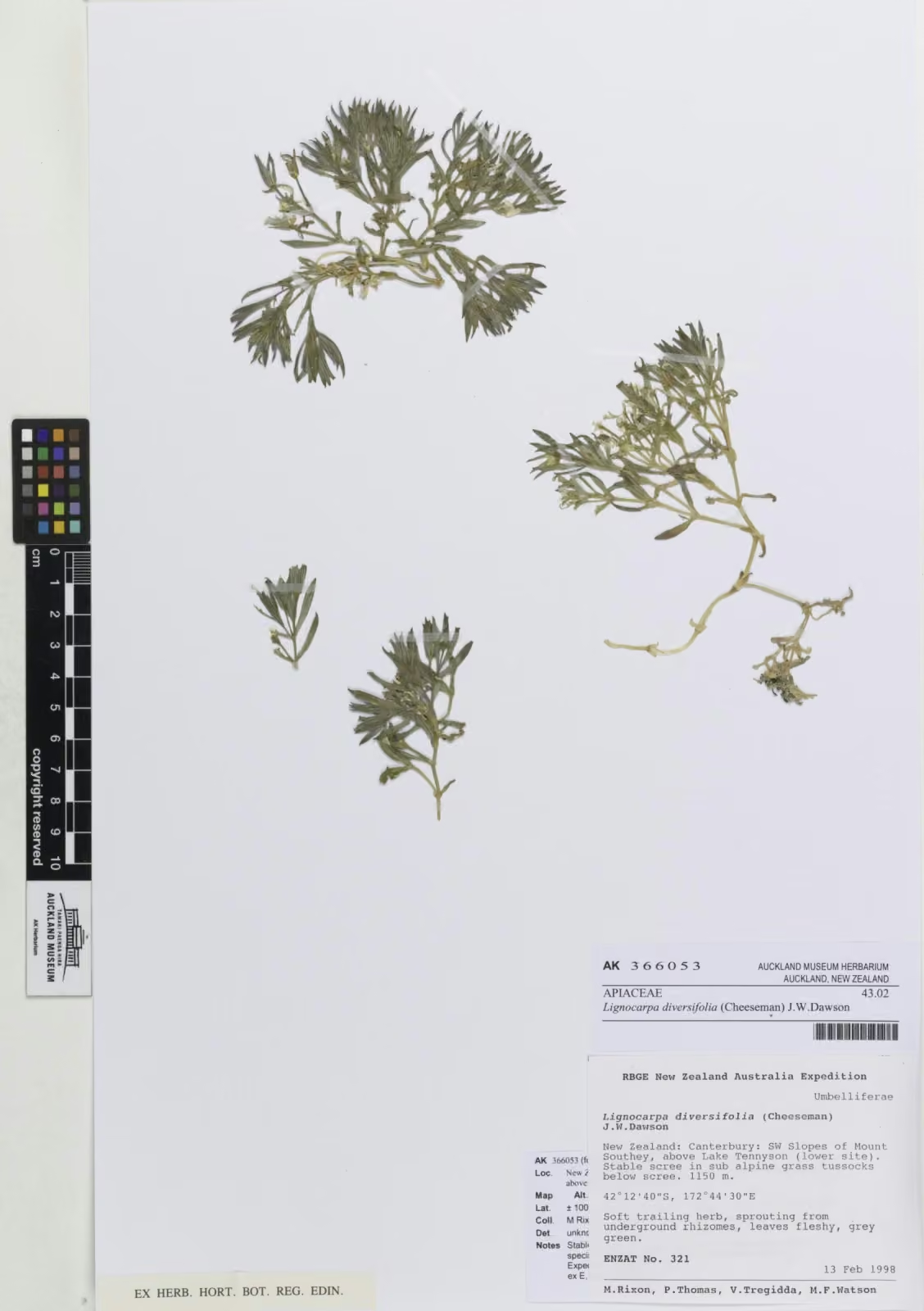
Lignocarpa diversifolia
Lignocarpa diversifolia
Lilaeopsis ruthiana
Lilaeopsis ruthiana
Lindsaea linearis
Lindsaea linearis
Oval Wedge Fern
Lindsaea trichomanoides
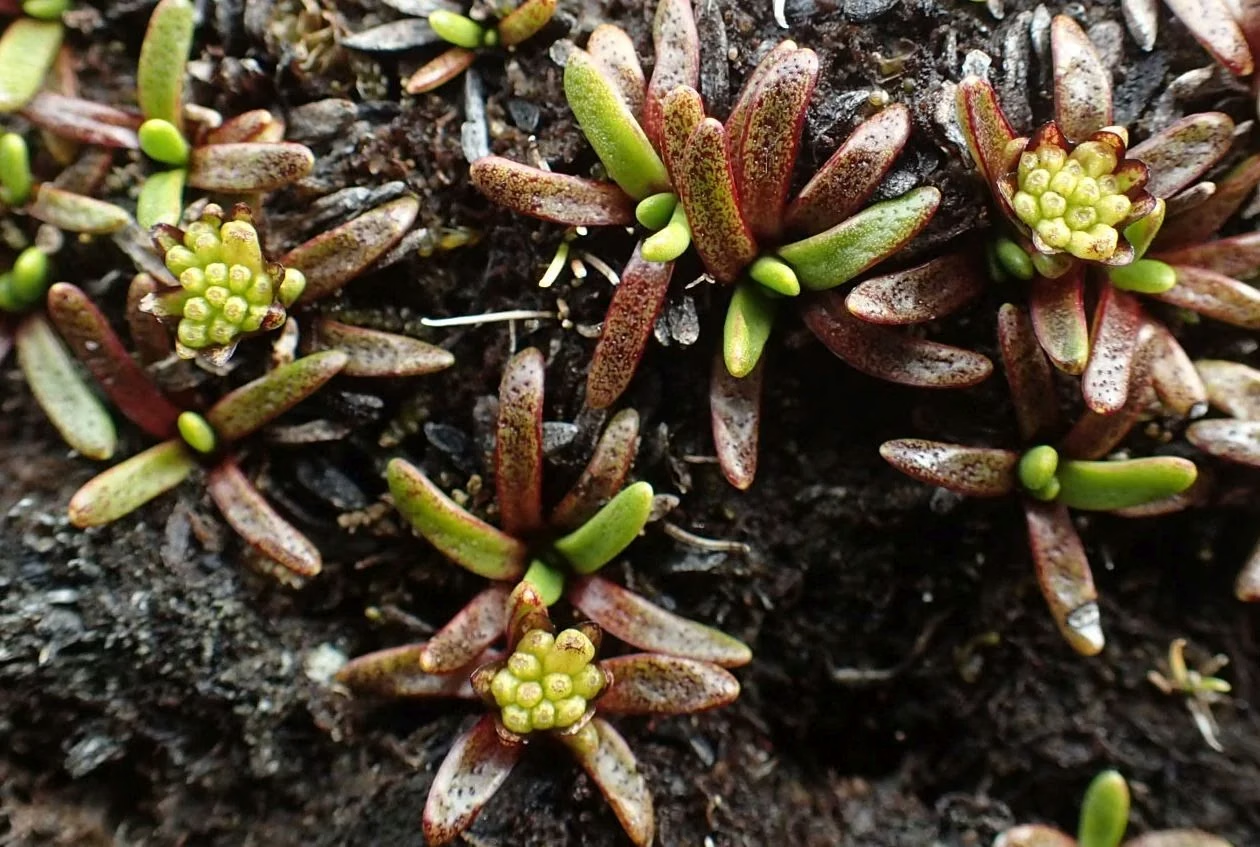
Cushion Daisy
Cushion Daisy
Plant Conservation
Lignocarpa carnosula is ranked Not Threatened (2023) and has held that ranking in every assessment since 2004.
Its scree habitat is remote and little affected by development. Keeping browsing animals in check in alpine areas and avoiding collection of wild plants are enough to keep it secure.
Frequently Asked Questions
What kind of plant is Lignocarpa carnosula?
It is a fleshy, hairless perennial herb in the carrot and parsley family, with a branching taproot, finely divided blue-grey leaves and white umbels, adapted to alpine scree.
What does carnosula mean?
The epithet carnosula means rather fleshy, referring to the thick, succulent texture of all of the plant's above-ground parts.
What was Lignocarpa carnosula called before?
It was first named Ligusticum carnosulum by Hooker and later placed in Anisotome as Anisotome carnosula before J.W. Dawson moved it to his new genus Lignocarpa in 1967.
How is Lignocarpa carnosula different from Lignocarpa diversifolia?
L. diversifolia is the northern species, from Nelson Lakes northwards, and has simple secondary bracts, while L. carnosula occupies the southern Southern Alps.
Sources and Further Reading
The botanical, growing, and conservation details for Lignocarpa (Lignocarpa carnosula) on this page draw on the New Zealand plant references below. Consult them for full technical records and the latest distribution data.