Surville Cliffs Mingimingi
Leucopogon xerampelinus
Last updated:
Surville Cliffs mingimingi (Leucopogon xerampelinus) is a low, sprawling member of the heath family that usually grows about 20 cm tall but can spread up to 1 m across. Its rigid, narrow leaves are a distinctive dull red-brown, which gives the species its name. It is found nowhere else but the roughly 120 ha of serpentinite rock at Surville Cliffs and North Cape in the far north of Northland, where it is one of the most abundant of the local endemic plants. White bell-shaped flowers appear from September to November, followed by small fleshy drupes. Explore more native shrubs in our native plant guide.
Plant Description
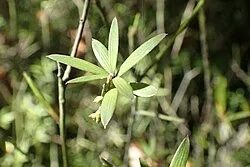
Leucopogon xerampelinus is a low, sprawling subshrub, usually no more than 20 cm tall but spreading to around 1 m across. Its branchlets are red-brown and either hairless or hairy in two lines (bifariously hairy). The leaves are narrow-lanceolate, 10 to 25 mm long and 1.5 to 4 mm wide, rigid, flat and leathery (coriaceous) with prominent veins, and coloured a dull red-brown.
The flowers are small, white and bell-shaped, carried in axillary and terminal racemes. Like other members of the genus, whose name means white beard, the corolla lobes are hairy. Flowering runs from September to November, and the fruits, small drupes that start pink-green, develop from October through to April.
It is most likely to be confused with the common mingimingi, Leucopogon fasciculatus, and L. parviflorus, but both are upright shrubs. The combination of a low sprawling habit, red-brown leaf colour and hairless or two-lined hairy branchlets distinguishes Surville Cliffs mingimingi. It was formally described by de Lange, Heenan and M.I. Dawson in 2003.
Quick Facts
| Scientific Name | Leucopogon xerampelinus |
|---|---|
| Height | Usually up to 0.2 m |
| Spread | Up to 1 m |
| Water Needs | Low to moderate; free-draining sites |
| Light | Full sun |
| Frost Tolerance | Low; from a frost-free far northern coast |
| Salt Tolerance | Tolerates windshorn coastal cliffs; exact salt tolerance not documented |
| Growth Rate | Slow |
| Lifespan | Long-lived perennial |
Climate Best Suited to
Suits the mild, frost-free, windy and seasonally dry climate of the far north. It is best suited to warm northern gardens with good drainage.
Regional Suitability
| City | Climate Suitability |
|---|---|
| Auckland | High |
| Wellington | Medium |
| Christchurch | Low |
| Dunedin | Low |
Plant Habitat
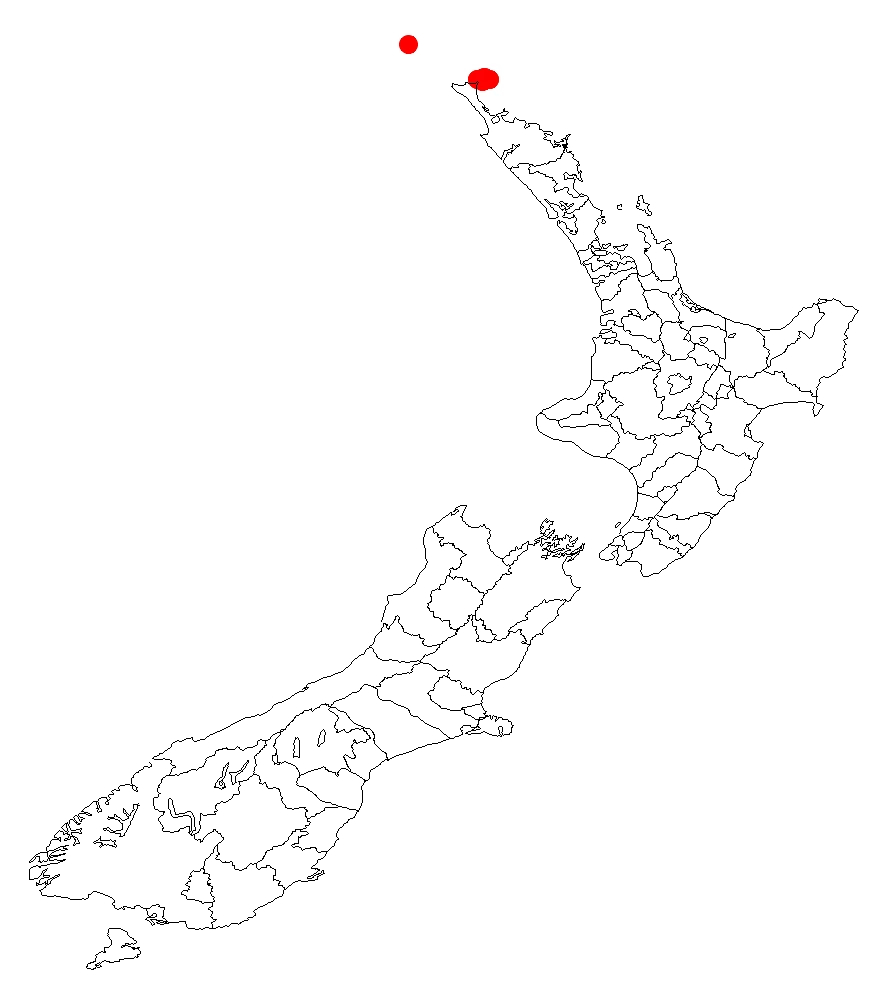
This species is endemic to the North Island and is restricted to North Cape and Surville Cliffs, at the northern tip of Northland near Te Paki. Its entire range is the roughly 120 ha exposure of serpentinite (ultramafic) rock there.
Within that small area it is common, forming part of the low windshorn scrub and growing in gullies, on cliff faces and on talus slopes. NZPCN notes it is one of the most abundant of the Surville Cliffs endemics, a group of plants that has evolved on the unusual, nutrient-poor, metal-rich ultramafic soils.
Growing Requirements
Soil Requirements
In the wild it grows only on serpentinite rock and soil, which is low in key nutrients and high in magnesium and heavy metals. In cultivation NZPCN reports it does not require ultramafic soil.
- Free-draining, gritty or stony soil
- Low fertility suits it
- Avoid heavy, waterlogged clay
Light Requirements
Its natural home is open, windshorn scrub and cliffs where it receives full exposure.
- Full sun
- Open sites without overhanging shrubs
Water Requirements
Serpentinite soils are thin and quick to dry, so the plant copes with seasonal dryness, but drainage matters more than heavy watering.
- Water young plants until established
- Avoid wet feet in winter
Planting and Establishing
NZPCN reports that cultivated plants do best in full sun in free-draining soil. A rock garden, sunny bank or large container with a gritty mix suits its sprawling habit, letting stems trail over stones as they do on talus slopes.
Plant in spring in northern gardens, set slightly high so the crown sheds water, and mulch with gravel rather than bark. Allow room for it to spread to around 1 m.
Ecological Role
Its fleshy drupes are dispersed by frugivory, meaning animals eat the fruit and spread the seed; on the Surville Cliffs this likely includes birds and lizards, though specific dispersers were not found documented. The small white flowers are typical of the heath family and are visited by insects.
As one of the commonest plants in the windshorn serpentinite scrub, it helps bind the thin soils of cliff faces and talus and is part of one of New Zealand's most distinctive endemic plant communities.
Uses & Significance
Garden Uses
It is a collector's plant suited to specialist native and rock gardens in warm districts.
- Rock gardens and sunny banks
- Containers with gritty mix
- Displays of Northland endemic plants
Ecological Value
Its value lies in being part of a tiny, unique endemic flora found on a single rock exposure.
- Fleshy fruit for native fauna
- Flowers for native insects
- Ground cover on unstable cliff and talus sites
Landscaping Uses
The red-brown foliage contrasts well with grey and silver-leaved natives and with pale gravel. Use it as a low, spreading foreground plant spilling over rocks or a retaining wall.
Combine it with other compact northern coastal species on a dry, sunny bank to create a small serpentinite-style scrub garden.
Seasonal Care Calendar
Spring
Flowering runs from September to November, with white bells along the stems.
- Peak flowering
- Good time for planting in warm districts
Summer
Pink-green drupes develop from October and ripen through summer.
- Fruit forming
- Water young plants during drought
Autumn
Fruit continues to be present until about April, providing seed for propagation.
- Collect ripe fruit
- Take semi-hardwood cuttings
Winter
The foliage often deepens in colour; protect from frost in colder districts.
- Keep drainage free
- Cover during hard frosts
When to Prune and How Much
Little pruning is needed. Its natural form is a low, wiry mat, and heavy pruning of slow-growing heaths can set them back.
If needed, lightly trim straggly tips after flowering to keep a dense habit, and take any trimmings of semi-hardwood as cutting material.
How to Grow Surville Cliffs Mingimingi
NZPCN records that Surville Cliffs mingimingi can be grown from seed and from semi-hardwood cuttings, but it warns that germination can be slow and that cuttings often fail. It is not commercially available, so any propagation should start from cultivated plants or seed collected with appropriate permission, given its tiny natural range on land managed for conservation.
From Seed
Seed is contained in the small fleshy drupes, which are present from October to April. Germination is slow, so sow generously and be prepared to wait.
- Collect ripe drupes in summer or early autumn
- Remove the flesh and rinse the stones clean
- Sow into a free-draining seed mix and cover with a thin layer of grit
- Keep the tray in a sheltered spot with even moisture
- Expect slow, irregular germination over many months
- Pot seedlings individually once they are large enough to handle
From Semi-Hardwood Cuttings
Cuttings can succeed but frequently fail, so take more than you need and treat them carefully.
Use clean, sharp secateurs and keep the cutting mix only just moist, because rotting at the base is a frequent cause of losses when striking cuttings of small-leaved heaths.
- Take 5 to 8 cm semi-hardwood cuttings from late summer to autumn
- Strip the lower leaves and dip the base in rooting hormone
- Insert into a gritty, free-draining propagating mix
- Keep in a humid, bright position out of direct sun, ideally with gentle bottom heat
- Check for roots after several months and pot on only well-rooted cuttings
Pests & Diseases
No specific pests or diseases are recorded for this species. As with most heaths, root rot in poorly drained or overwatered soil is the main cultivation problem.
In the wild its habitat on the Surville Cliffs is protected, but weeds and browsing animals are general pressures on the area's endemic flora.
Cultural Significance
No Māori name or traditional use specific to this species is recorded. The general name mingimingi is applied to several small-leaved shrubs, including Leucopogon fasciculatus, and the common name Surville Cliffs mingimingi was coined for this localised plant.
The Surville Cliffs lie in the Te Paki area at the northern end of Te Ika-a-Māui, a landscape of great significance to Māori. Botanically, the site is famous for its concentration of endemic plants found only on its serpentinite, and this species was only named in 2003.
Bonus Tip
Do not assume this plant needs serpentinite soil to grow. NZPCN notes it thrives in cultivation in any sunny, free-draining soil, so the key is excellent drainage rather than recreating ultramafic chemistry.
Related Plants
Explore other native plants that share similar characteristics or habitats with Surville Cliffs Mingimingi (Leucopogon xerampelinus), offering further insights into New Zealand's diverse flora. These related species provide context and opportunities for complementary planting in your garden.
North Island Edelweiss
Leucogenes leontopodium
Marlborough Edelweiss
Leucogenes neglecta
Styphelia nana
Styphelia nana
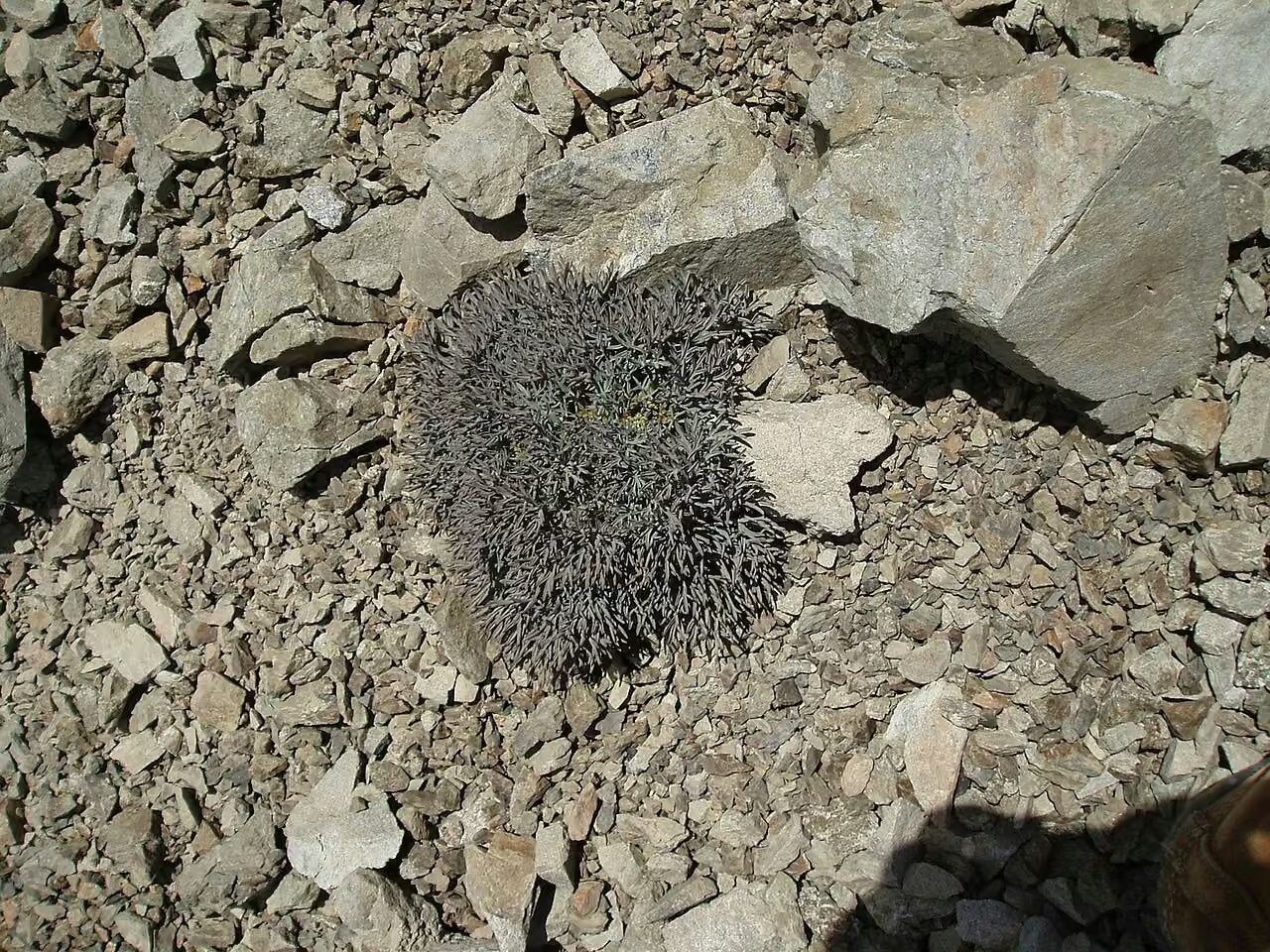
Lignocarpa carnosula
Lignocarpa carnosula
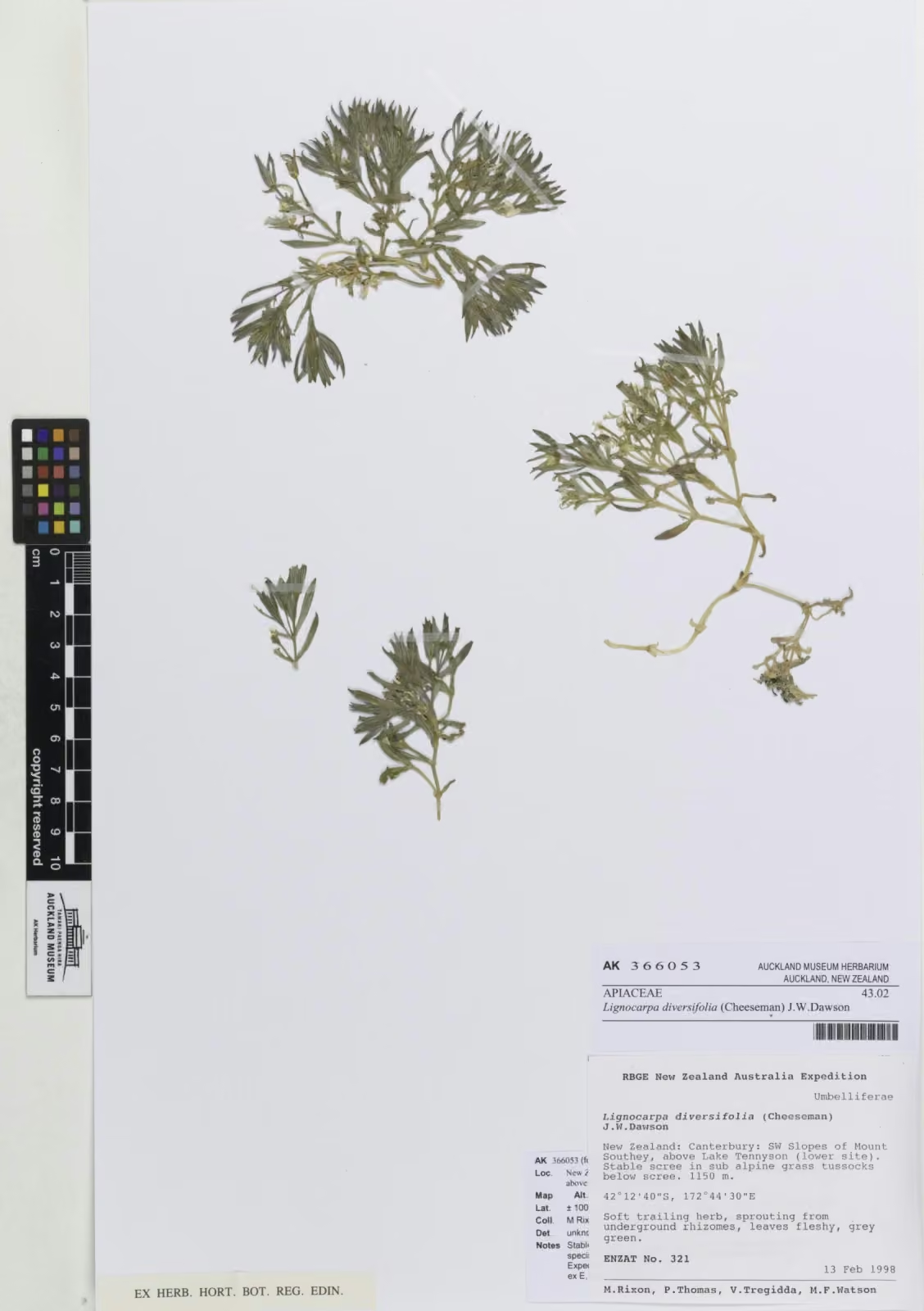
Lignocarpa diversifolia
Lignocarpa diversifolia
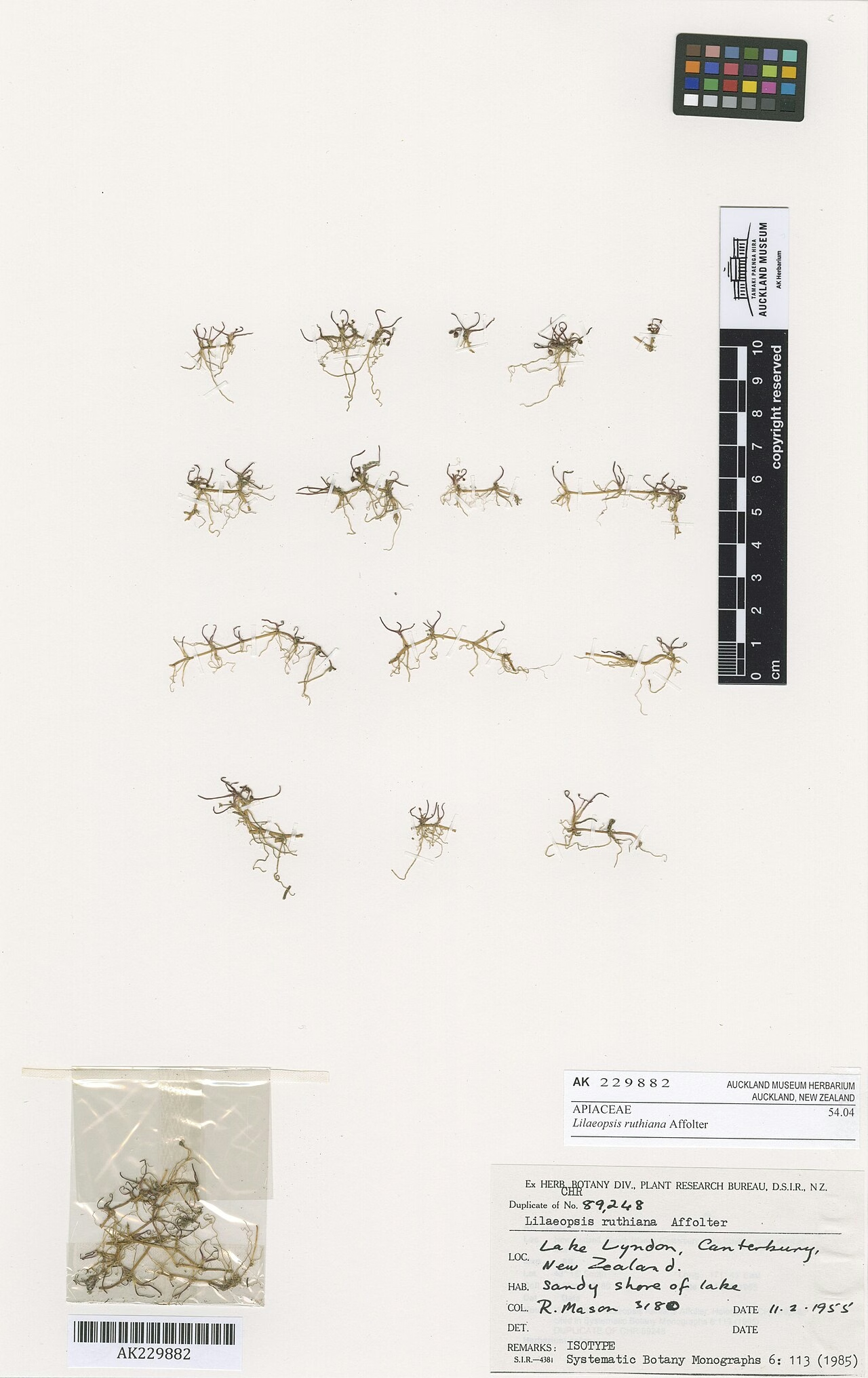
Lilaeopsis ruthiana
Lilaeopsis ruthiana
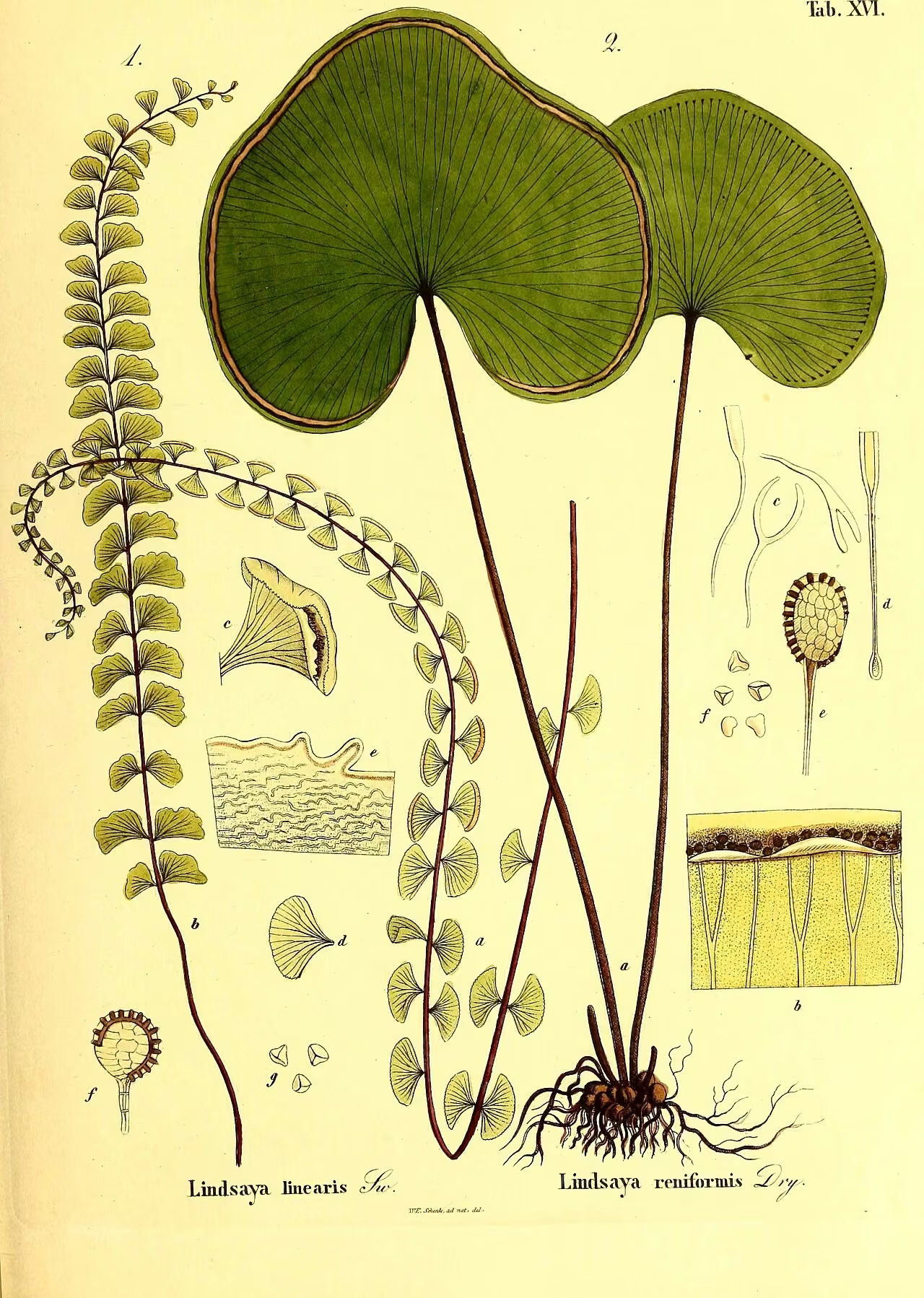
Lindsaea linearis
Lindsaea linearis
Mingimingi
Mingimingi
Plant Conservation
Leucopogon xerampelinus is ranked At Risk - Naturally Uncommon (2023) with the qualifier One Location (OL), and it has held this ranking since 2009. Although it is abundant where it grows, its entire range is a single 120 ha serpentinite exposure, so a single event such as fire or weed invasion could affect the whole species.
Keeping fire, weeds and browsing animals out of the Surville Cliffs area, and holding cultivated plants off-site as insurance, are the main ways to safeguard it.
Frequently Asked Questions
What does xerampelinus mean?
The epithet means dull red with a strong mixture of brown, describing the red-brown colour of the rigid leaves that sets this plant apart from other mingimingi.
Where does Surville Cliffs mingimingi grow?
It is confined to the ultramafic serpentinite of Surville Cliffs and North Cape at the tip of Northland, growing in low windshorn scrub, gullies, cliff faces and talus slopes.
Can Leucopogon xerampelinus be grown in a garden?
NZPCN says it can be grown from seed and semi-hardwood cuttings and does not need ultramafic soil, but germination is slow, cuttings often fail and it is not commercially available.
How do you tell Leucopogon xerampelinus from common mingimingi?
Unlike the upright shrubs Leucopogon fasciculatus and L. parviflorus, it is a low sprawling subshrub with red-brown leaves and branchlets that are hairless or hairy in two lines.
Sources and Further Reading
The botanical, growing, and conservation details for Surville Cliffs Mingimingi (Leucopogon xerampelinus) on this page draw on the New Zealand plant references below. Consult them for full technical records and the latest distribution data.