Traill's Button Daisy
Leptinella traillii subsp. traillii
Last updated:
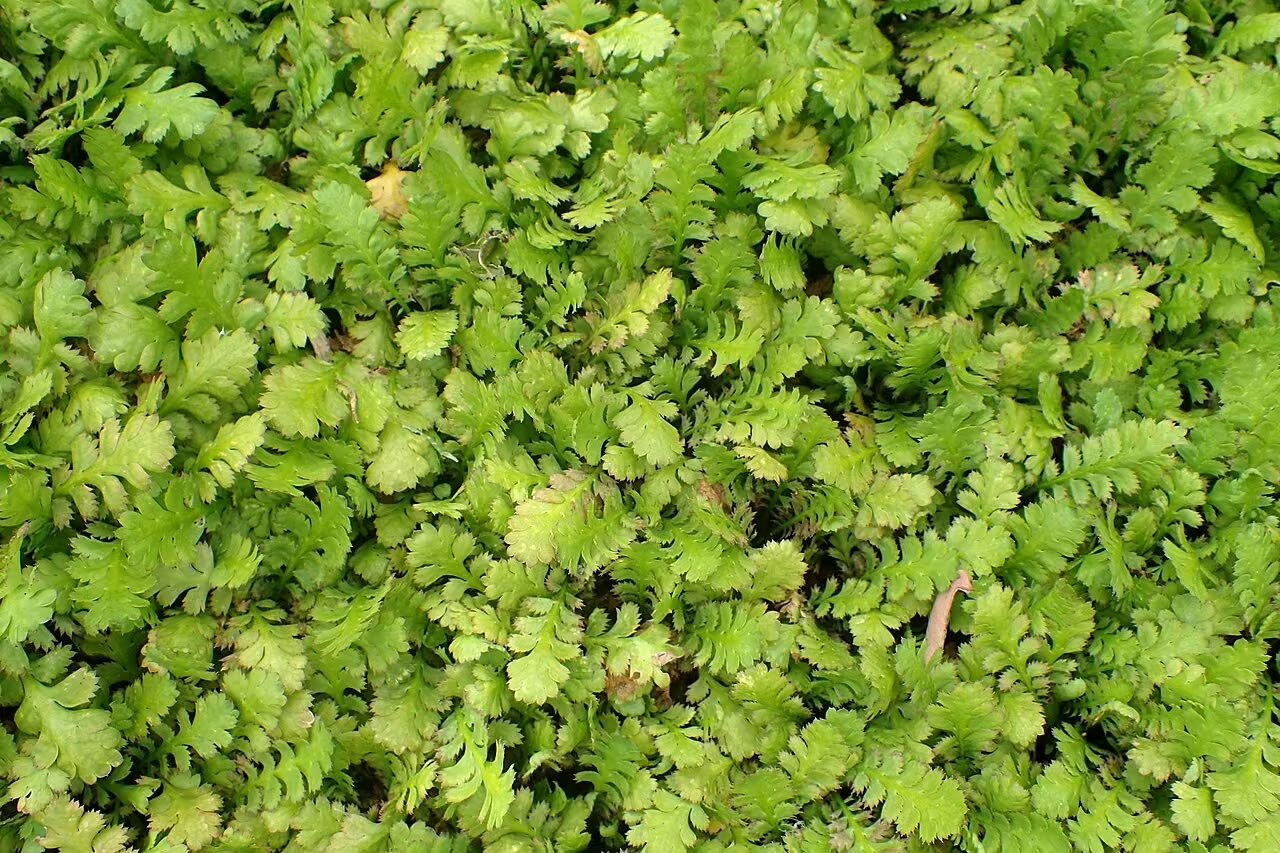
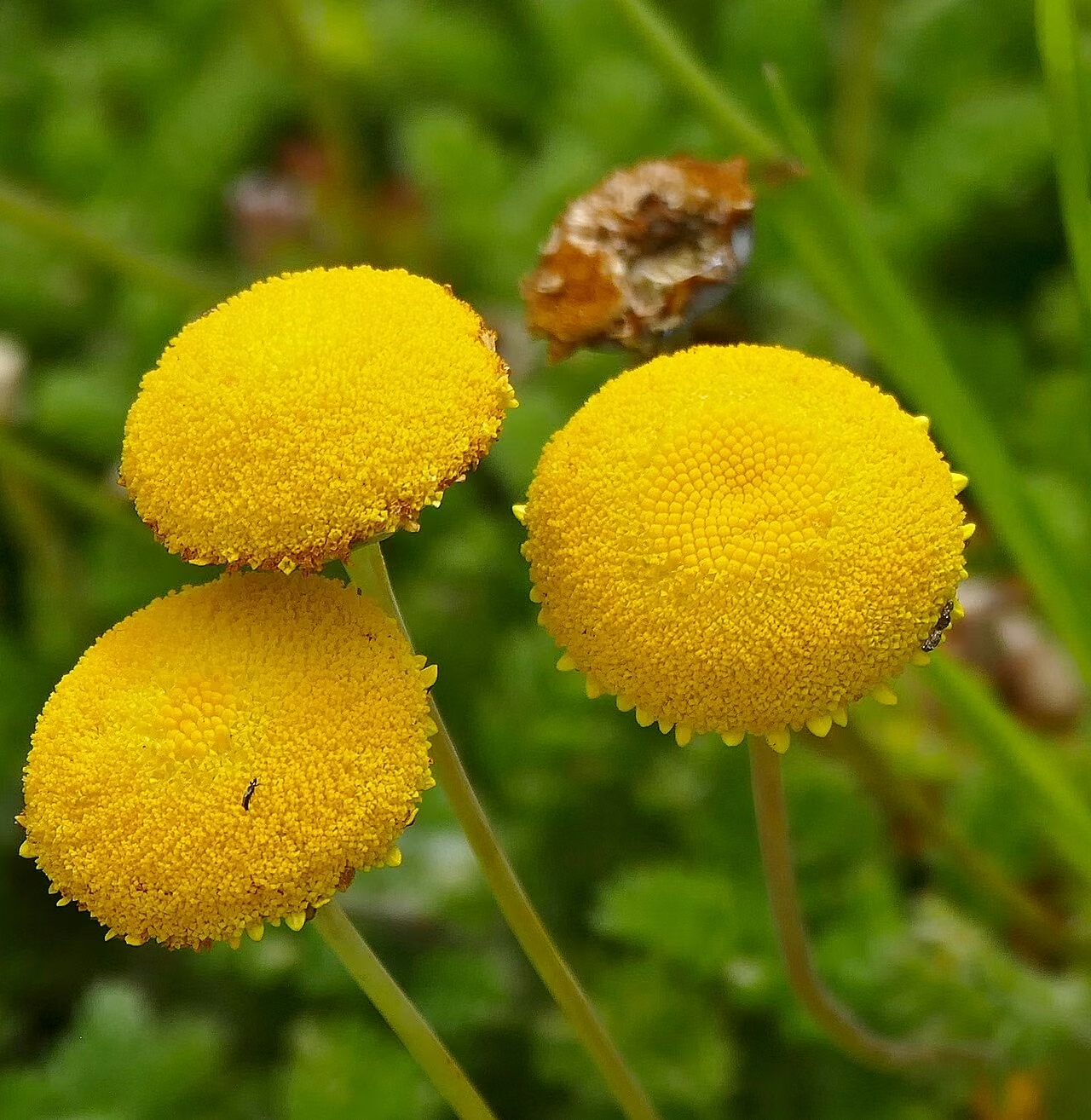
Traill's button daisy (Leptinella traillii subsp. traillii) is a creeping, mat-forming herb in the daisy family, found only on Stewart Island/Rakiura and its adjacent islands. It forms loose turf of thick, leathery, deeply lobed dark green leaves tinged brown, with small yellow-green button flower heads from August to October. It grows on the coast, usually on seepages on cliff faces, among boulders or on cobble beaches, and sometimes in damp hollows behind dunes. It is ranked At Risk - Naturally Uncommon because of its small range, not because it is declining. Once established it tolerates trampling and drought, making it a tough native ground cover. Explore more native ground covers in our native plant guide.
Plant Description
Leptinella traillii subsp. traillii is a dioecious, creeping perennial that forms loose turf-like mats from surface rhizomes. Its leaves are deeply lobed, 10-50 mm long, thick and leathery, dark green with brown pigmentation, and dotted with glands.
Male and female flower heads are produced on separate plants. Female heads are 3-5 mm across, enlarging to about 10 mm in fruit, with 20-70 curved yellow-green florets; male heads are 4-6 mm across. The seeds are small, brown and somewhat flattened. Flowering is from August to October and fruiting from September to January.
The closely related subsp. pulchella, endemic to the Southland coast, is similar but has thinner, less leathery leaves that are less obviously gland-dotted, with much coarser and more widely spaced teeth on the leaflets. Geography is a good first clue: plants on Stewart Island and its outliers belong to subsp. traillii.
Quick Facts
| Scientific Name | Leptinella traillii subsp. traillii |
|---|---|
| Height | Under 5 cm (flower stalks slightly taller) |
| Spread | Loose mats spreading by surface rhizomes |
| Water Needs | Moderate; prefers a damp root run but tolerates drought once established |
| Light | Full sun to light shade |
| Frost Tolerance | Moderate to high |
| Salt Tolerance | High; a coastal plant of beaches and cliffs |
| Growth Rate | Moderate |
| Lifespan | Perennial |
Climate Best Suited to
It suits cool, moist, windy oceanic climates with mild summers and few hard frosts. Salt-laden wind is part of its natural environment.
Regional Suitability
| City | Climate Suitability |
|---|---|
| Auckland | Low |
| Wellington | Medium |
| Christchurch | Medium |
| Dunedin | High |
Plant Habitat
This subspecies is endemic to Stewart Island/Rakiura and its adjacent islands. It is a narrow-range endemic, which is why it is ranked Naturally Uncommon, but within its range it is not considered threatened.
It is a coastal plant, usually found on seepages on cliff faces, among boulders or on cobble beaches. It also grows in damp hollows and along streamsides draining sand dunes, where moisture is reliable but competing vegetation is kept low.
Growing Requirements
Soil Requirements
In the wild it roots into wet gravels, sand and the soil pockets between boulders where fresh water seeps through. In gardens it needs moisture-retentive soil that still drains.
- Sandy or gravelly loam with steady moisture
- Tolerates salty coastal soils
- Low to moderate fertility
- Avoid stagnant, airless clay
Light Requirements
It grows in open coastal sites and does best with good light, though it will accept some shade in warmer gardens.
- Full sun in cool districts
- Light afternoon shade in warmer, drier areas
Water Requirements
NZPCN notes it prefers a damp root run, but once established it is very tolerant of drought. Steady moisture gives the densest mats.
- Water new plantings regularly until established
- Occasional deep watering in long dry spells keeps mats lush
Planting and Establishing
Plant rooted pieces in spring or autumn into a sunny or lightly shaded site with moist, free-draining soil. Space pieces 15-20 cm apart for a ground cover; they will join up over one or two seasons.
It is well suited to coastal gardens in the south, between paving, along path edges and in damp gravel areas. In warmer northern gardens, give it a cooler, moister position.
Ecological Role
As a dioecious species, it relies on small insects such as flies to carry pollen from male to female plants. The seeds are small and papery, and the creeping rhizomes allow clones to spread along seepages and beach margins.
It is part of the low coastal turf and herbfield communities of Rakiura, where salt spray, wind and seepage water keep the vegetation short. These turfs are an important and distinctive part of southern New Zealand coastal ecosystems.
Uses & Significance
Garden Uses
A hard-wearing native ground cover with handsome dark, leathery foliage, especially suited to cool coastal gardens.
- Between pavers and stepping stones
- Coastal and seaside gardens
- Lawn alternative in small, lightly used areas
- Damp gravel gardens
Ecological Value
Growing it helps conserve a narrow-range endemic and showcases the coastal turf flora of Rakiura.
- Contributes to southern coastal turf communities
- Small nectar source for native flies
- Binds gravels and soil on seepages and beach margins
Landscaping Uses
Use its dark, bronzed foliage as a contrast to pale gravel, shell grit or silver-leaved coastal plants. It works well beside other low turf natives such as Selliera radicans and Leptinella dioica in a coastal-themed planting.
Because it tolerates trampling, it can fill gaps in a path or patio where a living, low surface is wanted, provided the soil does not dry out for long periods.
Seasonal Care Calendar
Spring
Flowering from August to October, with small yellow-green button heads among dark foliage.
- Plant or divide
- Weed around mats
Summer
Seed ripens from September to January. Mats grow actively if moisture is adequate.
- Water during extended dry spells
- Trim spent flower stalks if desired
Autumn
Growth slows but foliage remains attractive.
- Good time to plant rooted pieces
- Clear fallen leaves from mats
Winter
Hardy to cold, wet, windy conditions.
- Little care needed
- Ensure soil does not become stagnant
When to Prune and How Much
No pruning is needed. Spent flower stalks can be clipped or lightly mown on a high setting to keep a neat surface.
Old, thin areas can be refreshed by replanting vigorous rooted pieces from the edge of the mat.
How to Grow Traill's Button Daisy
Traill's button daisy is easy to propagate from rooted pieces, according to NZPCN. The surface rhizomes root as they spread, so a single plant can supply many divisions. Because the plant is dioecious, all divisions from one plant are the same sex; if you want seed, grow male and female plants together. When buying plants, note that it is sometimes sold under the incorrect names Leptinella dioica or L. squalida.
From Rooted Pieces and Division
This is the simplest and most reliable method, and it can be done in spring or early autumn when soil is moist and growth is active.
- Cut or pull rooted sections of rhizome from the edge of an established mat.
- Trim each piece to a few centimetres with healthy leaves and roots.
- Pot into a moist, free-draining mix or plant straight into prepared ground.
- Keep the soil damp and sheltered from drying wind while roots establish.
- Plant out or space pieces 15-20 cm apart once new growth appears.
From Seed
Seed sets only where male and female plants grow near each other. Fruiting heads ripen from September to January.
- Collect the swollen brown female heads as they mature.
- Sow fresh seed on the surface of a damp seed mix.
- Keep the tray evenly moist in a cool, bright, sheltered place.
- Prick out seedlings once large enough to handle, and grow them on in small pots for a season before planting out.
Pests & Diseases
No significant pests are recorded. Slugs may graze young plants in moist conditions, and plants in very dry, hot positions may brown off.
As with other button daisies, invading grasses and weeds are the main threat to garden mats, so hand weed regularly while the turf establishes.
Cultural Significance
No Māori name or traditional Māori use is recorded for this subspecies in the sources consulted.
The epithet traillii honours Charles Traill of Stewart Island, and the genus name comes from the Greek leptos, slender, referring to the ovary. NZPCN notes that this plant is one of the main contributing species to the so-called 'Maniototo' bowling green turf, an unusual horticultural use for a native herb.
Bonus Tip
If you buy a button daisy labelled Leptinella dioica or L. squalida with thick, leathery, bronze-green leaves, check it against this description: NZPCN notes that Traill's button daisy is often sold under those names. Knowing what you have helps you give it the damp, sunny conditions it prefers.
Related Plants
Explore other native plants that share similar characteristics or habitats with Traill's Button Daisy (Leptinella traillii subsp. traillii), offering further insights into New Zealand's diverse flora. These related species provide context and opportunities for complementary planting in your garden.
Leptinella pusilla
Leptinella pusilla
Leptinella rotundata
Leptinella rotundata
Dryland Button Daisy
Leptinella serrulata
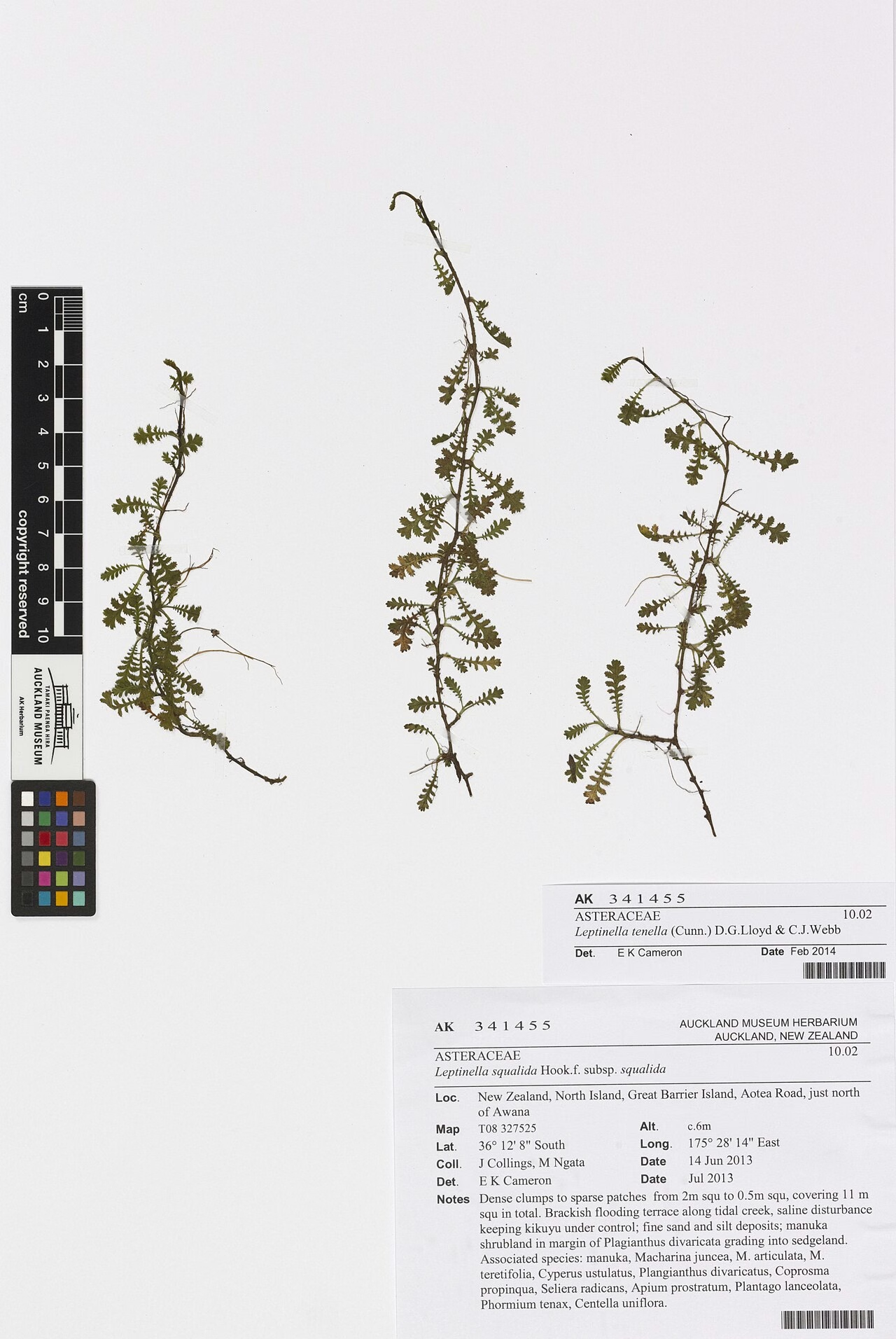
Leptinella tenella
Leptinella tenella
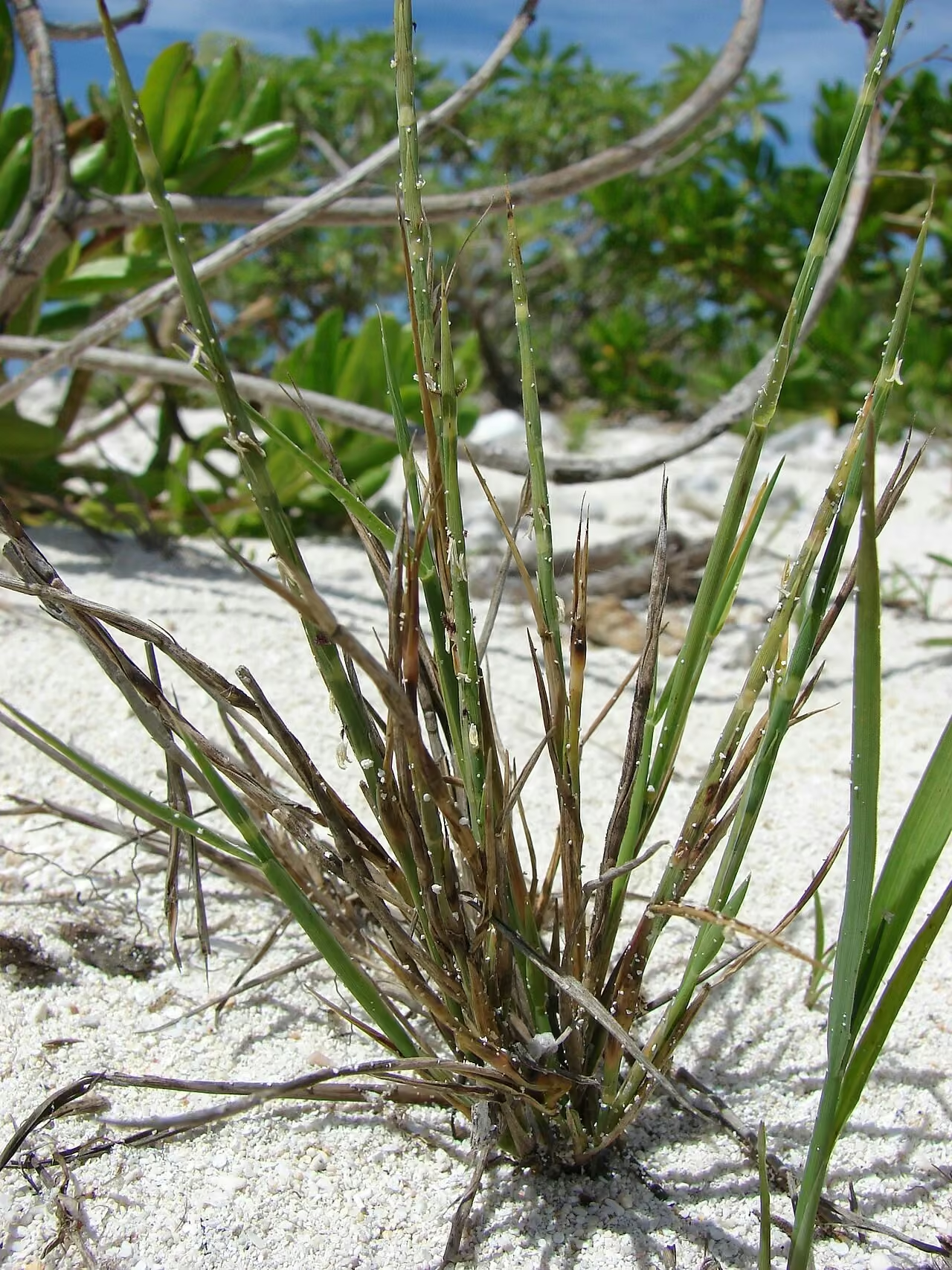
Lepturus repens
Lepturus repens
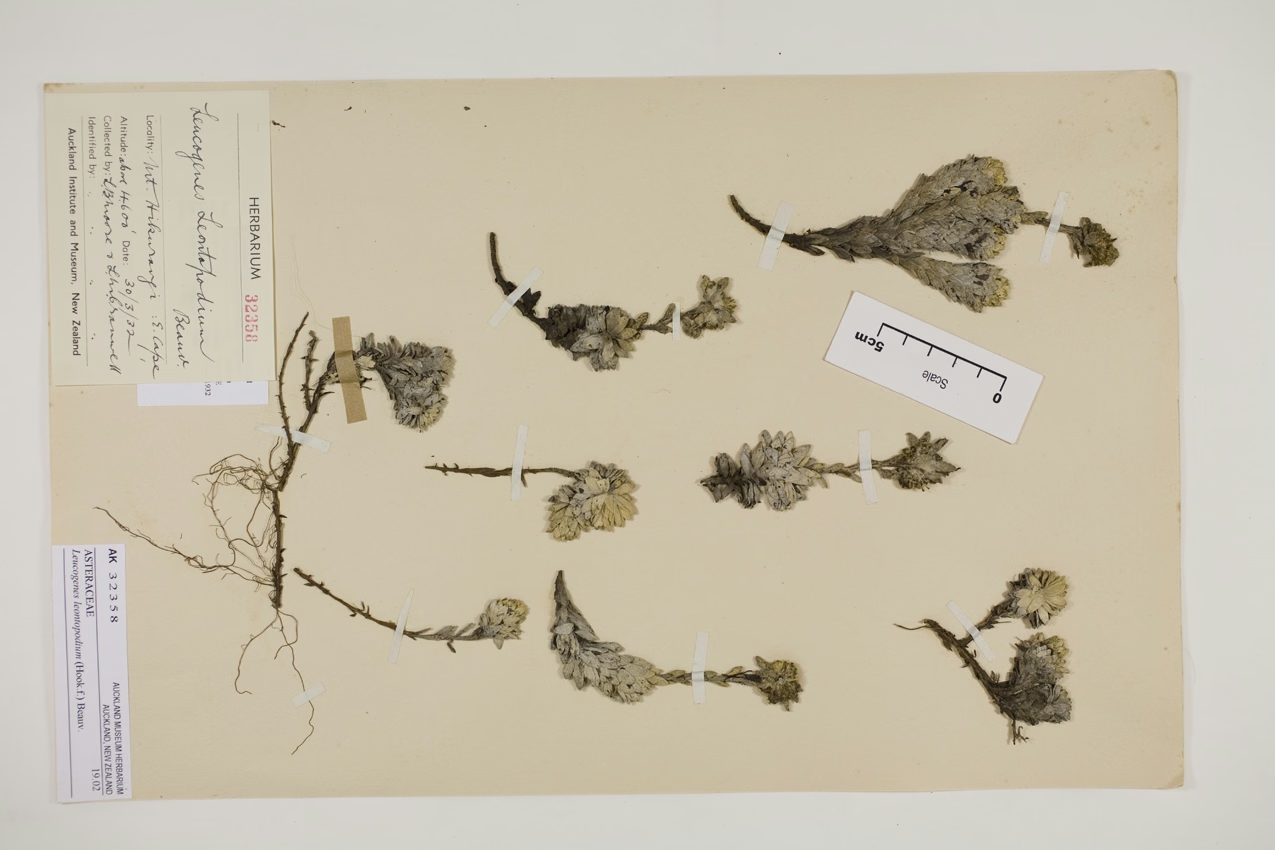
North Island Edelweiss
Leucogenes leontopodium
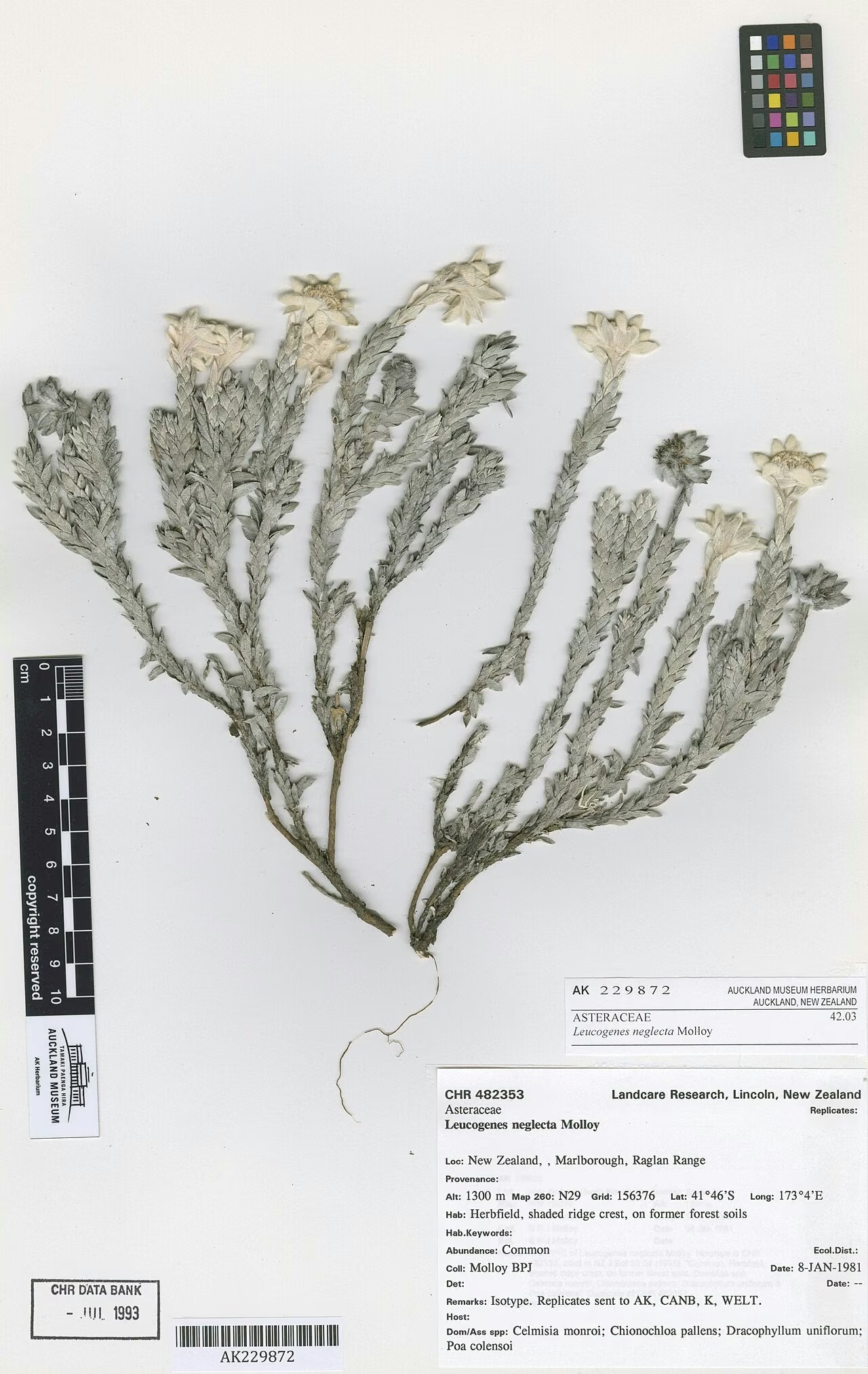
Marlborough Edelweiss
Leucogenes neglecta
Leptinella albida
Leptinella albida
Plant Conservation
Leptinella traillii subsp. traillii is ranked At Risk - Naturally Uncommon (2023) with the qualifier Sp (sparse). It is a narrow-range endemic confined to Stewart Island and nearby islands, but NZPCN does not consider it threatened.
Its coastal seepage and beach habitats are naturally limited, so protecting Rakiura's coastal turf from weeds and disturbance is the main conservation need. Cultivated populations help spread the risk.
Frequently Asked Questions
Where is Traill's button daisy found?
Leptinella traillii subsp. traillii is endemic to Stewart Island/Rakiura and nearby islands, where it grows on coastal cliff seepages, among boulders, on cobble beaches and in damp dune hollows.
How is subsp. traillii different from subsp. pulchella?
Subspecies pulchella grows on the Southland coast and has thinner, less leathery, less obviously gland-dotted leaves with much coarser, widely spaced teeth on the leaflets.
Is Traill's button daisy a good lawn plant?
NZPCN says that once established it is very tolerant of trampling and drought, though it prefers a damp root run, which makes it a useful hard-wearing native ground cover.
Who is Leptinella traillii named after?
NZPCN says the name honours Charles Traill, a Stewart Islander, reflecting the island home of this subspecies.
Sources and Further Reading
The botanical, growing, and conservation details for Traill's Button Daisy (Leptinella traillii subsp. traillii) on this page draw on the New Zealand plant references below. Consult them for full technical records and the latest distribution data.