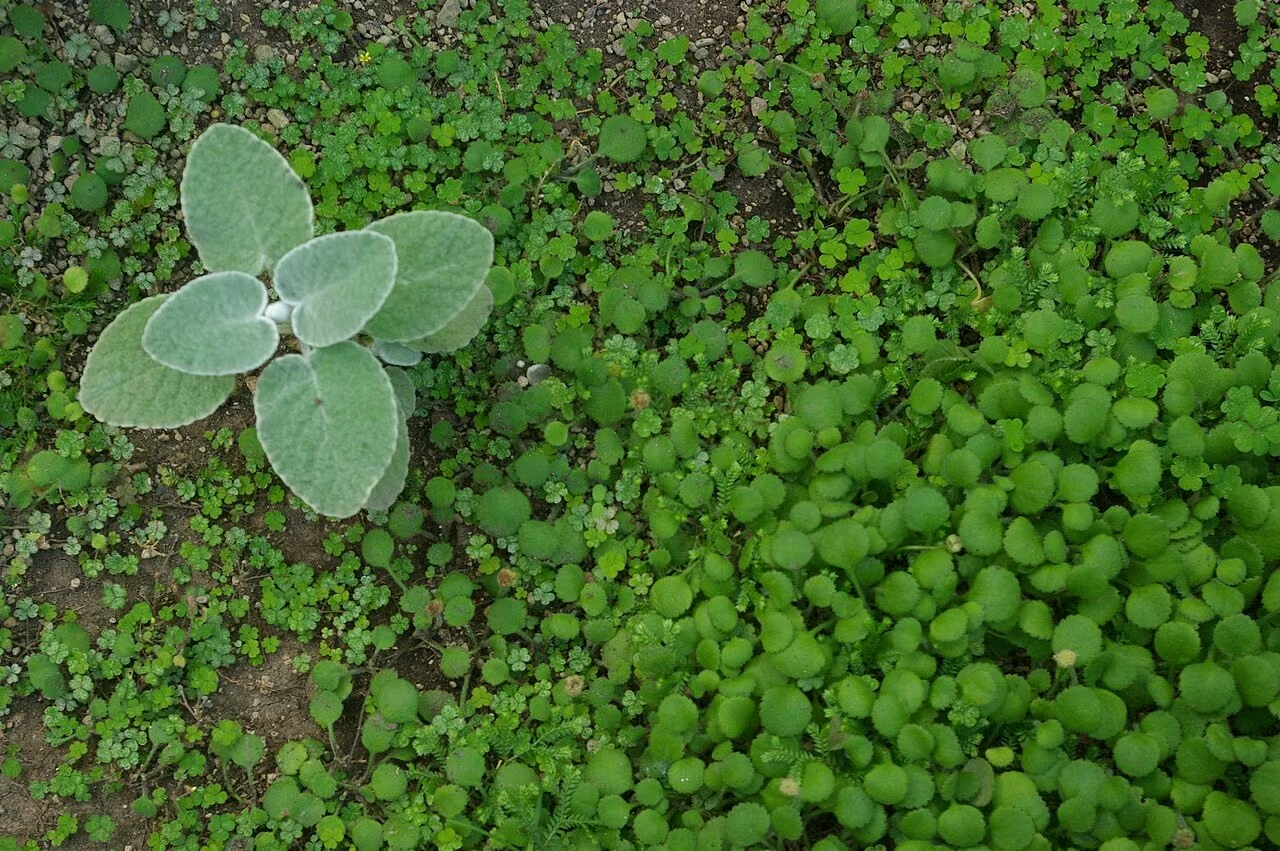
Button Daisy
Leptinella rotundata
Last updated:
Leptinella rotundata is a creeping, mat-forming herb in the daisy family, endemic to the west coast of the northern North Island between Scott's Point at Te Paki and the Waitakere Ranges. It forms diffuse patches of round, yellow-green, scalloped leaves on slender rhizomes and bears small yellow-green button flower heads on stalks up to 6 cm long. Its rounded, undivided leaves make it unlike almost every other Leptinella, most of which have feathery, divided foliage. It clings to the wind and salt-blasted edges of coastal cliffs and boulder falls, is known from only about five sites, and is ranked Threatened - Nationally Critical. Explore more native ground covers in our native plant guide.
Plant Description
Leptinella rotundata is a creeping perennial herb that forms loose, diffuse patches rather than a dense turf. Its slender rhizomes are dark green or purple-green and sparsely covered in silky hairs, and they carry the leaves in two rows along the stem. The leaves are simple, 10-50 mm long and 5-15 mm wide, almost round (suborbicular), thin and yellow-green, with shallowly scalloped (crenate) margins.
The small flower heads (capitula) are 5-7 mm across, yellow-green and button-like, with no showy ray petals, and sit on stout stalks 20-60 mm long. Each head is surrounded by 6-12 bracts (phyllaries). Flowering is mainly from August to January, though odd heads may appear at any time of year.
The rounded, undivided leaves separate it at a glance from every other Leptinella in New Zealand, almost all of which have pinnately divided leaves. It also has a remarkably high chromosome number (2n = c.312), which, together with its poor seed set, has led botanists to suggest it may be a relict species within its section of the genus.
Quick Facts
| Scientific Name | Leptinella rotundata |
|---|---|
| Height | Under 10 cm (flower stalks 2-6 cm) |
| Spread | Diffuse patches, spreading by rhizomes |
| Water Needs | Moderate; tolerates a dry, exposed site once established |
| Light | Full sun to light shade |
| Frost Tolerance | Low to moderate (frost-free northern coasts) |
| Salt Tolerance | High; grows on salt-blasted coastal cliffs |
| Growth Rate | Moderate |
| Lifespan | Perennial, often short-lived in cultivation |
Climate Best Suited to
It suits mild, frost-free, windy coastal climates of the far north, with warm humid summers and moist winters. Constant salt-laden wind is part of its natural setting rather than a problem.
Regional Suitability
| City | Climate Suitability |
|---|---|
| Auckland | High |
| Wellington | Medium |
| Christchurch | Low |
| Dunedin | Low |
Plant Habitat
Leptinella rotundata is endemic to the North Island, where it is confined to the west coast from Scott's Point at Te Paki in the far north south to the Waitakere Ranges west of Auckland. Only about five sites are known, and the Waitakere population was rediscovered in 2010 after the species had not been seen there for many years.
Its habitat is very specific: the wind and salt-blasted margins of vegetated coastal cliff faces and boulder falls, where exposure holds back taller competing plants. At any one site it is usually sparse and patchy, scattered through low vegetation rather than forming large colonies.
Growing Requirements
Soil Requirements
In the wild it roots into thin, mineral soils on cliff ledges and among boulders. In cultivation it needs a free-draining but moisture-retentive mix that does not become waterlogged.
- Gritty loam or a potting mix with added grit or pumice
- Avoid heavy, sodden clay
- Low to moderate fertility; rich soils encourage taller weeds that smother it
- Tolerates salty coastal soils
Light Requirements
Its natural sites are open and exposed, so it grows best with plenty of light. Too much shade from taller plants is one reason it disappears from overgrown cliff tops.
- Full sun or bright light shade
- Keep taller neighbours from overtopping the patches
Water Requirements
Moderate moisture suits it best. On cliffs it receives salt spray, rain and occasional seepage, but drains quickly. Pot plants should not be allowed to dry right out in summer.
- Water regularly in dry spells, especially in pots
- Ensure good drainage so the rhizomes do not rot
Planting and Establishing
Plant divisions into a sunny, open, well-drained spot where they will not be overrun by vigorous ground covers. A rock garden pocket, a raised bed or a wide shallow pot works well, and gravel or small stones around the plant help keep weeds down while letting the rhizomes creep.
Because the species is Nationally Critical, only grow plants sourced from reputable native plant nurseries or conservation programmes. Never collect from the wild, and do not plant it near natural populations, where garden stock could mix with wild genetic lines.
Ecological Role
Like other button daisies, Leptinella rotundata has tiny, rayless flower heads that are visited by small generalist insects such as flies. NZPCN records that seed is rarely if ever formed in the wild, which appears to be linked to the natural separation of plants of different sexes, so the species persists and spreads mainly by its creeping rhizomes.
It occupies an early-successional niche: exposed cliff margins where wind and salt keep the vegetation low and open. If shrubs or weeds close over these gaps, the plant is shaded out, so it depends on ongoing natural disturbance to keep its habitat available.
Uses & Significance
Garden Uses
In gardens it is mainly a plant for collectors and conservation-minded growers, valued for its unusual round leaves within a genus known for feathery foliage.
- Rock gardens and coastal pocket plantings
- Shallow pots and troughs
- Ex situ conservation collections
Ecological Value
As one of New Zealand's rarest coastal herbs, every secure cultivated and wild population matters for its survival.
- Represents an unusual, possibly relict lineage within Leptinella
- Part of the distinctive low cliff-top flora of Northland and Auckland
- Provides small nectar sources for coastal insects
Landscaping Uses
Use Leptinella rotundata as a small feature rather than a large ground cover. Its soft, round, yellow-green leaves contrast well with the fine, divided leaves of other button daisies or with grey coastal plants such as Senecio and dwarf Pimelea in a coastal rock garden.
Keep companions low and non-invasive. Vigorous mat-formers, kikuyu or creeping exotic grasses will quickly overwhelm it, mirroring the weed invasion that threatens it in the wild.
Seasonal Care Calendar
Spring
Main growth and flowering season, with button heads appearing from late winter onward.
- Divide congested plants as growth begins
- Weed carefully around patches
Summer
Flowering continues into early summer. Plants in pots can dry out quickly in heat.
- Water during dry spells
- Watch for slugs in humid weather
Autumn
Growth slows, though sporadic flowers may still appear.
- Good time to take rooted pieces for new pots
- Top up gravel mulch
Winter
Plants tick over quietly in mild northern winters.
- Protect potted plants from hard frost in cooler districts
- Avoid waterlogging
When to Prune and How Much
No pruning is needed. Simply remove spent flower stalks if they look untidy and pull out any weeds that creep into the patch.
Because cultivated plants tend to weaken and die out after a few years, regular division effectively takes the place of pruning: lifting and replanting young, vigorous pieces keeps the planting healthy.
How to Grow Button Daisy
Division is by far the most reliable way to propagate Leptinella rotundata. NZPCN notes that seed is rarely if ever produced in the wild, and most plants in cultivation have been raised from divided pieces. Because the species is Nationally Critical, propagation material should come only from cultivated stock or through authorised conservation programmes, and plants of known wild origin should be kept labelled so their source population is not lost.
By Division
The creeping rhizomes root as they spread, so a healthy patch can be lifted and pulled apart into many small rooted pieces. NZPCN describes it as very easily grown this way and recommends regular division because cultivated plants are often short-lived and lose vigour if left alone.
- Choose a vigorous patch in spring or early autumn when growth is active.
- Lift a section of the mat with a trowel, keeping soil around the roots.
- Tease it into pieces that each carry several leaves and some roots.
- Pot each piece into a free-draining mix with added grit or pumice.
- Keep in a sheltered, bright spot and water lightly until new leaves appear.
- Plant out or repot once roots fill the container, and repeat division every year or two.
From Seed
Seed is rarely set, so this method is unlikely to be practical for home growers. If fresh, well-formed seed (cypselae) is ever produced in cultivation, it can be sown in the same way as other button daisies.
- Collect ripe heads when they turn brown in late spring or summer.
- Sow fresh on the surface of a fine seed mix and press in lightly.
- Keep evenly moist in a sheltered, bright place.
- Prick out seedlings once they have a few true leaves.
Pests & Diseases
Few specific pests are recorded. Slugs and snails may graze the soft leaves, particularly on young divisions in pots, and aphids occasionally colonise new growth in sheltered conditions.
The bigger danger in both garden and wild is competition. Exotic grasses and weeds smother the low patches, and wet, poorly drained soils can cause rhizome rot.
Cultural Significance
No Māori name or traditional Māori use is recorded for this species in the sources consulted. It is a small, inconspicuous herb of remote cliff faces and has no known history of use.
Botanically, it was first described by Thomas Cheeseman in 1906 as a variety of Cotula dioica, later raised to species rank and moved to Leptinella. The epithet rotundata refers to its rounded leaves, and the genus name comes from the Greek leptos, meaning slender or delicate, referring to the ovary.
Bonus Tip
Treat this plant as a short-lived perennial that you renew rather than a permanent fixture: divide it every year or two and keep a spare pot or two growing elsewhere. That way, if the main planting fades, as cultivated plants often do, you will not lose the species from your collection.
Related Plants
Explore other native plants that share similar characteristics or habitats with Button Daisy (Leptinella rotundata), offering further insights into New Zealand's diverse flora. These related species provide context and opportunities for complementary planting in your garden.
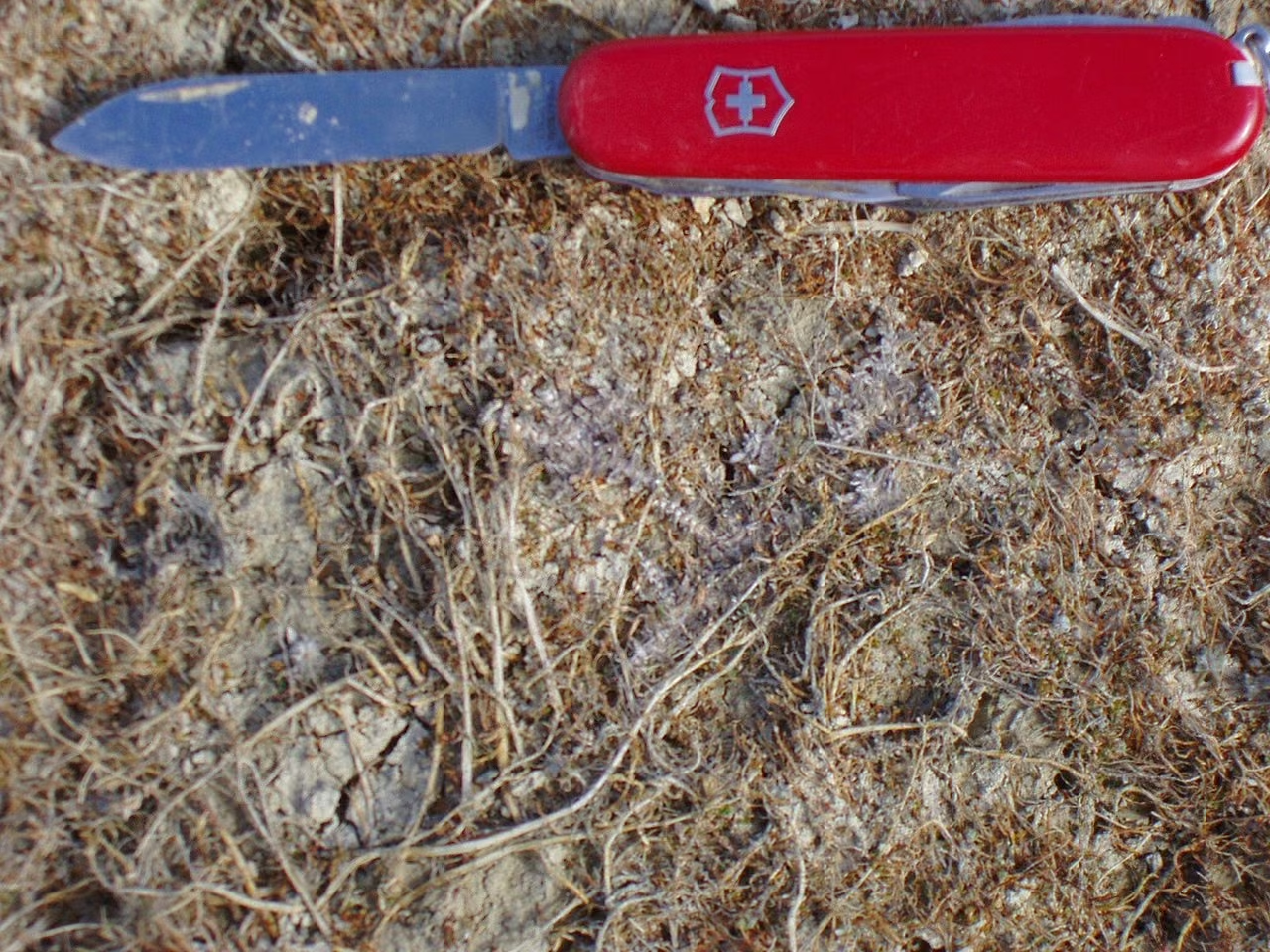
Leptinella maniototo
Leptinella maniototo
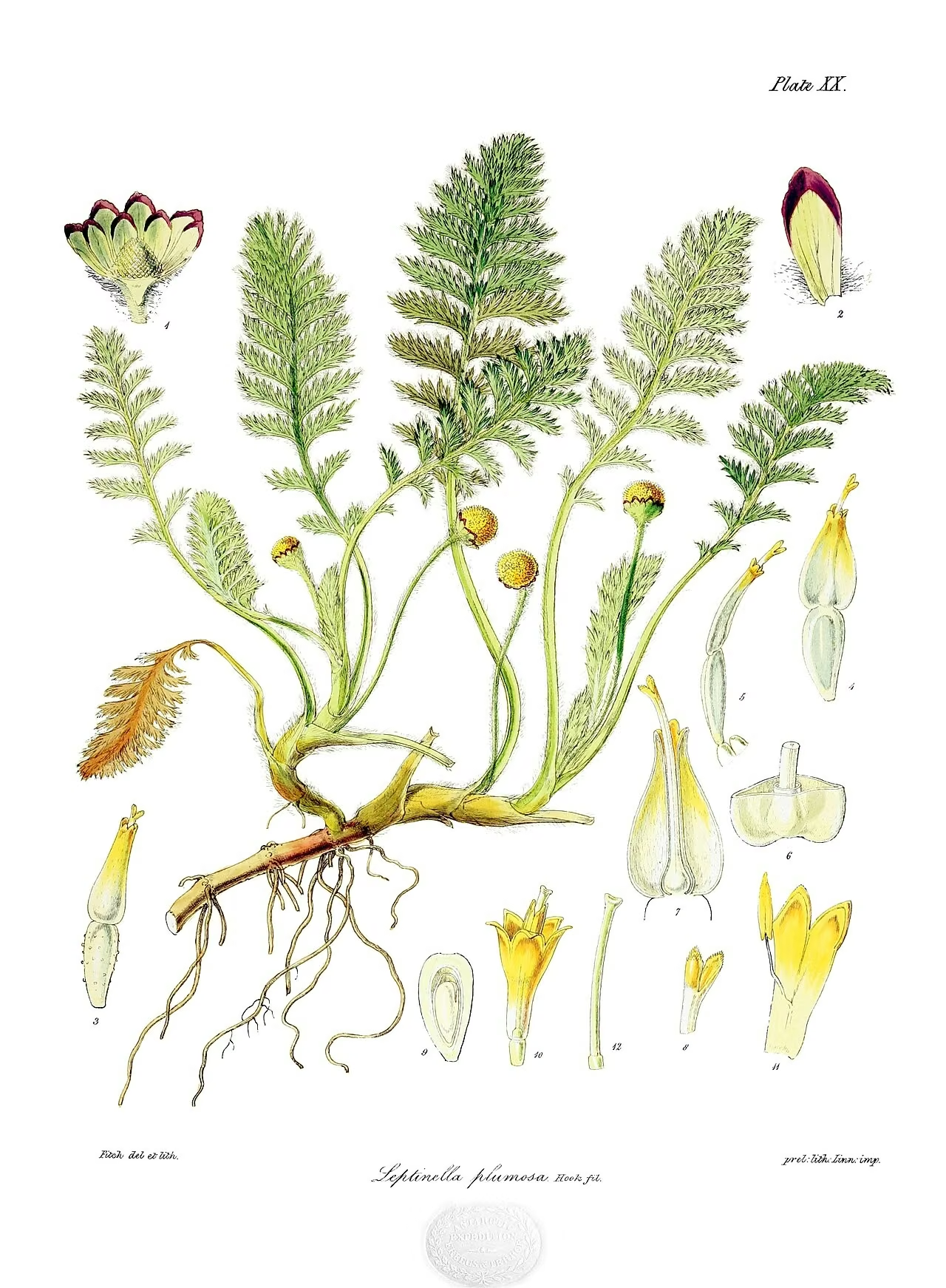
Leptinella plumosa
Leptinella plumosa
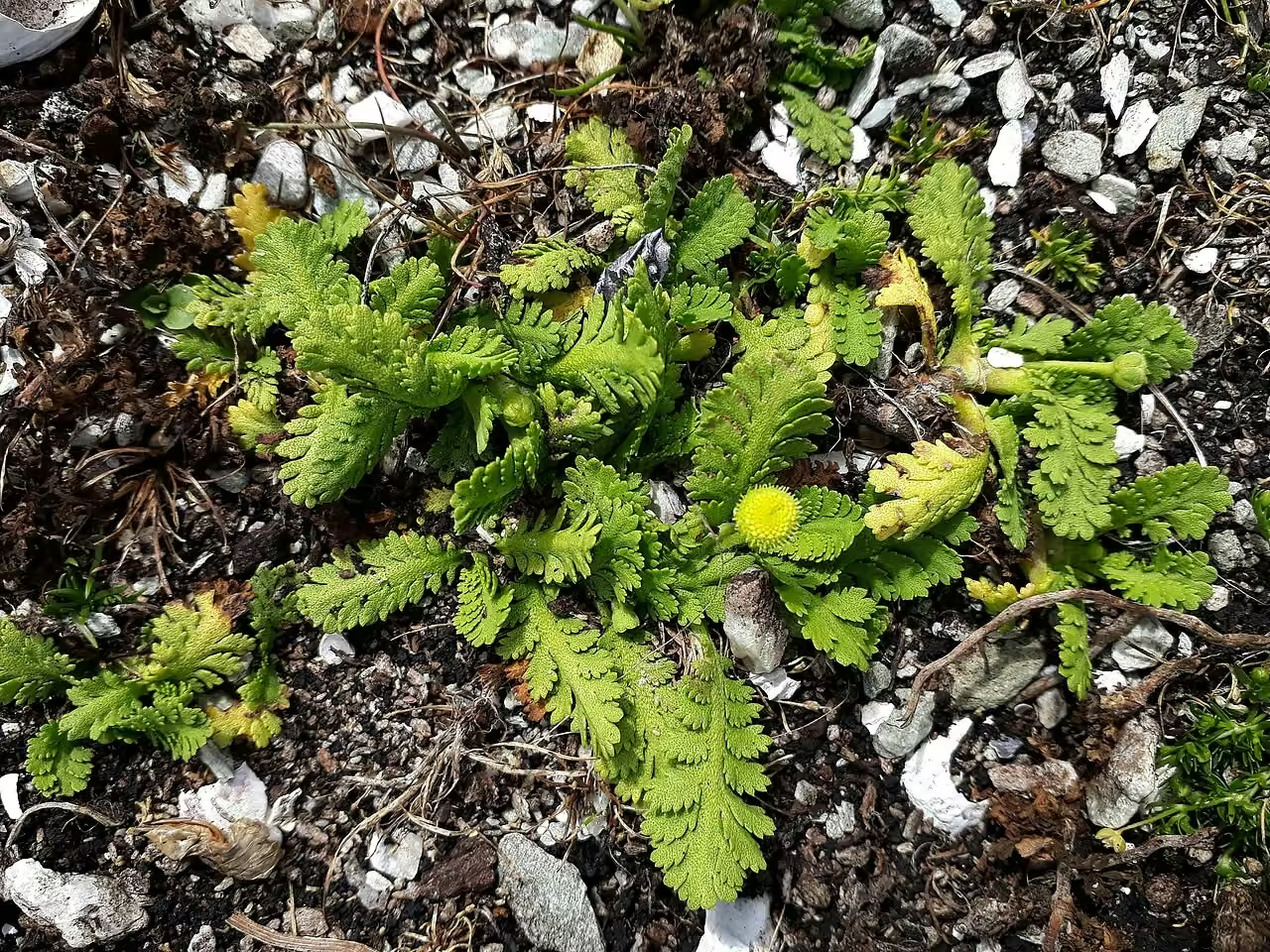
Leptinella potentillina
Leptinella potentillina
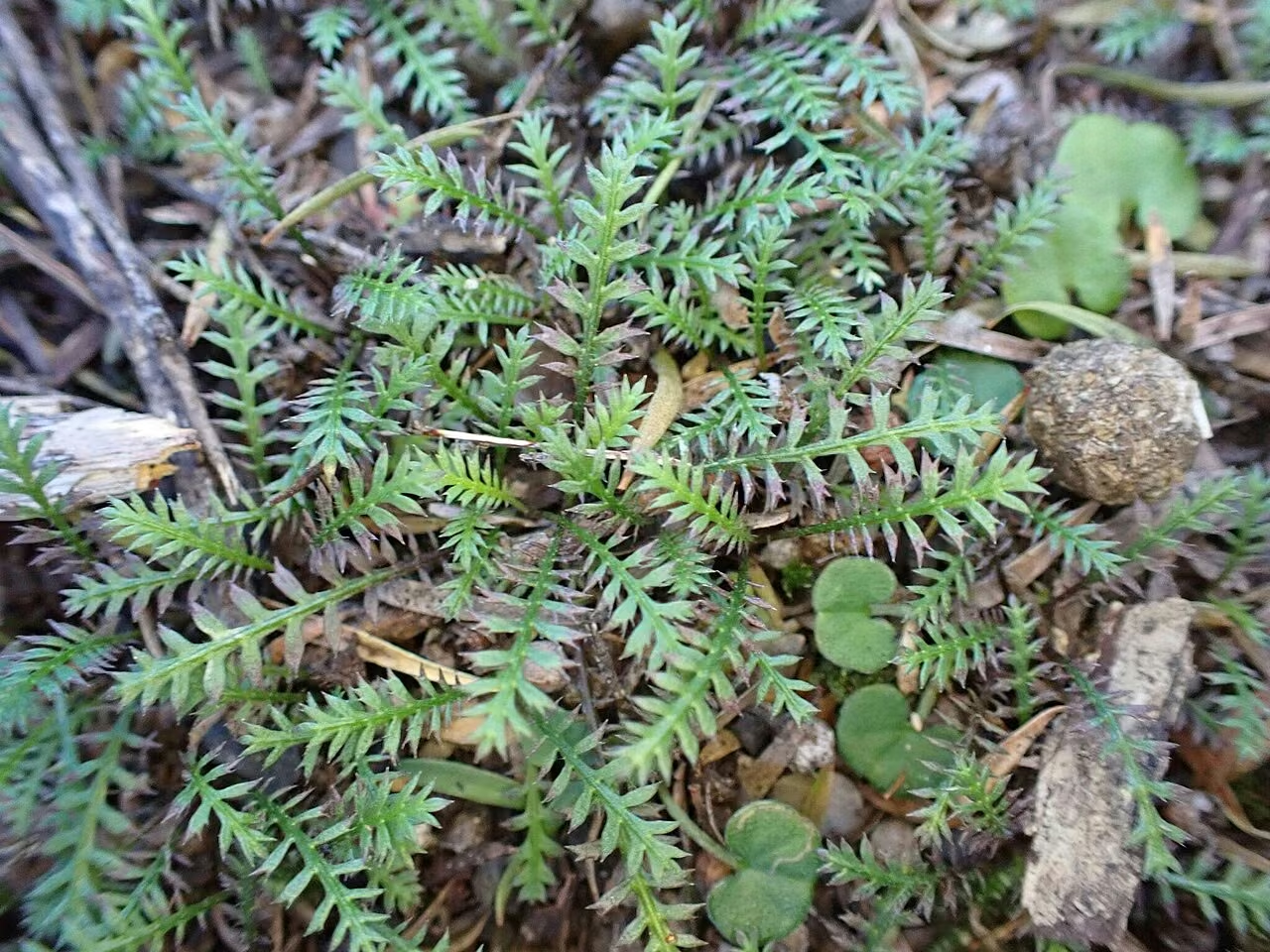
Leptinella pusilla
Leptinella pusilla
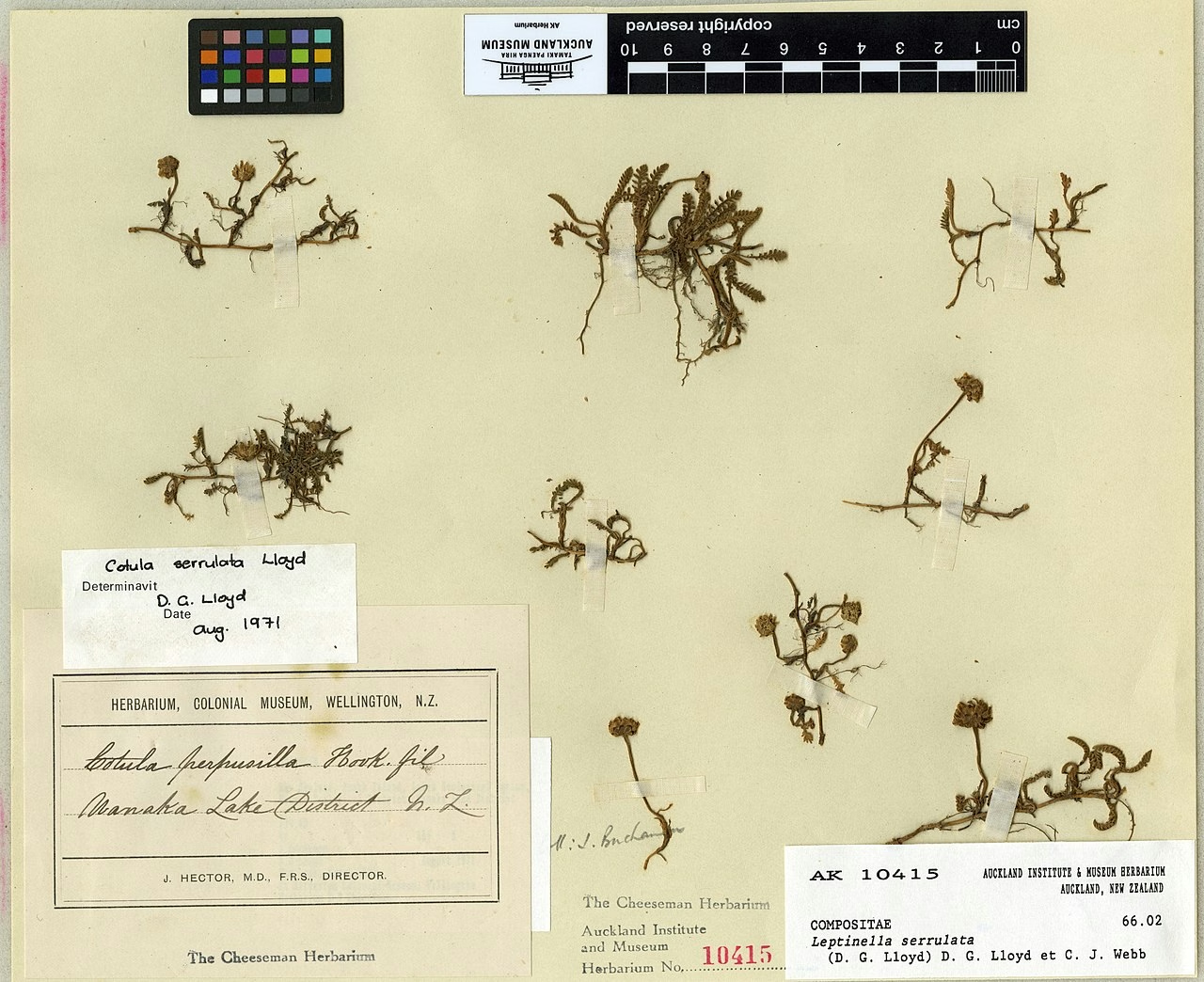
Dryland Button Daisy
Leptinella serrulata
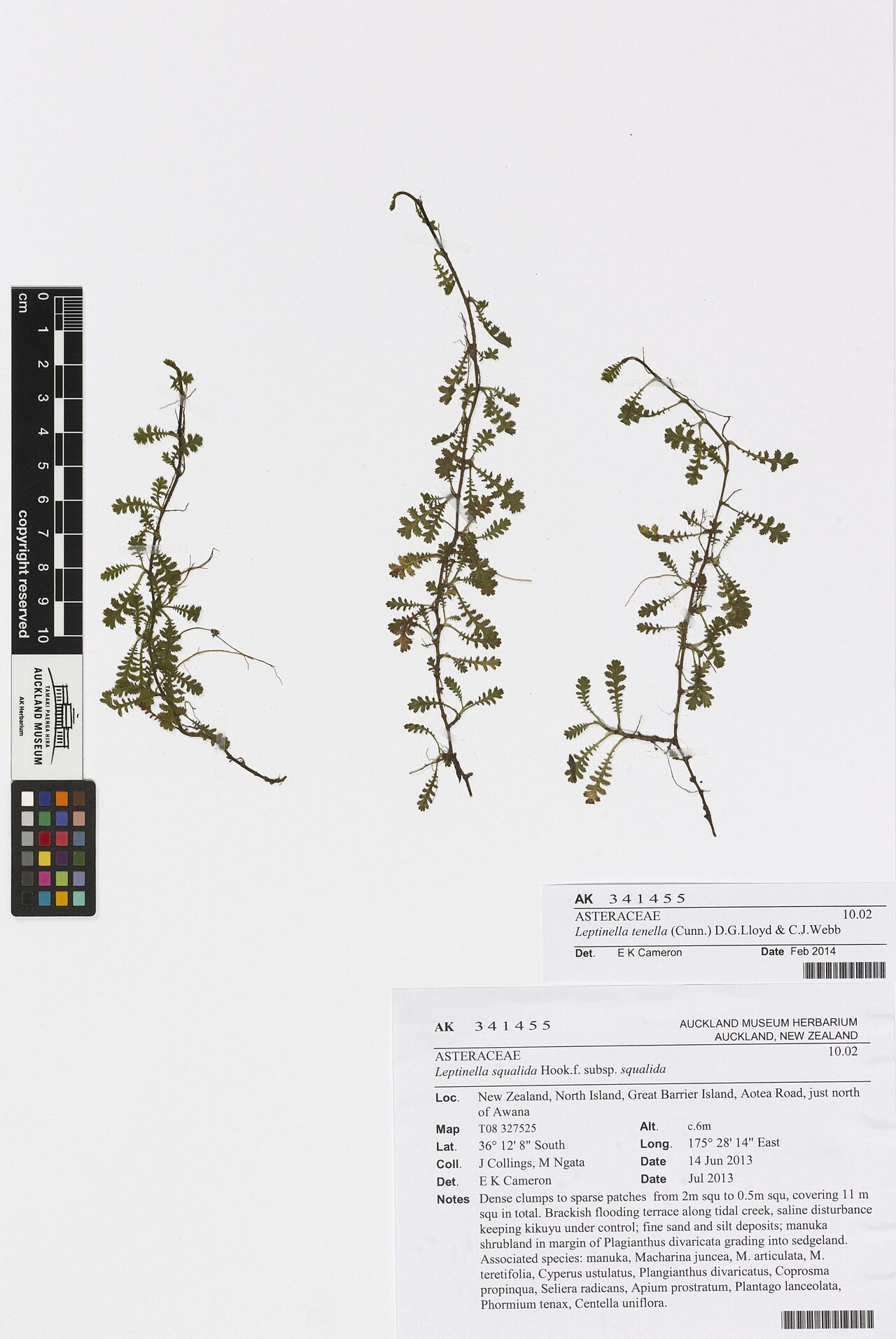
Leptinella tenella
Leptinella tenella
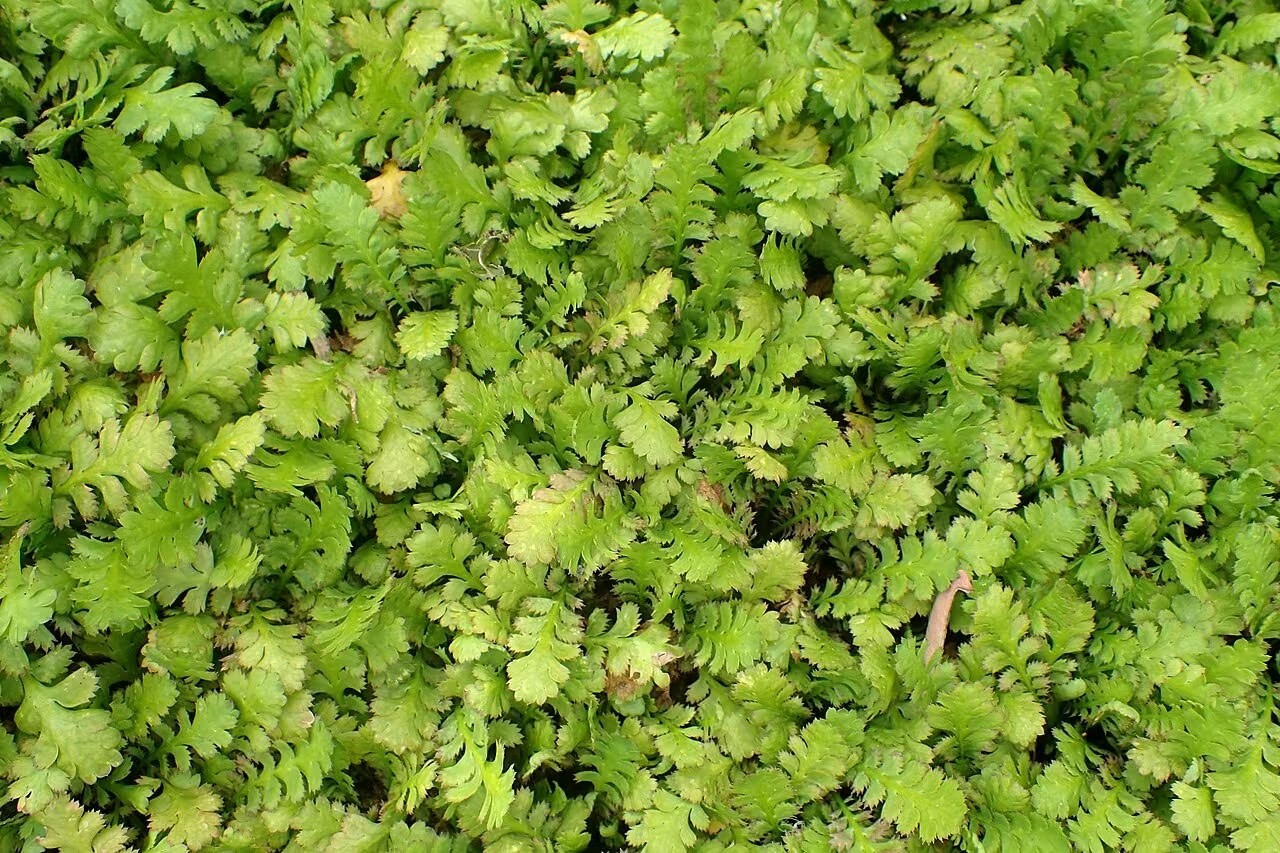
Traill's Button Daisy
Leptinella traillii subsp. traillii
Lepturus repens
Lepturus repens
Plant Conservation
Leptinella rotundata is ranked Threatened - Nationally Critical (2023), the highest threat category, with qualifiers indicating it is sparse, data poor on size and trend, and recovering in places. It is also listed as Regionally Critical in both Northland and Auckland.
All known sites are threatened by coastal erosion and by weed invasion of its narrow cliff-top and boulder-bank habitats, and the lack of seed set limits natural recovery. Weed control at known sites, protecting cliff margins from development and maintaining cultivated backup populations of known origin all help secure its future.
Frequently Asked Questions
How do you identify Leptinella rotundata?
It is the only New Zealand Leptinella with simple, almost circular leaves 1-5 cm long with scalloped (crenate) margins. Most other button daisies have finely divided, fern-like leaves.
Where does Leptinella rotundata grow in the wild?
It grows on the west coast of Northland and Auckland, from Scott's Point at Te Paki south to the Waitakere Ranges, on salt-blasted cliff margins and boulder falls. It was rediscovered in the Waitakere Ranges in 2010.
Why is Leptinella rotundata so rare?
It is known from only about five sites, where coastal erosion and weeds threaten its narrow cliff-top habitat. Seed is rarely if ever formed in the wild, so populations cannot easily spread or recover.
Can Leptinella rotundata be grown in a garden?
Yes. NZPCN says it is very easily grown by division, but cultivated plants are often short-lived and need regular division to stay vigorous. Use nursery-raised stock, never wild plants.
Sources and Further Reading
The botanical, growing, and conservation details for Button Daisy (Leptinella rotundata) on this page draw on the New Zealand plant references below. Consult them for full technical records and the latest distribution data.