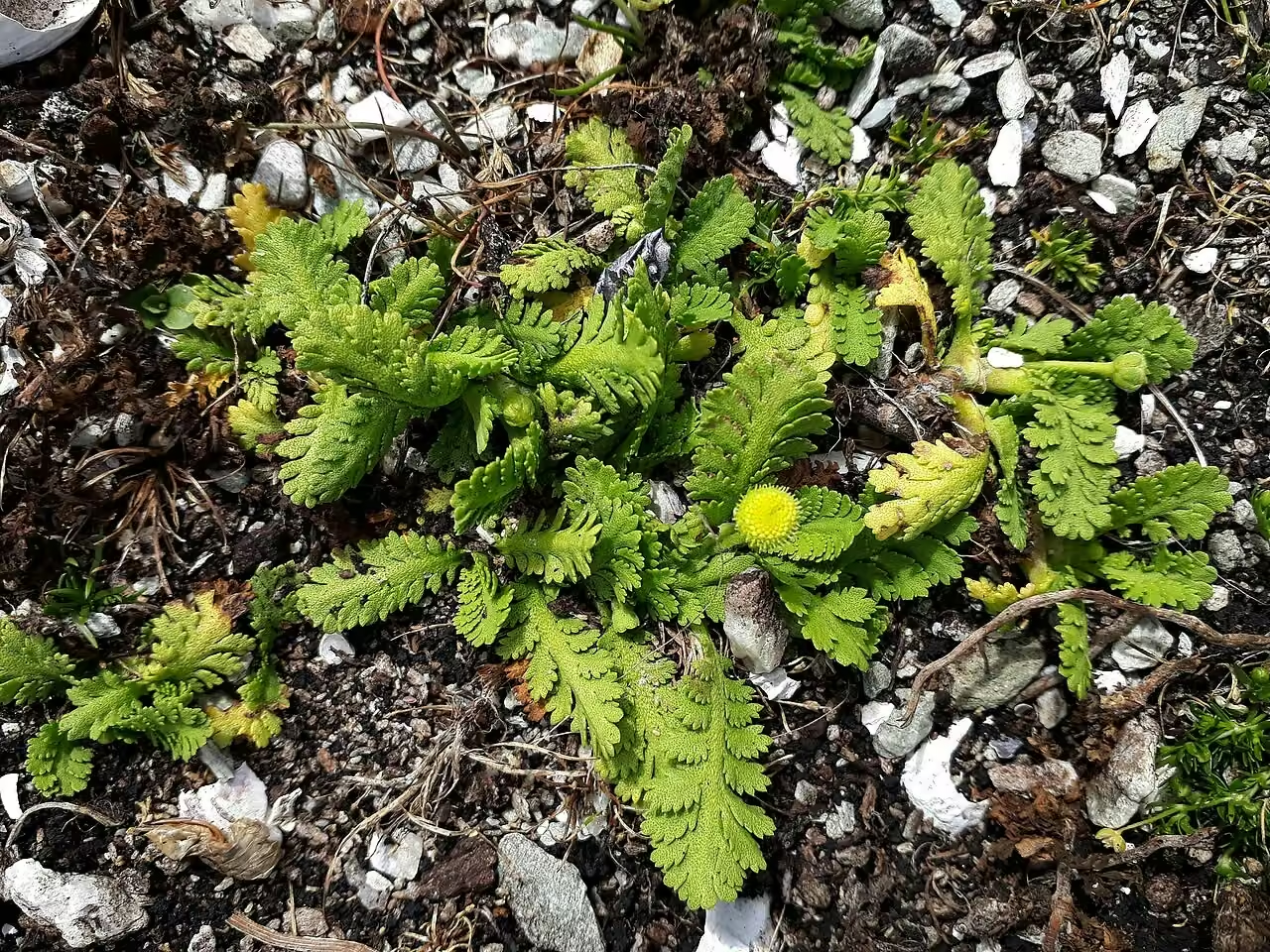
Button Daisy
Leptinella potentillina
Last updated:
Leptinella potentillina is a robust, fleshy button daisy endemic to the Chatham Islands and the Auckland Islands. It creeps by thick rhizomes lying on the soil surface to form loose spreading patches or dense turf, with large, ferny, yellow-green leaves up to 12 cm long and yellow-green to lemon-yellow button heads 5 to 8 mm across. It grows on the coast in and near seepages influenced by the tide, in damp turf, estuaries, dunes and sandy hollows, and is very common on the beaches of Te Whanga Lagoon on Chatham Island. NZPCN considers it one of the most attractive Leptinella and easy to grow in a damp, sunny spot. Explore more native ground covers in our native plant guide.
Plant Description
Leptinella potentillina is a stout, rather robust, fleshy, monoecious perennial herb that creeps diffusely or forms dense, compact turf. Its pale, thick rhizomes lie on the soil surface, are sparsely hairy, and usually branch singly at flowering points, with leaves arranged in two rows.
The leaves are once-divided, 2 to 12 cm long and 4 to 25 mm wide, with an obovate, subfleshy, yellow-green blade lacking brown pigment and 6 to 15 pairs of pinnae edged with small triangular teeth, giving a ferny appearance. The flower heads are 5 to 8 mm across with 15 to 30 involucral bracts, 60 to 200 yellow-green female florets in several rows and more numerous male florets, coloured yellow-green, yellow or lemon-yellow. The cypselae are up to 1.5 mm long, pale and papery at first, turning brown and smooth.
NZPCN says the extremely robust, usually yellow-green leaves and yellowish heads mark it out immediately from other New Zealand Leptinella. Its closest relative is Leptinella tenella, which is a much smaller plant with leaves 10 to 40 mm long compared with 20 to 150 mm in this species.
Quick Facts
| Scientific Name | Leptinella potentillina |
|---|---|
| Height | About 5 cm in leaf |
| Spread | Spreading turf or patches |
| Water Needs | Moist to damp |
| Light | Full sun |
| Frost Tolerance | Moderate; native to mild oceanic islands |
| Salt Tolerance | High; grows in tidal seepages and estuaries |
| Growth Rate | Moderate to fast |
| Lifespan | Perennial |
Climate Best Suited to
Suits the mild, cool, windy oceanic climate of the Chatham Islands, and tolerates the colder conditions of the Auckland Islands. In mainland gardens it suits cool, moist coastal climates rather than hot, dry ones.
Regional Suitability
| City | Climate Suitability |
|---|---|
| Auckland | Medium |
| Wellington | High |
| Christchurch | Medium |
| Dunedin | High |
Plant Habitat
Leptinella potentillina is endemic to New Zealand, found on the Chatham Islands and the subantarctic Auckland Islands. NZPCN notes it is very common on the Chatham Islands, where it is often conspicuous on the sand beaches of the lagoon, but less abundant on the Auckland Islands.
It is a coastal species, usually found in or near seepages subject to tidal influence. It is also a component of damp turf, estuarine vegetation, sand dunes and damp sandy hollows, all places where fresh water and salt water meet and the ground stays moist.
Growing Requirements
Soil Requirements
In the wild it grows on damp sand and silty, brackish ground near the shore.
- Moist sandy or silty soil
- Tolerates brackish seepage and occasional salt
- Grows well in ordinary moist garden loam
Light Requirements
NZPCN notes it does best in sunny situations, matching its open coastal habitat.
- Full sun for compact, colourful foliage
- Light shade is tolerated but growth is looser
Water Requirements
It favours damp ground around seepages and lagoon margins.
- Keep the soil consistently moist
- Water well during dry summer spells
Planting and Establishing
Plant rooted pieces in spring or autumn in a sunny, damp spot such as a pond margin, a moist rockery pocket or a low-traffic area of lawn, where they will spread into a ferny turf.
It suits coastal gardens well because of its natural tolerance of salt-influenced ground, but avoid hot, dry banks, where the fleshy leaves will scorch and the plant will struggle.
Ecological Role
On the Chatham Islands it is a prominent plant of the sandy beaches and seepages around the lagoon, where its creeping rhizomes help bind damp sand and silt in the zone between land and tide.
Its button heads carry many florets open to small visiting insects, though specific pollinators are not documented in the sources consulted. The small papery cypselae, like those of related Leptinella, are probably dispersed by wind and attachment.
Uses & Significance
Garden Uses
It is one of the most ornamental button daisies, with large ferny leaves and yellowish heads.
- Lawn alternative in damp, sunny, low-traffic areas
- Rockery and pond-edge ground cover
- Coastal gardens with moist soil
- Chatham Islands plant collections
Ecological Value
It is part of the coastal turf and dune flora of the Chatham and Auckland Islands.
- Binds sand and silt on lagoon beaches and seepages
- Occupies the brackish zone between dune and tide
- An endemic species of two remote island groups
Landscaping Uses
Use Leptinella potentillina as a soft, ferny carpet between stepping stones in a damp courtyard or along the edge of a pond, where its yellow-green leaves brighten dark stone and water. Its lemon-yellow button heads add a light summer accent.
It combines well with other Chatham Islands plants in a themed garden, and its bright foliage contrasts with bronze and purple-leaved button daisies in a mixed groundcover planting.
Seasonal Care Calendar
Spring
Flowering begins as early as August and new leaves expand.
- Plant or divide
- Keep soil moist as growth accelerates
Summer
Flowering continues to February, with yellow-green to lemon-yellow heads.
- Water in dry spells
- Trim spent flower stalks if desired
Autumn
Fruiting continues over a long period, from September through to July.
- Good time to lift and replant rooted pieces
- Remove fallen leaves from the turf
Winter
The plant remains evergreen and growth slows.
- Avoid walking on frosted turf
- Ensure the site does not become stagnant and waterlogged
When to Prune and How Much
No pruning is required. If it is used as a lawn alternative, a light trim with shears or a high mower setting after flowering will remove spent heads and keep it tidy.
Cut back any runners that spread into paths or neighbouring plants.
How to Grow Button Daisy
NZPCN describes Leptinella potentillina as easy to propagate from rooted pieces, which is the quickest and most reliable way to multiply it. The thick rhizomes lie on the soil surface and root as they spread, so a mature patch can supply many divisions without harming the parent. Because the species is monoecious, it can also set seed in cultivation, and fruiting runs over a long season from September to July. As it is a naturally uncommon species, take material only from plants already in cultivation or from authorised collections, rather than from wild populations on the Chatham or Auckland Islands.
By Division (Rooted Pieces)
Take rooted pieces at any time the plant is in active growth, though spring and autumn give the best results because the soil is moist and temperatures are mild.
- Cut a length of surface rhizome with several leaves and roots
- Plant directly into moist garden soil or a pot of free-draining mix
- Firm in and water thoroughly
- Keep consistently damp and in sun until the piece is spreading
- Plant out pot-grown pieces once they fill the container
From Seed
Seed is set in the heads after flowering, with cypselae turning brown and smooth as they ripen. Germination details for this species are not recorded in the sources consulted.
- Collect heads once the cypselae have turned brown
- Sow on the surface of a moist seed mix
- Keep in a bright, sheltered place and do not let it dry out
- Prick out seedlings into individual pots as they develop
Pests & Diseases
No serious pests or diseases are recorded. Slugs and snails may graze young leaves, and plants in stagnant, shaded wet ground may rot.
Introduced lawn grasses and weeds can invade the turf, so hand weed regularly if it is used as a lawn alternative.
Cultural Significance
No traditional Māori or Moriori name or use is recorded for Leptinella potentillina in the sources consulted.
The species was described by the Victorian Government Botanist Ferdinand von Mueller, whose name is also commemorated in its synonym Cotula muelleri. The epithet potentillina appears to liken the divided leaves to those of Potentilla, a genus in the rose family.
Bonus Tip
If you want a lawn alternative for a damp, sunny corner where grass struggles, NZPCN suggests this species is well suited to a lawn or rockery. Plant rooted pieces closely in spring and keep them weeded and watered through the first summer so they knit together before grasses can move in.
Related Plants
Explore other native plants that share similar characteristics or habitats with Button Daisy (Leptinella potentillina), offering further insights into New Zealand's diverse flora. These related species provide context and opportunities for complementary planting in your garden.
Goyen's Button Daisy
Leptinella goyenii
Leptinella lanata
Leptinella lanata
Leptinella maniototo
Leptinella maniototo
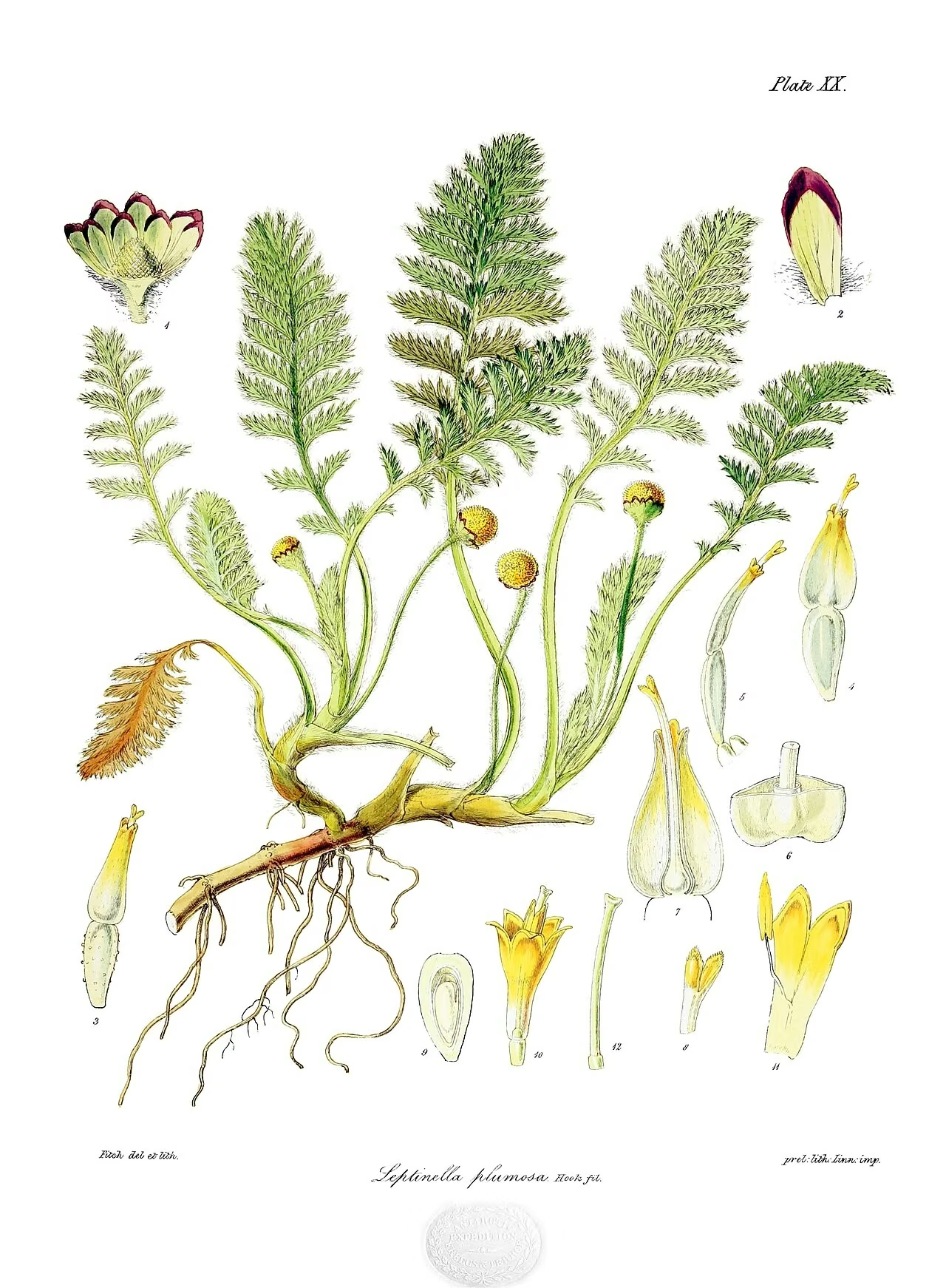
Leptinella plumosa
Leptinella plumosa
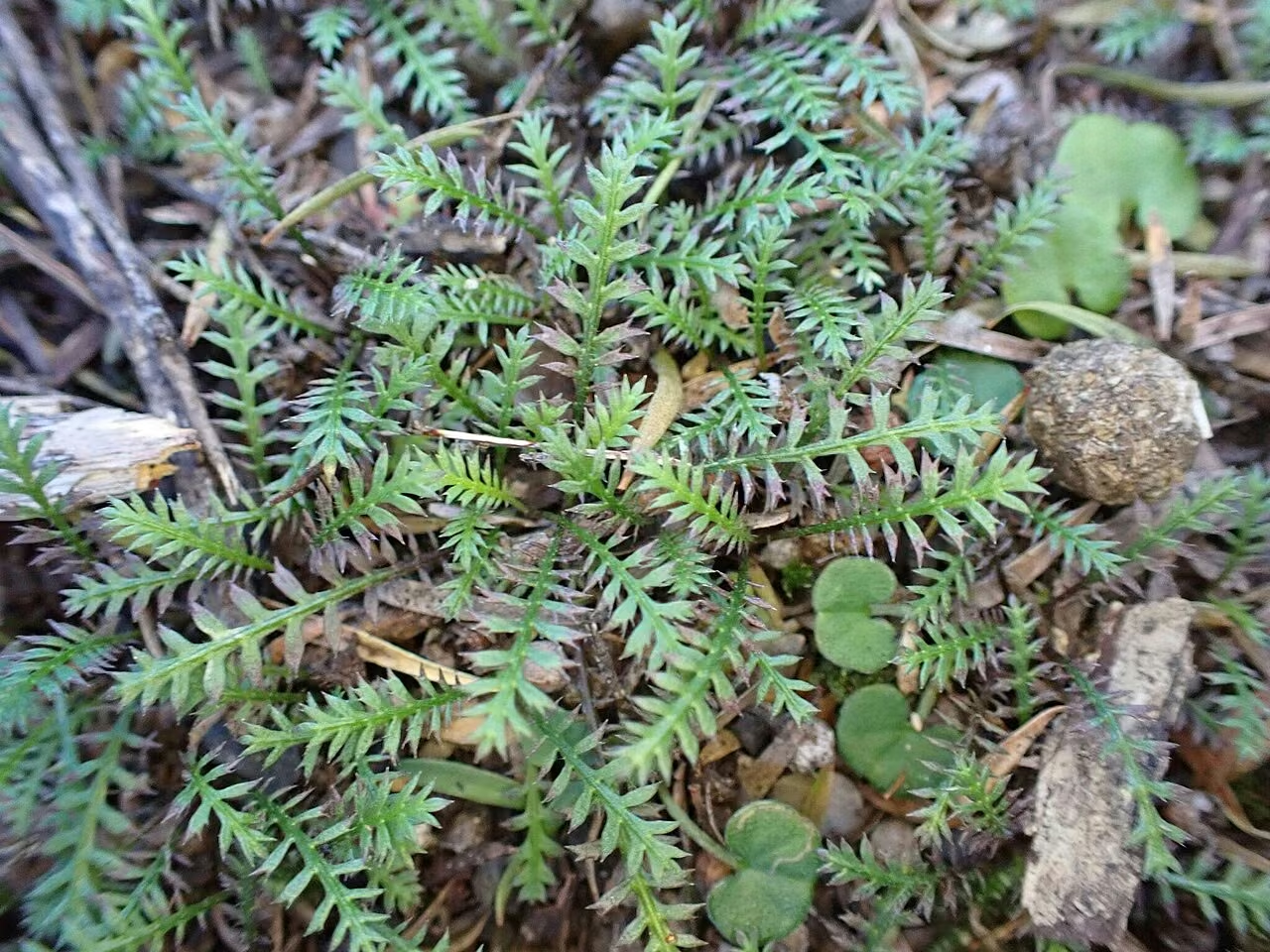
Leptinella pusilla
Leptinella pusilla
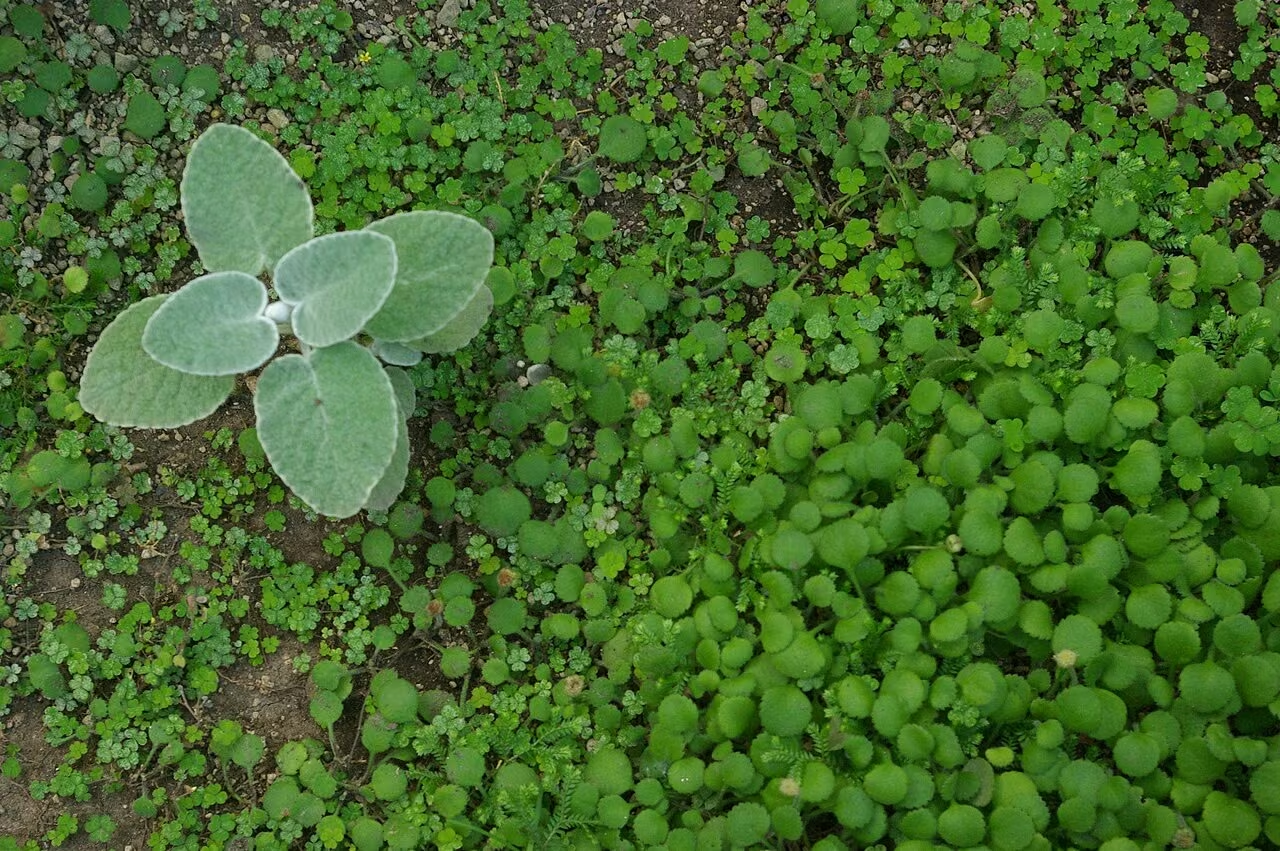
Leptinella rotundata
Leptinella rotundata
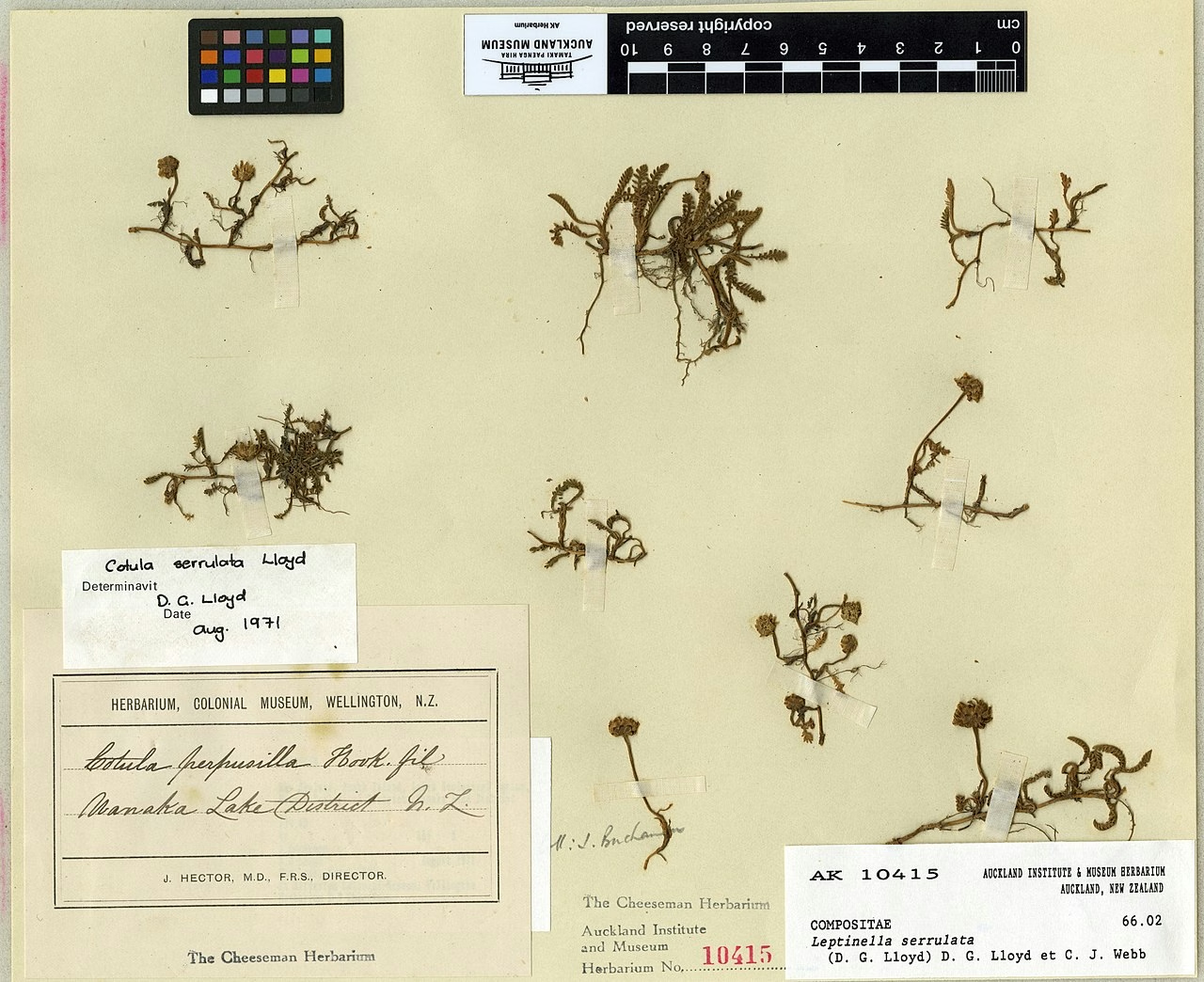
Dryland Button Daisy
Leptinella serrulata
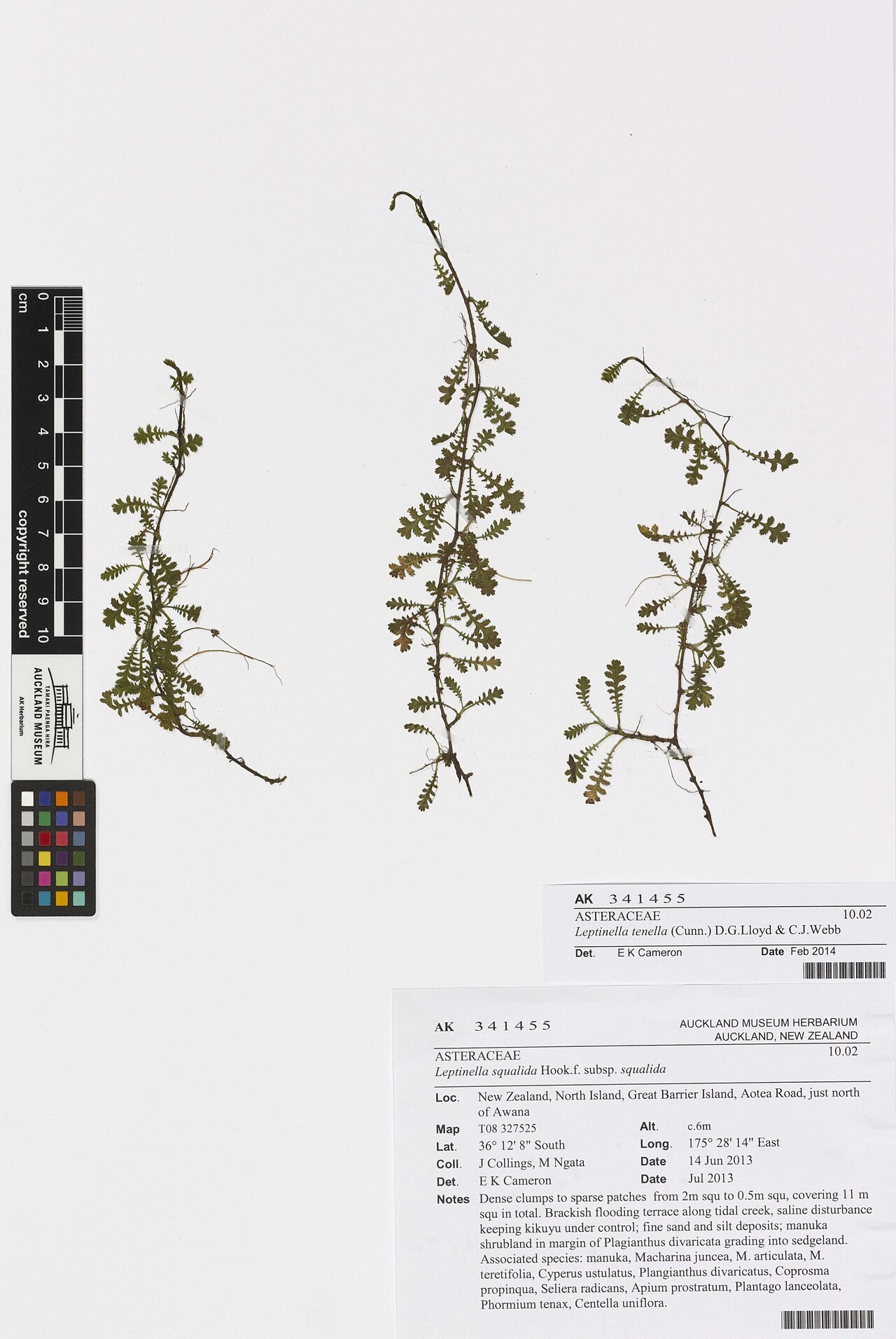
Leptinella tenella
Leptinella tenella
Plant Conservation
Leptinella potentillina is ranked At Risk - Naturally Uncommon (2023) with the qualifier Range Restricted, a ranking it has held since at least 2012. NZPCN notes no significant threats; it remains very common on the Chatham Islands, though less abundant on the Auckland Islands.
Its rarity reflects its natural confinement to two island groups. Protecting coastal seepages and lagoon margins on the Chathams from drainage, weeds and stock trampling helps keep it secure.
Frequently Asked Questions
Where does Leptinella potentillina grow naturally?
It is endemic to the Chatham Islands and the subantarctic Auckland Islands, where it grows on coastal tidal seepages, damp turf, estuaries, sand dunes and sandy hollows.
Is Leptinella potentillina a good garden plant?
Yes. NZPCN describes it as easy to grow from rooted pieces and an attractive plant for a rockery or lawn, doing best in damp, sunny situations.
How do you tell Leptinella potentillina from other button daisies?
Its very robust, yellow-green ferny leaves, 2 to 12 cm long, and yellow-green to lemon-yellow heads set it apart. It is closest to Leptinella tenella, which has much smaller leaves.
Sources and Further Reading
The botanical, growing, and conservation details for Button Daisy (Leptinella potentillina) on this page draw on the New Zealand plant references below. Consult them for full technical records and the latest distribution data.