Goyen's Button Daisy
Leptinella goyenii
Last updated:
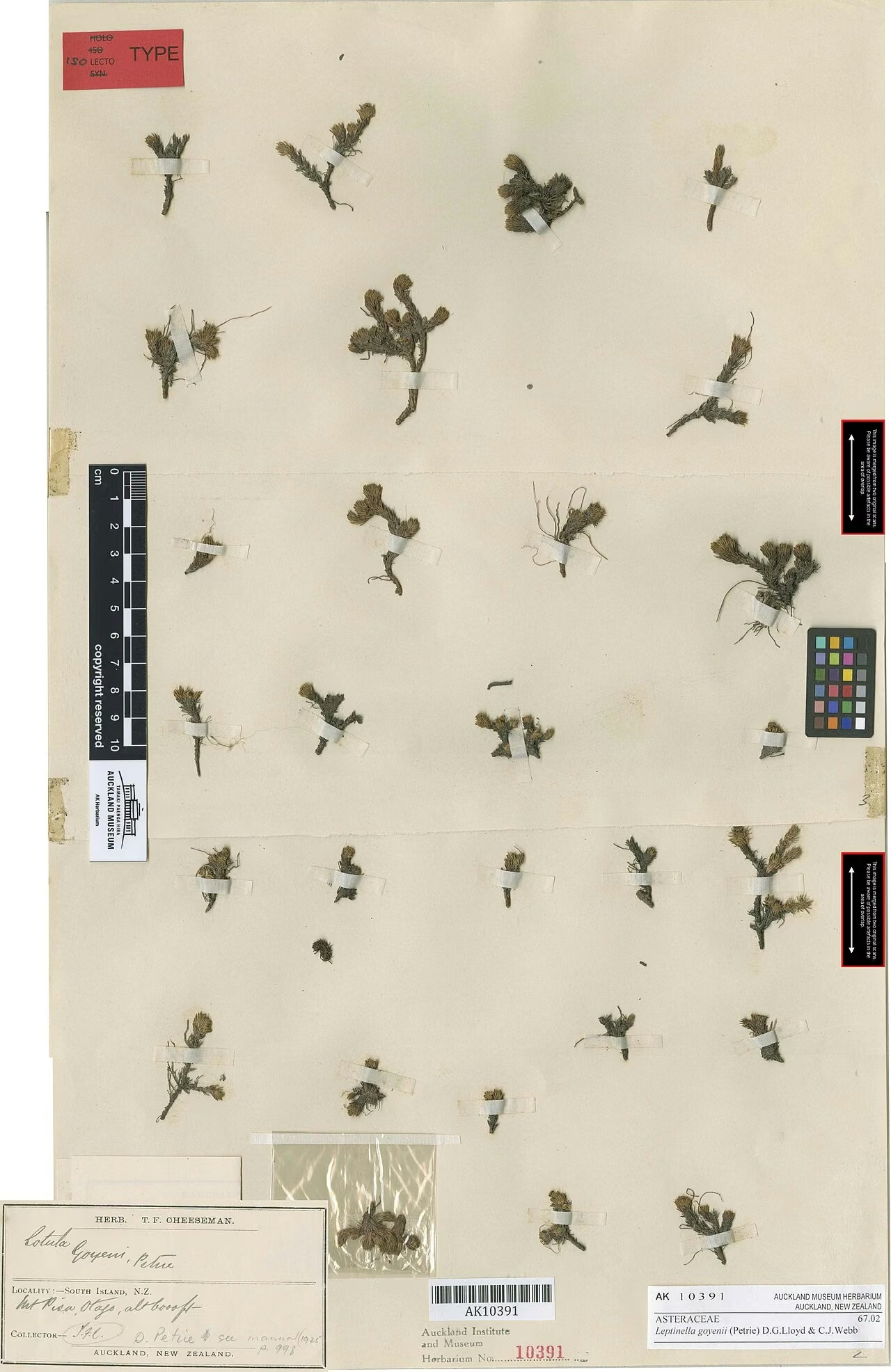
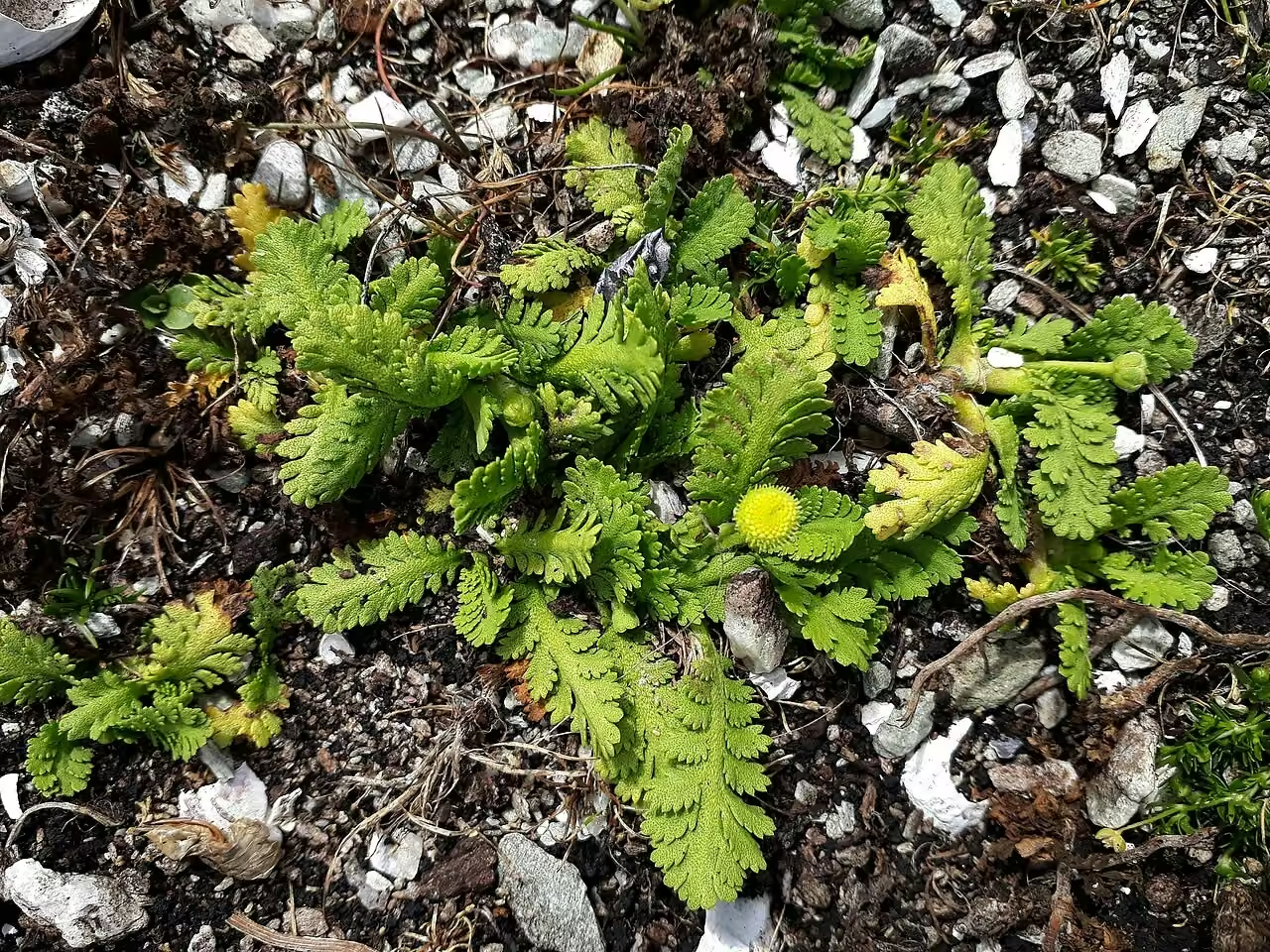
Goyen's button daisy (Leptinella goyenii) is a woody, mat-forming alpine herb endemic to the South Island, ranging from Central Otago west to Fiordland. It builds compact mats up to 30 mm thick and up to 1 m across, made of densely packed stems clothed in tiny overlapping leaves split into finger-like lobes, a combination found in no other Leptinella. Small red-tinged button heads rise on stalks up to 7 cm long in early summer. It grows above about 1300 m among rocks, on cliffs, in fellfield and on stony ridge tops. It is Not Threatened nationally but is difficult to cultivate. Explore more native ground covers in our native plant guide.
Plant Description
Leptinella goyenii is a woody, mat-forming perennial herb. Its more or less horizontal rhizomes are densely packed, with branches single or in diverging clusters of two or three, producing compact mats up to 30 mm thick in patches up to 1 m wide. The woody stems give the mats a firmness unusual among button daisies.
The leaves are small, 4 to 6 mm long and 4 to 5 mm wide, overlapping closely along the stems and palmately divided into linear, sharply pointed lobes, so each leaf looks like a tiny hand. Flower heads are 2 to 4 mm across and barely emerge from the mat surface, on stalks up to 70 mm long. The Flora of New Zealand describes the plant as possibly subdioecious, with heads mainly female or mainly male. Female heads have 10 to 15 involucral bracts and male heads 8 to 12, and the florets are tinged red or pink and yellow. The fruit is a papery cypsela.
NZPCN notes that the stout woody stems, mat-forming habit and overlapping palmately lobed leaves set it apart from every other species in the genus, so it is unlikely to be confused with other button daisies.
Quick Facts
| Scientific Name | Leptinella goyenii |
|---|---|
| Height | Mats up to 30 mm thick |
| Spread | Patches up to 1 m wide |
| Water Needs | Moderate; well-drained rocky sites |
| Light | Full sun, open alpine ground |
| Frost Tolerance | High; grows above 1300 m |
| Salt Tolerance | No information available; an inland alpine species |
| Growth Rate | Slow |
| Lifespan | Long-lived perennial |
Climate Best Suited to
Suits the cold, snowy and windswept alpine climate of the southern South Island mountains. It is not adapted to warm lowland gardens.
Regional Suitability
| City | Climate Suitability |
|---|---|
| Auckland | Low |
| Wellington | Low |
| Christchurch | Low |
| Dunedin | Low |
Plant Habitat
Leptinella goyenii is endemic to the South Island, from the Central Otago mountains west to Fiordland. It is an alpine species recorded above about 1300 m.
It usually grows among rocks, on cliff faces and in fellfield, and on gently sloping, rock-strewn ridge summits. These are exposed, stony places where the firm woody mats can anchor between boulders and survive frost heave, wind and snow.
Growing Requirements
Soil Requirements
In the wild it grows in thin, stony soil between rocks and on ridge-top rubble.
- Sharp drainage among rock
- Low-fertility mineral soil
- Crevices and rubble rather than deep soil
Light Requirements
It occupies open, treeless alpine ridges and rock faces in full exposure.
- Full sun and open sky
- Not found under shrubs or in shaded gullies
Water Requirements
Its alpine home receives rain and snow through the year, but rocky sites shed water quickly.
- Moisture from rain, snowmelt and mist
- Never sits in standing water
Planting and Establishing
Goyen's button daisy is not suitable for general planting. NZPCN describes it as difficult to grow, it is not commercially available, and it should not be removed from the wild.
Botanic gardens or alpine specialists wanting to display it should source material only through legitimate conservation channels and grow it in a cold, gritty crevice or trough in an alpine house with strong air movement.
Ecological Role
Its woody mats help bind stony ridge-top soil and create small sheltered pockets in otherwise bare fellfield. NZPCN records that its papery cypselae are dispersed by wind and possibly by attachment to animals.
The insects that pollinate its small red-tinged flower heads are not documented in the sources consulted, though flies and other small insects commonly visit the open heads of alpine daisies.
Uses & Significance
Garden Uses
It has essentially no place in ordinary gardens because it is difficult to grow and not commercially available.
- Botanic garden alpine collections only, from legal sources
- Best appreciated in the wild on Otago and Fiordland ridges
Ecological Value
It is a characteristic plant of high, rocky ridges in the southern South Island.
- The only woody, palmate-leaved button daisy, a distinctive member of the genus
- Stabilises rubble on exposed ridge summits
- Part of the alpine fellfield flora of Central Otago and Fiordland
Landscaping Uses
Leptinella goyenii is not used in landscaping. In a botanic alpine display it would be set into a crevice or between rocks, where its tight mat of hand-shaped leaves could be viewed at close range.
For a similar low, textured button daisy effect in a home garden, nursery-grown Leptinella species that tolerate lowland conditions are a far more practical choice.
Seasonal Care Calendar
Spring
The mats emerge from snow cover and begin new growth as the tops warm.
- No intervention needed in the wild
- Watch for winter rot on cultivated plants
Summer
Flowering runs from November to January, with tiny red and yellow heads sitting among or just above the leaves.
- Look for flowering mats on rocky ridges
- Step around mats when off track
Autumn
Fruit ripens from December into April and the papery seeds are shed.
- Leave wild seed undisturbed
- Keep cultivated plants cool and airy
Winter
Plants sit dormant under frost and snow on the alpine tops.
- No action required
- Shelter cultivated plants from prolonged wet
When to Prune and How Much
Do not prune. The woody stems grow slowly and cutting them leaves gaps in the mat that are slow to fill.
On cultivated plants, simply remove any dead stems with fine scissors.
How to Grow Goyen's Button Daisy
Goyen's button daisy is difficult to propagate, NZPCN states it should not be removed from the wild, and it is not commercially available. No published propagation protocol for this species was found in the sources consulted. The notes below describe the approach usually taken with alpine Leptinella and are offered only for botanic gardens or conservation projects working with legally held material. Expect slow growth and losses, and keep plants cool, bright and well ventilated at every stage, because warm, humid air is the usual cause of failure with high-alpine daisies.
From Cuttings
Because the stems are woody and densely packed, short stem pieces taken from the edge of a cultivated mat are the most likely vegetative option. Any piece that already carries roots has a much better chance.
- Take a short stem section from the edge of a cultivated mat in late spring
- Insert into pure pumice or coarse grit kept just moist
- Keep cool and lightly shaded while roots develop
- Pot on gently into a very gritty alpine mix
- Grow on in an unheated alpine house with good air flow
From Seed
Flowering is from November to January and fruit ripens from December to April. The Flora of New Zealand describes the species as possibly subdioecious, with heads that are mainly female or mainly male, so seed is best expected where several plants grow together.
- Collect papery seed heads as soon as they ripen
- Sow fresh on a gritty mix and leave outdoors over winter for natural chilling
- Keep seedlings cool and grow them on slowly before potting
Pests & Diseases
No specific pests or diseases are recorded for Leptinella goyenii. In cultivation, rot in warm or humid conditions is the most likely problem.
In the wild, trampling of mats on popular ridges and browsing by introduced animals could cause local damage, though no specific threats are documented.
Cultural Significance
No traditional Māori name or use is recorded for Leptinella goyenii in the sources consulted.
It was first described by Donald Petrie as Cotula goyenii. The epithet very likely honours Peter Goyen (1845-1927), an Otago school inspector and naturalist who collected plants with Petrie and after whom Petrie also named Myosotis goyenii, although the original description was not checked for this page. The common name Goyen's button daisy follows the epithet.
Bonus Tip
To find this plant in the wild, look on stony ridge crests above 1300 m in Central Otago in December or January, when it is in flower. The tiny leaves cut into narrow fingers like a miniature hand, packed onto firm woody stems, are the quickest way to tell it from every other button daisy.
Related Plants
Explore other native plants that share similar characteristics or habitats with Goyen's Button Daisy (Leptinella goyenii), offering further insights into New Zealand's diverse flora. These related species provide context and opportunities for complementary planting in your garden.
Pouteretere
Leptecophylla robusta
Leptinella albida
Leptinella albida
Leptinella calcarea
Leptinella calcarea
Chatham Island Button Daisy
Leptinella featherstonii
Leptinella lanata
Leptinella lanata
Leptinella maniototo
Leptinella maniototo
Leptinella plumosa
Leptinella plumosa
Leptinella potentillina
Leptinella potentillina
Plant Conservation
Leptinella goyenii has been ranked Not Threatened in every national assessment from 2004 to 2023. However, the Otago regional assessment (2025) lists it as Regionally Naturally Uncommon, reflecting its restriction to high, rocky sites.
Much of its habitat lies on conservation land in the Otago mountains and Fiordland National Park. Staying on tracks across fellfield and never collecting plants are the main ways visitors can help.
Frequently Asked Questions
What is Goyen's button daisy?
It is Leptinella goyenii, a woody, mat-forming member of the daisy family that grows on rocky alpine ground above about 1300 m in Central Otago, Southland and Fiordland.
How do you identify Leptinella goyenii?
Look for stout woody stems forming a tight mat, small overlapping leaves 4 to 6 mm long that are palmately divided into narrow pointed lobes, and tiny button heads 2 to 4 mm across sitting at the mat surface.
Is Goyen's button daisy rare?
Nationally it is ranked Not Threatened, but the Otago regional assessment (2025) lists it as Regionally Naturally Uncommon because it is confined to high rocky sites.
Can I grow Goyen's button daisy?
NZPCN describes it as difficult to grow and says it should not be removed from the wild. It is not commercially available.
Sources and Further Reading
The botanical, growing, and conservation details for Goyen's Button Daisy (Leptinella goyenii) on this page draw on the New Zealand plant references below. Consult them for full technical records and the latest distribution data.