Button Daisy
Leptinella lanata
Last updated:
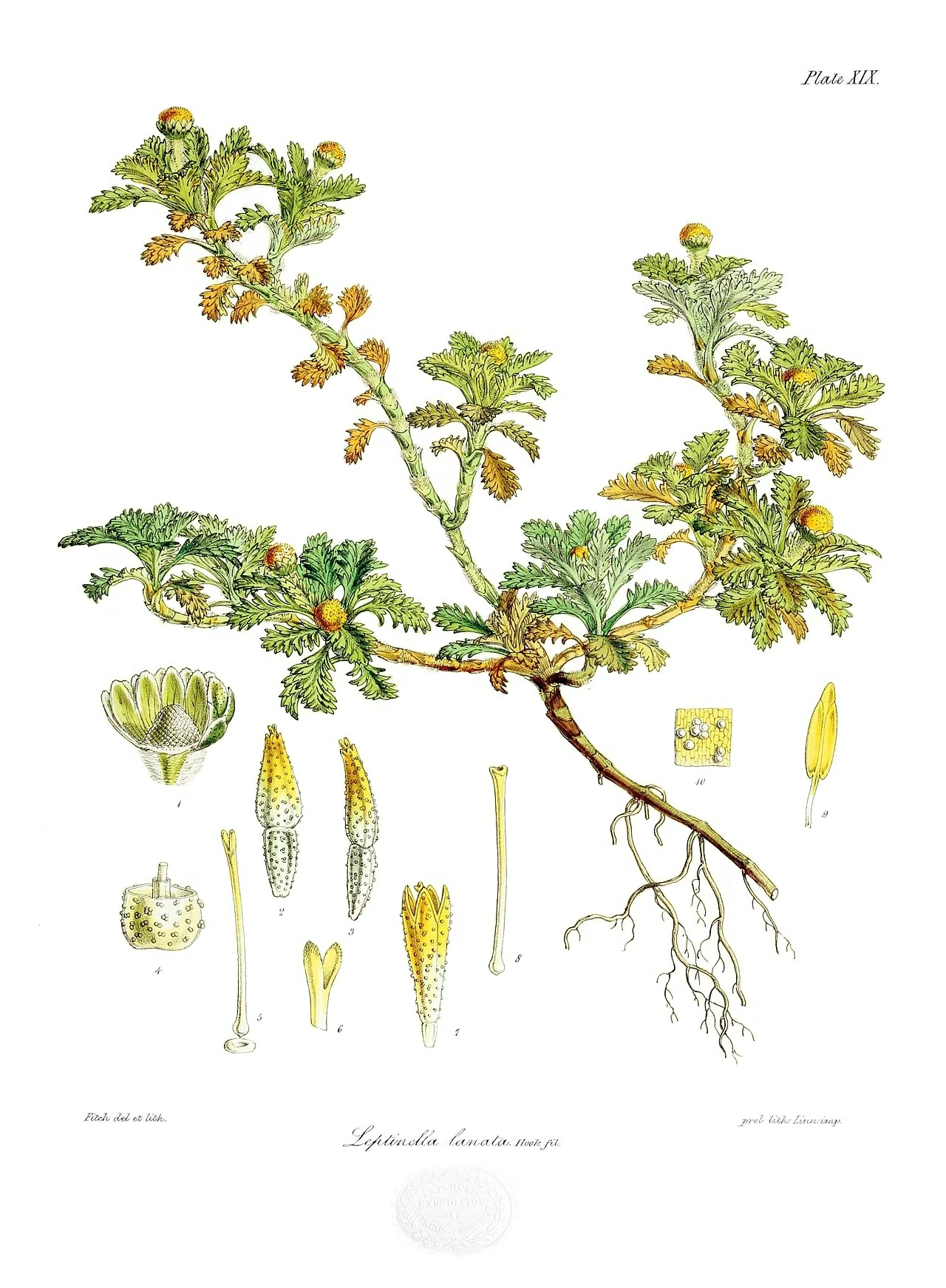
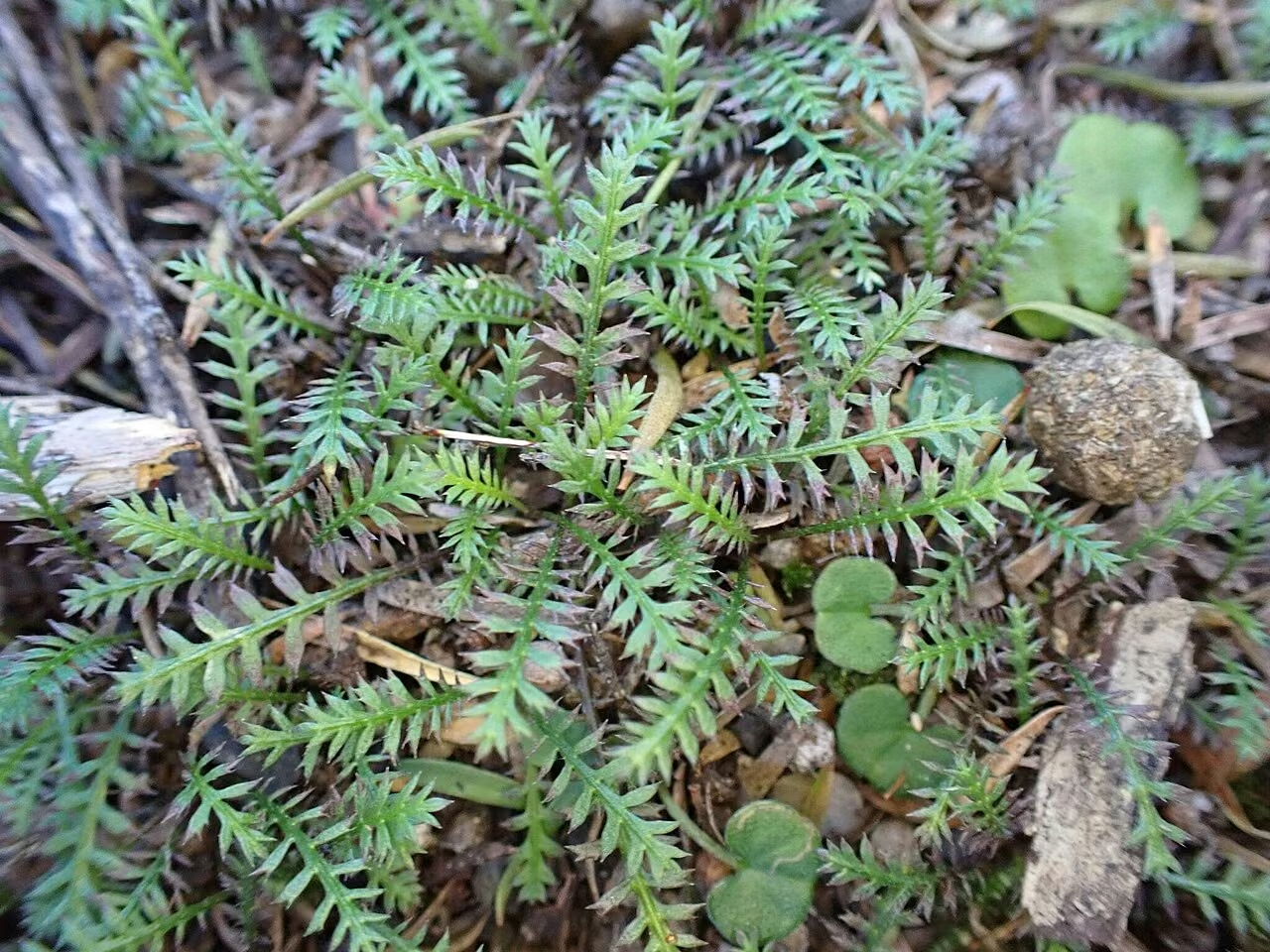
Leptinella lanata is a robust but small-leaved subantarctic button daisy found on the Auckland Islands and Campbell Island/Motu Ihupuku, and since 2004 also known from Australia's Heard Island. Its name comes from its stout creeping stems, which are wrapped in thick mats of woolly hair when young. The plant forms small patches of thick, fleshy, light green divided leaves and bears greenish-yellow button heads up to 1 cm across. It grows on coastal rocks, cliff tops, damp peat and among seal haul-outs and seabird colonies. It is ranked At Risk - Naturally Uncommon because of its small range. Explore more native ground covers in our native plant guide.
Plant Description
Leptinella lanata is a robust but small-leaved, diffusely creeping perennial herb that is monoecious, carrying both female and male florets in each head. Its rhizomes are stout, 1 to 4 mm across, and covered at first in thick mats of woolly hair before becoming hairless and brownish. Branches typically radiate in clusters of up to four from flowering points.
The leaves are once-divided, 1 to 2.5 cm long and 4 to 10 mm wide, with 3 to 5 pairs of lobes cut about halfway across by triangular teeth. They are thick, subfleshy and light green, woolly when young, especially along the midrib, but soon become almost hairless. The hemispherical flower heads are 6 to 10 mm across, with 50 to 100 female florets and 70 to 90 male florets, coloured green and yellow, on woolly stalks. The fruits are shiny, golden-brown cypselae up to 2.3 mm long.
NZPCN distinguishes it by the combination of woolly rhizomes, leaves that become hairless with age, and woolly flower stalks. Its leaves are far smaller and fleshier than those of the other large subantarctic button daisy, Leptinella plumosa.
Quick Facts
| Scientific Name | Leptinella lanata |
|---|---|
| Height | Low creeping herb, a few centimetres tall |
| Spread | Small patches |
| Water Needs | High; damp peat and coastal rock |
| Light | Full sun to open, often cloudy sites |
| Frost Tolerance | Moderate; a cool oceanic subantarctic species |
| Salt Tolerance | High; grows on coastal rocks and cliff tops |
| Growth Rate | Moderate |
| Lifespan | Perennial |
Climate Best Suited to
Suits the cool, cloudy, wet and windy oceanic climate of the subantarctic islands, where summers are cold and temperatures rarely reach extremes. NZPCN notes it requires cool conditions and will not tolerate humidity.
Regional Suitability
| City | Climate Suitability |
|---|---|
| Auckland | Low |
| Wellington | Low |
| Christchurch | Low |
| Dunedin | Medium |
Plant Habitat
Leptinella lanata is found in the New Zealand subantarctic on the Auckland Islands and Campbell Island/Motu Ihupuku. In 2004 it was also discovered on Heard Island in the southern Indian Ocean, which is why NZPCN now treats it as indigenous rather than strictly endemic.
It is a coastal plant of rocks, cliff tops, damp exposed peat and rock crevices, and it also grows within seal haul-outs and seabird nesting grounds. These sites are often disturbed and enriched by animals, which keeps them open and nutrient-rich.
Growing Requirements
Soil Requirements
It grows on damp peat and in rock crevices, often enriched by seal and seabird activity.
- Moist, organic or peaty soil
- Tolerates nutrient-rich ground near animal colonies
- Rock crevices with constant moisture
Light Requirements
It grows on open coastal ground with no tree cover, under the frequently overcast subantarctic sky.
- Open sites with good light
- Cool temperatures matter more than strong sun
Water Requirements
The subantarctic islands receive frequent rain, drizzle and sea spray, so the plant is rarely dry.
- Keep soil constantly moist but not stagnant
- Cool, moving air is essential to avoid rot
Planting and Establishing
Leptinella lanata is rarely grown and is not a practical plant for most New Zealand gardens. NZPCN says it is easy to grow from rooted pieces but needs cool conditions to thrive and will not tolerate humidity, which rules out warm northern districts.
Where it is grown, for example in a botanic garden collection in the far south, plant it in a moist peaty mix in an open, breezy position, and do not let it dry out in summer heat.
Ecological Role
Its preference for seal haul-outs and seabird nesting grounds ties it to the nutrient cycle of the subantarctic coast, where animals carry nutrients from the sea onto land. As a low creeping herb it helps cover bare, disturbed peat in these areas.
NZPCN records that its papery cypselae are dispersed by wind and possibly by attachment, which may help explain how a species from the New Zealand subantarctic also reached distant Heard Island. Its pollinators are not documented in the sources consulted.
Uses & Significance
Garden Uses
It is a curiosity for specialist collections in cool climates rather than a garden plant.
- Subantarctic plant displays in botanic gardens
- Cool, moist rock gardens in the far south
- Education about subantarctic coastal vegetation
Ecological Value
It is part of the coastal herbfield flora of New Zealand's subantarctic islands, which are a World Heritage Area.
- Covers disturbed ground around seal and seabird colonies
- One of only a few button daisies of the subantarctic
- A naturally range-restricted species with an outlying population on Heard Island
Landscaping Uses
Leptinella lanata is not used in landscaping. In a subantarctic display it would be shown on damp peat between rocks, perhaps alongside other subantarctic herbs, to illustrate the low coastal turf of Campbell Island.
Gardeners wanting a woolly-stemmed button daisy effect are better served by mainland Leptinella species that are commercially available and tolerate lowland conditions.
Seasonal Care Calendar
Spring
Flowering begins in October as days lengthen on the islands.
- Keep cultivated plants cool and moist
- Check for rot after winter
Summer
Flowering continues, and fruit develops from December.
- Shade pots from hot afternoon sun
- Never allow the soil to dry out
Autumn
Flowering can run on to April and fruiting to May.
- Collect ripe heads if seed is wanted
- Take rooted pieces as temperatures fall
Winter
Growth slows in the cold, wet subantarctic winter.
- Protect from waterlogging
- Ensure good ventilation in covered collections
When to Prune and How Much
No pruning is needed for this low creeping herb.
Remove any rotting or dead stems promptly in cultivation, since decay can spread quickly through the patch in still, humid air.
How to Grow Button Daisy
NZPCN describes Leptinella lanata as easy to propagate from rooted pieces, but it requires cool conditions to thrive and will not tolerate humidity. In practice, the difficulty lies in keeping plants healthy rather than getting them to root. All wild populations are on nature reserves in the subantarctic, where collecting requires a permit, so propagation is only appropriate for material already held in cultivation or collected under authorisation. Because the plant is monoecious, seed may also be set in cultivation, but no germination data for this species were found in the sources consulted.
By Division (Rooted Pieces)
The stout creeping rhizomes branch from flowering nodes and root along older stems, so rooted sections can be separated and potted. Do this in cool weather, ideally autumn or early spring.
- Select a section of rhizome with healthy leaves and roots
- Cut it cleanly from the parent plant
- Pot into a moist mix of peat substitute, sand and grit
- Keep in a cool, bright, well-ventilated place
- Water regularly so the mix never dries out
From Seed
Fruiting runs from December to May. The cypselae are shiny and golden-brown when ripe, up to 2.3 mm long.
A cold, airy glasshouse or shade house in a southern district gives seedlings the best chance, since warm humid air quickly causes damping off.
- Collect heads when the cypselae have turned golden-brown
- Sow on the surface of a moist, peaty seed mix
- Keep cool and evenly moist
- Pot on seedlings when they have several true leaves
Pests & Diseases
No pests or diseases are recorded for Leptinella lanata. In cultivation, rot caused by warmth and humidity is the main risk.
On the subantarctic islands, introduced mammals such as sheep, cattle and rabbits once damaged coastal vegetation, but these have been removed from Campbell Island and Enderby Island, helping herbfield plants recover.
Cultural Significance
No traditional Māori name or use is recorded for Leptinella lanata in the sources consulted.
It was described by Joseph Dalton Hooker, who visited the Auckland Islands and Campbell Island in 1840 on the Ross Antarctic expedition and named much of the subantarctic flora. It was later treated as Cotula lanata before being returned to Leptinella.
Bonus Tip
When identifying button daisies on Campbell Island, turn over a creeping stem near the growing tip. A thick sleeve of woolly hair on the young rhizome, together with small fleshy leaves, points to Leptinella lanata rather than the large, feathery-leaved Leptinella plumosa.
Related Plants
Explore other native plants that share similar characteristics or habitats with Button Daisy (Leptinella lanata), offering further insights into New Zealand's diverse flora. These related species provide context and opportunities for complementary planting in your garden.
Leptinella albida
Leptinella albida
Leptinella calcarea
Leptinella calcarea
Chatham Island Button Daisy
Leptinella featherstonii
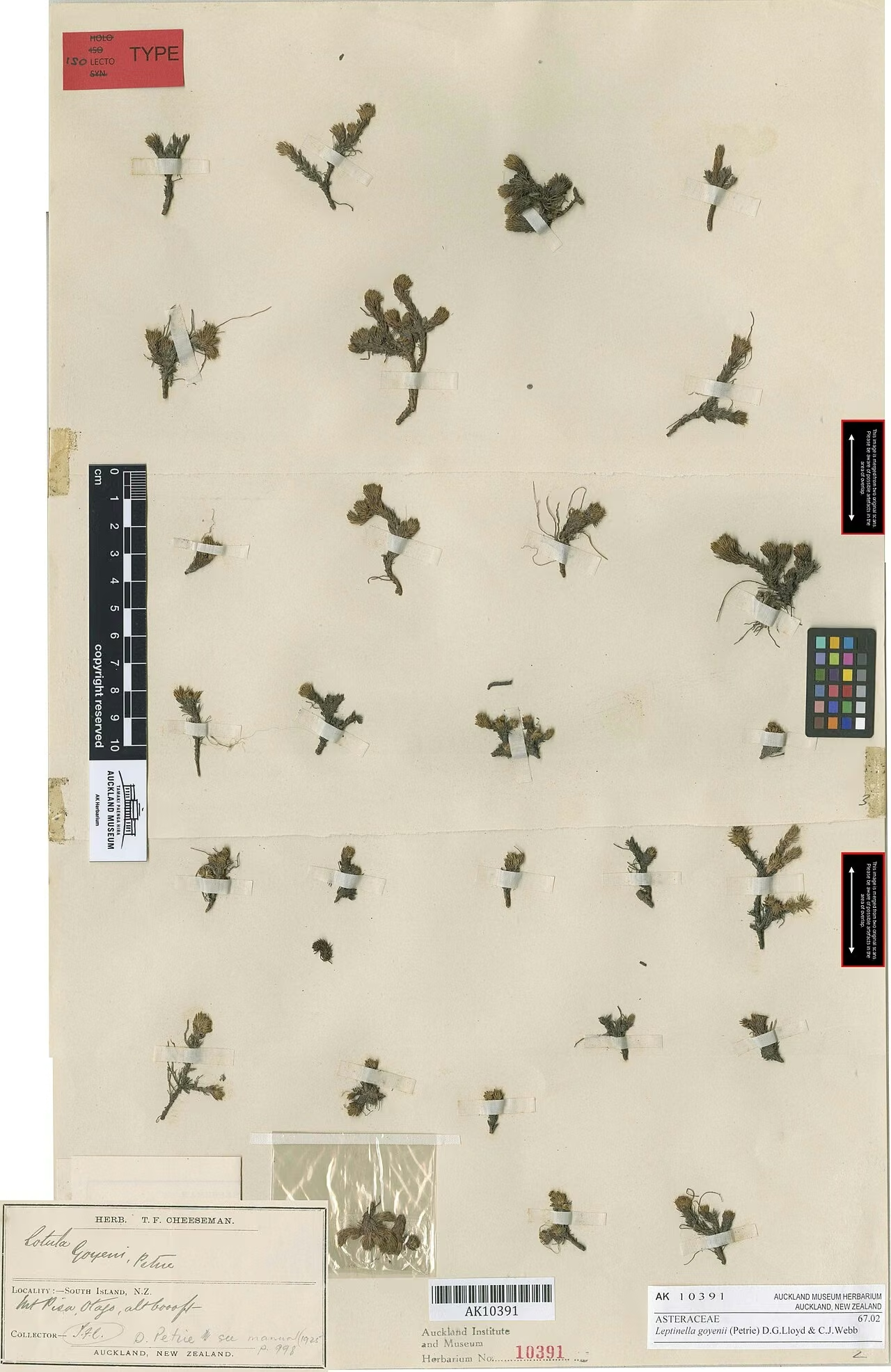
Goyen's Button Daisy
Leptinella goyenii
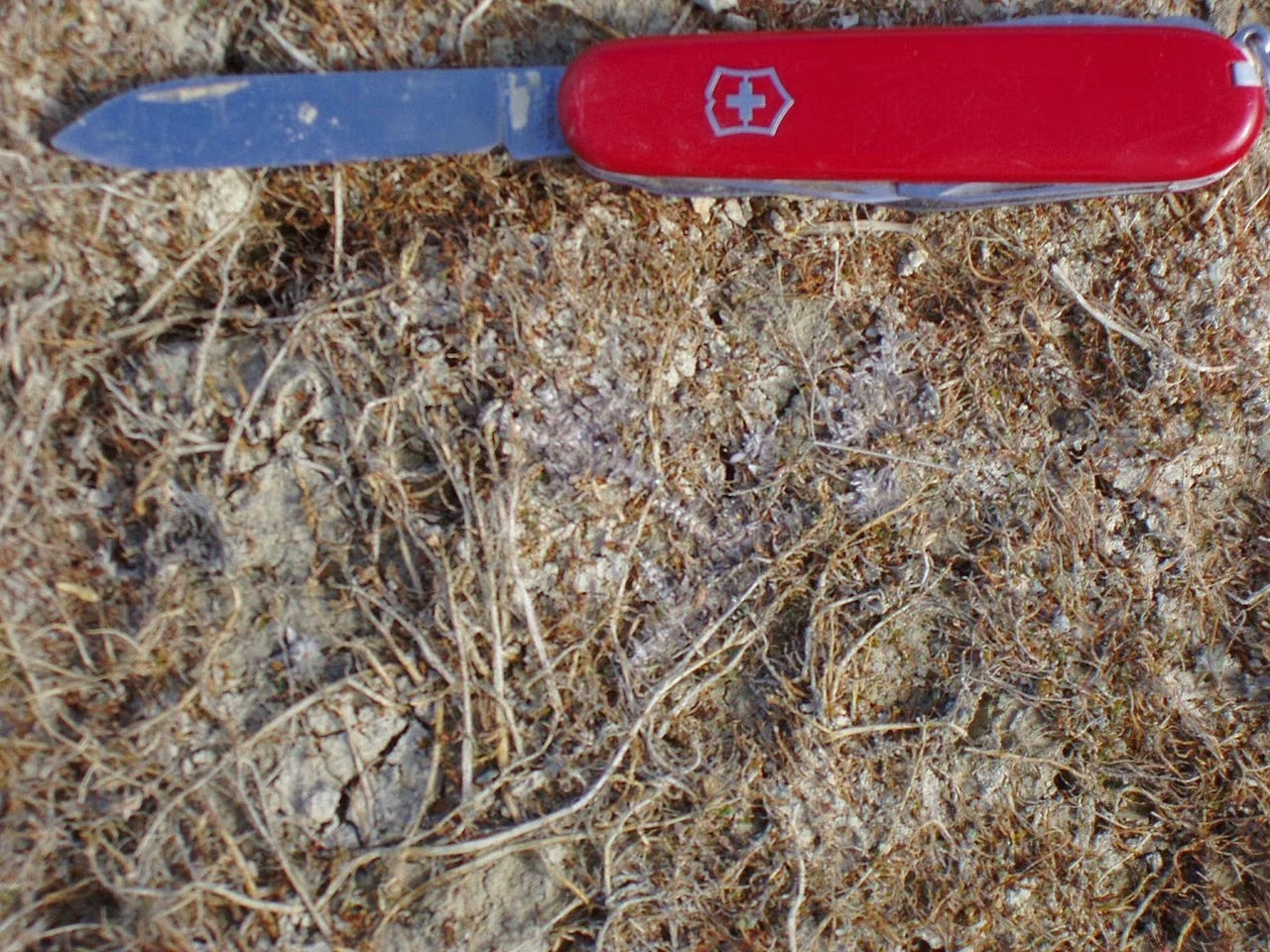
Leptinella maniototo
Leptinella maniototo
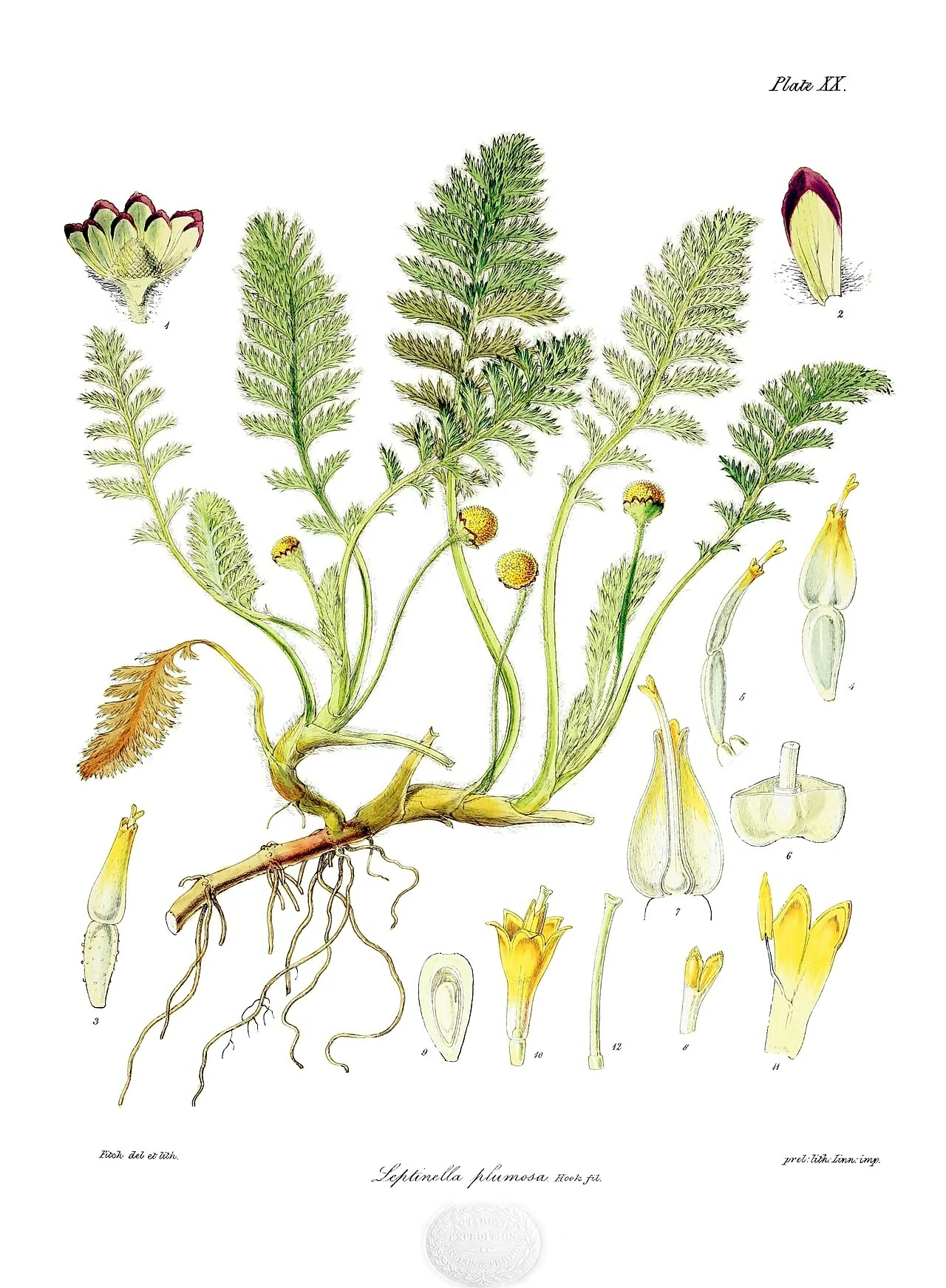
Leptinella plumosa
Leptinella plumosa
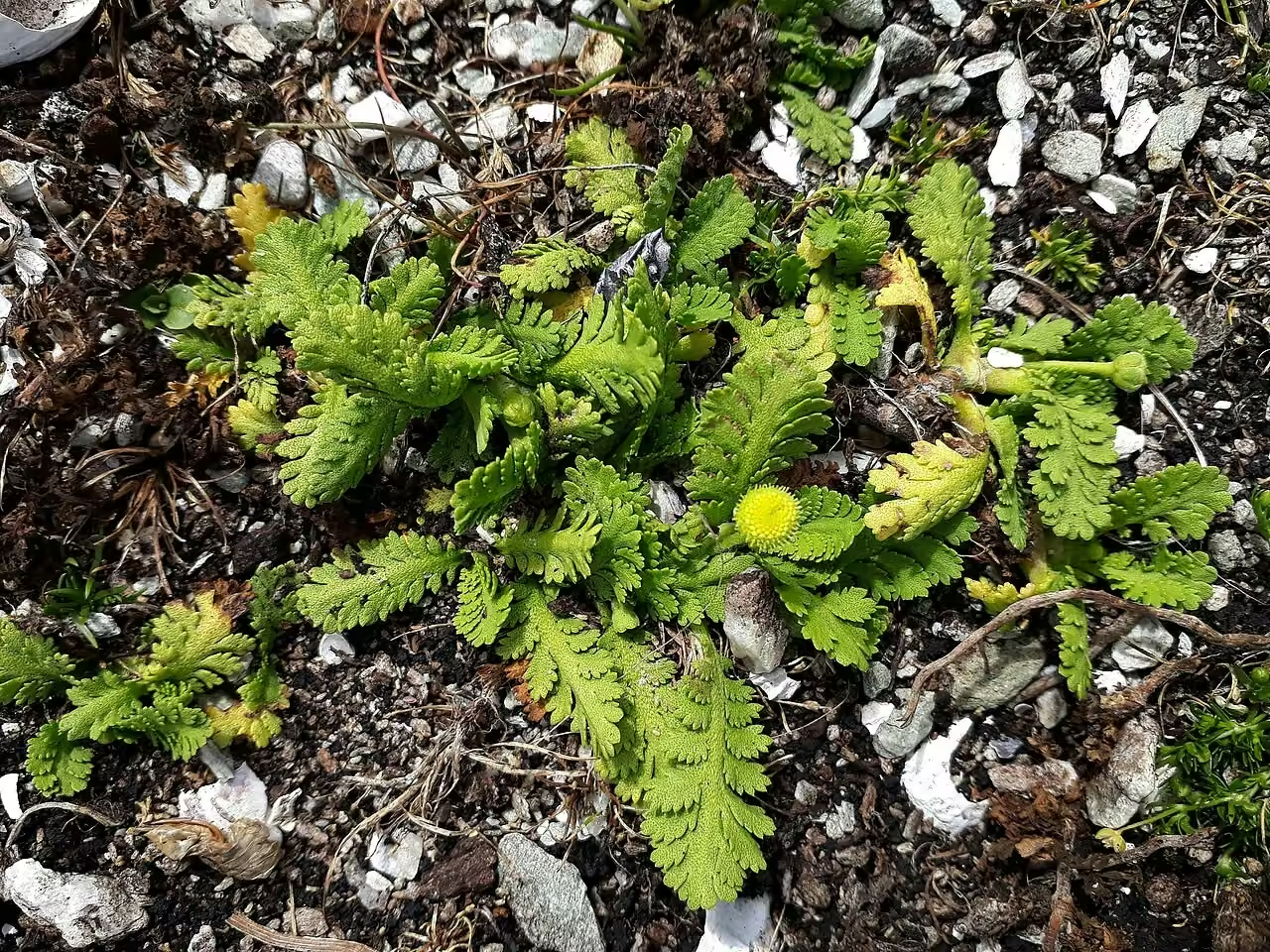
Leptinella potentillina
Leptinella potentillina
Leptinella pusilla
Leptinella pusilla
Plant Conservation
Leptinella lanata is ranked At Risk - Naturally Uncommon (2023) with the qualifiers Data Poor Size and Range Restricted. NZPCN notes it is listed because it is confined to a small geographic area rather than because it is known to be declining.
Both the Auckland Islands and Campbell Island are nature reserves within the New Zealand Subantarctic Islands World Heritage Area, with landing by permit only. The removal of introduced mammals from Campbell Island and parts of the Auckland Islands has benefited coastal herbfields.
Frequently Asked Questions
Where does Leptinella lanata grow?
In New Zealand it grows only on the subantarctic Auckland Islands and Campbell Island/Motu Ihupuku. It was also discovered on Heard Island, an Australian subantarctic territory, in 2004.
What does lanata mean?
Lanata is Latin for woolly. It refers to the thick mats of woolly hair on the young creeping stems, which are a key feature for identifying the species.
How is Leptinella lanata different from Leptinella plumosa?
Leptinella plumosa has large, soft, finely divided feathery leaves up to 20 cm long, whereas Leptinella lanata has small, thick, fleshy leaves only 1 to 2.5 cm long with woolly stems and flower stalks.
Sources and Further Reading
The botanical, growing, and conservation details for Button Daisy (Leptinella lanata) on this page draw on the New Zealand plant references below. Consult them for full technical records and the latest distribution data.