Button Daisy
Leptinella calcarea
Last updated:
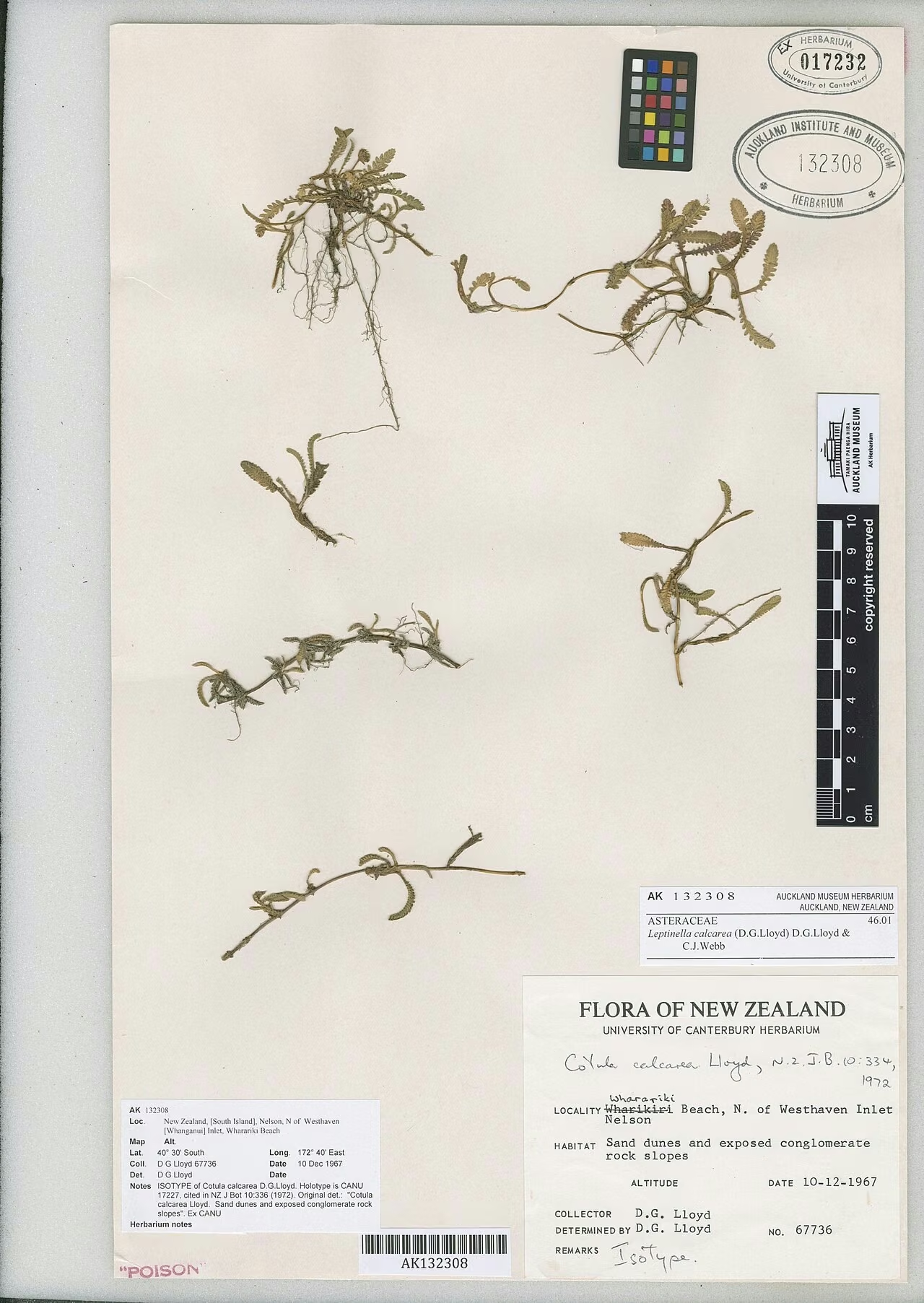
Leptinella calcarea is a small, mat-forming button daisy found only on the coast of north-west Nelson, from Cape Farewell south to Kahurangi Point. It forms loose to compact turfs of thick, stiff, yellow-green leaves covered in woolly hairs, spreading by pale wiry rhizomes buried deep in the ground. It grows on consolidated dunes, limestone, calcareous mudstone and conglomerate rock where little else covers the ground. Plants are either male or female. It is ranked At Risk - Naturally Uncommon because of its very small range, but it is easy to grow by division in free-draining, fertile soil in full sun. Explore more native ground covers in our native plant guide.
Plant Description
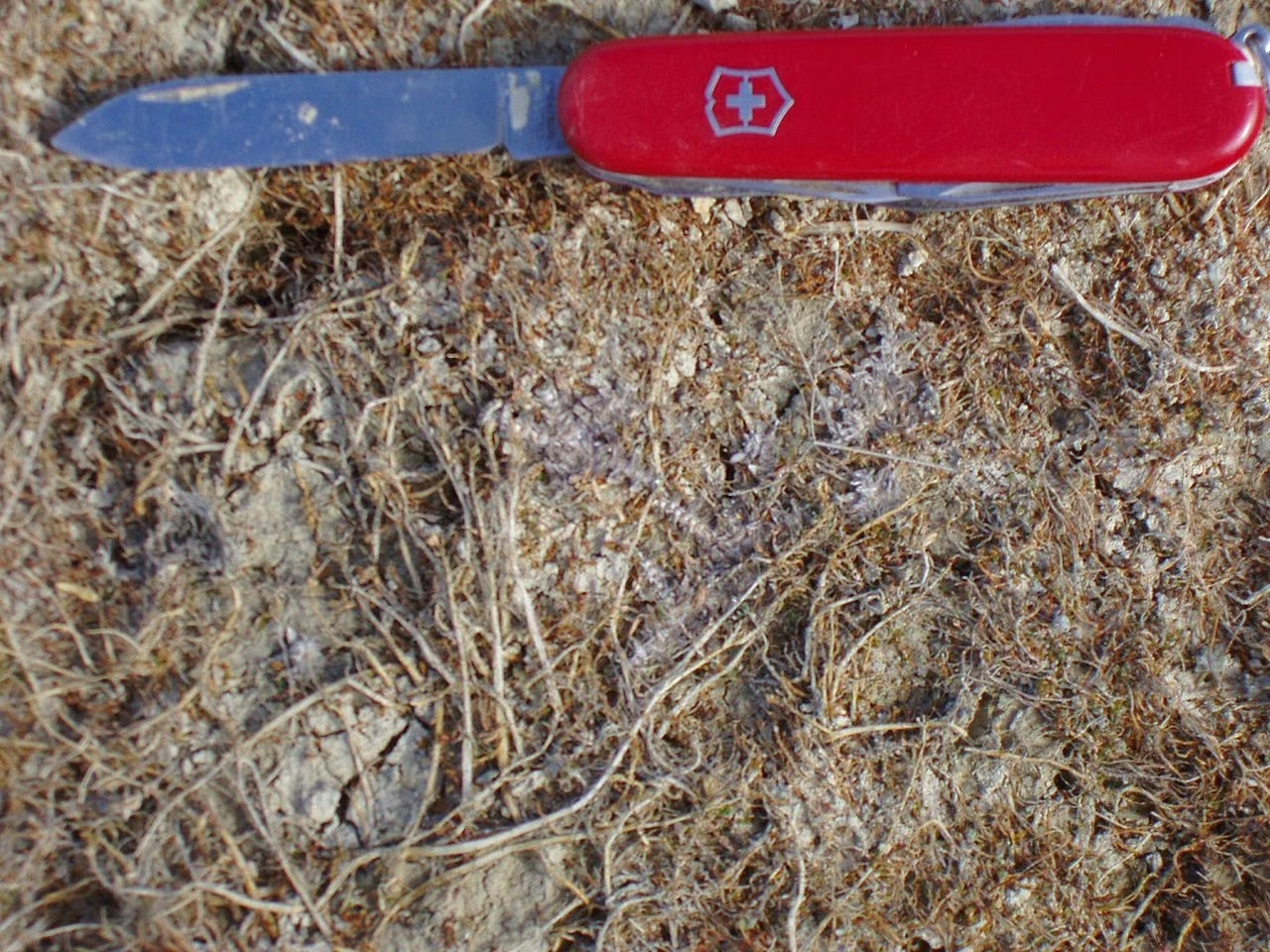
Leptinella calcarea is a dioecious perennial herb, with male and female flowers on separate plants. It spreads by deeply buried, pale, wiry, hairless rhizomes that branch only occasionally, sending up tufts of spirally arranged leaves that together form loose, open mats or tighter turfs.
The leaves are 1 to 4 cm long and 3 to 6 mm wide, once-divided into 12 to 20 pairs of closely overlapping pinnae with small teeth. They are distinctive in being thick, fleshy and rigidly stiff, yellow-green or sometimes grey-green, and carry a moderate to dense cover of long woolly hairs. Female heads are 3 to 5 mm across, widening to about 10 mm as fruit develops, while male heads are a little larger at 4 to 6 mm. The florets are green and yellow.
Its closest relative is Leptinella pusilla, a grassland button daisy of the eastern South Island. Leptinella calcarea differs in its stiff, fleshy, densely hairy leaves without brown pigmentation.
Quick Facts
| Scientific Name | Leptinella calcarea |
|---|---|
| Height | Low turf, a few centimetres tall |
| Spread | Loose to compact mats spreading by rhizomes |
| Water Needs | Low to moderate; free-draining sites |
| Light | Full sun |
| Frost Tolerance | Moderate; a coastal lowland species |
| Salt Tolerance | Tolerates coastal exposure on dunes and coastal rock |
| Growth Rate | Moderate |
| Lifespan | Perennial |
Climate Best Suited to
Suits the mild, wet, windswept coastal climate of north-west Nelson, with frequent westerly weather and few hard frosts. It grows well in mild coastal gardens with good drainage.
Regional Suitability
| City | Climate Suitability |
|---|---|
| Auckland | Medium |
| Wellington | High |
| Christchurch | Medium |
| Dunedin | Medium |
Plant Habitat
Leptinella calcarea is endemic to the South Island and confined to the north-west Nelson coast, from Cape Farewell at the base of Farewell Spit south along the coast to Kahurangi Point. This stretch includes limestone and mudstone headlands, dune systems and coastal rock platforms.
It is a coastal plant of consolidated sand dunes, calcareous mudstones, limestones and conglomerate rock. NZPCN describes it as a turf-forming species of sites with minimal vegetation cover, so it depends on open ground that is not smothered by taller plants.
Growing Requirements
Soil Requirements
It grows on lime-rich rock and consolidated sand, but NZPCN notes it does well in cultivation in free-draining, fertile soil.
- Free-draining sandy or gritty soil
- Tolerates lime-rich ground; adding limestone chip suits it
- Reasonably fertile soil gives denser mats
Light Requirements
In the wild it occupies open, sparsely vegetated coastal sites, and it needs full sun in the garden.
- Full sun keeps leaves compact and woolly
- Shade or overgrowth leads to thin, weak mats
Water Requirements
North-west Nelson is wet, but its dune and rock habitats drain quickly, so it never sits in waterlogged ground.
- Water during long dry spells in summer
- Avoid heavy, poorly drained soils
Planting and Establishing
Plant divisions in spring or autumn in a sunny rockery, raised bed or pot filled with free-draining, reasonably fertile soil. A sand or limestone grit mulch suits its natural preference for lime-rich, sparsely vegetated ground and keeps the woolly leaves off wet soil.
Because plants are either male or female, a single clone will not set seed. If you want seed for restoration or a collection, grow plants of both sexes from known local stock.
Ecological Role
On the north-west Nelson coast it is one of the low plants colonising open limestone, mudstone and dune surfaces, where its rhizomes help bind sand and fine rock debris. Its small flower heads are open to visiting insects, but its pollinators are not documented in the sources consulted.
Being dioecious, it relies on pollen moving between separate male and female plants. The small papery cypselae lack a pappus and, as with other Leptinella, are probably spread by wind and attachment.
Uses & Significance
Garden Uses
It is an attractive, low, woolly ground cover for sunny, well-drained spots.
- Rock gardens and limestone features
- Coastal gravel gardens
- Pots and troughs for its textured foliage
- Restoration plantings within its natural range from local stock
Ecological Value
It is a narrow-range endemic of an unusual coastal limestone landscape in north-west Nelson.
- Part of the distinctive limestone flora of the Golden Bay and Kahurangi coast
- Helps stabilise open dune and rock surfaces
- Contributes to the diversity of New Zealand's endemic button daisies
Landscaping Uses
Use Leptinella calcarea as a fine-textured, yellow-green carpet between paving stones on a sunny terrace or around limestone boulders in a rock garden. Its stiff, woolly leaves give a slightly frosted look that contrasts well with smooth stone.
Pair it with other low coastal natives that like open ground, and keep vigorous grasses away, since the plant naturally grows where vegetation cover is sparse.
Seasonal Care Calendar
Spring
Flowering runs from August to November, with green and yellow button heads above the foliage.
- Divide and replant clumps
- Weed around mats to keep them open
Summer
Fruit develops from September through to January on female plants.
- Water in prolonged drought
- Collect ripe heads if seed is wanted
Autumn
Growth continues steadily in mild coastal conditions.
- Good time for planting divisions
- Top up grit or sand mulch
Winter
Mats remain evergreen and grow slowly over winter.
- Ensure drainage stays good in wet weather
- Remove fallen leaves that may smother the mat
When to Prune and How Much
Pruning is not required. Trim off spent flower stalks if you prefer a tidier mat.
If a mat becomes patchy in the centre, lift and divide it, replanting the vigorous outer pieces into refreshed soil.
How to Grow Button Daisy
NZPCN describes Leptinella calcarea as easily grown by division of whole plants, which makes vegetative propagation the most reliable way to multiply it. Because the rhizomes are deeply buried, wiry and only sparingly branched, it is better to lift and split whole clumps than to try to snip off small pieces from the surface. As a dioecious species, seed is only produced when male and female plants grow together, and any material for restoration should come from the north-west Nelson populations it naturally belongs to, collected with the appropriate permission.
By Division
Divide established clumps in spring or early autumn, when the soil is moist and warm enough for new roots to form quickly. Each division should include several leafy tufts and a length of rhizome.
- Lift the whole clump with a deep spade to keep the buried rhizomes intact
- Gently tease it apart into pieces with several tufts and roots
- Replant at once into free-draining, fertile soil in full sun
- Water in well and keep lightly moist until new growth shows
- Label male and female plants if you know them, for future seed production
From Seed
Seed is set only on female plants that have received pollen from a male. Fruit ripens between September and January, when the female heads expand to around 10 mm across.
- Collect heads once the cypselae turn brown
- Sow fresh on a sandy seed mix and barely cover
- Keep in a bright, sheltered spot and moist but not wet
- Pot seedlings individually when large enough to handle
Pests & Diseases
No specific pests or diseases are recorded for this species. Slugs and snails may damage young growth, and poorly drained or shaded sites can cause the fleshy leaves to rot.
In the wild the greater threat is competition from weeds and changes in land use on the coastal strip, rather than insect pests.
Cultural Significance
No traditional Māori name or use is recorded for Leptinella calcarea in the sources consulted.
It was described by the botanist David Lloyd as Cotula calcarea and later transferred to Leptinella. The species name, from the Latin calx for limestone, records its strong association with the limestone and lime-rich rocks of the north-west Nelson coast.
Bonus Tip
When dividing this plant, dig deeper than you expect. The pale rhizomes are deeply buried and wiry, and pieces pulled from the surface usually have too little root to establish, whereas a clump lifted with a full spade depth of soil splits cleanly into strong divisions.
Related Plants
Explore other native plants that share similar characteristics or habitats with Button Daisy (Leptinella calcarea), offering further insights into New Zealand's diverse flora. These related species provide context and opportunities for complementary planting in your garden.
Shore Cress
Lepidium tenuicaule
Square Sedge
Lepidosperma australe
Pouteretere
Leptecophylla robusta
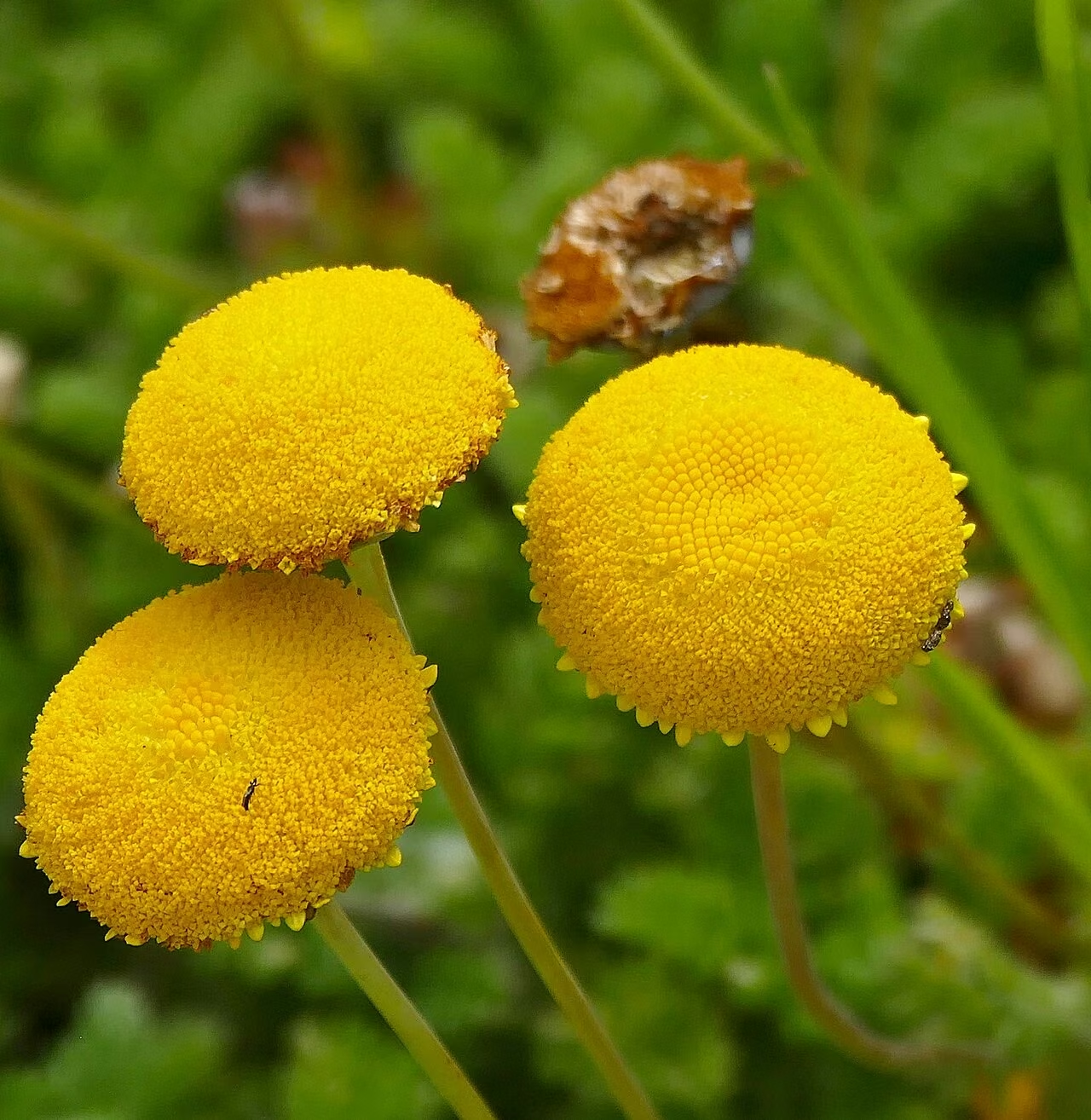
Leptinella albida
Leptinella albida
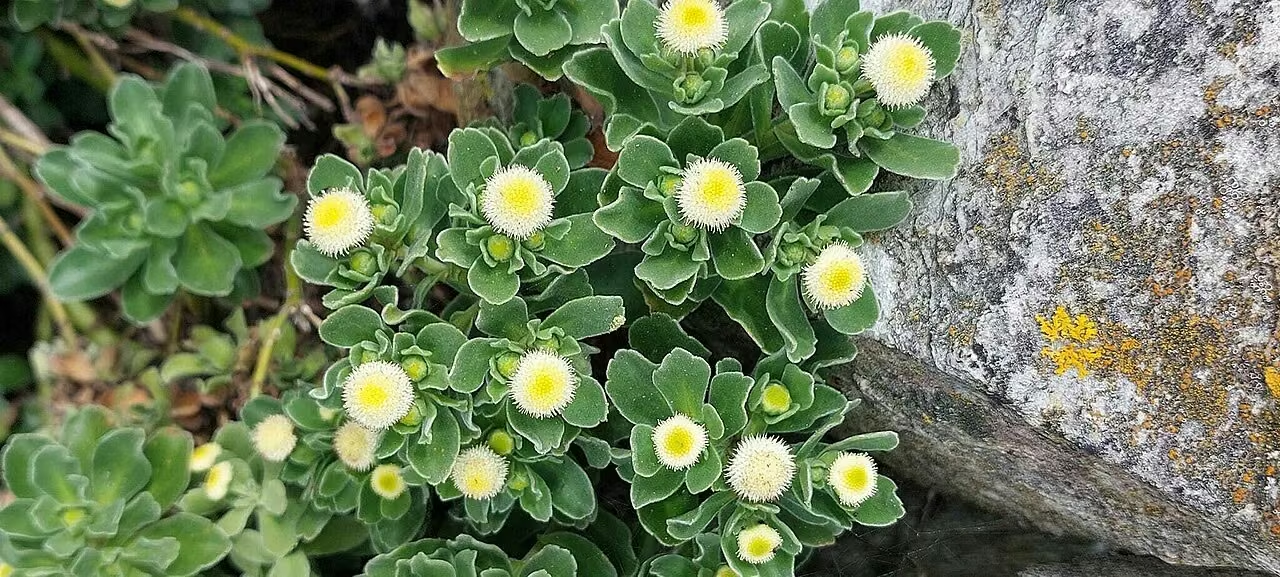
Chatham Island Button Daisy
Leptinella featherstonii
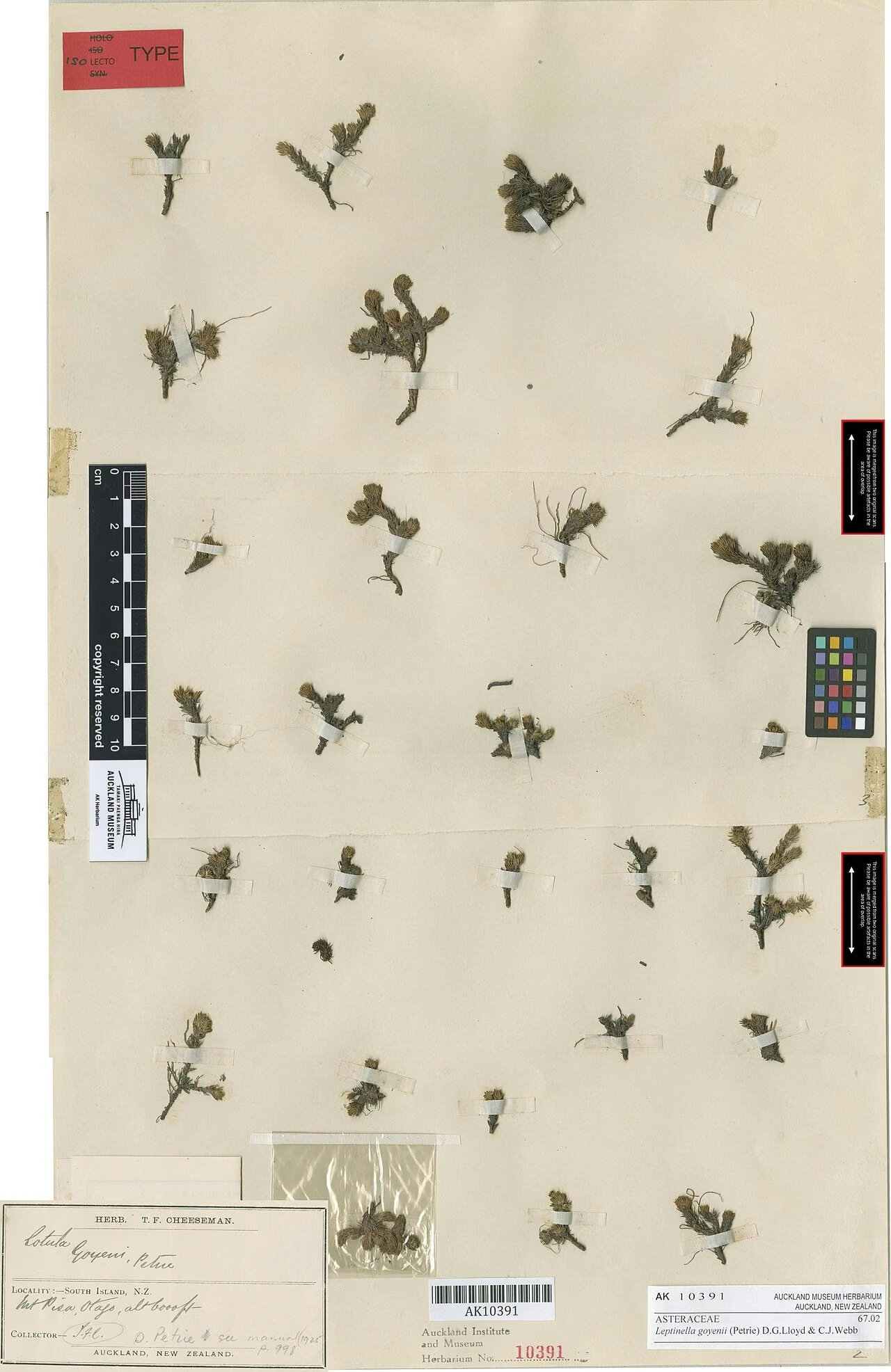
Goyen's Button Daisy
Leptinella goyenii
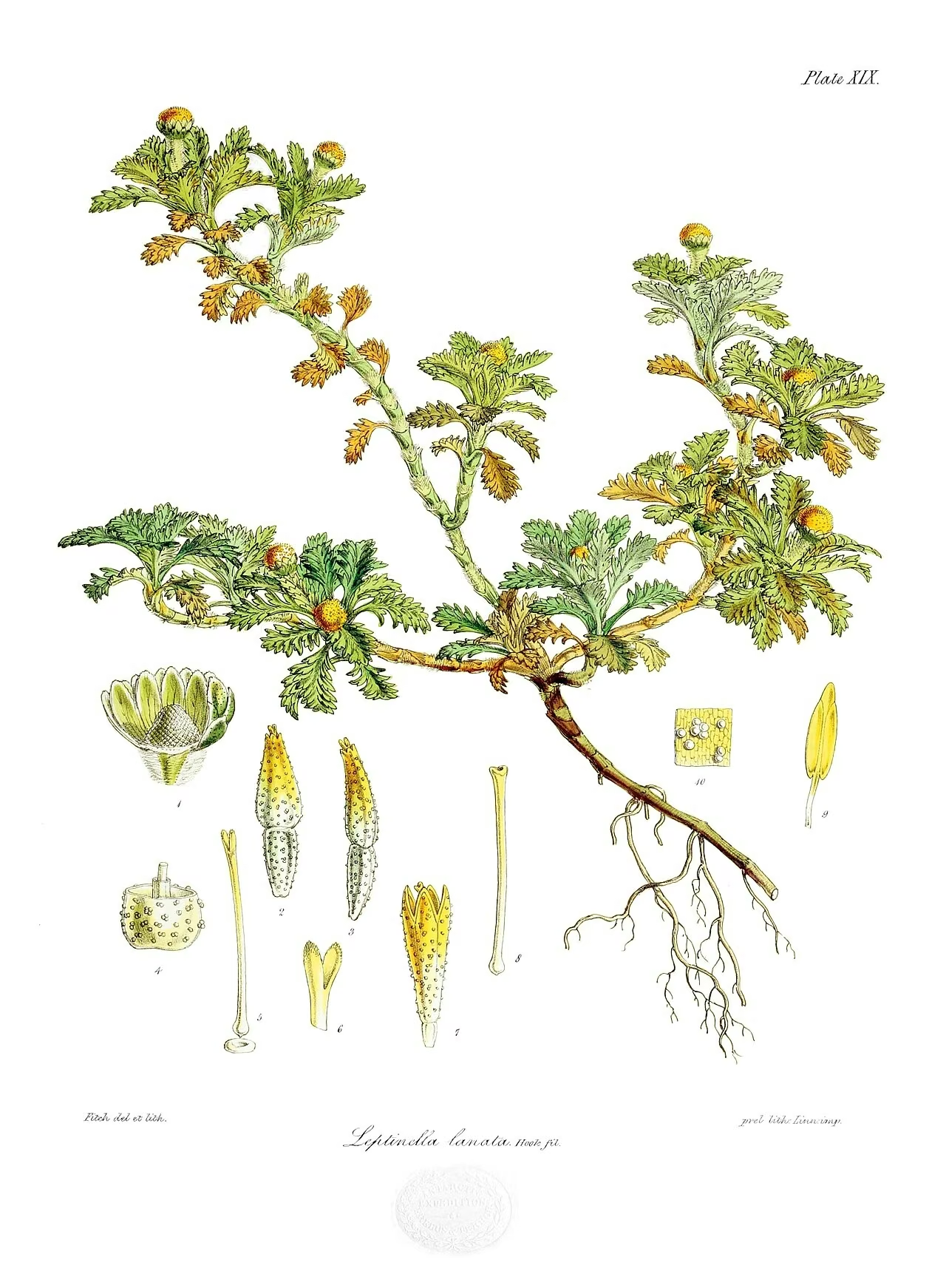
Leptinella lanata
Leptinella lanata
Leptinella maniototo
Leptinella maniototo
Plant Conservation
Leptinella calcarea is ranked At Risk - Naturally Uncommon (2023) with the qualifier Range Restricted, and has held that ranking since at least 2009. Its whole range is a short stretch of coast between Cape Farewell and Kahurangi Point.
NZPCN notes that its populations are small and vulnerable to land-use change. Keeping weeds and heavy grazing off the open dune and limestone sites it needs, and protecting the coastal reserves within its short range, are the most useful actions.
Frequently Asked Questions
Where is Leptinella calcarea found?
Only on the north-west Nelson coast of the South Island, from Cape Farewell south to Kahurangi Point, on dunes, limestone, calcareous mudstone and conglomerate rock.
What does the name calcarea mean?
It comes from the Latin calx, meaning limestone or lime, referring to the limestone and calcareous rocks on which this button daisy often grows.
How do you tell Leptinella calcarea from Leptinella pusilla?
Leptinella calcarea has thick, fleshy, rigidly stiff leaves that are densely woolly and lack the brown pigment often seen on Leptinella pusilla leaves.
Sources and Further Reading
The botanical, growing, and conservation details for Button Daisy (Leptinella calcarea) on this page draw on the New Zealand plant references below. Consult them for full technical records and the latest distribution data.