Chatham Island Button Daisy
Leptinella featherstonii
Last updated:
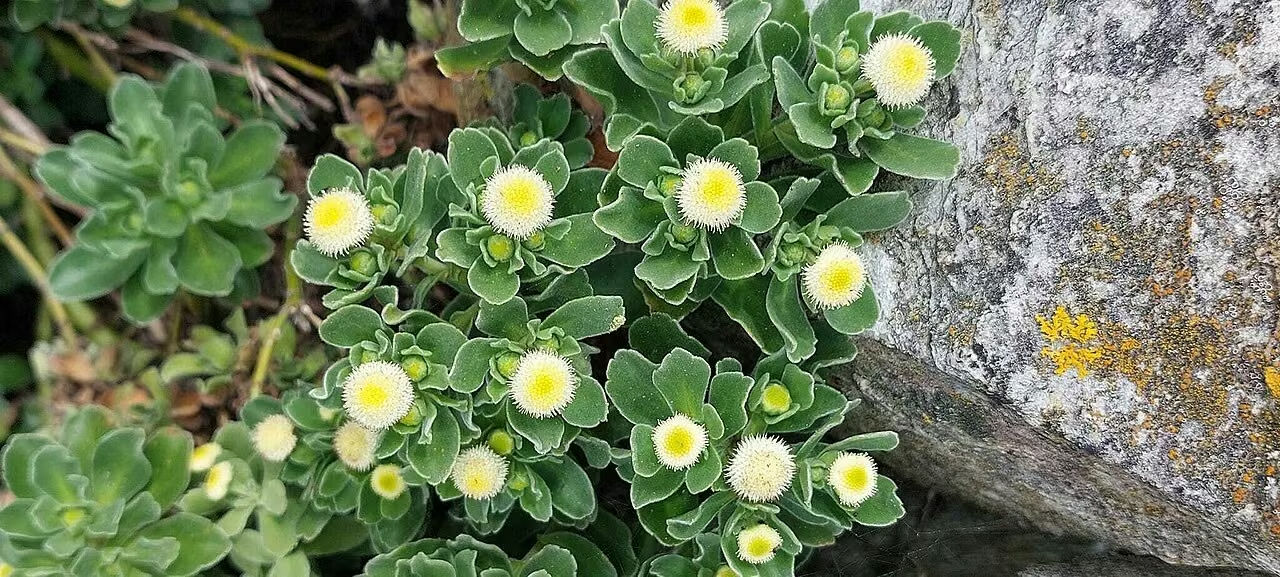
Chatham Island button daisy (Leptinella featherstonii), also called the muttonbird plant, is a robust, grey-green, woody-based daisy that grows up to 1.5 m tall and 2 m across. It is found only in the Chatham Islands, where it grows on peaty coastal ground beside burrowing and nesting seabirds that enrich the soil with guano. Once widespread across the archipelago, it now survives mainly on predator-free offshore islands and rock stacks, plus two sites on the main island. It is classed as At Risk - Relict, and its health closely tracks the health of the seabird colonies it depends on. Explore more native shrubs in our native plant guide.
Plant Description
Leptinella featherstonii is a monoecious, woody to subwoody shrub that forms a robust, sprawling plant up to 1.5 m tall and 2 m wide, with stems that become decumbent as they age. The foliage is grey-green to dark green with a glaucous bloom, and the leaves crowd towards the tips of the branches, giving each shoot a rosette-like appearance.
The leaves are almost stalkless and broadly obovate, about 15 to 60 mm long and 6 to 25 mm wide, with up to three shallow, blunt triangular teeth near the tip. The flower heads are small hemispherical buttons about 10 mm across, typical of the button daisies, with no showy ray petals. They are cream to yellow-green, and each head carries numerous tiny florets. The seeds are small chocolate-brown achenes marked with pale ribs.
No other plant in New Zealand closely resembles it. Most Leptinella species are low, creeping, fern-leaved mat plants, so a shrubby button daisy with fleshy, toothed obovate leaves growing in a Chatham Islands seabird colony is unmistakable.
Quick Facts
| Scientific Name | Leptinella featherstonii |
|---|---|
| Height | Up to 1.5 m |
| Spread | Up to 2 m |
| Water Needs | Moderate; must not dry out for long |
| Light | Full sun, open coastal sites |
| Frost Tolerance | Low to moderate; native to the mild, oceanic Chatham Islands |
| Salt Tolerance | High; grows on exposed coastal ground and rock stacks |
| Growth Rate | Moderate to fast in fertile soil |
| Lifespan | Perennial |
Climate Best Suited to
Suited to a cool, moist, windy oceanic climate with few temperature extremes, like that of the Chatham Islands. It struggles in hot, humid summers and in places prone to long dry spells.
Regional Suitability
| City | Climate Suitability |
|---|---|
| Auckland | Low |
| Wellington | Medium |
| Christchurch | Low |
| Dunedin | Medium |
Plant Habitat
This species is endemic to the Chatham Islands. It was formerly widespread on all the islands, but is now restricted to Kaingaroa and the Ocean Bay area of Rēkohu (Chatham Island), and to offshore islands and stacks including Rangitira (South East Island), Little Mangere, the Pyramid, the Forty-Fours (Motuhara), Star Keys, the Sisters, Western Reef and the rock stacks known collectively as the Murumuru beside Pitt Island.
It grows on peaty ground near the coast, usually within colonies of burrowing or surface-nesting seabirds. On Western Reef it grows in rock crevices enriched by seabird and marine mammal activity. Its dependence on nutrient-rich, disturbed seabird soils makes it a useful indicator of healthy seabird populations.
Growing Requirements
Soil Requirements
In the wild it grows in deep, peaty soil heavily enriched by seabird guano, so it needs a fertile, humus-rich, free-draining but moisture-retentive mix in cultivation.
- Rich, organic, peaty soil or potting mix
- Good drainage, but never allowed to dry out completely
- Responds to regular feeding, reflecting its high-nutrient seabird habitat
Light Requirements
Its natural sites are open, windswept and coastal, with little shade from taller vegetation.
- Full sun to very light shade
- Good air movement helps avoid the humid, still conditions it dislikes
Water Requirements
The Chatham Islands have frequent rain and drizzle and rarely suffer long droughts. NZPCN notes that the plant cannot tolerate prolonged drought, yet it also dislikes humid, stuffy conditions.
- Keep the root zone evenly moist
- Water deeply during dry spells rather than misting the foliage
- Avoid humid, poorly ventilated spots such as enclosed courtyards or glasshouses
Planting and Establishing
Choose an open, breezy position with rich, moist soil, ideally in a cool coastal garden in the southern half of the country. Plant into soil improved with plenty of compost and allow room for it to spread up to 2 m across.
Because the species is At Risk, only buy plants from nurseries that grow it from cultivated stock, and never collect plants or seed from the wild. Indiscriminate collection is one of the listed threats to the remaining populations.
Ecological Role
Leptinella featherstonii is closely tied to seabirds. Burrowing petrels and nesting birds disturb the soil and add guano, creating the fertile, open ground the plant needs. Where seabirds have declined, soil fertility falls and the plant gradually disappears.
Its small button flower heads are visited by small insects, and the plant itself is attacked by invertebrates, which NZPCN lists among its threats. It is part of a distinctive Chatham Islands coastal herbfield and shrubland community that once covered seabird-rich headlands and islands.
Uses & Significance
Garden Uses
This is a plant for enthusiasts and specialist collections rather than general landscaping, as it is difficult to keep in cultivation.
- Coastal native gardens in cool, breezy southern locations
- Botanic garden and conservation collections of Chatham Islands flora
- Large containers where soil fertility and moisture can be controlled
Ecological Value
As a relict species bound to seabird colonies, it is an indicator of healthy seabird ecosystems in the Chatham Islands.
- Forms part of the specialised vegetation of seabird nesting grounds
- Its recovery signals successful predator and browser control
- Holds unique genetic diversity found nowhere else in the world
Landscaping Uses
In a garden it forms a broad, grey-green mound that contrasts well with other Chatham Islands plants such as Chatham Island forget-me-not and Chatham Island flax. Its rosettes of fleshy, toothed leaves give a bold texture at the front of a coastal border.
Give it space and good air circulation rather than crowding it with other shrubs, and site it where it can be checked often for drying out.
Seasonal Care Calendar
Spring
Flowering begins in spring and new rosettes of leaves expand at the branch tips.
- Feed with compost or a balanced fertiliser
- Watch for invertebrate damage on new growth
Summer
Flowering continues through summer and the first seed matures in late summer.
- Water deeply in dry spells
- Collect fresh seed as heads ripen
Autumn
Autumn is the main fruiting period, when the button heads dry and release their achenes.
- Sow seed fresh
- Take cuttings from firm new growth
Winter
Growth slows in winter. The plant is adapted to a mild, wet, windy climate rather than hard frosts.
- Protect from heavy frost in colder districts
- Avoid waterlogging in cold, wet soil
When to Prune and How Much
Little pruning is needed. Remove dead or straggly stems after flowering to keep the plant compact, as older stems tend to sprawl and become decumbent.
Light trimming can encourage fresh rosettes, but avoid heavy cutting into old woody stems, which may not resprout well.
How to Grow Chatham Island Button Daisy
NZPCN records that Leptinella featherstonii can be grown from fresh seed and from cuttings, but that it is difficult to maintain once established because it dislikes humidity and cannot cope with prolonged drought. Propagating from a range of cultivated parent plants helps keep genetic diversity in garden and conservation stocks. Never take seed or cuttings from wild plants, as all remaining populations are small and the species is At Risk - Relict.
From Seed
Seed ripens from late summer into autumn. The achenes are small and chocolate-brown, and fresh seed gives the best results, so sow it as soon as it is collected rather than storing it.
- Collect mature, dry flower heads from cultivated plants in late summer or autumn
- Rub the heads gently to free the achenes
- Sow on the surface of a fine, free-draining seed mix and cover very lightly
- Keep the tray evenly moist in a cool, bright, well-ventilated spot
- Prick out seedlings into rich potting mix once they have a few true leaves
From Cuttings
Cuttings taken from healthy, actively growing shoot tips root readily. Use material from plants already in cultivation and keep the cuttings cool and airy, because humid, stagnant conditions encourage rot in this species.
- Take 5 to 10 cm tip cuttings from firm new growth
- Strip the lower leaves and insert into a free-draining propagating mix
- Keep the mix moist but avoid enclosing the cuttings in a humid tent for long
- Pot on once roots form, using a fertile, humus-rich mix
Pests & Diseases
In the wild the main problems are browsing mammals, weeds, erosion and invertebrate attack. In gardens, slugs, snails and leaf-chewing insects can damage the soft rosettes, so check plants regularly.
Humid, still air and stagnant soil encourage fungal rots, which are a common cause of losses in cultivation. Good airflow and careful watering reduce the risk.
Cultural Significance
No traditional Moriori or Māori use of this plant is recorded in the sources consulted. Its common name, muttonbird plant, reflects its close link with the seabird colonies of the Chatham Islands.
Ferdinand Mueller named it Leptinella featherstonii in 1864 in honour of Dr Isaac Featherston, then Superintendent of Wellington Province, who had sent living Chatham Islands plants to the Melbourne Botanic Garden. Joseph Hooker moved it to Cotula in 1867, and it was long known by that name before the button daisies were returned to Leptinella.
Bonus Tip
If you are growing this plant, think of it as a seabird-colony plant: it wants rich soil and steady moisture but also open, breezy conditions. A cool, exposed coastal garden with a regular feed of compost will suit it far better than a sheltered, humid corner.
Related Plants
Explore other native plants that share similar characteristics or habitats with Chatham Island Button Daisy (Leptinella featherstonii), offering further insights into New Zealand's diverse flora. These related species provide context and opportunities for complementary planting in your garden.
Square Sedge
Lepidosperma australe
Pouteretere
Leptecophylla robusta
Leptinella albida
Leptinella albida
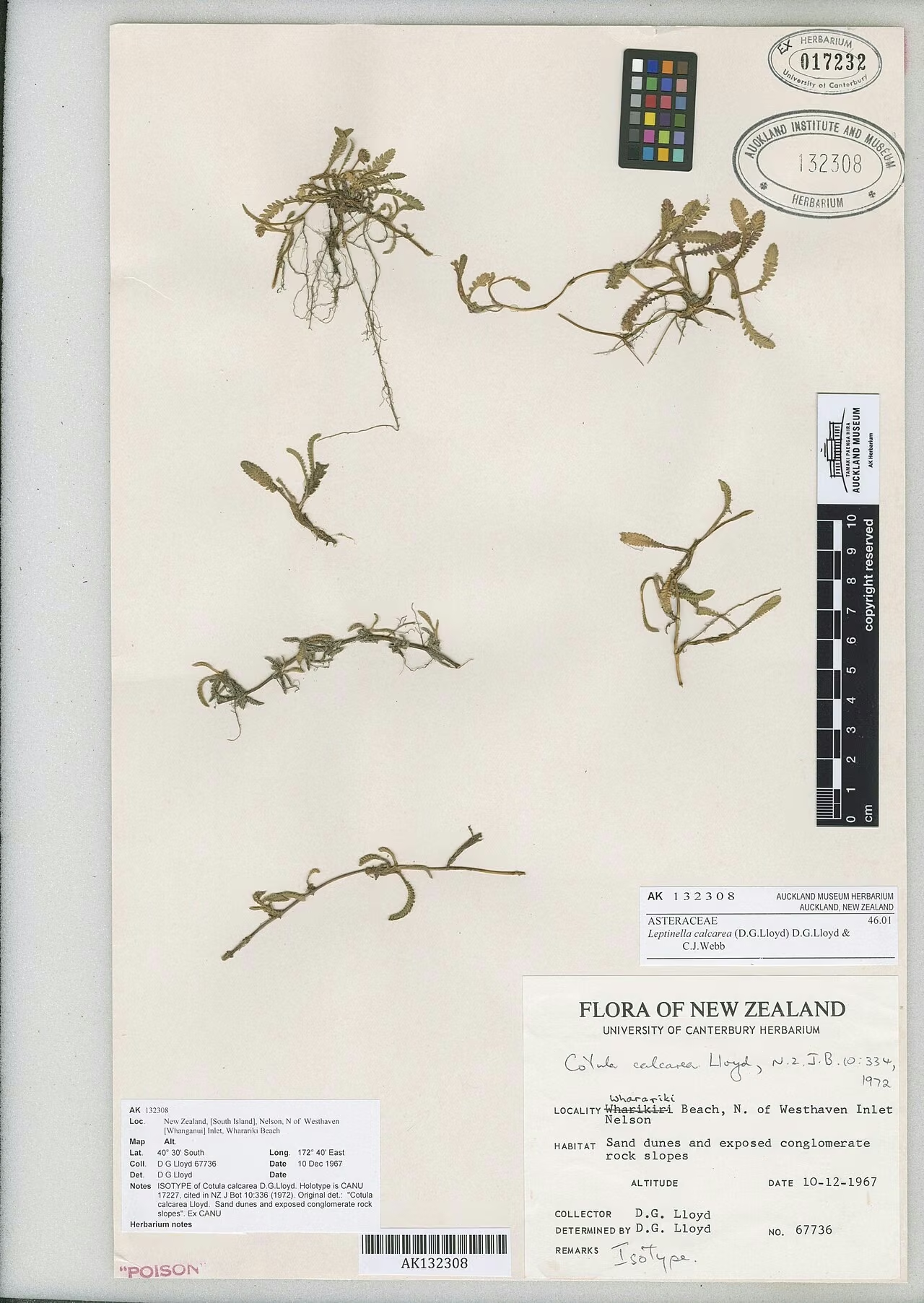
Leptinella calcarea
Leptinella calcarea
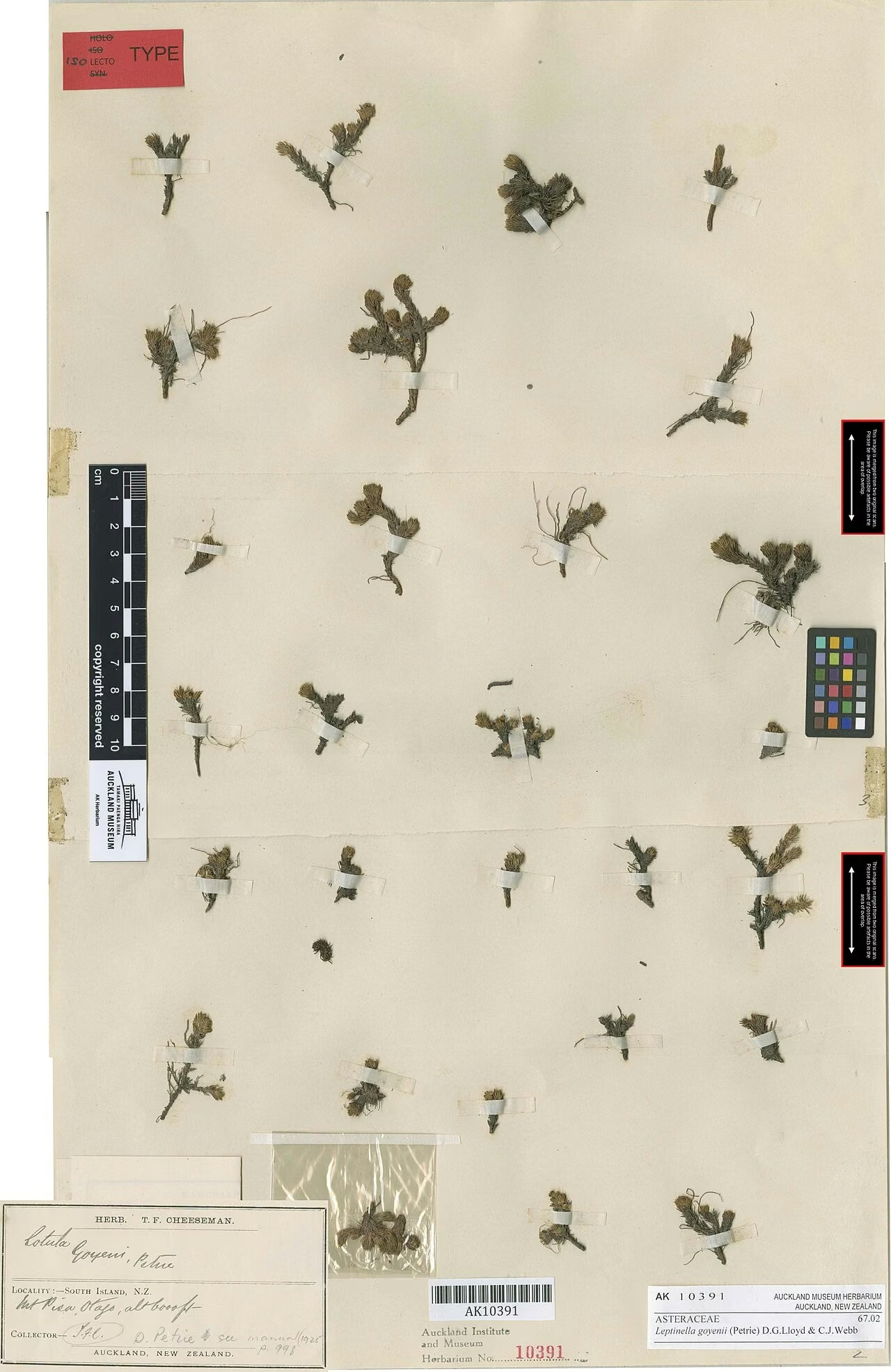
Goyen's Button Daisy
Leptinella goyenii
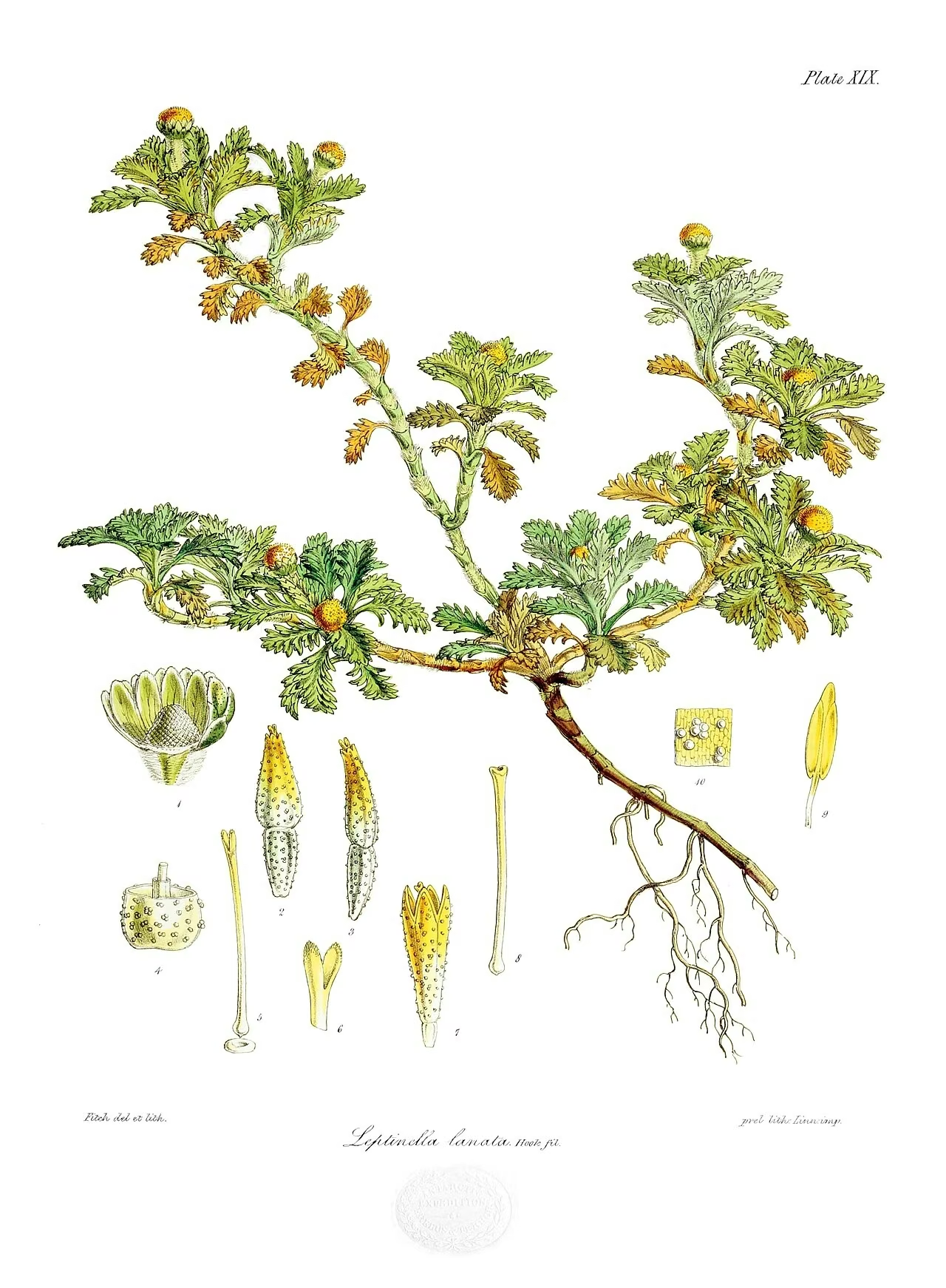
Leptinella lanata
Leptinella lanata
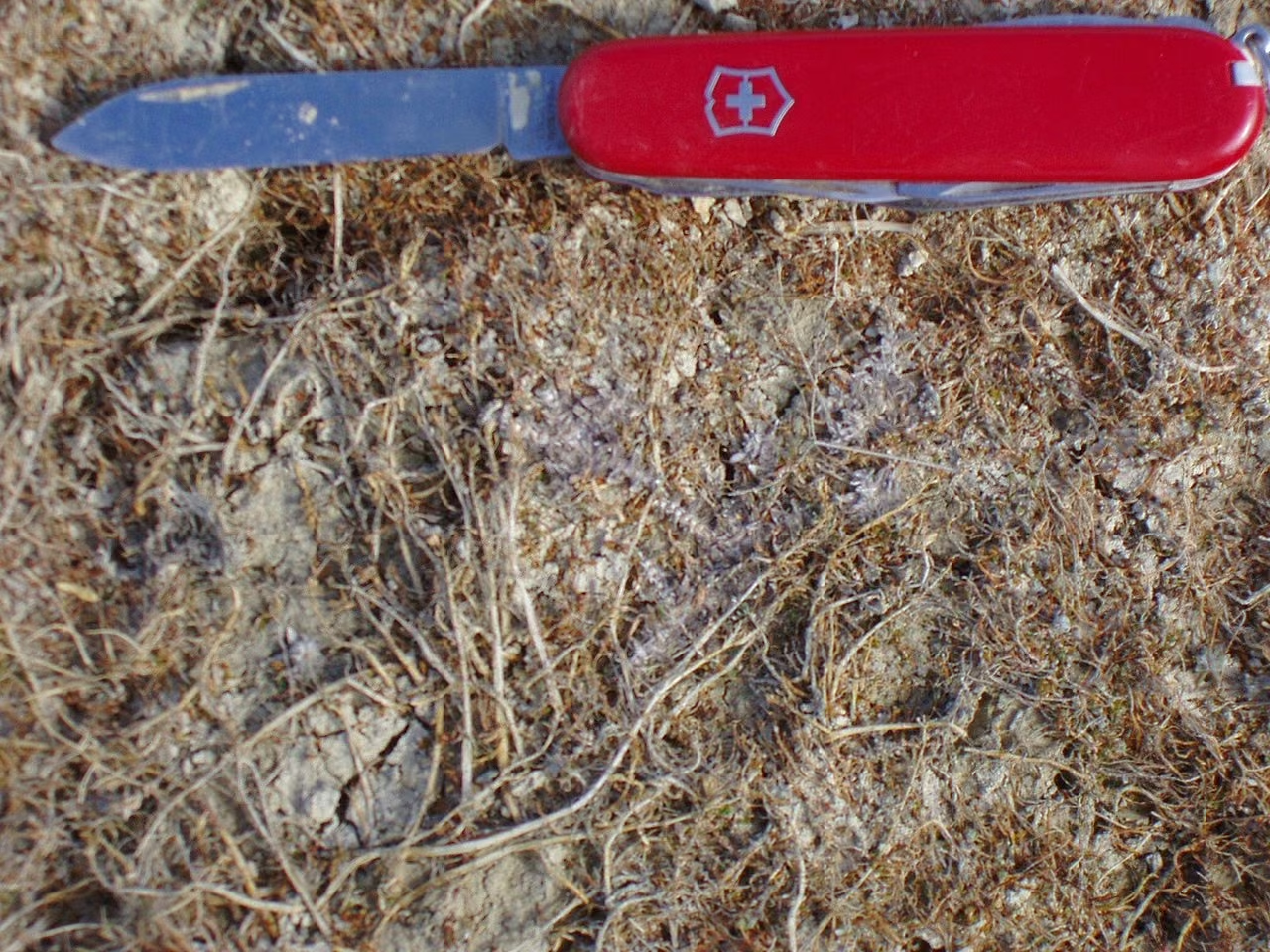
Leptinella maniototo
Leptinella maniototo
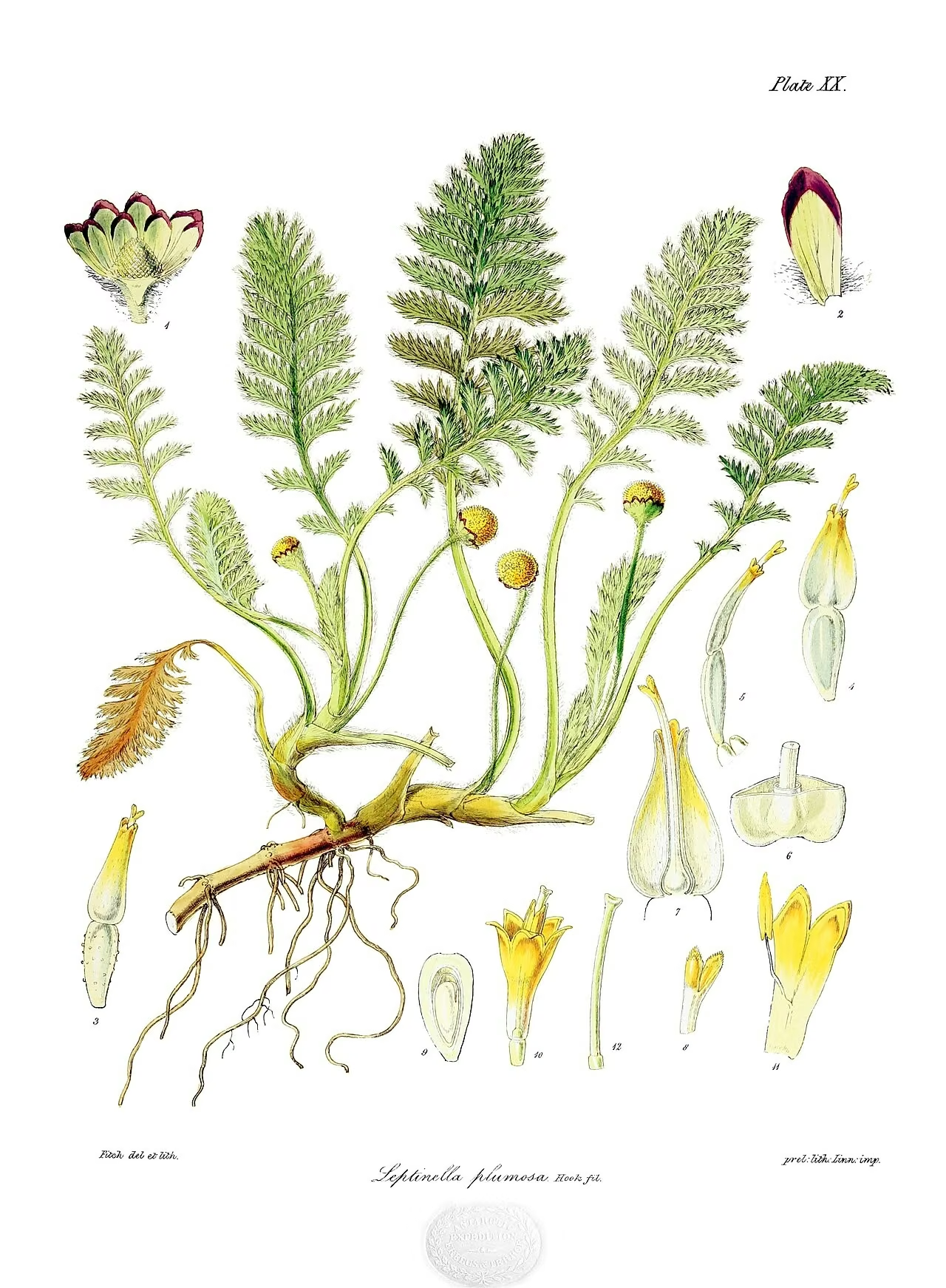
Leptinella plumosa
Leptinella plumosa
Plant Conservation
Leptinella featherstonii is ranked At Risk - Relict (2023), with the qualifiers Climate Impact, Conservation Dependent, Island Endemic and Range Restricted. It has disappeared from most of the main Chatham and Pitt Islands, surviving mainly on offshore islands and rock stacks free of browsing mammals.
Threats include loss of habitat through erosion, weed invasion, browsing by mammals, the loss of seabird activity and the resulting fall in soil fertility, collection, storm damage and invertebrate attack. Fencing out stock, controlling browsers and predators, and restoring seabird colonies on the main islands all help this species recover.
Frequently Asked Questions
Why is Leptinella featherstonii called the muttonbird plant?
It grows almost exclusively in and around seabird colonies, among the burrows and nests of petrels and other seabirds, where guano keeps the peaty soil rich in nutrients.
Where does the Chatham Island button daisy grow naturally?
Only in the Chatham Islands. Today it is known from Kaingaroa and near Ocean Bay on the main island, and from offshore islands such as Rangitira (South East Island), Little Mangere, the Pyramid, the Forty-Fours, Star Keys, the Sisters and Western Reef.
Is the Chatham Island button daisy endangered?
It is classed as At Risk - Relict, meaning it now occupies only a small fraction of its former range, largely because browsing mammals, erosion and seabird decline removed it from most of the main islands.
Can you grow Leptinella featherstonii in a garden?
It can be raised from fresh seed and cuttings, but it is hard to keep alive long term because it dislikes humid conditions and cannot tolerate prolonged drought.
Sources and Further Reading
The botanical, growing, and conservation details for Chatham Island Button Daisy (Leptinella featherstonii) on this page draw on the New Zealand plant references below. Consult them for full technical records and the latest distribution data.