Shore Cress
Lepidium tenuicaule
Last updated:
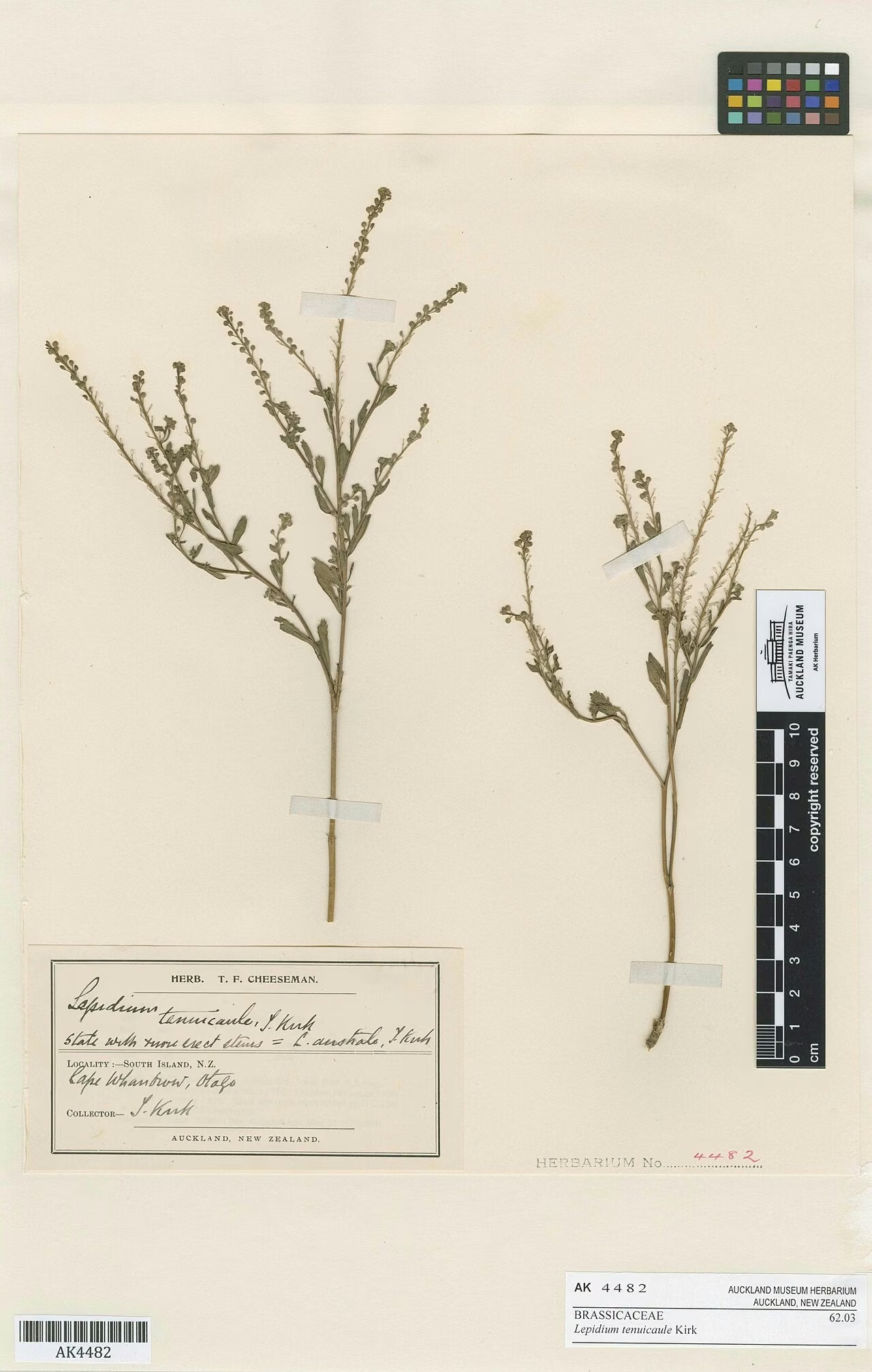
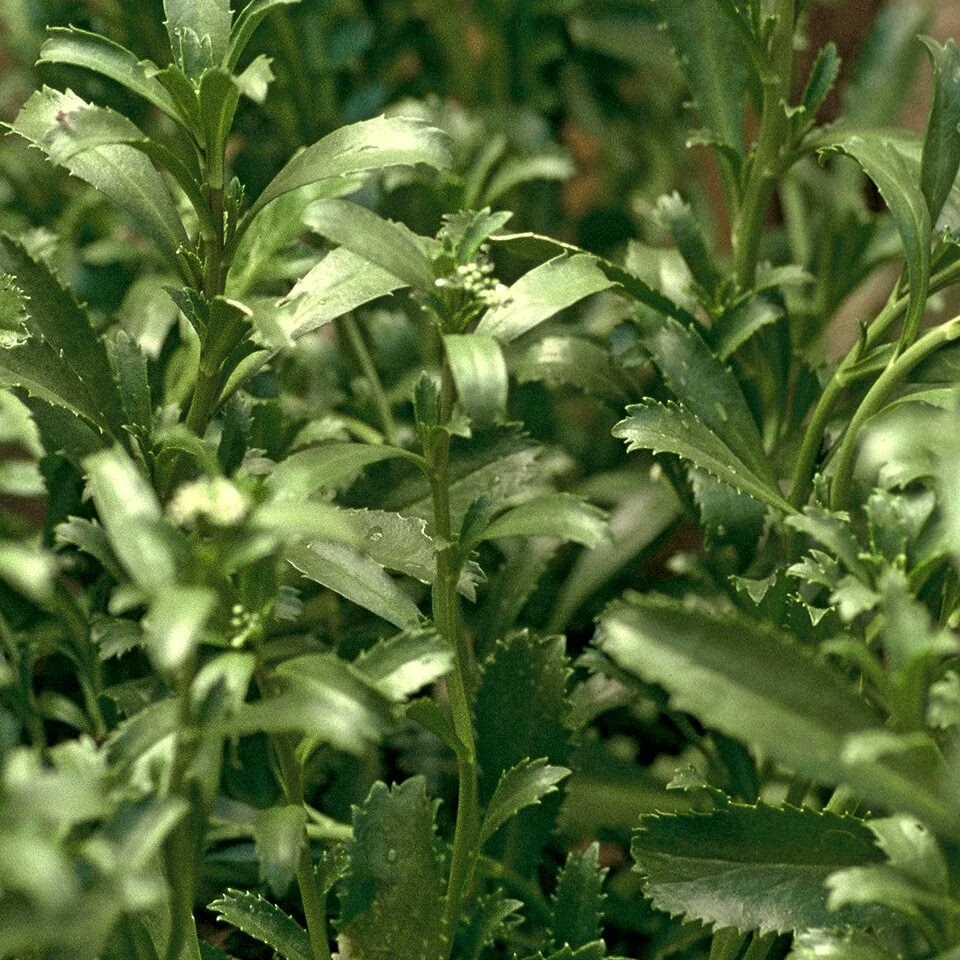
Shore cress (Lepidium tenuicaule) is a small, rosette-forming perennial herb endemic to New Zealand. It grows from a stout, deep taproot and spreads thin prostrate stems usually 8 to 15 cm long, with ferny, dark green leaves often mottled red or purple at the base. Every part smells pungently of cress. It lives in damp coastal turf, often where trampling keeps taller plants away, and today is found from Shag Point in Otago south to the Foveaux Strait islands. It is probably extinct in the North Island, where it was known only from Kapiti Island, and is ranked Threatened - Nationally Vulnerable. Explore more native ground covers in our native plant guide.
Plant Description
Lepidium tenuicaule is a rosette-forming perennial herb arising from a stout, deeply descending taproot. All parts give off a pungent cress smell. The stems are prostrate to ascending and slender, as the name tenuicaule (thin-stemmed) suggests, usually 80 to 150 mm long but ranging from 20 to 300 mm.
The basal leaves are pinnate, dark green and often mottled red or purple towards the base, 20 to 100 mm long, with usually 7 to 15 pairs of acutely toothed leaflets that give the rosette a ferny look. Stem leaves are much smaller, 5 to 20 mm long, and narrowly spoon-shaped to linear. Flowers appear from October to January in racemes that lengthen to 50 to 100 mm in fruit. Petals are white or absent and smaller than the sepals. The round seed pods are only 1.5 to 2 mm long and ripen from November to February.
NZPCN describes it as very distinctive and unlikely to be confused with any other lepidium. Leafy rosettes can resemble those of Leptinella species, but bruising a leaf releases a pungent cress smell that Leptinella lacks.
Quick Facts
| Scientific Name | Lepidium tenuicaule |
|---|---|
| Height | Under 0.05 m; a flat rosette |
| Spread | Stems usually 80-150 mm, occasionally to 300 mm |
| Water Needs | Moderate to high; prefers damp ground |
| Light | Full sun to partial shade |
| Frost Tolerance | Good; grows in coastal Otago and Southland |
| Salt Tolerance | High; a coastal turf plant |
| Growth Rate | Moderate |
| Lifespan | Perennial |
Climate Best Suited to
A plant of cool, moist southern coastal climates, from coastal Otago to Southland and Foveaux Strait. It tolerates frost, wind and salt spray.
Regional Suitability
| City | Climate Suitability |
|---|---|
| Auckland | Low |
| Wellington | Medium |
| Christchurch | Medium |
| Dunedin | High |
Plant Habitat
Shore cress is endemic to the North and South islands. In the North Island it was recorded only from Kapiti Island and is probably extinct there. In the South Island it ranged from Oamaru south to the islands of Foveaux Strait; it has been lost from Oamaru, where it was once a local urban weed, and from Cape Whangaroa, but large populations persist from Shag Point southward.
It grows in coastal turf, preferring damp, peaty ground free of taller shrubs and grasses. Tolerant of shade and trampling, it is often found in seaside car parks, on footpaths and walking tracks and around lighthouses, where regular disturbance keeps competitors at bay.
Growing Requirements
Soil Requirements
It prefers damp, peaty ground and tolerates compacted, poorly drained soil that many plants dislike.
- Damp peaty or loamy soil
- Copes with compaction
- Tolerates poorly drained ground
- No need for rich fertiliser
Light Requirements
It grows best in open turf but tolerates some shade.
- Full sun to partial shade
- Keep taller plants from overshadowing it
Water Requirements
Damp ground suits it; it is not a plant for dry, sandy sites.
- Keep soil moist through summer
- Water pots regularly
- Occasional wet feet are tolerated
Planting and Establishing
NZPCN suggests shore cress for compacted, poorly drained soils, such as along driveways or at the base of lawns, where its multi-coloured, ferny rosettes and compact habit are an asset. Plant it where taller grasses and herbs will not crowd it.
In southern coastal gardens it can be used in damp turf, between paving stones or along well-used paths that mimic its natural trampled habitat.
Ecological Role
The small flowers open from October to January and set seed from November to February. NZPCN notes that the mucilaginous seeds are dispersed by attachment, and possibly by wind and water. Sticky seeds clinging to feet, animals or vehicles may explain its affinity for car parks and tracks.
The species depends on regular disturbance, such as trampling, grazing or salt spray, to keep coastal turf short and open. Where disturbance stops and shrubs and grasses take over, populations decline.
Uses & Significance
Garden Uses
A small but useful native groundcover for awkward ground.
- Compacted ground along driveways and paths
- Bases of lawns and damp turf
- Between stepping stones in coastal gardens
- Conservation collections of native cresses
Ecological Value
Shore cress is a characteristic member of southern coastal turf communities.
- Flowers for small coastal insects
- Seeds dispersed by attachment, linking turf patches
- A threatened endemic that benefits from careful management
Landscaping Uses
Its flat, ferny rosettes in shades of dark green, red and purple add colour and texture at ground level. Use it as an informal groundcover in damp, trampled spots where little else grows well.
Pair it with other low coastal turf plants such as native Leptinella or Selliera, keeping taller species well away.
Seasonal Care Calendar
Spring
Flowering begins in October as rosettes grow strongly.
- Remove competing grasses
- Check for slugs and caterpillars
Summer
Flowering continues until January, with seed ripening into February.
- Keep soil damp
- Collect seed as pods mature
Autumn
Growth slows after fruiting.
- Sow fresh seed
- Clear fallen leaves off rosettes
Winter
Rosettes persist through cool, wet winters in the south.
- Little care needed
- Avoid smothering with mulch
When to Prune and How Much
No pruning is required. Trim spent flowering stems if you want a tidier appearance, and remove encroaching grasses or shrubs, which are a much bigger threat to the plant than any lack of pruning.
How to Grow Shore Cress
NZPCN describes shore cress as easy to grow from fresh seed. The seeds are mucilaginous, becoming sticky when wet, which helps them cling to surfaces and should be kept in mind when sowing. Because the species is Nationally Vulnerable, collect seed only from cultivated plants or with permission from the relevant landowner or the Department of Conservation, and keep local provenance where plants are intended for restoration.
From Seed
Pods ripen from November to February. Sow seed fresh for the best germination, as NZPCN recommends.
- Collect ripe pods as they dry
- Separate the small seeds; they become sticky when moistened
- Sow on the surface of a moist, fine seed mix
- Press seed gently into contact with the mix
- Keep damp in a bright, sheltered spot
- Prick out seedlings once rosettes have a few leaves
- Pot on or plant out into damp, open ground before the taproot becomes constricted
Growing on Seedlings
Shore cress grows from a single stout taproot and has no spreading rhizomes, so division is not a practical option and no information on rooting cuttings was found. Seed-raised plants are therefore the way to increase it, and young plants need care while the taproot develops.
Seedlings resent being left too long in small pots, because the taproot coils once it reaches the bottom. Plant them out while still young into damp, open ground, ideally in autumn or spring when the soil is moist.
- Use deep pots or root trainers to give the taproot room
- Grow seedlings in good light to keep rosettes compact
- Protect them from slugs and snails
- Plant out within a few months of pricking out
- Keep surrounding grass short so rosettes are not shaded out
Pests & Diseases
As a member of the cabbage family, shore cress can be attacked by brassica pests such as cabbage white butterfly caterpillars, diamondback moth larvae and aphids, and by slugs and snails on young rosettes. No specific disease problems are reported on the NZPCN fact sheet.
In the wild, the more important threat is not pests but loss of open turf to taller grasses and shrubs.
Cultural Significance
No Māori name or traditional use is recorded for Lepidium tenuicaule. Thomas Kirk described it, choosing the epithet tenuicaule, meaning thin-stemmed.
Its history is unusual for a threatened plant: at Oamaru it once grew as a local urban weed, and today many surviving populations rely on human-made habitats such as car parks, footpaths, tracks and lighthouse grounds.
Bonus Tip
Shore cress depends on short, open turf, so letting grass grow long around it does more harm than good. Where it grows on a lawn edge or path at home, keep the grass mown low around the rosettes and pull out any taller weeds that start to shade them.
Related Plants
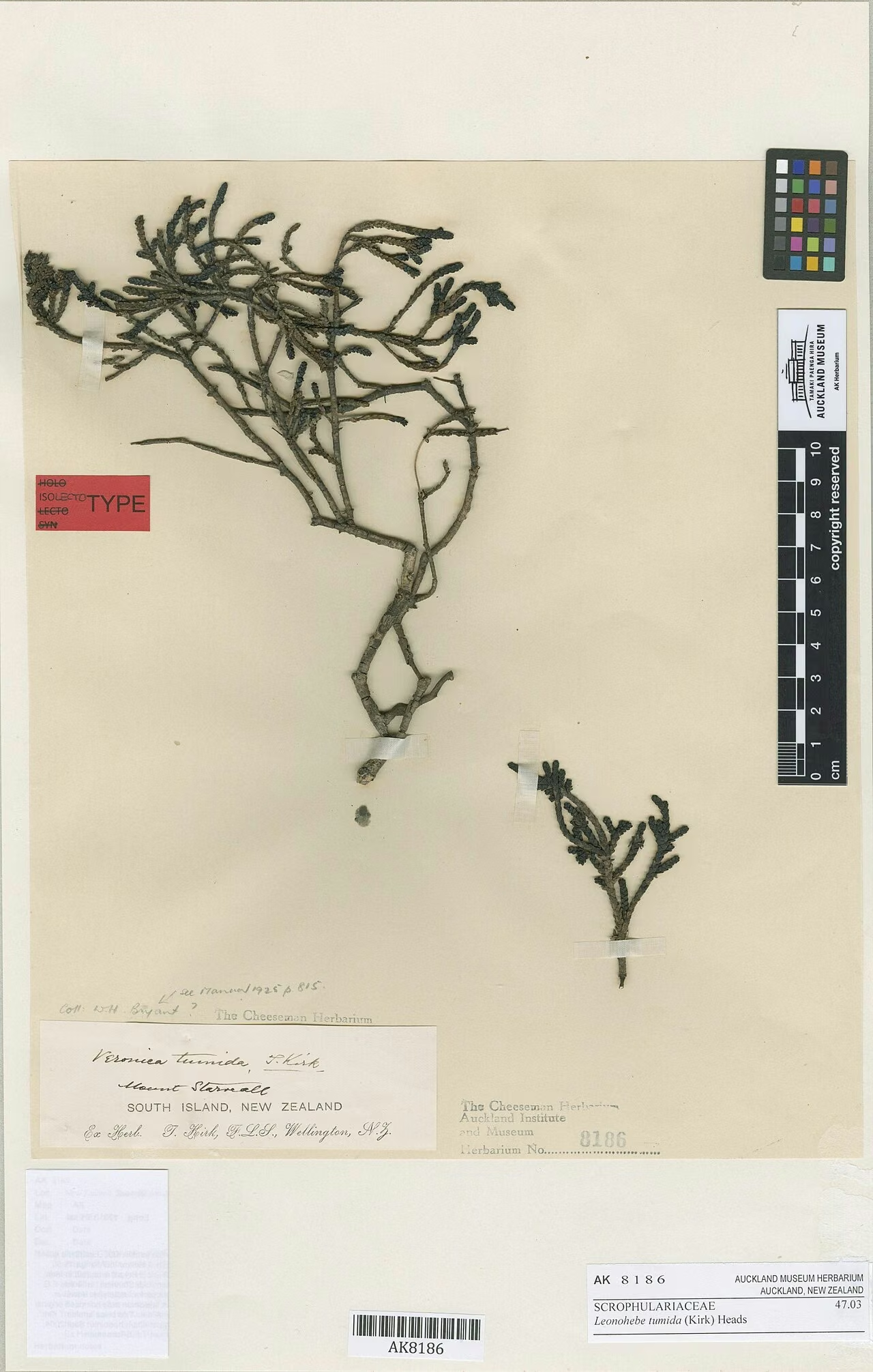
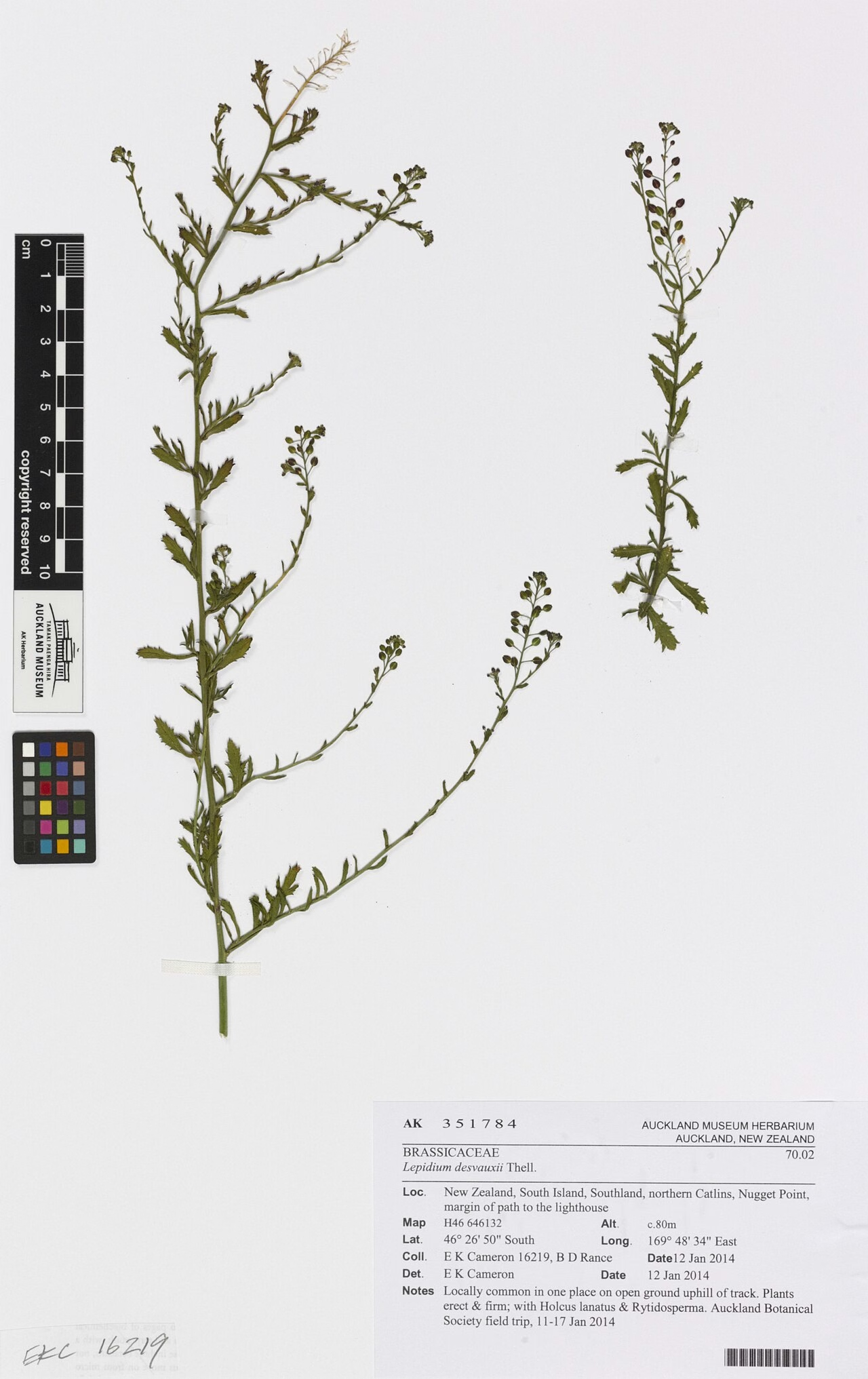
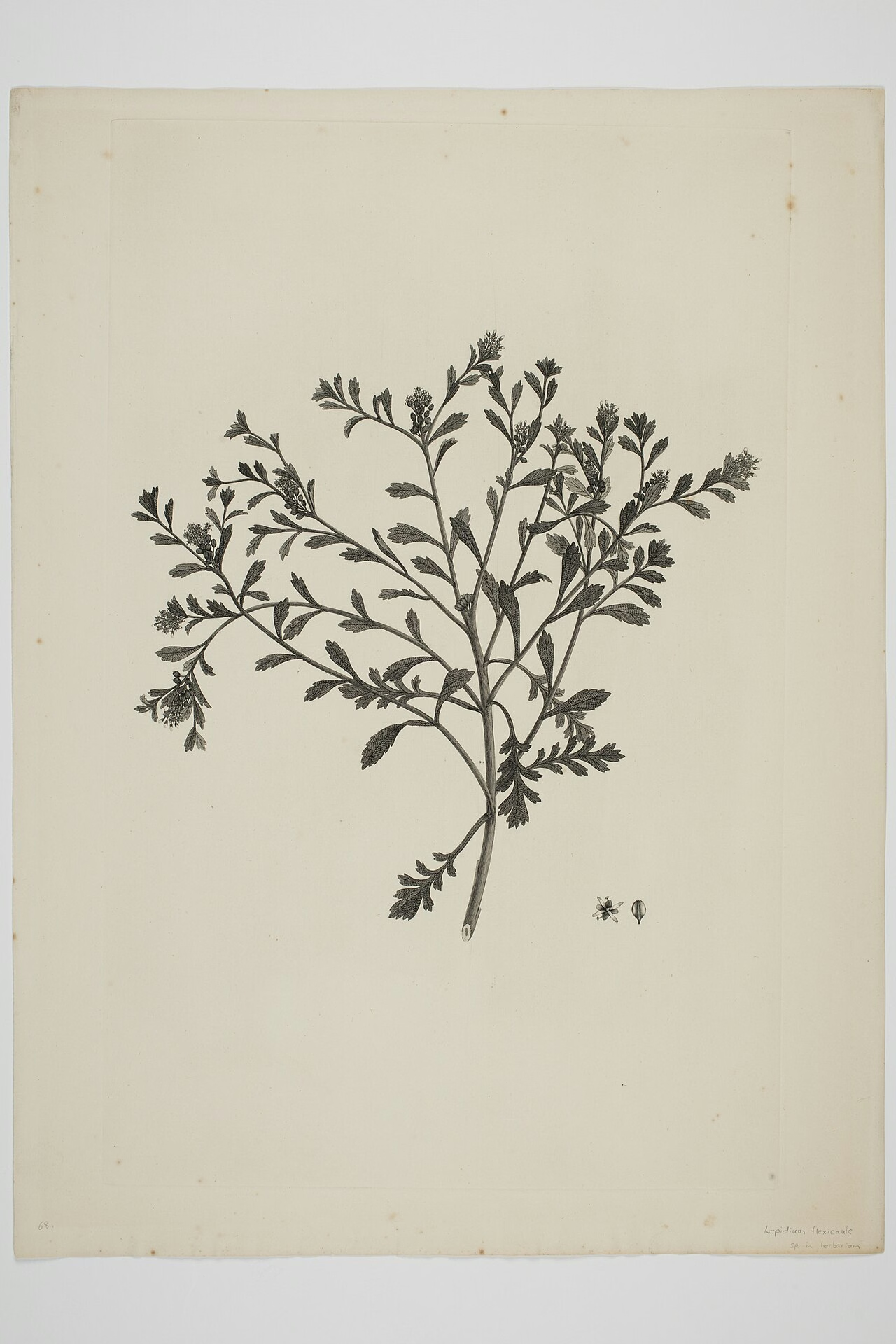
Explore other native plants that share similar characteristics or habitats with Shore Cress (Lepidium tenuicaule), offering further insights into New Zealand's diverse flora. These related species provide context and opportunities for complementary planting in your garden.
Plant Conservation
Lepidium tenuicaule is ranked Threatened - Nationally Vulnerable (2023) with qualifiers DPT (data poor: trend) and RR (range restricted). NZPCN notes it appears more secure than once believed, but it has been lost from the North Island, Oamaru and Cape Whangaroa.
Habitat has been lost through removal of car parks and roads crossing coastal turf, and through changes in disturbance that allow shrubs and grasses to take over. Retaining short, disturbed coastal turf and controlling weeds are the most helpful actions.
Frequently Asked Questions
Where can you find shore cress?
Shore cress grows in coastal turf in the south-eastern South Island, with large populations from Shag Point south along the coast to the Foveaux Strait islands. It once grew at Oamaru and on Kapiti Island.
Why does shore cress grow in car parks and on tracks?
It tolerates trampling and shade but not competition from taller grasses and shrubs, so it thrives in trampled coastal turf around car parks, footpaths, tracks and lighthouses.
What does Lepidium tenuicaule look like?
It forms a flat rosette of pinnate, dark green leaves with sharply toothed leaflets, often red or purple at the base, with slender stems bearing tiny white flowers and round seed pods.
Can I grow shore cress at home?
Yes. NZPCN says it is easy from fresh seed and suits compacted, poorly drained ground such as driveway edges and the bases of lawns. Specialist native nurseries occasionally stock it.
Sources and Further Reading
The botanical, growing, and conservation details for Shore Cress (Lepidium tenuicaule) on this page draw on the New Zealand plant references below. Consult them for full technical records and the latest distribution data.