Coastal Wind Grass
Lachnagrostis littoralis subsp. littoralis
Last updated:
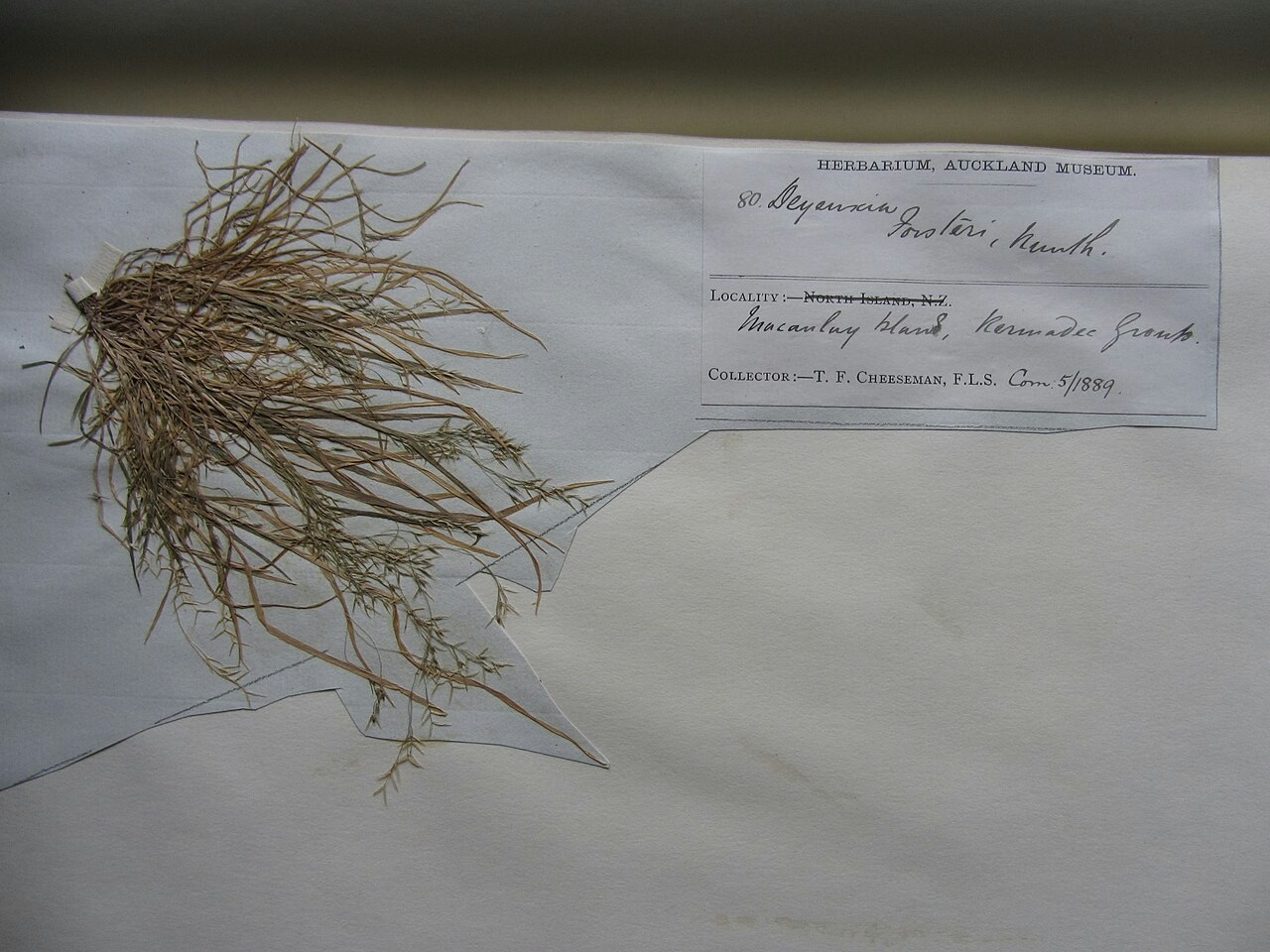
Coastal wind grass (Lachnagrostis littoralis subsp. littoralis) is a small, densely tufted annual grass endemic to New Zealand. Plants are light green to grey-green or bluish, from 3 cm to 40 cm tall, with narrow leaves and compact, hairy-looking seed heads. It is strictly coastal, growing on exposed cliff faces, in salt-pruned coastal turf, among boulders and on cobble beaches through the North Island, the northern South Island and the Chatham Islands. Although ranked Not Threatened nationally, it is uncommon in parts of its range and is regarded as regionally Naturally Uncommon in Northland and Wellington. Explore more native grasses and flaxes in our native plant guide.
Plant Description
Coastal wind grass forms dense little tufts that are light green, greyish green or distinctly glaucous. Plants range from just 30 mm tall on wind-blasted cliffs to about 400 mm in sheltered spots. The leaf blades are short and narrow, 10 to 80 mm long and 1.5 to 5 mm wide.
The flowering panicle is contracted rather than widely spreading, 20 to 120 mm long and 5 to 85 mm wide. Each tiny spikelet holds a single floret whose lemma carries an awn 3 to 6 mm long, attached roughly midway up the back, bent at a knee and slightly twisted. As in all Lachnagrostis, the base of the floret (the callus) bears woolly hairs, which gives the genus its name.
Its close relative, Lachnagrostis littoralis subsp. salaria, is larger and lacks the bent awn. Lachnagrostis filiformis, a common grass of damp inland ground, has unequal bare panicle branches and shorter lemmas of 1.3 to 2 mm, against 1.8 to 3 mm in coastal wind grass.
Quick Facts
| Scientific Name | Lachnagrostis littoralis subsp. littoralis |
|---|---|
| Height | 0.03-0.4 m |
| Spread | Small tufts, usually under 0.2 m across |
| Water Needs | Low to moderate; tolerates dry exposed sites and damp hollows |
| Light | Full sun |
| Frost Tolerance | Moderate; a lowland coastal plant |
| Salt Tolerance | High; grows on salt-exposed cliffs and beaches |
| Growth Rate | Fast, completing its life cycle within a season |
| Lifespan | Annual |
Climate Best Suited to
Suits mild, windy, salt-laden coastal climates from Northland to the northern South Island and the Chatham Islands. It does not grow inland or in the mountains.
Regional Suitability
| City | Climate Suitability |
|---|---|
| Auckland | High |
| Wellington | High |
| Christchurch | Low |
| Dunedin | Low |
Plant Habitat
Coastal wind grass is endemic to New Zealand and is found throughout the North Island, in the northern South Island and on the Chatham Islands. NZPCN describes it as common in coastal habitats across this range, though it is uncommon in some districts and is ranked regionally Naturally Uncommon in Northland and Wellington.
It is strictly coastal. Typical sites are exposed cliff faces, short coastal turf, gaps among boulders and cobble beaches. It occasionally turns up in seabird-influenced petrel scrub and in damp depressions within sand dune systems, where seasonal moisture lets seedlings establish.
Growing Requirements
Soil Requirements
In the wild it roots into thin soil, rock crevices, gravel and sand, often enriched by salt spray and, in petrel scrub, by seabird guano.
- Free-draining gravel, sand or rocky soil
- Tolerates thin, skeletal soils in cliff ledges
- No need for added fertiliser
Light Requirements
This is a plant of open, treeless coastal ground and does not persist where taller vegetation closes over it.
- Full sun and open exposure
- Fails under shade from shrubs or rank grasses
Water Requirements
Being an annual, it grows mainly through the moist months and sets seed before conditions become harsh, so it copes with summer-dry cliffs as well as damp dune hollows.
- Moist conditions are needed for germination
- No summer watering needed once seed has set
Planting and Establishing
Coastal wind grass is not sold in nurseries and is rarely planted deliberately. Because it is an annual, it is established by sowing seed rather than by planting tubes.
In coastal restoration on cliffs or cobble beaches, scatter locally collected seed onto bare, open ground in autumn or early spring and leave it to establish naturally. NZPCN notes it can become invasive in cultivation, so keep it to naturalistic coastal settings.
Ecological Role
Coastal wind grass is part of the low turf and herb communities of exposed coasts, where it fills bare gaps among rocks and cobbles alongside other salt-tolerant herbs. Its short life cycle lets it exploit ground that is regularly disturbed by storms, slips and salt burn.
As a grass it is wind pollinated, and its seed is dispersed by wind. Its specific role as food for invertebrates or birds is not documented in the sources consulted.
Uses & Significance
Garden Uses
It has a limited role in gardens because it is short-lived and can spread by self-sowing.
- Coastal rock gardens and cobble plantings that imitate natural shores
- Revegetating bare cliff or beach margins with local seed
- Educational plantings of native coastal turf species
Ecological Value
It contributes to the diversity of New Zealand's coastal turf, a specialised and much-reduced habitat.
- An endemic grass restricted to coastal habitats
- Colonises bare, disturbed ground on cliffs and beaches
- Regionally uncommon in Northland and Wellington
Landscaping Uses
Its fine, grey-green tufts and soft seed heads suit naturalistic coastal schemes, especially among boulders, driftwood and gravel, where it can come and go each season.
Treat it as an ephemeral filler rather than a permanent feature, and plan for longer-lived coastal plants such as sedges and low shrubs to provide the year-round structure.
Seasonal Care Calendar
Spring
Plants grow quickly and flowering begins from September.
- Watch for the first contracted seed heads
- Keep competing weeds out of sown areas
Summer
Flowering and fruiting continue through summer, with seed ripening from October onwards.
- Collect ripe seed heads for sowing
- Plants on dry cliffs may brown off early
Autumn
Fruiting continues into June, and the first autumn rains trigger new seedlings.
- Sow fresh seed on bare ground
- Leave old plants to shed seed in place
Winter
Young plants from autumn germination sit as small tufts over winter.
- Avoid trampling seedling areas
- No maintenance required
When to Prune and How Much
No pruning is needed. As an annual, each plant dies after setting seed, and the dead tufts can simply be left to break down or pulled out once seed has dropped.
If self-sown seedlings appear where they are not wanted, pull them out before they flower.
How to Grow Coastal Wind Grass
NZPCN describes coastal wind grass as easy to grow from fresh seed, and since it is an annual, seed is the only practical way to propagate it. Flowering runs from September to May and fruiting from October to June, so there is a long season in which to gather ripe heads. The plant self-sows freely, and NZPCN warns that it can become invasive in cultivation, so it is best used in coastal restoration with seed collected from the same stretch of coast rather than in ordinary garden beds.
From Seed
The seed is tiny, held in single-flowered spikelets with a bent awn and woolly callus hairs. Collect heads when they turn straw coloured and the florets loosen easily, before the wind carries them away. Fresh seed gives the best results.
- Cut ripe panicles into a paper bag on a dry day
- Rub the heads gently to release the florets
- Sow on the surface of a gritty, sandy seed mix or directly onto bare ground
- Press in lightly without burying the seed deeply
- Keep just moist in full light until seedlings appear
- Prick out or thin seedlings to small clumps and plant out while still young
Direct Seed Sowing on Site
For revegetating a cliff or beach margin, scattering seed straight onto the site is usually more successful than raising plants in pots, because the seedlings establish their roots in the rocky ground where they will grow.
- Choose bare, open patches with no rank grass cover
- Scatter seed in autumn ahead of winter rain
- Leave the area undisturbed so plants can set seed and self-sow
Pests & Diseases
No specific pests or diseases are recorded for this grass. The main threats come from competition with taller introduced grasses and weeds that smother open coastal turf.
Trampling, vehicles on beaches and coastal development can destroy the open, bare ground it needs to germinate.
Cultural Significance
No traditional Māori name or use is recorded for coastal wind grass in the sources consulted.
The genus name Lachnagrostis combines the Greek lachne, wool, with Agrostis, a grass, describing the woolly hairs at the base of the floret. The epithet littoralis comes from the Latin litus, the shore, reflecting its strictly coastal habitat.
Bonus Tip
To confirm you have subspecies littoralis rather than the larger subsp. salaria of salt marshes, look closely at a floret with a hand lens: subspecies littoralis has an awn 3 to 6 mm long that is clearly bent at a knee and slightly twisted, arising from about the middle of the lemma.
Related Plants
Explore other native plants that share similar characteristics or habitats with Coastal Wind Grass (Lachnagrostis littoralis subsp. littoralis), offering further insights into New Zealand's diverse flora. These related species provide context and opportunities for complementary planting in your garden.
Kelleria tessellata
Kelleria tessellata
Koeleria cheesemanii
Koeleria cheesemanii
Lachnagrostis elata
Lachnagrostis elata
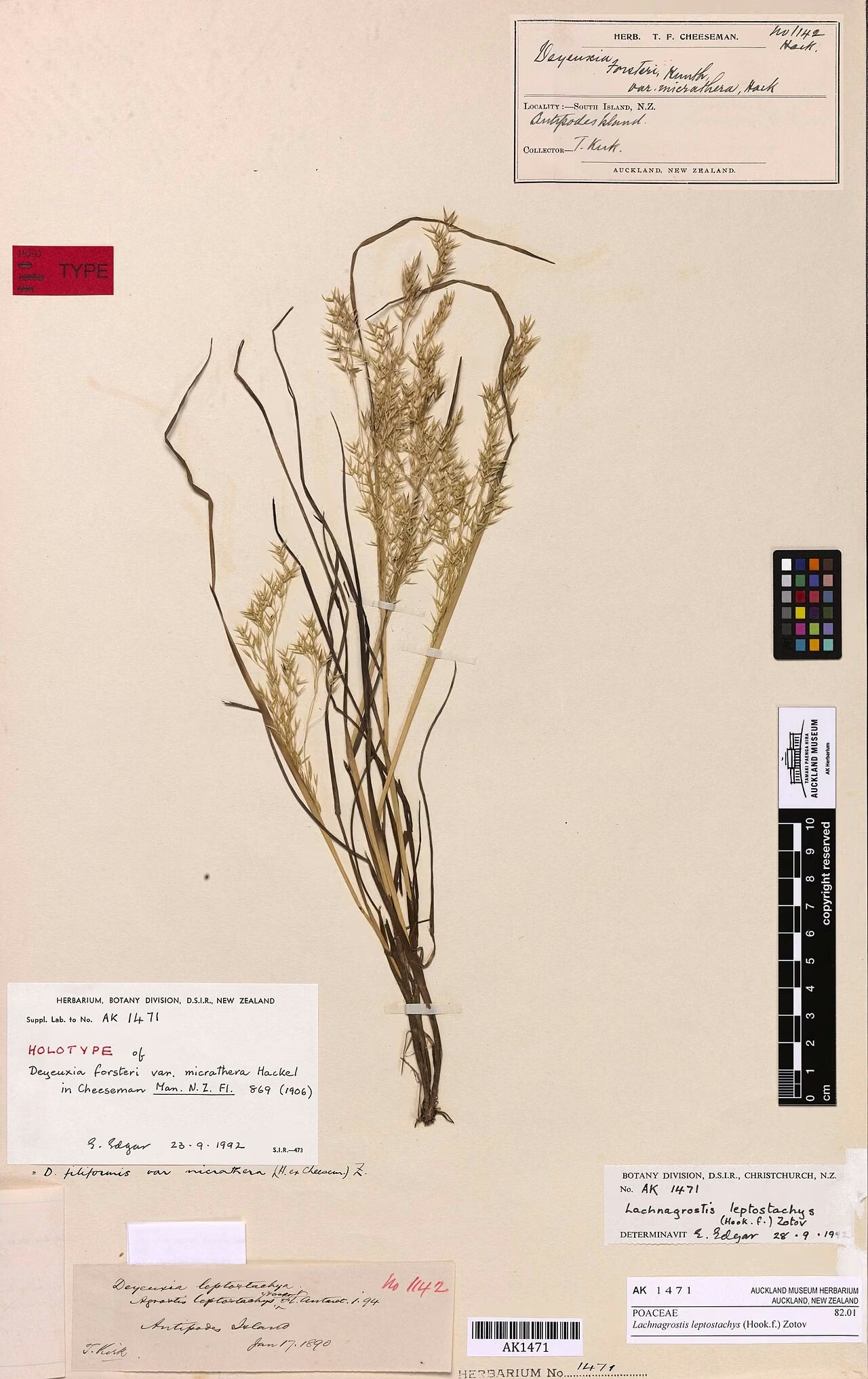
Lachnagrostis leptostachys
Lachnagrostis leptostachys
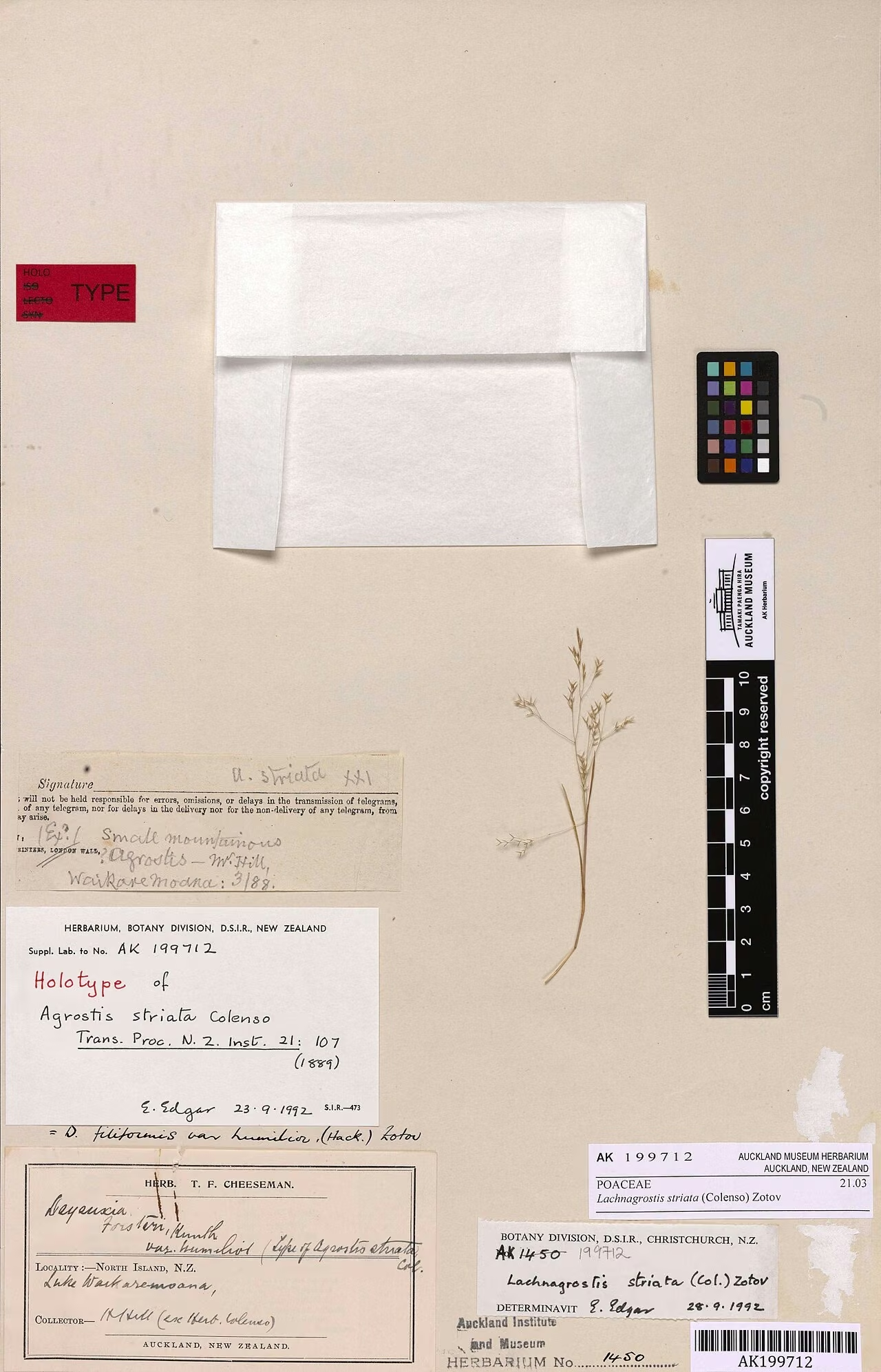
Purple Wind Grass
Lachnagrostis striata
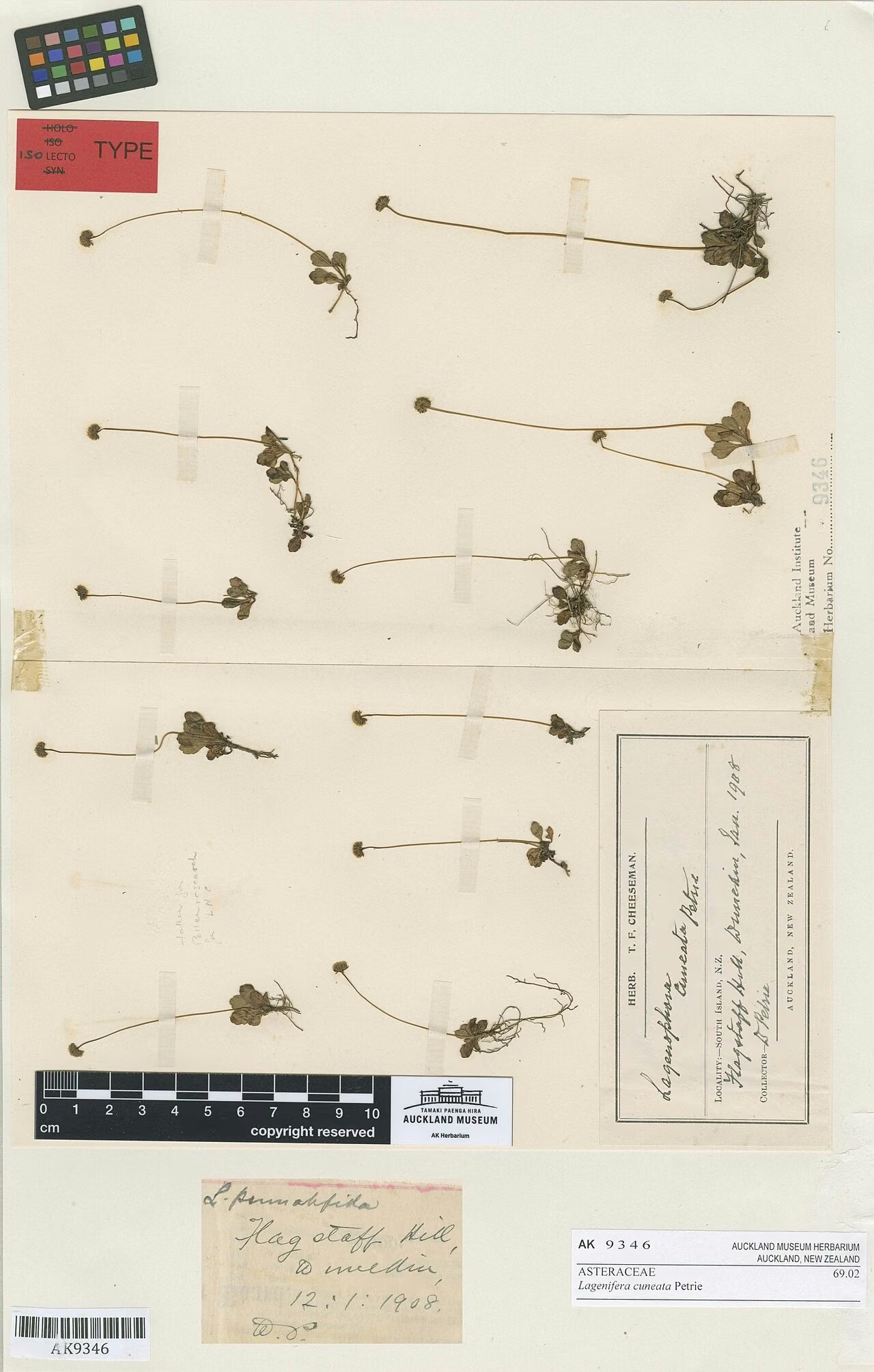
Lagenophora cuneata
Lagenophora cuneata
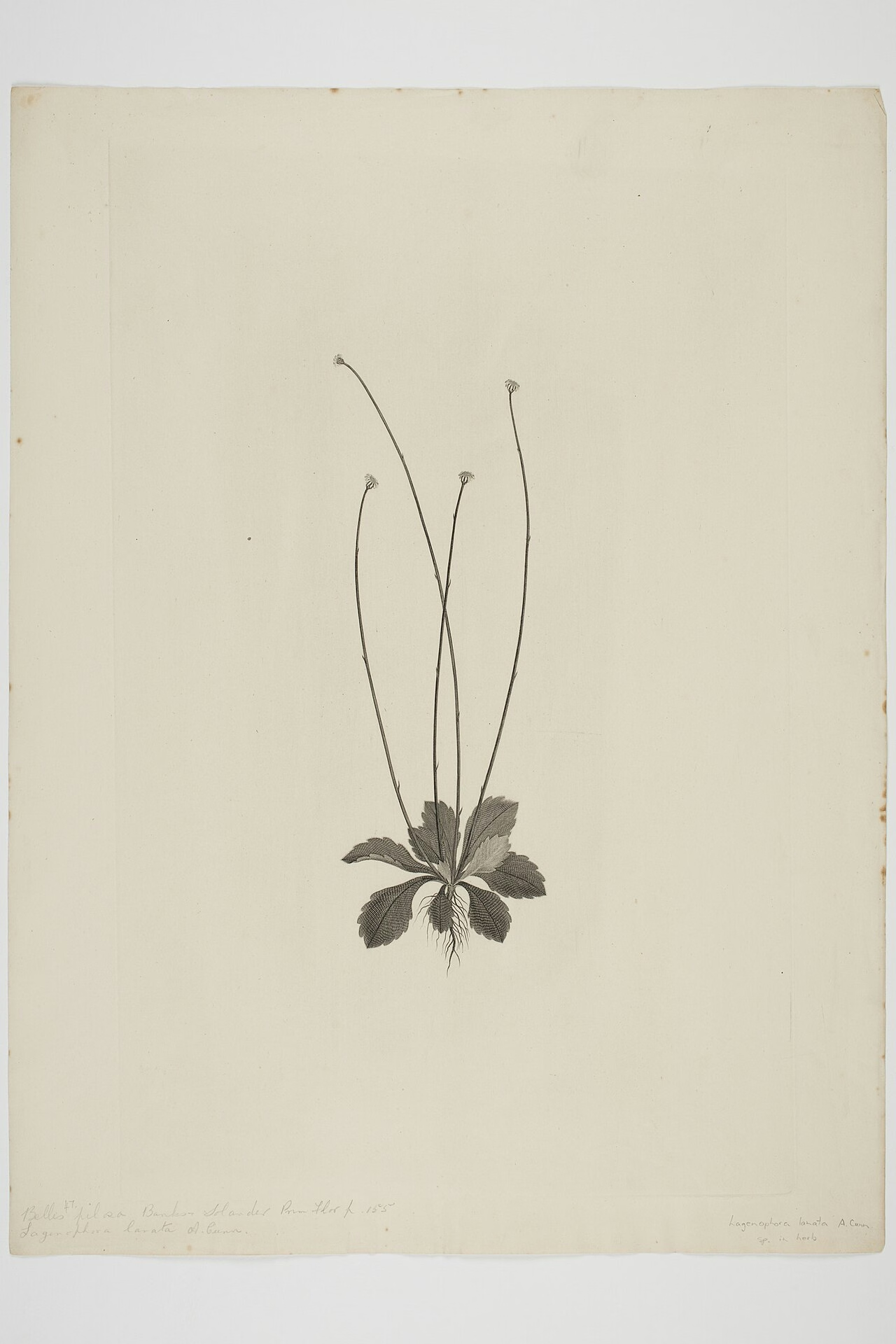
Lagenophora sublyrata
Lagenophora sublyrata
Papataniwhaniwha
Lagenophora petiolata
Plant Conservation
Coastal wind grass is ranked Not Threatened (2023), but NZPCN notes it can be uncommon over parts of its range. Regional assessments rank it Regionally Naturally Uncommon in Northland and Wellington.
Protecting open coastal turf from weed invasion, vehicles and heavy trampling is the most useful action, along with using local seed in coastal restoration so that small populations are reinforced.
Frequently Asked Questions
Where does coastal wind grass grow?
Only on the coast: exposed cliff faces, coastal turf, among boulders and on cobble beaches, occasionally in petrel scrub or damp hollows in dunes, from the North Island to the northern South Island and the Chatham Islands.
Is Lachnagrostis littoralis an annual or perennial grass?
NZPCN describes subspecies littoralis as an annual grass, so each plant lives for one season and the population persists by seed.
How do you tell Lachnagrostis littoralis subsp. littoralis from subsp. salaria?
Subspecies littoralis is smaller overall and its lemma carries a bent (geniculate), slightly twisted awn 3 to 6 mm long attached near the middle of the back.
Why is it called wind grass?
The light, open seed heads of Lachnagrostis break away when ripe and are blown about by the wind, which spreads the seed; the genus name itself means woolly grass, after the hairs on the floret base.
Sources and Further Reading
The botanical, growing, and conservation details for Coastal Wind Grass (Lachnagrostis littoralis subsp. littoralis) on this page draw on the New Zealand plant references below. Consult them for full technical records and the latest distribution data.