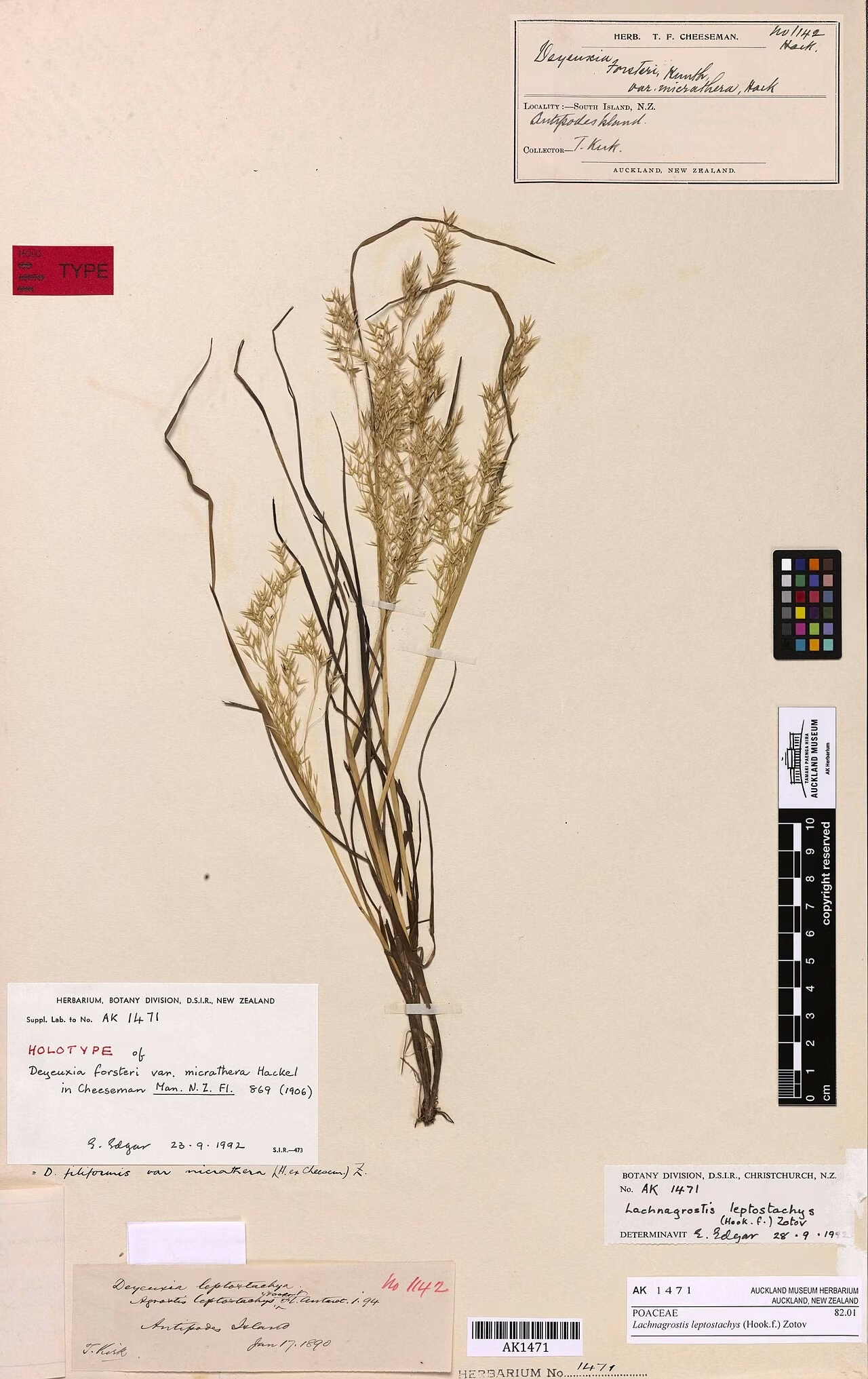
Wind Grass
Lachnagrostis leptostachys
Last updated:
Lachnagrostis leptostachys is a subantarctic wind grass endemic to New Zealand's Auckland, Campbell and Antipodes Islands. It forms pale green, erect tufts 15 to 65 cm tall, with narrow, rolled leaves that often overtop its delicate, loosely branched flower heads. It grows mainly near the coast on rock-strewn ground and in peaty turf, and occasionally higher up in Chionochloa antarctica tussock grassland. It faces no apparent threats, but it is ranked At Risk - Naturally Uncommon because its entire range is confined to these remote island groups. Explore more native grasses and flaxes in our native plant guide.
Plant Description
Lachnagrostis leptostachys forms pale green, erect tufts, usually 15 to 35 cm tall and up to about 65 cm. New shoots arise inside the leaf sheaths (intravaginal branching). The leaves are narrow and involute (rolled), only 0.5 to 1 mm in diameter, grey-green to dark green, with membranous sheaths, and they often overtop the panicles.
The panicles are delicate and laxly branched. Spikelets are 4.5 to 5.5 mm long, and each lemma bears an awn 4 to 6 mm long, attached at the middle or upper part of the lemma, which is straight or slightly curved. As in all Lachnagrostis, there are hairs on the callus below the lemma, the woolly feature that gives the genus its name. The chromosome number is 2n = 84.
It is the only Lachnagrostis on Campbell Island. It differs from L. pilosa subsp. nubifera in its straight or curved rather than geniculate awns, and from related species in its intravaginal branching.
Quick Facts
| Scientific Name | Lachnagrostis leptostachys |
|---|---|
| Height | 0.15-0.65 m |
| Spread | Erect tufts |
| Water Needs | Moist; cool, wet oceanic climate |
| Light | Full sun, open coastal sites |
| Frost Tolerance | Good; subantarctic species |
| Salt Tolerance | Grows mainly near the coast; exact tolerance not documented |
| Growth Rate | Moderate |
| Lifespan | Perennial |
Climate Best Suited to
A plant of the cold, windy, cloudy and very wet subantarctic oceanic climate, with cool summers and few warm days; warm, humid climates do not suit it.
Regional Suitability
| City | Climate Suitability |
|---|---|
| Auckland | Low |
| Wellington | Low |
| Christchurch | Low |
| Dunedin | Medium |
Plant Habitat
Lachnagrostis leptostachys is confined to the Auckland, Campbell and Antipodes Island groups in the New Zealand subantarctic, making it a narrow-range endemic.
It grows mainly in coastal places on rock-strewn ground and in peaty turf. Occasionally it is found at higher elevations within grassland dominated by Chionochloa antarctica, the subantarctic snow tussock.
Growing Requirements
Soil Requirements
Grows in peaty turf and among rocks in coastal subantarctic sites.
- Peaty, organic soil
- Rocky, free-draining ground
Light Requirements
An open-ground grass of exposed coasts with frequent cloud cover.
- Full sun in cool, cloudy climates
Water Requirements
The subantarctic islands have frequent rain and drizzle, so soils stay moist much of the year.
- Keep consistently moist
- Good drainage around the crown
Planting and Establishing
This is not a garden plant for most of New Zealand. If grown for conservation or display, it needs a cool, airy position in moist, peaty but free-draining soil, and it will do best in the far south.
In warmer districts plants may grow but fail to flower, as happened in Auckland, so a cool alpine house or southern location is needed for it to complete its life cycle.
Ecological Role
Like other grasses it is wind pollinated, and the light florets of wind grasses are carried by wind. It flowers from November to January and fruits from December to March.
On the subantarctic islands it is part of the coastal turf and rocky-ground vegetation, ecosystems that have recovered strongly since introduced animals such as sheep, cattle, pigs and rabbits were removed from several islands.
Uses & Significance
Garden Uses
Of interest mainly to botanic gardens and specialists in subantarctic flora.
- Conservation and display collections
- Cool-climate native grass collections
Ecological Value
One of the endemic grasses that make up the distinctive subantarctic flora.
- Endemic to the subantarctic islands
- Part of coastal turf communities
Landscaping Uses
Lachnagrostis leptostachys has little landscaping use because it struggles away from cool, oceanic conditions.
In a southern garden its fine, pale tufts could be grown with other subantarctic plants such as Bulbinella rossii or Pleurophyllum in a cool, moist bed, but these too are demanding plants.
Seasonal Care Calendar
Spring
New growth begins as the islands warm slightly.
- Divide or plant in late spring
Summer
Flowering from November to January, with seed from December.
- Keep cool and moist
- Collect seed
Autumn
Fruiting ends by about March.
- Sow fresh seed
- Tidy old flower stems
Winter
Growth is slow in the cold, wet subantarctic winter.
- Avoid waterlogging
- Little care needed
When to Prune and How Much
No pruning is required. Remove dead leaves and spent flower stems by hand to keep the tuft airy.
Good air movement around the plant matters more than shaping, given its dislike of humidity.
How to Grow Wind Grass
NZPCN reports that Lachnagrostis leptostachys is easy to grow from fresh seed and rooted pieces, but it dislikes humidity and warm climates, and plants grown in Auckland failed to flower. Access to the subantarctic islands is strictly controlled by the Department of Conservation, so any seed or plant material must come through permitted collection or existing cultivated stock.
From Seed
Seed ripens between December and March. Fresh seed germinates readily in cool conditions.
A cool spot is more important than warmth for germination. Seedlings raised in warm, humid glasshouses tend to grow soft and are prone to rot, so a shaded cold frame or an outdoor bench in a southern garden gives sturdier plants. Remember that even healthy plants may not flower in warm districts, so keep seed-raised stock in the coolest conditions available if you want a further generation of seed.
- Obtain fresh seed from permitted collections or cultivated plants.
- Sow on the surface of a moist, peaty seed mix and press lightly.
- Keep cool and moist in a well-ventilated spot.
- Prick out seedlings into individual pots once they have a few leaves.
- Grow on in a cool, airy place away from warmth and humidity.
By Division of Rooted Pieces
Rooted pieces taken from established tufts give quick results.
Division is the quickest way to share material between conservation collections, since each rooted piece establishes as a new tuft when kept cool and moist.
- Lift the tuft in spring.
- Separate pieces with their own roots.
- Pot into a moist, free-draining peaty mix.
- Keep shaded and damp until new growth appears.
- Move to a cool, open position.
Pests & Diseases
No pests or diseases are recorded for this grass. NZPCN notes it faces no apparent threats in the wild.
In cultivation, warmth and humidity are the main problems, leading to weak growth, failure to flower and possible fungal rot.
Cultural Significance
No Māori name or traditional use is recorded for Lachnagrostis leptostachys in the sources consulted.
Joseph Hooker first described it as Agrostis leptostachys in 1845, in his Flora Antarctica based on collections made on the subantarctic islands. Zotov transferred it to Lachnagrostis in 1965. The epithet leptostachys means slender-spiked.
Bonus Tip
On Campbell Island identification is simple: it is the only Lachnagrostis there. Elsewhere in the subantarctic, check the awns with a hand lens, as straight or slightly curved awns indicate L. leptostachys while sharply bent awns point to L. pilosa subsp. nubifera.
Related Plants
Explore other native plants that share similar characteristics or habitats with Wind Grass (Lachnagrostis leptostachys), offering further insights into New Zealand's diverse flora. These related species provide context and opportunities for complementary planting in your garden.
Kelleria multiflora
Kelleria multiflora
Kelleria tessellata
Kelleria tessellata
Koeleria cheesemanii
Koeleria cheesemanii
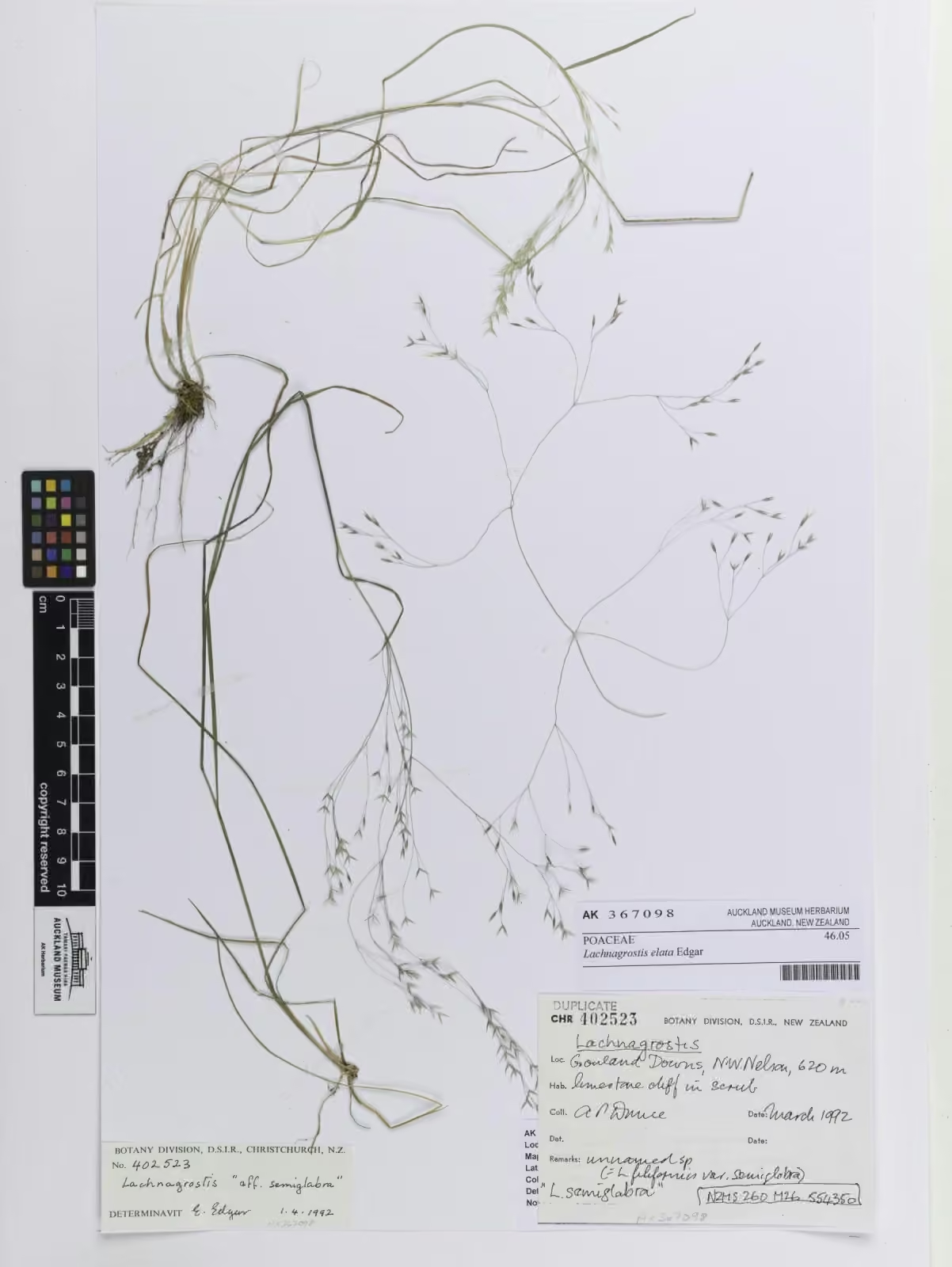
Lachnagrostis elata
Lachnagrostis elata
Coastal Wind Grass
Lachnagrostis littoralis subsp. littoralis
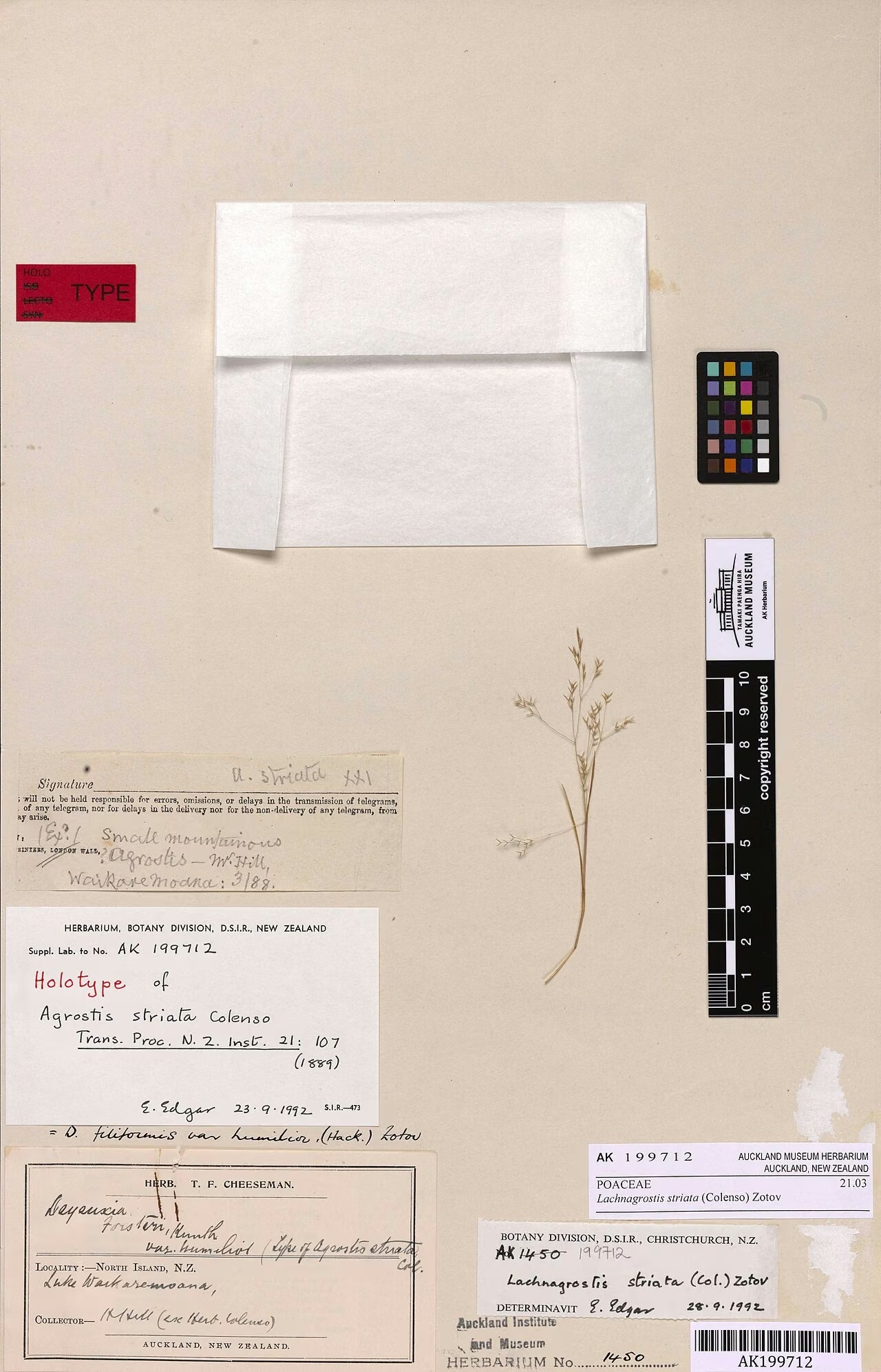
Purple Wind Grass
Lachnagrostis striata
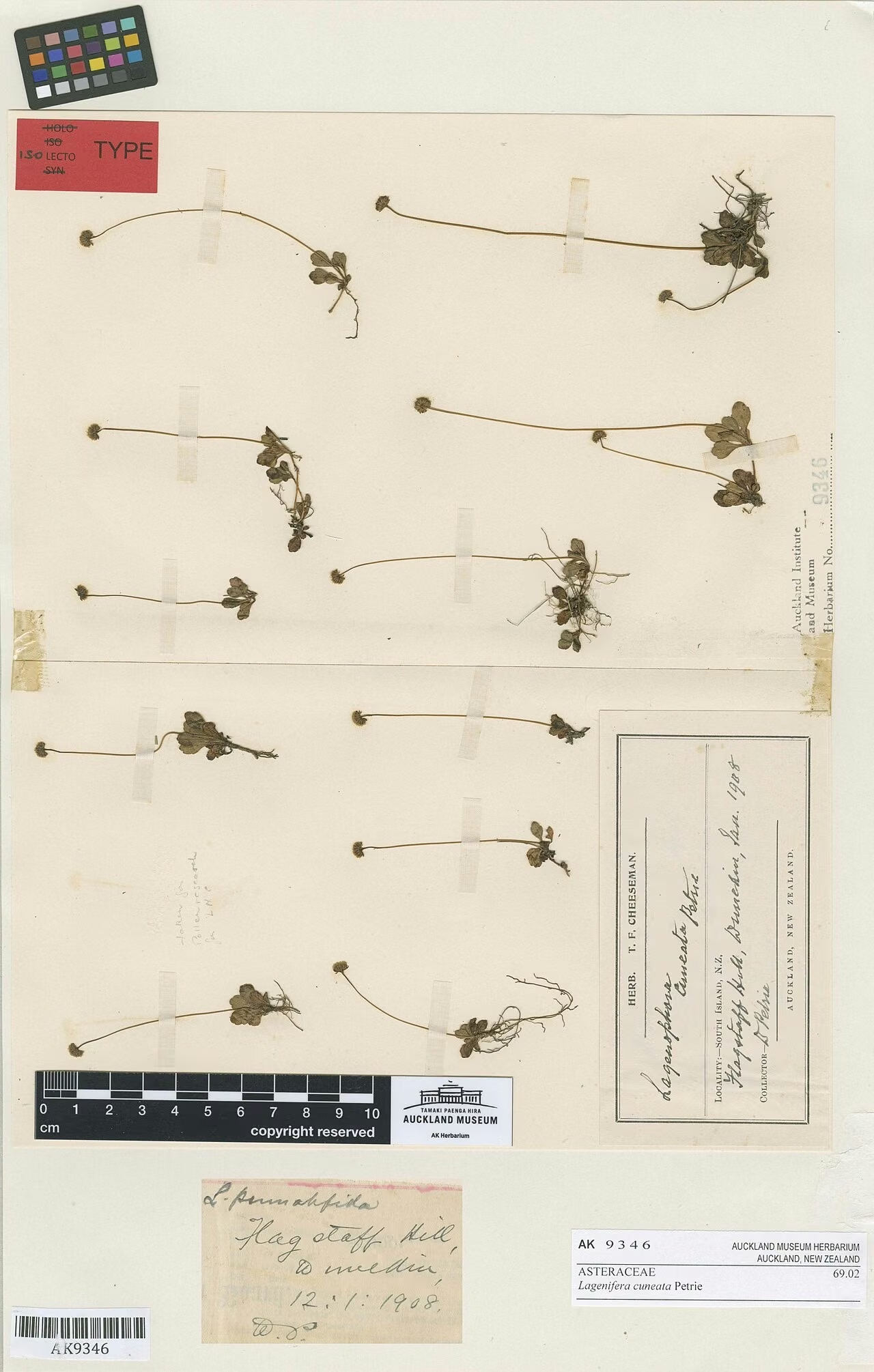
Lagenophora cuneata
Lagenophora cuneata
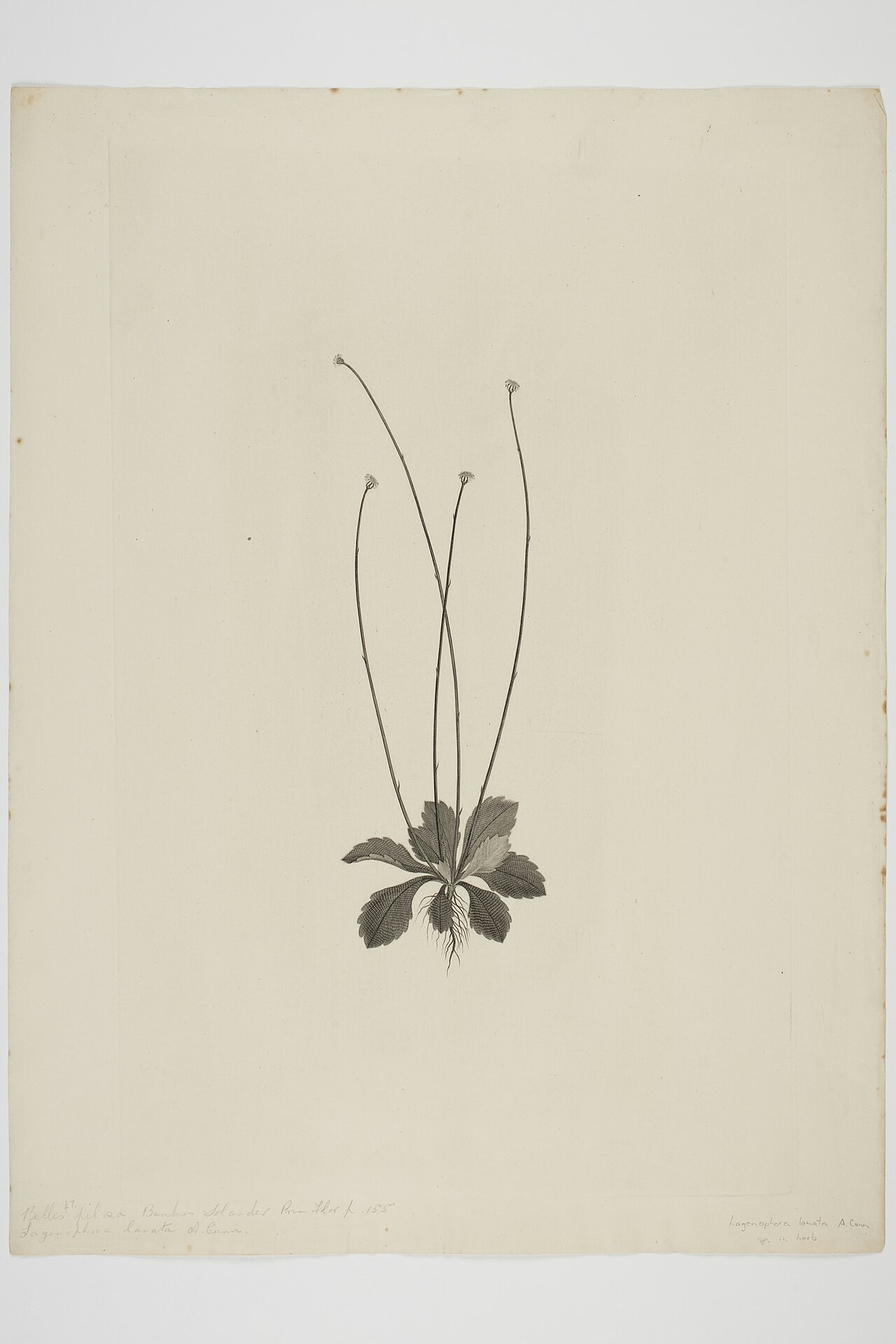
Lagenophora sublyrata
Lagenophora sublyrata
Plant Conservation
Lachnagrostis leptostachys is ranked At Risk - Naturally Uncommon (2023), with qualifiers range restricted (RR) and sparse (Sp). NZPCN states it has no apparent threats and is listed only because it is a narrow-range endemic.
The subantarctic islands are nature reserves and part of a World Heritage Area with strict biosecurity. Keeping new weeds and pests out is the most important protection for this grass and the rest of the island flora.
Frequently Asked Questions
Where does Lachnagrostis leptostachys grow?
Only on New Zealand's subantarctic Auckland, Campbell and Antipodes Islands, mainly on coastal rock-strewn ground and peaty turf and occasionally in Chionochloa antarctica grassland.
How is Lachnagrostis leptostachys told from Lachnagrostis pilosa subsp. nubifera?
L. leptostachys has straight or slightly curved awns, while L. pilosa subsp. nubifera has bent (geniculate) awns. L. leptostachys also branches inside the leaf sheath (intravaginal) rather than outside it.
Can subantarctic wind grass be grown on the mainland?
It grows easily from fresh seed and rooted pieces but dislikes humidity and warm climates. NZPCN reports that plants grown in Auckland failed to flower.
Sources and Further Reading
The botanical, growing, and conservation details for Wind Grass (Lachnagrostis leptostachys) on this page draw on the New Zealand plant references below. Consult them for full technical records and the latest distribution data.