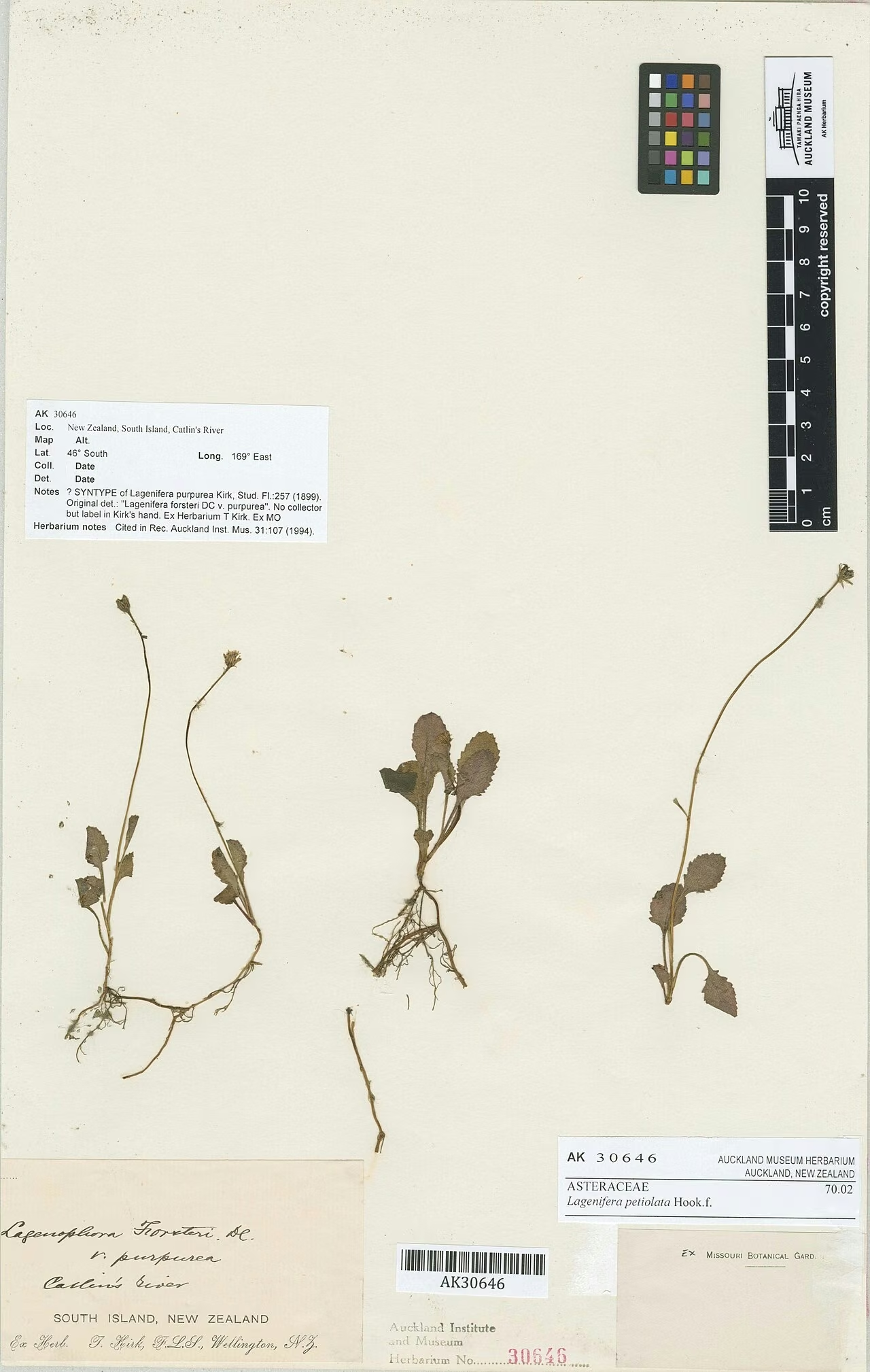
Papataniwhaniwha
Lagenophora petiolata
Last updated:
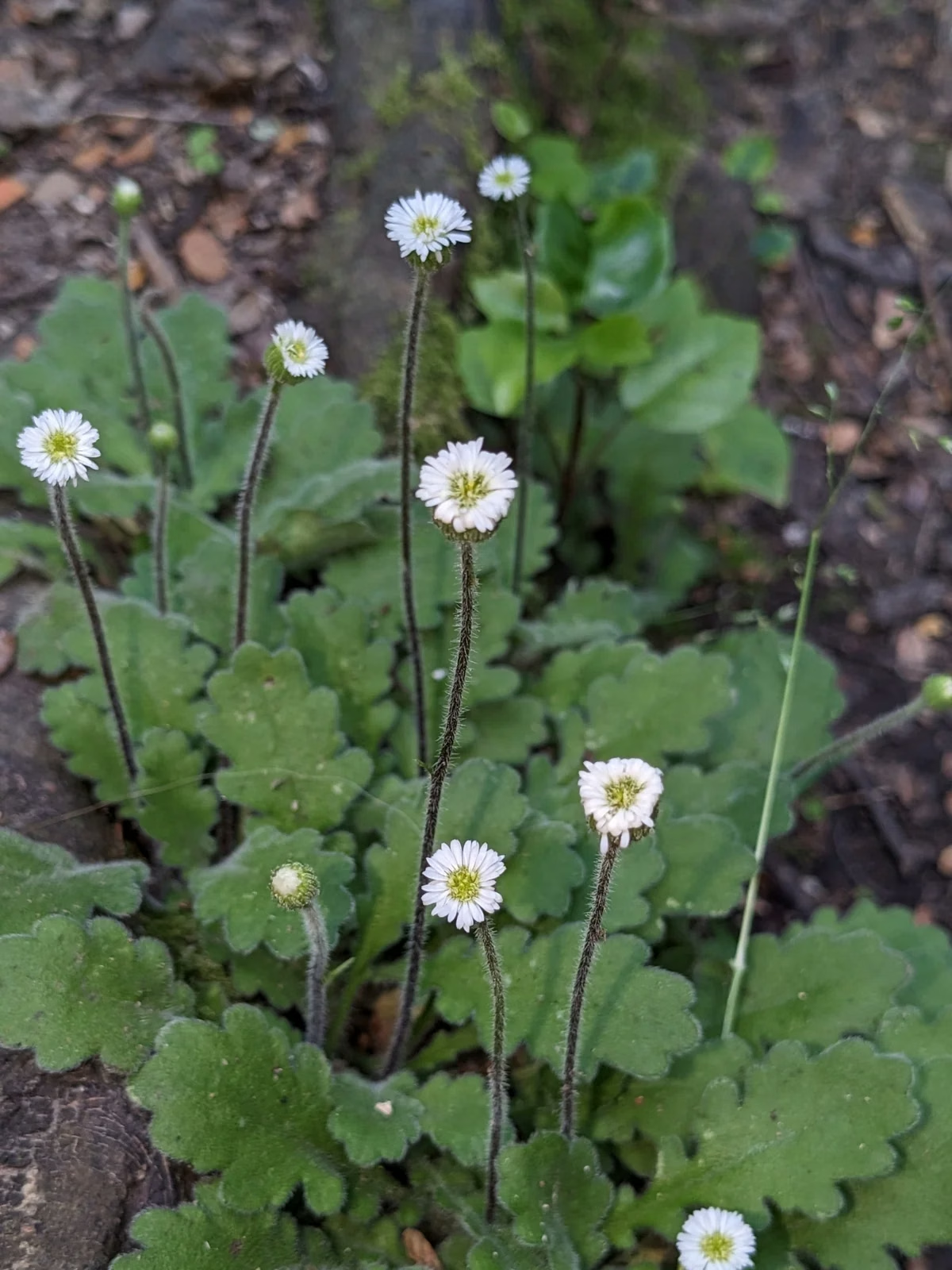
Papataniwhaniwha (Lagenophora petiolata), once spelt Lagenophora petiolata, is a small creeping daisy endemic to New Zealand. Slender branching rhizomes carry rosettes of rounded leaves 1 to 2 cm across on noticeably long stalks, and in early summer thin stems 6 to 15 cm tall hold single white and yellow daisy heads. It grows in open shrubland, light forest, grassland and open places from about latitude 37° southwards, and on Stewart Island and outlying islands. It is ranked Not Threatened. Māori used its sap to treat an abscessed tooth and mouth ulcers. It was previously known as Lagenifera petiolata. Explore more native ground covers in our native plant guide.
Plant Description
Lagenophora petiolata has a slender, branching rhizome with rosettes of leaves at the nodes, so it forms open patches. The leaf blades are about 10 to 20 mm long and wide, roundish to ovate-oblong or broadly elliptic, thinly leathery and finely hairy to almost hairless. The margins carry a few widely spaced, distinctly pointed teeth or are wavy to almost entire. The leaf stalks are long, usually 20 to 30 mm.
Slender flower stalks 6 to 15 cm long, hairless to rather hairy, each carry a single head 5 to 10 mm across with white rays and a yellow centre. The bracts around the head are narrow and pointed. The seeds are about 2.5 mm long, obliquely obovate, distinctly curved and plump, with thickened margins and a beak about 0.75 mm long.
The long leaf stalks, sparse pointed teeth and curved seeds separate it from papataniwhaniwha in the narrower sense (Lagenophora pumila), whose leaves are stiffly hairy with rounded teeth and whose heads are larger. Several forms once given separate names, such as Lagenifera purpurea, are now included in this species.
Quick Facts
| Scientific Name | Lagenophora petiolata |
|---|---|
| Height | 0.06-0.15 m in flower |
| Spread | Open patches spreading by rhizomes |
| Water Needs | Moderate |
| Light | Full sun to partial shade |
| Frost Tolerance | High; reaches subalpine grassland |
| Salt Tolerance | No information available |
| Growth Rate | Moderate |
| Lifespan | Perennial |
Climate Best Suited to
Suits temperate climates from the central North Island south to Stewart Island, from mild lowlands to cold subalpine grassland.
Regional Suitability
| City | Climate Suitability |
|---|---|
| Auckland | Low |
| Wellington | Medium |
| Christchurch | Medium |
| Dunedin | High |
Plant Habitat
Lagenophora petiolata is endemic to New Zealand. The Allan Flora records it from the North, South and Stewart Islands and the Kermadec Islands, and from about latitude 37° southwards on the main islands. The type was collected from the top of the Ruahine Range. Herbarium specimens also come from the Chatham Islands and Campbell Island.
It grows in open shrubland, light forest, grassland and other open places, from near sea level, as in the lower Taieri Gorge, to subalpine grassland at about 970 m in Fiordland. Specimens record it from moist forest openings, stream banks in open forest, forest margins and red tussock grassland. Its wetland indicator rating is Facultative.
Growing Requirements
Soil Requirements
It grows in a range of moist, low-fertility soils in grassland, forest margins and shrubland.
- Moist but not waterlogged soil
- Open turf or thin leaf litter
- Low to moderate fertility
Light Requirements
It occurs in both open grassland and light forest, so it tolerates a range of light conditions.
- Full sun to partial shade
- Avoid deep shade under dense canopy
Water Requirements
Many of its sites are damp, such as forest openings and stream banks, though it also grows in grassland.
- Keep evenly moist in cultivation
- Water during dry summer spells
Planting and Establishing
Papataniwhaniwha is an easy small groundcover for moist, open spots among rocks, on the edge of a path or in a shaded lawn where mowing is light.
Plant small divisions in spring into loose, moist soil, and keep vigorous grasses and weeds away until the rhizomes have spread.
Ecological Role
Its seeds are glandular and are dispersed by wind and by attaching to animals, which helps it spread into small gaps in grassland and forest margins.
The single daisy heads offer pollen and nectar to small insects, though specific pollinators are not recorded in the sources consulted.
Uses & Significance
Garden Uses
It is a modest, informal groundcover rather than a showy perennial.
- Native lawn alternatives in light shade
- Rock garden and path-edge pockets
- Understorey filler in restoration plantings
Ecological Value
It is a widespread small herb of grassland and forest margins across much of New Zealand.
- Endemic to New Zealand
- Found from lowland to subalpine
- Present on several outlying island groups
Landscaping Uses
Use papataniwhaniwha as a fine-scale groundcover beneath ferns and small shrubs, where its rounded leaves and little daisies soften bare soil.
It combines well with other low natives such as Leptinella and small sedges in moist, partly shaded corners.
Seasonal Care Calendar
Spring
New rosettes grow along the rhizomes.
- Divide and replant
- Weed around patches
Summer
Flowering runs from November to January.
- Water in dry spells
- Enjoy the white daisies
Autumn
Fruiting continues until April.
- Collect seed heads
- Sow fresh seed
Winter
Plants sit quietly as low rosettes through frosts.
- No action required
- Clear fallen leaves from patches
When to Prune and How Much
No pruning is needed. Spent flower stalks can be removed for neatness.
If patches spread too far, simply pull out the unwanted rhizomes.
How to Grow Papataniwhaniwha
NZPCN notes that the cypselae of Lagenophora petiolata are dispersed by wind and attachment, and the species is readily increased by both seed and division, as is typical of rhizomatous Lagenophora. Flowering occurs from November to January and fruiting from December to April, so seed is ready from mid summer. Division of the spreading rhizomes is the quickest method and gives flowering-sized plants within a season, while seed is useful for raising larger numbers for restoration. Collect only from plants you are permitted to take material from, and favour local sources.
From Seed
The curved seeds are about 2.5 mm long, with a short beak and no pappus. Collect heads as they dry and before the seeds drop.
- Collect ripe heads between December and April
- Sow fresh seed on a fine, moist seed mix
- Cover lightly with fine grit or sieved mix
- Keep in a sheltered spot with bright indirect light
- Pot on seedlings when they have several leaves
- Plant out the following spring
By Division
Each rosette along the rhizome forms its own roots, making division simple. Spring is the best time, as new growth establishes quickly.
Planted divisions spread most quickly where the soil surface is loose and moist, since the slender rhizomes run just below the surface and root at each new rosette.
- Lift a section of an established patch
- Cut the rhizome into pieces each with a rooted rosette
- Replant directly or into pots of moist mix
- Keep damp and lightly shaded until growing
Pests & Diseases
No specific pests are recorded. Slugs and snails may chew leaves in moist garden conditions.
In gardens, the main risk is being smothered by vigorous lawn grasses or weeds.
Cultural Significance
NZPCN gives the Māori name papataniwhaniwha, which is also applied to Lagenophora pumila, and the Flora of New Zealand records parani. Ngā Tipu Whakaoranga records that its sap was used for an abscessed tooth (Goldie 1904) and for an ulcerated mouth (Best 1906). These early records may not separate the closely related species as they are understood today.
Joseph Hooker named the species from material collected at the top of the Ruahine Range. The genus name comes from the Latin lagen, a flask, and the Greek suffix phora, carrier, probably referring to the urn-shaped seed.
Bonus Tip
To tell this species from other small native daisies, gently lift a leaf and look at its stalk: in Lagenophora petiolata the stalk is usually longer than the blade itself, often 2 to 3 cm, and the few marginal teeth end in small sharp points.
Related Plants
Explore other native plants that share similar characteristics or habitats with Papataniwhaniwha (Lagenophora petiolata), offering further insights into New Zealand's diverse flora. These related species provide context and opportunities for complementary planting in your garden.
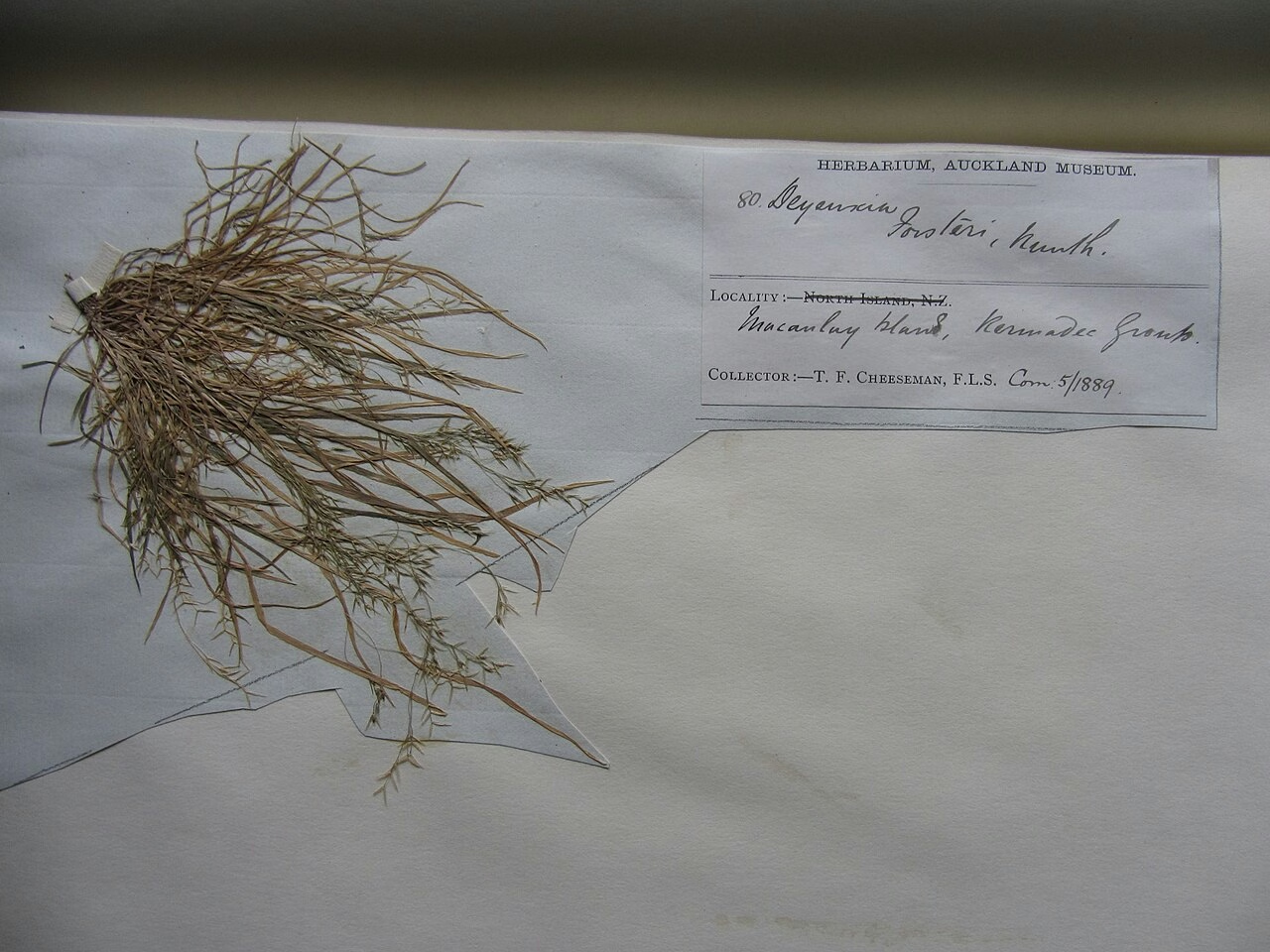
Coastal Wind Grass
Lachnagrostis littoralis subsp. littoralis
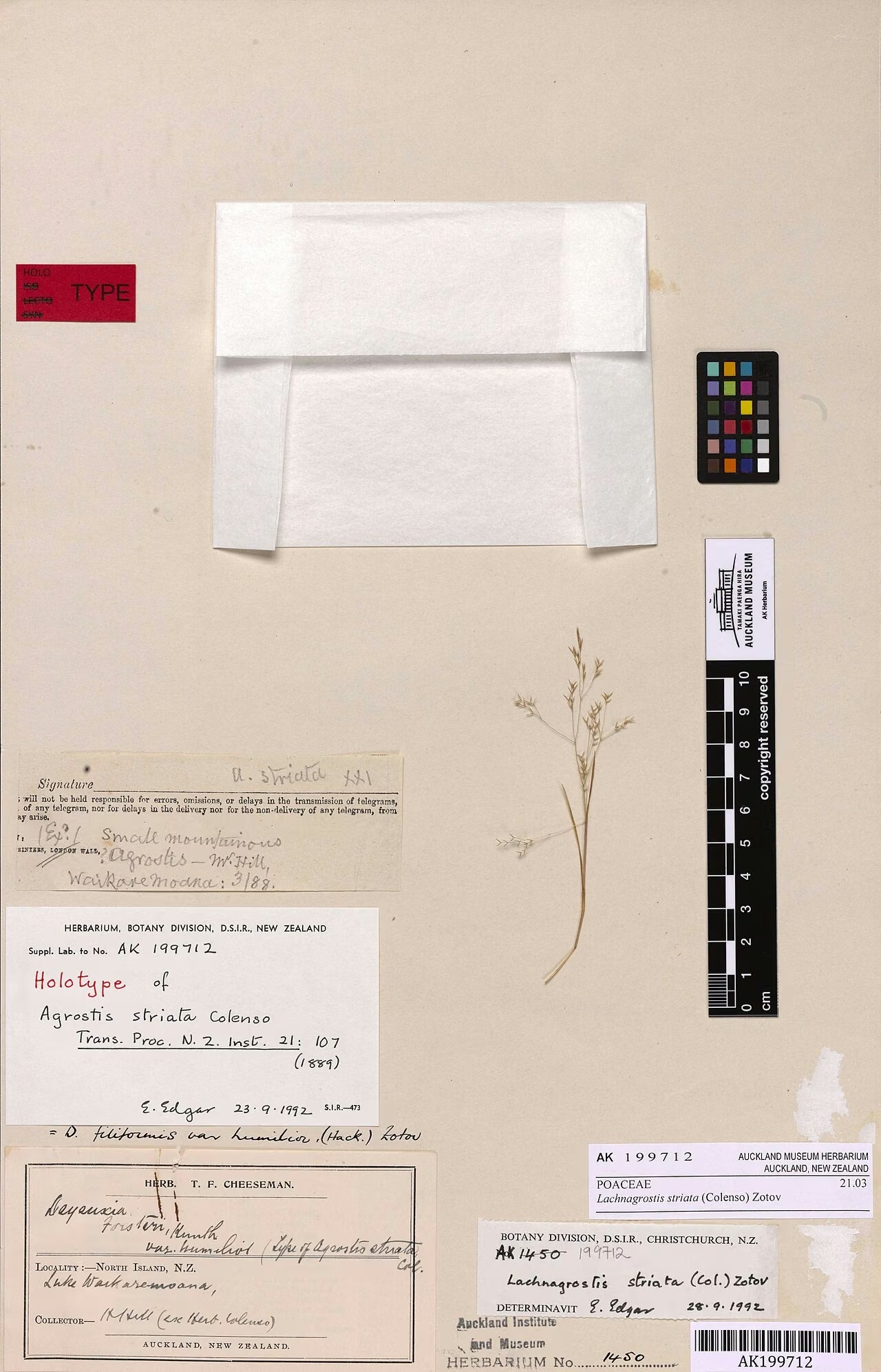
Purple Wind Grass
Lachnagrostis striata
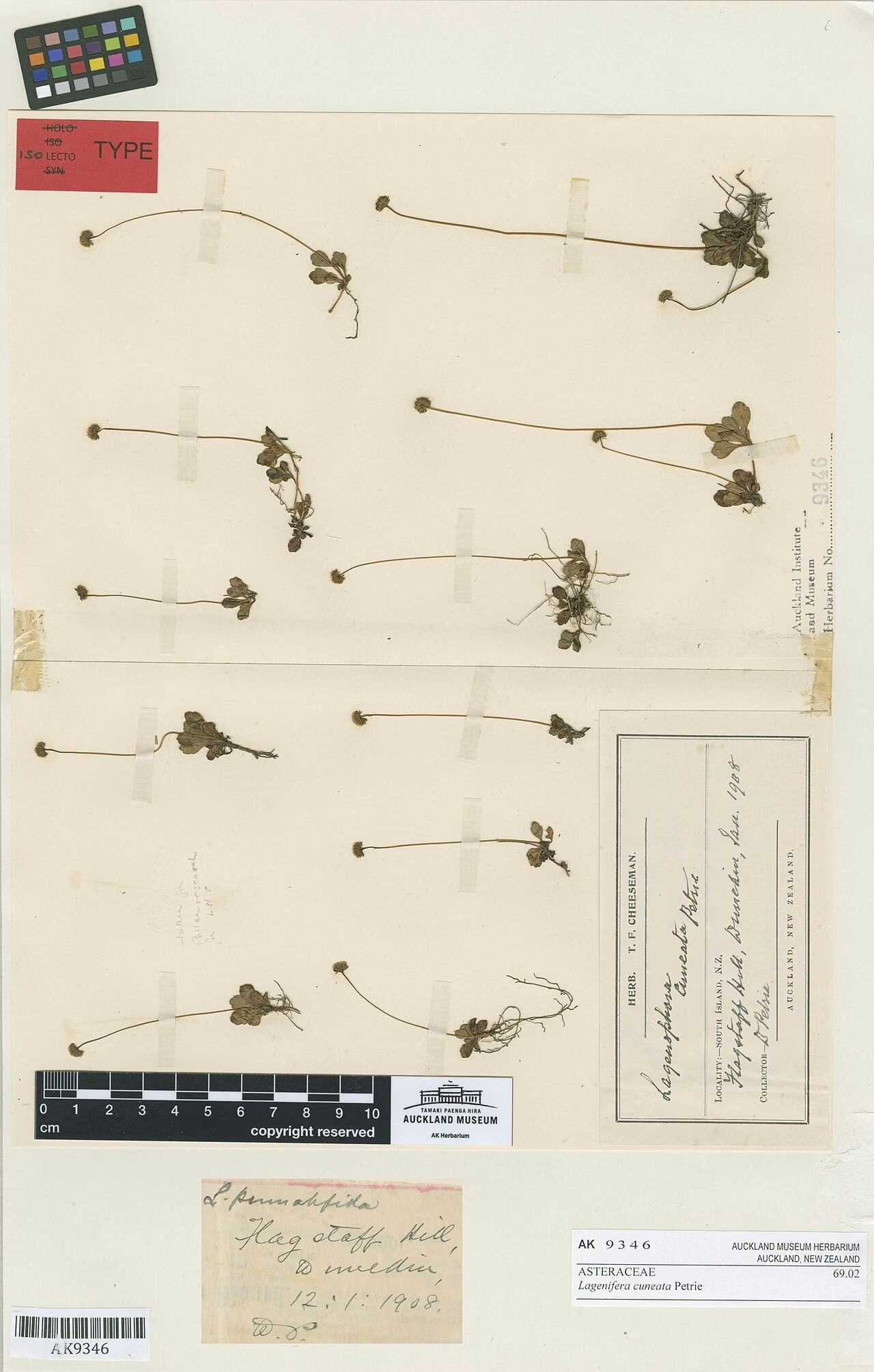
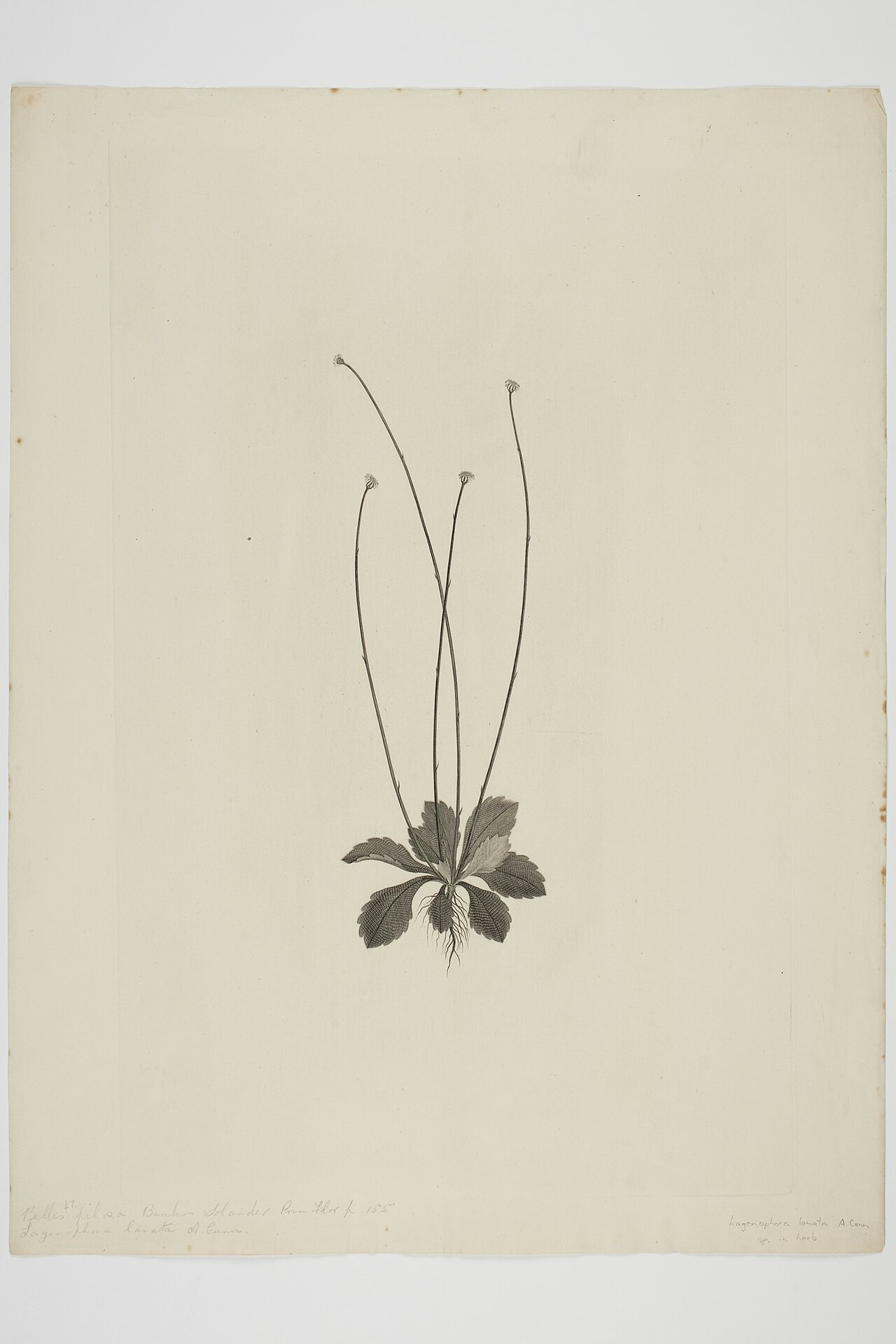
Lagenophora cuneata
Lagenophora cuneata
Lagenophora sublyrata
Lagenophora sublyrata
Velvet Fern
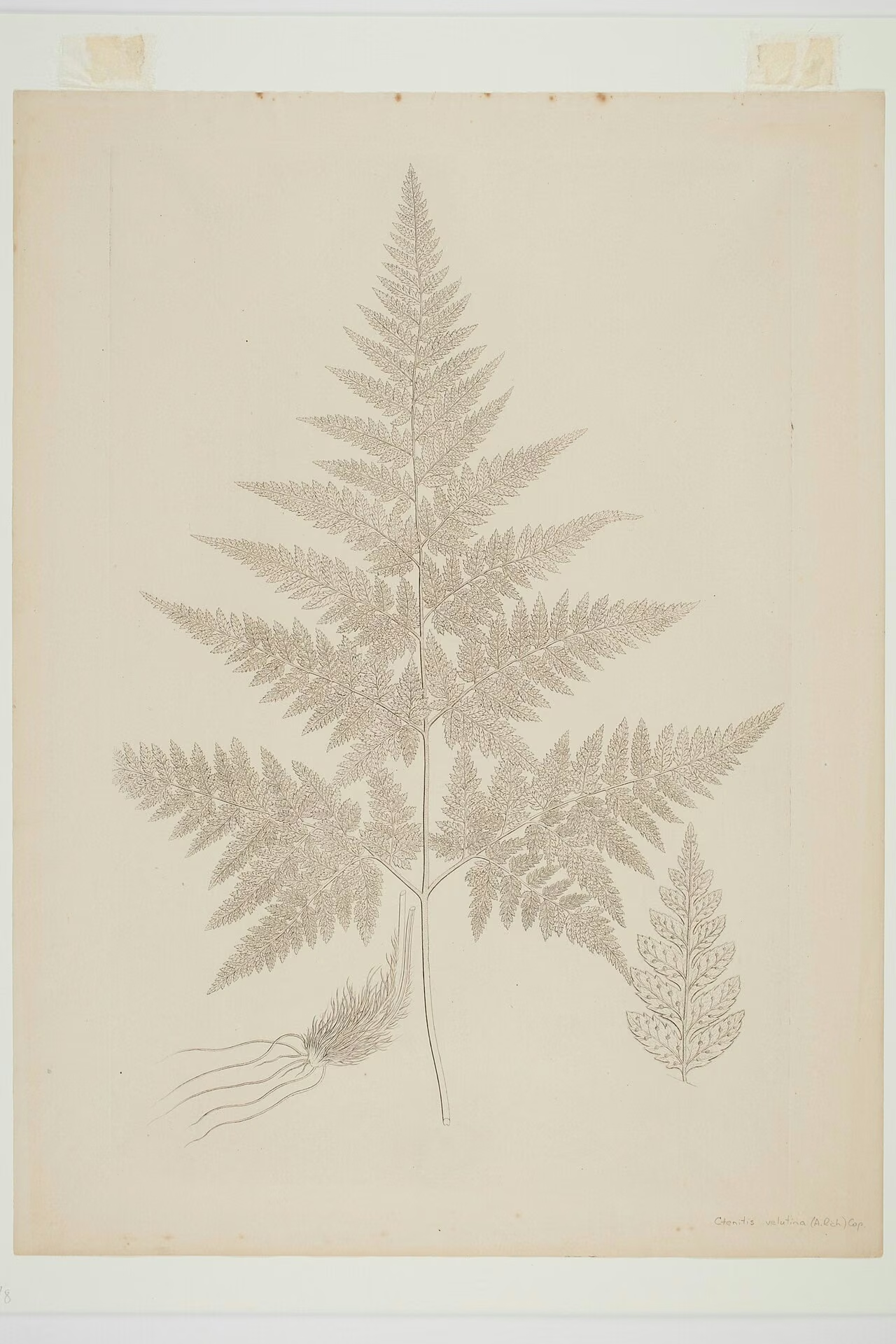
Lastreopsis velutina
Mairehau
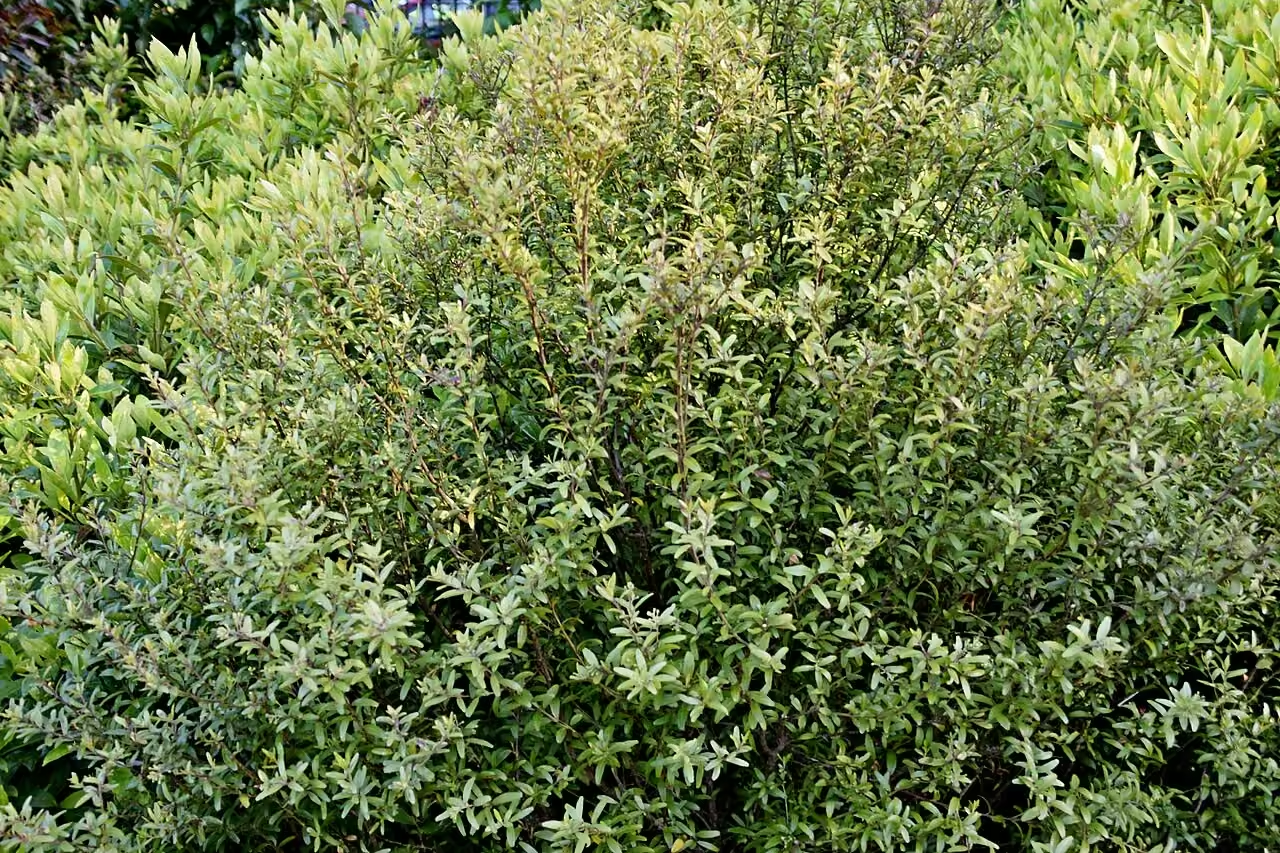
Leionema nudum
Veronica quadrifaria
Veronica quadrifaria
Pinnatifida Plant
Pinnatifida Plant
Plant Conservation
Lagenophora petiolata is ranked Not Threatened, an assessment unchanged since 2004. Regionally it is Not Threatened in Otago but Regionally Naturally Uncommon in Wellington.
It benefits from the protection of open grassland, forest margins and shrubland from weed invasion, and from leaving native turfs unmown or lightly grazed.
Frequently Asked Questions
What does petiolata mean in Lagenophora petiolata?
It means having leaf stalks. This species has distinctly long petioles, 10 to 30 mm long, which hold its rounded leaves above the ground.
Did Māori use Lagenophora petiolata?
Ngā Tipu Whakaoranga records the name parani for it, with its sap used for an abscessed tooth (Goldie 1904) and for an ulcerated mouth (Best 1906).
How is Lagenophora petiolata different from Lagenophora pumila?
Lagenophora petiolata has leaves on longer stalks with sparse, distinctly pointed teeth, smaller heads 5 to 10 mm across and curved seeds, while L. pumila has stiffly hairy, round-toothed leaves and larger heads 10 to 15 mm across.
Where does papataniwhaniwha grow?
Lagenophora petiolata occurs from about latitude 37° southwards through the North, South and Stewart Islands, in open shrubland, light forest, grassland and open places from lowland to subalpine.
Sources and Further Reading
The botanical, growing, and conservation details for Papataniwhaniwha (Lagenophora petiolata) on this page draw on the New Zealand plant references below. Consult them for full technical records and the latest distribution data.