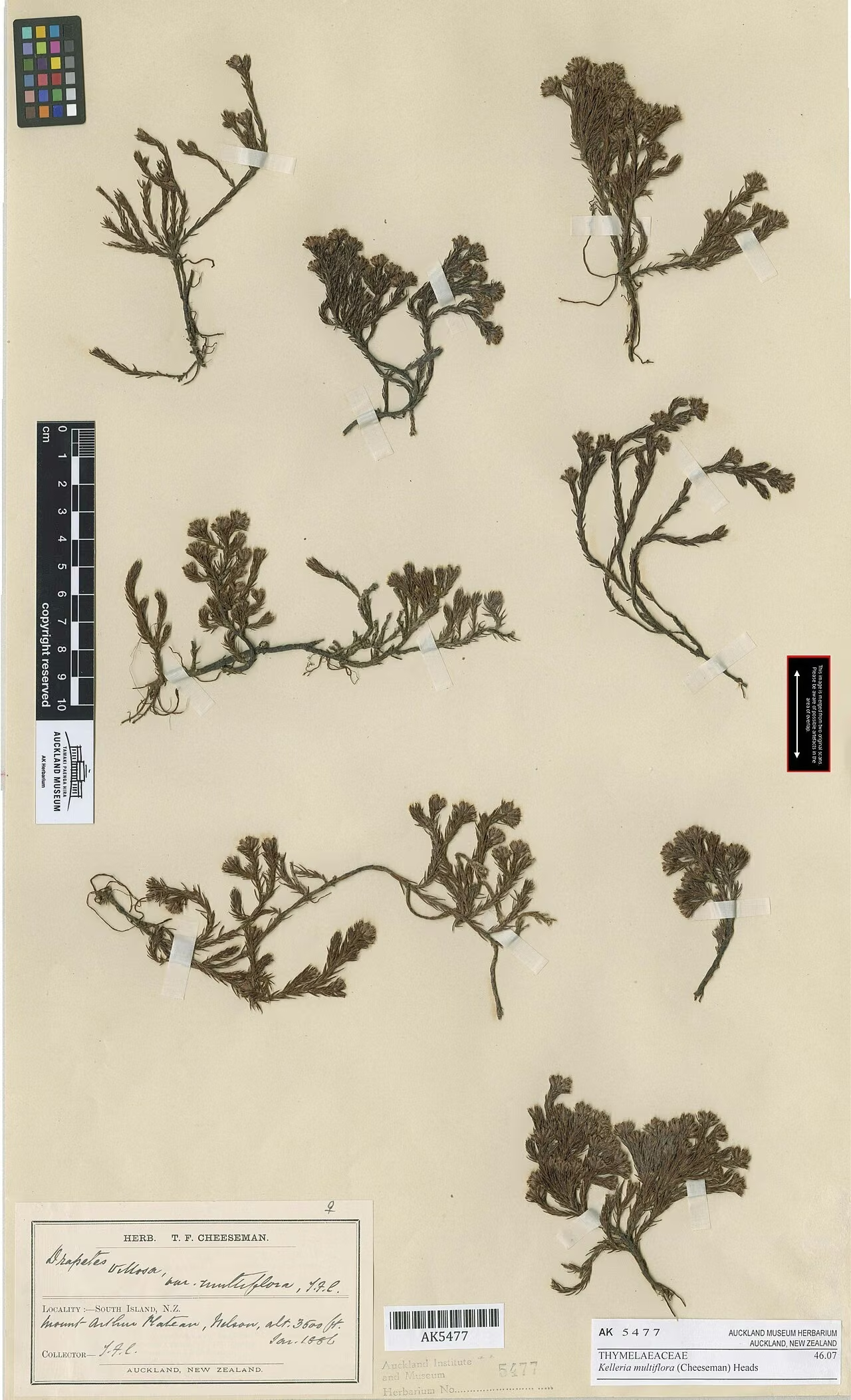
Kelleria
Kelleria multiflora
Last updated:
Kelleria multiflora is a low, mat-forming woody subshrub in the daphne family (Thymelaeaceae), endemic to New Zealand. Its robust prostrate stems build lax mats 30 cm or more across, and the branchlets are densely clothed in white to greyish hairs, giving the plant a silvery look. Narrow leaves 4 to 7 mm long stand erect and overlap closely, and the shoot tips carry heads of five to fifteen small white flowers, more than other Kelleria, hence the name multiflora. It grows in subalpine grassland and scrub, with records from the Nelson mountains to Arthur's Pass and Craigieburn. It is ranked Not Threatened. Explore more native ground covers in our native plant guide.
Plant Description
Kelleria multiflora forms low, lax mats up to 30 cm or more across. Its stems and branches are prostrate and robust, and the younger branchlets are densely covered in white to greyish hairs, which is one of its most obvious features.
The leaves are erect and densely imbricate (overlapping like roof tiles), linear-lanceolate, 4 to 7 mm long and only 0.5 to 1 mm wide, with fringed (ciliate) margins. Flowers are crowded in heads of five to fifteen at the branch tips. Each white flower has a villous perianth tube about 2 to 3 mm long. Like other Kelleria, the fruit is a small single-seeded structure that NZPCN suggests may be wind dispersed.
Other New Zealand Kelleria have fewer flowers per head, usually three to eight. K. dieffenbachii has short 2.5 to 3.5 mm leaves and smooth branchlets, and K. laxa has wider 1 to 1.5 mm leaves with a rounded, hair-tufted tip. K. villosa, the species it was once placed under as a variety, is a separate taxon.
Quick Facts
| Scientific Name | Kelleria multiflora |
|---|---|
| Height | A few centimetres; low mats |
| Spread | Mats 30 cm or more across |
| Water Needs | Moist, well-drained |
| Light | Full sun to light shade |
| Frost Tolerance | High; subalpine species |
| Salt Tolerance | Low; a mountain plant |
| Growth Rate | Slow |
| Lifespan | Long-lived perennial |
Climate Best Suited to
Suited to cold, moist subalpine climates with frosty winters and snow; it is not adapted to warm, humid lowlands.
Regional Suitability
| City | Climate Suitability |
|---|---|
| Auckland | Low |
| Wellington | Low |
| Christchurch | Medium |
| Dunedin | Medium |
Plant Habitat
Kelleria multiflora is endemic to New Zealand. The type comes from the Mount Arthur Plateau, and herbarium and iNaturalist records come mainly from the northern and central South Island: Kahurangi National Park and the Tasman mountains, Mount Richmond Forest Park, Marlborough, the Matakitaki Valley in Nelson Lakes, Buller, Grey and Westland, and Canterbury around Arthur's Pass and Broken River.
Its habitat is subalpine grassland, where it grows among tussocks and low herbs, and some specimens come from subalpine scrub from about 1100 m.
Growing Requirements
Soil Requirements
Grows in stony, humus-rich subalpine soils that stay moist but drain freely.
- Gritty, free-draining mix with some organic matter
- Avoid heavy clay and standing water
- No fertiliser needed
Light Requirements
A plant of open subalpine grassland, receiving full light but cool temperatures.
- Full sun in cool gardens
- Light shade in warmer areas
Water Requirements
It needs reliable moisture through summer but resents wet, cold soil in winter.
- Water in dry periods
- Ensure winter drainage
Planting and Establishing
Grow it in a trough, raised scree bed or alpine house, using a gritty, humus-rich mix. Place it where the mat can spread over flat stones that keep the roots cool.
Plant in spring in cold districts so it can establish before winter, and top-dress with grit to keep the hairy foliage off wet soil.
Ecological Role
Its many-flowered white heads provide small nectar sources in the short subalpine summer, though pollinators have not been specifically studied. NZPCN notes that Kelleria fruits are possibly dispersed by wind.
The low mats form part of the inter-tussock ground layer, helping to bind thin soils on subalpine slopes and tablelands.
Uses & Significance
Garden Uses
An attractive alpine for enthusiasts, valued for its silvery hairy shoots.
- Troughs and alpine house pans
- Scree gardens in cool regions
- Native alpine plant collections
Ecological Value
An endemic part of the South Island subalpine mat flora.
- Endemic to New Zealand
- Nectar for small alpine insects
- Ground cover between tussocks
Landscaping Uses
The silvery hairy shoots contrast well with green cushion plants and dark stones in a trough or scree bed. Use it alongside other subalpine natives such as small Celmisia, Raoulia and dwarf tussocks.
Because the mat is lax, it looks best spreading over a flat stone or the edge of a trough rather than as a groundcover over open soil.
Seasonal Care Calendar
Spring
New shoots appear and the mat expands.
- Repot or plant out
- Begin regular watering
Summer
Heads of up to fifteen white flowers open at the branch tips.
- Keep roots cool
- Shade pots in hot weather
Autumn
Fruits ripen after flowering.
- Sow fresh seed
- Take late summer cuttings
Winter
The plant is dormant and often under snow in the wild.
- Keep dry in pots
- Protect from rain-soaked soil
When to Prune and How Much
No routine pruning is required. Snip out any dead branchlets in spring.
Avoid heavy trimming, which this slow-growing plant replaces only gradually.
How to Grow Kelleria
No propagation notes specific to Kelleria multiflora are published by NZPCN. Approaches used for other alpine Kelleria are fresh seed sown as soon as ripe, cuttings in late summer and detaching stems that have rooted where they lie on the ground. All need a gritty mix and cool, humid conditions while roots form. Collect wild material only with permission, and only small amounts from any one plant.
From Seed
Fresh seed is preferable because the viability of stored Kelleria seed is not documented. Sowing in autumn and leaving the tray outdoors exposes it to natural winter cold, which many alpine plants respond to.
- Collect ripe fruit from the flower heads in late summer or autumn.
- Sow straight away on a gritty seed mix.
- Cover thinly with fine grit.
- Keep the tray in a cool, sheltered spot outdoors and keep it moist.
- Be patient, as germination may not occur until spring.
- Pot seedlings singly when they have several leaves.
From Cuttings and Rooted Stems
Short shoot cuttings taken in late summer can root in a pumice-based mix. Pieces of prostrate stem that have already rooted give quicker results.
- Take 2 to 4 cm non-flowering shoot tips.
- Remove the lower leaves carefully, as the hairy stems bruise easily.
- Insert into a mix of pumice and fine bark and keep shaded and humid.
- Pot on when new growth shows roots have formed.
- For rooted stems, sever the section from the parent and pot with its roots intact.
Pests & Diseases
No specific pests or diseases are recorded. Wet winter soil leading to rot is the main problem in cultivation, and the hairy foliage can rot if it sits on damp mix.
Slugs and snails can graze young shoots, and plants may decline in hot, humid summers away from the mountains.
Cultural Significance
No Māori name or traditional use is recorded for Kelleria multiflora in the sources consulted.
Thomas Cheeseman described it as Drapetes villosa var. multiflora in his 1906 Manual of the New Zealand Flora from Mount Arthur Plateau material. Harry Allan raised it to species rank as Drapetes multiflorus in 1961, and Michael Heads transferred it to Kelleria in 1990.
Bonus Tip
Count the flowers. When a Kelleria in flower has heads of more than about eight flowers and its branchlets look silvery-white with hairs, it is very likely K. multiflora; this is the quickest field check in the northern South Island mountains, where several Kelleria species grow together.
Related Plants
Explore other native plants that share similar characteristics or habitats with Kelleria (Kelleria multiflora), offering further insights into New Zealand's diverse flora. These related species provide context and opportunities for complementary planting in your garden.
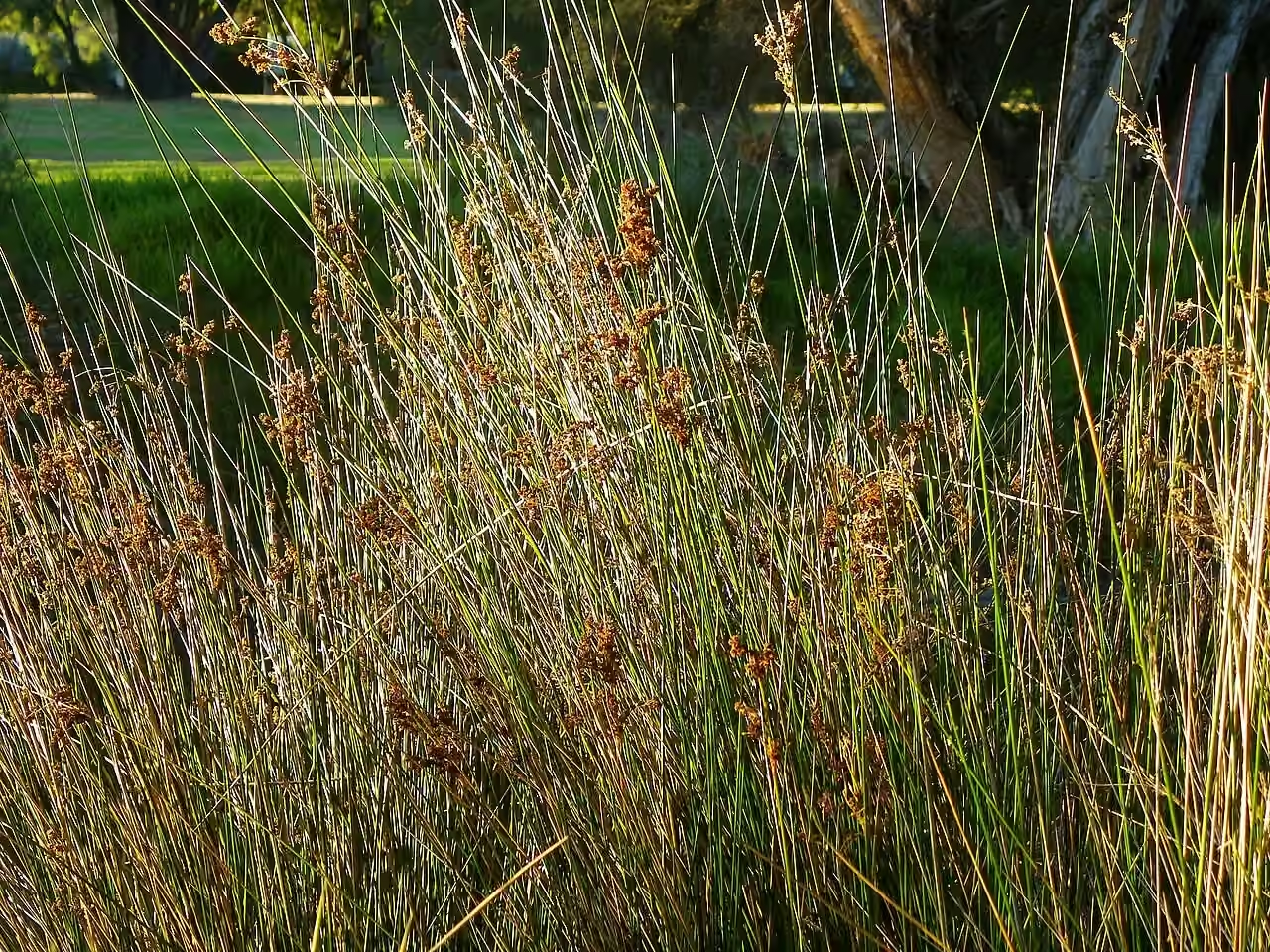
Giant Rush
Juncus pallidus
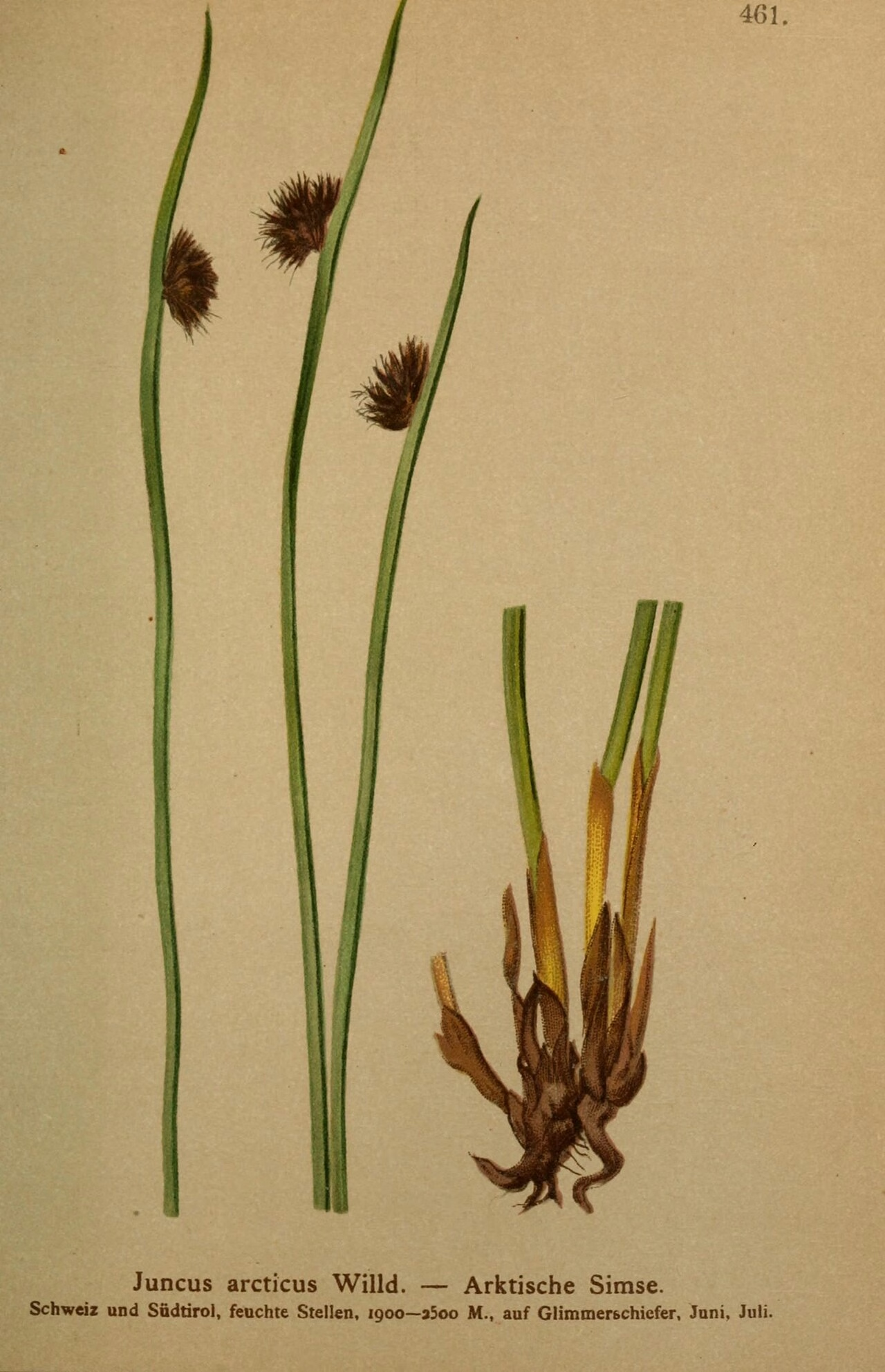
Leafless Rush
Juncus pauciflorus
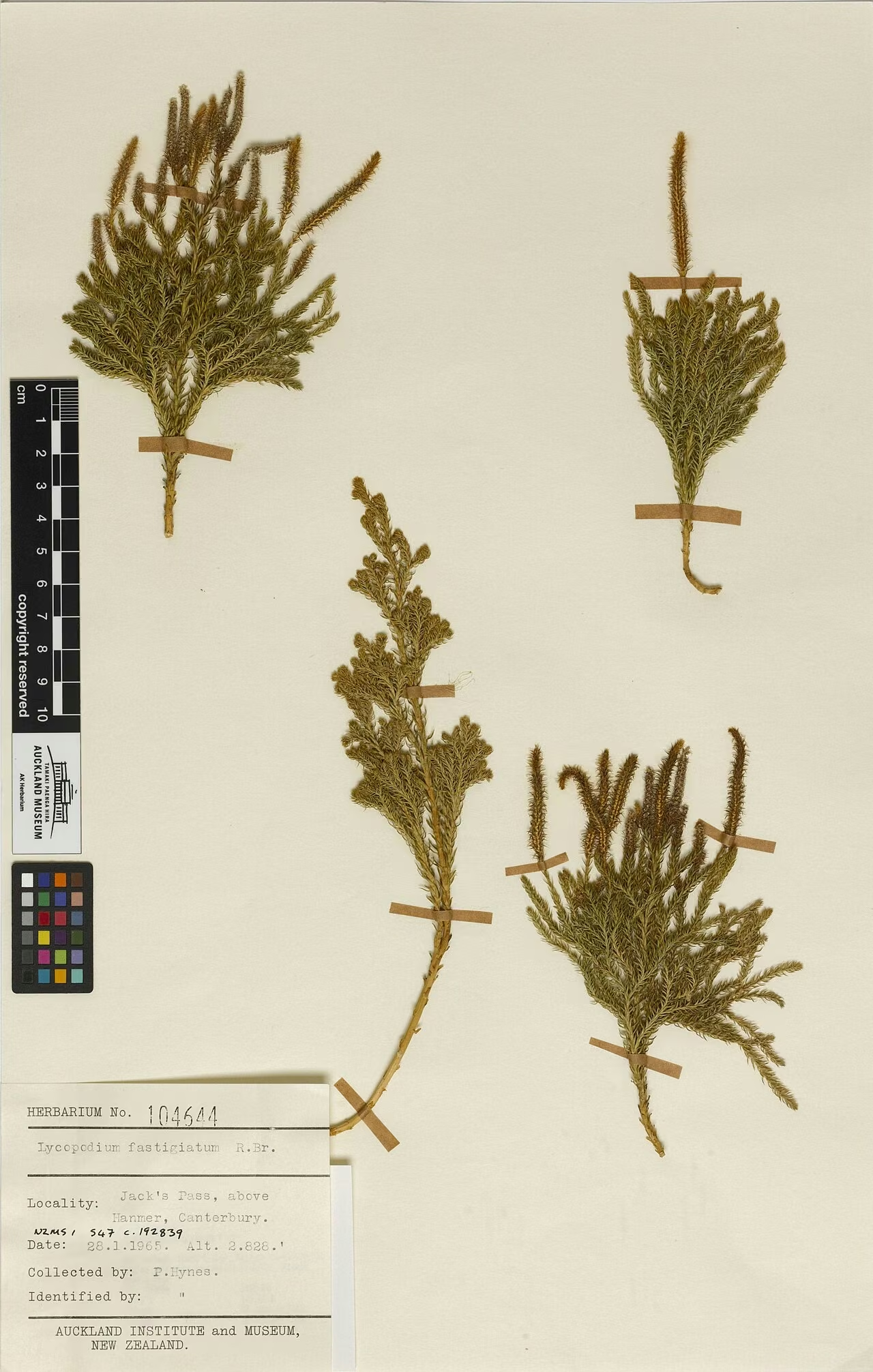
Alpine Kelleria
Kelleria dieffenbachii
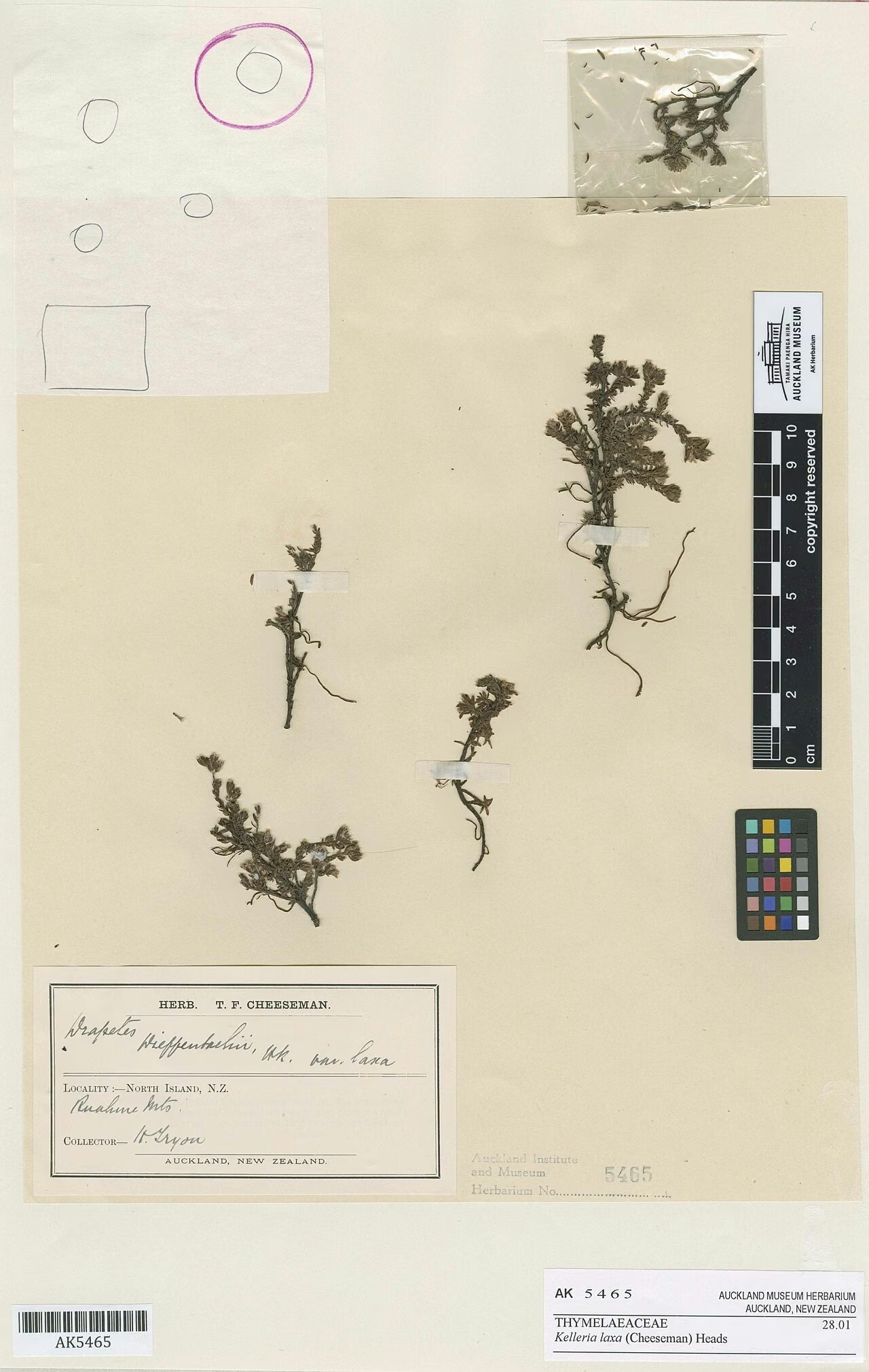
Kelleria laxa
Kelleria laxa
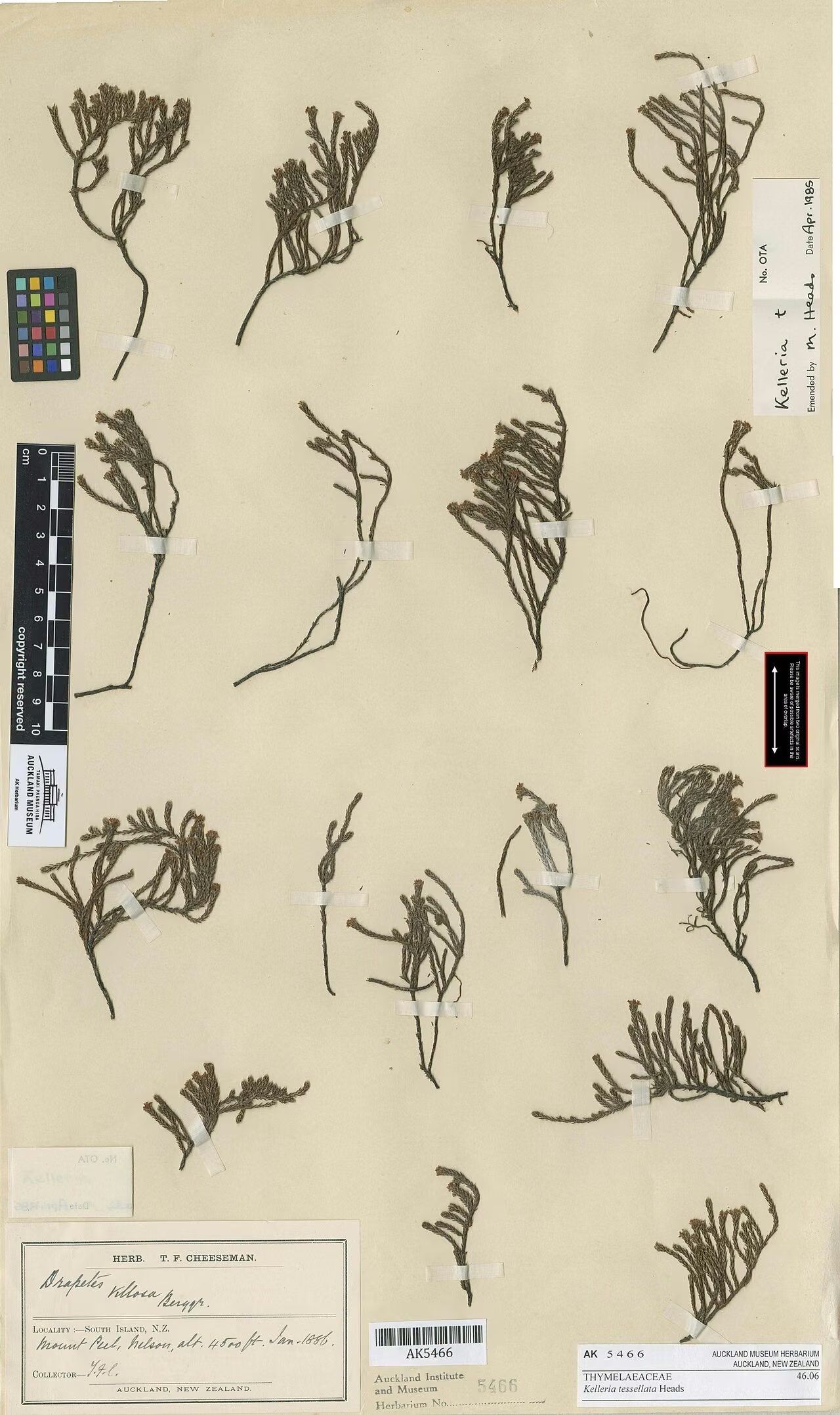
Kelleria tessellata
Kelleria tessellata
Koeleria cheesemanii
Koeleria cheesemanii
Lachnagrostis elata
Lachnagrostis elata
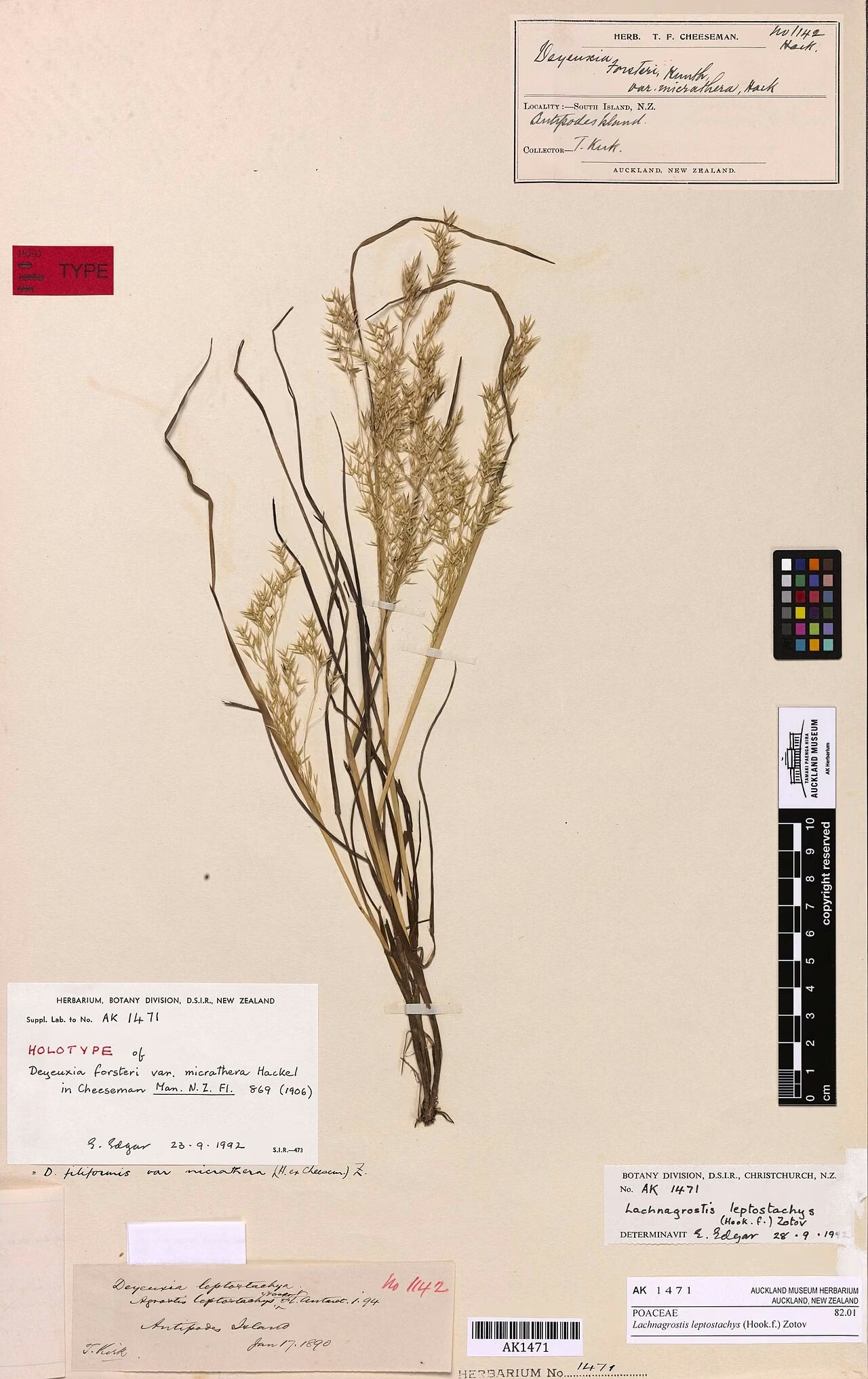
Lachnagrostis leptostachys
Lachnagrostis leptostachys
Plant Conservation
Kelleria multiflora has been ranked Not Threatened in every assessment since 2004.
Much of its range lies within Kahurangi, Nelson Lakes and Arthur's Pass National Parks and Mount Richmond Forest Park. General pressures on subalpine mat plants include weed invasion of tussock grassland and browsing by introduced animals.
Frequently Asked Questions
Why is it called Kelleria multiflora?
Multiflora means bearing many flowers. Its flower heads hold five to fifteen flowers, compared with three to eight in Kelleria dieffenbachii and Kelleria laxa.
How can you identify Kelleria multiflora?
Look for densely white or greyish hairy branchlets, erect, tightly overlapping linear-lanceolate leaves 4 to 7 mm long with fringed margins, and white flower heads with five to fifteen flowers.
Where was Kelleria multiflora first collected?
The type specimen came from the Mount Arthur Plateau in north-west Nelson, now in Kahurangi National Park, and Cheeseman named it Drapetes villosa var. multiflora in 1906.
Sources and Further Reading
The botanical, growing, and conservation details for Kelleria (Kelleria multiflora) on this page draw on the New Zealand plant references below. Consult them for full technical records and the latest distribution data.