Alpine Kelleria
Kelleria dieffenbachii
Last updated:
Alpine kelleria (Kelleria dieffenbachii) is a tiny woody subshrub in the daphne family, Thymelaeaceae, that forms dense to loose mats about 25 cm across and only a few centimetres high. Its prostrate rooting stems carry minute, leathery leaves 2.5 to 3.5 mm long and small heads of three to eight white flowers in summer. It grows in montane to alpine grassland, herbfield and fellfield on the North, South and Stewart Islands and also in Australia and New Guinea. It is the type species of the genus and is ranked Not Threatened. Explore more native ground covers in our native plant guide.
Plant Description
Kelleria dieffenbachii forms dense to lax patches up to 25 cm or more across. Its stems and branches are prostrate and root as they spread, reaching up to 3 mm in diameter, and the short branchlets are smooth (glabrous). The whole plant is usually only a few centimetres tall.
The leaves are erect, closely set and only 2.5 to 3.5 mm long, tapering and concavo-convex in cross section, so they look like tiny overlapping scoops along the shoots. Flowers are borne in heads of three to eight at the shoot tips. Each white flower has a hairy perianth tube about 1.5 to 2.5 mm long, and flowers may be unisexual or bisexual on the same plant. The fruit is small and ovoid, about 1.5 mm long.
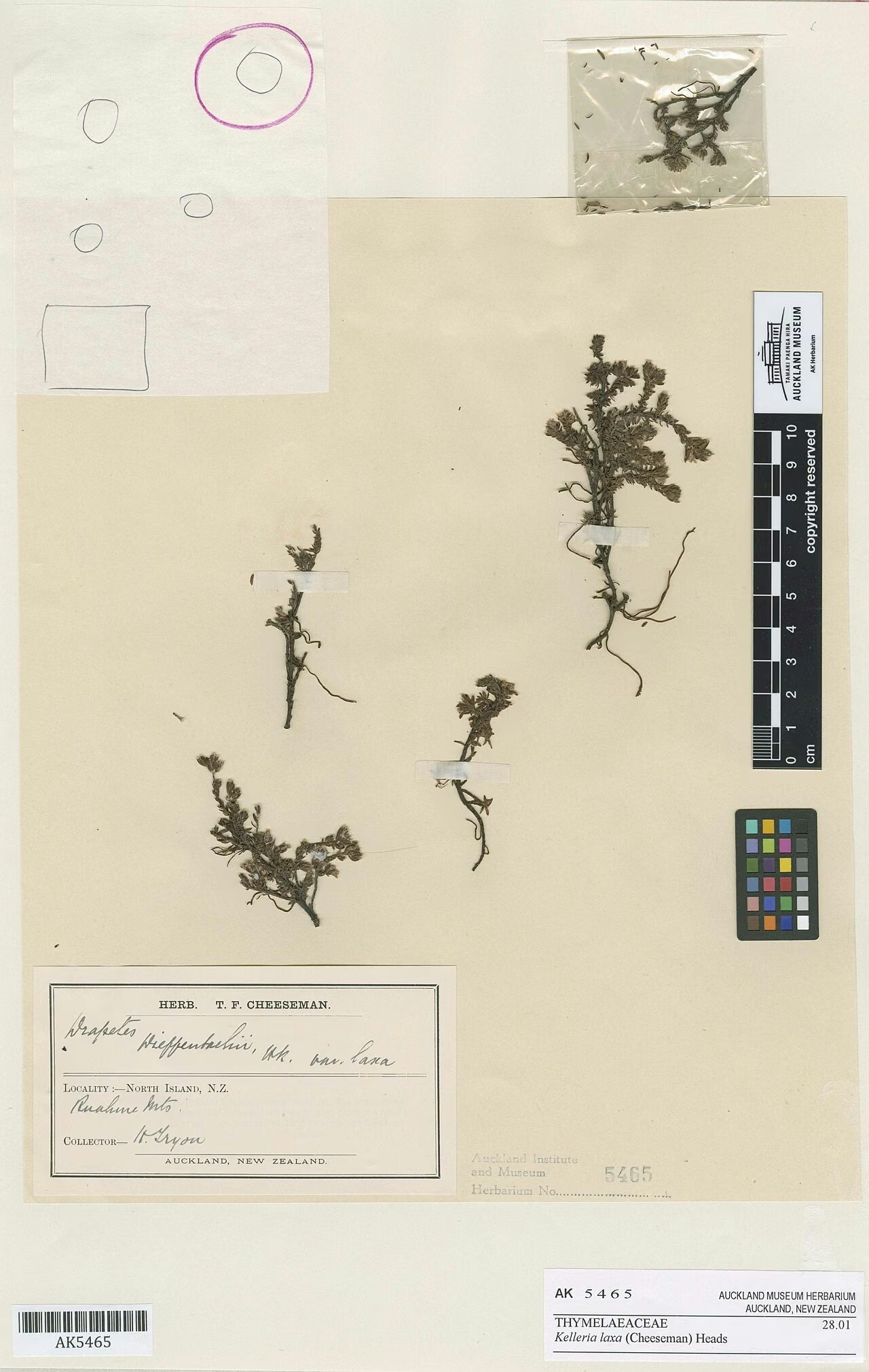
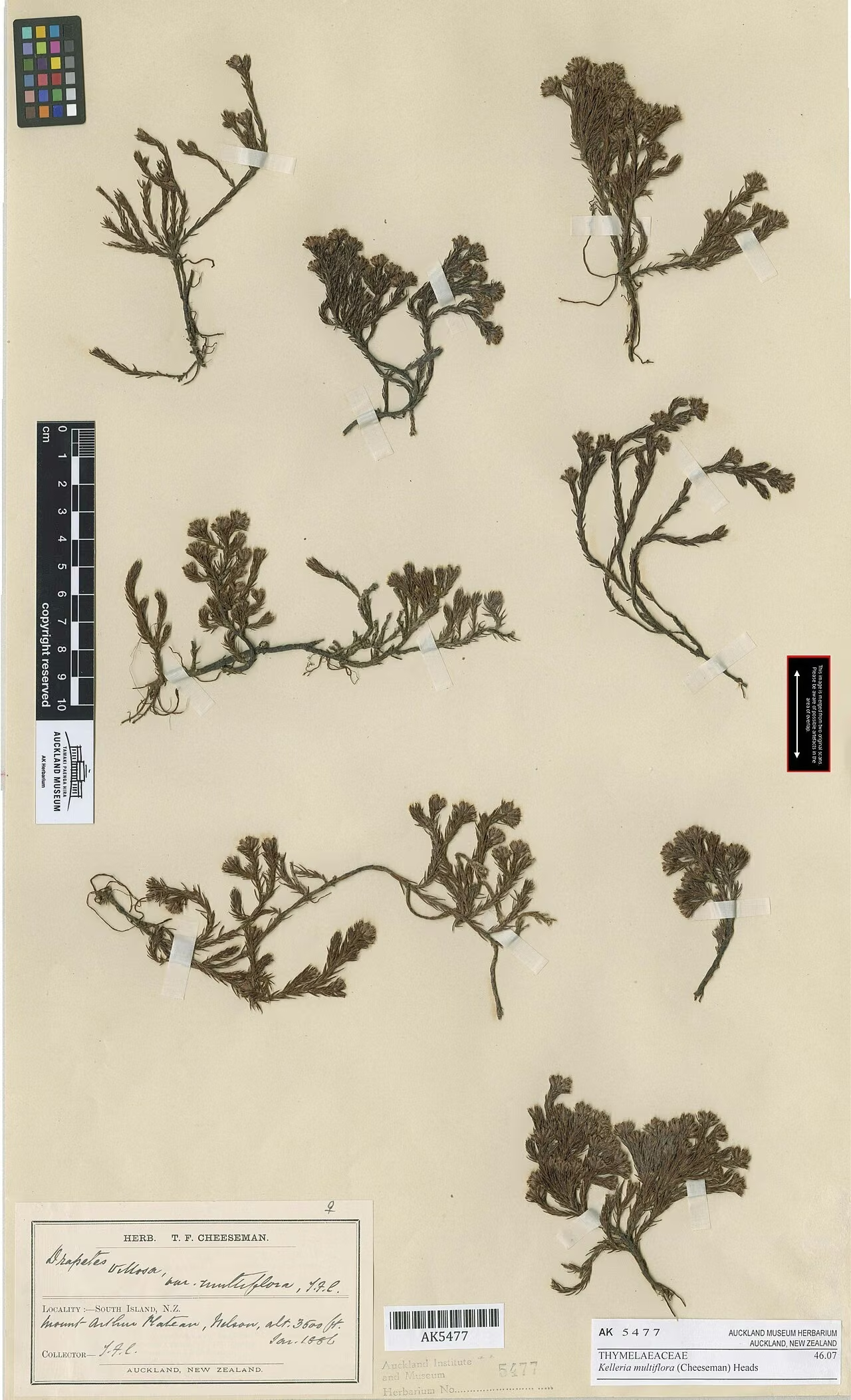
Several Kelleria species grow in New Zealand mountains and are easily confused. K. laxa has longer, linear to elliptic-oblong leaves 4 to 5 mm long, and K. multiflora has 4 to 7 mm leaves, densely white or grey hairy branchlets and five to fifteen flowers per head. The short, scoop-shaped leaves and smooth branchlets point to K. dieffenbachii.
Quick Facts
| Scientific Name | Kelleria dieffenbachii |
|---|---|
| Height | 2-5 cm |
| Spread | Patches about 25 cm or more across |
| Water Needs | Moist but sharply drained |
| Light | Full sun to light shade |
| Frost Tolerance | High; alpine species |
| Salt Tolerance | Low; not a coastal plant |
| Growth Rate | Slow |
| Lifespan | Long-lived perennial |
Climate Best Suited to
Suits cold, exposed montane to alpine climates with cool summers, winter snow and frost; it does poorly in warm, humid lowland conditions.
Regional Suitability
| City | Climate Suitability |
|---|---|
| Auckland | Low |
| Wellington | Low |
| Christchurch | Medium |
| Dunedin | Medium |
Plant Habitat
In New Zealand alpine kelleria is recorded from the North Island (the type came from Mt Egmont/Taranaki and Colenso described Drapetes macrantha from the Ruahine Range), the South Island and Stewart Island/Rakiura, with possible records from the Chatham and Auckland Islands. Outside New Zealand it is reported from the Australian Alps, including Kosciuszko National Park, Tasmania and the New Guinea highlands above 3000 m.
It grows in subalpine and alpine grassland, herbfield and fellfield, preferring drier and better-drained sites than some relatives. It colonises gravelly ground and is occasionally found on Sphagnum peat, often among Chionochloa tussock and near the shrubby edges of subalpine scrub with Dracophyllum and Olearia.
Growing Requirements
Soil Requirements
It naturally grows in thin, stony, well-drained mineral soils and gravels, sometimes on peat.
- Gritty mix with fine gravel, coarse sand or pumice
- Sharp drainage is essential
- Low fertility; no fertiliser needed
Light Requirements
An open-country plant that grows in full sun among low tussock and herbs.
- Full sun in cool climates
- Light afternoon shade in warmer districts
Water Requirements
It needs steady moisture at the roots but cannot tolerate waterlogging.
- Water regularly while establishing
- Never leave pots standing in water
Planting and Establishing
Plant into a trough, scree bed or raised alpine bed filled with a gritty, free-draining mix, ideally in autumn or early spring in cold districts. Tuck the plant between stones so its rooting stems can spread over cool ground.
Top-dress with fine gravel to keep the crown dry and the roots cool. In lowland North Island gardens it is best kept in an alpine house or shaded trough rather than open ground.
Ecological Role
The small, tubular white flowers appear from spring through summer and are likely visited by small insects such as flies and native bees, although specific pollinators have not been documented. NZPCN notes that its fruits are possibly wind dispersed.
Its low, rooting mats help bind gravel and fine soil in fellfield and herbfield, forming part of the low woody cushion layer between tussocks.
Uses & Significance
Garden Uses
A choice plant for alpine enthusiasts rather than general gardens.
- Troughs and alpine house pots
- Scree beds and rock gardens in cool regions
- Miniature native plant collections
Ecological Value
As a widespread native alpine subshrub it contributes to the mat and cushion flora of mountain grasslands.
- Helps stabilise gravelly alpine ground
- Provides small nectar flowers in a short alpine season
Landscaping Uses
Use it to soften the edges of rocks in a trough or scree garden, where its tiny leaves and white flower heads can be appreciated at close range. Combine it with other small alpines such as Raoulia and dwarf Celmisia that share its need for sharp drainage.
It is too small and slow for groundcover over large areas, but a few plants spreading between stones give a natural alpine look.
Seasonal Care Calendar
Spring
New growth begins as snow melts; flowering can start in spring in some districts.
- Begin watering pots
- Check drainage after winter
Summer
The main flowering season, with heads of small white flowers from about December to February.
- Keep roots cool and moist
- Shade troughs in hot weather
Autumn
Flowering can continue into autumn in New Zealand, followed by small fruits.
- Collect ripe fruit for sowing
- Take cuttings in late summer to early autumn
Winter
Plants sit dormant under snow or frost in the wild.
- Protect from winter wet
- Little water needed
When to Prune and How Much
No pruning is needed. Remove any dead shoots carefully with fine scissors.
If a mat becomes bare in the centre, top-dress with gravel and allow the rooting stems around the edge to fill back in.
How to Grow Alpine Kelleria
No propagation protocol specific to Kelleria dieffenbachii is recorded by NZPCN. Growers of related Kelleria species recommend sowing seed as soon as it is ripe or taking cuttings in late summer, and because the stems root where they touch the ground, rooted pieces can also be separated. All alpine Kelleria are slow and appreciate cool, gritty conditions while young. Collect only small amounts from wild plants and only where you have permission.
From Seed
Seed should be sown fresh, as soon as the small fruits are ripe in late summer or autumn. A period of winter cold outdoors may help germination, as it does for many alpine plants, although this has not been tested for this species.
- Collect ripe fruits from the flower heads.
- Sow on a gritty seed mix and cover lightly with fine grit.
- Leave the tray outdoors in a cool, sheltered spot over winter.
- Keep the mix moist but never waterlogged.
- Pot seedlings individually once they have several leaves.
From Cuttings and Rooted Layers
Short cuttings of the current season's shoots taken in late summer can be rooted in a gritty mix. The prostrate stems also root naturally, so layered pieces are an easy option.
- Take cuttings 2 to 3 cm long from healthy shoots in late summer.
- Strip leaves from the lower half and insert into a mix of pumice and fine bark.
- Keep in a cool, shaded, humid spot until roots form.
- Alternatively, cut a stem that has already rooted and pot it up with its own roots.
- Grow on in a gritty mix before planting out.
Pests & Diseases
No specific pests or diseases are recorded. In cultivation the most common causes of loss are root rot from wet, poorly drained mixes and stress in hot, humid weather.
In pots, slugs and snails may graze the small shoots, and moss or liverwort can smother the mat if the surface stays damp; a gravel top-dressing helps prevent both.
Cultural Significance
No Māori name or traditional use is recorded for Kelleria dieffenbachii in the sources consulted.
The species was described by William Jackson Hooker from material collected on Mt Egmont/Taranaki in 1839 and is named after Ernst Dieffenbach, the German naturalist who explored the mountain for the New Zealand Company. It is the type species of Kelleria.
Bonus Tip
To confirm you have K. dieffenbachii rather than K. laxa, look closely with a hand lens at a few leaves: if they are under about 3.5 mm long, cupped like tiny scoops and the branchlets between them are smooth, you are almost certainly looking at alpine kelleria.
Related Plants
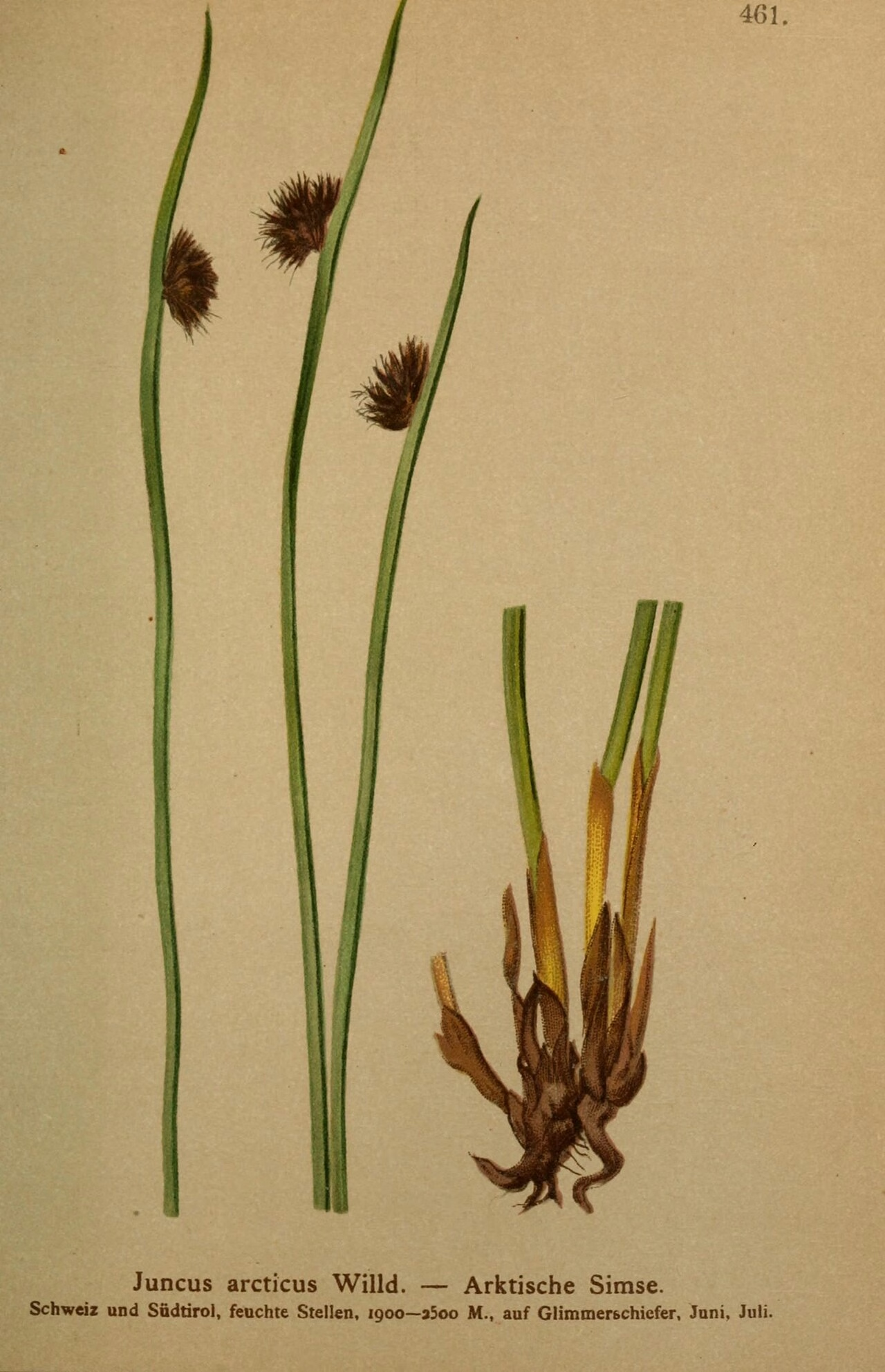
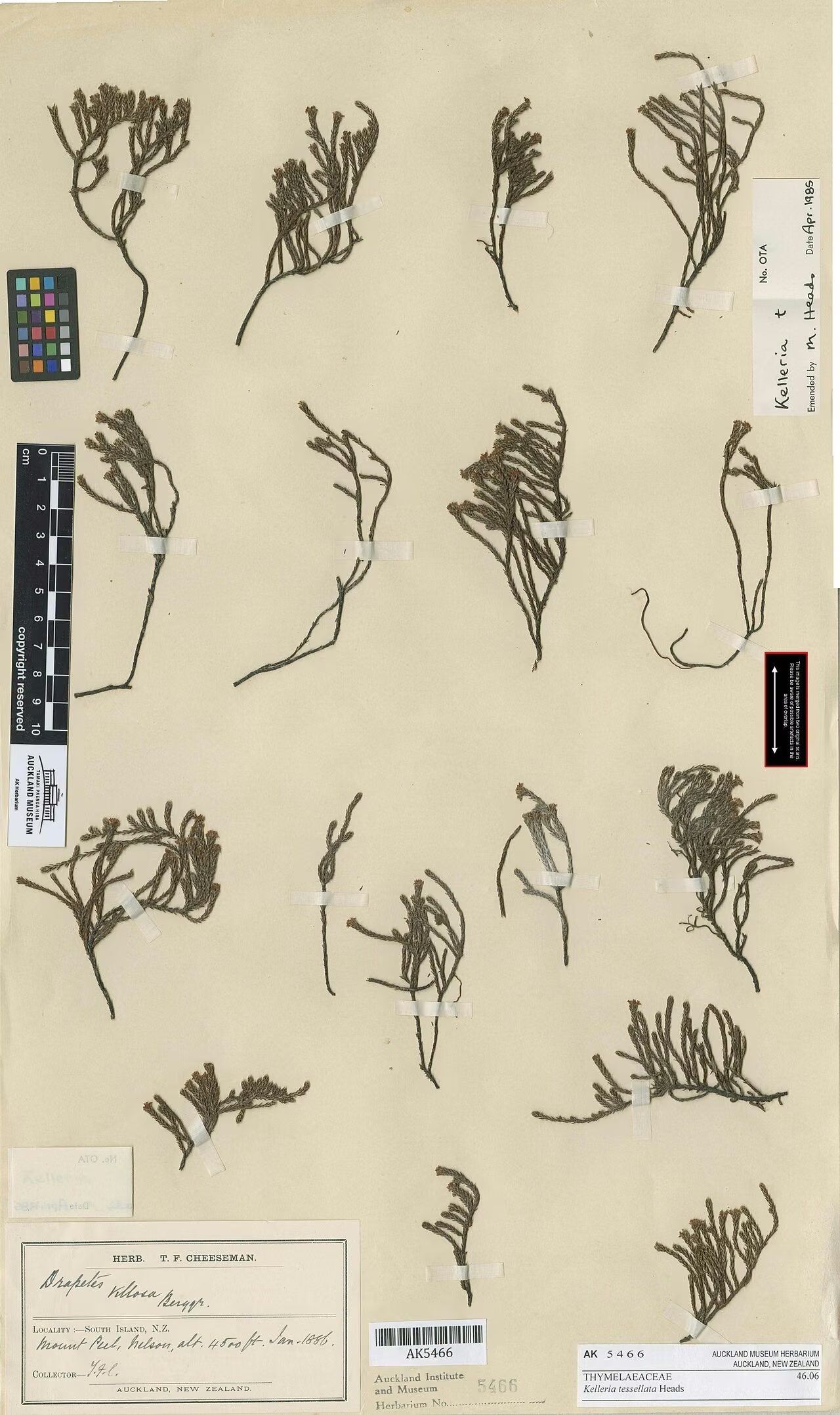
Explore other native plants that share similar characteristics or habitats with Alpine Kelleria (Kelleria dieffenbachii), offering further insights into New Zealand's diverse flora. These related species provide context and opportunities for complementary planting in your garden.
Plant Conservation
Kelleria dieffenbachii has been ranked Not Threatened in every New Zealand assessment since 2004, and is regionally Not Threatened in Otago and Wellington.
Its alpine habitats are largely within conservation land. Weed invasion, such as wilding conifers and introduced grasses, and trampling around popular alpine tracks are general pressures on the mat flora it belongs to.
Frequently Asked Questions
What family does Kelleria dieffenbachii belong to?
It belongs to Thymelaeaceae, the same family as daphne and the native Pimelea, which is why its small white flowers have a tubular perianth like a miniature daphne.
How do you tell Kelleria dieffenbachii from other Kelleria species?
It has the shortest leaves of the common species, only 2.5 to 3.5 mm long and concavo-convex, with smooth branchlets. Kelleria laxa and Kelleria multiflora have longer 4 to 7 mm leaves, and K. multiflora has densely hairy branchlets and more flowers per head.
Who was Kelleria dieffenbachii named after?
The epithet honours Dr Ernst Dieffenbach, a 19th century German naturalist who worked in New Zealand. The type specimen came from Mt Egmont/Taranaki in 1839.
Can you grow alpine kelleria in a garden?
It can be grown in a trough, rock garden or alpine house with very gritty, free-draining soil and cool conditions, but it struggles in warm, humid lowland gardens.
Sources and Further Reading
The botanical, growing, and conservation details for Alpine Kelleria (Kelleria dieffenbachii) on this page draw on the New Zealand plant references below. Consult them for full technical records and the latest distribution data.