Dwarf Rush
Juncus novae zelandiae
Last updated:
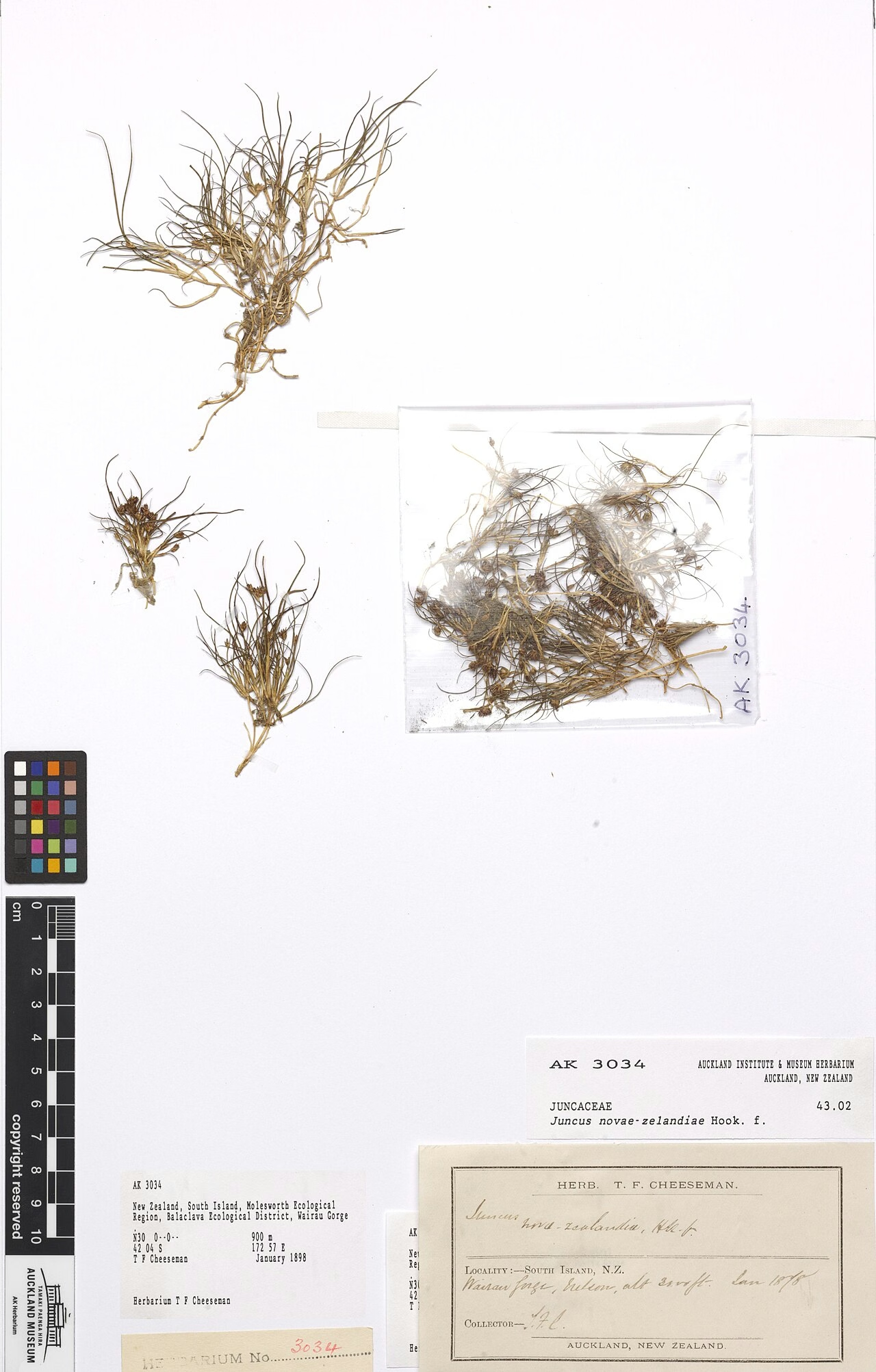
Dwarf rush (Juncus novae-zelandiae) is a tiny rush endemic to New Zealand, forming dense tufts and often large patches only 20 to 150 mm high from a long, creeping rhizome. Its almost thread-like leaves are divided internally by cross-walls, and each stem carries a single small cluster of three to five flowers that ripen into lustrous black capsules. It grows from Te Moehau on the Coromandel Peninsula south through the North, South and Stewart Islands, mostly in montane to alpine mires and damp peaty turf, descending to sea level in the south. It is ranked Not Threatened. Explore more native grasses and flaxes in our native plant guide.
Plant Description
Juncus novae-zelandiae is a small, densely tufted rush arising from a long, ascending rhizome and usually forming large patches, rarely more scattered growth. The stems are 20 to 150 mm long and 0.5 to 1 mm thick, heavily branched and creeping at the base. The numerous leaves are 0.2 to 0.8 mm wide, narrow-linear, compressed and almost thread-like, and they are septate: divided inside by transverse cross-walls that are scarcely visible from the outside.
Each stem ends in a single cluster of three to five flowers, each 2 to 3 mm long. The outer tepals are straw-coloured tinged with reddish brown, and there are six stamens. The capsule is up to 3 mm long, usually longer than the tepals, oblong-ovoid with a small point, and becomes a lustrous, glossy black when ripe, which is the easiest feature to spot in the field.
It is most likely to be confused with Juncus antarcticus and Juncus pusillus. It differs from Juncus antarcticus in its septate leaves, red or greenish brown tepals and consistently six stamens, and from Juncus pusillus in its lustrous black rather than dull pale brown capsules and stems that usually exceed the leaves at maturity.
Quick Facts
| Scientific Name | Juncus novae zelandiae |
|---|---|
| Height | 20-150 mm |
| Spread | Forms large patches from a far-creeping rhizome |
| Water Needs | High; wet peaty ground or partly submerged |
| Light | Full sun, open sites |
| Frost Tolerance | High; reaches alpine mires |
| Salt Tolerance | No information available |
| Growth Rate | Moderate |
| Lifespan | Perennial |
Climate Best Suited to
It suits cool, wet climates, from montane and alpine areas in the north to sea level in the cool south. Hot, dry conditions do not suit it.
Regional Suitability
| City | Climate Suitability |
|---|---|
| Auckland | Low |
| Wellington | Medium |
| Christchurch | Medium |
| Dunedin | High |
Plant Habitat
Dwarf rush is endemic to New Zealand. It is found from Te Moehau (Mount Moehau, at the northern tip of the Coromandel Peninsula) south through the North Island, South Island and Stewart Island/Rakiura.
It is mostly montane to alpine, but descends to sea level in more southern places. It usually grows in open sites in mires or in damp, peaty turf, and is rarely found in or near running water. It is rated a facultative wetland plant.
Growing Requirements
Soil Requirements
It grows in damp, peaty turf and mire soils.
- Wet, peaty or organic soil
- Acidic bog conditions suit it
- Tolerates being partly submerged in pots
Light Requirements
In the wild it occupies open places in mires and turf, so it prefers good light.
- Full sun is best
- Avoid shading by taller plants
Water Requirements
Consistently wet conditions are needed; NZPCN recommends a partially submerged pot.
- Keep soil saturated
- Stand the pot in a tray of water
- Avoid fast-flowing water, which it rarely grows in
Planting and Establishing
Grow dwarf rush in a pot of peaty mix stood partly in water, or plant it into the open, wet margin of a bog garden or pond in a cool district. Its creeping rhizome will slowly spread to form a low mat.
Keep taller rushes and sedges away from it, since it is a plant of open turf and can be shaded out. In restoration plantings, use it on wet, peaty ground within its natural range.
Ecological Role
Dwarf rush flowers from October to December and fruits from November through to July. Like other rushes it is wind-pollinated. NZPCN notes that its seeds are mucilaginous and are dispersed by attachment, wind and water.
It is a characteristic plant of open mires and peaty turf in the mountains, where its creeping rhizomes help form dense, low turf alongside mosses, small sedges and cushion plants.
Uses & Significance
Garden Uses
It is a miniature rush for specialist wetland and alpine collections.
- Partly submerged pots
- Bog gardens and alpine troughs kept wet
- Miniature pond edges
Ecological Value
It contributes to the open turf communities of New Zealand's upland mires.
- Forms dense low turf in mires
- Helps bind wet peaty surfaces
- Seeds spread by water, wind and attachment
Landscaping Uses
In a trough or pot it forms a neat, fine-textured mat studded with glossy black capsules from late spring through winter, which gives it a long season of interest.
Use it at the front of a miniature bog garden with other small wetland plants, or around the edge of a small water bowl where its creeping habit can soften hard edges.
Seasonal Care Calendar
Spring
Flowering begins in October.
- Divide established patches
- Top up water trays as weather warms
Summer
Capsules form from November and start turning glossy black.
- Keep pots partly submerged
- Collect ripe capsules
Autumn
Fruit remains on the plant, extending interest.
- Sow fresh seed
- Remove weeds that shade the mat
Winter
Capsules can persist into July. Plants are frost-hardy.
- Little care needed
- Keep the mix wet
When to Prune and How Much
No pruning is needed. Dead stems can be trimmed off in late winter, once the capsules have shed, to keep the mat tidy.
To control spread or rejuvenate an old patch, cut out sections with a sharp spade or knife and replant them elsewhere.
How to Grow Dwarf Rush
NZPCN describes dwarf rush as easy to propagate from fresh seed, rooted pieces and division of whole plants, and recommends growing it in a partially submerged pot. The long creeping rhizome makes vegetative methods especially quick, while seed is useful when larger numbers are needed for restoration plantings. Keep the young plants wet at all times and in full light.
From Seed
Capsules ripen from November and can stay on the plant into July, turning a lustrous black. The seeds are mucilaginous, becoming sticky when wet, so sow them onto a moist surface where they will adhere.
- Collect black capsules as they begin to split
- Shake the seed out onto paper
- Sow thinly on the surface of wet, peaty seed mix
- Do not cover, as rush seed is very small
- Stand the tray in water in full light
- Prick out seedlings into pots once they form small tufts
By Division and Rooted Pieces
Because dwarf rush forms patches from a far-creeping rhizome, rooted pieces can be cut from the edge of a patch at almost any time of the growing season, and whole plants can be split into several clumps.
Rooted pieces taken in spring establish fastest, as the plant is coming into active growth.
- Cut a section of rhizome with roots and shoots attached
- Pot into wet, peaty mix
- Stand the pot partly submerged in water
- Keep in full light until new growth appears
- Plant out into a wet, open site once established
Pests & Diseases
No specific pests or diseases are recorded for dwarf rush. The main threat in cultivation is drying out or being shaded and overgrown by larger plants.
In the wild, mires and peaty turf can be damaged by drainage, trampling, vehicle tracks and the spread of weeds.
Cultural Significance
No Māori name or traditional use specific to Juncus novae-zelandiae has been recorded in the sources consulted.
It was described by Joseph Dalton Hooker in 1853. Its epithet novae-zelandiae simply means of New Zealand, and the genus name Juncus comes from the Latin jungere, to tie or bind, probably because rush stems were used for tying. Some botanists now place it in the genus Verojuncus.
Bonus Tip
When sorting through tiny rushes in a mire, look for the shiny black capsules: in dwarf rush they are glossy and usually longer than the tepals, while the similar Juncus pusillus has dull pale brown capsules.
Related Plants
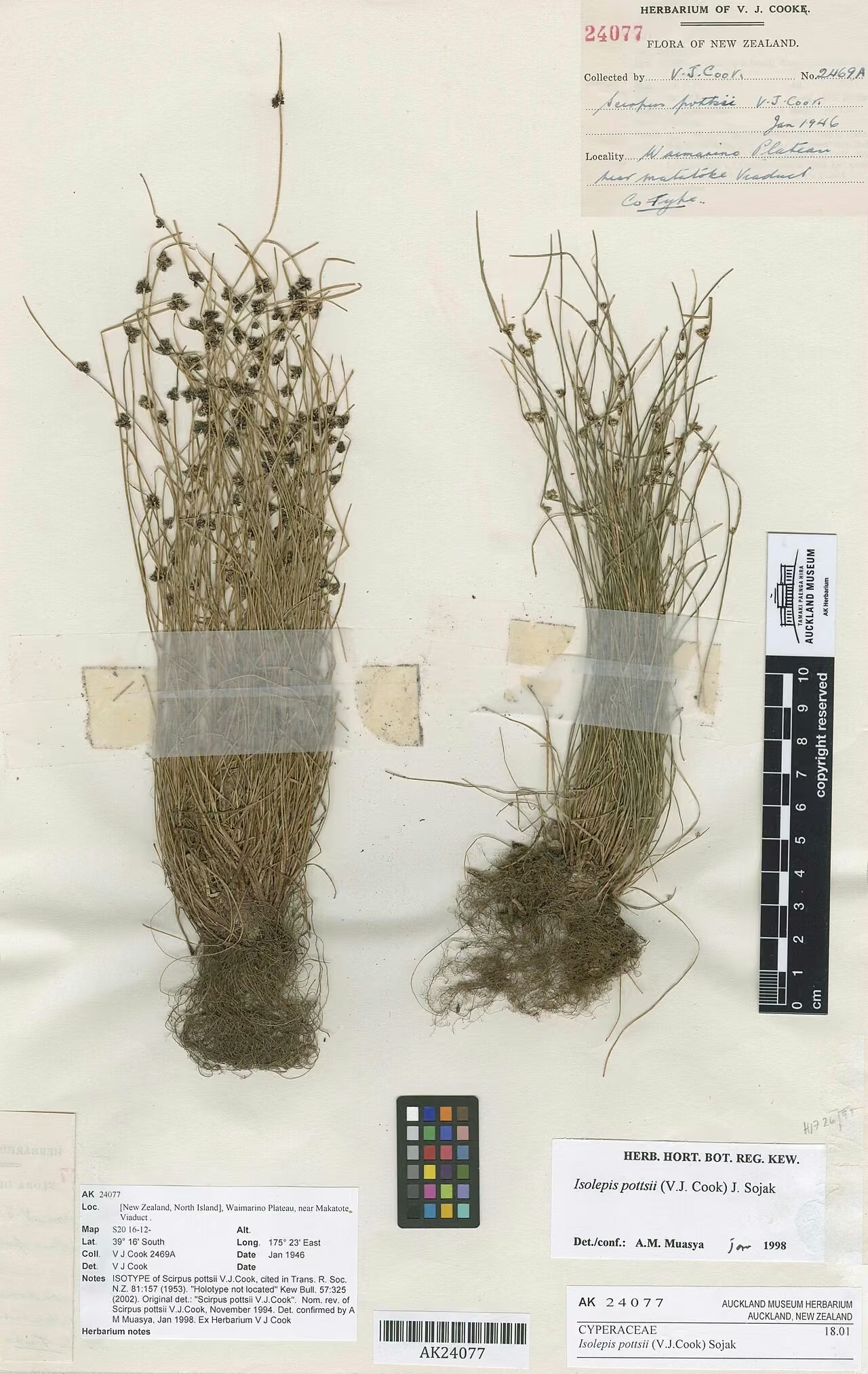
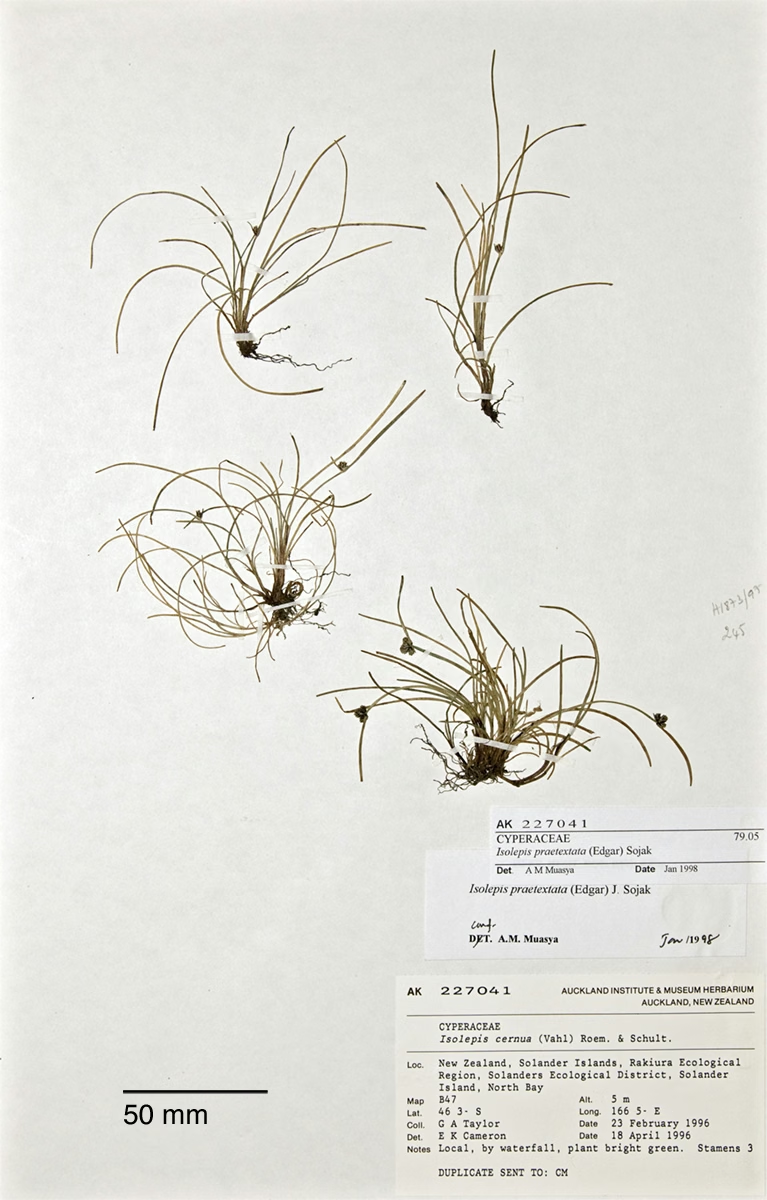
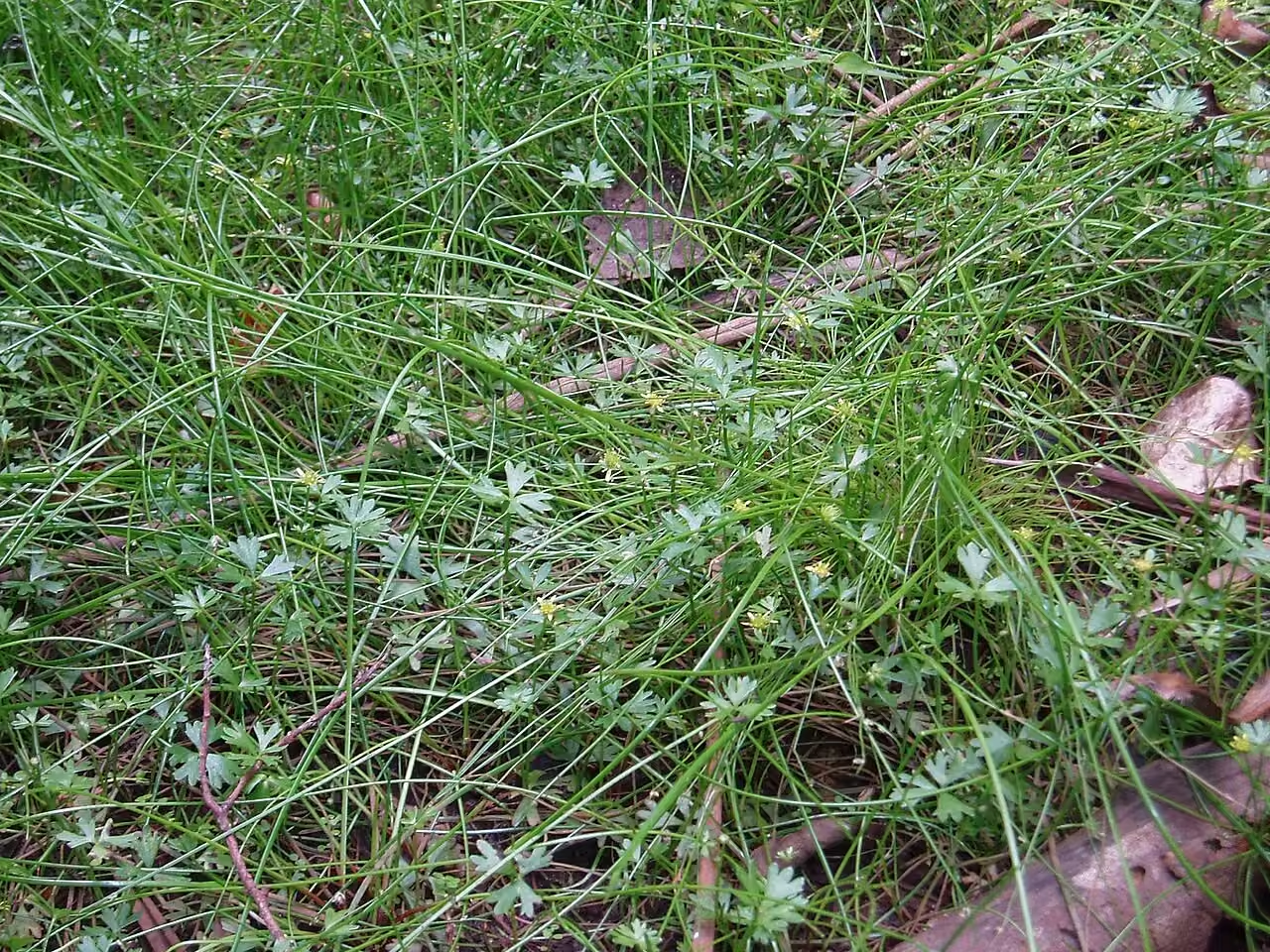
Explore other native plants that share similar characteristics or habitats with Dwarf Rush (Juncus novae zelandiae), offering further insights into New Zealand's diverse flora. These related species provide context and opportunities for complementary planting in your garden.
Plant Conservation
Juncus novae-zelandiae is ranked Not Threatened in the 2023 national assessment and is Regionally Not Threatened in Otago. In the Wellington region it is ranked Regionally Naturally Uncommon.
Keeping mires and peaty turf intact, protected from drainage and trampling, is the most important action for this and other small wetland plants.
Frequently Asked Questions
What is dwarf rush?
Dwarf rush is Juncus novae-zelandiae, a tiny endemic rush that forms patches 20 to 150 mm high in damp peaty turf and mires from the Coromandel to Stewart Island.
How do you tell Juncus novae-zelandiae from Juncus pusillus?
Juncus novae-zelandiae has lustrous black capsules rather than dull pale brown ones, and its stems usually stand taller than the leaves when mature.
How is dwarf rush different from Juncus antarcticus?
Dwarf rush has septate leaves with internal cross-walls, red or greenish brown tepals, and always six stamens, which separates it from Juncus antarcticus.
How do you grow dwarf rush?
NZPCN says it is easy from fresh seed, rooted pieces or division, and is best grown in a partially submerged pot.
Sources and Further Reading
The botanical, growing, and conservation details for Dwarf Rush (Juncus novae zelandiae) on this page draw on the New Zealand plant references below. Consult them for full technical records and the latest distribution data.