Club Rush
Isolepis subtilissima
Last updated:
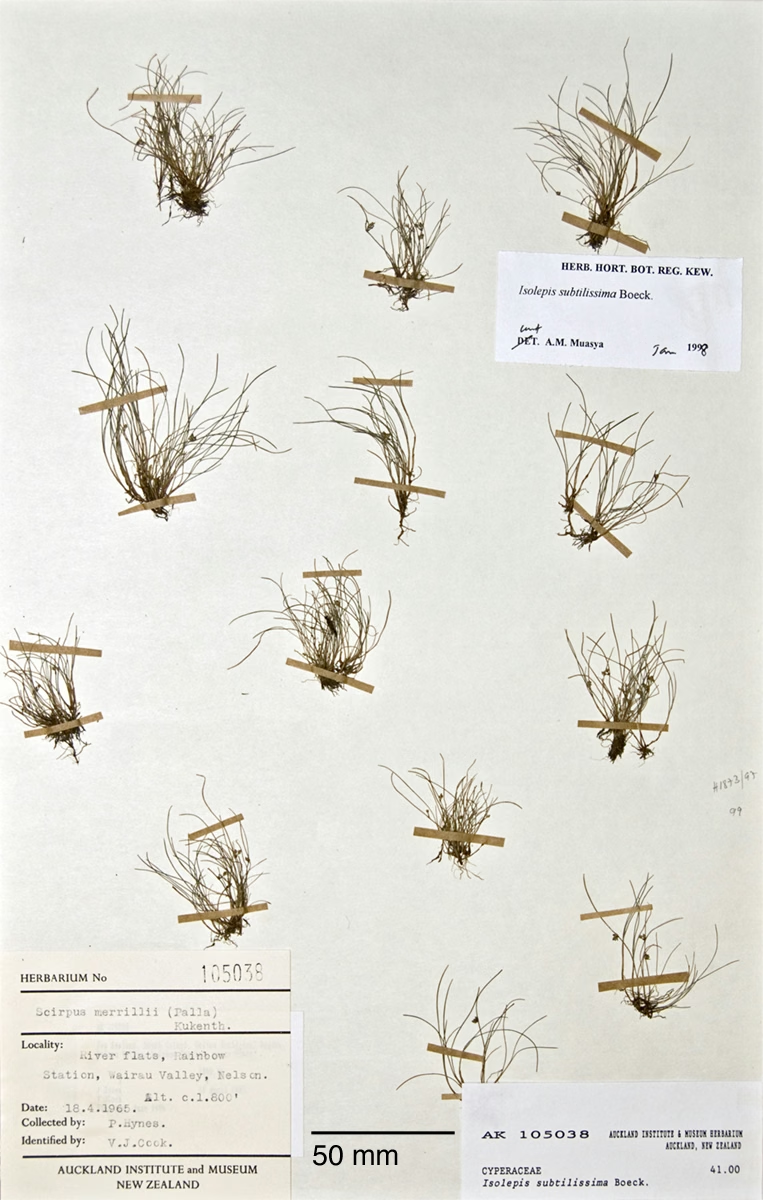
Isolepis subtilissima is one of New Zealand's smallest sedges: a minute plant forming little fine-leaved tufts from a much-branched creeping rhizome, with thread-like culms only 10 to 90 mm tall and usually a single pale green spikelet. It is indigenous to the North and South Islands and also occurs in Australia, New Guinea and the Philippines. In New Zealand it is mainly montane or subalpine, growing in cloud forest, around tarns and in bogs, and comes down to the lowlands in the south. It is ranked Not Threatened but is Regionally Critical in the Wellington region. Explore more native grasses and flaxes in our native plant guide.
Plant Description
Isolepis subtilissima is a minute sedge that forms small, fine-leaved tufts from a much-branched, creeping rhizome up to 0.5 mm in diameter. Its culms are filiform (thread-like), usually 10 to 50 mm long and occasionally up to 90 mm, and only 0.2 to 0.3 mm wide. There are one to four bristle-like, channelled leaves about 0.5 mm wide, which may be shorter or longer than the culms.
The inflorescence appears lateral and is usually a single spikelet, occasionally two, with a bract up to 30 mm long continuing past it. The ovate spikelets are pale green and only 1 to 2.5 mm long. The glumes are slightly more than 1 mm long, pale cream and membranous or marked with red, with a prominent green keel. There is usually one stamen and three style branches. The nut is under 1 mm long, three-angled, prominently ribbed on its back angle, pointed and pale straw-coloured.
It is most similar to Isolepis habra but is smaller, with stems to about 60 mm, an upright tufted habit, usually very dark green culms and slightly larger nuts.
Quick Facts
| Scientific Name | Isolepis subtilissima |
|---|---|
| Height | 10-90 mm |
| Spread | Small tufts along a branched creeping rhizome |
| Water Needs | High; dislikes drought |
| Light | Part shade to sun in cool sites |
| Frost Tolerance | High; reaches subalpine bogs |
| Salt Tolerance | Low; an inland montane plant |
| Growth Rate | Slow to moderate |
| Lifespan | Perennial |
Climate Best Suited to
It needs a cool, moist climate such as montane cloud forest and subalpine bogs, and does poorly where summers are warm, humid or dry.
Regional Suitability
| City | Climate Suitability |
|---|---|
| Auckland | Low |
| Wellington | Low |
| Christchurch | Medium |
| Dunedin | High |
Plant Habitat
In New Zealand Isolepis subtilissima is indigenous to the North and South Islands. It also occurs overseas in the Philippines, New Guinea and Australia.
It is predominantly a montane or subalpine plant, found in cloud forest, around tarns and within bogs. In the southern part of its range it extends down river systems into lowland areas. It is rated a facultative wetland plant, usually growing in wetlands but occasionally on damp ground outside them.
Growing Requirements
Soil Requirements
It grows in wet peat and humus in bogs, tarn margins and mossy cloud forest.
- Constantly moist, peaty soil
- A peat and sand mix works in pots
- Never let the mix dry out
Light Requirements
Its natural habitats range from shaded cloud forest to open bogs, but always in cool conditions.
- Part shade is safest in cultivation
- Sun is tolerated only where it stays cool and wet
Water Requirements
NZPCN notes that it dislikes drought, so steady moisture is essential.
- Keep the root zone permanently moist
- Stand pots in shallow water during summer
- Good air movement helps avoid stagnant humidity
Planting and Establishing
Given its tiny size, Isolepis subtilissima is best grown in a shallow pan or pot of peaty mix, where it can be kept cool and moist and seen up close. A sheltered, shaded spot on the cool side of a house or in an alpine house suits it.
Planting out is only realistic in cool southern gardens with a permanently damp bog or tarn margin. Plant a small clump rather than a single tuft so it is not lost among mosses.
Ecological Role
It flowers from October to December and fruits from November to April. It is wind-pollinated, and NZPCN notes that the nuts are dispersed by water, and possibly by seed-eating animals and by attachment.
Within bogs, tarn margins and cloud forest it forms part of a fine turf of tiny sedges, mosses and herbs. Its much-branched rhizome lets it spread through moss and peat, forming small colonies.
Uses & Significance
Garden Uses
This is strictly a collector's plant for specialist growers of tiny native sedges and alpines.
- Alpine house or shaded pan culture
- Miniature bog gardens
- Moss and fern terraria in cool rooms
Ecological Value
It is a component of the fine turf and bog flora of New Zealand's upland wetlands.
- Part of montane bog and tarn margin communities
- Spreads through moss and peat in cloud forest
- Adds to the diversity of small wetland sedges
Landscaping Uses
At under 90 mm tall it has little landscape impact, but a pan of it looks like a miniature green lawn studded with tiny pale spikelets. Display it on a bench or in a trough where it can be appreciated at eye level.
Combine it with other miniature bog plants such as tiny mosses in a peat-filled trough kept in shade, making a small model of a montane bog.
Seasonal Care Calendar
Spring
New growth appears and flowering starts in October.
- Divide crowded pans
- Begin regular watering checks
Summer
Fruit ripens from November. Heat and humidity are the main dangers.
- Move pots to the coolest, airiest spot
- Never let the mix dry out
Autumn
Fruiting finishes in April.
- Sow fresh seed
- Remove moss that is overgrowing the tufts
Winter
Plants are hardy to cold in their mountain habitats.
- Little care needed
- Keep the mix damp but not stagnant
When to Prune and How Much
No pruning is required for such a small plant. Remove fallen leaves or debris that could smother the tufts.
If mosses or liverworts start to overgrow the pan, gently thin them back with tweezers, or divide and repot the sedge.
How to Grow Club Rush
NZPCN describes Isolepis subtilissima as easily grown from fresh seed, rooted pieces and division of whole plants. The challenge is not getting new plants but keeping them alive: it requires cool conditions and dislikes both humidity and drought. Raise plants in shallow pans of peaty mix in a cool, airy, shaded place, and keep them evenly moist from below. Good air movement around the pots matters as much as moisture, because stagnant warm air is exactly what this montane sedge dislikes.
From Seed
The pale straw-coloured nuts ripen between November and April. They are less than 1 mm long, so collect whole spikelets as they mature and sow while fresh, as NZPCN recommends.
- Collect mature spikelets onto paper
- Crush gently to release the tiny nuts
- Sprinkle over the surface of a fine, moist peat-based mix
- Do not cover the seed
- Water from below and keep the pan cool and shaded
- Leave seedlings to form small colonies before dividing
By Division and Rooted Pieces
The much-branched creeping rhizome makes division easy. Small rooted sections can be cut from the edge of a colony and placed on fresh mix, or a whole plant can be split into several clumps.
- Lift the plant or a section of the colony
- Separate rooted pieces with a fine knife or fingers
- Lay them onto moist peaty mix and firm in gently
- Keep cool, shaded and damp until new shoots appear
Pests & Diseases
No specific pests or diseases are recorded for Isolepis subtilissima. In cultivation it is most often lost to heat, humidity or a single dry spell.
Moss, liverworts and algae can overgrow a pan; keep the surface open and the plants in good air movement.
Cultural Significance
No Māori name or traditional use specific to Isolepis subtilissima has been recorded in the sources consulted.
It was described by the German botanist Johann Otto Boeckeler in 1858 and was treated as Scirpus subtilissimus by S.T. Blake in 1969. Schoenoplectus merrillii is now treated as the same species. The epithet subtilissima means very fine or very slender, referring to its thread-like culms.
Bonus Tip
To grow this tiny sedge in a warm district, set its pan inside a larger tray of wet sand or gravel on a shaded, breezy shelf. Evaporation keeps the roots cool and moist while the moving air prevents the stagnant humidity it dislikes.
Related Plants
Explore other native plants that share similar characteristics or habitats with Club Rush (Isolepis subtilissima), offering further insights into New Zealand's diverse flora. These related species provide context and opportunities for complementary planting in your garden.
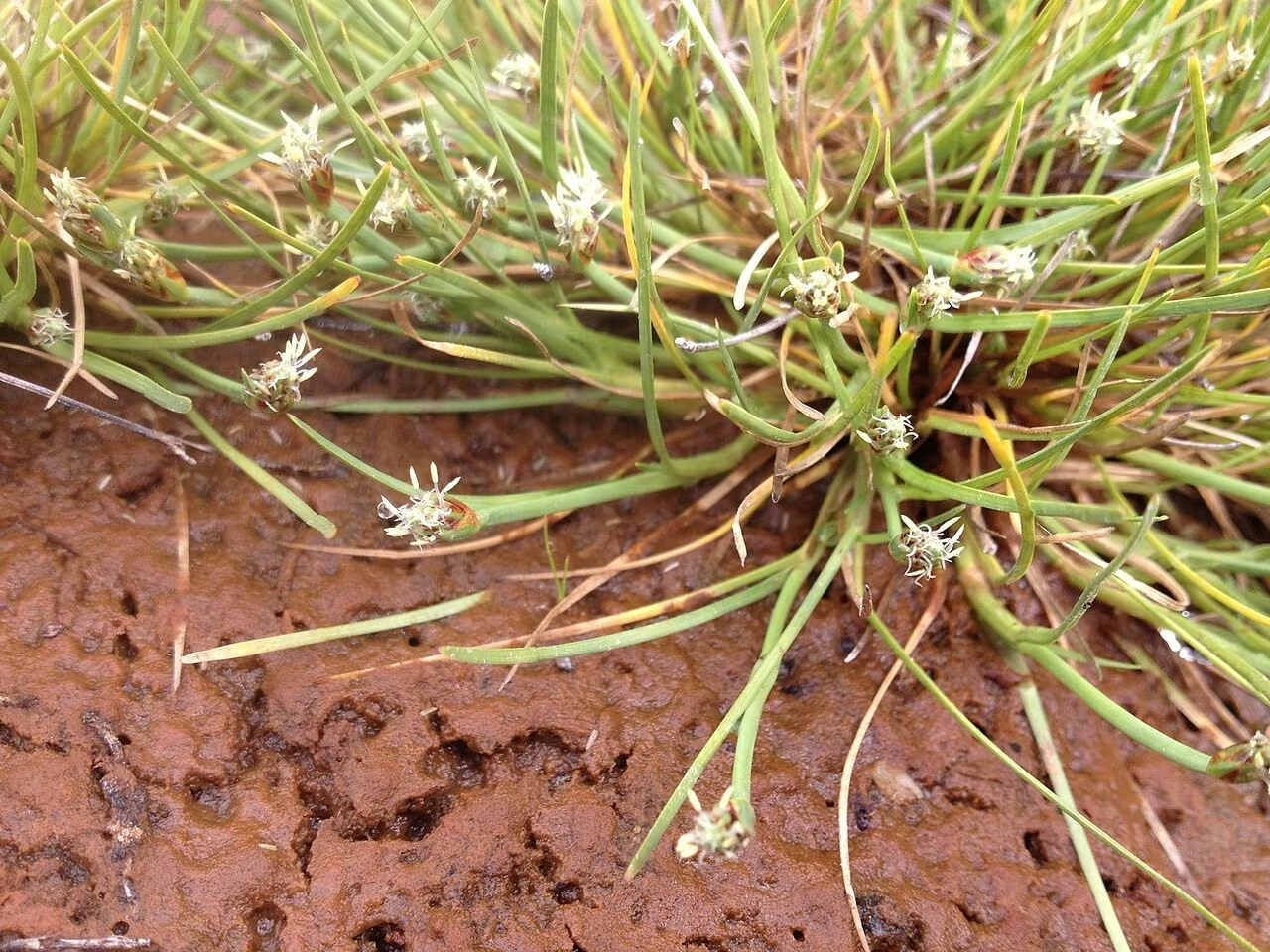
Isolepis crassiuscula
Isolepis crassiuscula
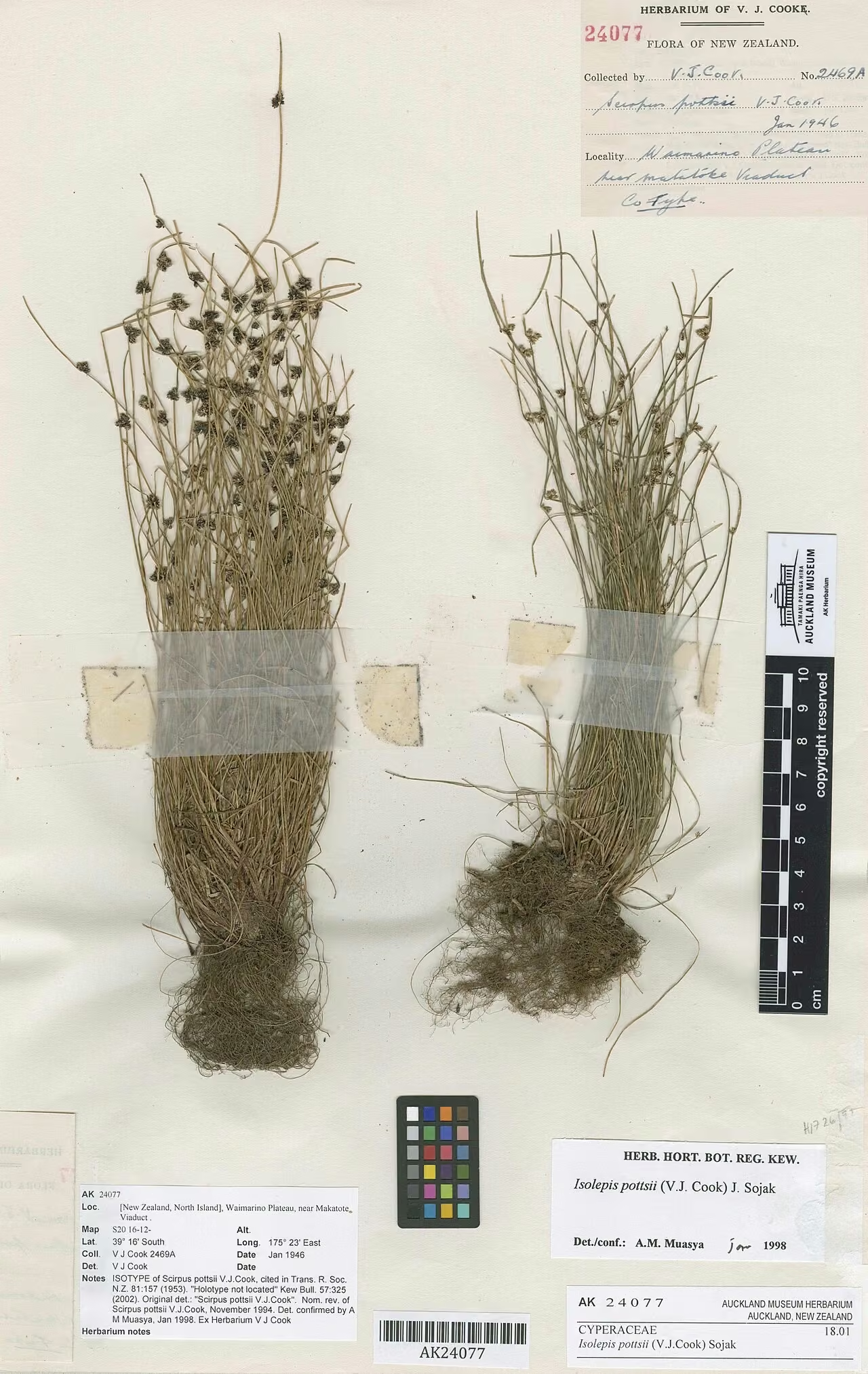
Isolepis pottsii
Isolepis pottsii
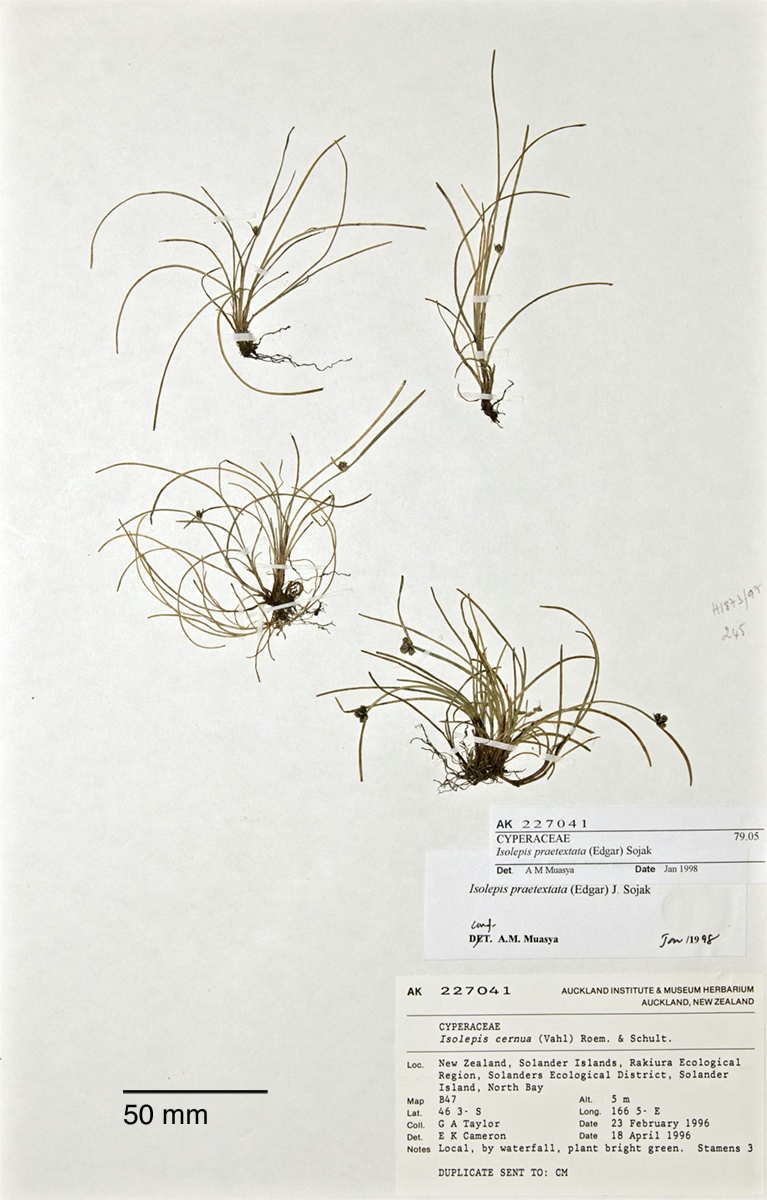
Isolepis praetextata
Isolepis praetextata
Isolepis reticularis
Isolepis reticularis
Juncus novae zelandiae
Juncus novae zelandiae
Giant Rush
Juncus pallidus
Leafless Rush
Juncus pauciflorus
Alpine Kelleria
Kelleria dieffenbachii
Plant Conservation
Isolepis subtilissima is ranked Not Threatened in New Zealand (2023), with the qualifiers DPS and DPT (data poor for population size and trend) and SO (secure overseas).
Regionally it is ranked Regionally Critical in Wellington and Data Deficient in Otago, so local populations deserve protection. Keeping bogs, tarn margins and cloud forest free of drainage, trampling and weeds is the best way to conserve it.
Frequently Asked Questions
How small is Isolepis subtilissima?
Its culms are thread-like, usually 10 to 50 mm long and only 0.2 to 0.3 mm thick, occasionally reaching 90 mm, and its spikelets are just 1 to 2.5 mm long.
How do you tell Isolepis subtilissima from Isolepis habra?
Isolepis subtilissima is smaller, with stems to about 60 mm, an upright tufted habit, usually very dark green culms and slightly larger nuts.
Is Isolepis subtilissima found outside New Zealand?
Yes. It is indigenous to New Zealand but also occurs in the Philippines, New Guinea and Australia, so it is not endemic.
Can you grow Isolepis subtilissima?
NZPCN says it is easily grown from fresh seed, rooted pieces or division, but it needs cool conditions and dislikes both humidity and drought.
Sources and Further Reading
The botanical, growing, and conservation details for Club Rush (Isolepis subtilissima) on this page draw on the New Zealand plant references below. Consult them for full technical records and the latest distribution data.