Club Rush
Isolepis pottsii
Last updated:
Isolepis pottsii is a slender, tufted sedge endemic to New Zealand, recorded from the North Island, South Island and Chatham Islands. Its extremely fine culms, about 0.5 mm wide, reach 60 to 400 mm tall and carry a small cluster of one to six spikelets that appears to sprout from the side of the stem, because a long bract continues past it. It grows on boggy ground: in upland cloud forest, subalpine scrub and bog margins in the north, on river banks and forest seepages further south, and in restiad bog on the Chathams. It is uncommon, and in 2023 was ranked Data Deficient. Explore more native grasses and flaxes in our native plant guide.
Plant Description
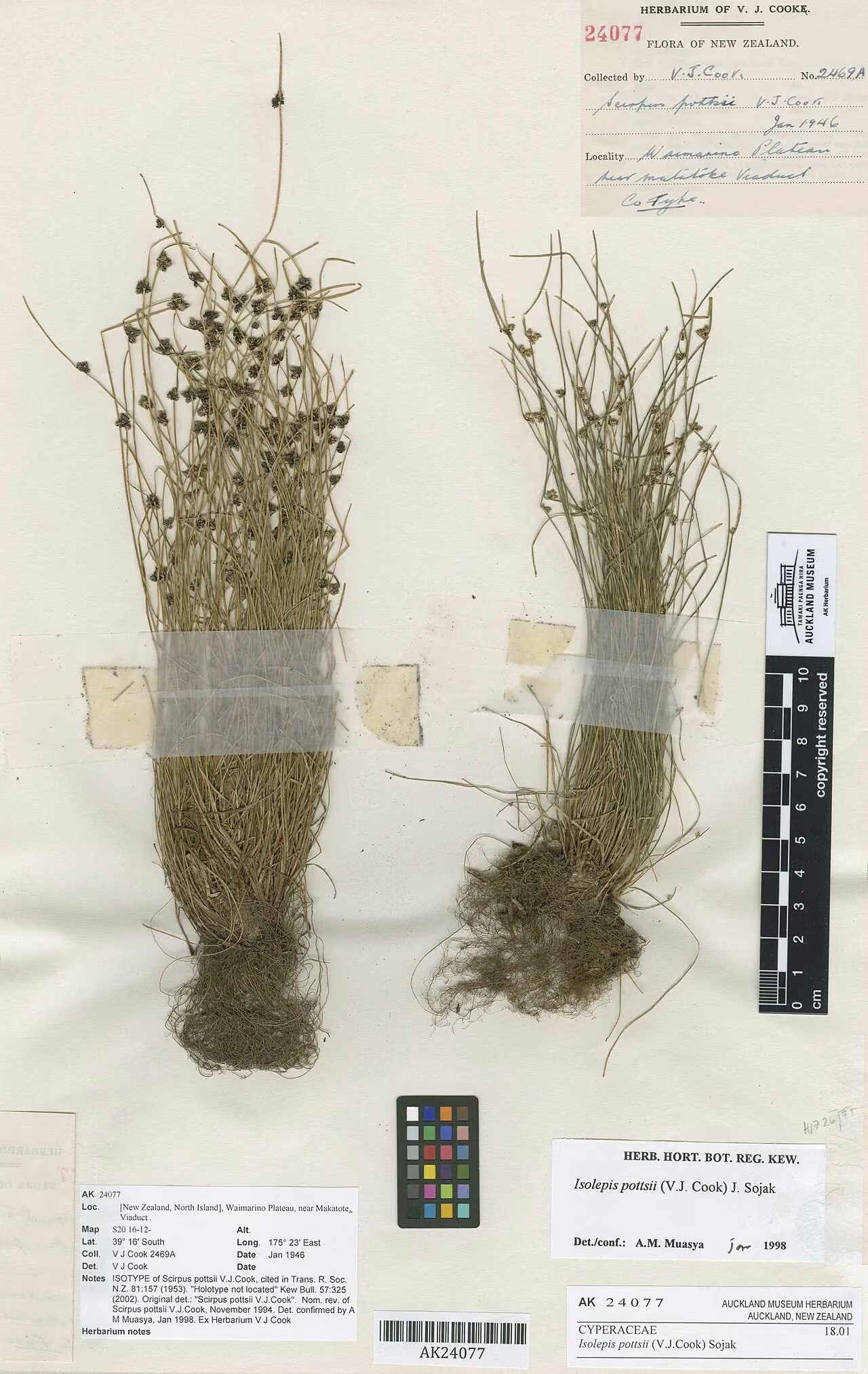
Isolepis pottsii forms leafy tufts from an ascending rhizome about 1 mm in diameter. The culms are extremely fine, about 0.5 mm wide, and usually 100 to 250 mm tall, occasionally from 60 mm to 400 mm. There are one to four leaves per tuft, generally shorter than the culms, linear and concavo-convex in section, with membranous sheaths marked by red-purple nerves.
The inflorescence appears to be on the side of the stem because the bract below it, 10 to 40 mm long, continues upward like an extension of the culm. It holds usually three or four spikelets (one to six), each 2.5 to 4 mm long, ovoid or elliptical. The lanceolate glumes are about 1.5 mm long and dark red to almost black, or pale cream with red markings, with a strong green keel. The nut is about 1 mm long, biconvex or rarely three-angled, distinctly pointed, and dull yellow to yellow-brown with a minutely netted but glossy surface.
It is most easily confused with Isolepis distigmatosa. Isolepis pottsii is more gracile and often strictly erect, has true leaves, much finer culms and leaves, fewer spikelets, and two or three style branches.
Quick Facts
| Scientific Name | Isolepis pottsii |
|---|---|
| Height | 60-400 mm |
| Spread | Small tufts from a short ascending rhizome |
| Water Needs | High; boggy or seeping ground |
| Light | Part shade to sun |
| Frost Tolerance | Moderate to high; reaches subalpine scrub |
| Salt Tolerance | No information available |
| Growth Rate | Moderate |
| Lifespan | Short-lived perennial |
Climate Best Suited to
It suits cool, wet climates with persistent moisture, such as cloudy uplands in the north and lowland seepages in the cooler south. Warm, dry conditions do not suit it.
Regional Suitability
| City | Climate Suitability |
|---|---|
| Auckland | Low |
| Wellington | Medium |
| Christchurch | Medium |
| Dunedin | High |
Plant Habitat
Isolepis pottsii is endemic to New Zealand and has been recorded from the North Island, South Island and Chatham Islands. Its habitat shifts with latitude: in northern parts of its range it is restricted to upland sites above about 500 m, in cloud forest, subalpine scrub and on the fringes of bogs.
In the southern North Island and the South Island it comes down to lowland forest, growing on river banks and in seepages. On the Chatham Islands it has been found in restiad bog. In all cases it favours boggy ground. It is rated facultative for wetland indication, occurring both in wetlands and on damp non-wetland sites.
Growing Requirements
Soil Requirements
It grows on boggy, often peaty or silty ground that stays moist.
- Moist, organic soil or peat mix
- Seepage sites with steady moisture are ideal
- Avoid dry, sandy mixes
Light Requirements
Wild plants grow in cloud forest and scrub as well as open bog fringes, so it accepts a range of light.
- Part shade suits most gardens
- Sun is fine if the soil stays wet
Water Requirements
Consistent moisture is essential for this bog and seepage plant.
- Keep soil damp all year
- A pot in a shallow saucer of water works well
- Do not allow summer drought
Planting and Establishing
NZPCN suggests growing it in a damp site or in a pot. A container is the safest choice because such a fine-stemmed sedge is easily lost or smothered among larger plants in a garden bed.
If planting out, choose a seepage, bog margin or the damp edge of a shaded stream, and plant several individuals together so the fine culms make a visible clump. Because the species tends to be short-lived, keep a few seedlings in reserve.
Ecological Role
It flowers from November to December and fruits from December to April. As with other members of the genus, pollination is by wind. NZPCN notes that the nuts are dispersed by water, and possibly by seed-eating animals and by attachment.
It is a minor component of wet ground vegetation, growing among mosses, small sedges and restiads in bogs and seepages. Its scattered occurrence led NZPCN to describe it as probably best regarded as biologically sparse.
Uses & Significance
Garden Uses
This is a plant for collectors of native sedges rather than for general landscaping.
- Pot culture in a native wetland collection
- Bog garden edges
- Damp seepage beds in cool gardens
Ecological Value
It adds to the diversity of small sedges in bogs, seepages and upland forest wetlands.
- Part of the native bog and seepage flora
- Adds fine structure among mosses and restiads
- Nuts are possibly eaten and spread by seed-eating animals
Landscaping Uses
The hair-fine stems and dark spikelets give a delicate, misty effect when several plants are grown together in a shallow bowl or along a shaded bog edge. It is best viewed at close range where its detail can be appreciated.
It is not suitable for mass planting or erosion control because it is small and short-lived. Use it alongside other fine-textured wetland natives in specialist plantings.
Seasonal Care Calendar
Spring
New growth emerges and flowering begins in November.
- Divide established plants
- Refresh tired potting mix
Summer
Flowering finishes and nuts ripen from December.
- Keep pots moist in heat
- Collect seed to keep a supply of young plants
Autumn
Fruiting continues to April.
- Sow fresh seed
- Replace any plants that have died out
Winter
Growth is slow through the cooler months.
- Little care needed
- Check that pots are not waterlogged by stagnant water
When to Prune and How Much
No pruning is needed. Remove dead culms by hand if a pot looks untidy.
Because individual plants are short-lived, replacing old plants with seedlings is more useful than trying to rejuvenate them by cutting back.
How to Grow Club Rush
NZPCN reports that Isolepis pottsii is easily grown in a damp site, or in a pot, from fresh seed and by division of whole plants. It also notes that the plant tends to be short-lived, so it is worth raising a few new plants every year or two to keep it in cultivation. Both methods are simple as long as the young plants never dry out.
From Seed
The nuts ripen between December and April. They are small, yellow-brown and glossy, and shed easily from mature spikelets, so collect heads just as they begin to brown. Sow promptly, since NZPCN recommends fresh seed.
- Collect spikelets as they turn brown
- Shake or rub out the nuts over paper
- Sow thinly on the surface of a moist peat-based mix
- Keep the tray in part shade and stand it in a saucer of water
- Prick out seedlings into small pots once they form tufts
- Pot on or plant into a damp site when well rooted
By Division
Whole plants can be lifted and split into smaller tufts, each with some roots attached. Spring, as new growth starts, is a good time to do this.
Divide into reasonably sized clumps rather than single shoots, because tiny pieces of such a fine sedge establish slowly and can dry out quickly.
- Lift the plant or remove it from its pot
- Gently separate tufts with roots attached
- Replant at once into damp mix
- Keep shaded and moist until growth resumes
Pests & Diseases
No specific pests or diseases are recorded for Isolepis pottsii. Short life span, drying out and competition from larger plants are the main reasons it disappears from gardens.
In the wild, the drainage of bogs and seepages and the spread of weeds into wet ground are the most likely pressures on its habitat.
Cultural Significance
No Māori name or traditional use specific to Isolepis pottsii has been recorded in the sources consulted.
It was described by V.J. Cook in 1953 as Scirpus pottsii and transferred to Isolepis by Soják. The epithet honours someone named Potts, but the sources consulted do not say who. The genus name comes from the Greek isos (equal) and lepis (scale).
Bonus Tip
When looking for this sedge in the field, check the spikelet cluster: it seems to grow out of the side of the stem because the bract carries straight on above it. Combined with hair-fine culms and true leaves, this helps separate it from the stouter Isolepis distigmatosa.
Related Plants
Explore other native plants that share similar characteristics or habitats with Club Rush (Isolepis pottsii), offering further insights into New Zealand's diverse flora. These related species provide context and opportunities for complementary planting in your garden.
Beach Morning Glory
Ipomoea pes caprae subsp. brasiliensis

Pygmy Clubrush
Isolepis basilaris
Isolepis caligenis
Isolepis caligenis
Isolepis crassiuscula
Isolepis crassiuscula
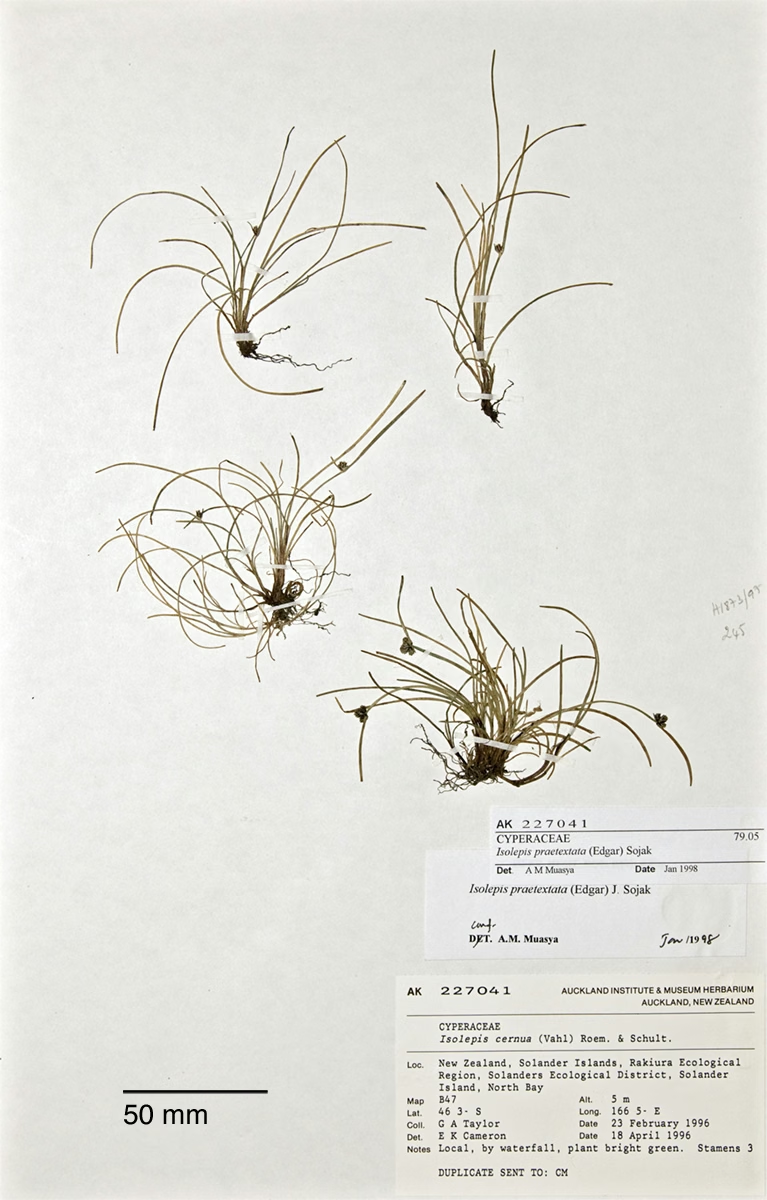
Isolepis praetextata
Isolepis praetextata
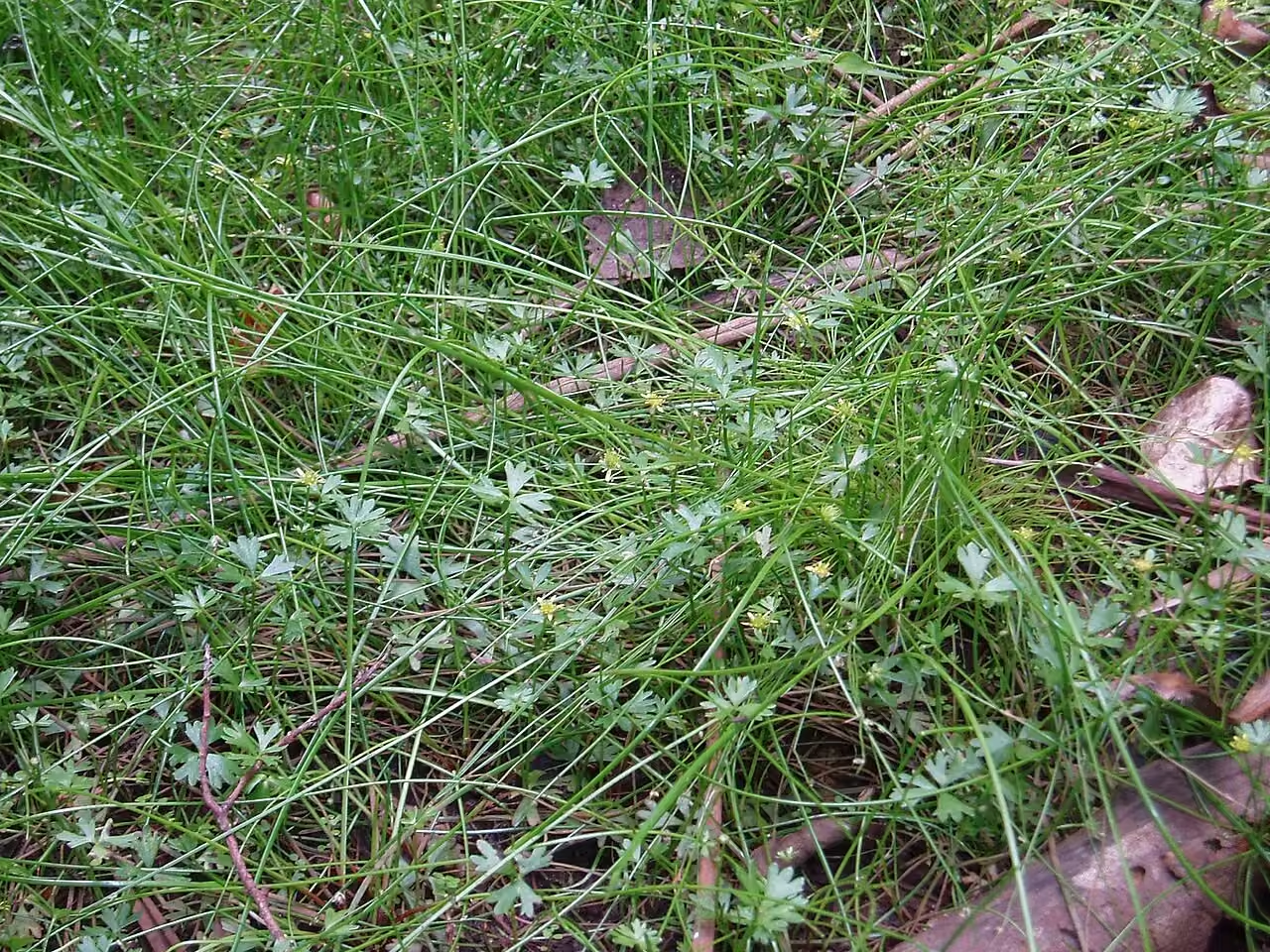
Isolepis reticularis
Isolepis reticularis
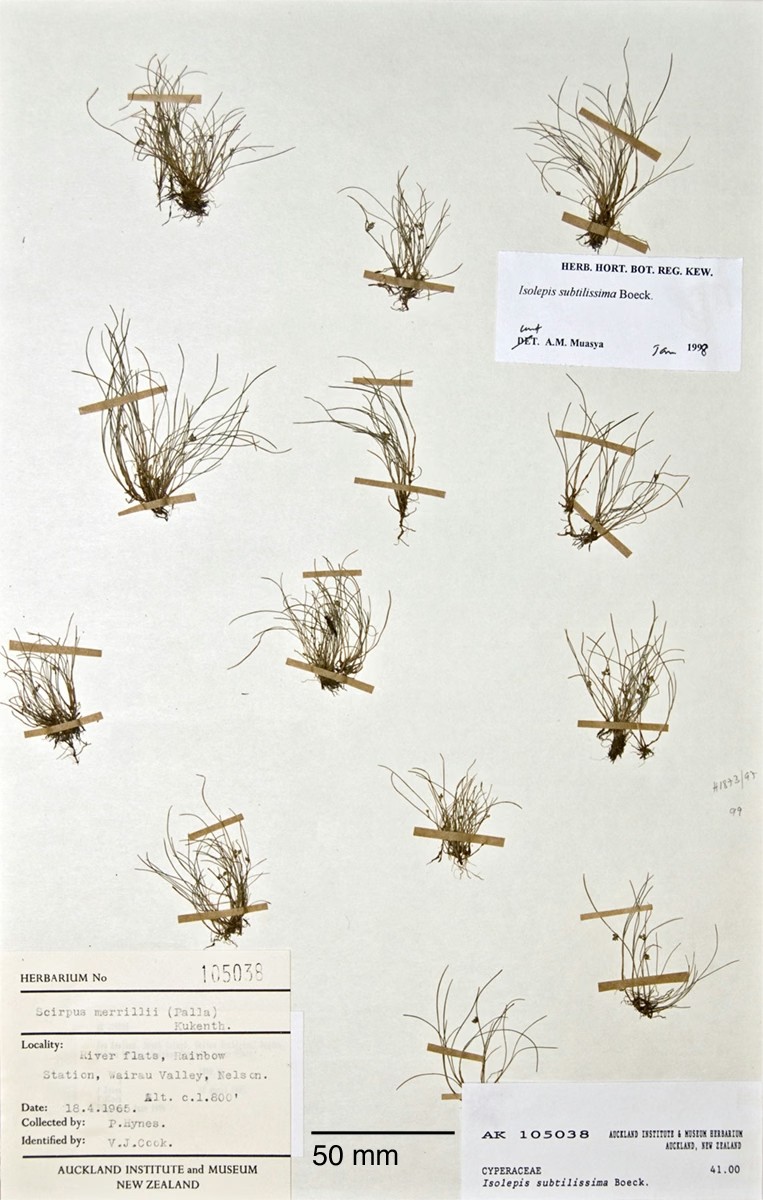
Isolepis subtilissima
Isolepis subtilissima
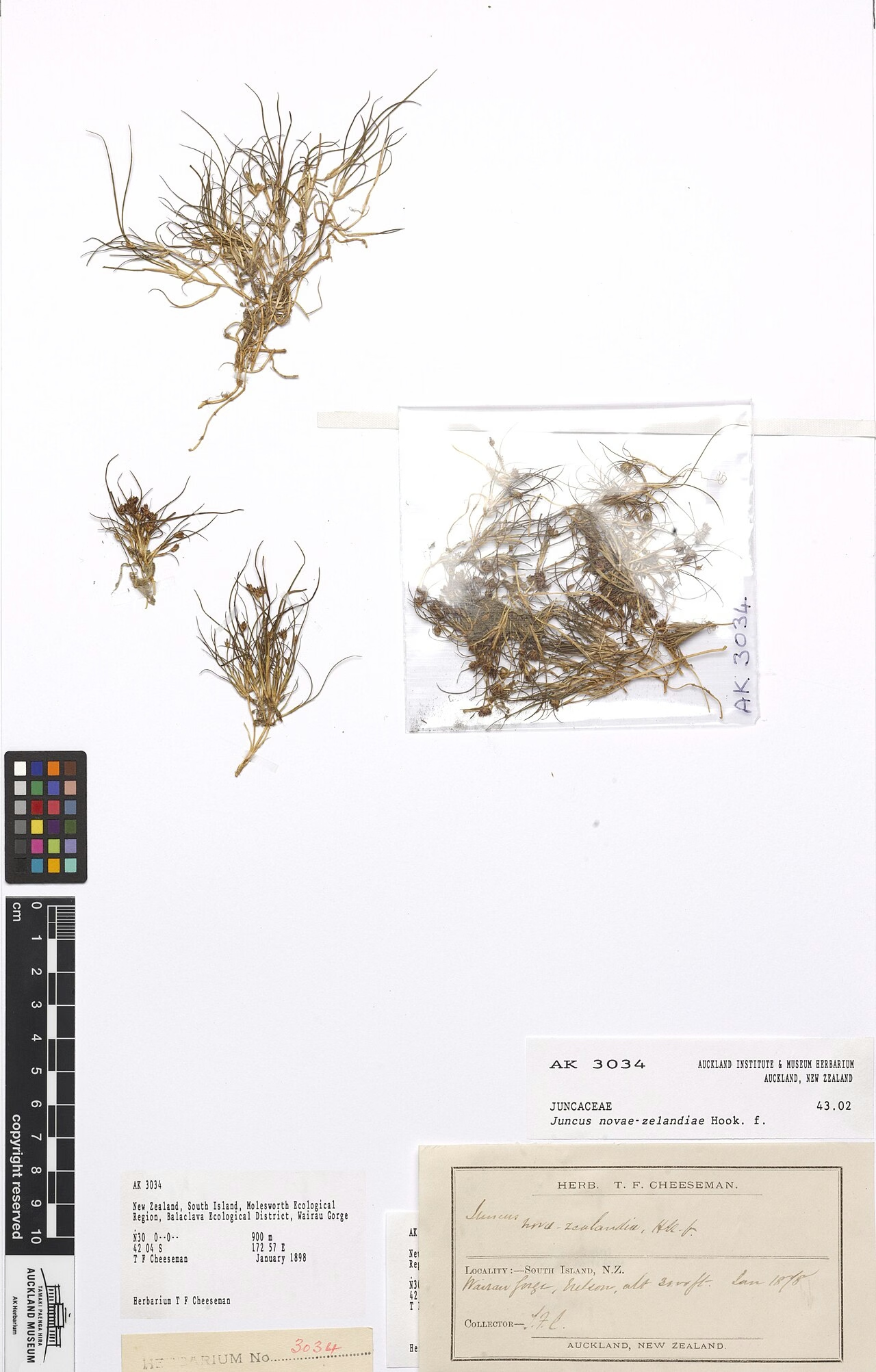
Juncus novae zelandiae
Juncus novae zelandiae
Plant Conservation
In the 2023 New Zealand threat assessment Isolepis pottsii was ranked Data Deficient, meaning too little is known about its distribution and abundance to assign a status. It had previously been ranked Not Threatened with a data poor qualifier.
Collecting good herbarium specimens and photographs, especially with mature nuts, will help botanists resolve its status. Protecting bogs, seepages and riparian forest from drainage and weeds benefits it and many other small wetland plants.
Frequently Asked Questions
What does Isolepis pottsii look like?
It forms leafy tufts of very fine culms about 0.5 mm wide and up to 400 mm tall, with one to six small spikelets that look lateral because a 10 to 40 mm bract continues above them.
How do you tell Isolepis pottsii from Isolepis distigmatosa?
Isolepis pottsii is more gracile and often strictly erect, has true leaves, much finer culms and leaves, fewer spikelets, and two or three style branches.
What is the conservation status of Isolepis pottsii?
It was assessed as Data Deficient in 2023, meaning there is not enough information to rank it. In 2017 it was listed as Not Threatened with a data poor qualifier.
Is Isolepis pottsii easy to grow?
NZPCN says it grows easily from fresh seed or division in a damp site or pot, but tends to be short-lived and is mainly of interest to native plant specialists.
Sources and Further Reading
The botanical, growing, and conservation details for Club Rush (Isolepis pottsii) on this page draw on the New Zealand plant references below. Consult them for full technical records and the latest distribution data.