Club Rush
Isolepis crassiuscula
Last updated:
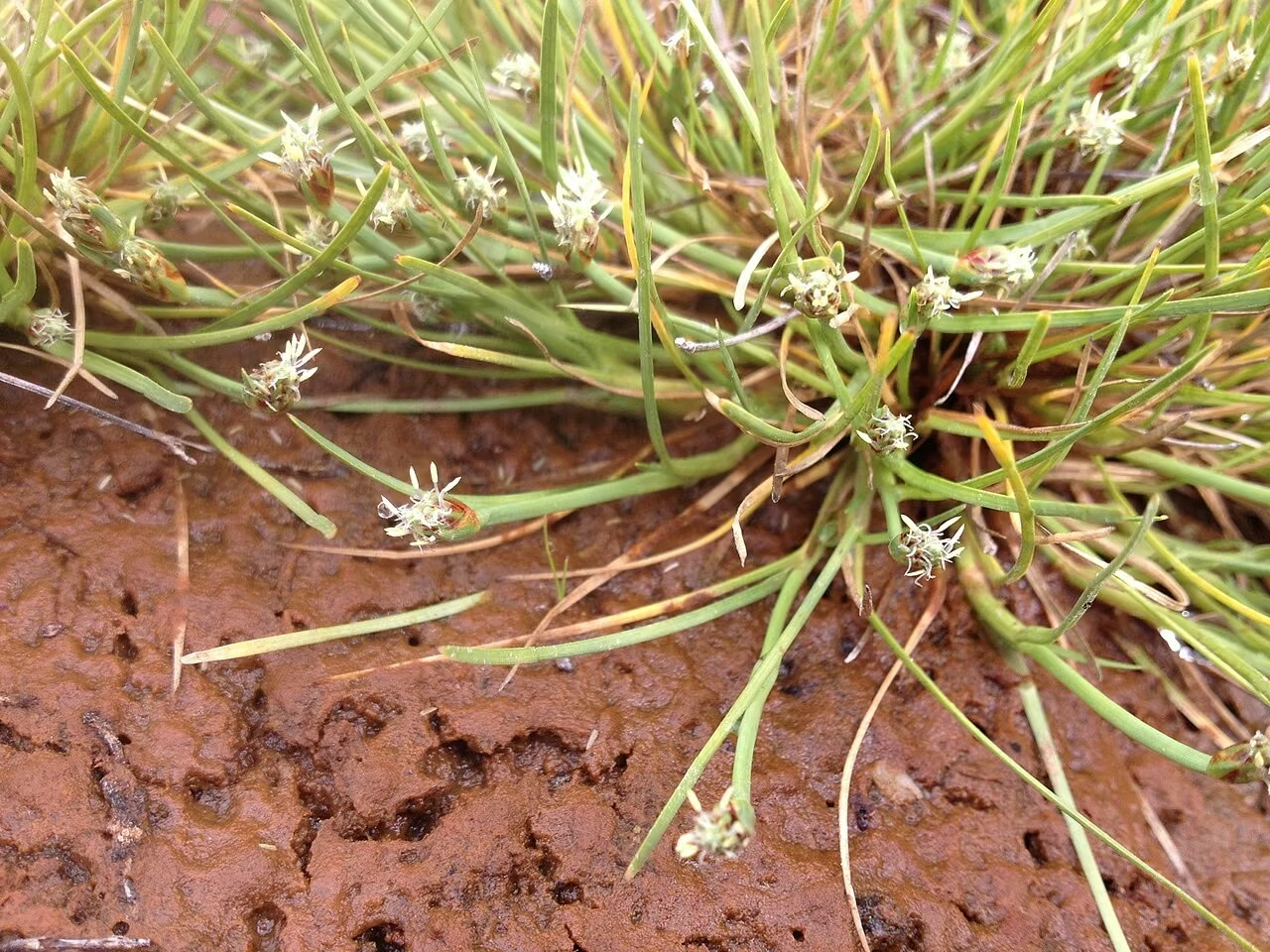
Isolepis crassiuscula is a small, yellow-green to bluish sedge that in New Zealand grows only on the Central Volcanic Plateau of the North Island, from the upper Rangitoto Range and Kaingaroa Plain south to the northern Ruahine Range and Waiouru. On land it forms compact tufts 60 to 150 mm across, but in deep pools and slow streams it grows fully underwater or as floating mats up to 1 m long. Its solitary, red-flecked spikelets with dark red-purple glumes make it distinctive. It also occurs in Australia and New Guinea, and is ranked At Risk - Naturally Uncommon in New Zealand because of its restricted range. Explore more native grasses and flaxes in our native plant guide.
Plant Description
Isolepis crassiuscula is a densely tufted sedge with yellow-green to glaucous (bluish-grey) foliage. It spreads by elongated, branched rhizomes that root at the nodes. On land it forms compact tufts 60 to 150 mm in diameter, while in water it can build floating mats up to 1 m long. The culms are rigid and leafy, 20 to 200 mm long and 1 to 2 mm thick, and the flattened, narrow-linear leaves are 40 to 60 mm long and 1 to 2 mm wide.
The flower head is usually a single terminal spikelet, rarely two. Spikelets are 3 to 10 mm long and 2 to 8 mm wide, ovoid to oblong, pale green flecked with red. The broadly ovate glumes, 2 to 4 mm long, are red-purple to dark red-purple. Each flower has 3 stamens and 2 style branches, and the nut is grey, obovate and compressed, about 1.5 by 1 mm.
The closest look-alike is Isolepis lenticularis. Isolepis crassiuscula has 3 rather than 2 stamens, spikelets 2 to 8 mm wide rather than 1 to 2 mm, and lacks the bract that sits below the spikelet in Isolepis lenticularis.
Quick Facts
| Scientific Name | Isolepis crassiuscula |
|---|---|
| Height | 20-200 mm |
| Spread | Tufts 60-150 mm across; aquatic mats up to 1 m long |
| Water Needs | Very high; boggy ground to shallow water |
| Light | Full sun to light shade |
| Frost Tolerance | High; grows to 1500 m on the volcanic plateau |
| Salt Tolerance | Low; an inland montane wetland plant |
| Growth Rate | Moderate |
| Lifespan | Perennial |
Climate Best Suited to
It suits the cold, frosty, high-rainfall climate of the central North Island volcanic plateau. It is not suited to warm, dry lowland conditions.
Regional Suitability
| City | Climate Suitability |
|---|---|
| Auckland | Low |
| Wellington | Low |
| Christchurch | Medium |
| Dunedin | Medium |
Plant Habitat
In New Zealand Isolepis crassiuscula is confined to the Central Volcanic Plateau of the North Island, from the upper Rangitoto Range and Kaingaroa Plain south to the northern Ruahine Range and the Waiouru area. Outside New Zealand it is found in Australia and New Guinea.
It is a montane to alpine wetland species of bogs, mires, and the margins of ponds, tarns and streams between about 700 and 1500 m. It also grows fully aquatic in deep pools and slow-flowing streams. It is rated an obligate wetland plant.
Growing Requirements
Soil Requirements
It grows in wet, peaty and volcanic soils around bogs and water margins.
- Permanently damp, peaty soil
- Tolerates being partly or fully submerged
- Acidic bog soils suit it well
Light Requirements
Its habitats on the volcanic plateau are mostly open bogs and water margins with good light.
- Full sun to light shade
- Avoid deep shade, which weakens tufts
Water Requirements
Water is essential. It never grows on dry ground.
- Keep soil saturated at all times
- Can be grown in shallow water in a pond
- Floating mats form in still or slow-moving water
Planting and Establishing
Plant rooted pieces in permanently wet, peaty soil at a pond or bog margin, or in a pot of peat-rich mix stood in water. In a pond it can be placed in shallow water and allowed to spread outward as a mat.
Because it is naturally restricted to the volcanic plateau, it is best grown by specialists and in restoration plantings within its natural range, using locally sourced material.
Ecological Role
Isolepis crassiuscula flowers from November to March and fruits from November to April, occasionally into May. NZPCN notes that its nuts are dispersed by water, and possibly by seed-eating animals and by attachment.
In plateau bogs and tarns it forms part of the low sedge turf and, in its aquatic form, floating mats that provide cover for aquatic invertebrates. NZPCN describes it as fairly widespread within its range and locally abundant, and it seems less vulnerable to weed invasion than some other wetland plants of the region.
Uses & Significance
Garden Uses
It is a specialist plant for wetland and pond collections rather than a mainstream garden sedge.
- Shallow margins of natural ponds
- Bog gardens in cool climates
- Aquatic pots for native wetland collections
Ecological Value
It is a characteristic plant of central North Island montane wetlands.
- Forms sedge turf at tarn and bog margins
- Floating mats shelter aquatic invertebrates
- Helps stabilise soft wet margins
Landscaping Uses
In a pond it softens hard edges with a low, bluish-green fringe that can creep out over the water. The red-flecked spikelets with dark glumes are attractive at close range.
Combine it with other plateau wetland natives such as small rushes and sedges in a bog garden designed around a cool, wet microclimate. It is too small to be used for screening or bank stabilisation on a large scale.
Seasonal Care Calendar
Spring
New growth begins and flowering starts in November.
- Divide plants as growth resumes
- Clear weeds from pond margins
Summer
Main flowering and fruiting season, with red-flecked spikelets prominent.
- Keep water levels up in dry spells
- Collect ripe nuts
Autumn
Fruiting continues to April or May.
- Sow fresh seed
- Thin floating mats if they spread too far
Winter
Growth slows; plants are hardy to the hard frosts of the volcanic plateau.
- No protection needed
- Avoid disturbing wet margins
When to Prune and How Much
No pruning is required. Dead culms can be pulled out by hand in spring to tidy tufts.
Floating mats in a pond can be trimmed back or divided if they spread further than wanted.
How to Grow Club Rush
According to NZPCN, Isolepis crassiuscula is readily propagated from rooted pieces and from fresh seed. Whichever method you use, the young plants need permanently damp, peaty soil, and they can be grown on in pots stood in water or planted directly into a pond margin. Use locally sourced material if planting near its natural range on the volcanic plateau.
From Rooted Pieces (Division)
The branched rhizomes root at their nodes, so a rooted section can be cut away and potted up with little disturbance. This is the quickest and most reliable method and gives a plant of flowering size in one season.
- Cut a section of rhizome that already has roots and shoots
- Pot it into a peat-rich, wet mix
- Stand the pot in a tray of water or sink it in a pond margin
- Keep in good light while it establishes
- Plant out once new shoots appear
From Seed
Collect the grey nuts when the spikelets mature between November and April. Fresh seed is recommended, so sow it promptly rather than storing it.
Seedlings are tiny at first, so keep the tray where it will not be flooded by heavy rain or overgrown by moss and liverworts, and be patient while they build up enough rhizome to handle.
- Rub the ripe nuts from the spikelets
- Sow on the surface of a wet, peaty mix
- Keep the tray standing in water
- Prick seedlings out into individual pots when large enough to handle
- Grow on in wet conditions before planting out
Pests & Diseases
No pests or diseases specific to Isolepis crassiuscula are recorded. NZPCN notes that it appears less vulnerable to weeds than other wetland plants of the central North Island.
In cultivation, ducks and other waterfowl may pull at floating mats, and algae can smother small plants in still, nutrient-rich ponds.
Cultural Significance
No Māori name or traditional use specific to Isolepis crassiuscula has been recorded in the sources consulted.
The species was described by Joseph Dalton Hooker and was long treated as Scirpus crassiusculus before the genus Isolepis was reinstated. The epithet crassiuscula means somewhat thick, and the genus name comes from the Greek isos (equal) and lepis (scale).
Bonus Tip
To see whether a small Isolepis from a plateau bog is this species, count the stamens with a hand lens and look below the spikelet: three stamens and no subtending bract point to Isolepis crassiuscula rather than Isolepis lenticularis.
Related Plants
Explore other native plants that share similar characteristics or habitats with Club Rush (Isolepis crassiuscula), offering further insights into New Zealand's diverse flora. These related species provide context and opportunities for complementary planting in your garden.
Coastal Morning Glory
Ipomoea cairica
Beach Morning Glory
Ipomoea pes caprae subsp. brasiliensis

Pygmy Clubrush
Isolepis basilaris
Isolepis caligenis
Isolepis caligenis
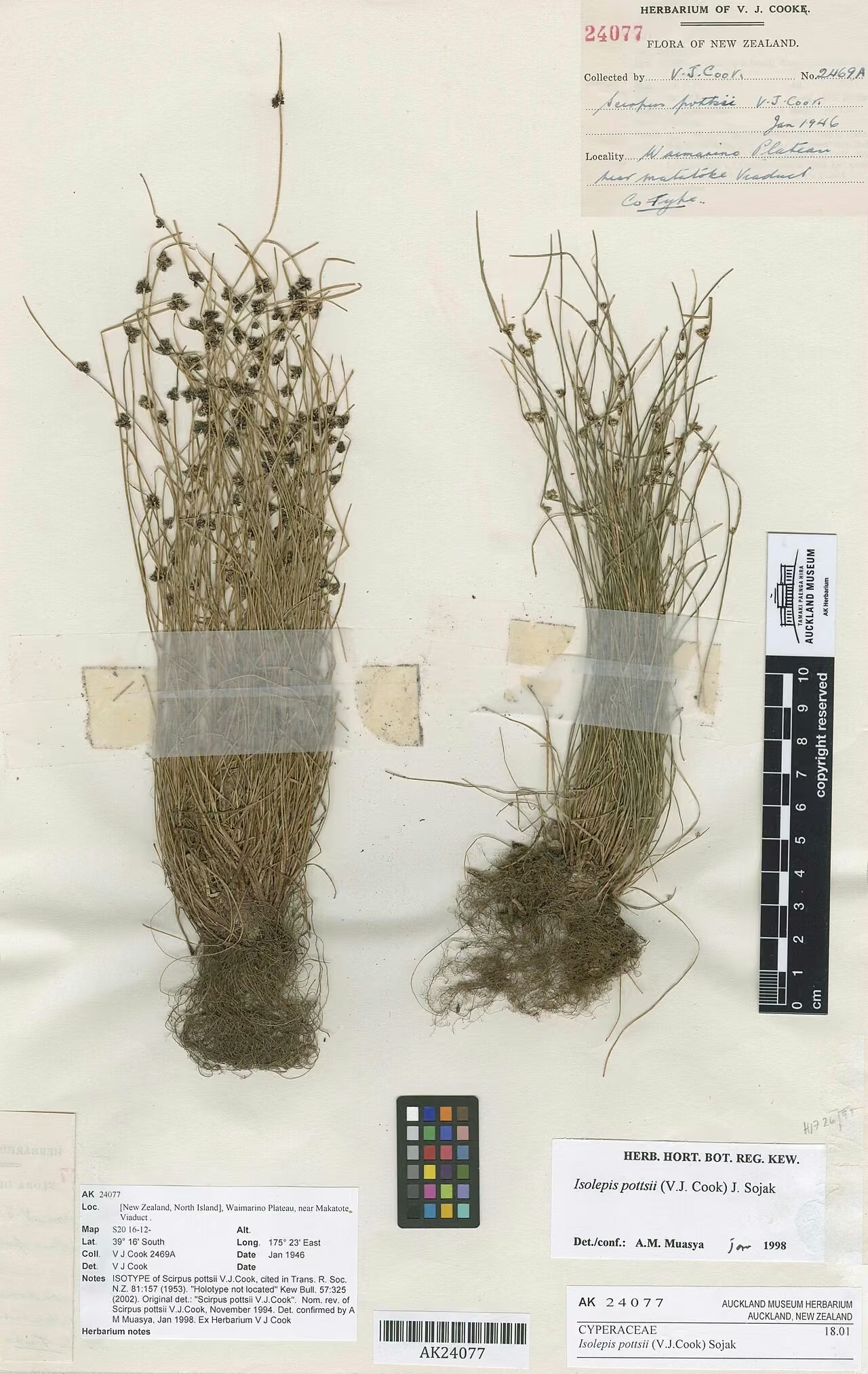
Isolepis pottsii
Isolepis pottsii
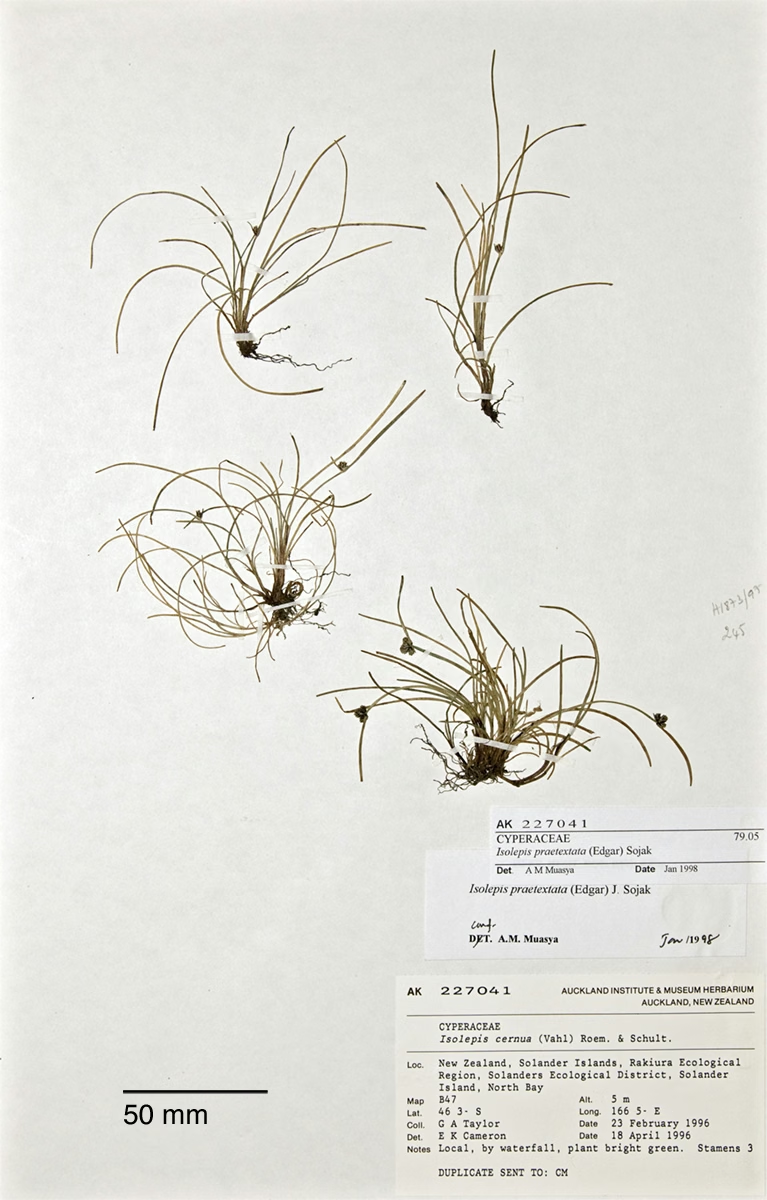
Isolepis praetextata
Isolepis praetextata
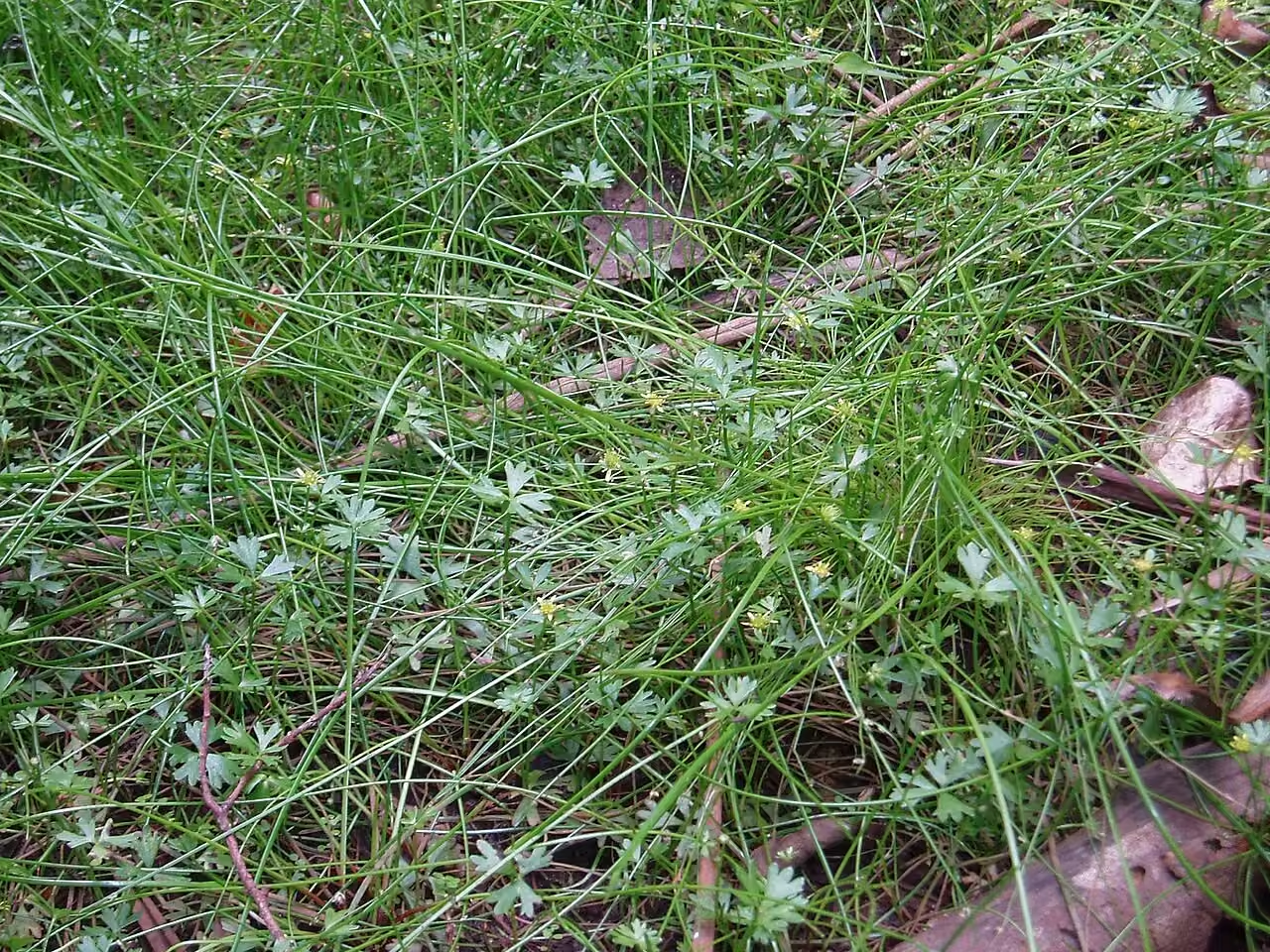
Isolepis reticularis
Isolepis reticularis
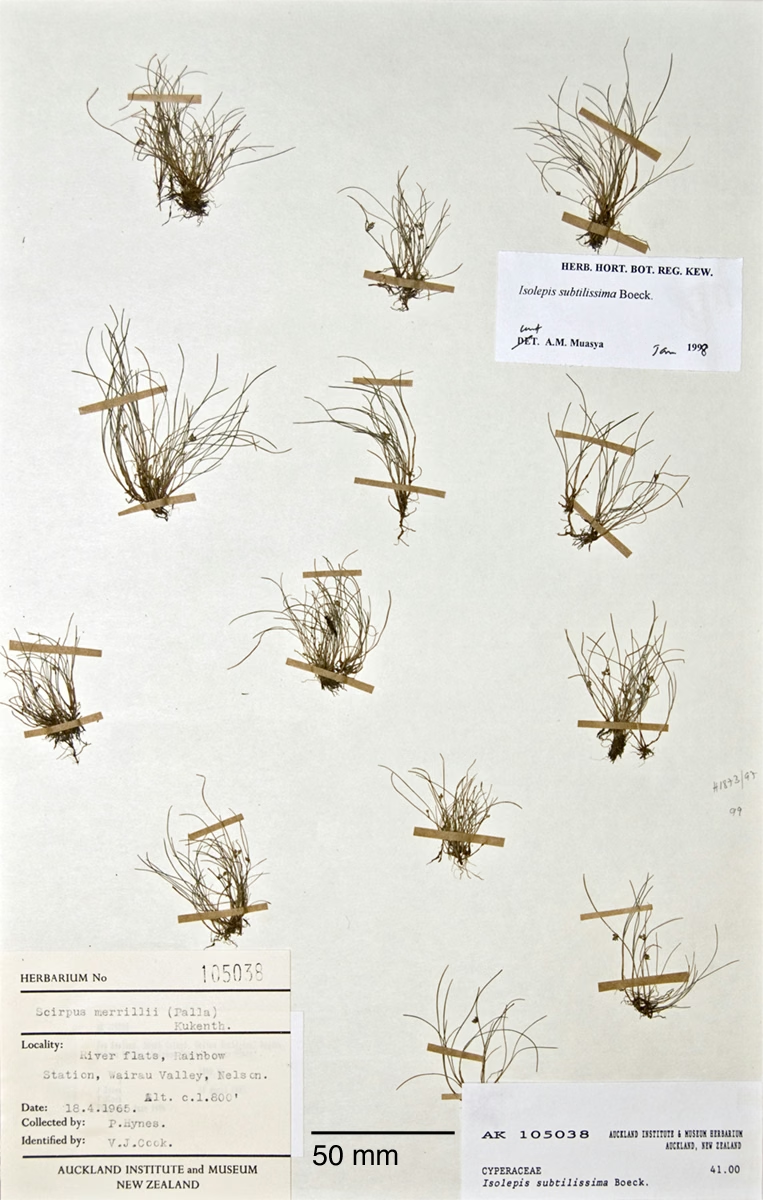
Isolepis subtilissima
Isolepis subtilissima
Plant Conservation
Isolepis crassiuscula is ranked At Risk - Naturally Uncommon (2023), with the qualifiers RR (range restricted) and SO (secure overseas). Its New Zealand range is limited to the Central Volcanic Plateau, but NZPCN describes it as rather widespread there and locally abundant.
Protecting plateau bogs, tarns and streams from drainage, vehicle damage and invasive weeds is the best way to secure it. Its occurrence in Australia and New Guinea means it is not at risk globally.
Frequently Asked Questions
Where is Isolepis crassiuscula found in New Zealand?
Only on the Central Volcanic Plateau of the North Island, from the upper Rangitoto Range and Kaingaroa Plain south to the northern Ruahine Range and the Waiouru area, at about 700 to 1500 m.
Can Isolepis crassiuscula grow underwater?
Yes. As well as forming tufts on boggy ground, it can grow fully aquatic in deep pools and slow-flowing streams, where it forms floating mats up to 1 m long.
How is Isolepis crassiuscula different from Isolepis lenticularis?
Isolepis crassiuscula has 3 stamens rather than 2, broader spikelets 2 to 8 mm wide, and no bract below the spikelet, whereas Isolepis lenticularis has a subtending bract.
Is Isolepis crassiuscula a good pond plant?
NZPCN notes it can be grown as an aquatic or pond plant from rooted pieces or fresh seed, provided it has permanently damp, peaty soil.
Sources and Further Reading
The botanical, growing, and conservation details for Club Rush (Isolepis crassiuscula) on this page draw on the New Zealand plant references below. Consult them for full technical records and the latest distribution data.