
Pygmy Clubrush
Isolepis basilaris
Last updated:
Pygmy clubrush (Isolepis basilaris) is one of New Zealand's smallest sedges, a minute, moss-like plant forming dense, circular patches only 1 to 10 cm across and up to 6 cm tall. Its tufts are bright green above and reddish brown below, and its tiny flower spikelets are hidden among the bristle-like leaves. Endemic to New Zealand, it grows from Hawke's Bay to Southland on damp sandy or silty margins of lagoons, tarns, ephemeral lakes and rivers, from the coast to 700 m. It is easily overlooked and is ranked At Risk - Naturally Uncommon, with livestock trampling and competition from taller plants among its threats. Explore more native grasses and flaxes in our native plant guide.
Plant Description
Isolepis basilaris is a minute, densely tufted sedge with much-branched rhizomes that build circular, moss-like patches 10 to 100 mm across. The plants reach no more than about 60 mm tall and are bright green above and reddish brown below. The leaves are setaceous, meaning fine and bristle-like, 5 to 60 mm long.
The flowering stems are very short, less than 1.5 cm, so the single spikelets, 2.5 to 3.5 mm long and 1.5 to 2 mm wide, sit hidden among the leaves near the base of the plant, which is reflected in the name basilaris. The nuts are about 0.5 mm long, red-brown to dark brown or almost black, with a finely netted surface.
It is most likely to be confused with Isolepis caligenis, another small turf-forming clubrush. Pygmy clubrush has only one or two leaves per tuft rather than two to five, shorter flower stems, and darker, flattened rather than rounded nuts.
Quick Facts
| Scientific Name | Isolepis basilaris |
|---|---|
| Height | Up to 0.06 m |
| Spread | Patches 1-10 cm across |
| Water Needs | High; permanently damp to seasonally flooded ground |
| Light | Full sun |
| Frost Tolerance | High; grows to 700 m and south to Southland |
| Salt Tolerance | Moderate; tolerates brackish margins |
| Growth Rate | Slow to moderate |
| Lifespan | Perennial |
Climate Best Suited to
A temperate turf sedge that suits cool to mild climates, as long as its ground stays damp for much of the year.
Regional Suitability
| City | Climate Suitability |
|---|---|
| Auckland | Low |
| Wellington | Medium |
| Christchurch | Medium |
| Dunedin | Medium |
Plant Habitat
Pygmy clubrush is endemic to New Zealand, occurring in the North and South Islands from Hawke's Bay south to Southland. It is found in coastal, lowland and upland sites from sea level to about 700 m.
It grows on damp sandy or silty margins of lagoons, tarns, ephemeral lakes and rivers, in both freshwater and brackish conditions. These are open, low turf habitats where water levels fluctuate and taller plants are kept at bay. It is classed as an obligate wetland plant, almost always found in wet places.
Growing Requirements
Soil Requirements
It needs damp, open sandy or silty ground with little competition.
- Fine sand or silt that stays moist
- Low fertility helps keep taller competitors out
- Tolerates slightly brackish conditions
Light Requirements
As a plant of open turf on lake and lagoon margins, it needs full light.
- Full sun
- Quickly declines if overshadowed by taller plants
Water Requirements
Moisture is essential; in the wild its margins may flood in winter and remain damp through summer.
- Keep constantly moist
- Tolerates periodic shallow flooding
- Stand pots in a saucer of water in summer
Planting and Establishing
Pygmy clubrush is not commercially available, though several botanic gardens and specialist growers hold it. In cultivation it is best grown in a shallow pan or trough of damp sandy mix, or at the very edge of a small pond where nothing taller can shade it.
Keep it free of weeds and mosses that might smother such a tiny plant, and never let the pot dry out.
Ecological Role
Like other sedges it is wind pollinated. It flowers from September to November and fruits from December to April, with persistent seed heads that remain among the foliage. The tiny nuts probably disperse with water along shorelines, though specific studies were not found.
It belongs to the specialised low turf communities of ephemeral wetlands and lake margins, where fluctuating water levels create open ground. Without that disturbance, taller vegetation closes in and the turf disappears.
Uses & Significance
Garden Uses
A specialist plant for collectors of small native wetland species.
- Shallow trough or pan in a wetland plant collection
- Edge of a small, sunny pond
- Ex situ conservation collections
Ecological Value
It is a characteristic member of New Zealand's turf communities on wetland margins, habitats that support many other small and threatened plants.
- Contributes to ephemeral wetland and lakeshore turf
- Indicator of intact, low-disturbance margins free of stock
- Endemic species with regional significance in Otago and Wellington
Landscaping Uses
Its main landscaping value is in naturalistic wetland restorations, where it can form part of a low turf on gently sloping sandy margins. In a garden it is best treated as a living miniature in a trough.
Pair it with other tiny turf plants rather than with sedges or rushes that would soon overtop it.
Seasonal Care Calendar
Spring
Flowering occurs from September to November, though the spikelets are hidden among the leaves.
- Keep moist as temperatures rise
- Weed carefully around patches
Summer
Fruit begins to form from December.
- Do not allow to dry out
- Stand pots in shallow water
Autumn
Fruiting continues to April and seed heads persist.
- Collect seed for propagation
- Divide patches if needed
Winter
Growth slows; wild sites may be flooded.
- Tolerates cold and wet
- Ensure pots are not frozen solid for long periods
When to Prune and How Much
No pruning is needed. Gently remove fallen leaves, weeds and competing mosses that might smother the patches.
If a patch becomes congested or dies out in the centre, lift and divide it to rejuvenate it.
How to Grow Pygmy Clubrush
NZPCN states that Isolepis basilaris is easily grown from fresh seed and by division of whole plants. Because it is At Risk and regionally endangered in places, material for propagation should come from existing cultivated plants or be collected only with permission and in line with Department of Conservation guidance. Its persistent seed heads make seed collection practical from December to April. Grow young plants in shallow containers of damp, sandy mix in full sun, which reproduces the open, wet lake margins where it grows naturally.
From Seed
The seed heads persist among the leaves, so ripe nuts can be gathered by teasing them out with fine tweezers once they have turned dark brown to almost black.
- Collect dark, ripe nuts from December to April
- Sow on the surface of a pan of moist, fine sandy seed mix
- Do not cover the seed, or cover only with a dusting of fine sand
- Stand the pan in a tray of shallow water to keep it constantly wet
- Keep in a bright, sheltered place
- Grow seedlings on as a group until they knit into small patches
By Division
Whole patches can be split into smaller clumps, each with a portion of rhizome and roots.
- Lift a patch with its sandy soil intact
- Gently tease it into several pieces with roots attached
- Replant into damp sandy mix at the same depth
- Keep wet and in good light until re-established
Pests & Diseases
No insect pests or diseases are recorded as significant. The greatest dangers in the wild are browsing and trampling by cattle, sheep, horses and pigs.
In cultivation the main risks are drying out and being smothered by weeds, moss or liverworts in the pot.
Cultural Significance
No Māori name or traditional use is recorded for pygmy clubrush, a tiny plant that is easily overlooked.
It was formerly treated as Scirpus basilaris. The genus name Isolepis comes from the Greek isos (equal) and lepis (scale), and basilaris is Latin for basal, describing the flowers held at the base of the plant.
Bonus Tip
To find pygmy clubrush in the field, search on hands and knees along the damp, open sandy fringe of a tarn or ephemeral lake in late spring or summer. Look for coin-sized, bright green, moss-like cushions that are reddish brown underneath when gently lifted at the edge.
Related Plants
Explore other native plants that share similar characteristics or habitats with Pygmy Clubrush (Isolepis basilaris), offering further insights into New Zealand's diverse flora. These related species provide context and opportunities for complementary planting in your garden.
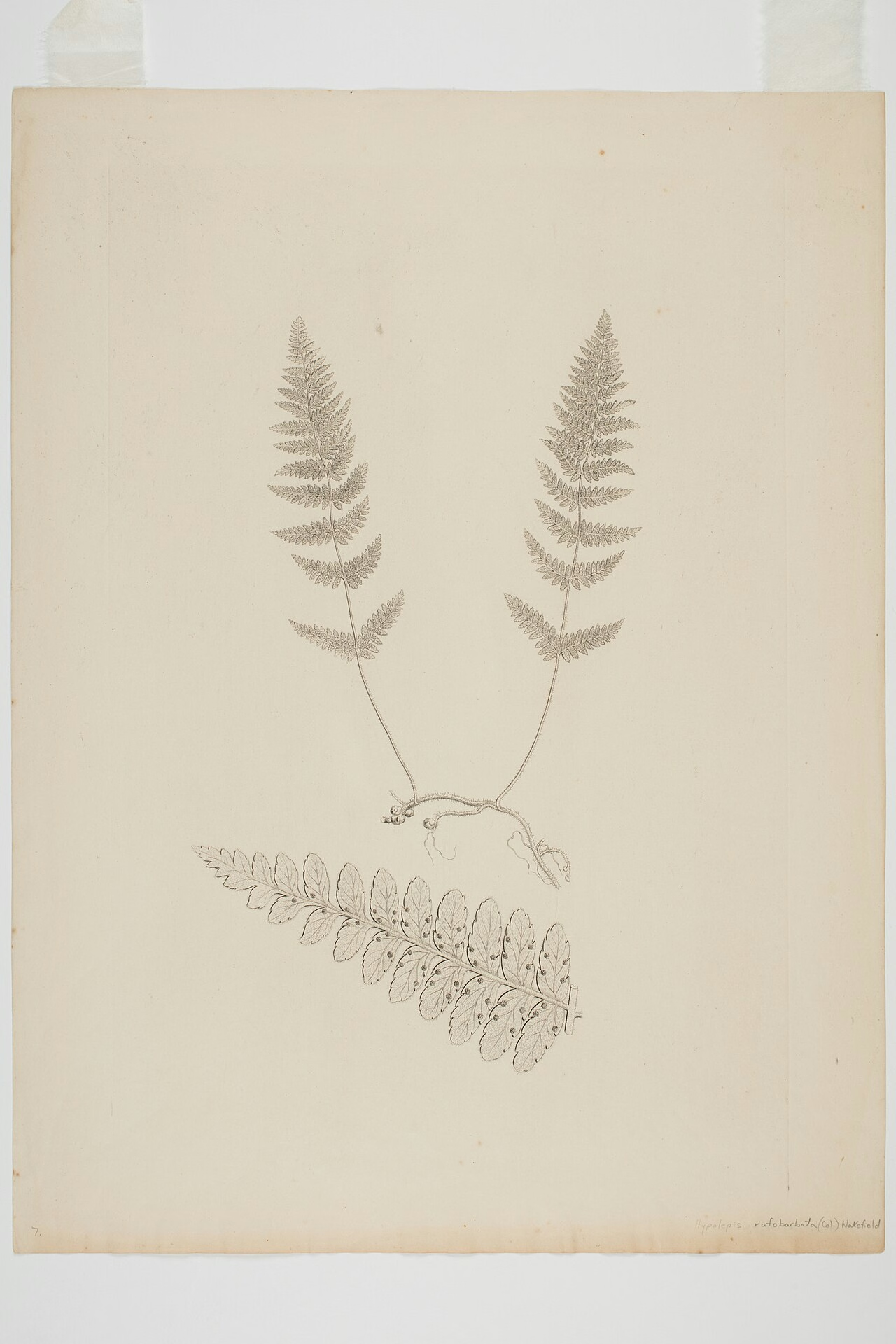
Sticky Pig Fern
Hypolepis rufobarbata
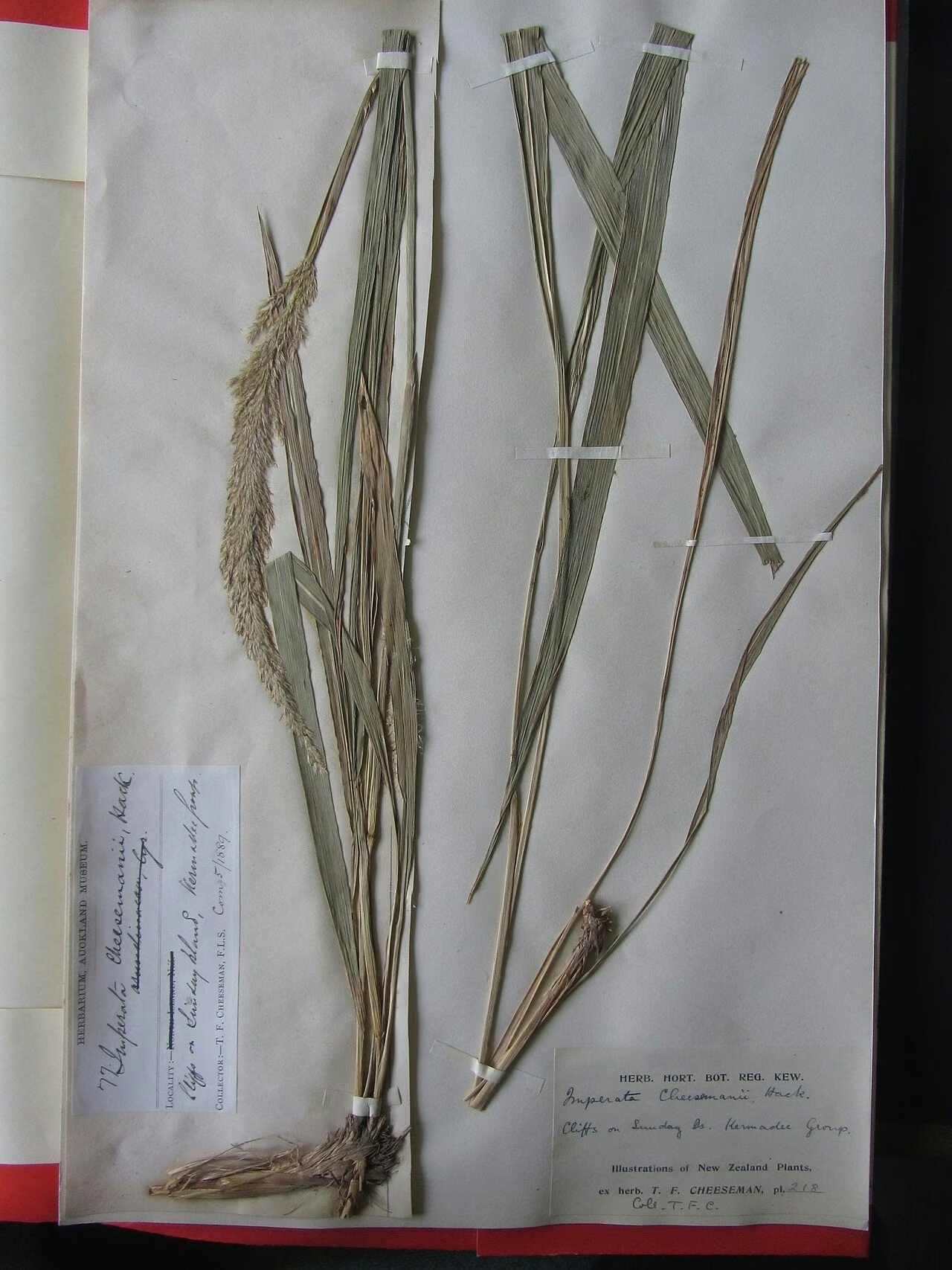
Cheeseman's Imperata
Imperata cheesemanii
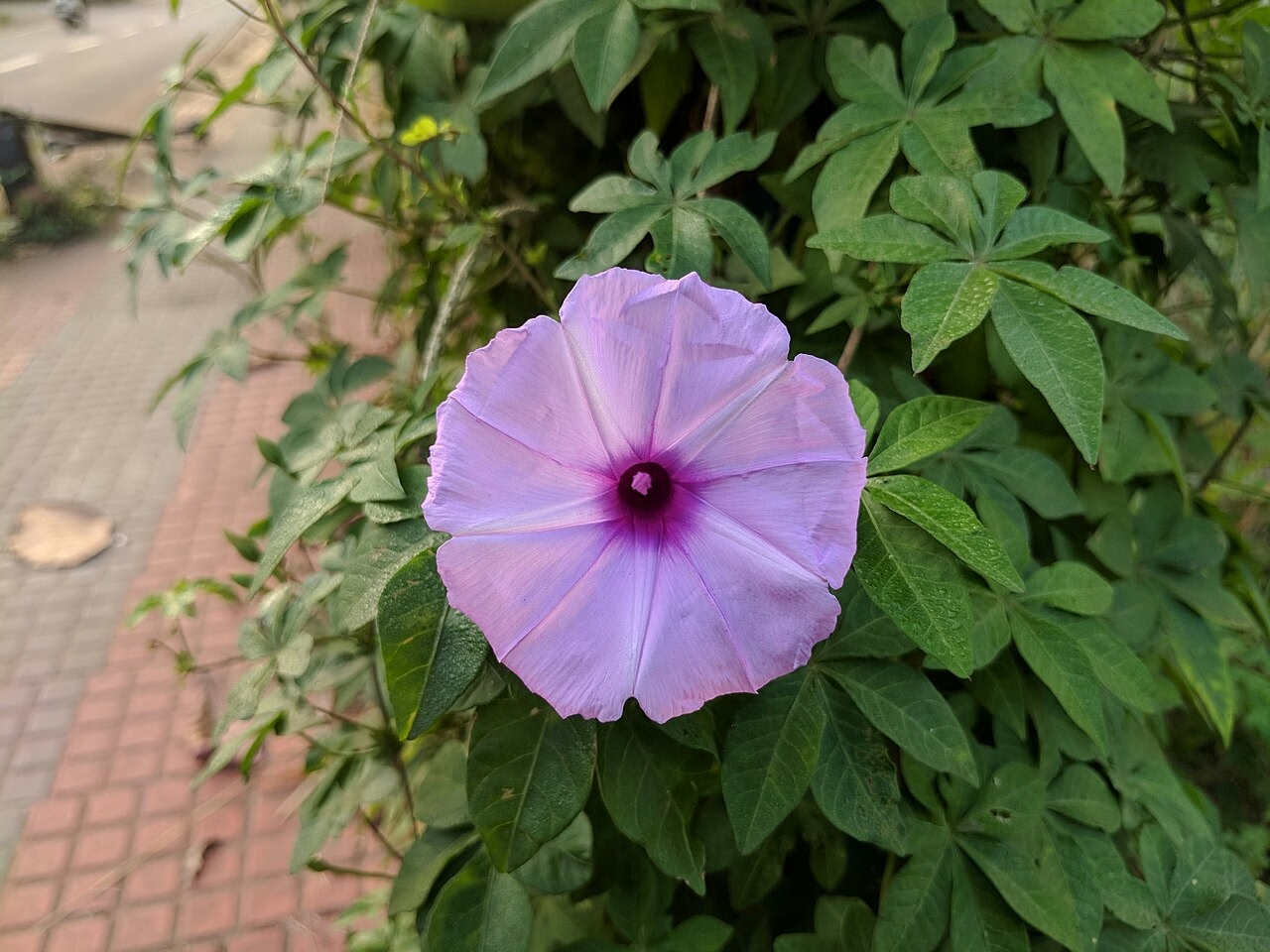
Coastal Morning Glory
Ipomoea cairica
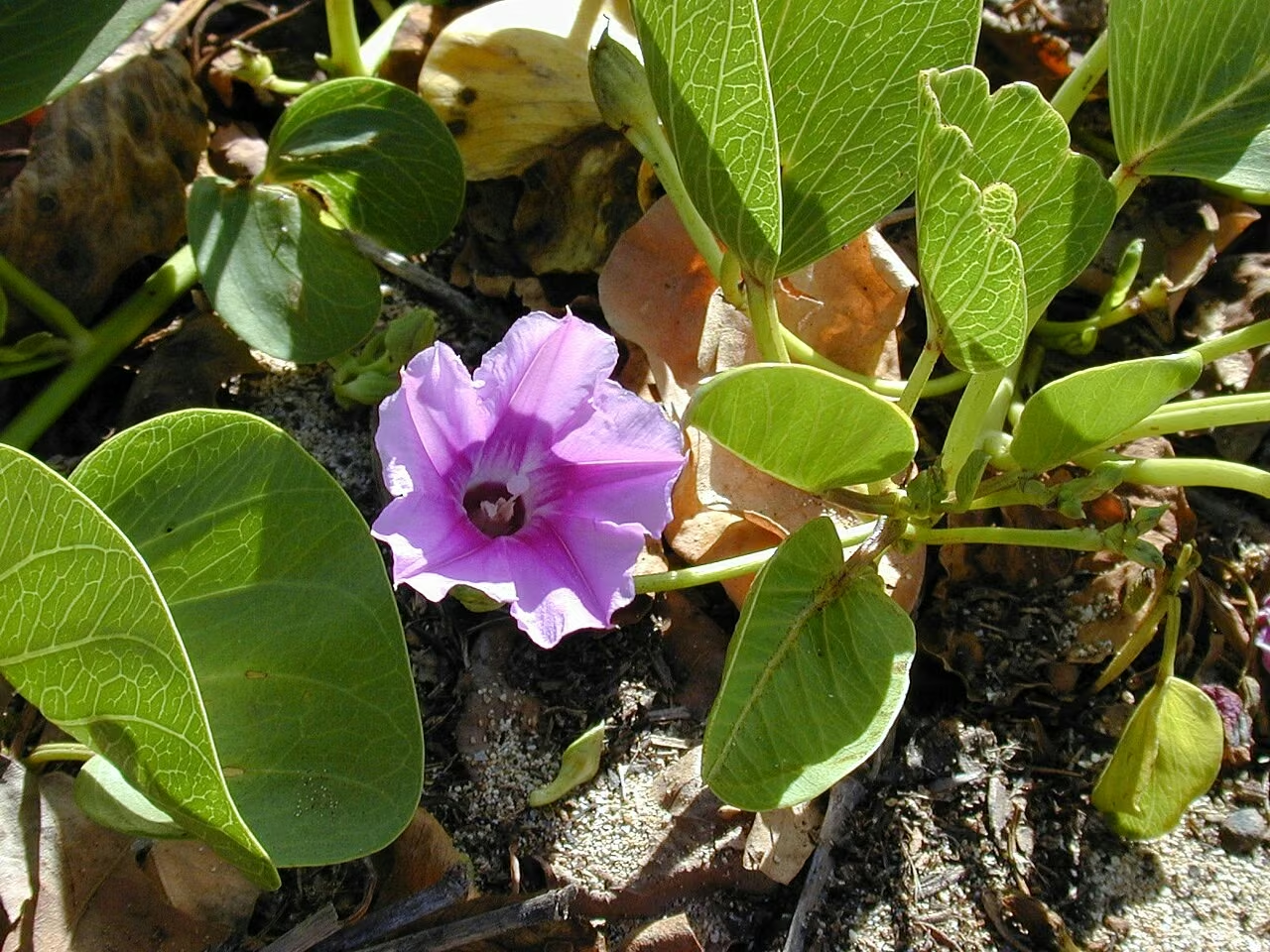
Beach Morning Glory
Ipomoea pes caprae subsp. brasiliensis
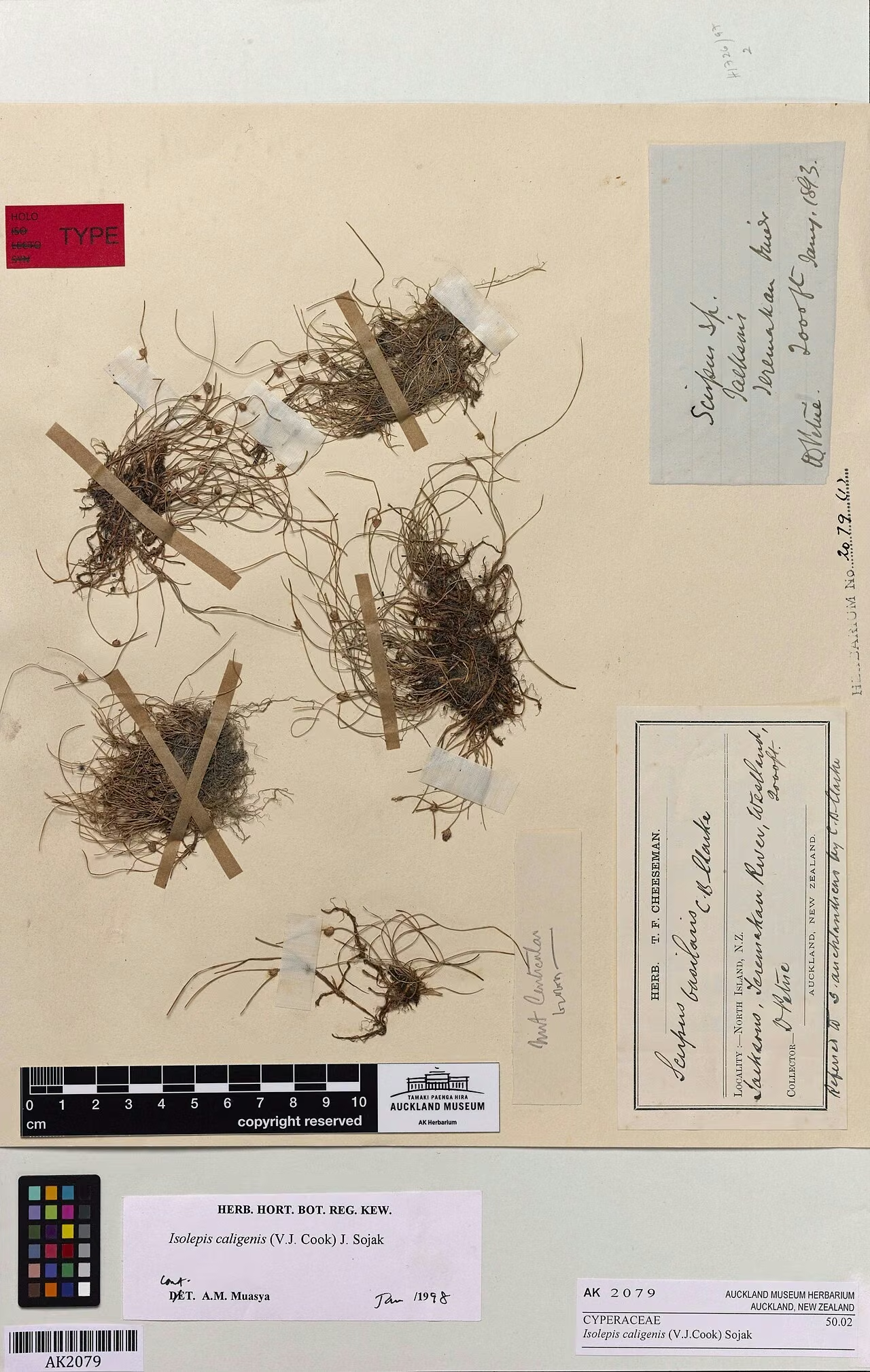
Isolepis caligenis
Isolepis caligenis
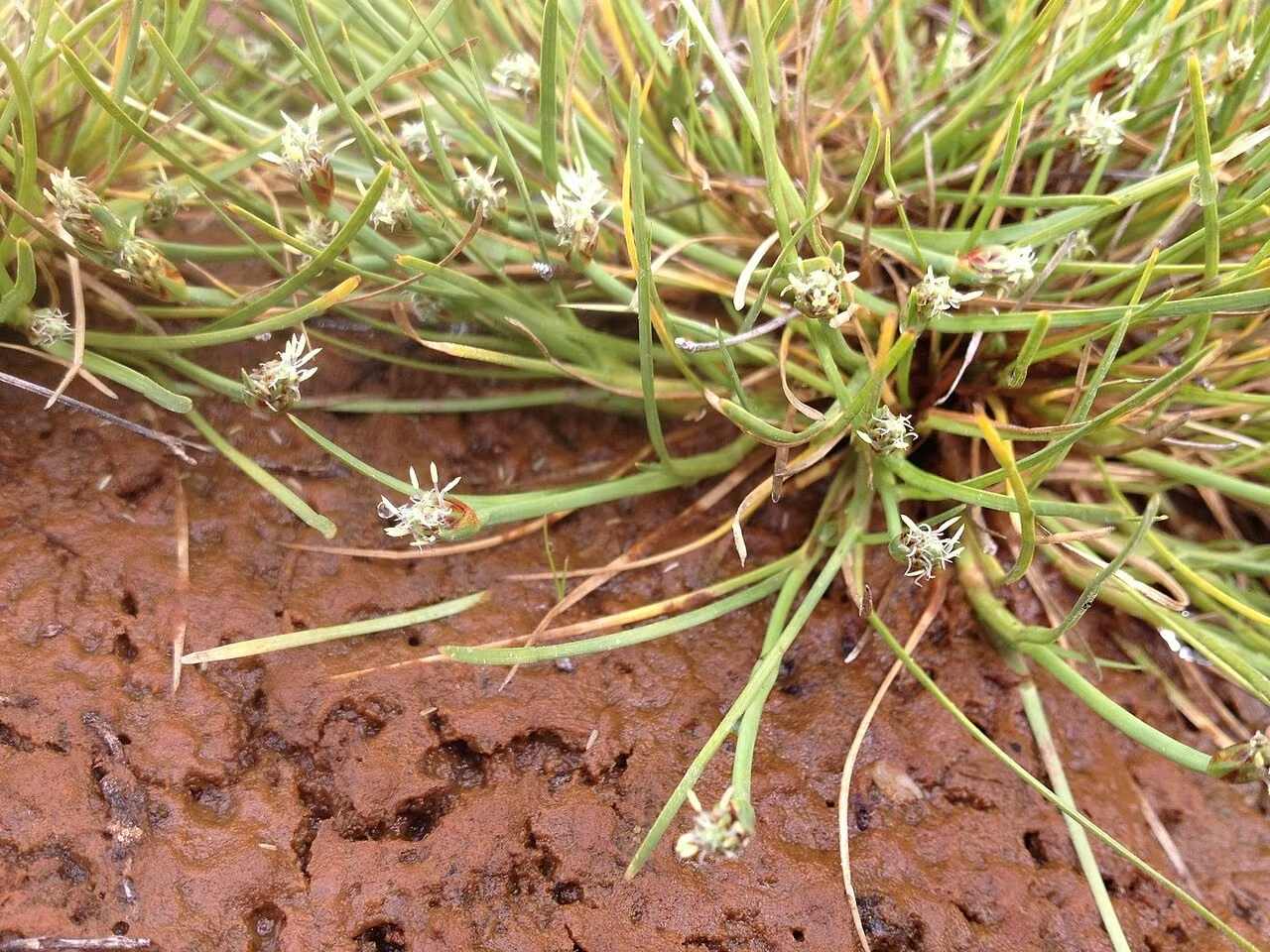
Isolepis crassiuscula
Isolepis crassiuscula
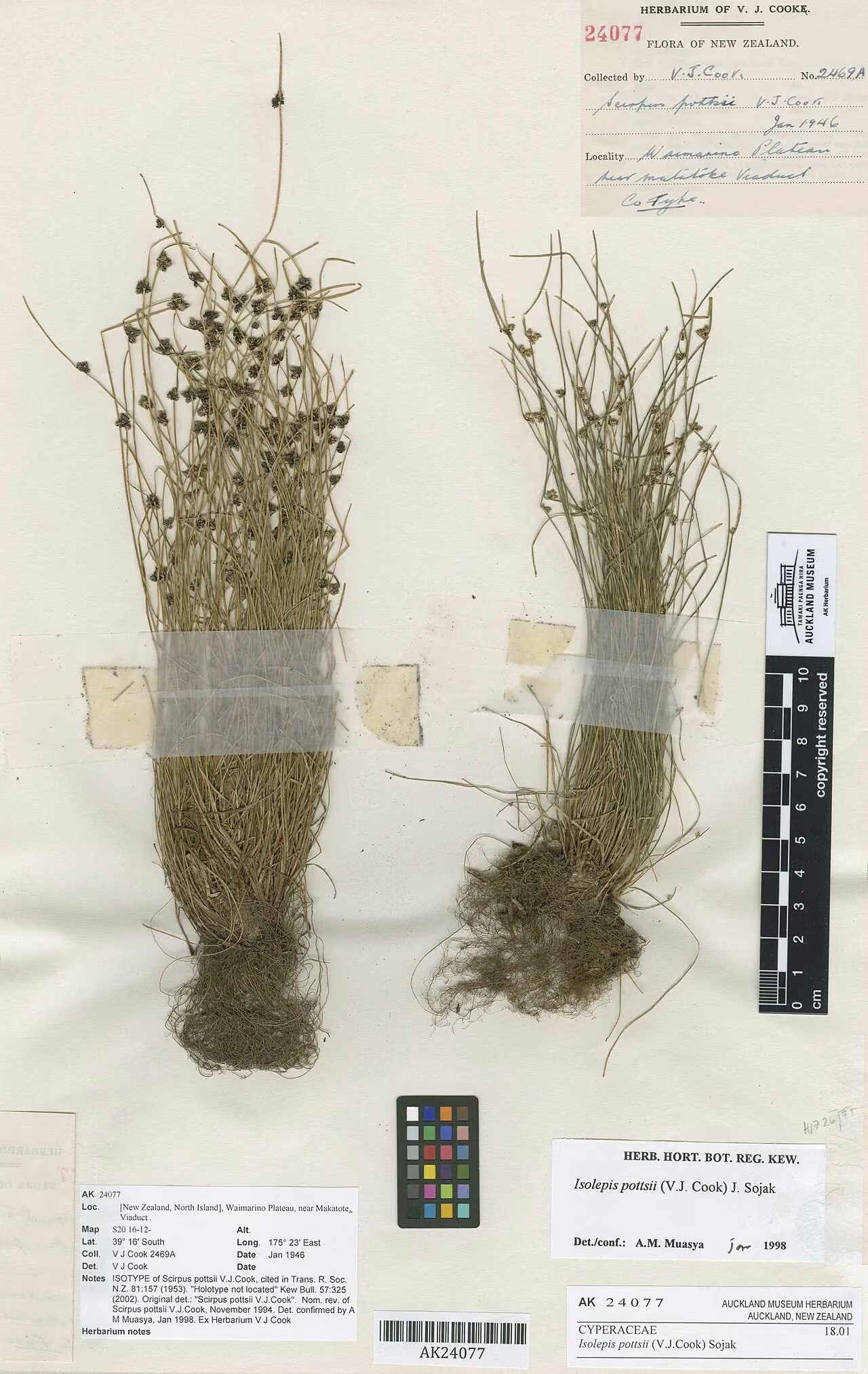
Isolepis pottsii
Isolepis pottsii
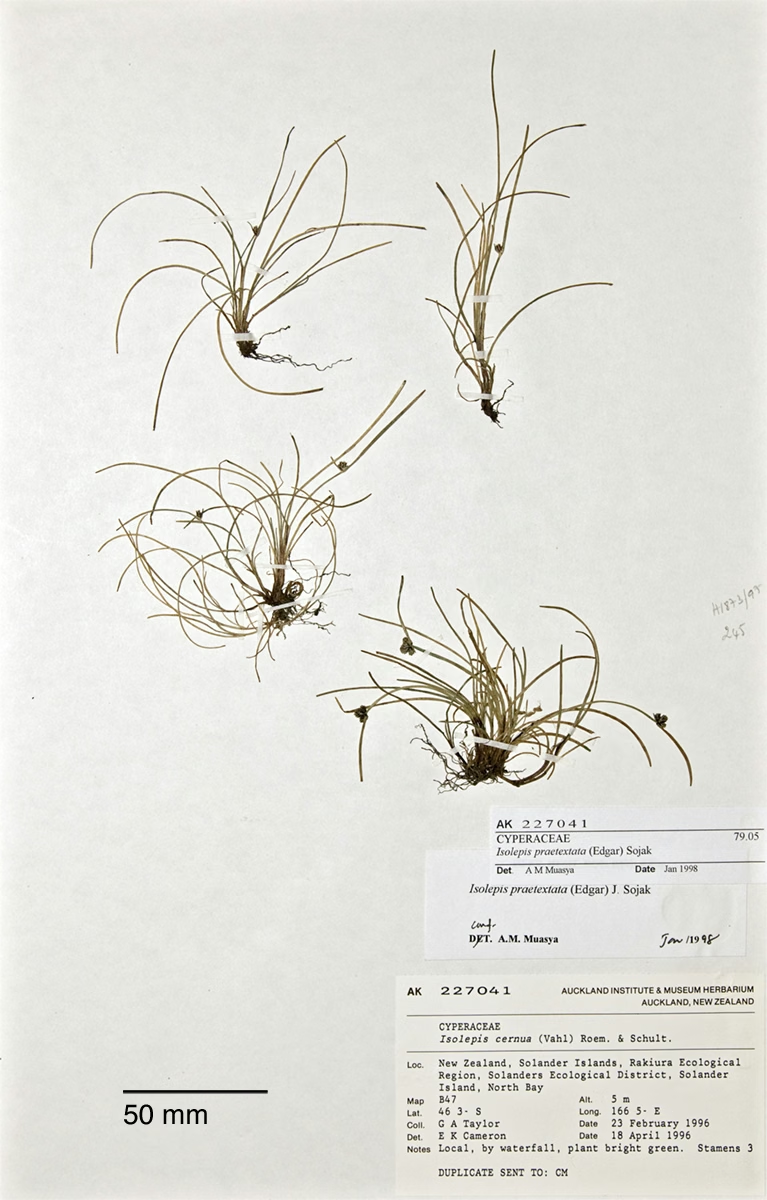
Isolepis praetextata
Isolepis praetextata
Plant Conservation
Isolepis basilaris is ranked At Risk - Naturally Uncommon (2023) with qualifiers EF (episodic or fluctuating), RR (range restricted) and Sp (sparse). It was previously listed as At Risk - Declining (2017) and Threatened - Nationally Vulnerable (2012). Regionally it is Regionally Endangered in Otago and Regionally Critical in Wellington.
Threats include livestock browsing and trampling, competition from taller vegetation, coastal development, erosion and four-wheel-drive vehicles. Fencing lake and lagoon margins from stock, keeping vehicles off sensitive shores and controlling weeds all help this tiny sedge.
Frequently Asked Questions
What does pygmy clubrush look like?
It forms tiny, dense, moss-like tufts 3 to 9 cm across, bright green above and reddish brown underneath, with bristle-like leaves that hide the small single spikelets and nearly black nuts.
Where is Isolepis basilaris found?
It occurs in the North and South Islands from Hawke's Bay to Southland, on damp sandy or silty margins of lagoons, tarns, ephemeral lakes and rivers up to 700 m altitude, in fresh or brackish water.
How is pygmy clubrush different from Isolepis caligenis?
Isolepis basilaris has fewer leaves per tuft (one or two rather than two to five), shorter flowering stems, and darker nuts that are flattened rather than rounded.
What threatens pygmy clubrush?
Browsing and trampling by cattle, sheep, horses and pigs, competition from taller vegetation, coastal development, erosion and damage from four-wheel-drive vehicles all affect its habitats.
Sources and Further Reading
The botanical, growing, and conservation details for Pygmy Clubrush (Isolepis basilaris) on this page draw on the New Zealand plant references below. Consult them for full technical records and the latest distribution data.