Beach Morning Glory
Ipomoea pes caprae subsp. brasiliensis
Last updated:
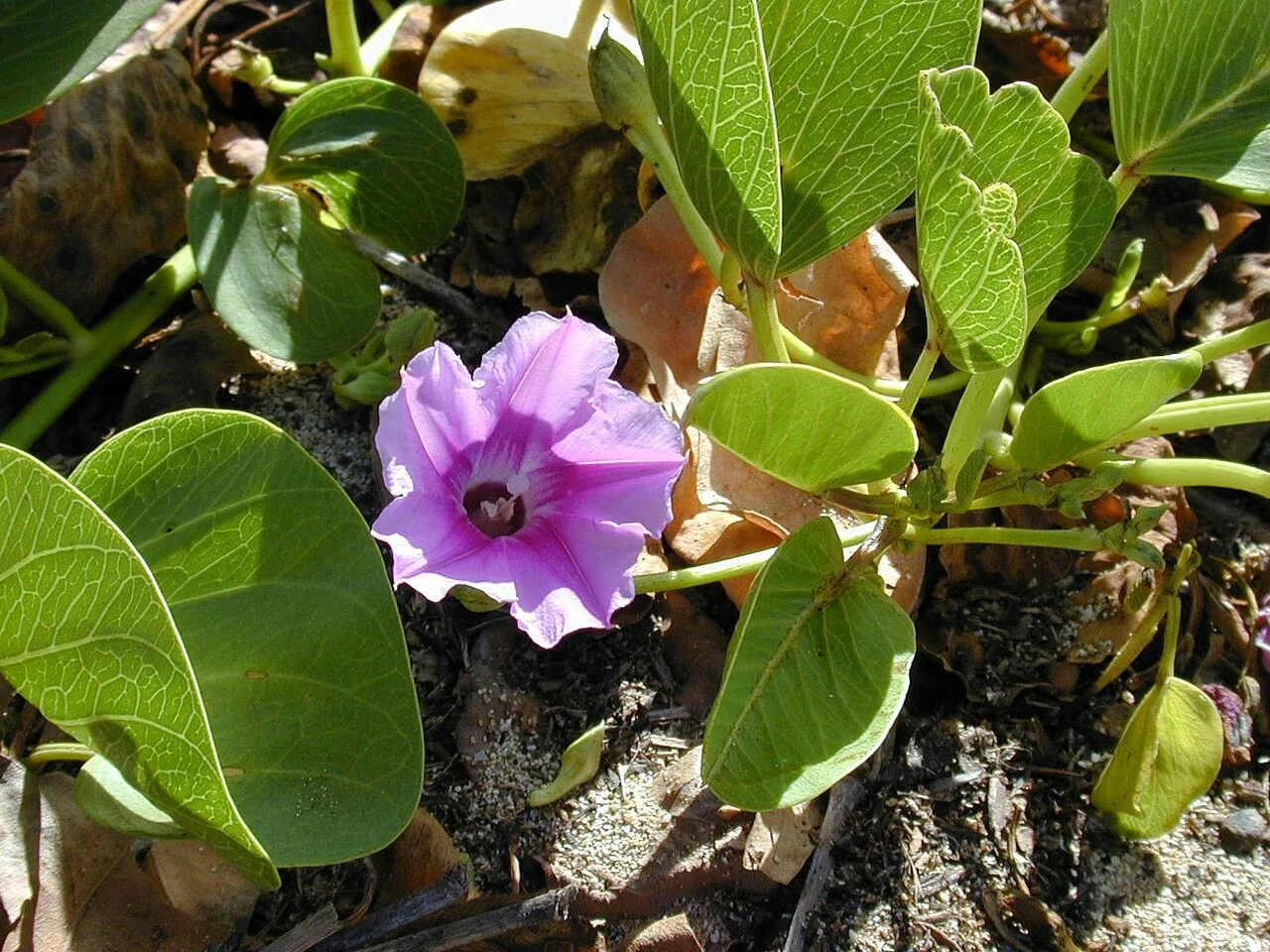
Beach morning glory (Ipomoea pes-caprae subsp. brasiliensis) is a robust, deep-rooted trailing vine of tropical beaches that reaches its world southern limit in New Zealand. Its prostrate stems can run up to 20 m across the sand, rooting at the nodes, and carry thick, glossy, rounded leaves often notched at the tip like a goat's hoof, the meaning of pes-caprae. Large pink funnel-shaped flowers 3 to 5 cm across appear from October to April. In New Zealand it grows on some of the Kermadec Islands and at a single mainland site at Te Paki in the far north, so it is ranked At Risk - Naturally Uncommon. Explore more native ground covers in our native plant guide.
Plant Description
Ipomoea pes-caprae subsp. brasiliensis is a hairless perennial with a stout, deep tap root. From it radiate numerous prostrate stems that trail up to 20 m long, rooting freely at the nodes, so a single plant can cover a large area of sand.
The leaves are broad-oblong to almost circular, 4 to 12 cm long (up to 17 cm in the species overall), entire, thick, fleshy and glossy dark green, often with a notch at the tip. The funnel-shaped flowers are pink with darker rose bands, 3 to 5 cm across, and are followed by capsules containing two to four brownish seeds.
NZPCN notes that even when not in flower the large, dark green, fleshy, broad-oblong to nearly round, glossy leaves are unmistakable. The other indigenous coastal morning glory, Ipomoea cairica, is a climber with deeply five to seven lobed leaves, and the native shore bindweed (Calystegia soldanella) has much smaller kidney-shaped leaves.
Quick Facts
| Scientific Name | Ipomoea pes caprae subsp. brasiliensis |
|---|---|
| Height | Under 0.3 m (prostrate) |
| Spread | Stems trail up to 20 m |
| Water Needs | Low; deep tap root |
| Light | Full sun |
| Frost Tolerance | None; extremely cold sensitive |
| Salt Tolerance | Very high; grows at the high tide mark |
| Growth Rate | Fast in warm conditions |
| Lifespan | Perennial |
Climate Best Suited to
A tropical and subtropical beach plant that needs warm, frost-free conditions; New Zealand is at the cold extreme of its world range.
Regional Suitability
| City | Climate Suitability |
|---|---|
| Auckland | Low |
| Wellington | Low |
| Christchurch | Low |
| Dunedin | Low |
Plant Habitat
Beach morning glory is abundant throughout the Pacific and Central America. In New Zealand it occurs on some of the Kermadec Islands and on the mainland only at Te Paki in the far north, where a small population grows at Te Paengarehia (Twilight Beach). A former population near Waipapakauri on Ninety Mile Beach was destroyed by forestry, and it has been recorded in beach drift further south at Ripiro Beach.
It is usually a strict beach strand plant, growing along the high tide mark among driftwood or at the base of foredunes. On the Kermadec Islands it has also been recorded along the rims of active fumaroles.
Growing Requirements
Soil Requirements
It grows in loose beach sand, sending its tap root deep to reach moisture.
- Clean, free-draining sand
- Tolerates salt spray and occasional wash from high tides
- Needs warm soil to grow actively
Light Requirements
A plant of fully open beaches.
- Full sun is essential
- Will not tolerate shade from dune shrubs
Water Requirements
Its deep tap root and fleshy leaves let it cope with dry, salty beach conditions.
- Very drought tolerant once established
- Avoid waterlogged soils
Planting and Establishing
This is not a practical garden plant in most of New Zealand. NZPCN reports it is extremely cold sensitive and has proved difficult to grow even in Kaitaia. If attempted, it needs a hot, frost-free, sandy site in the far north or a heated glasshouse.
Plants should never be taken from the tiny wild populations. Any restoration within its range should be guided by the Department of Conservation and local botanists.
Ecological Role
The seeds of beach morning glory float and are dispersed by ocean currents, which explains its vast pantropical range and the occasional records of it in beach drift on Northland beaches. Its trailing, rooting stems bind loose sand along the strand line.
In New Zealand it is at its southern limit, and the climate may be too cool for it to establish widely. No information on its pollinators in New Zealand was found.
Uses & Significance
Garden Uses
Of interest mainly to specialist collectors and botanic gardens in warm areas.
- Heated glasshouse collections of rare native plants
- Not recommended for general gardens because of its cold sensitivity
Ecological Value
It is a distinctive part of New Zealand's subtropical strand flora.
- Binds sand at the base of foredunes
- Marks the southern limit of a widespread tropical beach community
- Shows how sea-dispersed plants colonise New Zealand naturally
Landscaping Uses
In tropical countries it is used to bind sand on beachfronts, but in New Zealand its cold sensitivity rules out landscape use outside the far north.
Where seen in the wild, its sprawling stems and pink flowers make a striking sight against white sand and driftwood.
Seasonal Care Calendar
Spring
Flowering begins in October as the sand warms.
- New runners extend across the beach
- Fruits begin to form
Summer
Peak growth and flowering.
- Large pink flowers open in the morning
- Capsules ripen
Autumn
Flowering continues until about April.
- Fruiting continues
- Seeds may be carried off by high tides
Winter
Growth largely stops in New Zealand's cool winter.
- Frost or cold can kill exposed stems
- Fruits recorded through to August
When to Prune and How Much
No pruning is needed in the wild or in cultivation. Remove any cold-damaged stems from cultivated plants once warm weather returns.
In a glasshouse, trailing stems can be cut back to keep the plant within its bed.
How to Grow Beach Morning Glory
NZPCN reports that beach morning glory is easy to raise from fresh seed but extremely cold sensitive, and even in a mild climate such as Kaitaia it has proved difficult to grow on. Propagation is therefore best attempted only by botanic gardens or specialists with warm growing facilities, and only from legitimately sourced seed, never from the very small wild New Zealand populations. Stem pieces that have rooted at the nodes can also be grown on, since the trailing stems root freely where they touch moist sand. Expect slow progress and some losses through New Zealand winters.
From Seed
Fresh seed germinates readily in warmth. Like other morning glories the seed coat is hard, and gently nicking it speeds up water uptake.
- Collect ripe, brown capsules and extract the seeds
- Nick the seed coat or soak seeds overnight in warm water
- Sow about 1 cm deep in pure coarse sand or a very sandy mix
- Keep at a warm, steady temperature with bottom heat if possible
- Pot seedlings into deep containers to accommodate the tap root
- Grow on in a frost-free glasshouse
From Cuttings
Lengths of runner with roots already forming at the nodes can be detached and potted.
- Choose a healthy runner with roots developing at a node
- Cut a length with two or three nodes
- Pot into warm, free-draining sand
- Keep in bright light and warmth until new growth appears
Pests & Diseases
No pests or diseases specific to this plant in New Zealand were found in the sources consulted.
Cold, rather than pests, limits its survival here. In the wild, threats come from habitat loss, coastal development and disturbance of the strand line.
Cultural Significance
No Māori name or traditional use is recorded for beach morning glory in New Zealand, where it is extremely rare. It is a well-known plant across the tropical Pacific and around the world's warm coasts.
The genus name Ipomoea means worm-like, referring to the coiled flower bud, and pes-caprae means goat's foot, after the leaf shape. The subspecies name brasiliensis refers to Brazil.
Bonus Tip
When walking Northland's west coast beaches after big storms, look among the drift line for large, glossy, rounded leaves on trailing stems. Beach morning glory has been recorded in beach drift on Ripiro Beach, and new records are valuable to botanists.
Related Plants
Explore other native plants that share similar characteristics or habitats with Beach Morning Glory (Ipomoea pes caprae subsp. brasiliensis), offering further insights into New Zealand's diverse flora. These related species provide context and opportunities for complementary planting in your garden.
Hypolepis lactea
Hypolepis lactea
Sticky Pig Fern
Hypolepis rufobarbata
Cheeseman's Imperata
Imperata cheesemanii
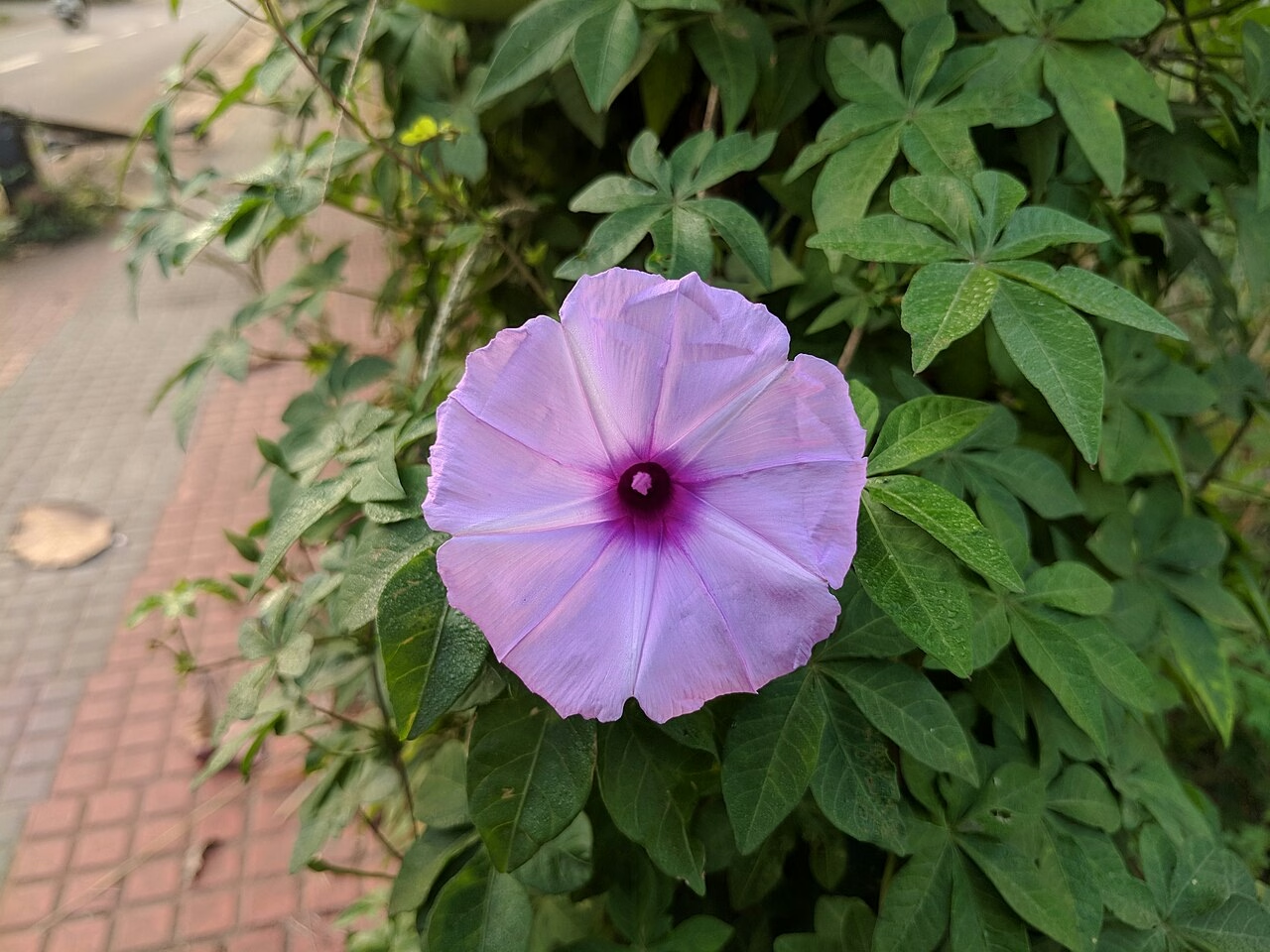
Coastal Morning Glory
Ipomoea cairica

Pygmy Clubrush
Isolepis basilaris
Isolepis caligenis
Isolepis caligenis
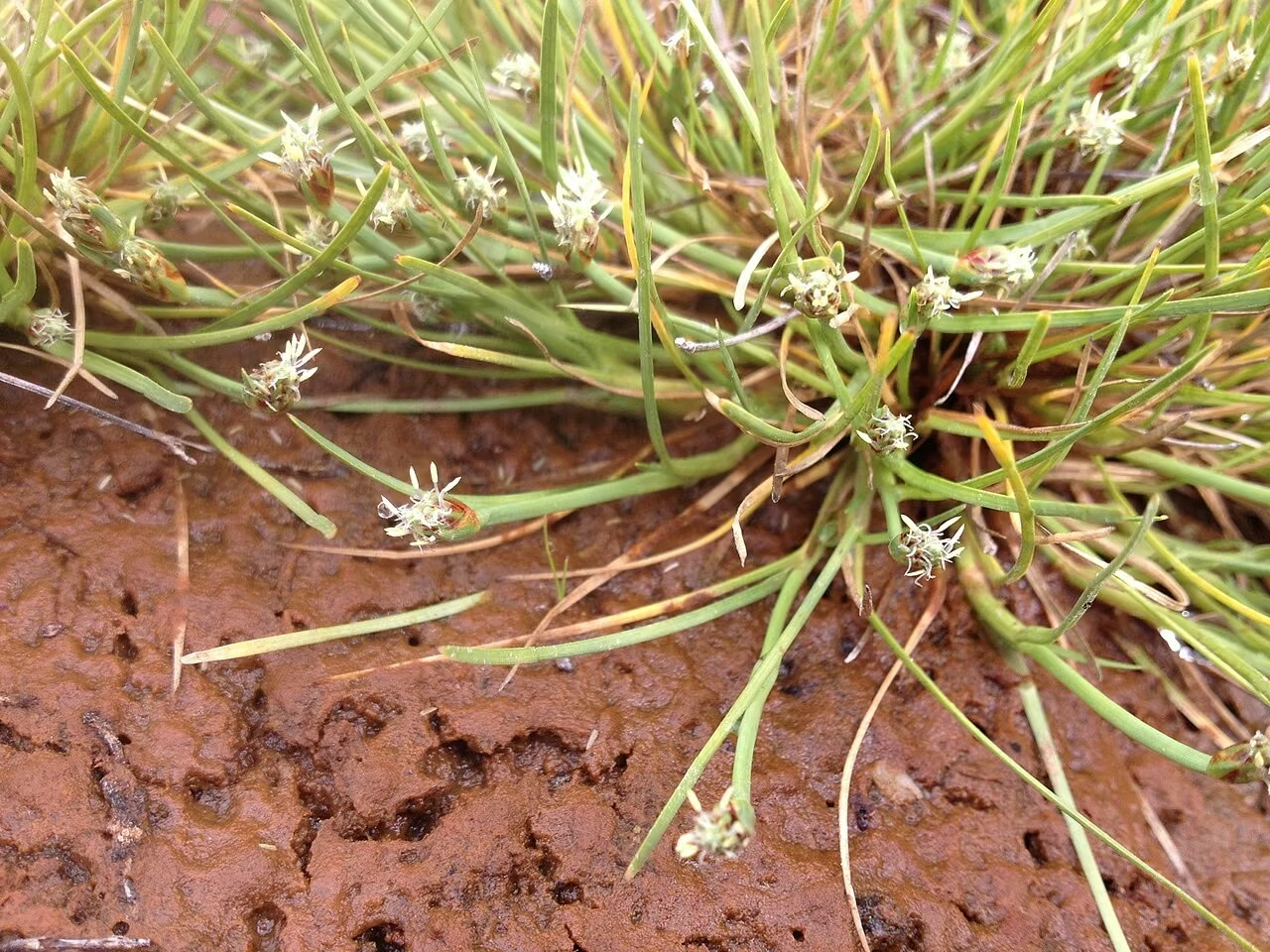
Isolepis crassiuscula
Isolepis crassiuscula
Isolepis pottsii
Isolepis pottsii
Plant Conservation
Beach morning glory is ranked At Risk - Naturally Uncommon (2023), with qualifiers CI (climate impact), RR (range restricted) and SO (secure overseas). Outside the Kermadec Islands it is limited to one mainland site, and a previous site near Waipapakauri was destroyed by forestry.
Protecting the Te Paki beach habitat from vehicles, trampling and coastal weeds is important. Records of any new drift-borne occurrences on Northland beaches help botanists track this species at its southern limit.
Frequently Asked Questions
Where does beach morning glory grow in New Zealand?
It is found on some of the Kermadec Islands and, on the mainland, only at Te Paki in the far north. It was once known from Ninety Mile Beach near Waipapakauri, but that site was destroyed by forestry.
Why is it called pes-caprae?
Pes-caprae is Latin for goat's foot, describing the broad, rounded leaves that are often notched at the tip and resemble a cloven hoof.
Can you grow beach morning glory in a New Zealand garden?
NZPCN says it is easy from fresh seed but extremely cold sensitive, and even in a mild place like Kaitaia it has proved difficult to grow.
How do beach morning glory seeds reach New Zealand?
Its seeds are carried by ocean currents, and it has been recorded in beach drift well south of its usual range, at Ripiro Beach near the Omamari Stream mouth in Northland.
Sources and Further Reading
The botanical, growing, and conservation details for Beach Morning Glory (Ipomoea pes caprae subsp. brasiliensis) on this page draw on the New Zealand plant references below. Consult them for full technical records and the latest distribution data.