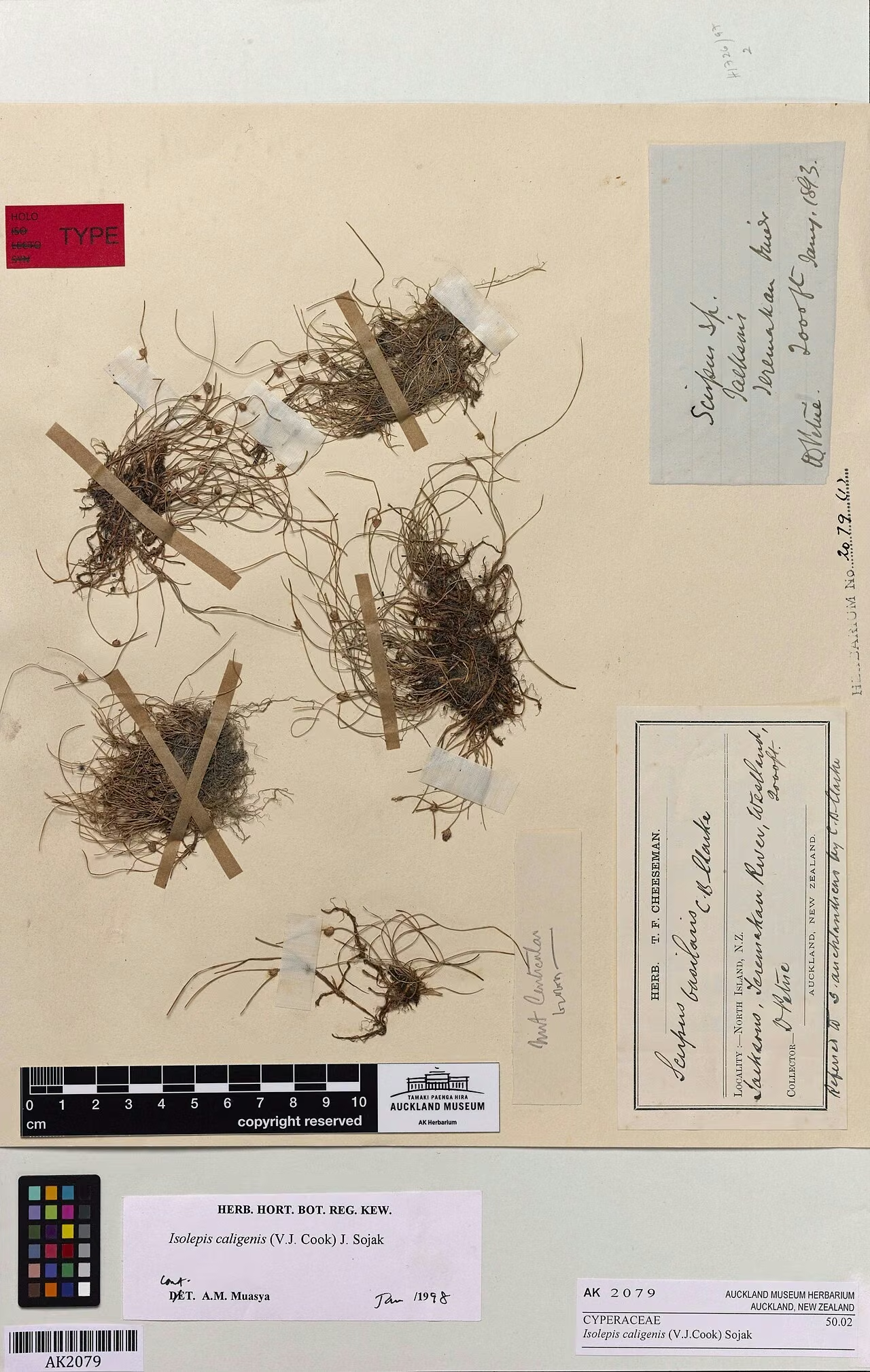
Club Rush
Isolepis caligenis
Last updated:
Isolepis caligenis is a small, bright green sedge endemic to New Zealand. It grows from a creeping rhizome as scattered tufts with stiff stems only 10 to 100 mm tall, usually overtopped by its fine leaves, and bears one or two pale green to brown spikelets. It lives in the mountains of the central North Island and the South Island, from the Kaimanawa Range south to at least Otago, mostly between 700 and 1400 m on damp, shaded forest floors and the margins of streams and lakes. It is ranked Not Threatened, and it makes a neat little pot plant for a cool, shady, permanently damp spot. Explore more native grasses and flaxes in our native plant guide.
Plant Description
Isolepis caligenis is a bright green, rhizomatous sedge that forms distant tufts rather than one dense clump. Its culms (flowering stems) are stiff and only 10 to 100 mm tall. Each tuft usually carries two to five very fine leaves about 0.5 mm wide, and these normally stand taller than the culms, so the flower heads sit down among the foliage.
The inflorescence is one or two spikelets, each with a prominent bract below it. Spikelets are 2 to 5 mm long and 1 to 4 mm wide and pale green to brown, with white, membranous glumes 1.5 to 2.5 mm long. The nut (seed) is almost round, about 1 mm long, compressed and a pearly grey colour; it is finely reticulate but looks smooth to the naked eye.
The species most likely to be confused with it is Isolepis basilaris. Isolepis caligenis has taller culms (more than 20 mm), broader spikelets (more than 3 mm wide) and a pearl-grey compressed nut, while Isolepis basilaris has a dark brown to almost black nut. A hand lens and mature nuts make the identification straightforward.
Quick Facts
| Scientific Name | Isolepis caligenis |
|---|---|
| Height | 10-100 mm |
| Spread | Scattered tufts along a creeping rhizome |
| Water Needs | High; needs permanently damp soil |
| Light | Shade to part shade |
| Frost Tolerance | High; a montane species |
| Salt Tolerance | Low; an inland mountain plant |
| Growth Rate | Moderate |
| Lifespan | Perennial |
Climate Best Suited to
It suits cool, moist montane climates with reliable rainfall and frosty winters. It does poorly in warm, humid lowland conditions.
Regional Suitability
| City | Climate Suitability |
|---|---|
| Auckland | Low |
| Wellington | Medium |
| Christchurch | Medium |
| Dunedin | High |
Plant Habitat
Isolepis caligenis is endemic to New Zealand. In the North Island it is known from the Kaimanawa Range southward, and in the South Island it extends south to at least Otago. It is chiefly a montane plant, recorded mostly between 700 and 1400 m above sea level.
Its habitat is damp ground in forest, stream margins and lake edges, usually in shaded places. It is rated an obligate wetland species, so it is almost always found where the soil stays wet.
Growing Requirements
Soil Requirements
It needs a soil that never dries out. In the wild it roots into damp forest floor litter and wet stream and lake margins.
- Permanently moist, humus-rich soil or potting mix
- Peat or bark-based mixes hold moisture well in pots
- Avoid free-draining, gritty mixes that dry quickly
Light Requirements
This sedge is a plant of shaded sites, typically under forest or along shaded banks.
- Best in shade or dappled light
- Protect from hot afternoon sun, which dries pots fast
Water Requirements
Water is the critical factor. The plant is an obligate wetland species and will fail if its roots dry out.
- Keep the root zone constantly damp
- A saucer under the pot helps in summer
- Use rainwater where tap water is hard
Planting and Establishing
NZPCN recommends growing Isolepis caligenis in a pot, which makes it easier to give it the cool, shady, permanently damp conditions it needs. Use a moisture-retentive mix and stand the pot in a shallow tray of water during warm weather.
In the ground it can be tried at the shaded edge of a pond or stream in cooler districts. Plant small divisions or seedlings a few centimetres apart so the rhizomes can knit together, and mark the spot, because the tiny tufts are easily lost among other plants.
Ecological Role
Like other Isolepis, it is wind-pollinated, with stamens and stigmas exposed in tiny spikelets. Flowering is recorded from October to December and fruiting from December to May.
Its small nuts fall near the parent or are carried along stream and lake margins; for Isolepis in general, NZPCN notes dispersal by water and possibly by seed-eating animals and attachment. Its creeping rhizome helps bind wet, shaded banks, and it forms part of the low sedge and herb layer on montane forest floors.
Uses & Significance
Garden Uses
This is a plant for enthusiasts rather than a general landscaping sedge, best kept as a pot specimen.
- Shaded pot collections of native sedges
- Cool, damp fernery corners
- Shaded pond margins in cool southern gardens
Ecological Value
Isolepis caligenis contributes to the native ground flora of montane forest and wetland edges.
- Helps hold damp, shaded stream and lake banks
- Part of the low native sedge layer in montane forest
- Supports invertebrate life in permanently wet ground
Landscaping Uses
Because it is only a few centimetres tall, Isolepis caligenis works best where it can be seen up close: a shallow bowl on a shaded deck, the front of a fern bed, or among mosses on a damp log edge. Its bright green colour contrasts well with dark mosses and small ferns.
In larger plantings it is too small to make an impact, so pair it with other shade-tolerant wetland natives and use it as a fine-textured groundcover between them rather than as a feature plant.
Seasonal Care Calendar
Spring
New shoots appear and flowering begins in October.
- Divide crowded pots now
- Start checking moisture more often
Summer
Nuts ripen from December. Summer heat and humidity are the main risks in cultivation.
- Keep pots in the coolest shady spot
- Collect ripe nuts for sowing
Autumn
Fruiting continues into May and growth slows as temperatures fall.
- Sow fresh seed
- Tidy any dead foliage
Winter
Plants sit quietly through frost in their montane habitat.
- Little care needed
- Do not let pots dry out in wind
When to Prune and How Much
No pruning is needed. Old, browned leaves can be gently combed out by hand to keep potted plants looking fresh.
If a pot becomes congested with dead centres, lift and divide it in spring rather than cutting it back, replanting the healthy outer tufts.
How to Grow Club Rush
NZPCN describes Isolepis caligenis as easily grown from fresh seed and from rooted pieces. Both methods work best in a cool, shady, constantly moist environment, and the young plants should be kept in pots rather than planted straight out, because the species dislikes humid conditions and can be overwhelmed by larger plants.
From Seed
Fresh nuts give the best results. They ripen from December to May; collect them when the spikelets turn brown and the pearly grey nuts loosen from the glumes.
NZPCN specifically recommends fresh seed, so sow it soon after collection rather than storing it.
- Collect ripe spikelets and rub out the nuts
- Sow on the surface of a fine, moist peat-based mix
- Press the seed lightly in but do not bury it deeply
- Stand the tray in a saucer of water in a cool, shaded place
- Prick out seedlings into small pots once they have several leaves
By Division of Rooted Pieces
Because the plant spreads by a creeping rhizome, rooted pieces with a tuft of leaves can be separated easily. This is the quickest way to get a sizeable pot of plants, and spring is a good time to do it.
- Lift the clump or tip it out of its pot
- Tease apart sections of rhizome each with roots and a leafy tuft
- Pot into a damp, moisture-retentive mix
- Keep shaded and wet while new roots form
- Grow on for a season before planting out
Pests & Diseases
No specific pest problems are recorded for Isolepis caligenis. The main cultivation failures come from drying out, heat and humid conditions, which NZPCN notes the species dislikes.
In the garden, slugs and snails may graze young tufts, and vigorous weeds or larger sedges can easily swamp such a small plant, so keep its patch clear.
Cultural Significance
No Māori name or traditional use specific to Isolepis caligenis has been recorded in the sources consulted.
The species was described by the New Zealand botanist V.J. Cook in 1953 as Scirpus caligenis, along with a variety tristigmatosa, and was later moved to the genus Isolepis by Soják. The genus name comes from the Greek isos (equal) and lepis (scale).
Bonus Tip
If you grow it in a warm or humid district, a pot plunged into a shaded, water-filled tray on the cool south side of a building gives the best chance of success; this mimics the cool, constantly wet montane forest floor it comes from.
Related Plants
Explore other native plants that share similar characteristics or habitats with Club Rush (Isolepis caligenis), offering further insights into New Zealand's diverse flora. These related species provide context and opportunities for complementary planting in your garden.
Cheeseman's Imperata
Imperata cheesemanii
Coastal Morning Glory
Ipomoea cairica
Beach Morning Glory
Ipomoea pes caprae subsp. brasiliensis

Pygmy Clubrush
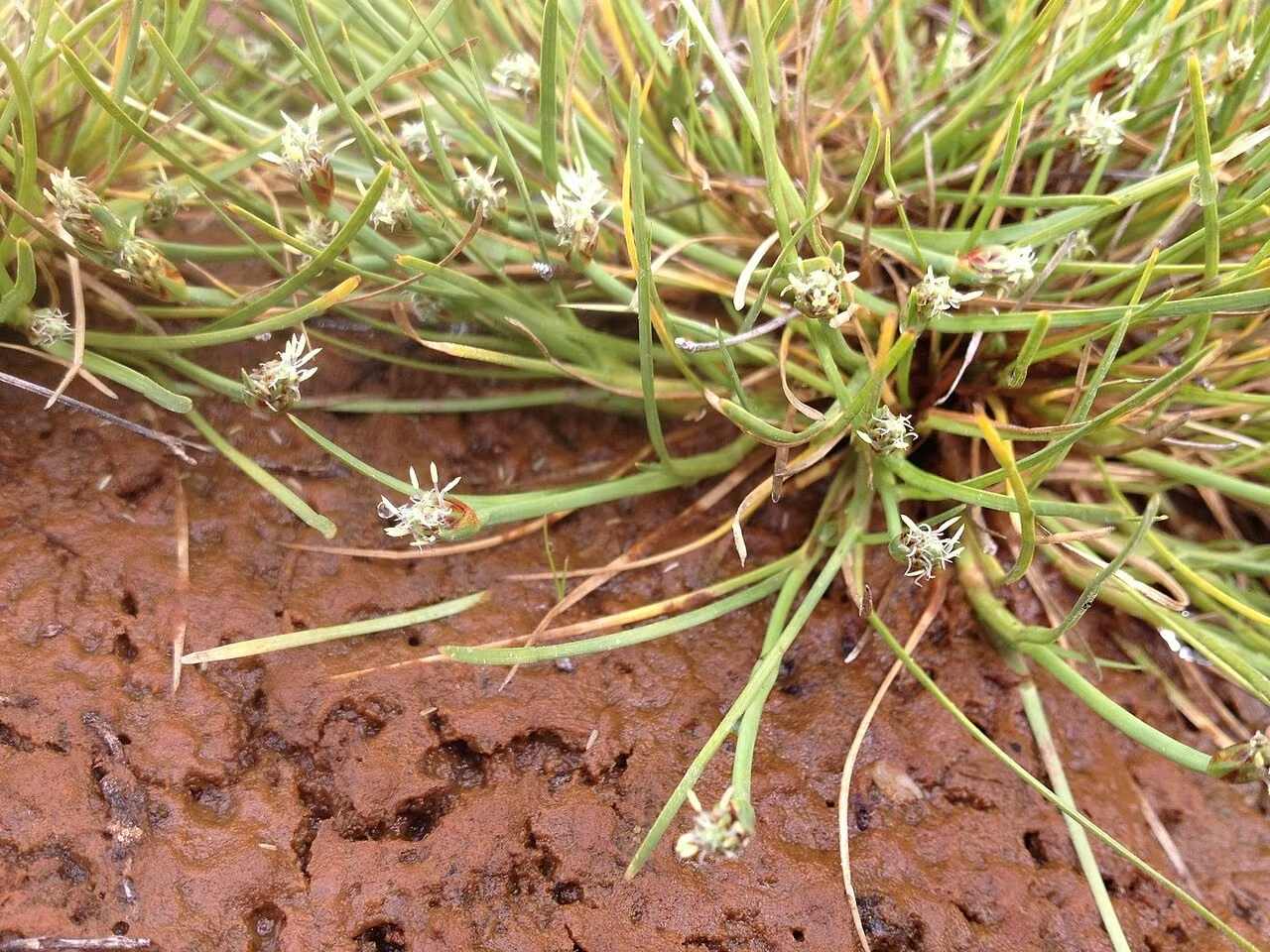
Isolepis basilaris
Isolepis crassiuscula
Isolepis crassiuscula
Isolepis pottsii
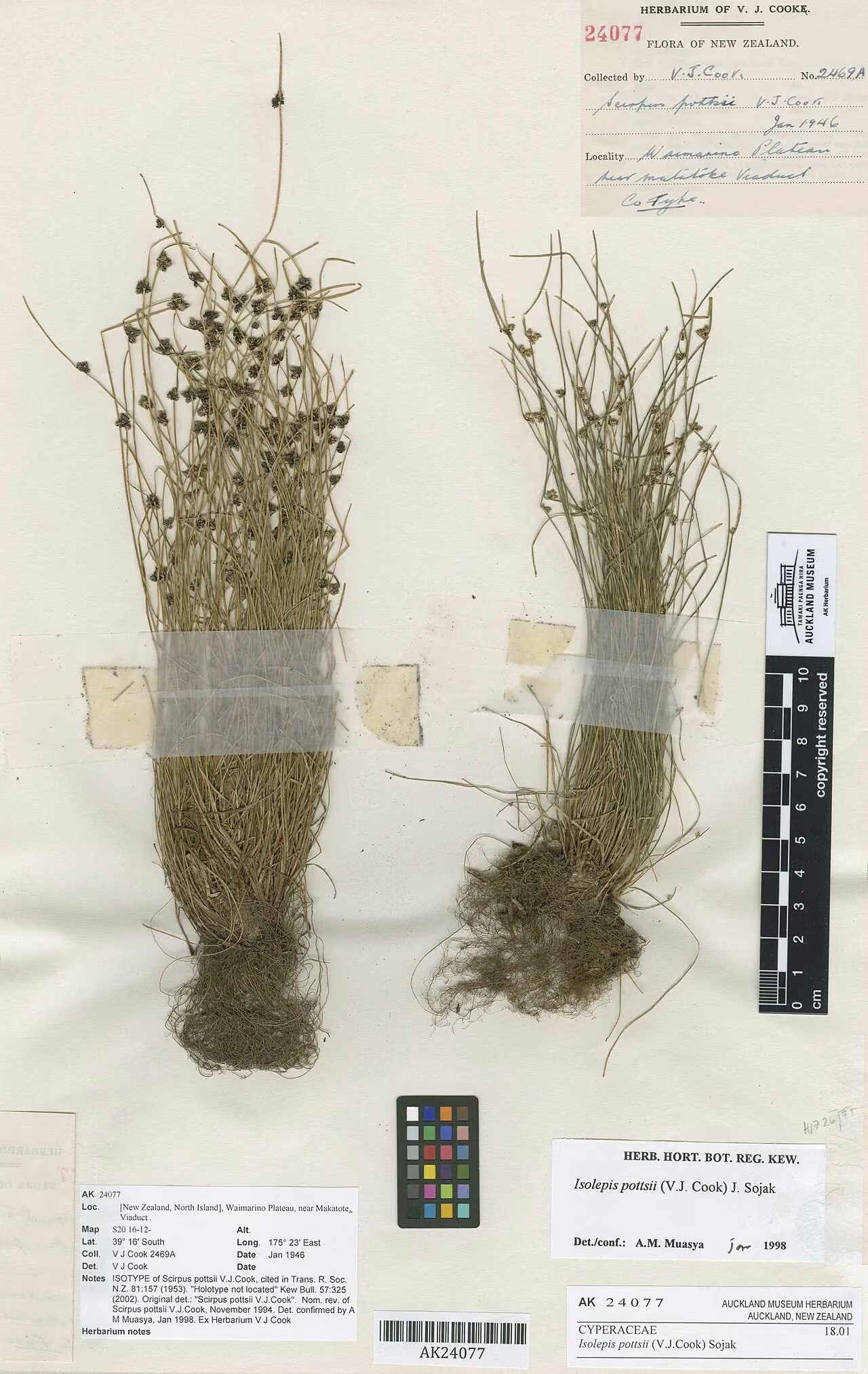
Isolepis pottsii
Isolepis praetextata
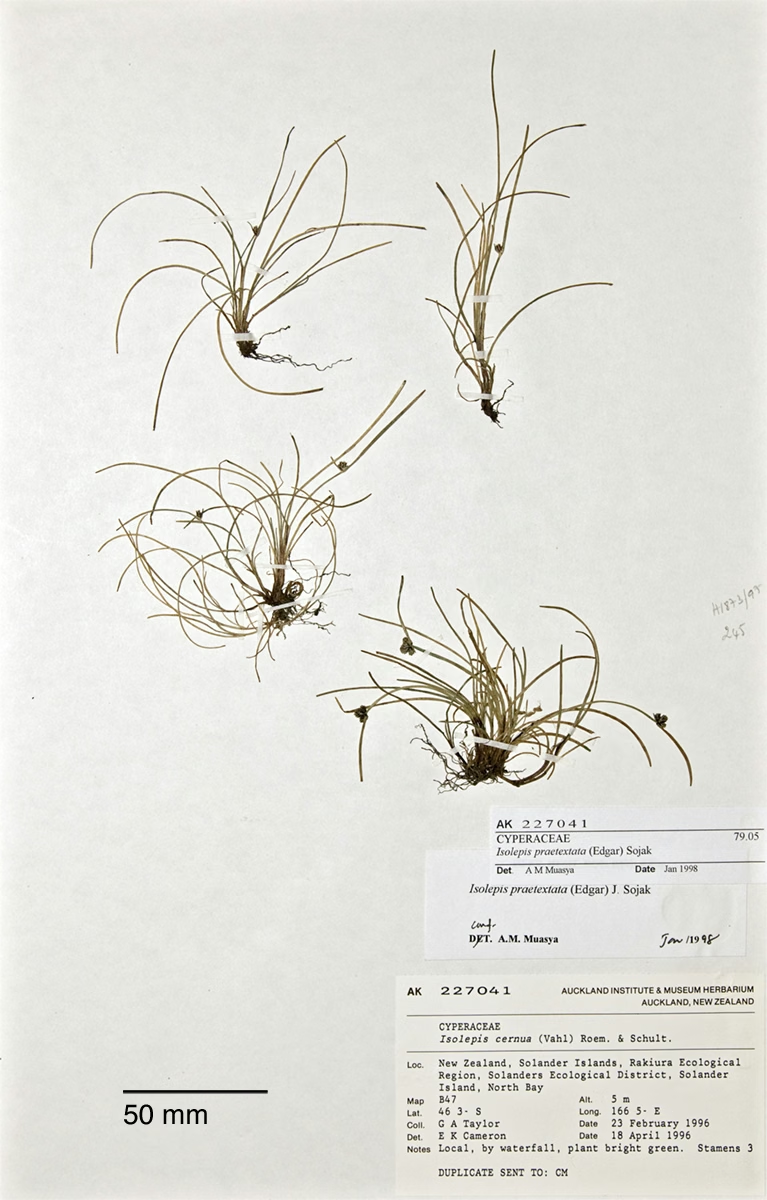
Isolepis praetextata
Isolepis reticularis
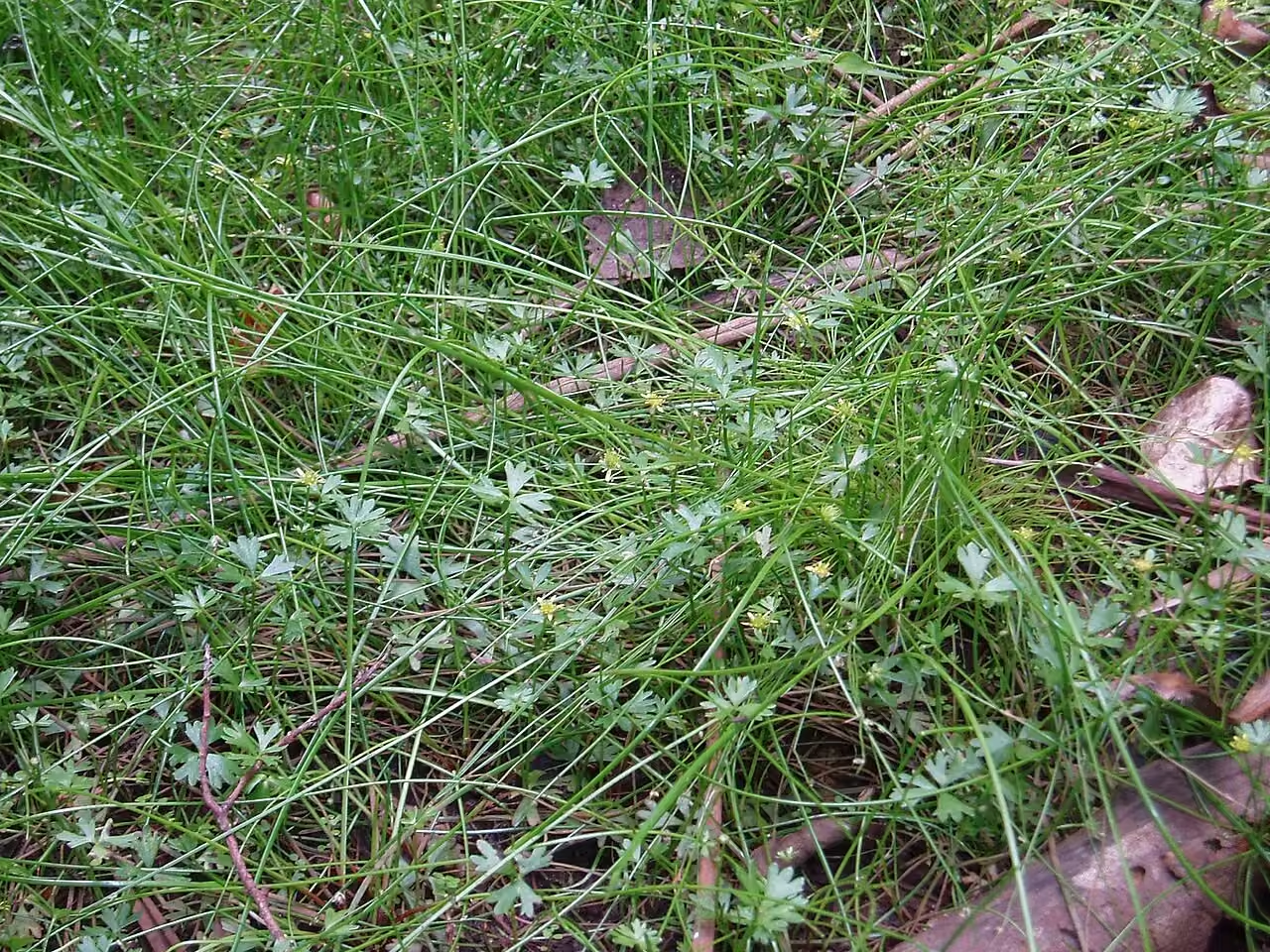
Isolepis reticularis
Plant Conservation
Isolepis caligenis is ranked Not Threatened in the 2023 assessment, with the qualifiers DPS (data poor: size) and DPT (data poor: trend), meaning that while it is not considered at risk, its population size and trend are not well known.
Protecting montane wetland margins and stream banks from trampling, drainage and weed invasion helps maintain the habitats it relies on. Records with good photos and nuts help botanists understand its true range.
Frequently Asked Questions
How do you tell Isolepis caligenis from Isolepis basilaris?
Isolepis caligenis has taller culms (over 20 mm), broader spikelets (over 3 mm wide) and a pearly grey, compressed nut, whereas Isolepis basilaris has a dark brown to almost black nut.
Where does Isolepis caligenis grow in New Zealand?
It is found from the Kaimanawa Range in the central North Island south through the South Island to at least Otago, mainly at 700 to 1400 m on damp, shaded ground in forest and beside streams and lakes.
Can Isolepis caligenis be grown in a garden?
NZPCN says it is easily grown from fresh seed or rooted pieces and is best kept in a pot in a cool, shady, permanently damp site. It dislikes humid climates.
Is Isolepis caligenis a wetland plant?
Yes. It is rated an obligate wetland plant (OBL), meaning it almost always occurs in wet places such as stream and lake margins.
Sources and Further Reading
The botanical, growing, and conservation details for Club Rush (Isolepis caligenis) on this page draw on the New Zealand plant references below. Consult them for full technical records and the latest distribution data.