Sticky Pig Fern
Hypolepis rufobarbata
Last updated:
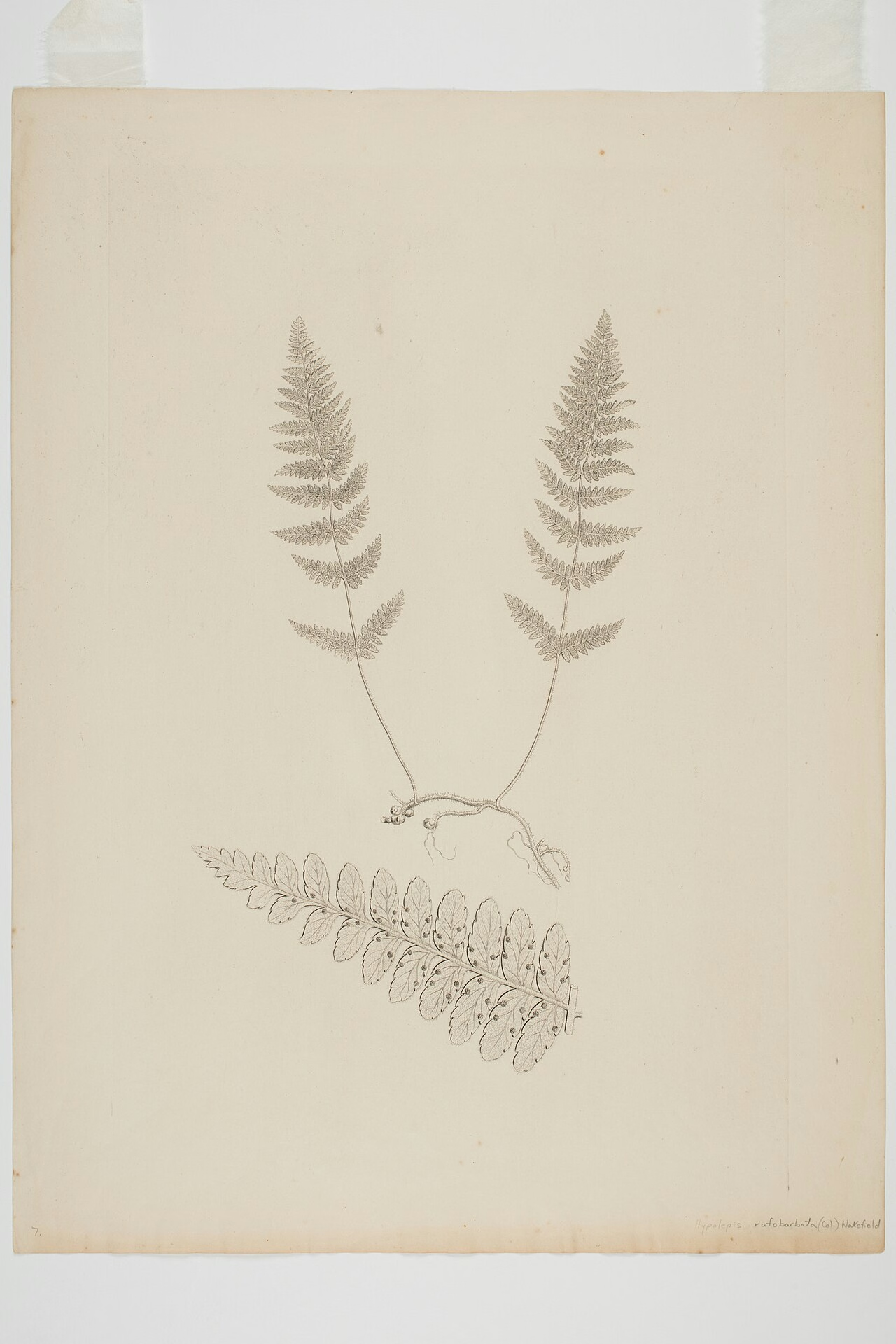
Sticky pig fern (Hypolepis rufobarbata) is an endemic New Zealand ground fern whose name means red-bearded, after the red-brown bristly hairs on its stalks and frond margins. From long-creeping rhizomes it sends up light green, narrowly ovate fronds up to about 65 cm long (occasionally more than 1 m). It is found throughout the North, South, Stewart and Chatham Islands, mostly above 300 m, colonising wet clay banks, stream sides, bush margins, peaty ground and even pine plantations. It can be tricky to establish but thrives once settled. Explore more native ferns in our native plant guide.
Plant Description
Hypolepis rufobarbata has long-creeping rhizomes 1 to 2 mm thick covered in red-brown hairs up to 4 mm long. The stipes are 3 to 50 cm long, dark purple-brown to red-brown, with scattered non-glandular hairs and abundant shorter glandular hairs.
The fronds are narrowly ovate to ovate, 2- to 3-pinnate-pinnatifid, light green on both surfaces and soft in texture, with 10 to 30 pairs of primary pinnae. Red-brown bristly hairs, rarely colourless, line the margins and the undersides, alongside glandular hairs that make the frond sticky. The more or less round sori are virtually unprotected, with no indusial flap.
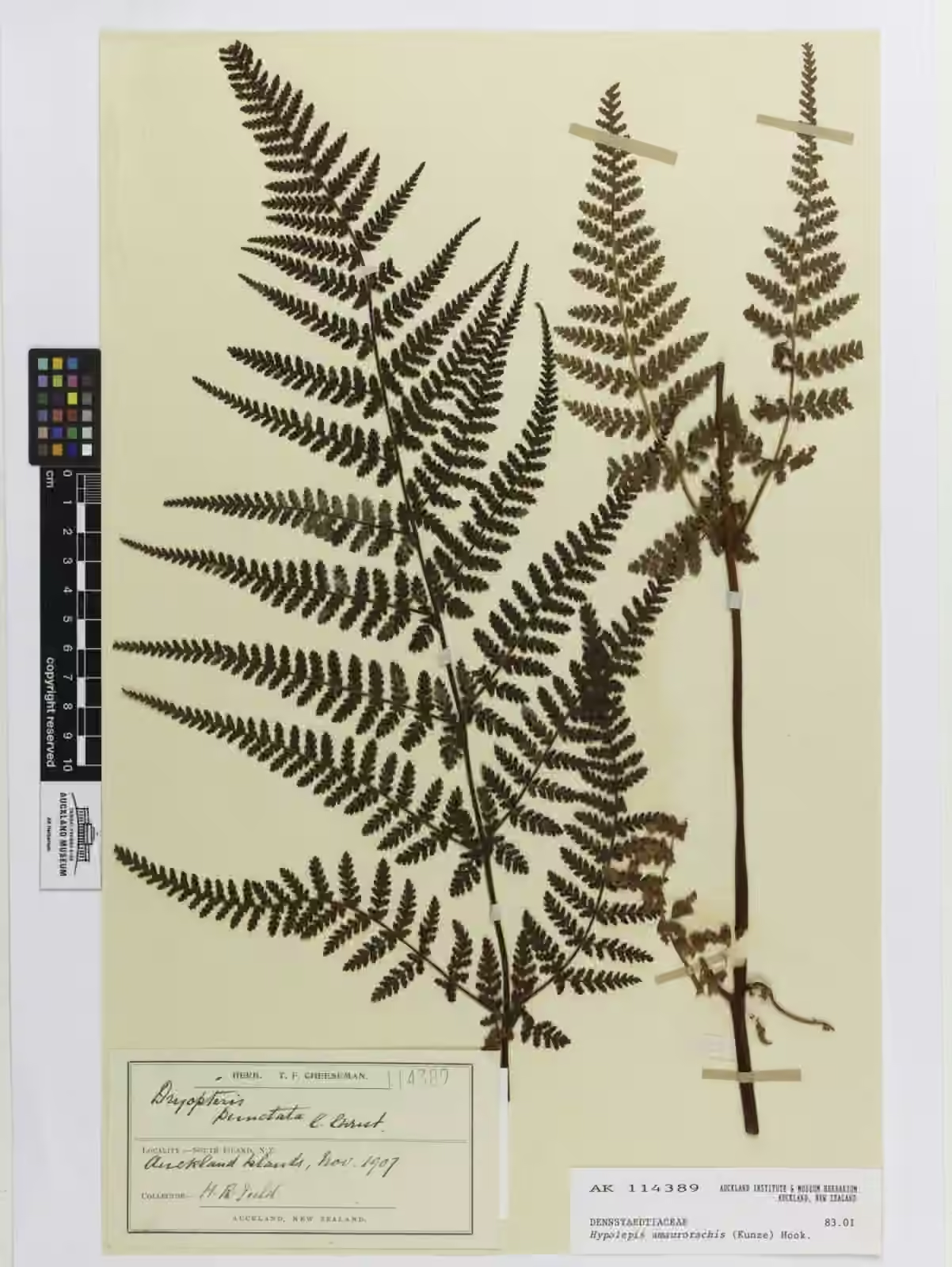
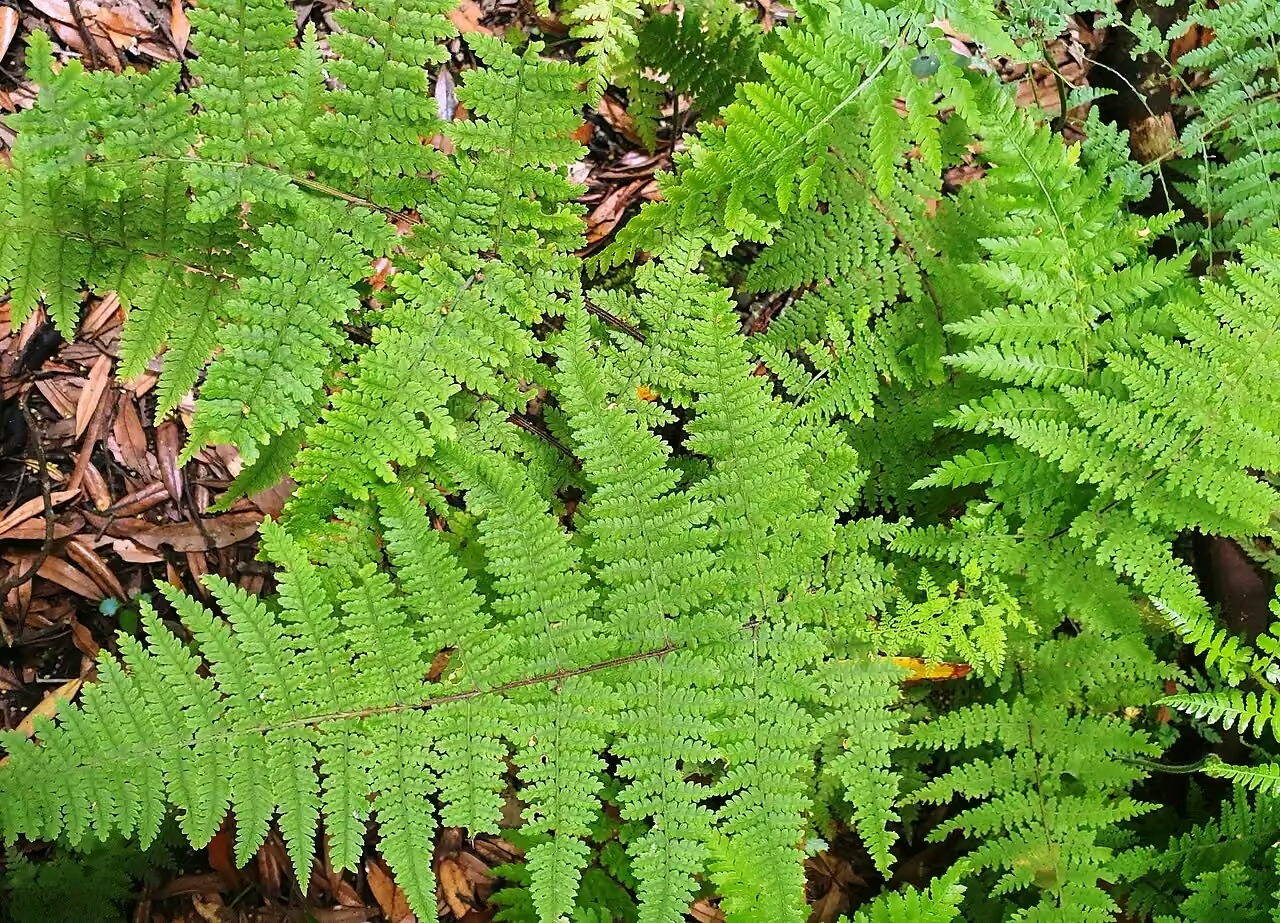
It is most similar to Hypolepis amaurorachis and H. lactea. H. amaurorachis has glandular rather than bristly hairs on the margins, while H. lactea has deltoid fronds with colourless glandular hairs and a white milky coating. The abundant red-brown bristles on the lamina margin are the key feature of sticky pig fern.
Quick Facts
| Scientific Name | Hypolepis rufobarbata |
|---|---|
| Height | 0.3-0.65 m (fronds occasionally over 1 m) |
| Spread | 1 m or more by creeping rhizomes |
| Water Needs | Moist to wet |
| Light | Partial shade to open sites |
| Frost Tolerance | High; grows to about 1170 m |
| Salt Tolerance | No information available |
| Growth Rate | Moderate to fast once established |
| Lifespan | Perennial |
Climate Best Suited to
A hardy fern of cool, moist temperate climates, growing from lowland to subalpine elevations with high rainfall.
Regional Suitability
| City | Climate Suitability |
|---|---|
| Auckland | Medium |
| Wellington | High |
| Christchurch | Medium |
| Dunedin | High |
Plant Habitat
Sticky pig fern is endemic to New Zealand. It ranges through the North Island from Northland to Wellington and the South Island from Nelson to Fiordland, as well as Stewart Island/Rakiura and the Chatham Islands, where it is scarce. It grows from about 10 m to 1170 m above sea level and is most frequent above 300 m.
It grows in wet forest and on wet, open, often peaty ground, and also on exposed but damp clay banks, stream sides, rotten logs, scrub, bush margins and swamp margins. It is found in podocarp, broadleaved and beech forest and also colonises plantation pine forest.
Growing Requirements
Soil Requirements
It tolerates a wide range of soils as long as they stay damp, from peat to clay.
- Moist peaty, humus-rich or clay soils
- Copes with poor, disturbed ground such as clay banks
- Benefits from organic mulch in cultivation
Light Requirements
It grows both under forest and on open banks, so it is flexible about light provided moisture is reliable.
- Partial shade is easiest in gardens
- Open sites suit it in cool, wet districts
Water Requirements
Regular moisture is essential; it is a plant of wet forest, boggy soils and stream banks.
- Keep soil moist year round
- Good for seepage areas and stream banks
Planting and Establishing
Plant in spring into moist soil, ideally in a cool, damp position such as a shaded bank or stream side. Firm the rhizome in gently and mulch to hold moisture.
NZPCN notes it is often difficult to establish, so water carefully until new fronds appear. Once settled it usually thrives and spreads by its rhizomes.
Ecological Role
Sticky pig fern disperses by minute wind-borne spores, enabling it to colonise freshly exposed clay banks, slips and logging tracks. It is one of the native ferns able to occupy the ground layer of exotic pine plantations.
Its creeping rhizomes help bind bare, damp soil, preparing the way for other native plants. No specific insect or bird relationships are documented.
Uses & Significance
Garden Uses
A useful native fern for damp, cool gardens and restoration sites.
- Covering damp clay banks
- Stream bank and seepage plantings
- Ground layer under restoration canopy in cool, wet districts
Ecological Value
Its ability to colonise disturbed, wet ground gives it a role in natural regeneration.
- Stabilises bare clay and stream banks
- Endemic component of beech, podocarp and broadleaved forest floors
- Provides native ground cover in plantation forests
Landscaping Uses
The soft, light green fronds with their reddish hairs look attractive when backlit on a bank. Use it in natural drifts with other ferns, mosses and low sedges.
Avoid tidy, formal settings; its running habit and sticky fronds are best suited to wilder parts of a garden.
Seasonal Care Calendar
Spring
New croziers covered in red-brown hairs appear.
- Plant and divide now
- Water newly planted ferns carefully
Summer
Fronds expand fully and spores ripen.
- Keep moist through dry spells
- Collect spore from fertile fronds
Autumn
Growth continues in cool, damp conditions.
- Sow fresh spore
- Mulch around plants
Winter
Fronds may die back after hard frosts in colder districts.
- Leave old fronds until spring
- Little care needed
When to Prune and How Much
No regular pruning is needed. Cut out dead fronds at the base in spring.
Thin or lift sections of rhizome if the fern spreads further than wanted.
How to Grow Sticky Pig Fern
NZPCN describes sticky pig fern as often difficult to propagate, though once established it usually thrives, and recommends growing it from fresh spores. Division of an established patch can also work if a good section of rhizome and roots is taken and kept moist. Patience and constant moisture are the keys to success with this species. Sow or divide in spring so young plants have a full growing season to settle in before winter.
From Spores
Use fresh spores, collected from a frond whose sori have just turned brown. Spores lose viability with age, so sow them soon after collection.
- Place the fertile frond on clean paper for a few days to release the spores
- Fill a pot with fine, peat-based mix and sterilise it with boiling water
- Sow spores thinly on the cooled surface
- Cover with glass or clear plastic and keep in a cool, bright spot out of direct sun
- Water from below to keep the surface moist
- Mist the prothalli once established to allow fertilisation
- Transplant young sporelings into individual pots when large enough to handle
By Division
Divisions establish best when taken in spring and replanted straight away into similar moist conditions.
- Lift a length of rhizome with several fronds and plenty of roots
- Cut the fronds back by half to reduce water loss
- Replant at once in moist, humus-rich soil in partial shade
- Keep the soil damp and sheltered until new growth is visible
Pests & Diseases
No important pests are recorded. Slugs and snails may graze young croziers.
The main problem is poor establishment, typically caused by soil drying out or by root disturbance during planting.
Cultural Significance
No Māori name or traditional use is recorded specifically for sticky pig fern.
Its epithet rufobarbata comes from the Latin rufus (red) and barba (beard), describing the reddish hairs on its leaves and leaf stalks. Like H. lactea it was distinguished from the Australian H. rugosula on chromosome and morphological evidence.
Bonus Tip
If you are trying to name a Hypolepis on a damp bank, use a hand lens on the frond margin: red-brown bristles point to H. rufobarbata, while colourless glandular hairs suggest H. lactea or H. amaurorachis.
Related Plants
Explore other native plants that share similar characteristics or habitats with Sticky Pig Fern (Hypolepis rufobarbata), offering further insights into New Zealand's diverse flora. These related species provide context and opportunities for complementary planting in your garden.
Hypolepis amaurorachis
Hypolepis amaurorachis
Giant Hypolepis
Hypolepis dicksonioides
Hypolepis lactea
Hypolepis lactea
Cheeseman's Imperata
Imperata cheesemanii
Coastal Morning Glory
Ipomoea cairica
Beach Morning Glory
Ipomoea pes caprae subsp. brasiliensis

Pygmy Clubrush
Isolepis basilaris
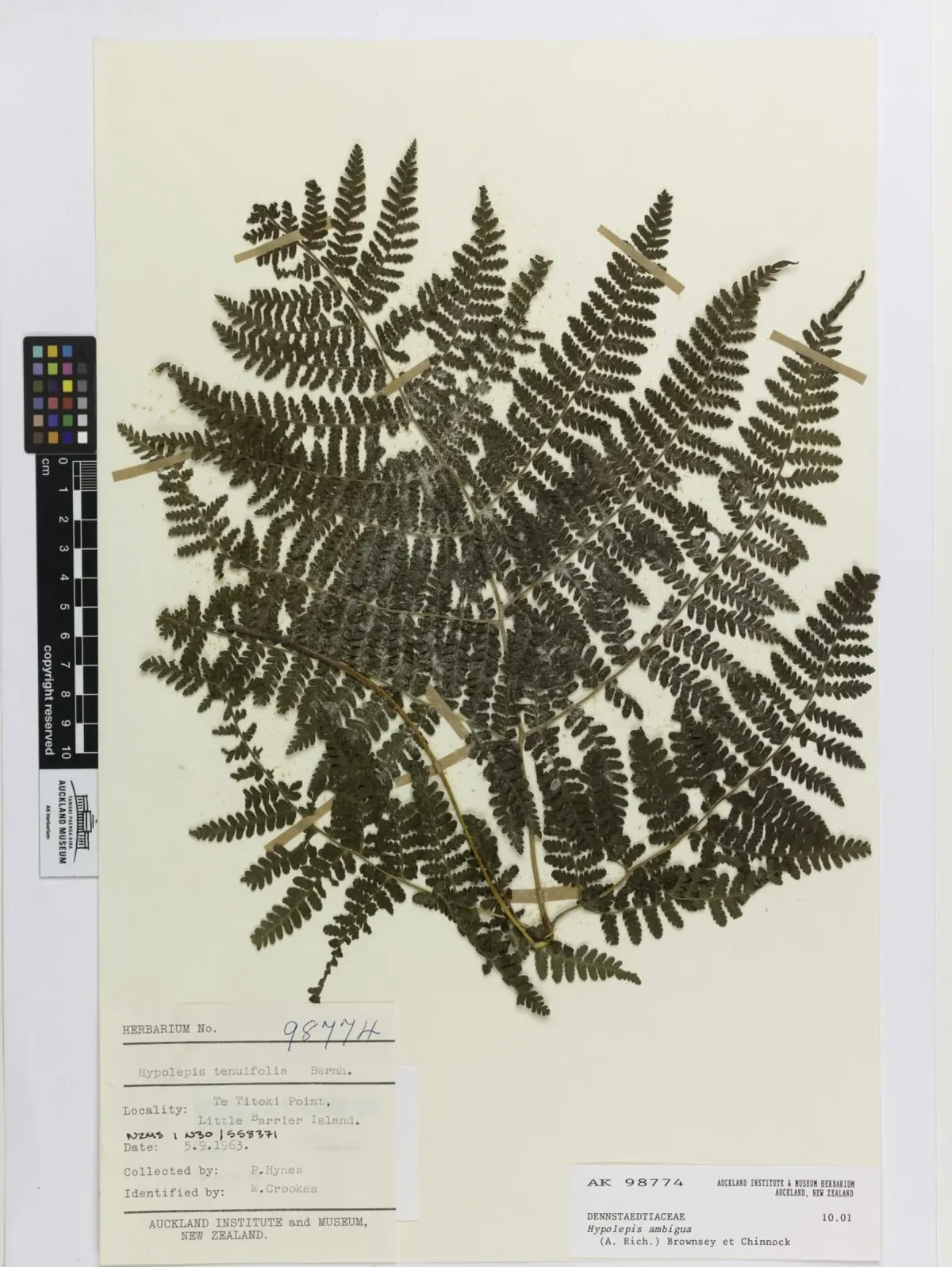
Rarauhi Nehenehe
Rarauhi Nehenehe
Plant Conservation
Hypolepis rufobarbata is ranked Not Threatened (2023) with the qualifier EF (episodic or fluctuating). Regionally it is Regionally Naturally Uncommon in Northland and Auckland and Not Threatened in Wellington and Otago.
It is widespread and readily colonises disturbed ground, so no specific conservation action is needed beyond protecting wet forest and wetland margins.
Frequently Asked Questions
Why is it called sticky pig fern?
The fronds are covered in abundant glandular hairs that make them sticky, and it belongs to the same genus as the common pig fern, Hypolepis ambigua. The scientific name rufobarbata means red-bearded.
How do you tell Hypolepis rufobarbata from Hypolepis lactea?
H. rufobarbata has narrowly ovate to ovate fronds with red-brown bristly hairs on the margins, while H. lactea has triangular fronds with colourless glandular hairs and a white milky exudate.
Where is sticky pig fern found?
It occurs from Northland to Fiordland, on Stewart Island and, scarcely, on the Chatham Islands, from 10 m to about 1170 m altitude, most often above 300 m.
Sources and Further Reading
The botanical, growing, and conservation details for Sticky Pig Fern (Hypolepis rufobarbata) on this page draw on the New Zealand plant references below. Consult them for full technical records and the latest distribution data.