Pig Fern
Hypolepis lactea
Last updated:
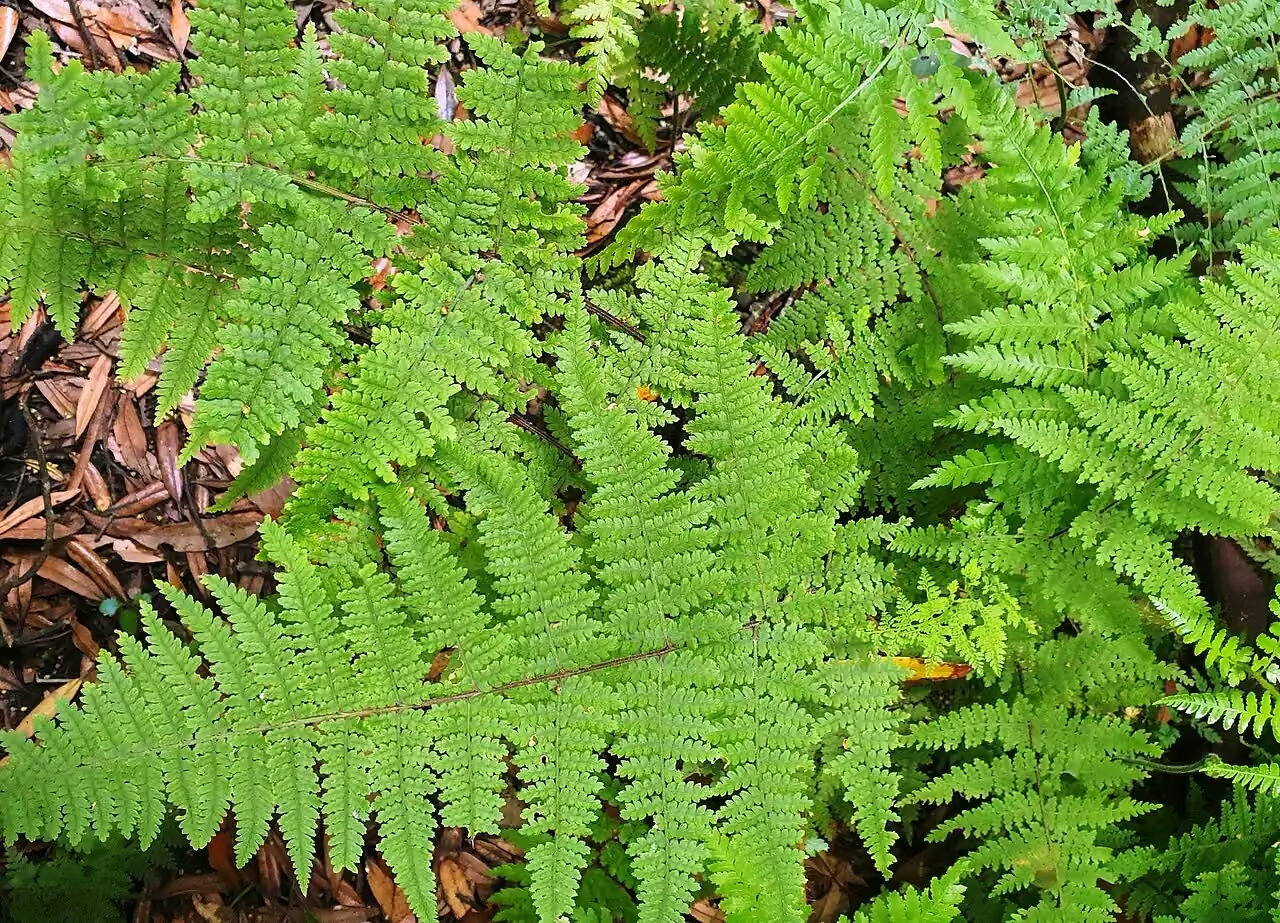
Hypolepis lactea is an endemic New Zealand ground fern named for the white, milky, sticky exudate that coats the upper surface of its older fronds. From a long-creeping rhizome it produces light green, triangular to ovate fronds usually 20 to 60 cm long (occasionally 90 cm or more) on dark purple-brown stalks. It is most common in coastal and lowland forest, swamps and peaty ground in the North Island south of the Kaipara Harbour, and is scarcer in the South Island and on the Chatham Islands. It is easy to grow but relatively short-lived. Explore more native ferns in our native plant guide.
Plant Description
Hypolepis lactea spreads by long-creeping rhizomes 1 to 2 mm thick, covered in red-brown hairs, with fronds arising every 1.5 to 9 cm. The stipes are 8.5 to 70 cm long and dark purple-brown to red-brown, carrying abundant red-brown non-glandular hairs near the base and colourless glandular hairs further up. The stalk stays dark well up into the frond.
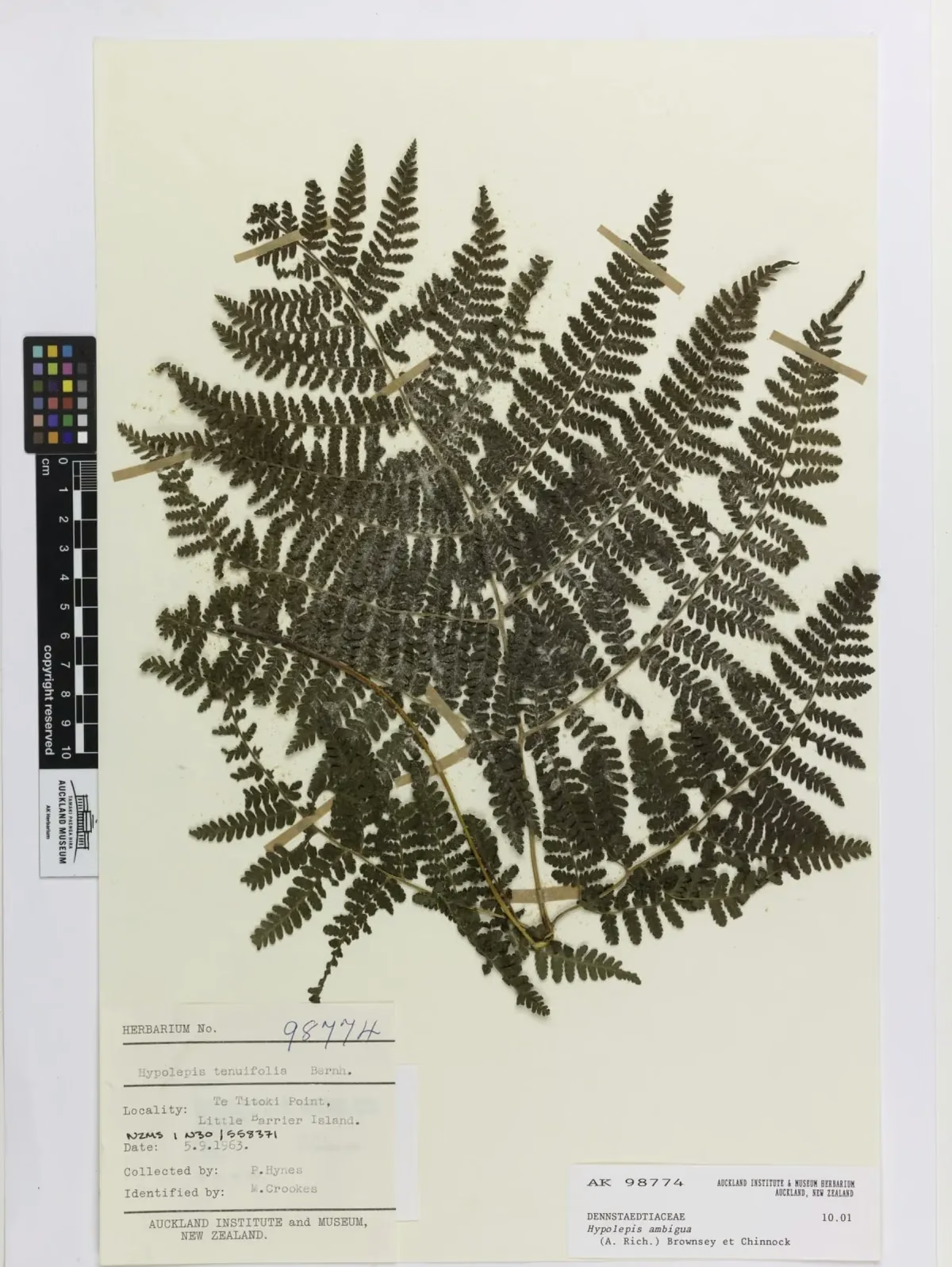
The blade is angular-ovate to deltoid, light green and soft, and 2-pinnate-pinnatifid to 3-pinnate-pinnatifid. Dense colourless glandular hairs 0.1 to 0.3 mm long cover the margins and surfaces, and with age the upper surface exudes a white, milky, sticky substance that gives the species its name. The round sori are not protected by indusial flaps.
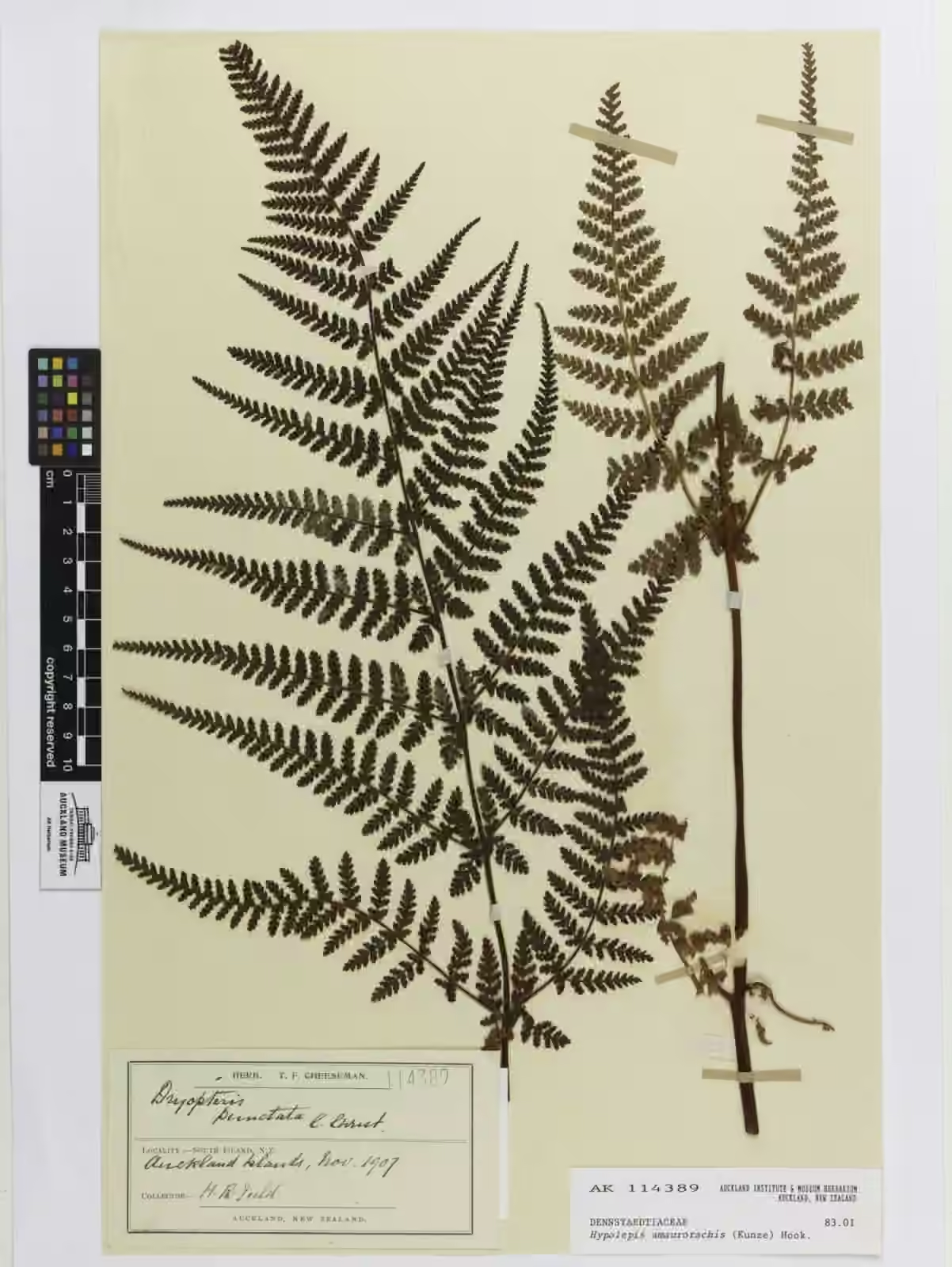
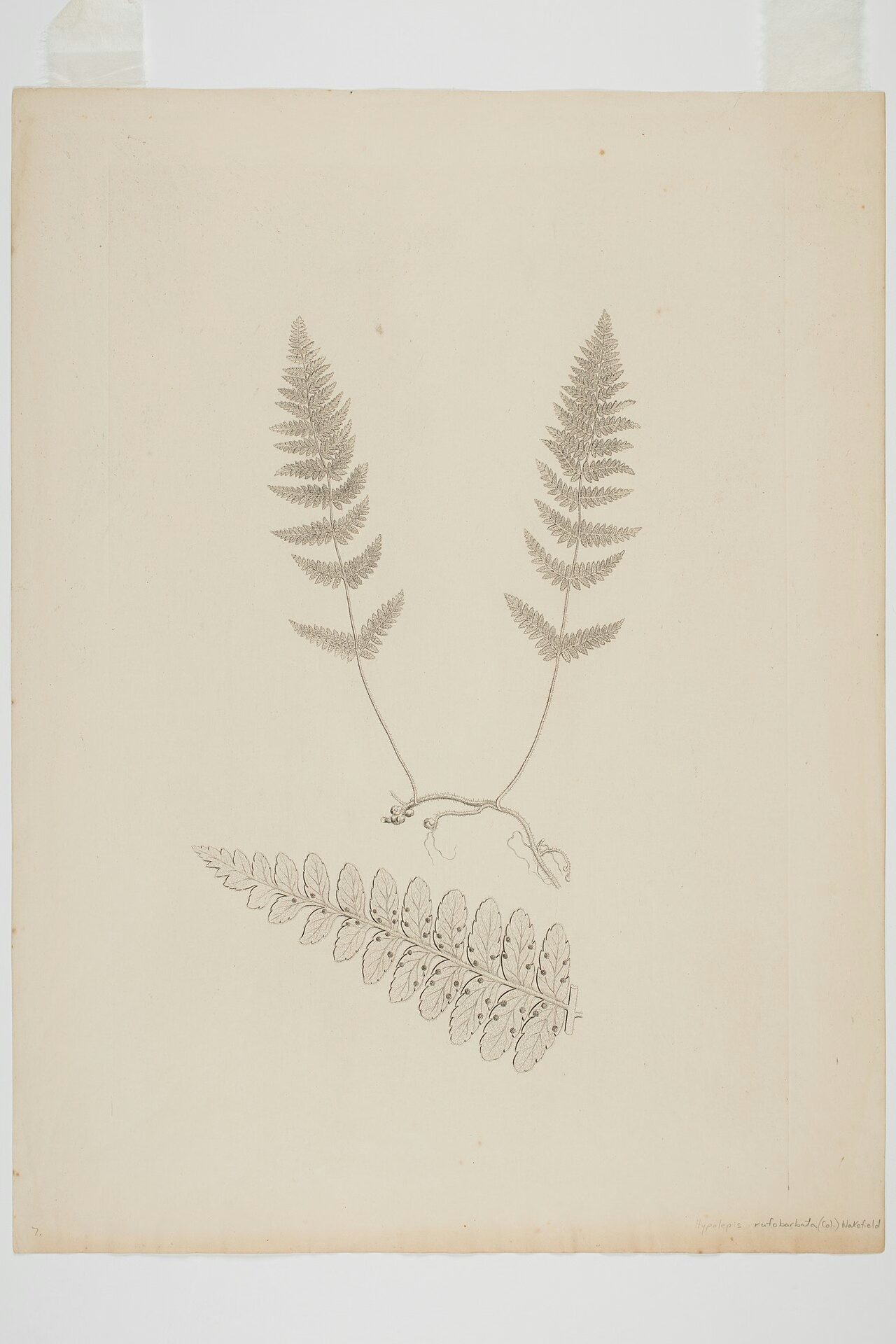
It closely resembles Hypolepis rufobarbata and H. amaurorachis. H. rufobarbata has narrower, ovate fronds with red-brown bristly hairs on the margins, while H. amaurorachis differs in the size of its glandular hairs and in stipe colour. The milky coating and colourless marginal hairs are the best field characters for H. lactea.
Quick Facts
| Scientific Name | Hypolepis lactea |
|---|---|
| Height | 0.3-0.9 m |
| Spread | 1 m or more by creeping rhizomes |
| Water Needs | Moist to wet |
| Light | Semi-shade |
| Frost Tolerance | Moderate; mainly a lowland species |
| Salt Tolerance | No information available |
| Growth Rate | Fast |
| Lifespan | Perennial, relatively short-lived |
Climate Best Suited to
A warm to cool temperate lowland fern that does best in mild, humid districts with year-round moisture.
Regional Suitability
| City | Climate Suitability |
|---|---|
| Auckland | High |
| Wellington | High |
| Christchurch | Medium |
| Dunedin | Medium |
Plant Habitat
Hypolepis lactea is endemic to New Zealand. It is found in the North Island from Northland to Wellington, most frequently in coastal and lowland sites from the Kaipara Harbour south, with isolated east coast populations. In the South Island it extends from western Nelson to Otago but is scarce, mostly in Nelson, Marlborough and north Westland. It also grows on the Chatham Islands. Its altitudinal range is from sea level to about 800 m, generally lower than related species.
It grows in kauri, podocarp, broadleaved and beech forest, on disturbed forest ground, and in swamps and restiad bogs on peaty soils. NZPCN notes it is occasionally epiphytic on the bases of Carex secta along the margins of water bodies.
Growing Requirements
Soil Requirements
It prefers moist, humus-rich soils and is at home on swampy or peaty ground.
- Moist, organic, humus-rich soil
- Peaty swamp margins are ideal
- Benefits from leaf-litter mulch
Light Requirements
NZPCN recommends semi-shade, reflecting its forest and forest-margin habitats.
- Dappled or partial shade
- Tolerates brighter light where soil stays wet
Water Requirements
Keep this fern consistently moist; it grows naturally in swamps and wet forest.
- Water regularly during dry periods
- Suits damp hollows and pond margins
Planting and Establishing
Plant in spring or autumn into moist, humus-rich soil in semi-shade, setting the rhizome just below the surface. Give it room to wander, since the creeping rhizomes will spread outward from the planting point.
Because individual plants are relatively short-lived, allow it to move around the garden and keep some divisions or spore-raised plants in reserve.
Ecological Role
Like other ferns, Hypolepis lactea disperses by minute wind-borne spores and has no flowers or pollinators. Its quick growth on disturbed forest ground and swamp margins makes it an early coloniser of openings.
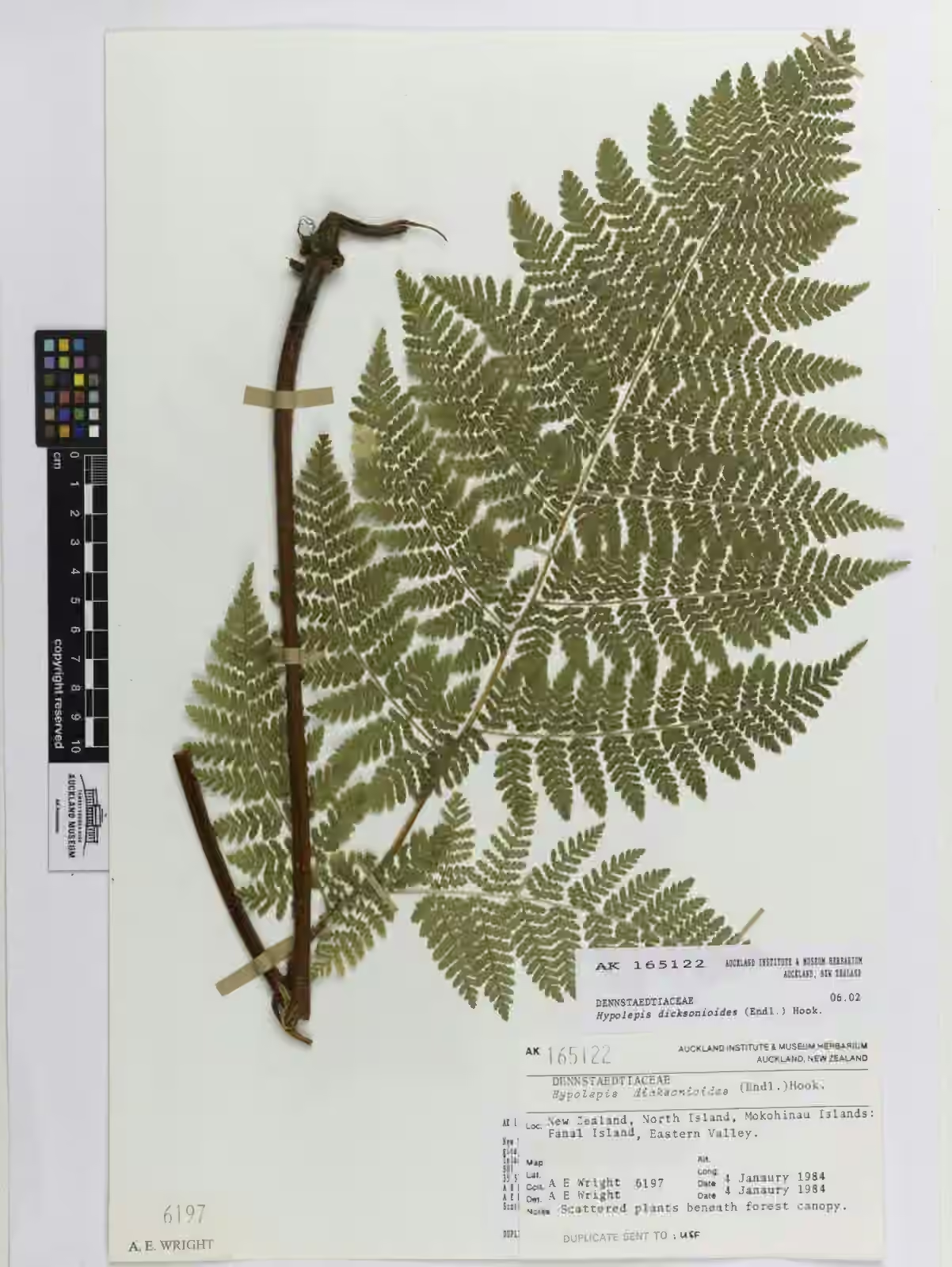
In thermal areas it hybridises with Hypolepis dicksonioides. No particular insect or bird associations are documented, though its sticky glandular hairs, like those of related species, collect fine debris.
Uses & Significance
Garden Uses
A soft, fast-spreading fern for moist, shaded native gardens.
- Ground cover under trees in damp shade
- Filler for bog and pond margins
- Restoration of lowland swamp and forest margins
Ecological Value
As an endemic lowland fern it contributes to the ground layer of a range of forest and wetland types.
- Quickly covers disturbed ground, reducing erosion
- Grows in kauri, podocarp, broadleaved and beech forest
- Part of restiad bog and swamp margin communities
Landscaping Uses
Its light green, lacy fronds brighten shaded corners and look striking where the milky sheen on older fronds catches the light. Combine it with darker-leaved ferns and sedges for contrast.
Plant it where a loose, spreading fern is welcome rather than among slow, choice plants it might overrun.
Seasonal Care Calendar
Spring
New croziers emerge with dense glandular hairs.
- Plant or divide
- Mulch with leaf litter
Summer
Fronds reach full size and the milky coating develops on older fronds.
- Keep well watered
- Spores ripen
Autumn
Fronds remain green in mild districts.
- Collect fresh spore
- Plant out young divisions
Winter
Growth slows and some fronds die back.
- Leave old fronds as protection
- Avoid soil compaction around rhizomes
When to Prune and How Much
Trim dead and tattered fronds at the base in late winter or spring. No other pruning is needed.
To keep it in bounds, cut through and remove outlying sections of rhizome.
How to Grow Pig Fern
NZPCN states that Hypolepis lactea is easily grown from fresh spore and by division of established plants. Since plants are relatively short-lived, it is worth propagating fresh stock every few years to maintain a planting. Grow young plants in moist, humus-rich mix and semi-shade, which mirrors the forest and swamp margins where it naturally occurs. Raising a few spare plants also guards against losses.
From Spores
Gather a frond with ripe, brown sori in summer or autumn. Lay it face down on paper in a draught-free room for a couple of days to collect the pale brown, spiny spores.
- Prepare a shallow pot of fine, moist seed-raising mix and sterilise it with boiling water
- Sow the spores thinly on the surface once the mix has cooled
- Enclose the pot in a clear plastic bag and place it in bright indirect light
- Keep the mix moist by bottom watering only
- When prothalli form a green mat, mist the surface to allow fertilisation
- Prick out young sporelings in small clumps and grow them on in semi-shade
By Division
Established plants are easy to divide because the rhizomes run near the surface and root along their length.
- In spring, lift a portion of rhizome carrying several fronds and roots
- Cut it free with a sharp knife or spade
- Replant in moist, humus-rich soil in semi-shade
- Water in well and keep damp until new fronds appear
Pests & Diseases
No significant pests or diseases are recorded. Slugs and snails may attack emerging croziers and young sporelings.
Plants fail mainly through drought, and because the species is short-lived, older patches may thin out naturally.
Cultural Significance
No Māori name or traditional use is recorded specifically for Hypolepis lactea.
The epithet lactea means milk-white, referring to the milky exudate on the fronds. The species was recognised as distinct from the Australian H. rugosula on the basis of morphological and chromosome differences (2n = 104).
Bonus Tip
To confirm an identification, rub the upper surface of an older frond: a sticky, whitish film coming away on your fingers, together with colourless hairs along the leaf margins, points to Hypolepis lactea rather than the red-haired H. rufobarbata.
Related Plants
Explore other native plants that share similar characteristics or habitats with Pig Fern (Hypolepis lactea), offering further insights into New Zealand's diverse flora. These related species provide context and opportunities for complementary planting in your garden.
Swamp Hypericum
Hypericum pusillum
Hypolepis amaurorachis
Hypolepis amaurorachis
Giant Hypolepis
Hypolepis dicksonioides
Sticky Pig Fern
Hypolepis rufobarbata
Cheeseman's Imperata
Imperata cheesemanii
Coastal Morning Glory
Ipomoea cairica
Beach Morning Glory
Ipomoea pes caprae subsp. brasiliensis
Rarauhi Nehenehe
Rarauhi Nehenehe
Plant Conservation
Hypolepis lactea is ranked Not Threatened (2023), with qualifiers noting it is data poor in size and trend and has an episodic, fluctuating presence. Regionally it is listed as Regionally Naturally Uncommon in Northland and Auckland.
Retaining lowland swamps, peat bogs and forest margins secures its habitat, and it readily recolonises disturbed openings within protected areas.
Frequently Asked Questions
What makes Hypolepis lactea different from other Hypolepis ferns?
Its deltoid fronds often become covered in a fine white, milky, sticky exudate on the upper surface, and the hairs on the frond margins are colourless glandular hairs rather than the red-brown bristles of H. rufobarbata.
Where does Hypolepis lactea grow?
It grows from Northland to Wellington, in the South Island from western Nelson to Otago (mainly Nelson, Marlborough and north Westland), and on the Chatham Islands, from sea level to about 800 m.
Is Hypolepis lactea easy to grow?
Yes. NZPCN says it is easily grown from fresh spore and by division, preferring moist, humus-rich soil in semi-shade, though individual plants are relatively short-lived.
Sources and Further Reading
The botanical, growing, and conservation details for Pig Fern (Hypolepis lactea) on this page draw on the New Zealand plant references below. Consult them for full technical records and the latest distribution data.