Ground Fern
Hypolepis amaurorachis
Last updated:
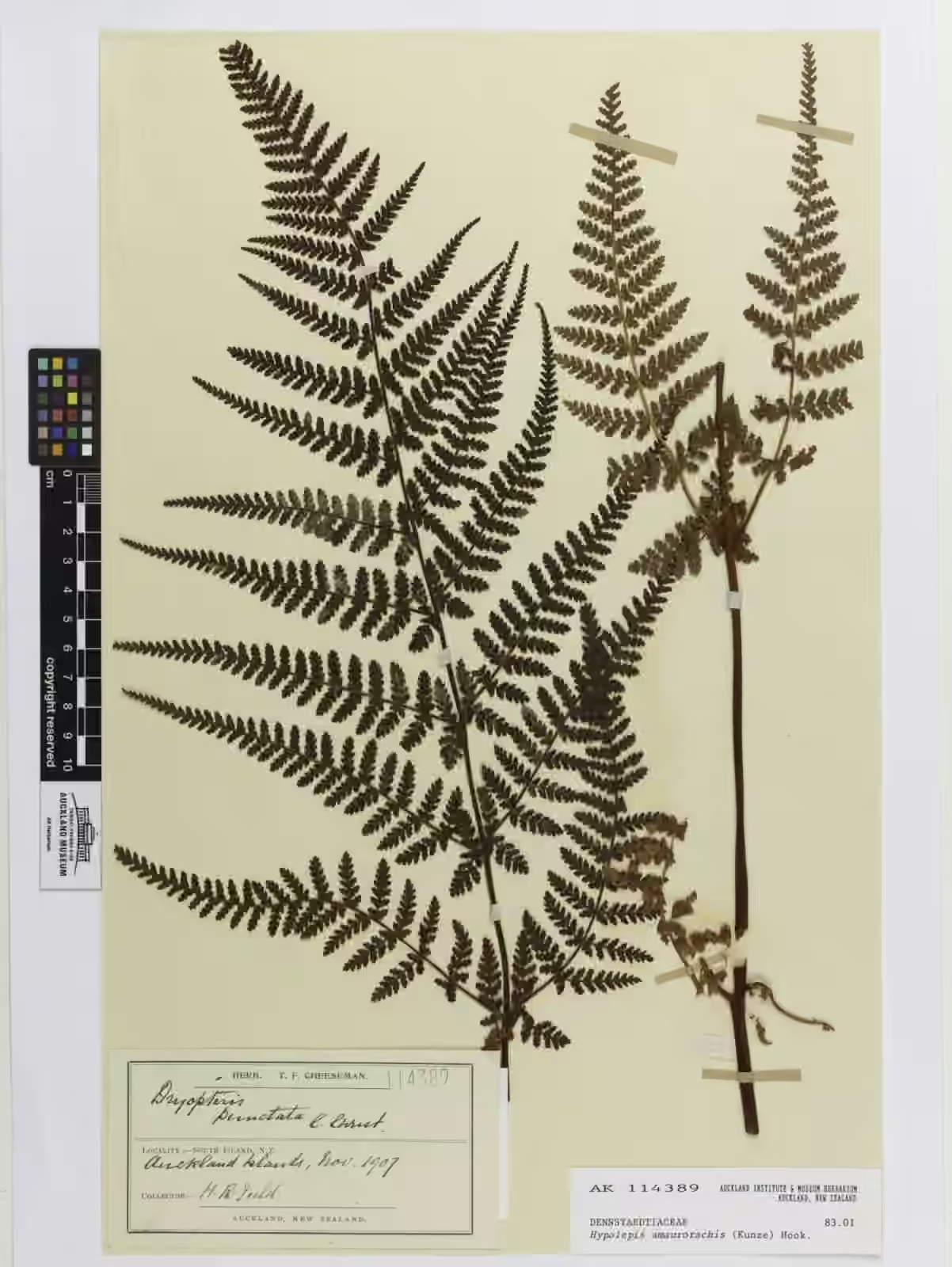
Hypolepis amaurorachis (correctly spelt amaurorhachis) is an uncommon ground fern of New Zealand's far south and outlying islands, also found in Victoria and Tasmania. It spreads by a long-creeping rhizome and produces soft fronds 15-55 cm long, two to three times divided, with a dark red-brown rachis that becomes pale and green towards the tip and both surfaces densely covered in colourless glandular hairs. It favours freshly disturbed ground near the coast in the Catlins, Fiordland, the Chatham Islands and the Auckland, Antipodes and Campbell Islands, often beside seal haul-outs and seabird colonies. It is ranked At Risk - Naturally Uncommon. Explore more native ferns in our native plant guide.
Plant Description
Hypolepis amaurorhachis is a terrestrial fern with a long-creeping rhizome clothed in red-brown hairs. The stipes are 70-230 mm long (occasionally to 450 mm) and carry pale brown glandular hairs. The blades are narrowly ovate to ovate, 150-550 mm long and 100-350 mm wide, twice pinnate near the tip and three times pinnate at the base, with 15-30 pairs of primary pinnae and deeply incised tertiary segments.
The rachis is dark red-brown, becoming paler and green towards the apex, which is the source of the name. Both surfaces of the blade are densely covered in colourless glandular hairs, and the margins bear similar hairs. The spores are pale brown and spiny. Like other Hypolepis, the sori sit on the undersides of the segments, partly protected by a turned-under margin.
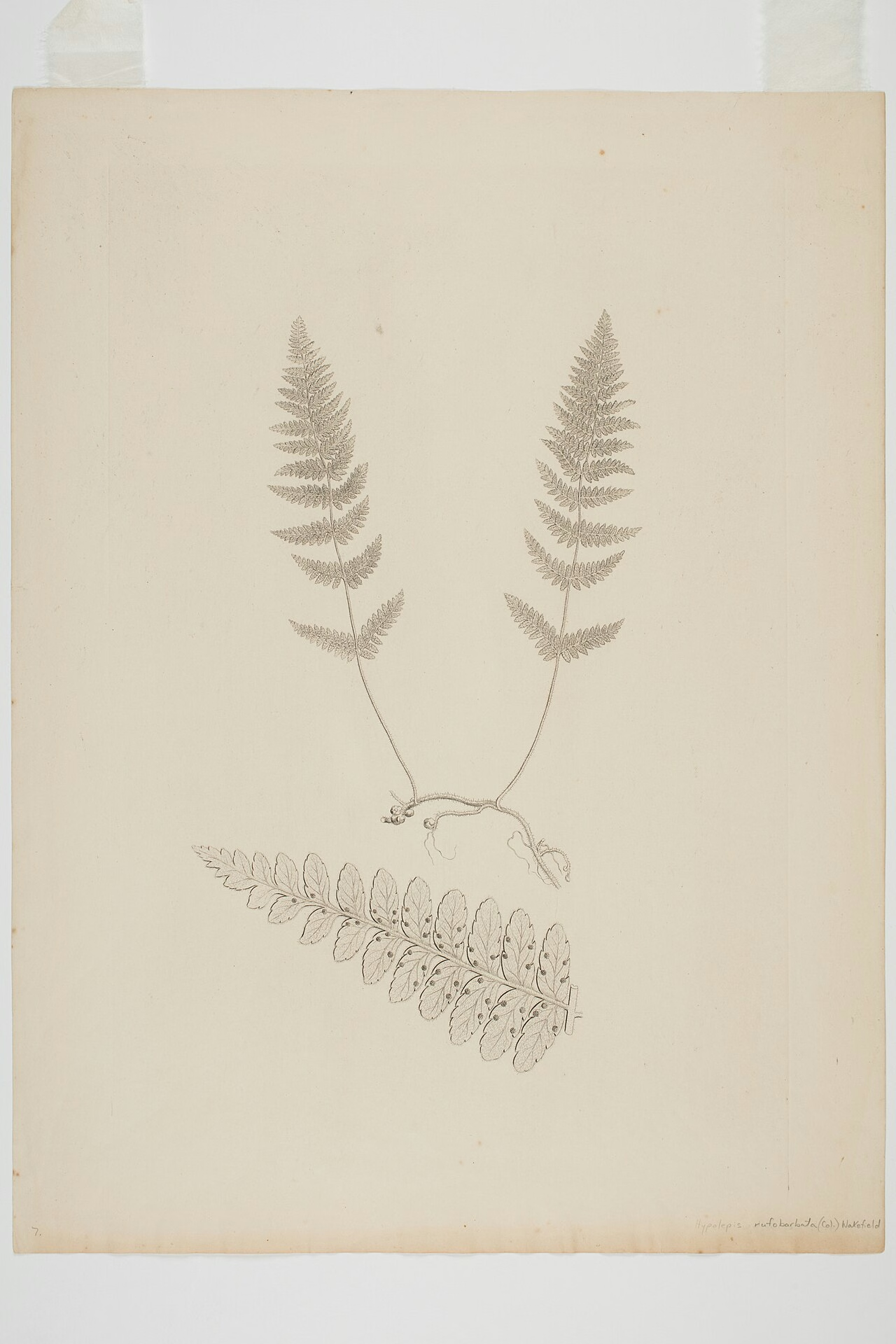
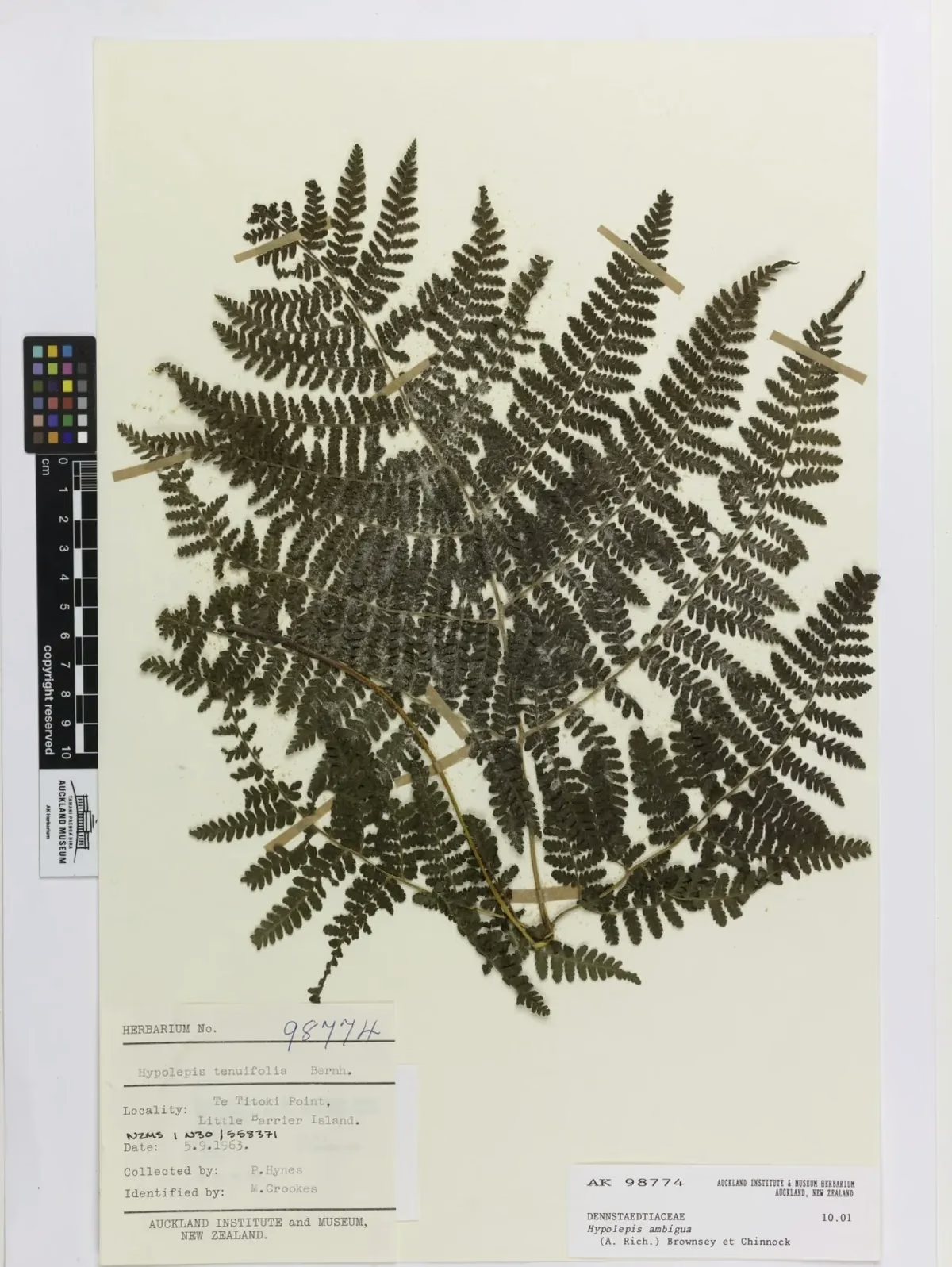
It is often confused with the sterile hybrid Hypolepis ambigua x H. rufobarbata, which has much larger, coarser, dark green to reddish-green fronds that are scarcely glandular. H. rufobarbata has red-brown needle-like hairs on the blade margins, H. lactea has darker stipes and shorter glandular hairs, and H. ambigua lacks glandular hairs and has larger spores.
Quick Facts
| Scientific Name | Hypolepis amaurorachis |
|---|---|
| Height | Fronds 0.2-0.8 m tall including stipe |
| Spread | Spreading colonies on a long-creeping rhizome |
| Water Needs | Moist soil |
| Light | Full sun to light shade |
| Frost Tolerance | Good; grows on subantarctic islands |
| Salt Tolerance | Tolerates coastal exposure; no specific data |
| Growth Rate | Fast; a short-lived coloniser |
| Lifespan | Short-lived perennial |
Climate Best Suited to
It suits cool, windy, oceanic climates of the far south and subantarctic, with frequent rain and mild temperatures year round.
Regional Suitability
| City | Climate Suitability |
|---|---|
| Auckland | Low |
| Wellington | Low |
| Christchurch | Low |
| Dunedin | Medium |
Plant Habitat
Hypolepis amaurorhachis is indigenous to New Zealand and south-eastern Australia (Victoria and Tasmania). In New Zealand it occurs in the far south of the South Island, along the Catlins and Fiordland coastline and in Southland, and on Rēkohu/Wharekauri/Chatham Island, the Antipodes Islands, the Auckland Islands and Campbell Island/Motu Ihupuku, from sea level to about 200 m.
It favours freshly disturbed ground in coastal habitats and lowland forest not far from the coast: open rocky slopes and terraces, open Dracophyllum scrub, Bulbinella herbfield, riverbanks, track sides and light gaps under podocarps or rātā. It often frequents the margins of seal haul-outs and seabird colonies.
Growing Requirements
Soil Requirements
It colonises freshly disturbed, often fertile coastal soils, such as those enriched by seals and seabirds.
- Disturbed, open ground
- Moist peaty or organic soils
- Nutrient-rich soils near wildlife colonies
Light Requirements
It grows in open sites and forest light gaps, and NZPCN suggests full sun in cultivation.
- Full sun
- Light gaps in coastal forest
- Open scrub and herbfield
Water Requirements
Its southern coastal habitats receive frequent rain and mist, so it expects moist soil.
- Keep soil moist
- Cool, humid air
- Avoid prolonged drying
Planting and Establishing
This fern is not commercially available and its propagation is not known. NZPCN suggests it would probably grow easily in a cool, peaty soil in full sun, which suits southern gardens best.
Because it is naturally uncommon and short-lived, do not collect it from the wild. Any cultivation should rely on spores from legally held plants, and it is best suited to specialist collections in cool southern districts.
Ecological Role
Hypolepis amaurorhachis is a transient coloniser. It appears on freshly disturbed ground, such as slips, track edges and areas churned by seals and seabirds, and is probably short-lived, disappearing as vegetation closes over.
Its association with seal haul-outs and seabird colonies suggests it benefits from the disturbance and nutrient enrichment these animals provide. Its spiny spores are spread by wind, allowing it to reach new disturbed sites across the southern islands.
Uses & Significance
Garden Uses
It has little garden use outside specialist fern collections in cool southern regions.
- Specialist fern collections
- Cool, peaty beds in full sun
- Interest for subantarctic plant enthusiasts
Ecological Value
It is part of the specialised flora that colonises disturbed ground around marine mammal and seabird colonies.
- Colonises disturbed coastal ground
- Naturally uncommon in New Zealand
- Present on subantarctic islands
Landscaping Uses
It is not used in landscaping. In restoration of southern coastal sites, leaving natural disturbance processes in place, such as wildlife activity, allows it to appear where conditions suit.
Its soft, sticky-haired fronds could provide texture in a cool fernery, but no cultivation experience is documented.
Seasonal Care Calendar
Spring
New fronds emerge from the creeping rhizome as the soil warms.
- Look for red-brown rachises on new fronds
- Check disturbed coastal ground
Summer
Fronds reach full size and sori mature.
- Feel for sticky glandular hairs
- Note pale green upper rachis
Autumn
Spores are shed and dispersed by wind.
- Collect spores only from cultivated plants
- Record new colonies
Winter
Fronds may die back or become tatty in cold, windy weather.
- Leave old fronds to protect the rhizome
- No action needed
When to Prune and How Much
No pruning is needed in the wild. In cultivation, old, tattered fronds can be cut at the base in late winter before new growth begins.
Avoid damaging the creeping rhizome near the soil surface.
How to Grow Ground Fern
NZPCN states that propagation of Hypolepis amaurorhachis is not known, but that it would probably grow easily in a cool, peaty soil in full sun. As a fern, it reproduces naturally by wind-dispersed spores and spreads by its long-creeping rhizome. The methods below follow the standard approaches used for Hypolepis ground ferns, which as a group are generally vigorous colonisers. Because this species is At Risk - Naturally Uncommon in New Zealand, wild plants should not be dug up, and spores should be taken only from cultivated plants or collected with appropriate permission.
From Spores
The pale brown, spiny spores are produced in sori on the frond undersides and are the most practical way to raise new plants.
- Place a fertile frond with ripe, brown sori on clean paper for a day or two
- Tap off the spores and remove debris
- Sow thinly on sterilised, moist peat-based mix
- Cover with glass or plastic and keep in bright, indirect light
- Keep moist until the green prothalli form and young fronds appear
- Prick out small clumps of sporelings and grow on in cool, peaty soil
By Division of the Rhizome
The long-creeping rhizome can be cut into sections, each with fronds and a growing tip.
- Work with a cultivated plant in spring
- Cut a length of rhizome with at least one healthy frond and growing tip
- Replant just below the surface of moist, peaty soil
- Keep well watered until new fronds develop
Pests & Diseases
No specific pests or diseases are recorded for this fern.
Because it relies on freshly disturbed ground, its main vulnerability is the closing over of open sites by taller vegetation or weeds, together with its naturally small, scattered populations.
Cultural Significance
No Māori name or traditional use specific to this species was found in the sources consulted.
The genus name Hypolepis comes from the Greek hypo (under) and lepis (scale), referring to the position of the sori under the frond margin. The epithet amaurorhachis comes from the Greek amauro- (dark) and rhachis, referring to the dark red-brown rachis.
Bonus Tip
When you find a Hypolepis on disturbed ground near the coast in the far south, rub a frond gently: Hypolepis amaurorhachis feels distinctly sticky from its dense colourless glandular hairs, and its rachis grades from dark red-brown at the base to pale green at the tip.
Related Plants
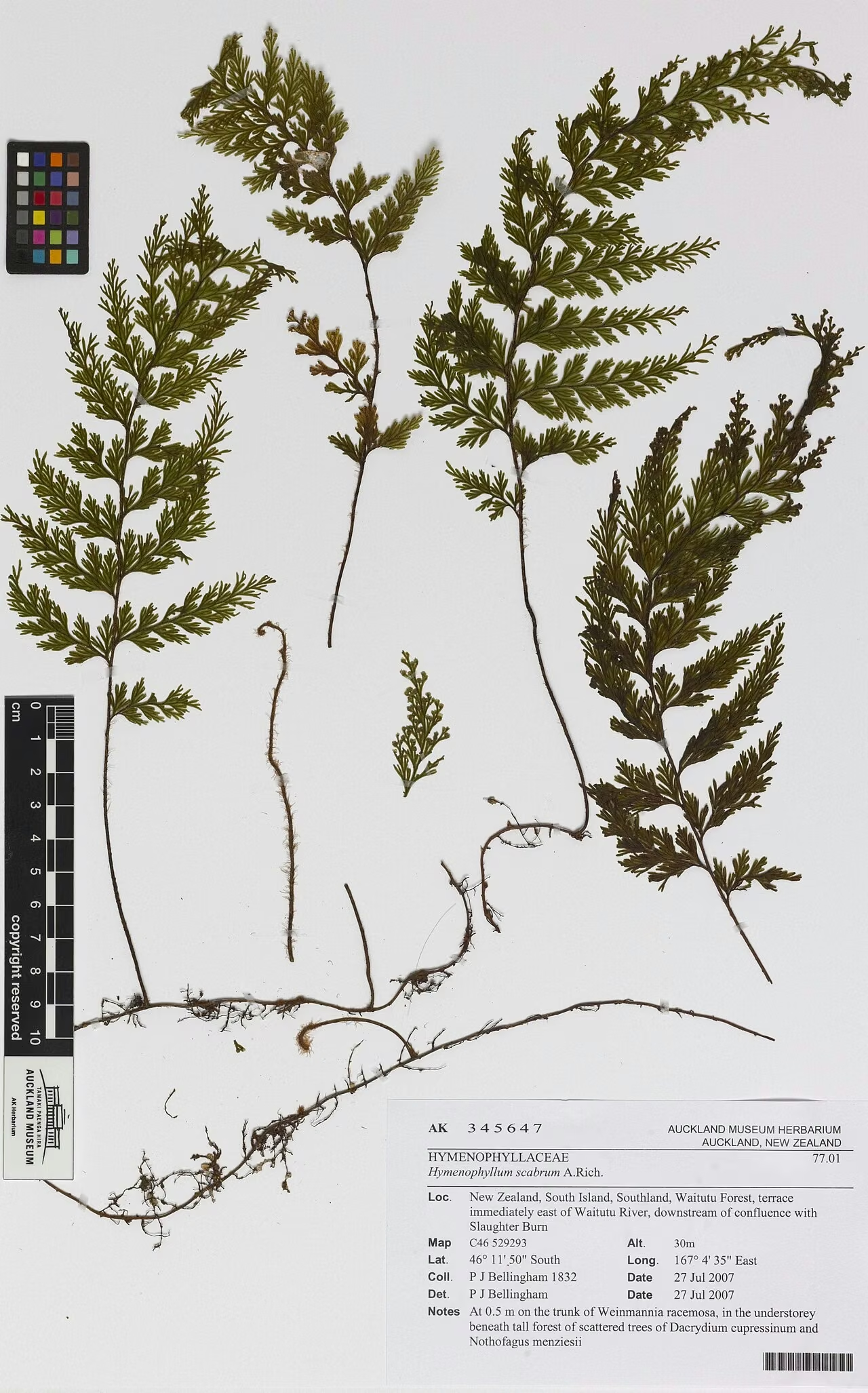
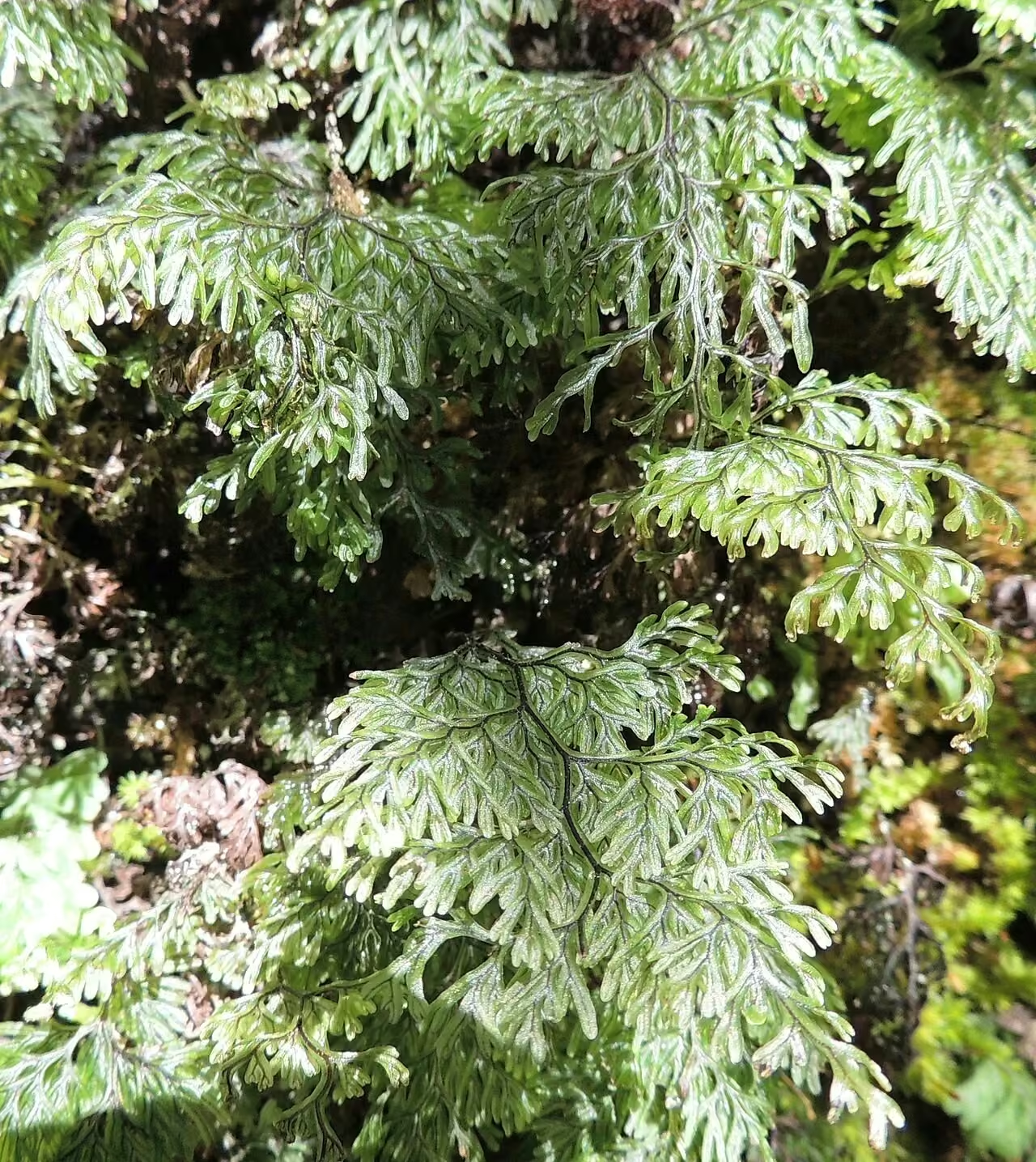
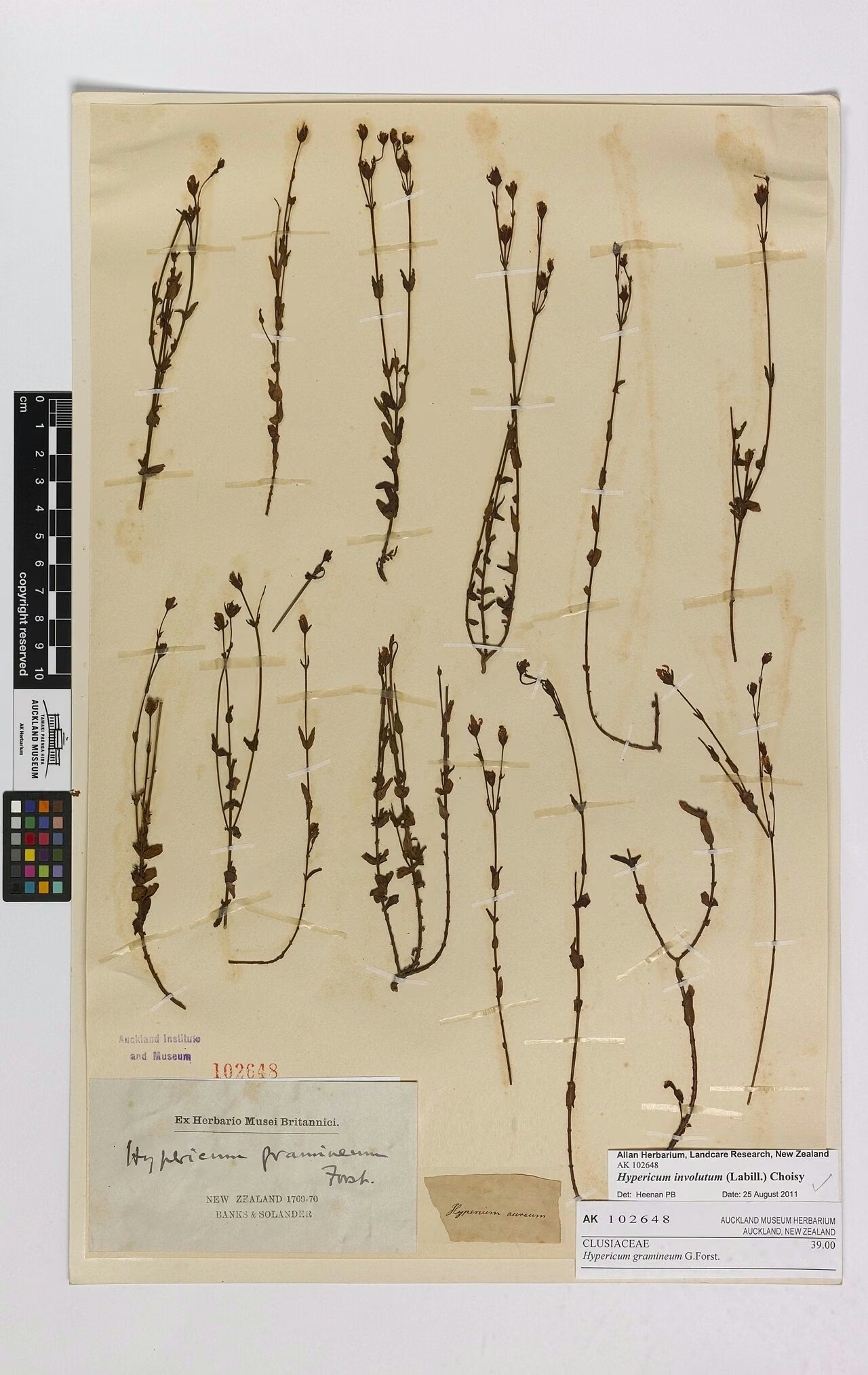
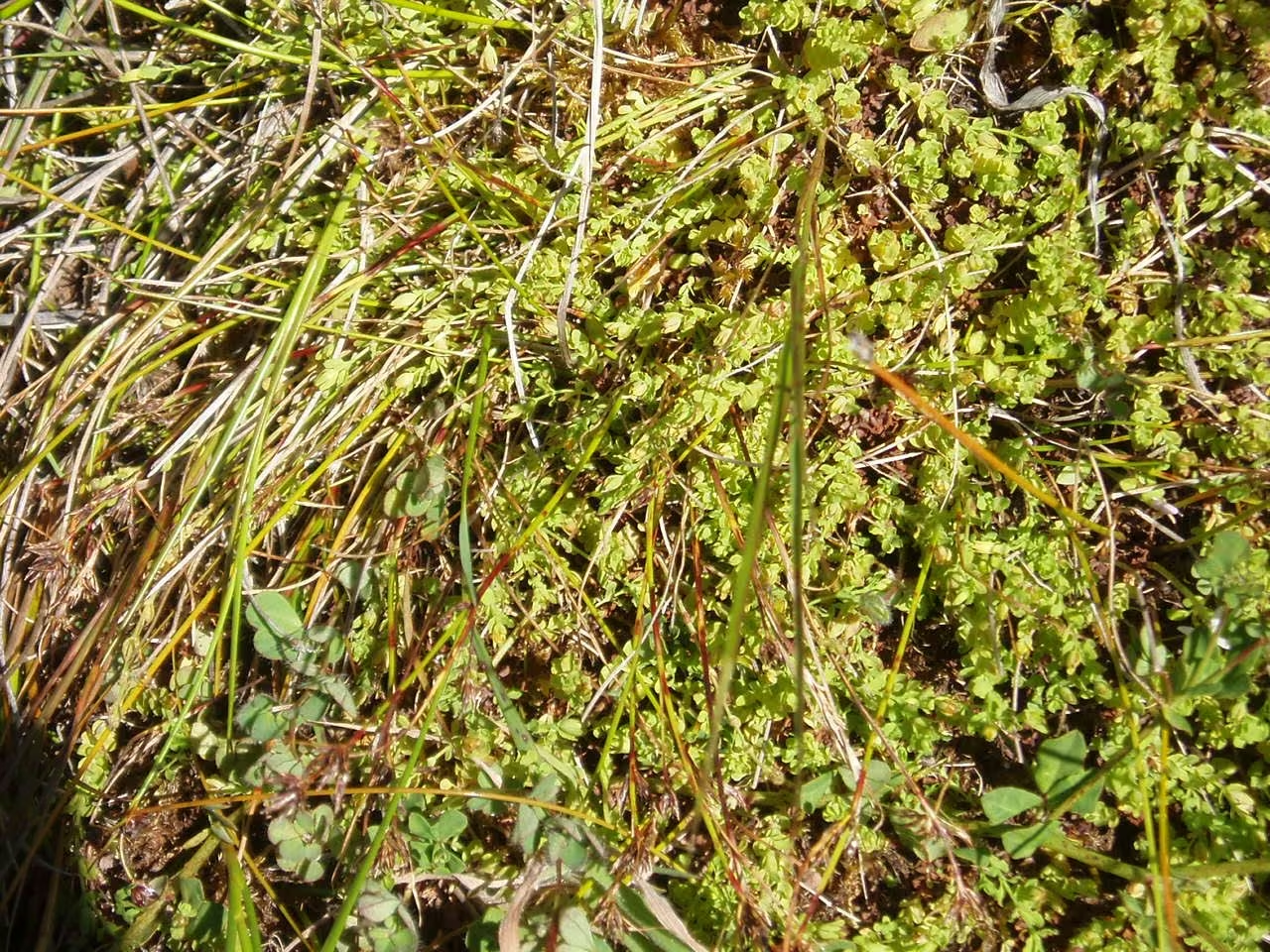
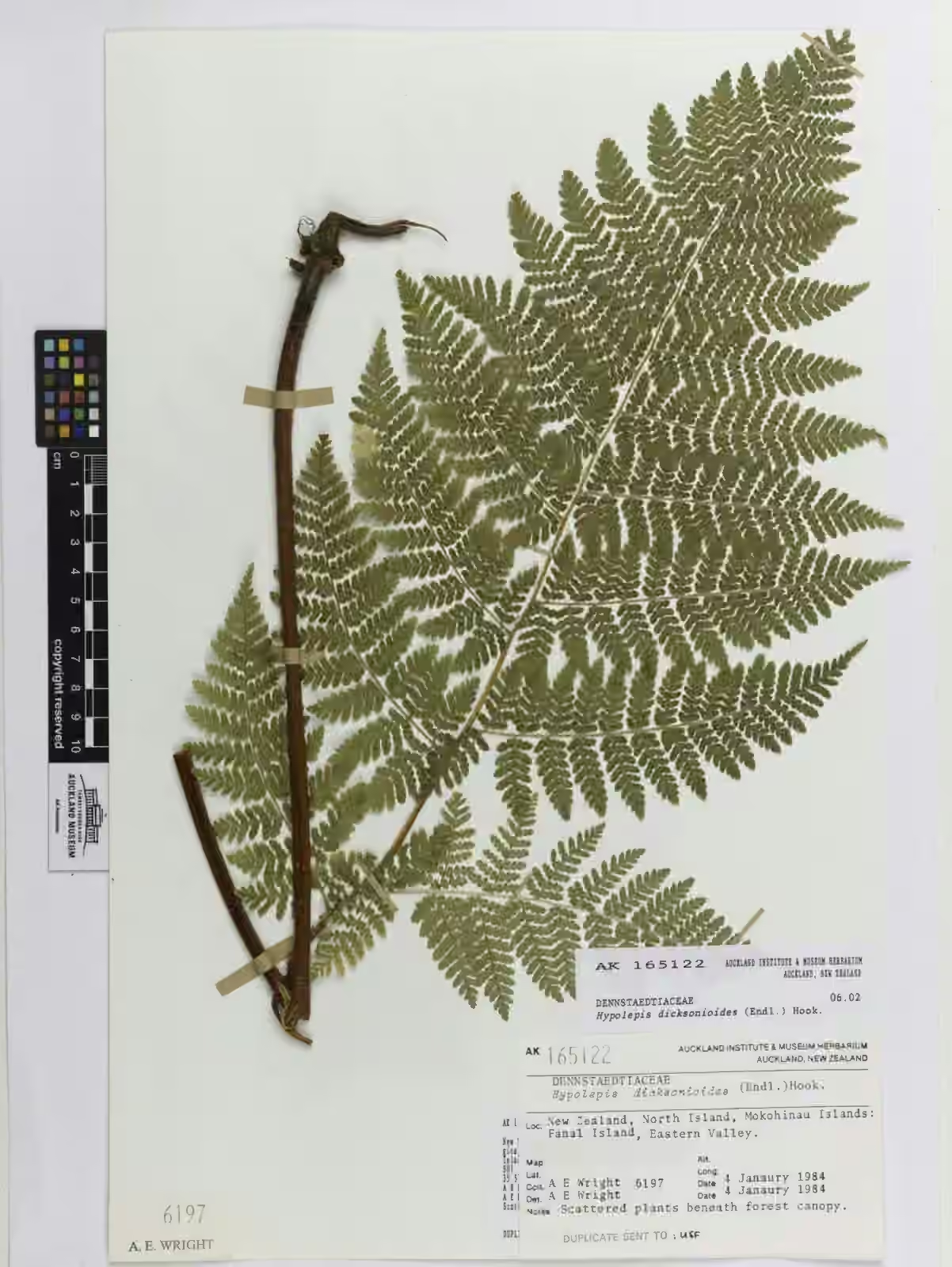
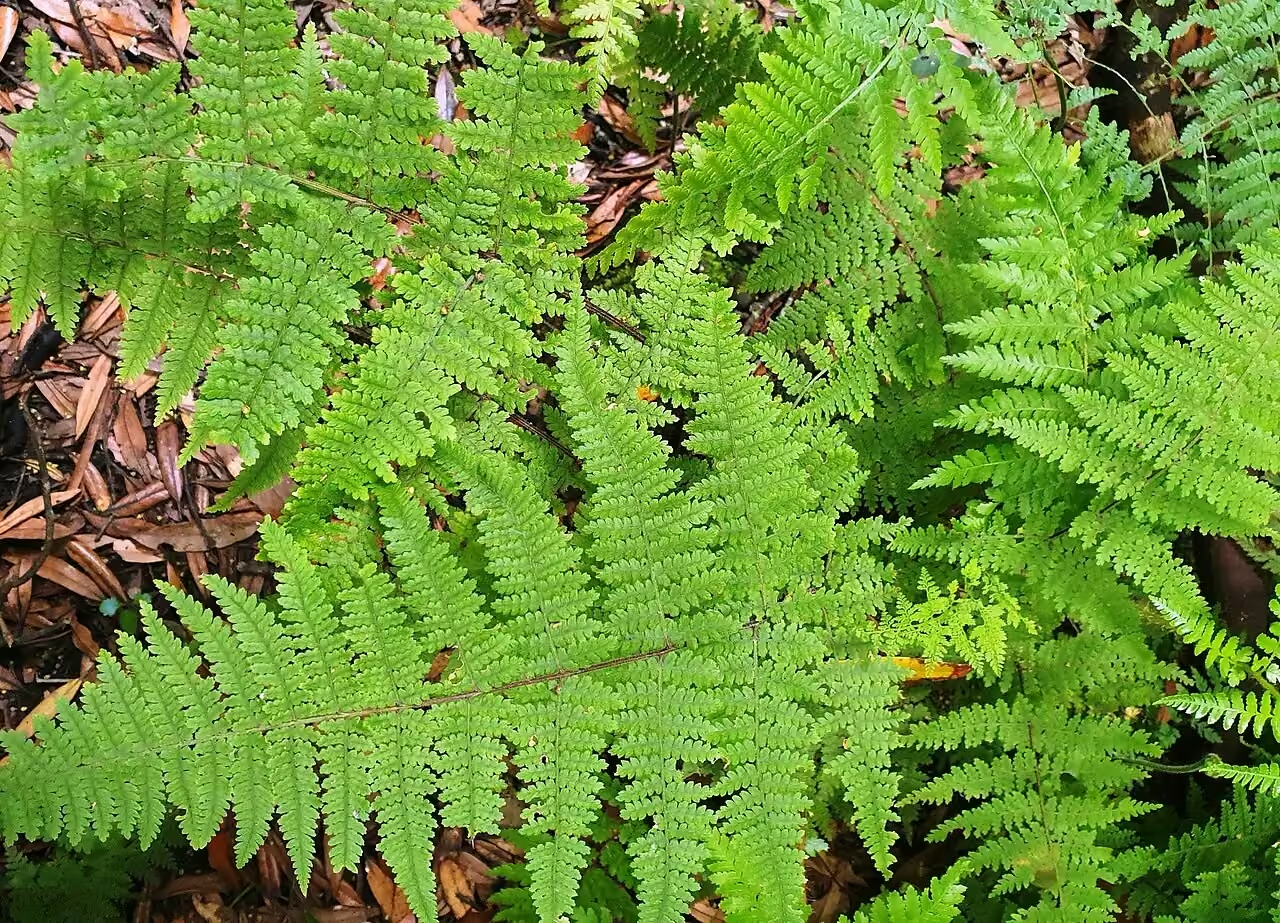
Explore other native plants that share similar characteristics or habitats with Ground Fern (Hypolepis amaurorachis), offering further insights into New Zealand's diverse flora. These related species provide context and opportunities for complementary planting in your garden.
Plant Conservation
Hypolepis amaurorhachis is ranked At Risk - Naturally Uncommon (2023), with qualifiers Sp (sparse), EF (episodic fluctuations), PD (partial decline) and SO (secure overseas). It is Regionally Critical in Otago.
Its populations are naturally sparse and transient, appearing in suitable disturbed habitat as opportunities arise. Protecting southern coastal habitats and wildlife colonies, and recording new occurrences, are the most useful actions.
Frequently Asked Questions
Is it Hypolepis amaurorachis or amaurorhachis?
The Flora of New Zealand uses amaurorhachis, Kunze's original 1850 spelling. Hooker later spelt it amaurorachis, an error repeated by many authors, but the original spelling must be kept.
Where does Hypolepis amaurorhachis grow in New Zealand?
It is found in the southern South Island along the Catlins and Fiordland coast, and on the Chatham, Antipodes, Auckland and Campbell Islands, from sea level to about 200 m.
Why is this fern often found near seal colonies?
NZPCN describes it as a short-lived species of freshly disturbed ground, and the margins of seal haul-outs and seabird colonies provide the open, disturbed and fertile soil it colonises.
How do you tell it from other Hypolepis ferns?
Its fronds are densely covered in colourless glandular hairs, and the rachis is dark red-brown below and pale green above. H. rufobarbata has red-brown needle-like hairs, and the hybrid H. ambigua x H. rufobarbata has larger, coarser, darker and less glandular fronds.
Sources and Further Reading
The botanical, growing, and conservation details for Ground Fern (Hypolepis amaurorachis) on this page draw on the New Zealand plant references below. Consult them for full technical records and the latest distribution data.