Swamp Hypericum
Hypericum pusillum
Last updated:
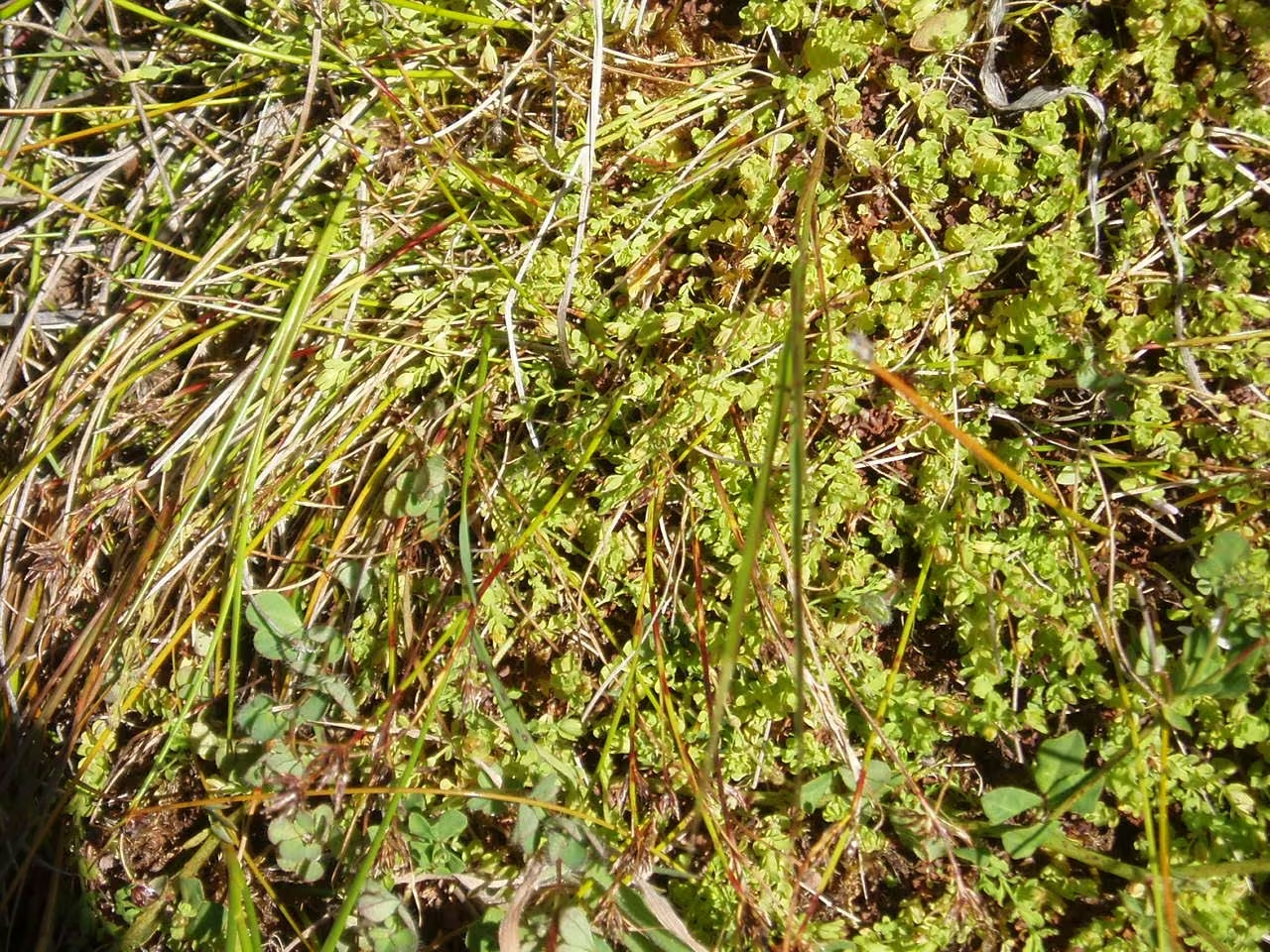
Swamp hypericum (Hypericum pusillum) is a small, creeping native herb with thin stems up to 20 cm long, tiny wavy-edged leaves and pale to dark yellow flowers up to 9 mm across. It grows in damp and wet places from the coast to the subalpine zone throughout the North, South and Stewart Islands, including stream and lake margins, swamps, bogs, damp tussock hollows and even poorly drained pasture. It also occurs in Australia and parts of Asia. NZPCN describes it as easily grown and an attractive ground cover for poorly drained clay soils. It is ranked Not Threatened. Explore more native ground covers in our native plant guide.
Plant Description
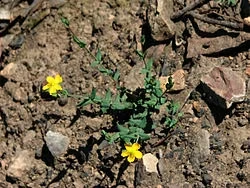
Hypericum pusillum is a small herb with slender stems usually up to 200 mm long and only 0.3-0.6 mm thick, usually prostrate to decumbent but sometimes erect. The stems are four-angled with four raised lines. The leaves are stalkless, 2.5-9 mm long and 1.5-3.5 mm wide, usually broadly elliptic, and often have strongly wavy (sinuate) margins.
The flowers are up to 9 mm across, with pale to dark yellow petals 2.8-4 mm long and nine free, pale yellow stamens. The capsule is cylindric to globose, 2.8-4.5 mm long, and the tiny seeds are 0.5-0.75 mm long, orange-brown to light yellow when fresh and ageing to dark brown.
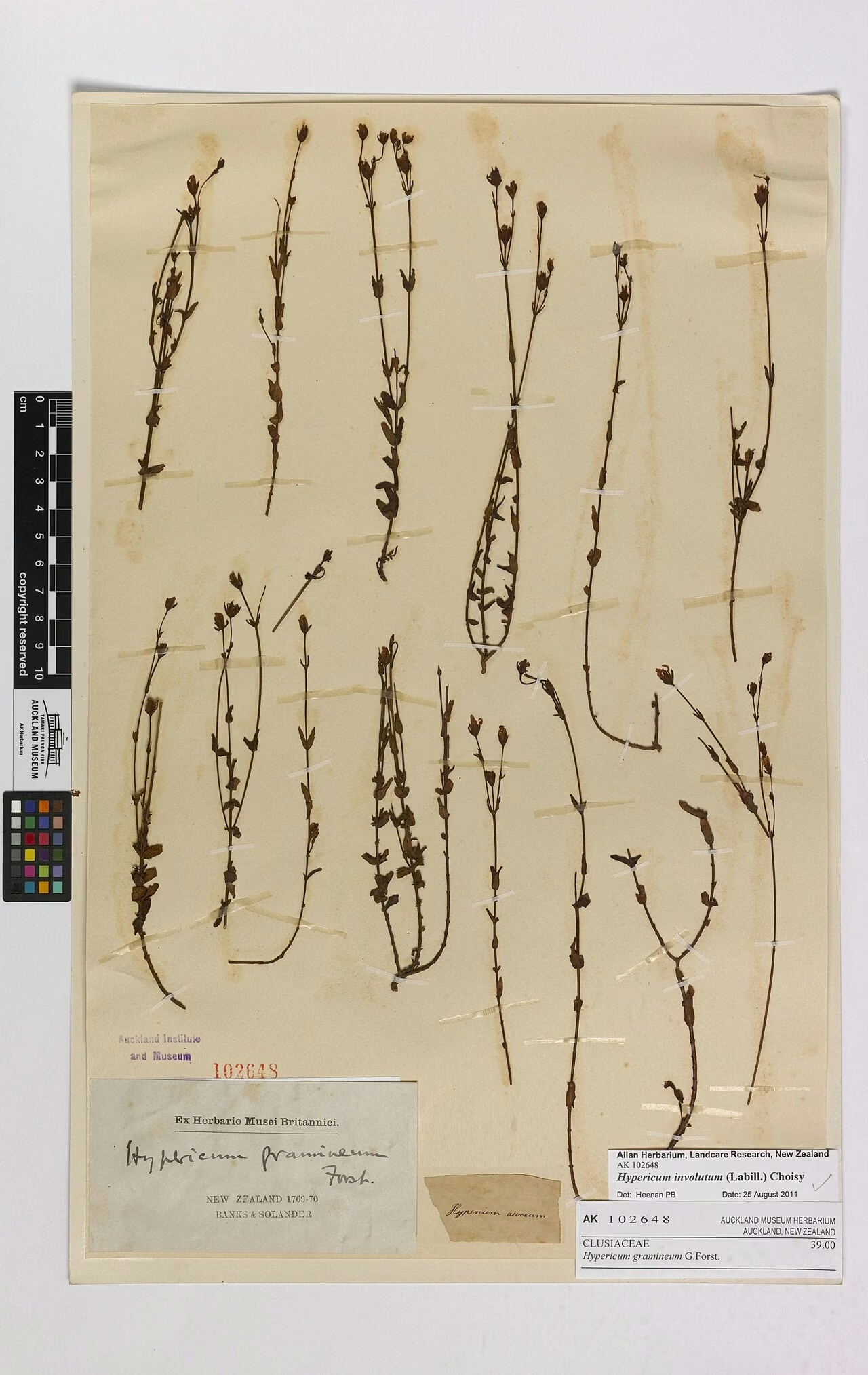
It is most often confused with the introduced Hypericum humifusum, which has round, two-lined stems and a conspicuous band of black glands on its leaves and sepals, and with the native H. involutum, which has erect stems, rolled-under leaf margins and much larger flowers.
Quick Facts
| Scientific Name | Hypericum pusillum |
|---|---|
| Height | Low; stems mostly prostrate |
| Spread | Stems up to 20 cm long |
| Water Needs | High; wet to damp soil |
| Light | Full sun to light shade |
| Frost Tolerance | Good; reaches the subalpine zone |
| Salt Tolerance | Low to moderate; found in some coastal wetlands |
| Growth Rate | Moderate |
| Lifespan | Perennial |
Climate Best Suited to
It adapts to a wide range of climates from warm coastal lowlands to cold subalpine sites, provided the ground stays damp.
Regional Suitability
| City | Climate Suitability |
|---|---|
| Auckland | High |
| Wellington | High |
| Christchurch | Medium |
| Dunedin | High |
Plant Habitat
Swamp hypericum is indigenous to New Zealand, where it occurs throughout the North, South and Stewart Islands, including Northland, Auckland, the Volcanic Plateau, Taranaki, Gisborne, the southern North Island, Nelson, Marlborough, Canterbury, Westland, Otago and Southland. It is also found in Australia, and NZPCN lists New Guinea, Malesia, south-east Asia, China and Japan.
It grows from the coast to the subalpine zone on river and stream banks, lake and tarn margins, swamps and bogs, open areas in forest, damp hollows among tussocks and in cattle-pugged, poorly drained pasture. It is rated an obligate wetland plant, though the Flora of New Zealand notes it can also grow on volcanic lava and tephra and on clay banks.
Growing Requirements
Soil Requirements
It thrives in damp to wet, poorly drained soils and is particularly suited to heavy clay.
- Wet clay and silt
- Peaty bog margins
- Damp gravel along streams
Light Requirements
It grows best in open, sunny wet ground, but tolerates some shade at forest openings.
- Full sun
- Light shade tolerated
- Keep free of tall overhanging plants
Water Requirements
It is a wetland plant that needs consistently moist or wet soil.
- Keep soil damp at all times
- Tolerates brief flooding
- Suffers in prolonged drought
Planting and Establishing
Plant swamp hypericum in a damp, sunny spot such as the edge of a pond, a rain garden or a low, poorly drained patch of lawn where little else thrives. NZPCN recommends it as an attractive ground cover for poorly drained clay soils.
Space plants about 15-20 cm apart and keep them well watered until established. Because it is tiny, keep it away from vigorous grasses and sedges that would smother it.
Ecological Role
Swamp hypericum is part of the low herb layer of wetland margins and damp turf, growing among mosses, sedges and other small herbs. Its small yellow flowers are available for much of the year, although its pollinators are not documented in the sources consulted.
Its tiny seeds are dispersed by wind and water, helping it colonise newly exposed damp ground such as stream banks, tarn margins and pugged pasture.
Uses & Significance
Garden Uses
It is a useful miniature ground cover for wet parts of the garden.
- Pond and stream edges
- Rain gardens and damp hollows
- Bog gardens and wet clay
Ecological Value
It contributes to native wetland herb diversity and stabilises bare wet soil.
- Native wetland groundcover
- Colonises bare damp ground
- Long flowering season for insects
Landscaping Uses
Use swamp hypericum as a living carpet between stepping stones in damp areas, along the margins of ponds and swales, or among small wetland sedges and rushes in restoration plantings.
Its fine texture and scattered yellow flowers suit small-scale, close-up plantings where it can be appreciated rather than large expanses.
Seasonal Care Calendar
Spring
Growth resumes and flowering picks up from September.
- Weed around patches
- Plant new pieces in damp soil
Summer
Flowering continues while soil stays moist.
- Water during dry spells
- Collect ripe capsules for seed
Autumn
Flowers and capsules continue into autumn.
- Divide and replant rooted pieces
- Sow fresh seed
Winter
Plants persist through winter wet and frost and may still flower in mild areas.
- Little care needed
- Remove smothering leaves
When to Prune and How Much
No pruning is needed. Keep competing grasses and weeds trimmed around patches so they are not overgrown.
Straggly stems can be trimmed lightly at any time to keep a patch dense.
How to Grow Swamp Hypericum
NZPCN states that swamp hypericum is easily grown from fresh seed and from rooted pieces. Its creeping stems root where they touch damp ground, so a single plant can quickly provide material for new patches. Fresh seed sown on a damp surface germinates readily, and its natural spread by wind and water shows how willingly it colonises moist bare soil. For wetland restoration, source seed or plants from the local area so that they suit local conditions. Keep all propagation material moist, as this is a wetland species that dries out quickly in small pots.
From Seed
Sow fresh seed, which is very small, on the surface of a damp mix.
- Collect ripening capsules as they turn brown
- Shake the tiny seed onto paper
- Sow on the surface of moist seed raising mix
- Do not cover, or cover only with a dusting of fine sand
- Stand the tray in a saucer of water to keep it wet
- Prick out seedlings when they have several leaves
By Division of Rooted Pieces
The quickest method is to lift sections of stem that have already rooted into the soil. Spring and autumn, when the ground is reliably wet, are the easiest times to establish divisions outdoors.
- Find stems that have rooted at the nodes
- Cut out small rooted pieces with a little soil
- Plant directly into damp ground or pots of moist mix
- Keep the soil wet until new growth appears, then let the patch spread naturally
Pests & Diseases
No serious pests or diseases are recorded. Drying out and smothering by taller plants are the main causes of loss in gardens.
In the wild, drainage of wetlands and invasion by aggressive pasture grasses and weeds reduce its habitat.
Cultural Significance
No Māori name or traditional use specific to this species was found in the sources consulted.
The epithet pusillum means insignificant or weak, probably a reference to its small stature. The genus name Hypericum comes from the Greek hyper (above) and eikon (picture), from the old practice of hanging the plants above pictures to ward off evil spirits.
Bonus Tip
If a wet corner of your lawn grows only moss and weeds, try swamp hypericum there: it is at home in cattle-pugged clay pasture in the wild and will make a fine, flowering carpet where most garden groundcovers would rot.
Related Plants
Explore other native plants that share similar characteristics or habitats with Swamp Hypericum (Hypericum pusillum), offering further insights into New Zealand's diverse flora. These related species provide context and opportunities for complementary planting in your garden.
Hymenophyllum revolutum
Hymenophyllum revolutum
Rough Filmy Fern
Hymenophyllum scabrum
Hairy Filmy Fern
Hymenophyllum villosum
Grassland Hypericum
Hypericum involutum
Hypolepis amaurorachis
Hypolepis amaurorachis
Giant Hypolepis
Hypolepis dicksonioides
Hypolepis lactea
Hypolepis lactea
Grassy St John's Wort
Grassy St John's Wort
Plant Conservation
Hypericum pusillum is ranked Not Threatened (2023), with the qualifier SO (secure overseas). Regionally it is Declining in Auckland and Not Threatened in Northland, Wellington and Otago.
Protecting and restoring wetlands, and controlling weeds at wetland margins, help it remain common.
Frequently Asked Questions
Where does swamp hypericum grow in New Zealand?
It grows throughout the North, South and Stewart Islands from the coast to subalpine altitudes, on stream and lake margins, in swamps and bogs, open forest areas, damp tussock hollows and cattle-pugged wet pasture.
How do you tell swamp hypericum from the introduced Hypericum humifusum?
Swamp hypericum is smaller, with four-angled stems and wavy-edged leaves, and lacks the conspicuous band of black glands on the leaves and sepals that H. humifusum has.
Is swamp hypericum a good ground cover?
Yes. NZPCN describes it as easily grown from fresh seed and rooted pieces and as an attractive ground cover for poorly drained clay soils.
When does swamp hypericum flower?
NZPCN records flowering and fruiting throughout the year, and the Flora of New Zealand gives the main flowering season as September to April.
Sources and Further Reading
The botanical, growing, and conservation details for Swamp Hypericum (Hypericum pusillum) on this page draw on the New Zealand plant references below. Consult them for full technical records and the latest distribution data.