Grassland Hypericum
Hypericum involutum
Last updated:
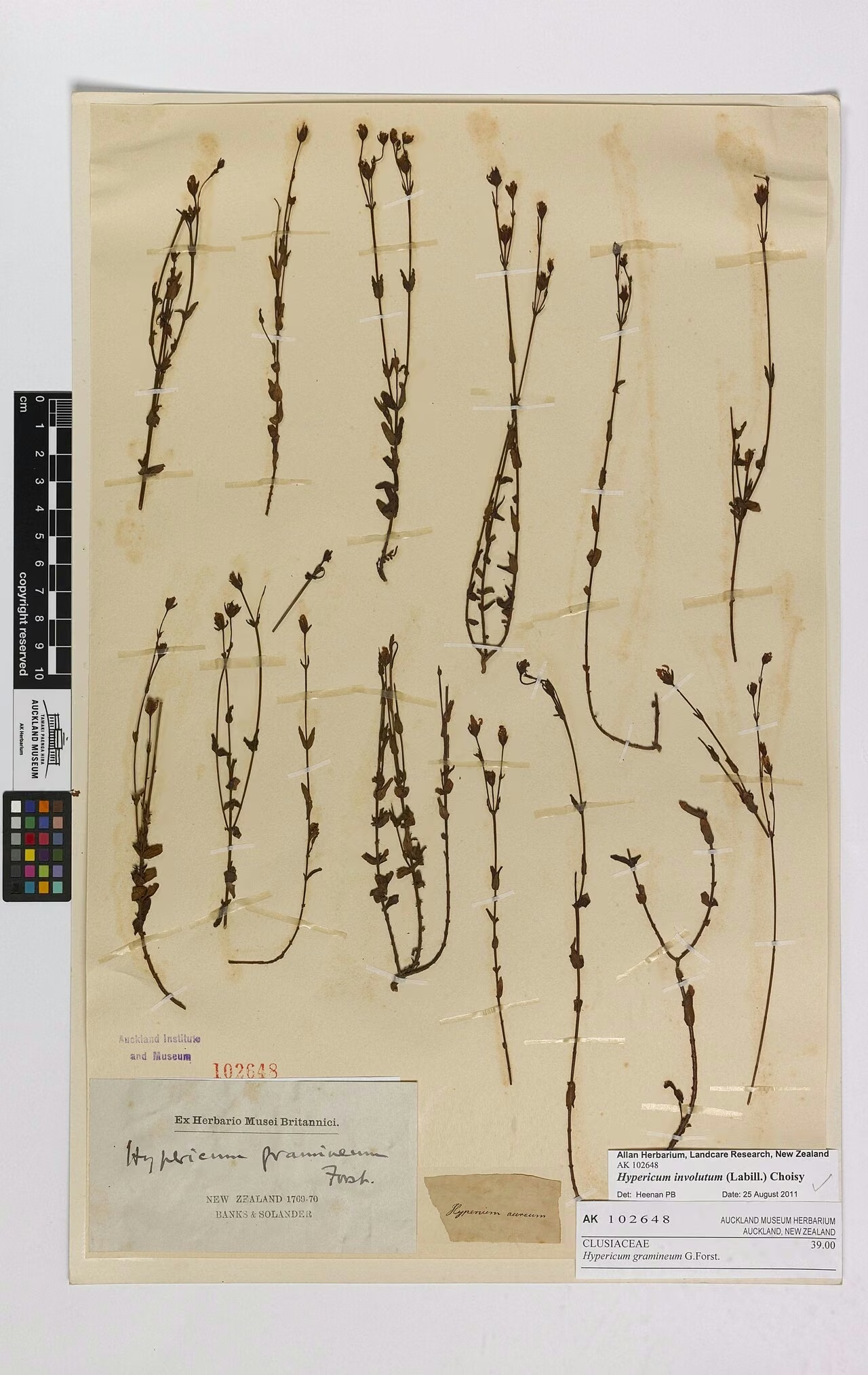
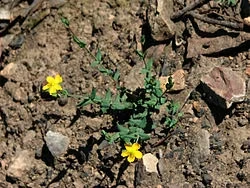
Grassland hypericum (Hypericum involutum) is a small native perennial herb with erect, four-angled stems up to 25 cm tall rising from a woody base, and golden yellow flowers up to about 17 mm across from October to March. It grows in dry, open places from the coast to the mountains, around rock outcrops, in open scrub and kānuka woodland and in sparse tussock grassland, from Te Paki to Southland, though it is scarce north of the Waikato. It is also native to Australia. Once confused with Hypericum gramineum, it is now ranked At Risk - Declining. Explore more native flowering plants in our native plant guide.
Plant Description
Hypericum involutum is a herbaceous perennial up to 250 mm tall with a woody, non-rhizomatous base. Its stems are erect, quadrangular and marked by four raised lines, up to 1.3 mm in diameter. The leaves are lanceolate to broadly elliptic, 2.5-20 mm long and 0.7-6.8 mm wide, with conspicuous translucent (pellucid) glands but no black glands, and the margins tend to be rolled under, as the epithet suggests.
The flowers are borne in terminal, loose clusters (dichasial cymes) of one to ten, with golden yellow petals longer than the sepals, 30-43 stamens and three styles. The corolla reaches about 17 mm across. The capsule is ovoid, 5.0-9.5 mm long, and contains oblong seeds with longitudinal ribs.
It is distinguished from all other New Zealand Hypericum by its lack of black glands combined with erect, four-lined stems from a woody base, three styles and a terminal inflorescence. Australian plants of the species have smaller capsules and fewer stamens (9-27) than New Zealand plants.
Quick Facts
| Scientific Name | Hypericum involutum |
|---|---|
| Height | Up to 0.25 m |
| Spread | Small clumps, about 0.1-0.2 m |
| Water Needs | Low; prefers dry, free-draining sites |
| Light | Full sun to light shade |
| Frost Tolerance | Good; grows to montane altitudes |
| Salt Tolerance | Some; occurs in coastal sites, but no specific data |
| Growth Rate | Moderate |
| Lifespan | Perennial |
Climate Best Suited to
It suits dry, sunny climates with cold winters, and is most at home in drier eastern and inland districts of the South Island.
Regional Suitability
| City | Climate Suitability |
|---|---|
| Auckland | Low |
| Wellington | Medium |
| Christchurch | High |
| Dunedin | Medium |
Plant Habitat
Grassland hypericum is indigenous to New Zealand and Australia. In New Zealand it occurs in the North and South Islands from Te Paki south to Southland, but is scarce north of the Waikato. Records span Northland, Auckland, the southern North Island, Nelson, Marlborough, Canterbury, Otago and Southland.
It grows from the coast to montane altitudes in dry, open sites: on and around rock outcrops, in open scrub, under open mānuka and kānuka stands, and in sparsely vegetated tussock grassland. Herbarium collections include plants from depleted tussock grassland near Alexandra in Central Otago.
Growing Requirements
Soil Requirements
It prefers thin, open, free-draining soils around rock and in sparse grassland.
- Free-draining, stony or gravelly soil
- Thin soils around rock outcrops
- Low fertility suits it
Light Requirements
It needs open, sunny sites with little competition from taller plants.
- Full sun
- Tolerates light shade under open kānuka
- Avoid dense, tall grass
Water Requirements
It is adapted to dry habitats and does not need regular watering once established.
- Low water needs
- Avoid waterlogged soil
- Water seedlings until established
Planting and Establishing
NZPCN notes that it is easily grown in an open, free-draining soil and can even be somewhat weedy in cultivation. Plant it in a sunny rock garden, gravel garden or trough where vigorous grasses and groundcovers will not smother it.
Because it is not commercially available, source plants or seed from reputable native plant growers or seed already in cultivation, and avoid collecting from wild populations of this declining species.
Ecological Role
Grassland hypericum is part of the small-herb flora of dry tussock grassland, rocky outcrops and open scrub. Its open, yellow flowers with many stamens offer pollen to visiting insects, though specific pollinators are not recorded in the sources consulted.
Its seeds are dispersed by wind and water. It depends on open, sparsely vegetated ground, so it declines where pasture grasses, weeds or wilding trees close over its habitat.
Uses & Significance
Garden Uses
It is a dainty plant for dry, sunny native gardens.
- Rock and gravel gardens
- Native grassland plantings
- Troughs and containers
Ecological Value
It adds to the diversity of native herbs in dry grassland and rock outcrop communities.
- Declining native herb
- Flowers available to insects over a long season
- Part of dry tussock grassland flora
Landscaping Uses
Use grassland hypericum among low tussocks such as Festuca or Poa, between rocks and in gravel, where its golden flowers stand out against grey stone through late spring and summer.
Keep it in small groups in the foreground, where it will not be overgrown, and allow it to self-seed into gaps.
Seasonal Care Calendar
Spring
New stems grow from the woody base and flowering begins in October.
- Weed around plants
- Watch for first flowers
Summer
Golden yellow flowers continue through summer as capsules develop.
- Main flowering period
- Water only in extreme drought
Autumn
Capsules ripen and release seed, with fruit present until June.
- Collect ripe seed from garden plants
- Let some seed fall to self-sow
Winter
Growth slows; the woody base persists through frost.
- Little care needed
- Check drainage after heavy rain
When to Prune and How Much
Little pruning is needed. Old flowering stems can be trimmed back to the woody base in late winter to tidy the plant and encourage fresh growth.
If it self-seeds more than wanted, remove seedlings or deadhead before capsules ripen.
How to Grow Grassland Hypericum
Grassland hypericum is described by NZPCN as easily grown in an open, free-draining soil, and it is inclined to be somewhat weedy, which suggests it sets seed readily in cultivation. It is not commercially available, so propagation from cultivated stock is the main way to obtain plants. Given its At Risk - Declining status, seed should not be collected from wild populations without permission, and any restoration planting should use locally sourced material. Seeds ripen in capsules from late spring through to winter and are naturally dispersed by wind and water.
From Seed
The small ribbed seeds can be sown fresh as soon as the capsules turn brown and begin to split.
- Collect ripe capsules from cultivated plants
- Shake out the tiny seeds onto paper
- Sow thinly on the surface of a free-draining seed mix
- Cover very lightly with fine grit
- Keep in a bright place and moist but not wet
- Prick out seedlings into small pots when large enough to handle
From Cuttings
No specific protocol was found, but short cuttings of non-flowering shoots are a common approach for small perennial Hypericum species. Cuttings give plants identical to the parent, which is useful for keeping a local form true.
- Take 3-5 cm cuttings of non-flowering shoots in spring or summer
- Remove the lower leaves
- Insert into a gritty, free-draining propagating mix
- Keep lightly moist in bright, indirect light
- Pot on once roots form
Pests & Diseases
No specific pests or diseases are recorded for this species. In the garden, overly wet soil and smothering by vigorous plants are the main causes of loss.
In the wild it is threatened mainly by habitat loss and the invasion of its open sites by introduced grasses, weeds and wilding conifers.
Cultural Significance
No Māori name or traditional use specific to this species was found in the sources consulted.
The genus name Hypericum comes from the Greek hyper (above) and eikon (picture), because plants were hung above pictures to ward off evil spirits. For many years this species was known in New Zealand under the name Hypericum gramineum, until a 2011 revision by Heenan showed they were separate.
Bonus Tip
If you are unsure whether a small yellow Hypericum is native grassland hypericum, check the leaves and sepals with a hand lens: it shows translucent dots but never black glands, whereas the introduced Hypericum humifusum has a conspicuous band of black glands.
Related Plants
Explore other native plants that share similar characteristics or habitats with Grassland Hypericum (Hypericum involutum), offering further insights into New Zealand's diverse flora. These related species provide context and opportunities for complementary planting in your garden.
Hymenophyllum rarum
Hymenophyllum rarum
Hymenophyllum revolutum
Hymenophyllum revolutum
Rough Filmy Fern
Hymenophyllum scabrum
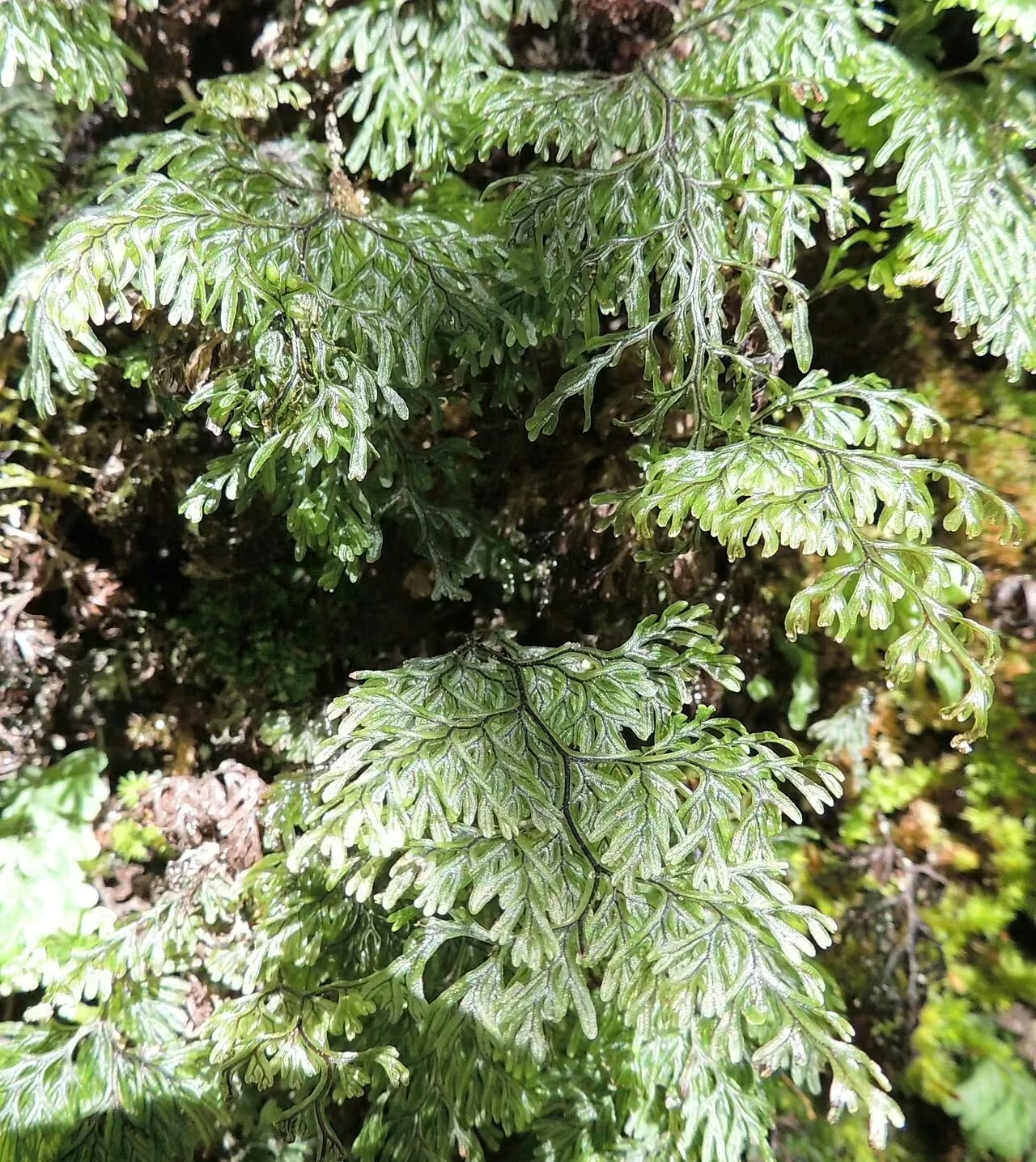
Hairy Filmy Fern
Hymenophyllum villosum
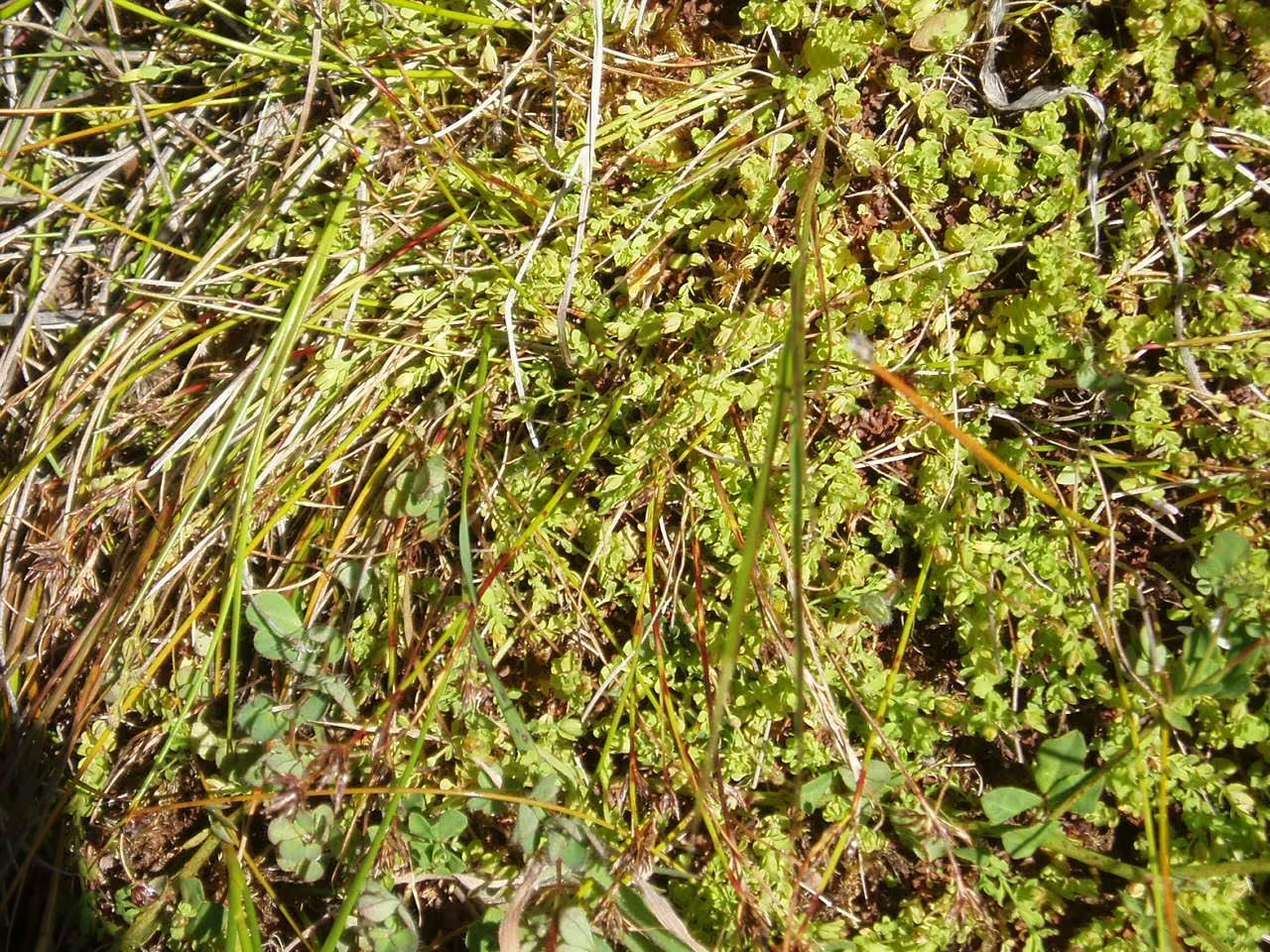
Swamp Hypericum
Hypericum pusillum
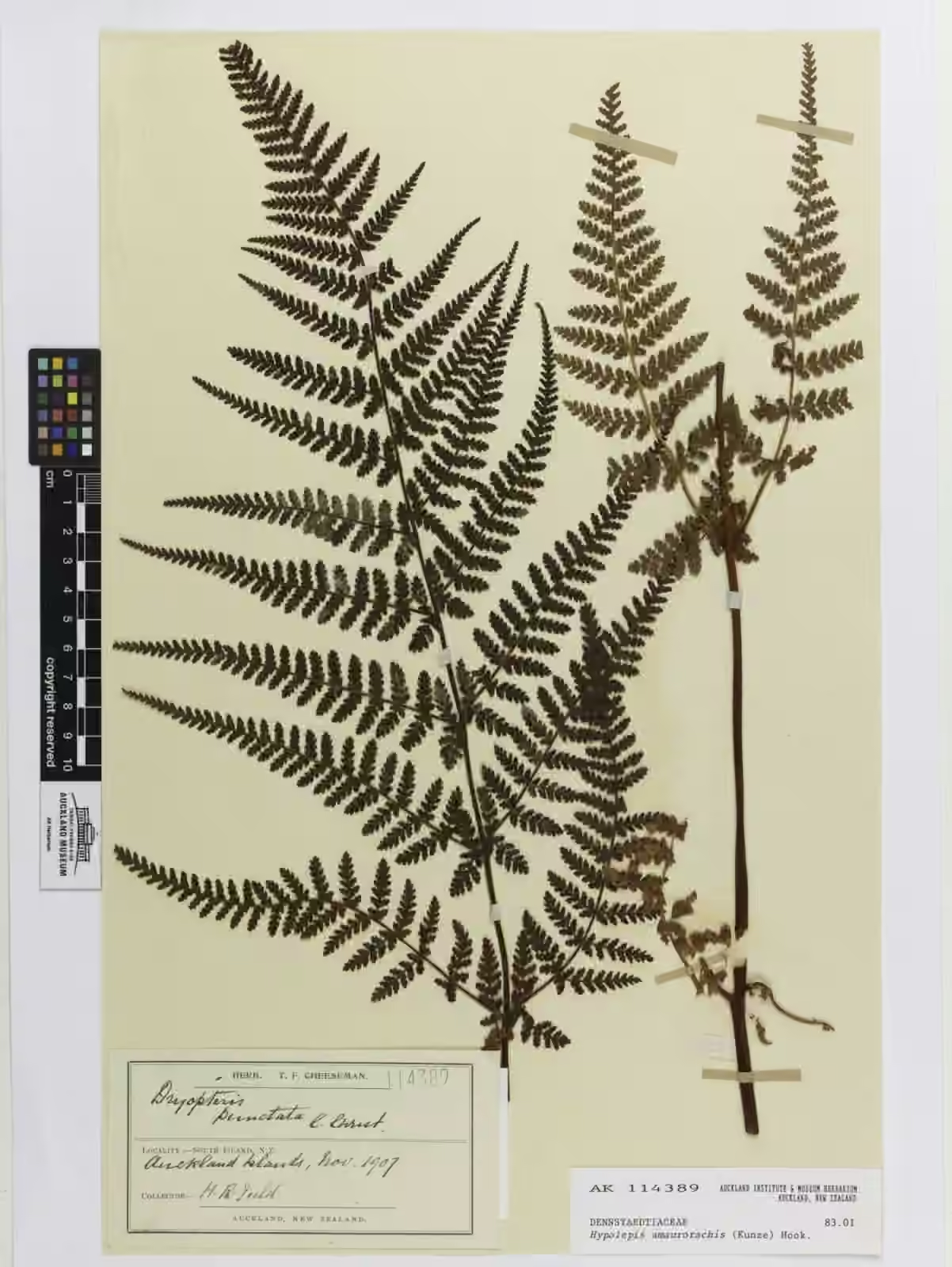
Hypolepis amaurorachis
Hypolepis amaurorachis
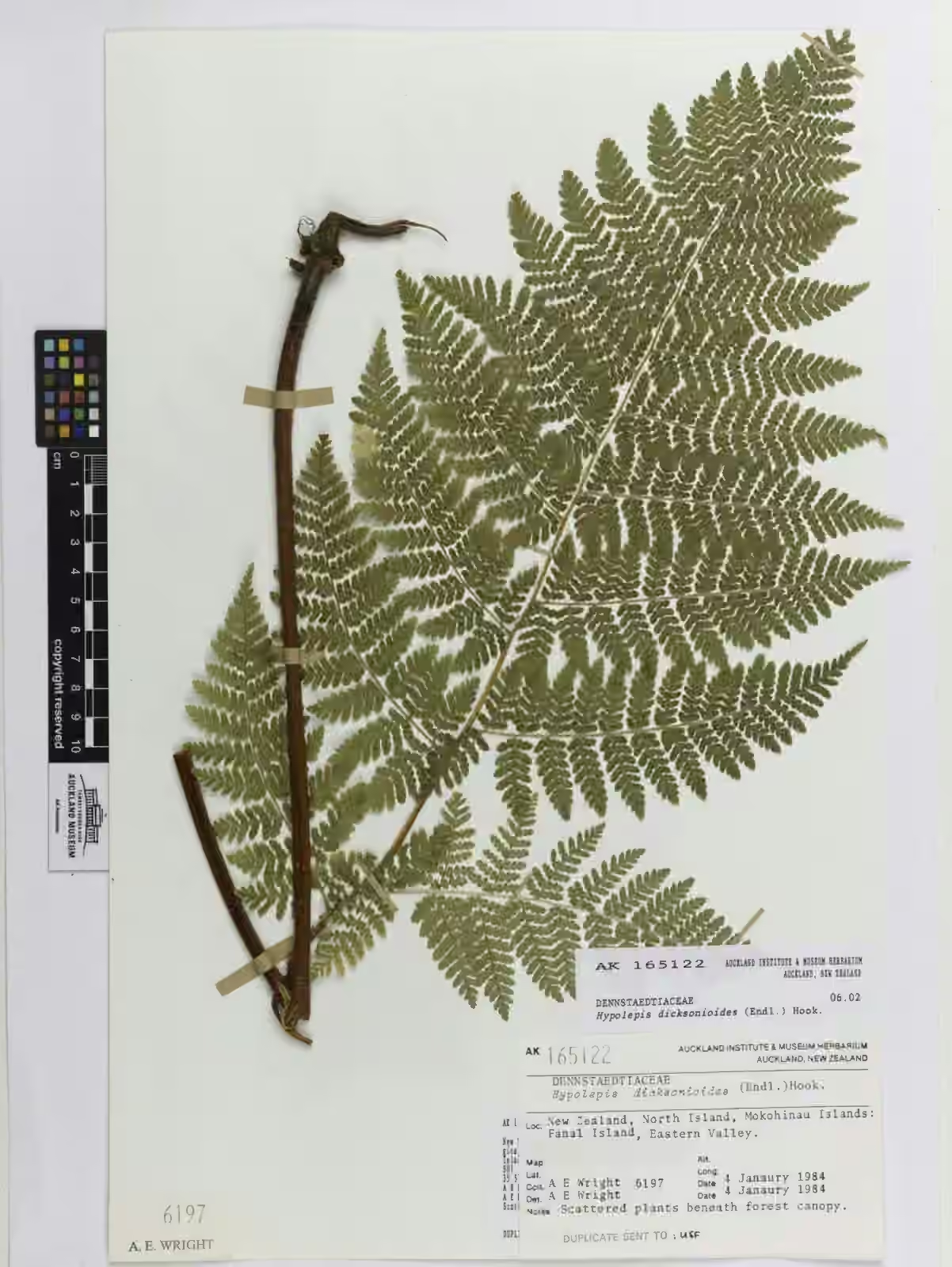
Giant Hypolepis
Hypolepis dicksonioides
Grassy St John's Wort
Grassy St John's Wort
Plant Conservation
Hypericum involutum is ranked At Risk - Declining (2023), with qualifiers DPS (data poor: size), DPT (data poor: trend) and SO (secure overseas). It was considered Not Threatened in 2004 and 2009. Regionally it is Critical in Auckland and Data Deficient in Northland and Otago.
Its dry grassland, scrub and rock outcrop habitats are vulnerable to agricultural development, weed invasion and wilding trees. Protecting remnant dry tussock grassland and controlling weeds around known sites help it persist.
Frequently Asked Questions
How do you identify grassland hypericum?
It is the only New Zealand Hypericum without black glands. Look for erect, four-angled stems with four raised lines branching from a woody base, three styles and terminal clusters of golden yellow flowers.
How is Hypericum involutum different from swamp hypericum?
Swamp hypericum (Hypericum pusillum) has prostrate stems, wavy leaf margins and smaller flowers about 5-9 mm across, and grows in wet places. Grassland hypericum is erect, has rolled-under leaf margins and larger flowers, and grows in dry, open sites.
Why is grassland hypericum At Risk - Declining?
Its dry grassland, scrub and rock outcrop habitats are being lost or invaded, and it has been ranked At Risk - Declining since 2012. In Auckland it is Regionally Critical.
Can grassland hypericum be grown in a garden?
NZPCN says it is easily grown in open, free-draining soil and can be somewhat weedy, although it is not commercially available.
Sources and Further Reading
The botanical, growing, and conservation details for Grassland Hypericum (Hypericum involutum) on this page draw on the New Zealand plant references below. Consult them for full technical records and the latest distribution data.