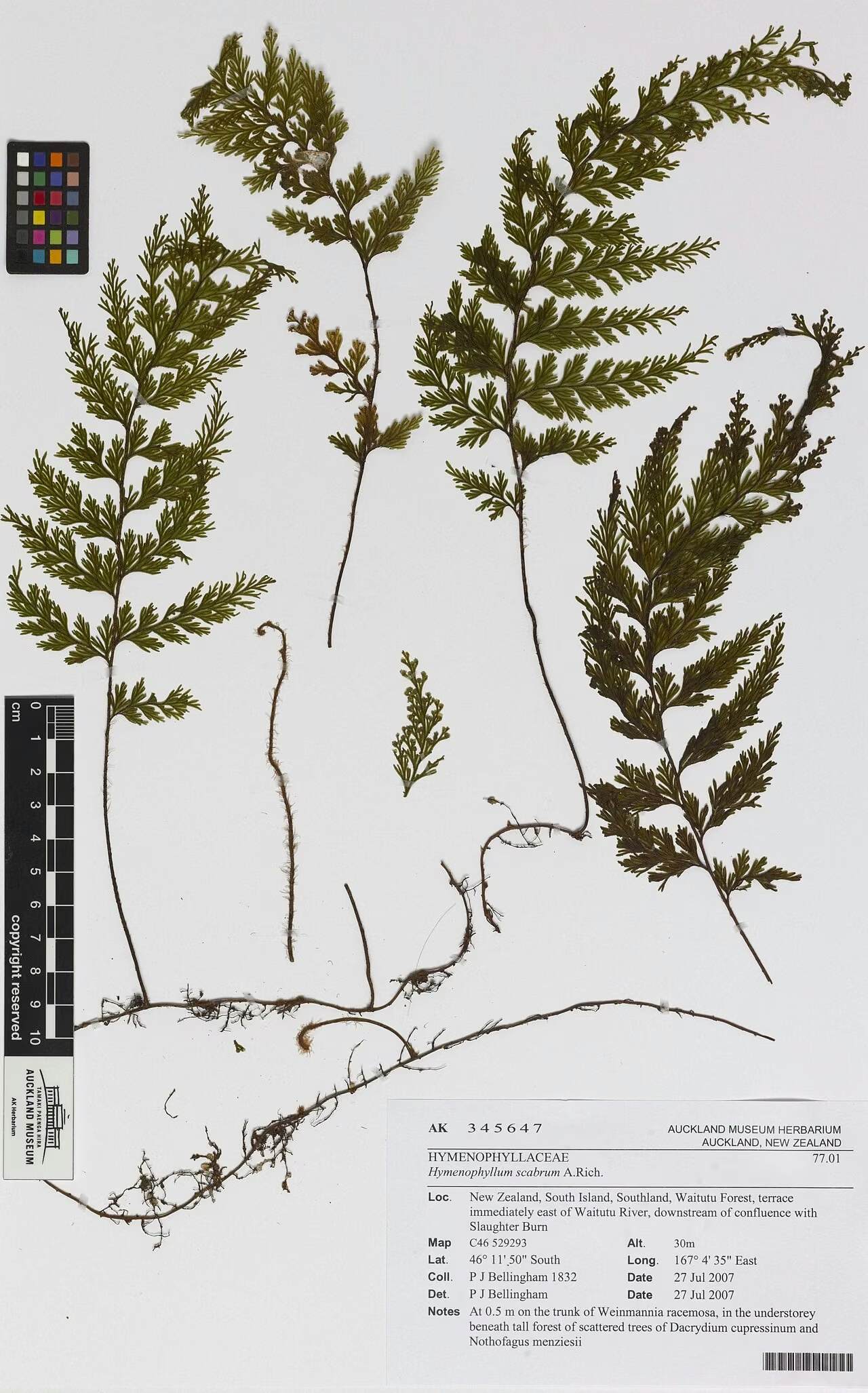
Rough Filmy Fern
Hymenophyllum scabrum
Last updated:
Rough filmy fern (Hymenophyllum scabrum) is a large, endemic New Zealand filmy fern with dark green to olive-green fronds up to 40 cm long, three to four times divided, held on stipes densely covered in stiff bristly hairs. It grows on the ground, logs, boulders, banks and as an epiphyte on tree ferns and trees in closed forest from Northland to Stewart Island/Rakiura and the Chatham Islands, from sea level to about 1100 m. Its olive colour and hairy stipes make it one of the most distinctive filmy ferns, and it is ranked Not Threatened. Explore more native ferns in our native plant guide.
Plant Description
Hymenophyllum scabrum is a terrestrial or epiphytic fern with long-creeping, slender rhizomes that are sparsely to densely covered in bristly hairs. The stipes are 40-200 mm long, unwinged and densely bristly-hairy.
The blades are 100-400 mm long and 50-140 mm wide, ovate to ovate-deltoid and three to four times pinnate, dark green to olive green, and bristly when young. The ultimate segments are linear with entire margins. Several sori terminate the ultimate segments, and the indusia are broadly ovoid to orbicular, smooth on the outer surface, with minutely or irregularly toothed flaps that bear bristly hairs.
NZPCN calls it a distinctive species, readily identified by its large, olive-green fronds and conspicuously bristly stipes. When dried, specimens tend to stain paper faintly brown or yellow-brown.
Quick Facts
| Scientific Name | Hymenophyllum scabrum |
|---|---|
| Height | Fronds 14-60 cm including stipe |
| Spread | Patches on long-creeping rhizomes |
| Water Needs | Constantly moist and humid |
| Light | Shade of closed forest |
| Frost Tolerance | Moderate; recorded to about 1100 m |
| Salt Tolerance | Low |
| Growth Rate | Slow |
| Lifespan | Perennial |
Climate Best Suited to
It needs a humid, high-rainfall forest climate and is most common in the wetter north and west, becoming scattered in drier eastern districts.
Regional Suitability
| City | Climate Suitability |
|---|---|
| Auckland | Low |
| Wellington | Low |
| Christchurch | Low |
| Dunedin | Low |
Plant Habitat
Rough filmy fern is endemic to New Zealand. In the North Island it ranges from the Mangamuka Range southwards; in the South Island it occurs in the Marlborough Sounds, northwest Nelson, Westland, Fiordland and Southland, with scattered records near Dunedin. It also grows on the Chatham Islands, Solander Island and Stewart Island/Rakiura, from sea level to about 1100 m, reaching 925 m on Key Summit.
It inhabits kauri, podocarp, beech and broadleaved forest, and occasionally closed scrub. It grows on the ground, rocks, banks, rock faces, rotting logs and stumps, and as an epiphyte on tree ferns and broadleaved trees.
Growing Requirements
Soil Requirements
It grows on forest floor litter, rotting wood, rock and bark rather than in mineral soil.
- Moist humus on the forest floor
- Rotting logs and stumps
- Tree fern trunks and mossy boulders
Light Requirements
It needs the deep, even shade of closed forest.
- Deep shade
- No direct sun
- Sheltered from wind
Water Requirements
As a filmy fern it loses water fast and relies on high humidity, frequent rain and damp substrates.
- Near-constant humidity
- Damp ground or wood
- Fronds curl in drought and recover after rain
Planting and Establishing
NZPCN states that rough filmy fern is difficult to propagate and should not be removed from the wild. It is not a nursery plant.
Its survival depends on keeping forest intact, including logs, stumps and tree ferns. It is a fine plant to look for on walks such as the Key Summit track or in Northland kauri forest.
Ecological Role
Rough filmy fern is part of the dense fern and moss layer on the floor, logs and trunks of wet New Zealand forest. Its larger fronds add significant cover in the lowest tier of the forest.
It spreads by long-creeping rhizomes and reproduces by minute wind-dispersed spores. It relies on stable, humid conditions and declines where canopy gaps or edges allow drying winds into the forest.
Uses & Significance
Garden Uses
It has no practical garden use, but its size and olive colour make it a good introduction to filmy ferns in the bush.
- Nature study and identification
- Fern photography
- Indicator of intact humid forest
Ecological Value
It contributes cover and moisture retention to forest floor and epiphyte communities.
- Endemic filmy fern
- Grows on tree ferns and rotting wood
- Part of the moist forest floor layer
Landscaping Uses
It is not used in landscaping. In forest restoration, retaining fallen logs, stumps and tree ferns provides the habitat it needs.
Fencing forest remnants from stock and keeping a closed canopy help maintain the humidity it requires.
Seasonal Care Calendar
Spring
Fresh fronds unfurl, bristly when young.
- Look for hairy croziers
- Good time for identification
Summer
Fronds curl during dry periods and open again after rain.
- Leave curled plants alone
- Sori may be visible on segment tips
Autumn
Spores are released in moist autumn weather.
- Check broad, bristly indusial flaps
- Record host or substrate
Winter
It persists through winter in sheltered forest.
- No intervention needed
- Fronds remain all year
When to Prune and How Much
No pruning is needed. Leave wild plants and their old fronds undisturbed.
In any specialist cultivation, remove only fully dead fronds with fine scissors to avoid damaging the rhizome.
How to Grow Rough Filmy Fern
Hymenophyllum scabrum is described by NZPCN as difficult to propagate, and it should not be removed from the wild. No published propagation method for this species was found. The methods below are the general approaches used for creeping filmy ferns and are only appropriate for material already in legal cultivation or salvaged with permission from logs or tree ferns being cleared. As one of the larger filmy ferns, its fronds lose water quickly once removed from forest shade, so any work must be done in humid conditions and new plants kept enclosed until they are clearly growing. Expect slow progress.
By Division of the Rhizome
The long-creeping rhizome can be divided into sections, each carrying fronds and growing tips.
- Work with a cultivated plant or salvaged material on a humid day
- Cut a length of rhizome with at least two fronds and a growing tip
- Pin it onto damp rotting wood, tree fern fibre or a moss bed
- Keep in a sealed case in deep shade
- Mist with rainwater to keep the fronds saturated
- Give ventilation only after new fronds have formed
From Spores
Filmy fern spores are short-lived and must be sown fresh. Raising this species from spores is not documented.
- Collect fronds with mature sori on the segment tips
- Sow spores at once on sterile, moist peat or sphagnum
- Seal the container and keep it cool and shaded
- Expect many months before visible growth
Pests & Diseases
No pests or diseases are recorded for rough filmy fern. Drying out is the main danger.
In the wild, canopy loss, clearance of forest, removal of fallen wood and browsing by introduced animals that open the understorey all reduce its habitat.
Cultural Significance
No Māori name or traditional use specific to this species was found in the sources consulted.
It was described by the French botanist Achille Richard in 1832. The epithet scabrum means rough, a reference to the bristly stipe.
Bonus Tip
If you are unsure whether a large filmy fern is rough filmy fern, gently run a finger along the stipe: the dense, stiff bristles are obvious to touch, and combined with the olive-green fronds they rule out most other species.
Related Plants
Explore other native plants that share similar characteristics or habitats with Rough Filmy Fern (Hymenophyllum scabrum), offering further insights into New Zealand's diverse flora. These related species provide context and opportunities for complementary planting in your garden.
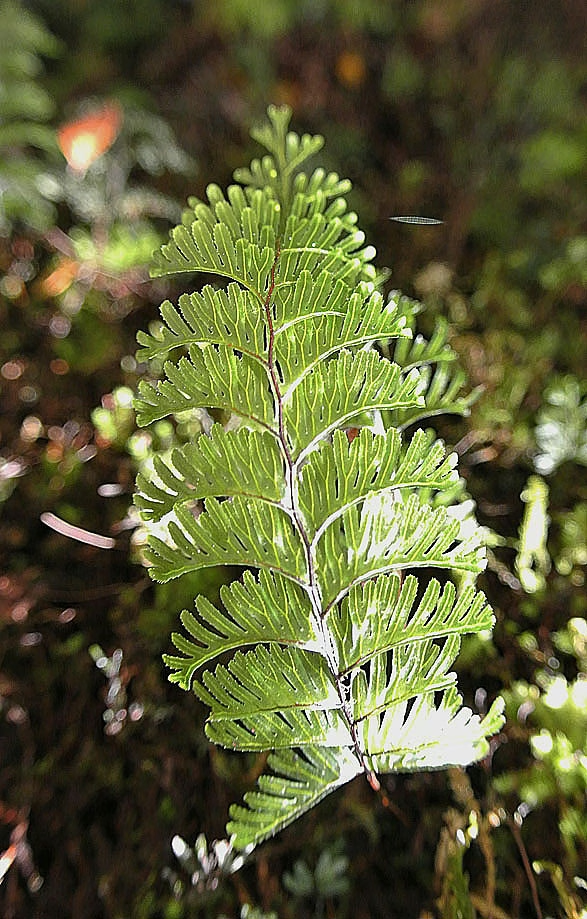
One-Sided Filmy Fern
Hymenophyllum peltatum
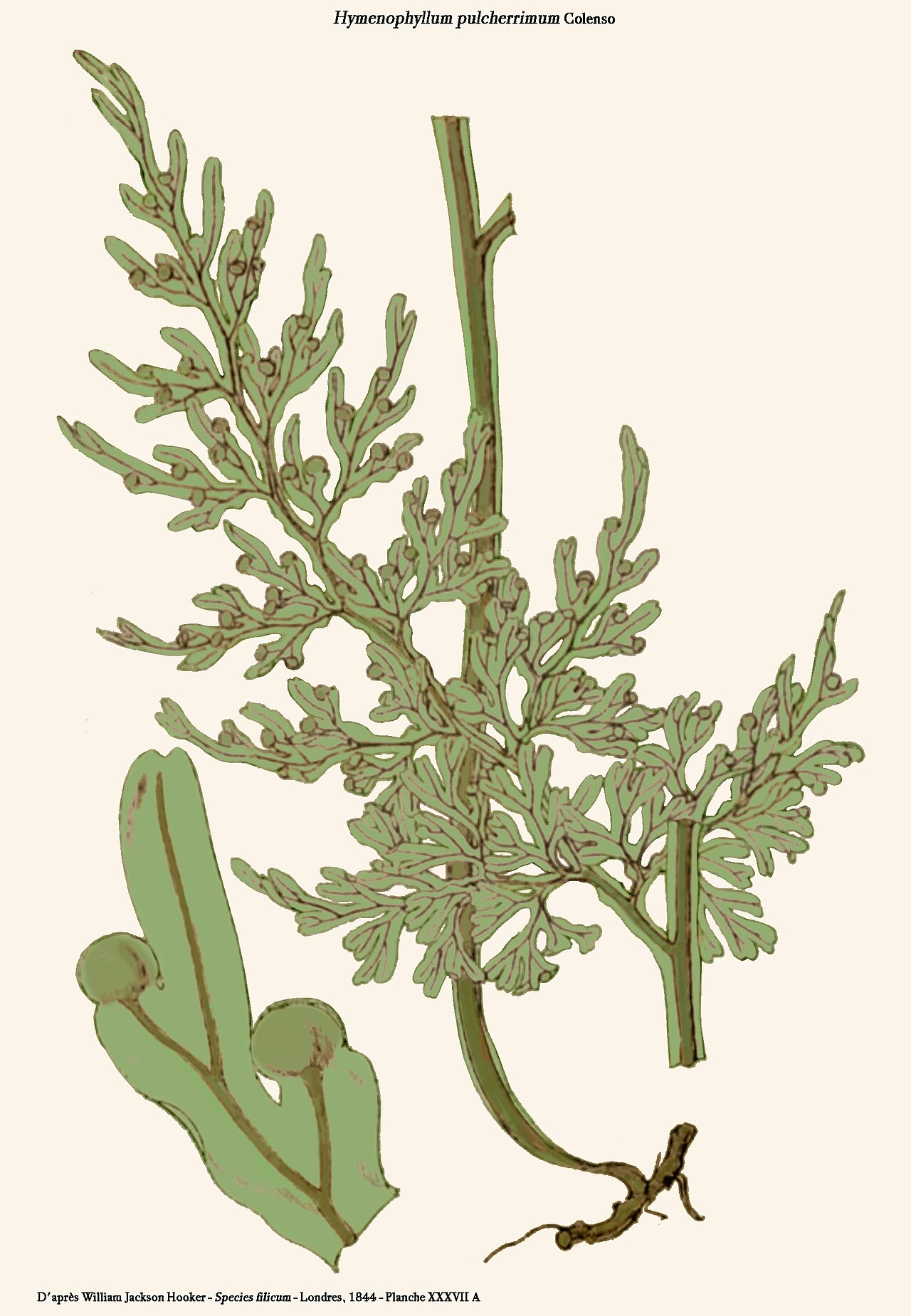
Tufted Filmy Fern
Hymenophyllum pulcherrimum
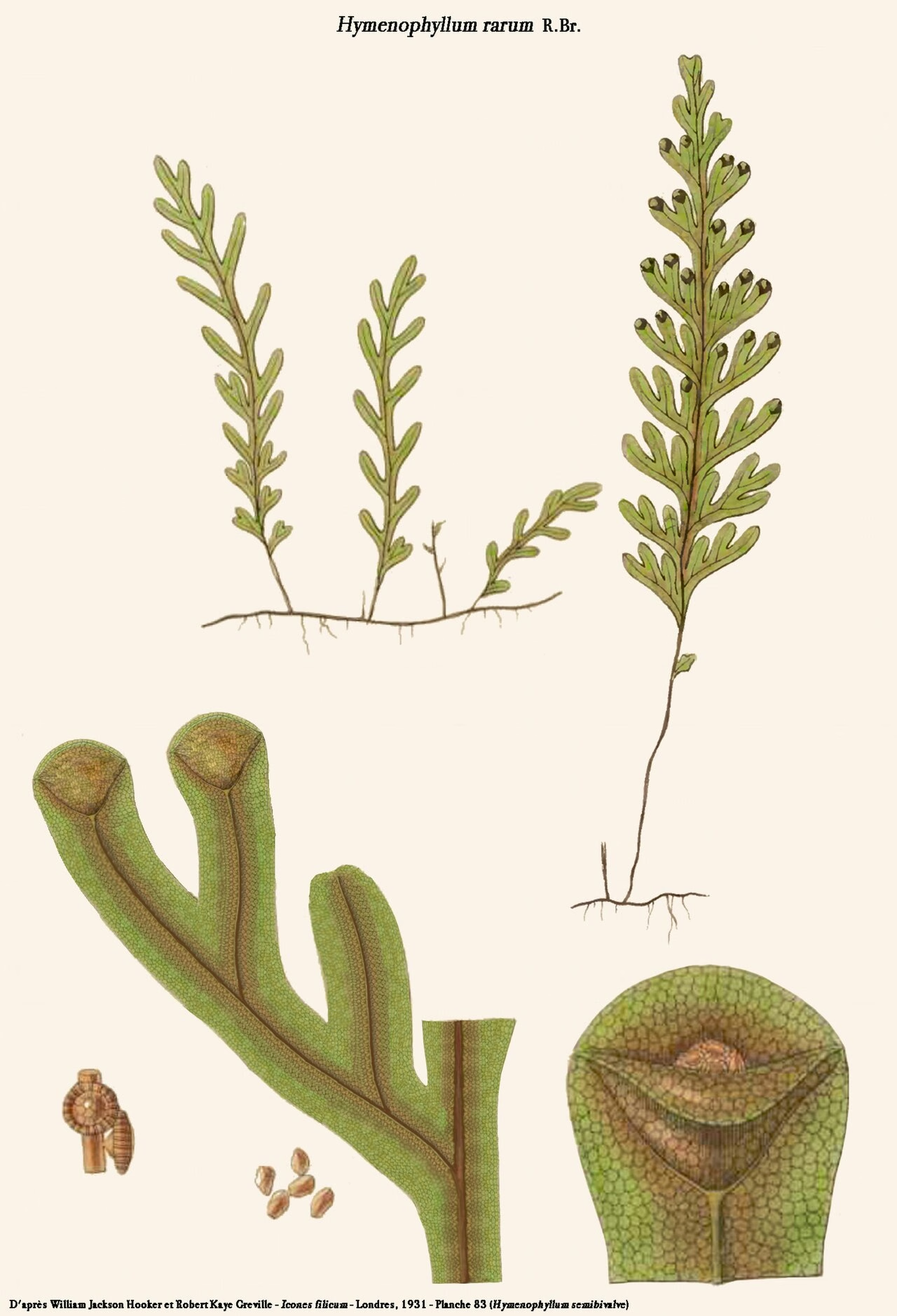
Hymenophyllum rarum
Hymenophyllum rarum
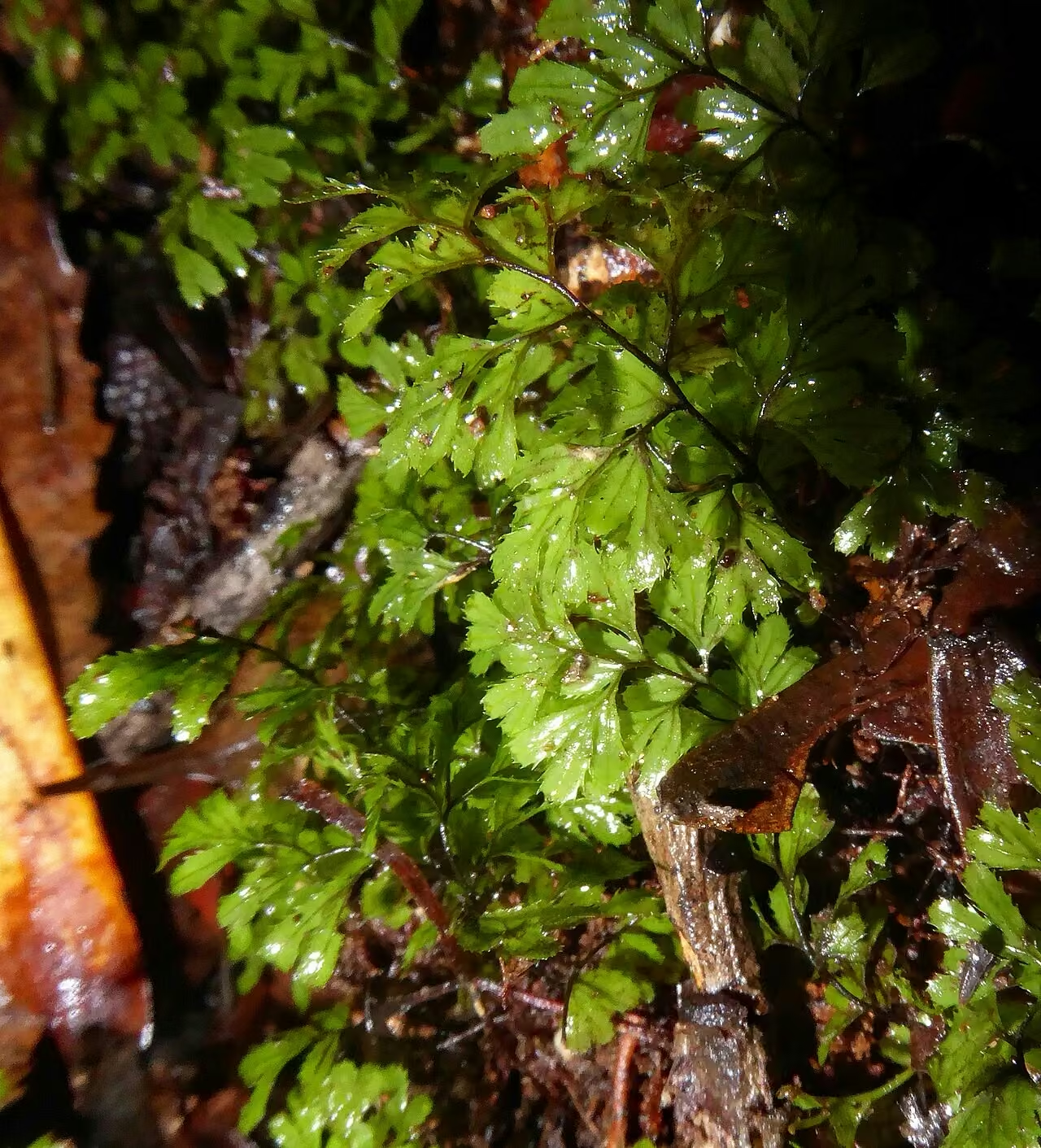
Hymenophyllum revolutum
Hymenophyllum revolutum
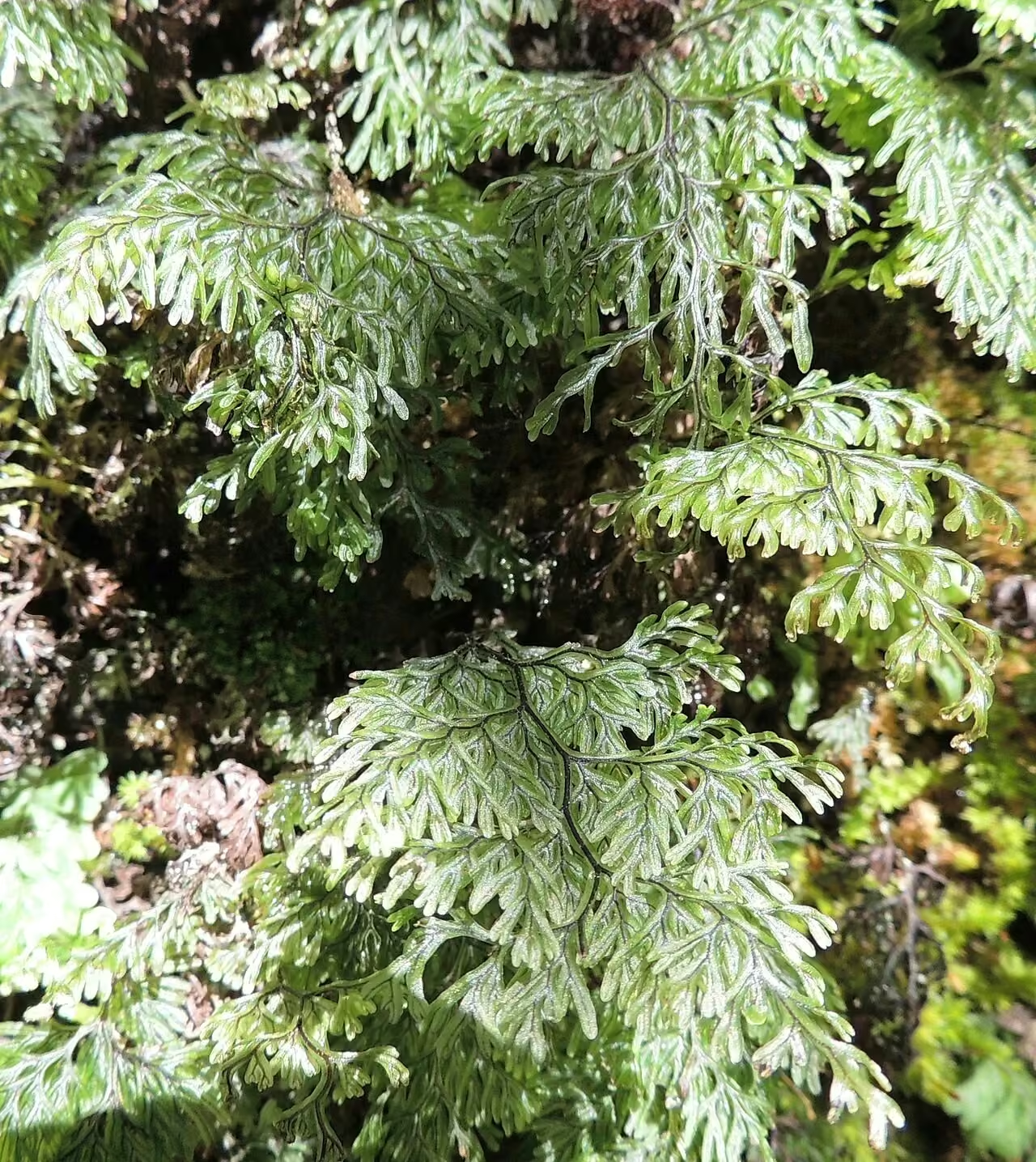
Hairy Filmy Fern
Hymenophyllum villosum
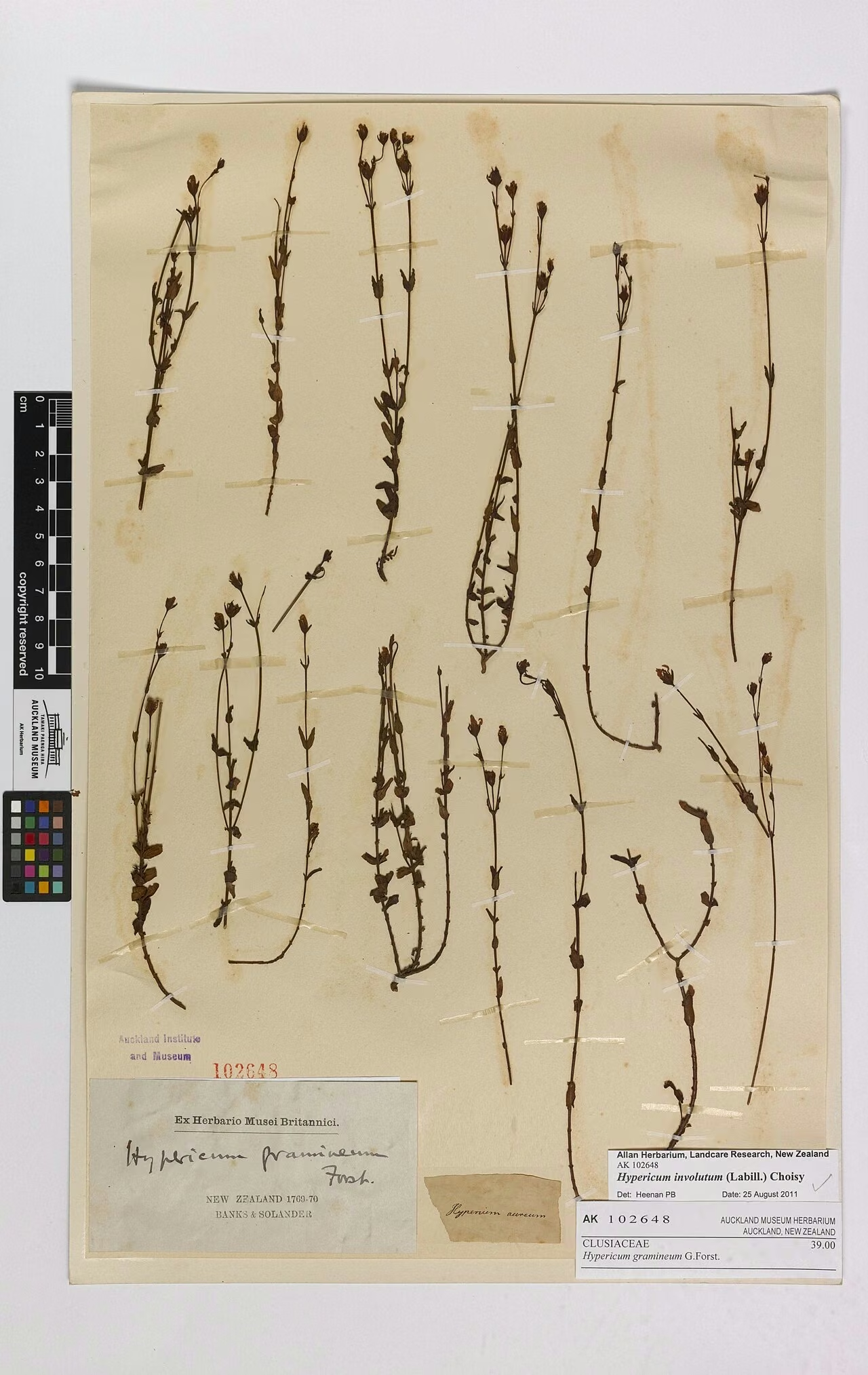
Grassland Hypericum
Hypericum involutum
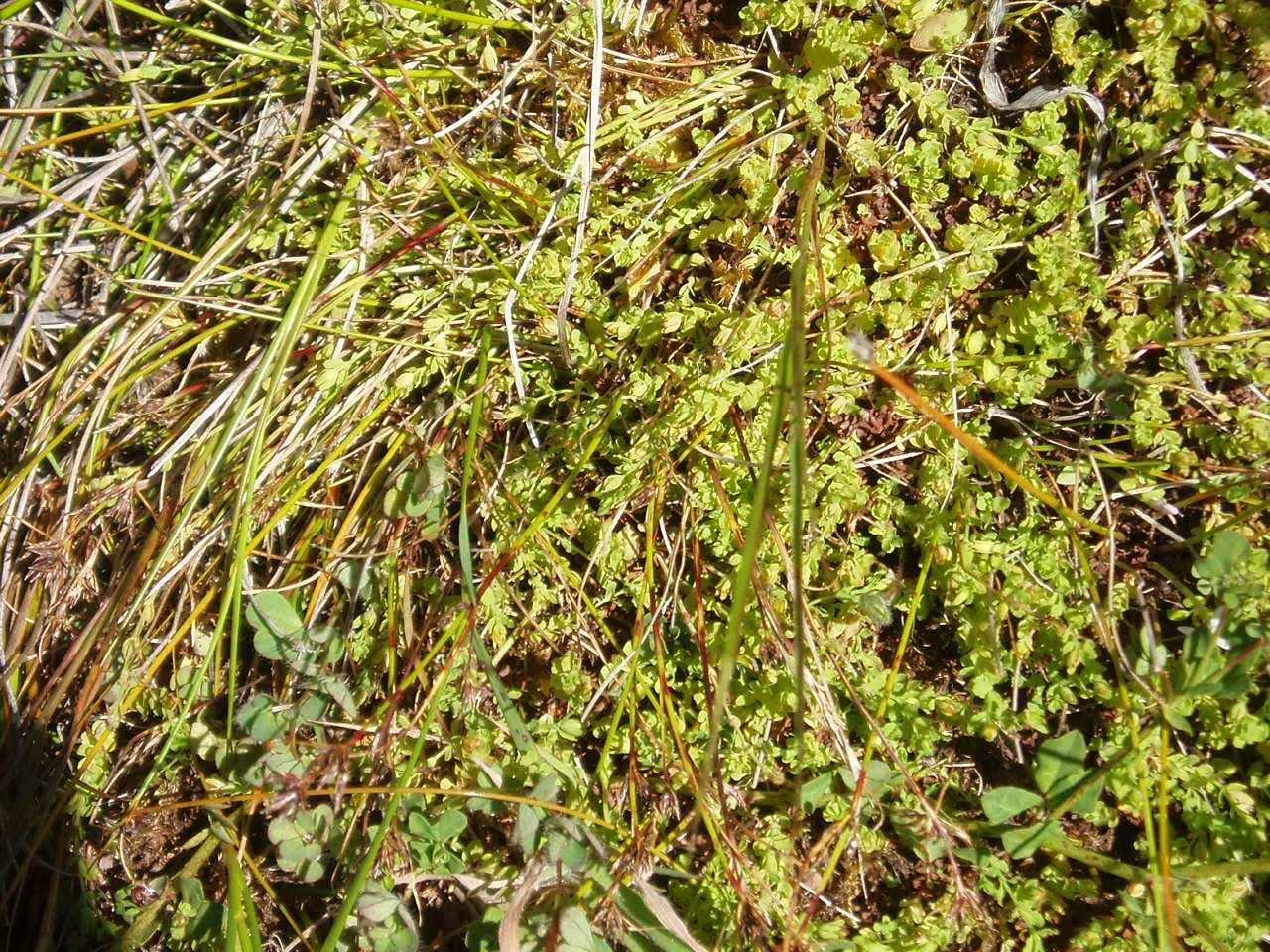
Swamp Hypericum
Hypericum pusillum
Hypolepis amaurorachis
Hypolepis amaurorachis
Plant Conservation
Hymenophyllum scabrum is ranked Not Threatened nationally (2023) and has been since 2004. It is Regionally Not Threatened in Northland, Auckland, Wellington and Otago.
Protecting closed, humid forest and leaving logs and tree ferns in place are the most useful ways to support it.
Frequently Asked Questions
Why is it called rough filmy fern?
The stipes are densely covered in bristly hairs that feel rough, and the epithet scabrum is Latin for rough or covered with short rigid points.
How do you identify Hymenophyllum scabrum?
Look for large ovate to triangular fronds that are dark green or olive green, with smooth-edged linear segments and stipes thickly clothed in long bristly hairs. The indusial flaps are broad and minutely toothed.
Where can you find rough filmy fern?
It grows in kauri, podocarp, beech and broadleaved forest from the Mangamuka Range in Northland south, in the western South Island, Southland and Fiordland, and on Stewart, Solander and Chatham Islands.
Does rough filmy fern stain paper?
Yes. NZPCN notes that dried specimens characteristically stain herbarium paper a faint brown or yellow-brown, a useful clue for botanists.
Sources and Further Reading
The botanical, growing, and conservation details for Rough Filmy Fern (Hymenophyllum scabrum) on this page draw on the New Zealand plant references below. Consult them for full technical records and the latest distribution data.