Hairy Filmy Fern
Hymenophyllum villosum
Last updated:
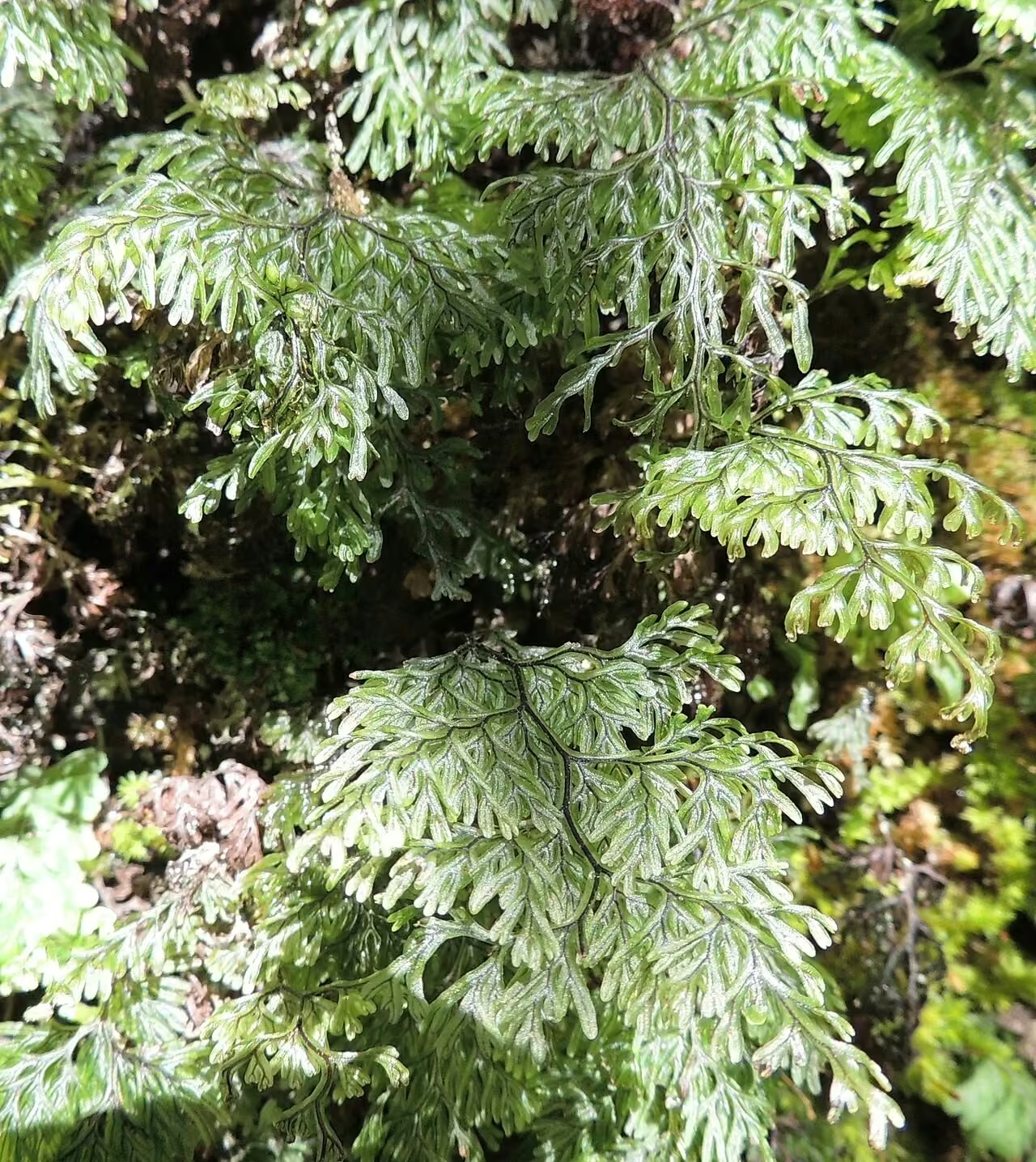
Hairy filmy fern (Hymenophyllum villosum) is an endemic New Zealand filmy fern of cool, wet mountain forest and subalpine scrub. It forms dense patches of dark green, finely divided fronds 5-18 cm long (occasionally to 24 cm) on hairy, black-winged stipes, and dried fronds give off a metallic scent. It grows on trees, logs, rocks and cliffs from Te Moehau and Mt Pirongia south to Stewart Island/Rakiura and the subantarctic Auckland and Campbell Islands, reaching 1700 m in the South Island. It is closely related to Hymenophyllum sanguinolentum but is smaller, hairier and more finely cut, and is ranked Not Threatened. Explore more native ferns in our native plant guide.
Plant Description
Hymenophyllum villosum is a terrestrial or epiphytic fern that forms dense patches from long-creeping, slender rhizomes. The stipes are 20-90 mm long, black and winged, with a zig-zag upper part, and like the rest of the frond they bear copious hairs.
The fronds are dark green, 50-180 mm long (rarely to 240 mm) and 20-100 mm wide, narrowly ovate to elliptic-deltoid, and three to four times pinnate. The ultimate segments are oblong and narrow, 0.25-0.75 mm wide according to NZPCN, with entire but usually wavy margins. The indusium is narrowly ovoid to ellipsoid and smooth on its outer face. Dried fronds have a metallic aromatic smell.
Its closest relative is Hymenophyllum sanguinolentum, which is larger, less hairy and has broader segments and crested indusia. South Island plants of H. villosum tend to be hairier with narrower segments than North Island ones. H. sanguinolentum is absent from the Chatham Islands, where only H. villosum occurs.
Quick Facts
| Scientific Name | Hymenophyllum villosum |
|---|---|
| Height | Fronds 5-24 cm long |
| Spread | Dense patches on long-creeping rhizomes |
| Water Needs | Constant moisture and humidity |
| Light | Shade to semi-open subalpine scrub |
| Frost Tolerance | High; reaches 1700 m |
| Salt Tolerance | Low |
| Growth Rate | Slow |
| Lifespan | Perennial |
Climate Best Suited to
It suits cold, wet, cloudy montane and subalpine climates and extends to the subantarctic islands, but rarely grows in warm lowland districts.
Regional Suitability
| City | Climate Suitability |
|---|---|
| Auckland | Low |
| Wellington | Low |
| Christchurch | Low |
| Dunedin | Low |
Plant Habitat
Hairy filmy fern is endemic to New Zealand. In the North Island it ranges from Te Moehau and Mt Pirongia southwards, mostly at 370-1300 m and only occasionally below 600 m, becoming more common in the southern North Island. In the South Island it is widespread from 30 m to 1700 m but rare below 200 m. It also grows on Stewart Island/Rakiura, the Chatham Islands, the Auckland Islands and Campbell Island/Motu Ihupuku.
It is found in montane to subalpine podocarp, beech and broadleaved forest, mānuka and kānuka scrub, subalpine scrub and alpine herbfield. It is usually epiphytic on trees including podocarps and southern beeches, and also grows on rotting logs, mossy hummocks, rocks, banks, crevices and cliff faces.
Growing Requirements
Soil Requirements
It grows on bark, moss, rotting wood and rock rather than in soil.
- Mossy trunks and branches
- Rotting logs and moss hummocks
- Rock crevices and cliff faces
Light Requirements
In forest it grows in shade; at higher altitudes it tolerates more open subalpine scrub and herbfield where cloud keeps it moist.
- Shade in forest
- Semi-open in cloudy subalpine sites
- No hot, dry sun
Water Requirements
It depends on frequent rain, mist and cloud, which are abundant in its montane habitats.
- Very high humidity
- Frequent cloud and rain
- Fronds curl when dry and revive when wet
Planting and Establishing
NZPCN states that hairy filmy fern is difficult to propagate, not commercially available and should not be removed from the wild.
It is best appreciated in montane forest and subalpine scrub, especially in the southern North Island and South Island beech forest, where its dark, finely cut fronds clothe trunks and logs.
Ecological Role
Hairy filmy fern is a common member of the epiphyte and rock-surface flora in montane and subalpine New Zealand, helping form the moss-rich mats that cover beech trunks and boulders in cloud-bathed forest.
It reproduces by minute wind-dispersed spores, which may explain its reach to the Chatham and subantarctic islands, and spreads vegetatively by long-creeping rhizomes.
Uses & Significance
Garden Uses
It has no practical garden use, but it is a characteristic fern for trampers to learn in mountain forest.
- Field identification practice
- Nature photography
- Indicator of cool, cloudy forest
Ecological Value
It contributes to moisture-retaining epiphyte communities in montane and subalpine ecosystems.
- Endemic filmy fern
- Extends to subantarctic islands
- Part of high-altitude epiphyte mats
Landscaping Uses
It is not used in landscaping. Its conservation relies on maintaining montane forest and subalpine scrub cover.
In high-country restoration, protecting existing scrub and beech forest from fire and browsing preserves its habitat.
Seasonal Care Calendar
Spring
Fronds are active as snow melts and spring rain arrives.
- Look on beech trunks and logs
- New hairy croziers appear
Summer
Fronds may curl in fine spells, reopening with cloud and rain.
- Check indusia for absence of crests
- Smell a dry frond for the metallic scent
Autumn
Spores are shed in cool, moist weather.
- Compare with H. sanguinolentum where both grow
- Record altitude
Winter
It withstands snow and frost at high altitudes.
- No action needed
- Plants may be snow covered at higher sites
When to Prune and How Much
No pruning is needed. Leave wild plants undisturbed.
Dead fronds are shed naturally and contribute to the humus in which the rhizomes creep.
How to Grow Hairy Filmy Fern
NZPCN describes Hymenophyllum villosum as difficult to propagate, states that it is not commercially available and asks that it not be removed from the wild. No propagation method specific to this species has been published. The general methods used for creeping filmy ferns are outlined below for anyone working with material that is already in legal cultivation or salvaged with permission. As a montane species, it is likely to need cooler conditions than lowland filmy ferns, so a sealed terrarium kept in a cool, shaded room is more suitable than a warm greenhouse. Constant humidity is essential throughout.
By Division of Rhizome Patches
Its long-creeping rhizomes form dense patches that can be separated into small pieces with fronds attached. Handle the pieces gently and keep them damp the whole time they are out of their enclosure.
- Moisten a cultivated patch so the rhizomes are flexible
- Cut a section of rhizome with several fronds
- Pin it onto damp bark, rotting wood or a moss pad
- Keep in a sealed terrarium in cool, low light
- Mist with rainwater so the fronds never dry
- Ventilate gradually once new fronds appear
From Spores
Filmy fern spores are green and short-lived and must be sown fresh. Success with this species has not been documented.
- Collect fronds with mature sori
- Sow spores immediately on sterile moist sphagnum or peat
- Seal the container and keep it cool and shaded
- Allow many months for gametophytes to develop
Pests & Diseases
No pests or diseases are recorded for hairy filmy fern.
Threats in the wild are mainly loss or drying of forest and scrub through fire, browsing animals and canopy damage.
Cultural Significance
No Māori name or traditional use specific to this species was found in the sources consulted.
The species was named by William Colenso. The epithet villosum comes from the Latin villosus, meaning with long rough hairs, referring to the hairy fronds that set it apart from its close relative H. sanguinolentum.
Bonus Tip
To separate hairy filmy fern from H. sanguinolentum in the field, hold a frond against the light and look along the stipe and rachis with a hand lens: H. villosum is clearly hairy throughout, while H. sanguinolentum is much less so and has broader segments.
Related Plants
Explore other native plants that share similar characteristics or habitats with Hairy Filmy Fern (Hymenophyllum villosum), offering further insights into New Zealand's diverse flora. These related species provide context and opportunities for complementary planting in your garden.
Tufted Filmy Fern
Hymenophyllum pulcherrimum
Hymenophyllum rarum
Hymenophyllum rarum
Hymenophyllum revolutum
Hymenophyllum revolutum
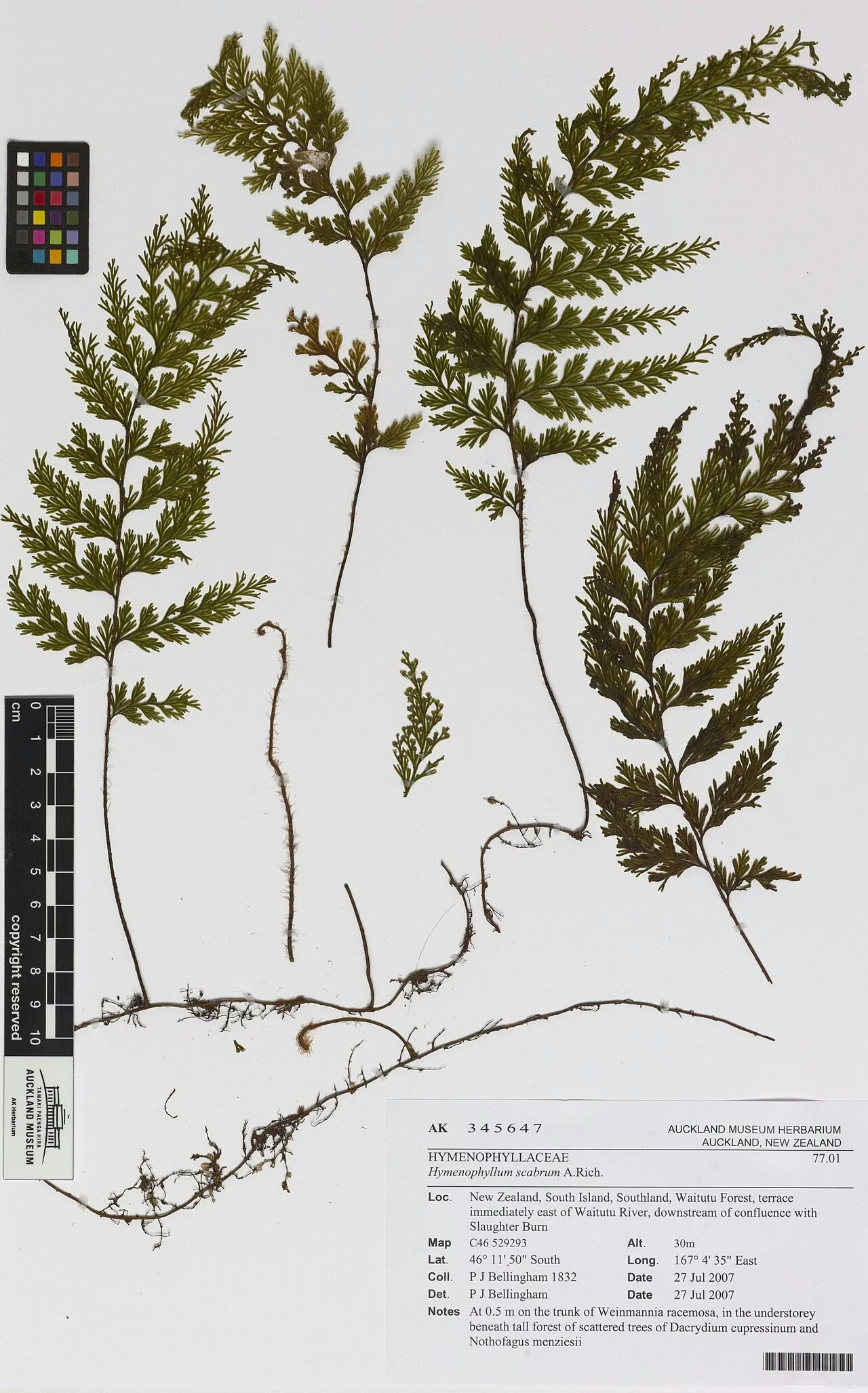
Rough Filmy Fern
Hymenophyllum scabrum
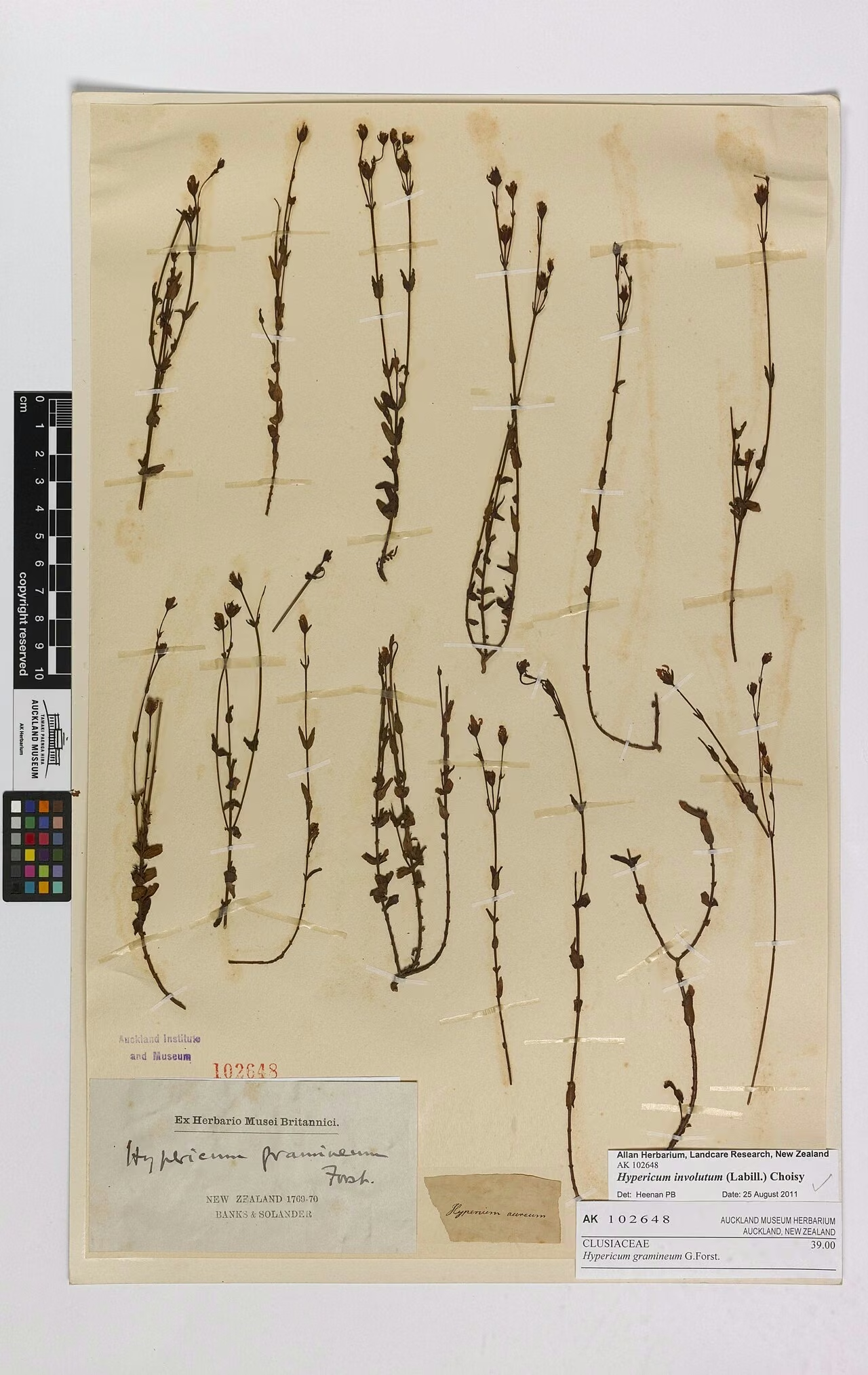
Grassland Hypericum
Hypericum involutum
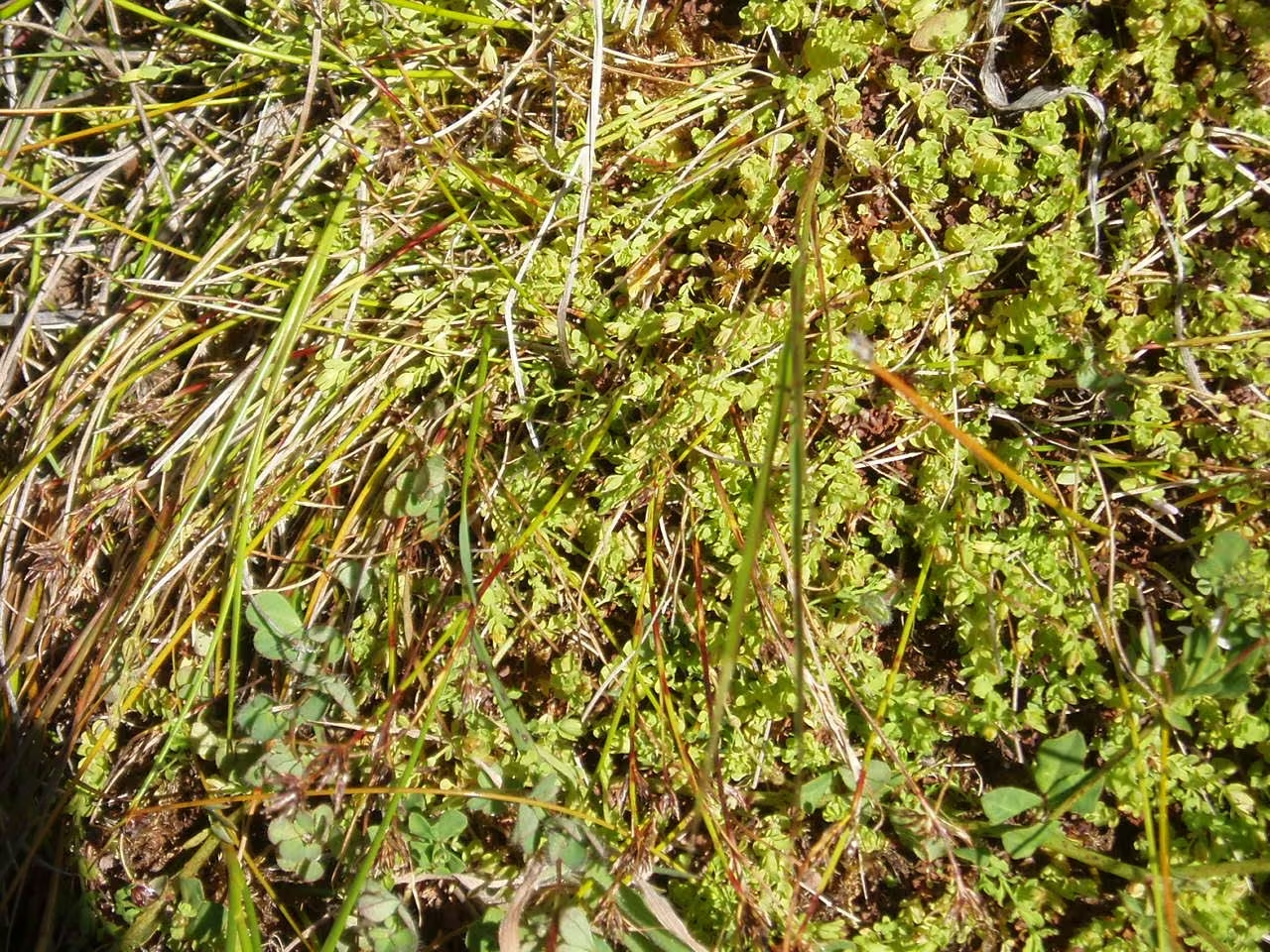
Swamp Hypericum
Hypericum pusillum
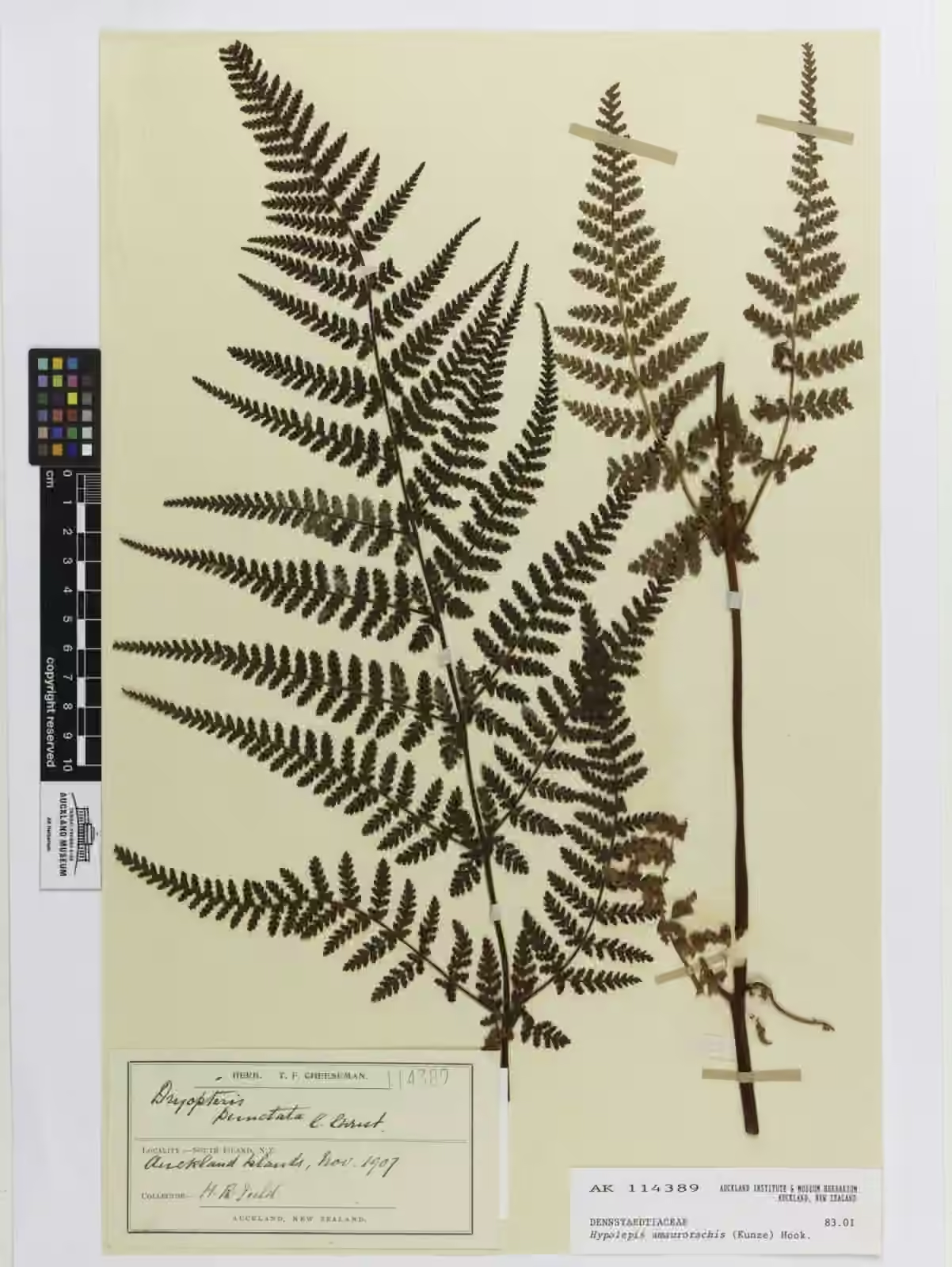
Hypolepis amaurorachis
Hypolepis amaurorachis
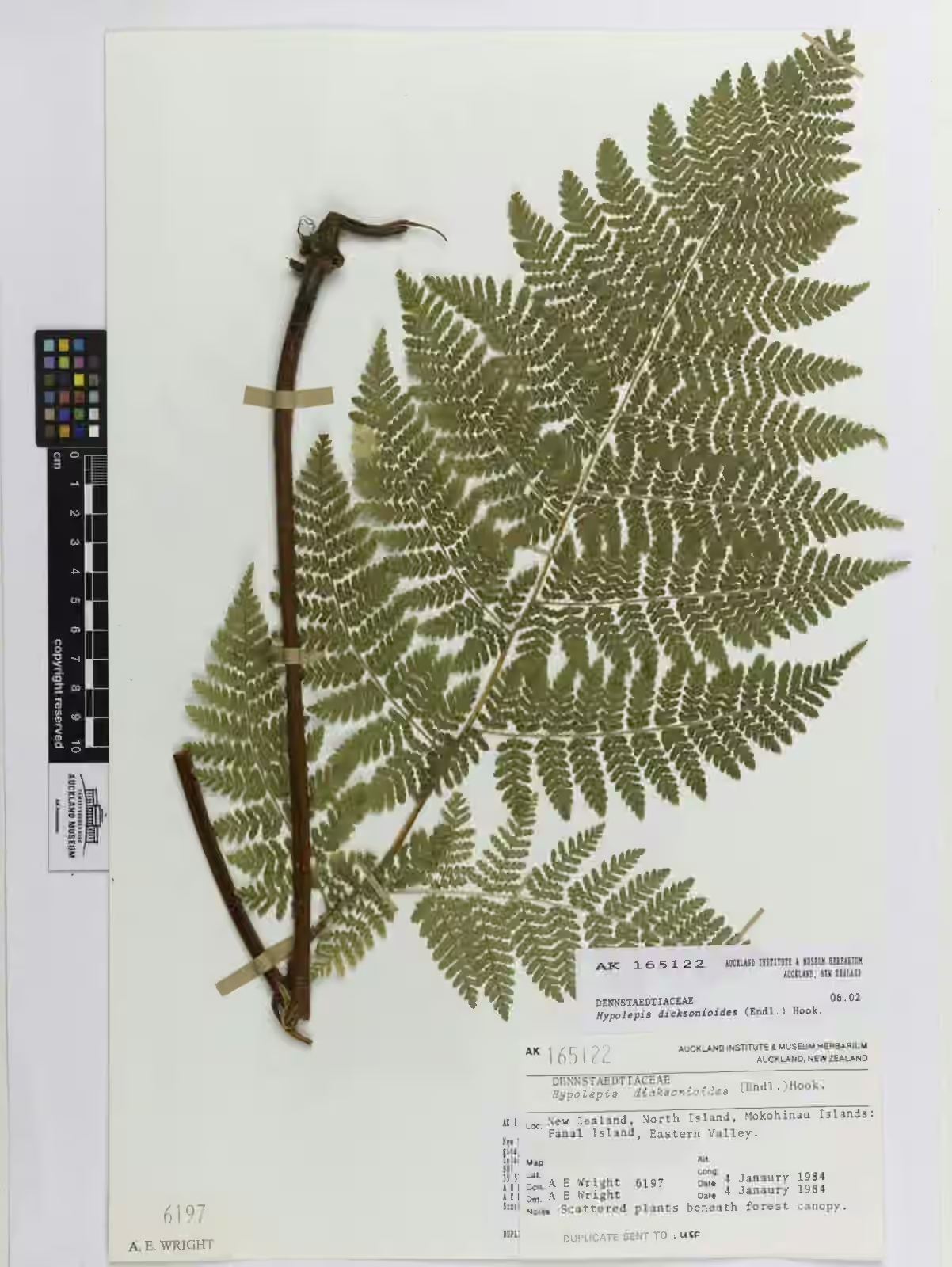
Giant Hypolepis
Hypolepis dicksonioides
Plant Conservation
Hymenophyllum villosum is ranked Not Threatened nationally (2023), unchanged since 2004. It is Regionally Naturally Uncommon in Northland, at the northern edge of its range, and Regionally Not Threatened in Wellington and Otago.
Protecting montane forest and subalpine scrub from fire and from browsing animals that open the canopy are the main ways to safeguard it.
Frequently Asked Questions
How is hairy filmy fern different from Hymenophyllum sanguinolentum?
Hairy filmy fern has hairy stipes, rachises and blades, narrower ultimate segments (about 0.4-1.2 mm wide compared with 0.8-1.5 mm) and smooth, uncrested indusial flaps. It usually grows at higher altitudes, though the two overlap.
Why do hairy filmy fern fronds smell metallic?
NZPCN records that the dark green fronds release a metallic aromatic scent when dry, a feature shared with some related filmy ferns that can help with identification.
How high does Hymenophyllum villosum grow in the mountains?
In the South Island it ranges from about 30 m to 1700 m and extends into alpine herbfields, while in the North Island it is mainly found from 370 m to 1300 m.
Sources and Further Reading
The botanical, growing, and conservation details for Hairy Filmy Fern (Hymenophyllum villosum) on this page draw on the New Zealand plant references below. Consult them for full technical records and the latest distribution data.