Grassy St John's Wort
Hypericum gramineum
Last updated:
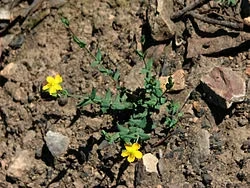
Grassy St John's Wort (Hypericum gramineum) is a small, glabrous perennial or sometimes annual herb native to New Zealand, growing 5 to 40 cm tall on distinctly four-angled stems. It has opposite, narrow lanceolate leaves dotted with translucent glands, and bright yellow to orange-yellow five-petalled flowers, 5 to 12 mm across, that appear from late spring into summer. A fast-growing, frost-hardy coloniser of open ground, it is found in tussock grasslands, shrublands, clay banks, and track sides from near sea level to montane elevations, thriving in full sun to partial shade. Explore more native flowering plants in our native plant guide.
Plant Description
Identification and Physical Characteristics
Hypericum gramineum is a small, glabrous perennial or sometimes annual herb that grows to a height of 5-40 cm. It features erect or decumbent stems that are distinctly four-angled (quadrangular). The leaves are opposite, sessile, and lanceolate to narrowly elliptic, typically measuring 5-25 mm in length. They often display recurved margins and are dotted with translucent glands. The flowers, which appear from late spring to summer, are bright yellow to orange-yellow, 5-12 mm in diameter, and arranged in loose terminal cymes. Each flower has five petals and numerous stamens. The fruit is an ovoid capsule containing many fine seeds. It is worth noting that this species has historically been confused with the endemic Hypericum involutum .
Quick Facts
| Scientific Name | Hypericum gramineum |
|---|---|
| Height | 5-40 cm |
| Spread | 10-30 cm |
| Water Needs | Moderate |
| Light | Full sun to partial shade |
| Frost Tolerance | Hardy |
| Salt Tolerance | Moderate |
| Growth Rate | Fast |
| Lifespan | Perennial / Annual |
Climate Best Suited to
Grassy St John's Wort is adaptable to a range of climates throughout New Zealand, from coastal to montane regions. It generally prefers temperate conditions and is capable of withstanding frost once established. It thrives in areas with good light and can often be found in open, sunny spots.
Regional Suitability
| City | Climate Suitability |
|---|---|
| Auckland | Suitable |
| Wellington | Suitable |
| Christchurch | Suitable |
| Dunedin | Suitable |
| Hamilton | Suitable |
| Tauranga | Suitable |
Plant Habitat
Natural Occurrence and Ecology
Hypericum gramineum is naturally found in a variety of open habitats. These include tussock grasslands, shrublands, clay banks, and track sides. It is an opportunistic plant that often colonizes disturbed ground where there is reduced competition from taller vegetation. It occurs from near sea level up to montane elevations.
Growing Requirements
Soil Requirements
It tolerates a range of soil types but performs best in free-draining substrates.
- Well-drained soil
- Sandy loam
- Clay loam (if drained)
- Tolerates poor soils
Light Requirements
Requires plenty of light to flower well and maintain a compact habit.
- Full sun
- Partial shade
Water Requirements
Prefers moist soil but can tolerate short dry periods once established.
- Moderate watering
- Keep moist during establishment
- Avoid waterlogging
Planting and Establishing
Establishment Guidance
Plant in a sunny location with well-drained soil. Space plants 20-30 cm apart to allow for spread. Water thoroughly after planting and ensure the soil remains moist while the plant establishes its root system. Mulching can help retain soil moisture and suppress weeds.
Ecological Role
Biodiversity and Ecosystem Impact
The bright yellow flowers of Hypericum gramineum are attractive to a variety of small insects and pollinators. As a ground-dwelling herb, it also contributes to the biodiversity of open grassland and shrubland ecosystems, providing cover for small invertebrates.
Uses & Significance
Garden Uses
This species is suitable for rock gardens, native meadows, and mixed borders.
- Rock gardens
- Native meadows
- Container planting
- Edging
Ecological Value
Supports native pollinators and contributes to habitat diversity in open areas.
- Attracts pollinators
- Ground cover
The versatility of this plant makes it a valuable addition to many New Zealand gardens. Beyond its aesthetic appeal, it offers practical benefits such as soil stabilization and shelter for smaller plants. Its historical and modern uses highlight its enduring importance in both traditional practices and contemporary landscape design, making it a thoughtful choice for any restoration or gardening project.
Landscaping Uses
In landscaping, Grassy St John's Wort is best used in naturalistic plantings where a delicate, flowering herb is desired. It works well amongst tussocks and rocks, adding splashes of yellow colour in summer. It is also effective in small pockets of soil in paved areas or walls.
Seasonal Care Calendar
Spring
Sow seeds or plant out new specimens.
- Sow seeds
- Plant new stock
- Apply general fertiliser
Summer
Water during dry spells to maintain flowering.
- Water as needed
- Deadhead if desired
Autumn
Collect seeds for propagation. Clean up dead foliage.
- Collect seeds
- Tidy plants
Winter
Plants may die back in cold areas; reduce watering.
- Reduce watering
- Protect from severe frost
When to Prune and How Much
Pruning is generally not required for this small herb. However, you can tidy up the plant by removing old or dead stems in late autumn or early spring to encourage fresh growth.
- Remove dead stems
- Tidy after flowering
If the plant becomes leggy, a light trim can help maintain a compact shape.
How to Grow Grassy St John's Wort
Cultivating Grassy St John's Wort ( Hypericum gramineum ) is a rewarding endeavor for any gardener interested in New Zealand's unique flora. This species can be propagated through several methods, each requiring specific conditions to ensure healthy growth and establishment. Successful propagation depends on mimicking the plant's natural environment and providing consistent care during the early stages of development. It is an adaptable plant that can add charm to rockeries and open spaces.
From Seed
Propagation from seed is often the most effective way to produce a large number of Grassy St John's Wort plants. Seeds should be collected when the capsules turn brown and begin to split, usually in late summer or autumn. Freshly collected seeds generally have higher germination rates than those that have been stored for long periods.
To grow from seed:
- Prepare a seed-raising mix that is free-draining, such as a blend of potting mix and sand or perlite.
- Sow the fine seeds on the surface of the mix. Do not cover them deeply, as they require some light to germinate; a very light dusting of sand is sufficient.
- Water the tray gently using a fine mist to avoid displacing the seeds.
- Place the tray in a warm, well-lit area, but out of direct scorching sun. Maintain a temperature of around 18-20°C.
- Keep the medium consistently moist but not waterlogged. Germination can be irregular, taking anywhere from a few weeks to a couple of months.
- Once seedlings have developed their second pair of true leaves and are large enough to handle, prick them out into individual small pots.
- Harden off the young plants gradually before planting them out into their final position in the garden.
Seedlings may self-sow in the garden if conditions are favorable, providing a natural renewal of plants.
From Cuttings
For those wishing to replicate specific characteristics of a parent plant, vegetative propagation via cuttings is the preferred method. This technique ensures that the new plants are genetically identical to the source. Softwood cuttings taken during the spring or early summer usually yield the best results for this species.
To propagate from cuttings:
- Select healthy, non-flowering shoots that are approximately 5-10 cm long.
- Using a sharp, clean knife or secateurs, make a clean cut just below a node (the point where leaves attach to the stem).
- Remove the lower leaves from the bottom third of the cutting to expose the nodes.
- Dip the cut end into rooting hormone powder or gel to encourage root development and prevent rot.
- Insert the cuttings into a pot filled with a gritty, free-draining propagation mix, such as coarse sand and peat.
- Place the pot in a humid environment, such as a propagator or inside a plastic bag, and keep it in bright, indirect light.
- Mist the cuttings regularly to maintain humidity. Roots should develop within a few weeks.
- Once rooted, pot the cuttings up individually and grow them on until they are established enough to be planted out.
Additional Methods
Depending on the growth habit of Grassy St John's Wort, division can also be a viable option for established clumps. This is best done in early spring or autumn when the plant is not in active flower.
To divide plants:
- Carefully lift the plant from the ground or pot, taking care not to damage the root system excessively.
- Gently tease the roots apart to separate the clump into smaller sections, ensuring each section has both roots and shoots.
- Replant the divisions immediately into prepared soil or pots and water well to settle them in.
Pests & Diseases
Hypericum gramineum is generally healthy and resistant to most pests and diseases. However, in overly damp or humid conditions, it may be susceptible to fungal issues such as powdery mildew or root rot. Ensure good air circulation and avoid waterlogging to prevent these problems. Aphids may occasionally be found on new growth but can be managed with a blast of water or insecticidal soap.
Cultural Significance
While there are no specific recorded Māori uses for Hypericum gramineum , the genus Hypericum has a long history of use in herbal medicine worldwide, particularly St John's Wort ( H. perforatum ), which is a different species. Native herbs like this contribute to the overall biodiversity and health of the New Zealand environment.
- Biodiversity value
- Native herb
Bonus Tip
Plant in groups of 3 or 5 to create a more impactful display of yellow flowers in the summer.
Cultivating this species effectively involves a deep understanding of its natural adaptations and environmental preferences. By mimicking its native habitat-whether that be the cool, moist understory of a temperate rainforest or the exposed, well-drained slopes of an alpine range-gardeners can ensure robust growth and long-term health. Regular observation and minimal, targeted intervention are often the best strategies for maintaining the unique characteristics and ecological contributions of this remarkable New Zealand native plant.
Related Plants
Explore other native plants that share similar characteristics or habitats with Grassy St John's Wort ( Hypericum gramineum ), offering further insights into New Zealand's diverse flora. These related species provide context and opportunities for complementary planting in your garden. For another flowering native plant, explore C. Is. Daisy.


Plant Conservation
Conservation Status and Threats
Hypericum gramineum is classified as 'Non-resident Native - Coloniser' in New Zealand. This means it is a native species that has arrived in New Zealand without human assistance but is not endemic. It is not currently considered threatened, but its limited distribution in some areas makes it a species of interest. Protection of its natural habitats ensures its continued presence in our flora.
Frequently Asked Questions
How tall does Grassy St John's Wort grow?
It is a small herb, growing between 5 and 40 cm tall with a spread of 10 to 30 cm.
When does Grassy St John's Wort flower?
It produces bright yellow to orange-yellow flowers from late spring through summer.
Does Grassy St John's Wort tolerate frost?
Yes, it is frost-hardy once established and copes with temperate to montane conditions.
Where does Grassy St John's Wort grow naturally?
It grows in open habitats such as tussock grasslands, shrublands, clay banks, and track sides, from near sea level to montane elevations.
Sources and Further Reading
The botanical, growing, and conservation details for Grassy St John's Wort (Hypericum gramineum) on this page draw on authoritative New Zealand plant references and citizen-science observation records. Consult the sources below for full technical records and the latest distribution data.