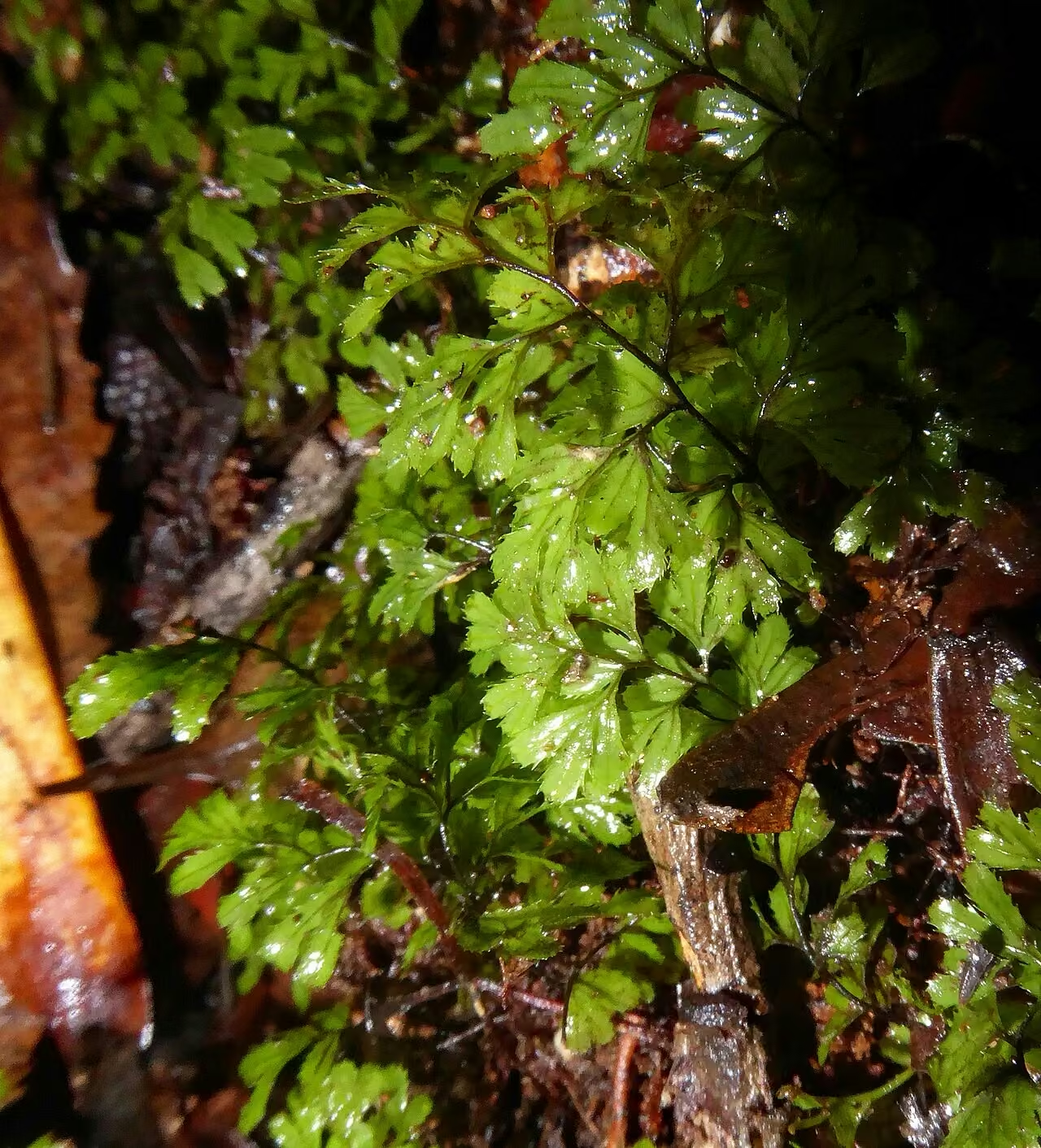
Filmy Fern
Hymenophyllum revolutum
Last updated:
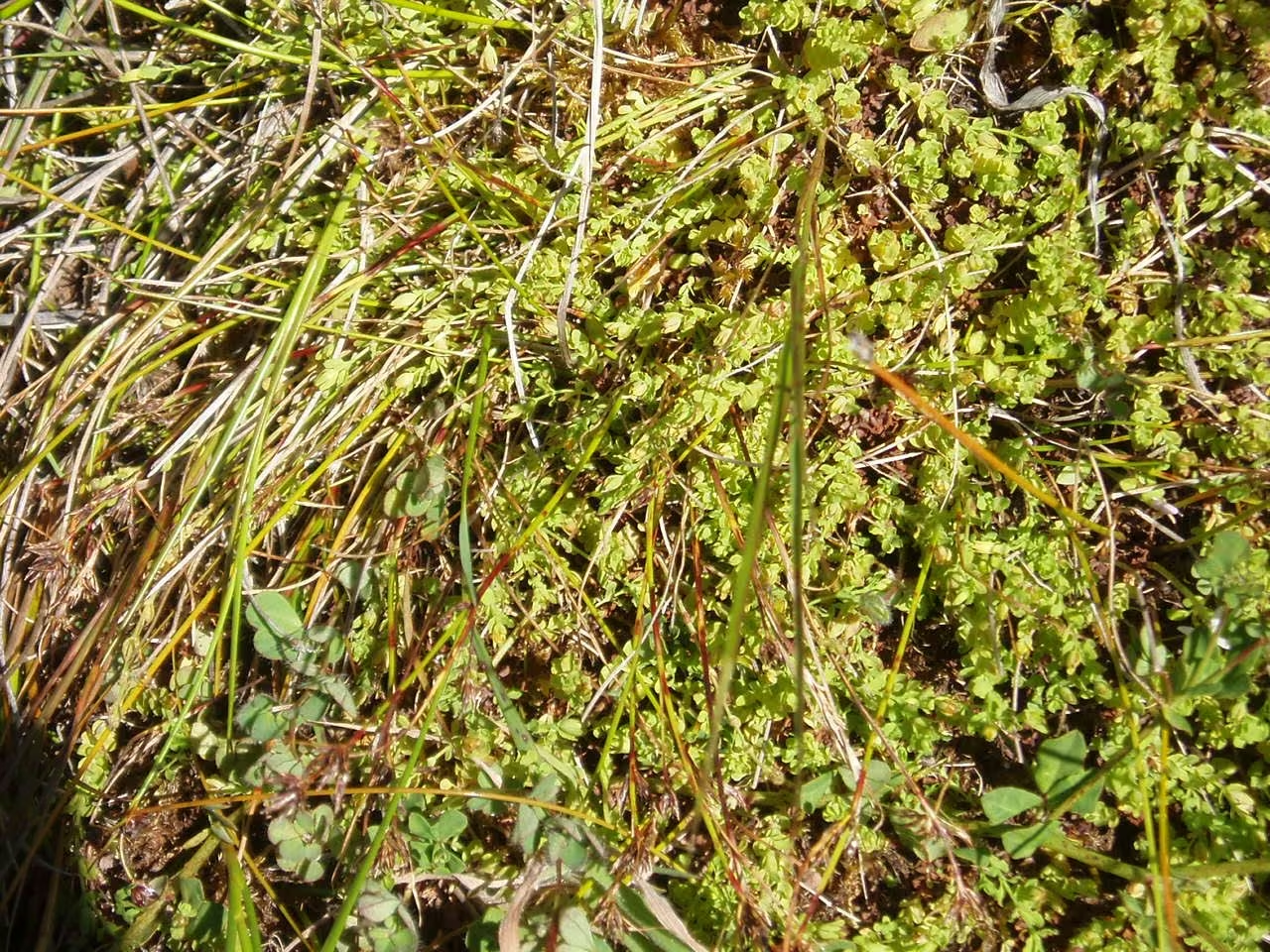
Hymenophyllum revolutum is a small endemic filmy fern that forms light green turf-like patches on tree trunks, rocks, logs and mossy banks in New Zealand forest. Its fronds are only 1-9 cm long, two to three times divided, with narrow, often forked segments and deeply toothed margins. It is found from Cape Reinga south through the North Island (except the east coast) and in the western and southern South Island, Stewart Island/Rakiura and the Chatham Islands, mostly below 750 m. It is often confused with Hymenophyllum cupressiforme and H. peltatum, and is ranked Not Threatened. Explore more native ferns in our native plant guide.
Plant Description
Hymenophyllum revolutum is an epiphytic or terrestrial fern that forms dense, turf-like patches from thin, branched rhizomes. The stipes are short, 5-30 mm long, and the rachis is narrowly winged in its upper portion only.
The fronds are light green, 10-90 mm long and 5-20 mm wide, narrowly elliptic to ovate and two to three times pinnate. The ultimate segments are linear to oblong, often forked, with deeply toothed margins, and the lobes of the pinnules tend to look rolled back, which gives the species its name. Each primary pinna carries a single sorus, enclosed by indusial flaps that are very deeply toothed.
It closely resembles Hymenophyllum cupressiforme and H. peltatum, which also have small toothed fronds. A hand lens is needed to check the partly winged rachis, the strongly toothed indusial flaps and the single sorus per primary pinna.
Quick Facts
| Scientific Name | Hymenophyllum revolutum |
|---|---|
| Height | Fronds 1-9 cm long |
| Spread | Turf-like patches on branched rhizomes |
| Water Needs | Constantly moist and humid |
| Light | Shade within forest or scrub |
| Frost Tolerance | Moderate; mainly lowland, to about 1000 m |
| Salt Tolerance | Low |
| Growth Rate | Slow |
| Lifespan | Perennial |
Climate Best Suited to
It suits humid, mild to cool forest climates from the far north to the south, but avoids the drier east coast of the North Island and eastern South Island.
Regional Suitability
| City | Climate Suitability |
|---|---|
| Auckland | Low |
| Wellington | Low |
| Christchurch | Low |
| Dunedin | Low |
Plant Habitat
Hymenophyllum revolutum is endemic to New Zealand. It occurs throughout the North Island from Cape Reinga southwards, apart from the east coast, and in the western and southern South Island, on Stewart Island/Rakiura and on the Chatham Islands. It ranges from sea level to just over 1000 m, but is usually found below 750 m.
It grows in kauri, podocarp and beech forest and in kānuka and mānuka scrub. It is most commonly epiphytic on trees and tree ferns, and also grows on the ground, on damp moss-covered banks and rocks, cliff faces, rotten logs and stumps.
Growing Requirements
Soil Requirements
It lives on bark, rock and rotting wood rather than in soil, with its rhizomes running through moss and humus.
- Tree and tree fern trunks
- Rotten logs and stumps
- Moss-covered banks and rocks
Light Requirements
It favours the shaded interior of forest and dense scrub.
- Shade to deep shade
- No direct sun
- Sheltered positions
Water Requirements
It needs consistently humid air and regular rain or mist, as its thin fronds dry quickly.
- High humidity at all times
- Damp substrates
- Fronds curl when dry and recover after rain
Planting and Establishing
NZPCN states that it is difficult to propagate, not commercially available and should not be removed from the wild.
The best way to support it is to protect shaded forest and scrub with tree ferns, logs and mossy banks. It cannot be grown in an ordinary garden.
Ecological Role
This filmy fern is a common part of the moss and epiphyte layer on trunks, tree ferns and logs in lowland forest, helping form the moist, spongy mats that cover these surfaces.
Its minute spores are dispersed by wind, and its branched rhizomes spread to form turf. Rotten logs and stumps are important habitats, so leaving fallen wood in forest benefits it.
Uses & Significance
Garden Uses
It has no practical garden use but is a rewarding subject for fern enthusiasts with a hand lens.
- Nature study in forest
- Close-up photography
- Teaching filmy fern identification
Ecological Value
It forms part of the living cover of trunks, logs and banks that retains moisture in the forest.
- Endemic filmy fern
- Colonises rotting wood and tree ferns
- Part of moisture-holding epiphyte mats
Landscaping Uses
It is not used in landscaping. On bush blocks, leaving fallen logs, stumps and tree ferns in place keeps the habitat it needs.
Maintain a closed canopy and dense understorey around forest remnants so humidity stays high.
Seasonal Care Calendar
Spring
Turf is fresh and green after winter rain.
- Search tree fern trunks and logs
- Look for single sori per pinna
Summer
Fronds may curl during dry spells and recover when wet.
- Do not disturb dry patches
- Use a hand lens on indusial flaps
Autumn
Rain returns and spores are shed.
- Compare with H. cupressiforme nearby
- Record substrate and altitude
Winter
It persists through mild lowland winters.
- No action needed
- Fronds remain present all year
When to Prune and How Much
No pruning is needed or appropriate. Leave wild patches untouched.
If a log or tree fern carrying the fern is moved, keep it in shade with the fern side away from sun and wind.
How to Grow Filmy Fern
NZPCN states that Hymenophyllum revolutum is difficult to propagate, not commercially available and should not be removed from the wild. No species-specific propagation method has been published. The general filmy fern methods below are offered only for material already in legal cultivation or salvaged with permission from logs or tree ferns that are being cleared. Success depends on keeping the delicate fronds permanently humid, ideally in a sealed terrarium, because the one-cell-thick blades lose water within minutes in open air. Patience is essential, since filmy ferns grow slowly even under ideal conditions.
By Division of the Turf
The branched rhizomes form turf that can be cut into small sections, each with its own fronds.
- Use a cultivated patch or a piece on salvaged wood
- Cut a small section of turf with rhizome and several fronds
- Place on damp rotting wood, tree fern fibre or a moss pad
- Keep in a sealed terrarium in low light
- Mist with rainwater whenever the surface starts to dry
- Ventilate gradually only after new fronds develop
From Spores
Fresh spores are needed because filmy fern spores are green and short-lived. Success with this species has not been recorded. Keep the sowing container away from sun, which would overheat it and kill the delicate gametophytes.
- Collect fronds with mature sori
- Sow spores immediately on sterile, moist sphagnum or peat
- Seal and keep in a cool, shaded place
- Expect slow development over many months
Pests & Diseases
No pests or diseases are recorded for this species. Desiccation is the main risk.
In the wild it is affected by forest clearance, removal of logs and tree ferns, and canopy damage that dries the understorey.
Cultural Significance
No Māori name or traditional use specific to this species was found in the sources consulted.
William Colenso described the species in 1845 from plants he collected at Lake Waikaremoana. The epithet revolutum is Latin for rolled back, referring to the appearance of the pinnule lobes. The European name Hymenophyllum tunbridgense was once wrongly applied to it.
Bonus Tip
When checking a small toothed filmy fern, trace the rachis down from the tip with a hand lens: in Hymenophyllum revolutum the wing along the rachis stops about halfway down, whereas in H. cupressiforme and H. peltatum it runs further.
Related Plants
Explore other native plants that share similar characteristics or habitats with Filmy Fern (Hymenophyllum revolutum), offering further insights into New Zealand's diverse flora. These related species provide context and opportunities for complementary planting in your garden.
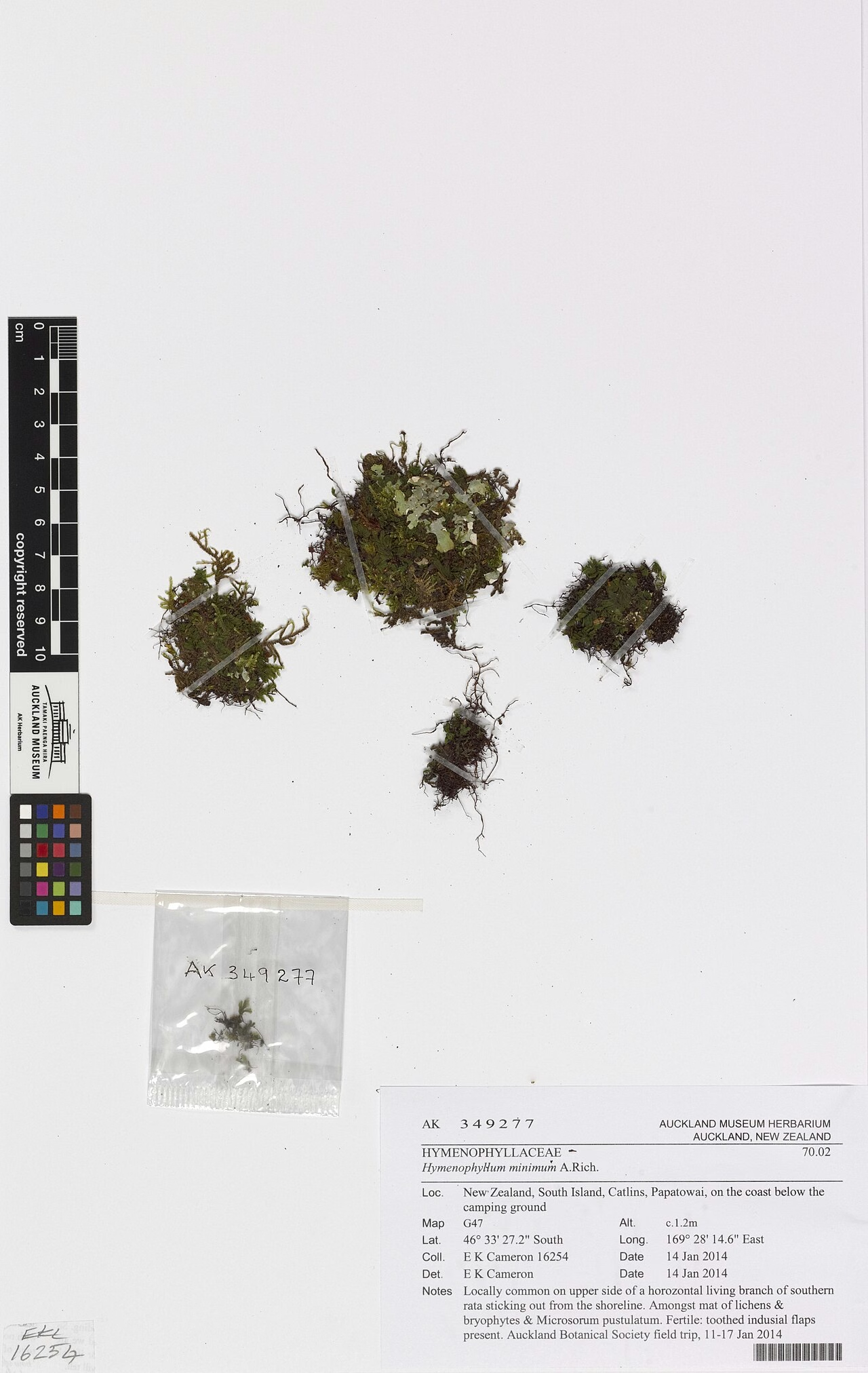
Hymenophyllum minimum
Hymenophyllum minimum
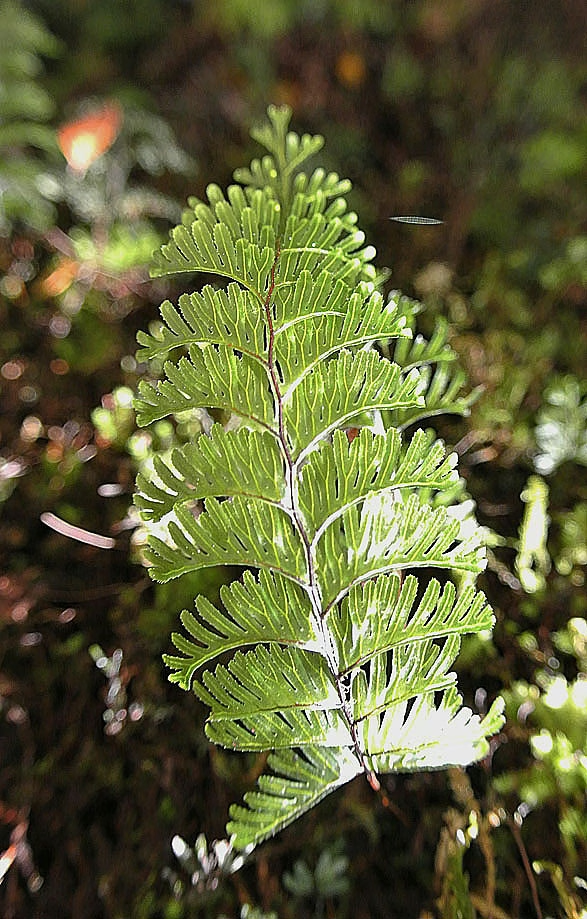
One-Sided Filmy Fern
Hymenophyllum peltatum
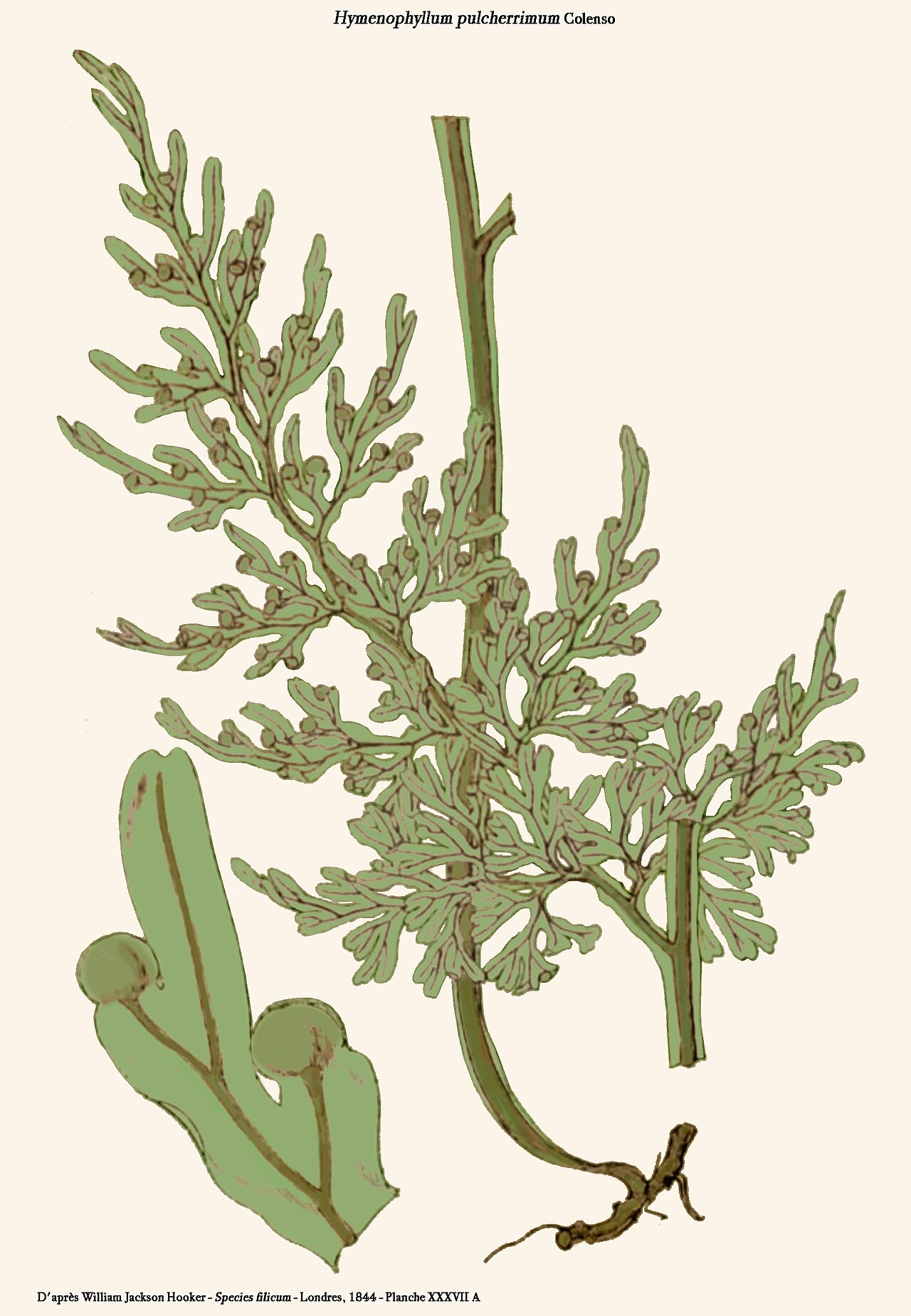
Tufted Filmy Fern
Hymenophyllum pulcherrimum
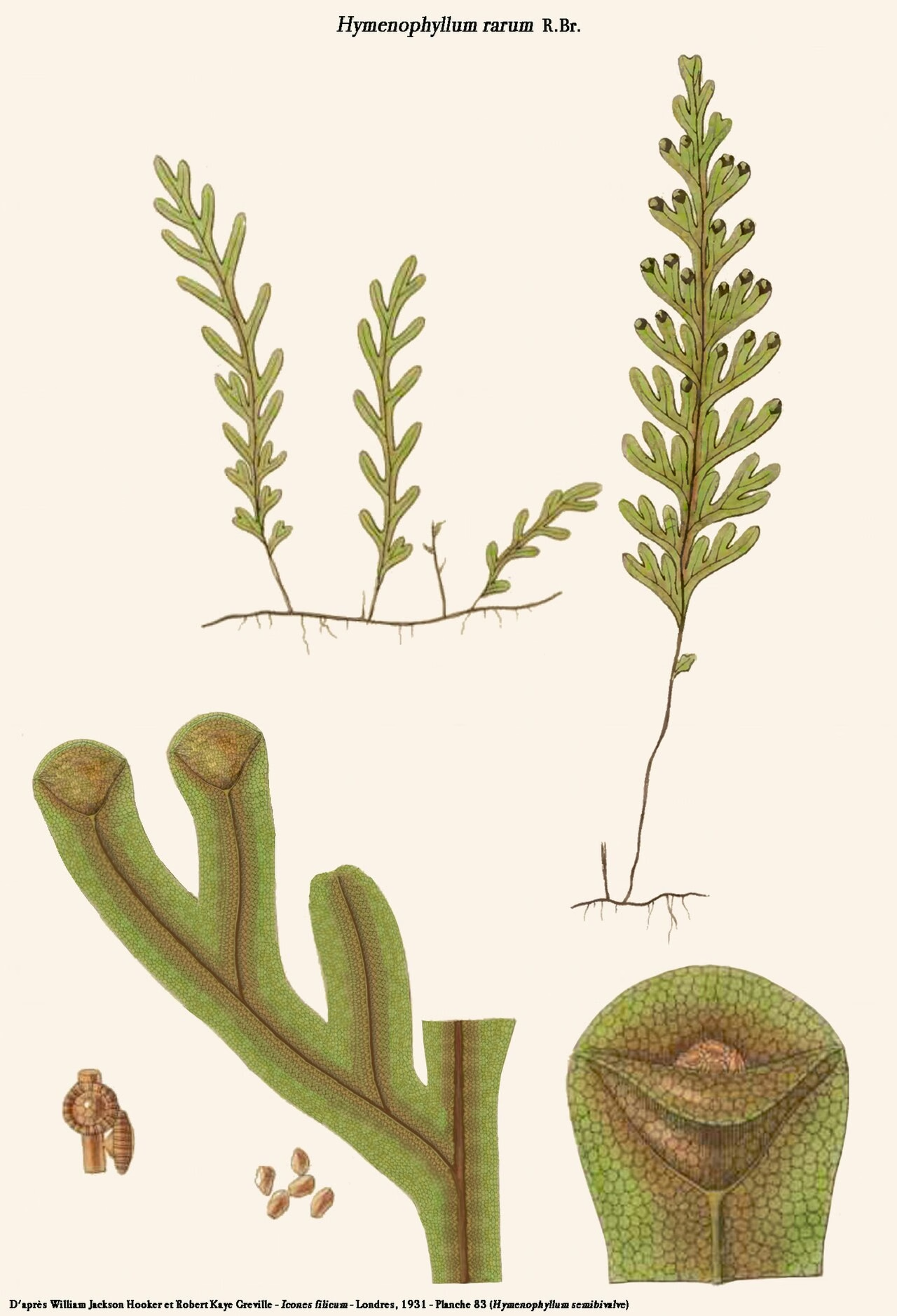
Hymenophyllum rarum
Hymenophyllum rarum
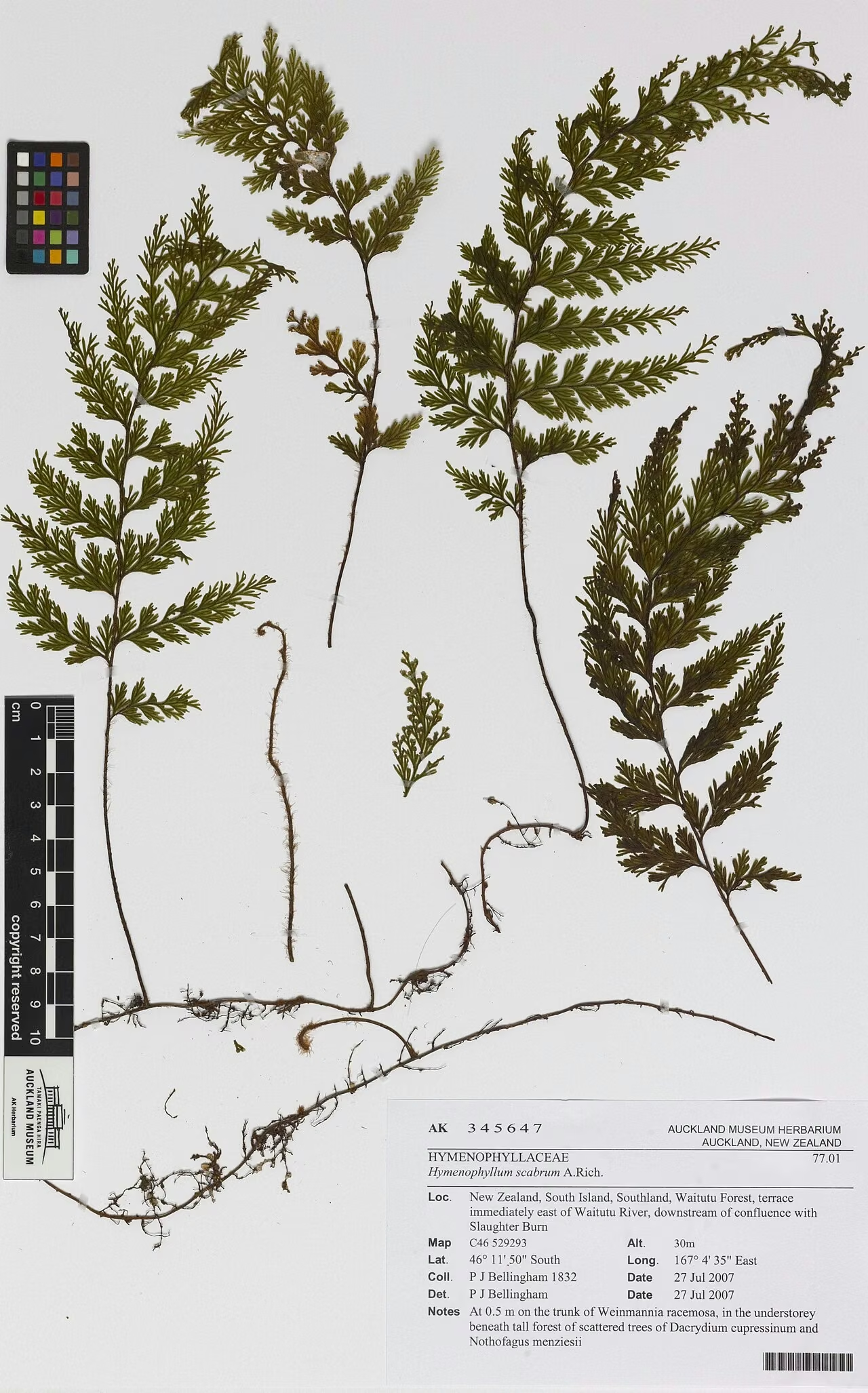
Rough Filmy Fern
Hymenophyllum scabrum
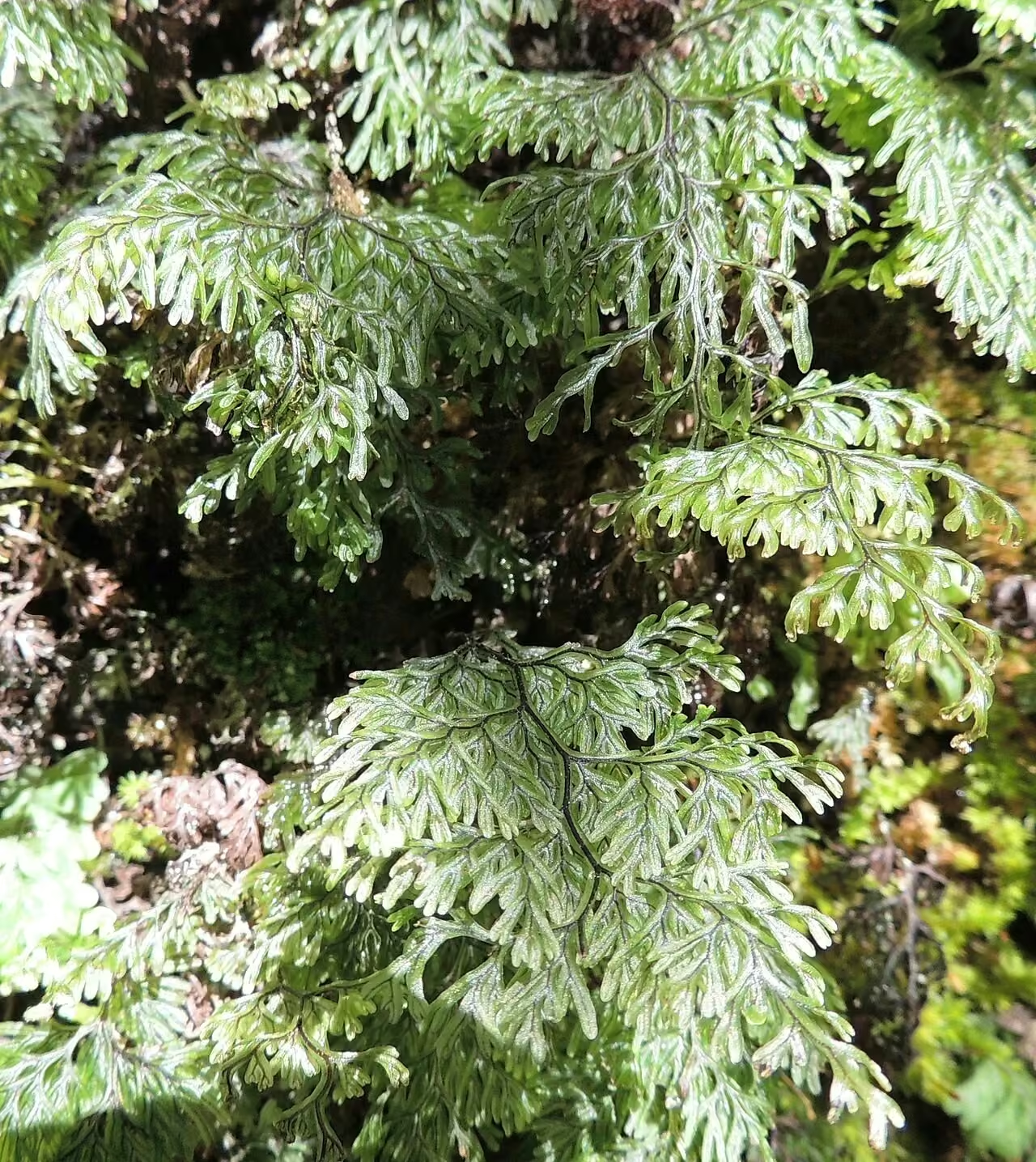
Hairy Filmy Fern
Hymenophyllum villosum
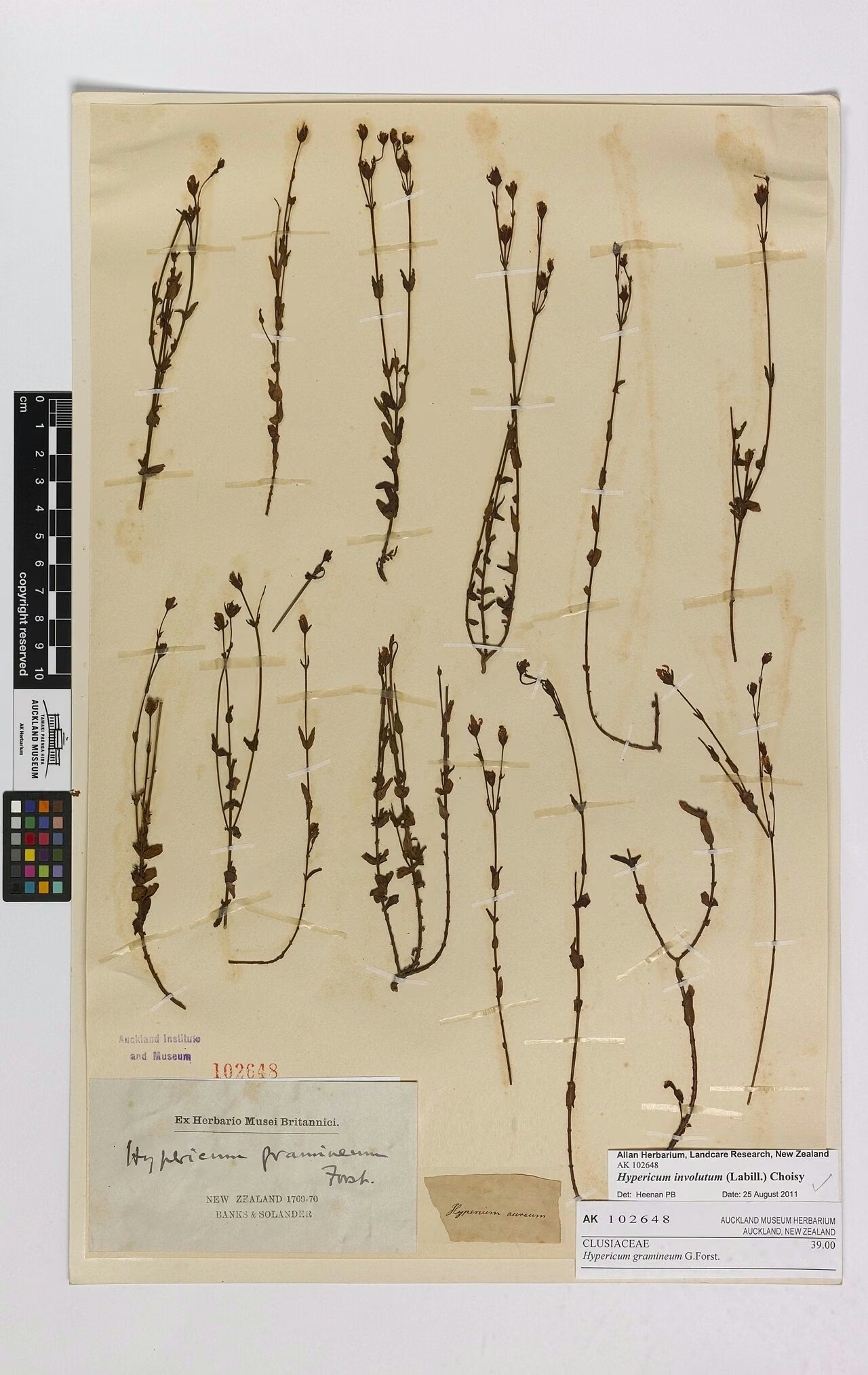
Grassland Hypericum
Hypericum involutum
Swamp Hypericum
Hypericum pusillum
Plant Conservation
Hymenophyllum revolutum is ranked Not Threatened nationally (2023) and has held this ranking since 2004. It is Regionally Not Threatened in Northland, Auckland, Wellington and Otago.
Keeping forest and scrub intact, and leaving logs, stumps and tree ferns in place, protects the substrates it depends on.
Frequently Asked Questions
How do you tell Hymenophyllum revolutum from H. cupressiforme and H. peltatum?
H. revolutum has a rachis that is winged only in its upper half and very deeply toothed indusial flaps. It also differs from H. peltatum in having just one sorus per primary pinna.
Where does Hymenophyllum revolutum grow?
It grows in kauri, podocarp and beech forest and in kānuka and mānuka scrub, on tree trunks, tree ferns, rocks, logs, stumps and moss-covered banks, from sea level to just over 1000 m.
Is Hymenophyllum revolutum endemic to New Zealand?
Yes. It is found only in New Zealand, on the North, South, Stewart and Chatham Islands, and it is ranked Not Threatened.
Sources and Further Reading
The botanical, growing, and conservation details for Filmy Fern (Hymenophyllum revolutum) on this page draw on the New Zealand plant references below. Consult them for full technical records and the latest distribution data.