Filmy Fern
Hymenophyllum malingii
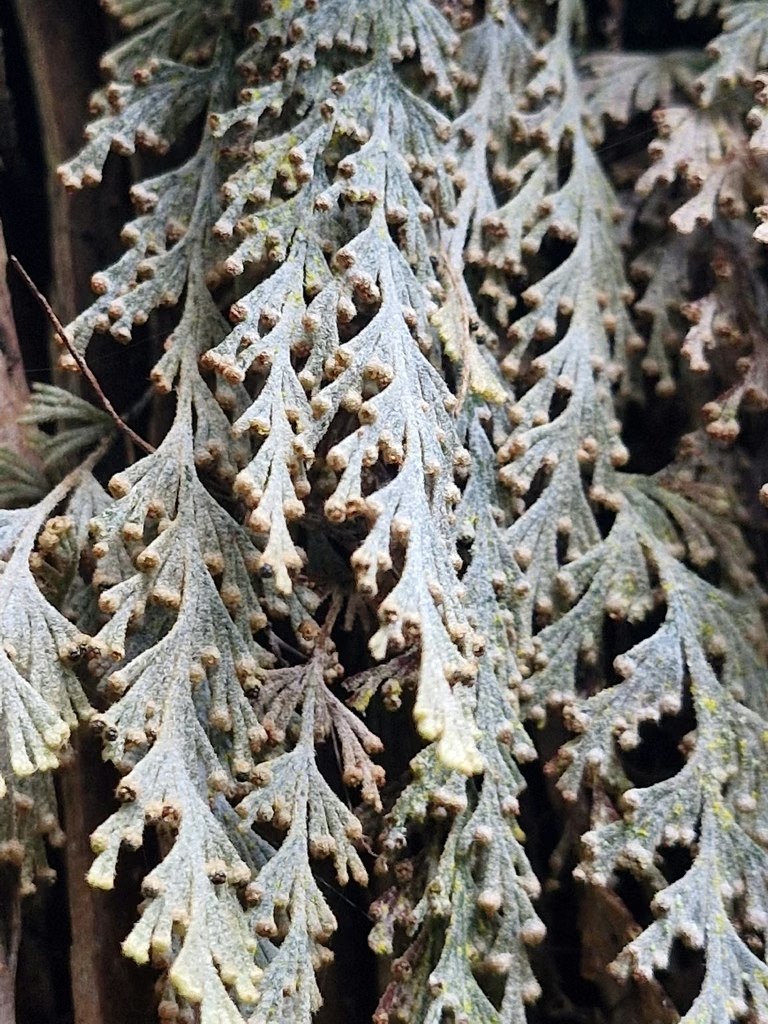
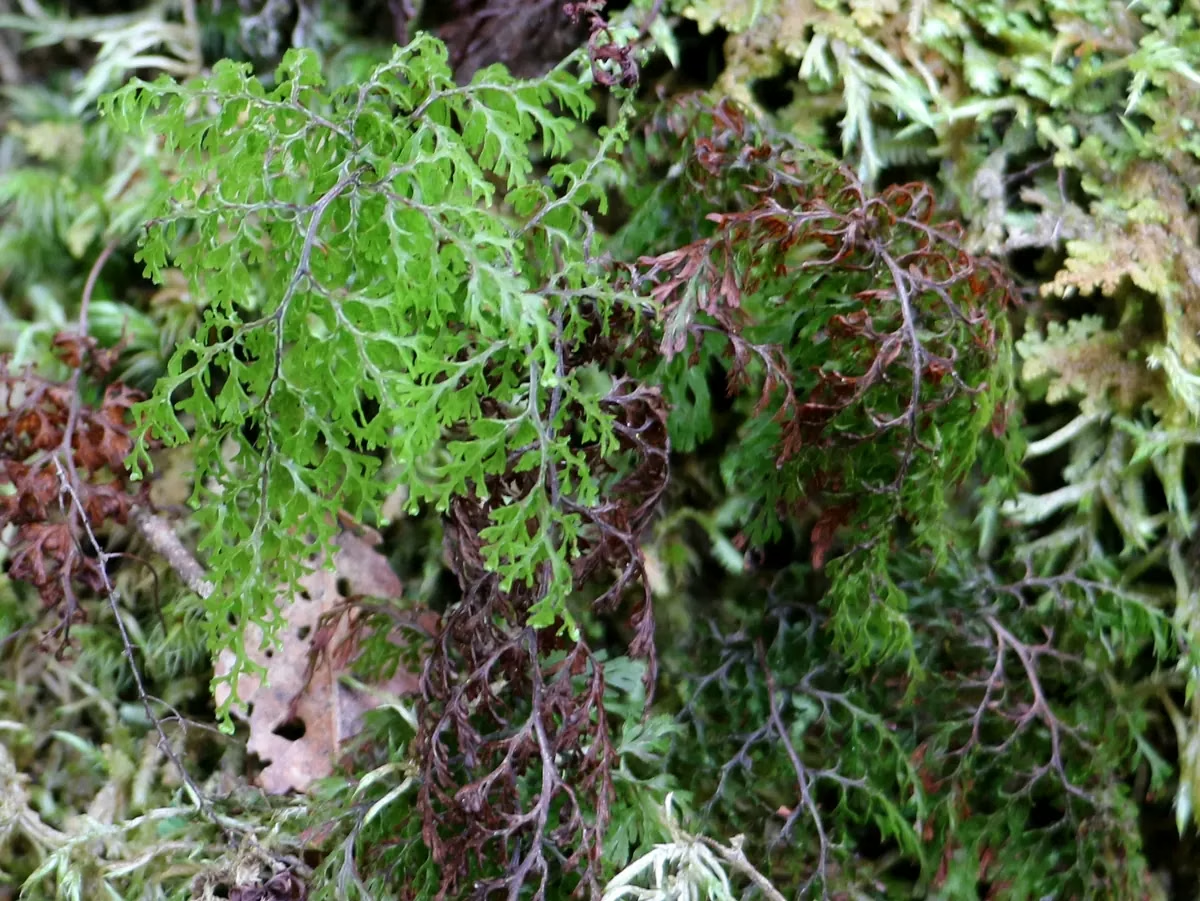
Hymenophyllum malingii is an endemic filmy fern that forms hanging patches, often on dead or dying kaikawaka trunks. Its narrow fronds are densely covered in star-shaped hairs. This epiphytic fern forms dense or diffuse hanging patches from a slender, brittle, creeping rhizome.
Identification
This epiphytic fern forms dense or diffuse hanging patches from a slender, brittle, creeping rhizome. Its narrow fronds are about 30-200 mm long and 5-30 mm wide.
Dense star-shaped hairs make the upper surface grey-white and the underside rusty red-brown. Unlike many filmy ferns, its final segments are narrow and almost circular in cross-section.
Quick facts
| Scientific Name | Hymenophyllum malingii |
|---|---|
| Former name | Trichomanes malingii |
| Family | Hymenophyllaceae |
| Frond blade | 30-200 mm long |
| Growth | Hanging patches on trees |
| Reproduction | Wind-dispersed spores |
| National status | Not Threatened (2023) |
| Height | Fronds 4-36 cm long in the modern Flora account |
| Water Needs | A cultivation watering requirement is not given in the species profile |
| Light | Montane forest epiphyte; a cultivation light rating is not documented |
| Spread | Hanging patches from long-creeping rhizomes; width unquantified |
| Frost Tolerance | Minimum tolerated temperature is not documented |
| Salt Tolerance | Salt tolerance is not documented |
| Growth Rate | Annual extension is not quantified in the cited accounts |
| Lifespan | Rhizomatous filmy fern |
Natural range
Flora of New Zealand records this fern from montane and subalpine North Island sites south through much of the western South Island, with outlying populations around Dunedin and Lake Manapouri.
| City | Climate Suitability |
|---|---|
| Auckland | Not assessed |
| Wellington | Not assessed |
| Christchurch | Not assessed |
Habitat and distribution
It usually grows on dead or dying kaikawaka trunks, but is also recorded on Hall’s tōtara, rimu, bog pine and beech, and occasionally on moss-covered rocks or cliffs.
Flora records elevations from about 80 m near Westport to 1,380 m in the Ruahine Range. It considers historical Banks Peninsula populations locally extinct.
Natural growing conditions
This fern is predominantly epiphytic, growing on trees rather than in soil, especially on dead or dying kaikawaka. NZPCN describes propagation as difficult and advises against taking plants from the wild.
Planting considerations
The species’ most frequent substrate is dead or dying kaikawaka, according to NZPCN. The network describes propagation as difficult and says plants should not be removed from the wild; it gives no tested planting protocol.
Growth and ecology
Long, slender rhizomes creep over the supporting surface and produce hanging fronds. Although chiefly associated with kaikawaka trunks, the fern sometimes grows on other trees and on moss-covered rock.
Observing the fronds
Look for hanging grey-white to rusty-brown patches on kaikawaka trunks. A close view reveals dense star-shaped hairs and rigid final segments that are almost round rather than flat in cross-section.
Garden context
NZPCN describes propagation as difficult and advises leaving wild plants in place. Its documented occurrence on dead or dying trunks is ecological information, not a complete recipe for establishing it in a garden.
Spores and fronds
As a fern, this species produces spores rather than flowers. Its sori sit at the ends of the final frond segments, and the protective indusial flaps around them are densely hairy.
Growth form
The frond stalks and rhizomes are slender and brittle, and the fern forms hanging patches. The cited Flora and NZPCN profiles do not specify a species-specific pruning method.
How to Grow Filmy Fern (Hymenophyllum malingii)
Spores and fragile rhizomes
The published NZ Plant Conservation Network propagation assessment is difficult, with explicit advice against removing wild plants. Its account does not supply a tested spore-germination method. The long-creeping rhizomes are slender and brittle, and the leaf stalks are also fragile. These structural observations give no basis for promising that a detached patch will establish in a garden.
The characteristic host tree
Hymenophyllum malingii is especially associated with dead or dying kaikawaka trunks in montane and subalpine forest. Recorded alternative supports include Hall's tōtara, rimu, mountain toatoa and beech. Occasional plants occupy moss-covered boulders or cliff faces. This unusually strong association with kaikawaka is valuable when interpreting the requirements of an existing population.
Recognising Its Coloured Covering
Fronds hang in patches and have narrow blades approximately 3-20 cm long and 0.5-3 cm wide. Dense, star-shaped hairs cover both surfaces. The upper side is greyish, while the lower surface is reddish brown. This covering belongs to the fern itself; the pale surface should not automatically be interpreted as mould or damage.
Inspecting fertile segments
The final leaf divisions are rigid, narrow and tubular, appearing round in cross-section. Spore-bearing structures occur at their ends, with densely hairy covering flaps. These features separate the species from the flat, green leaf segments of many other filmy ferns. Neither a seasonal spore-collection timetable nor a measured cultivation growth rate is given in the cited account.
Plant health
The cited profiles do not list specific pest or disease treatments. The grey upper surface and rusty-brown underside result from dense star-shaped hairs and are normal identifying features of this fern.
Naming and classification
Flora of New Zealand records that the species honours Christopher L. Maling, a surveyor and amateur naturalist. Former names include Trichomanes malingii, Apteropteris malingii and Sphaerocionium malingii.
Distinguishing hairy filmy ferns
Unlike Hymenophyllum frankliniae, this species has final segments that are almost round in cross-section. Its dense grey hairs above and rusty hairs below also make it distinctive among New Zealand filmy ferns.
Other New Zealand filmy ferns
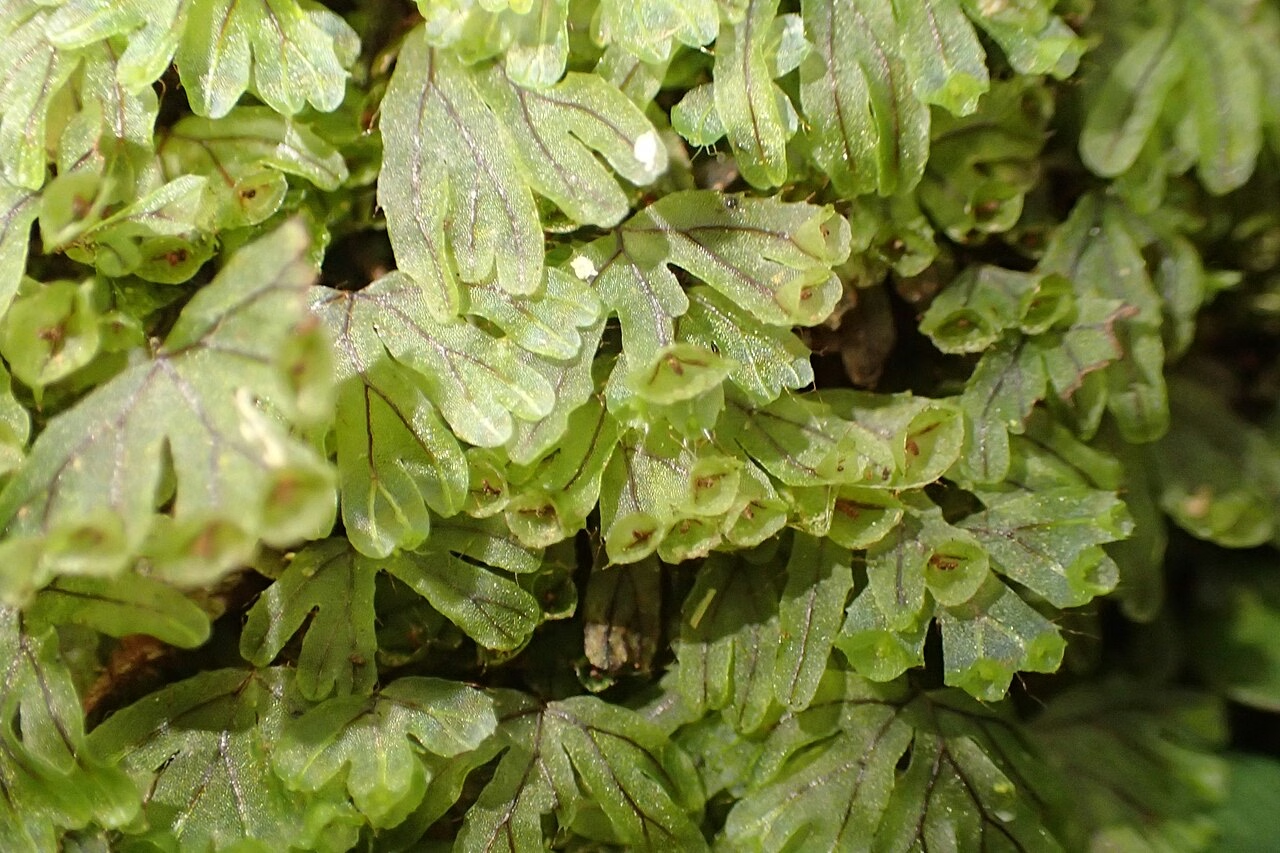
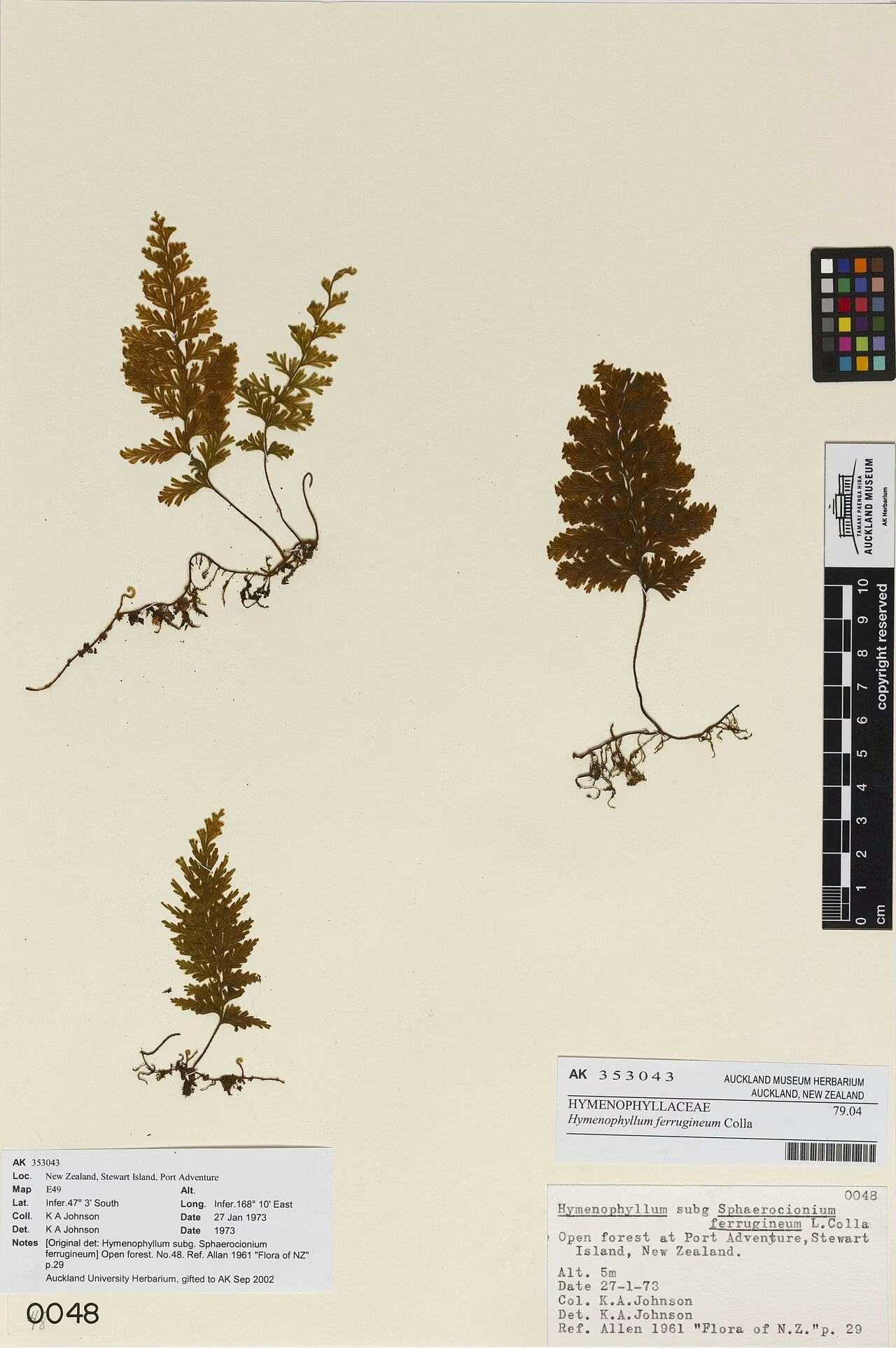
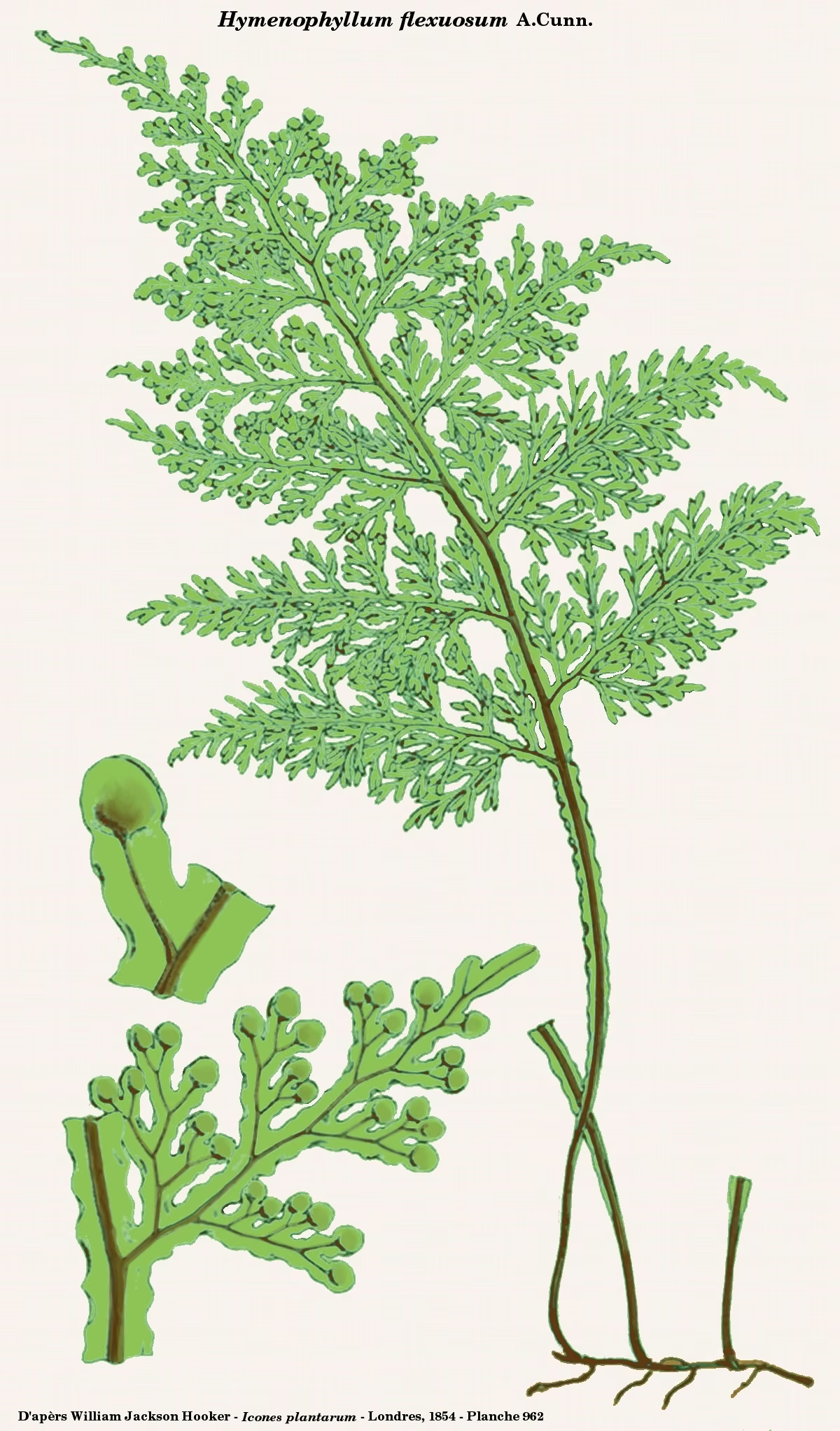
Explore other Hymenophyllum species with finely divided fronds and diverse forest habitats.
Conservation
Hymenophyllum malingii is endemic to New Zealand and was assessed as Not Threatened nationally in 2023. NZPCN lists it as Regionally Naturally Uncommon in Otago in 2025.
Frequently asked questions
Why does this fern appear grey?
Its fronds are densely covered with star-shaped hairs. The upper surface is usually greyish, with a reddish-brown appearance underneath.
Which tree is its characteristic host?
It is most strongly associated with dead or dying kaikawaka, although several other forest trees and occasional rocky substrates are recorded.
Are its smallest leaf divisions flat?
No. The final segments are narrow, rigid and tubular, with a rounded cross-section.
Sources
Identification, habitat, spores and conservation status: NZPCN. Detailed distribution, the origin of its name and comparisons with other filmy ferns: Flora of New Zealand.
Last updated: