Filmy Fern
Hymenophyllum bivalve
Last updated:
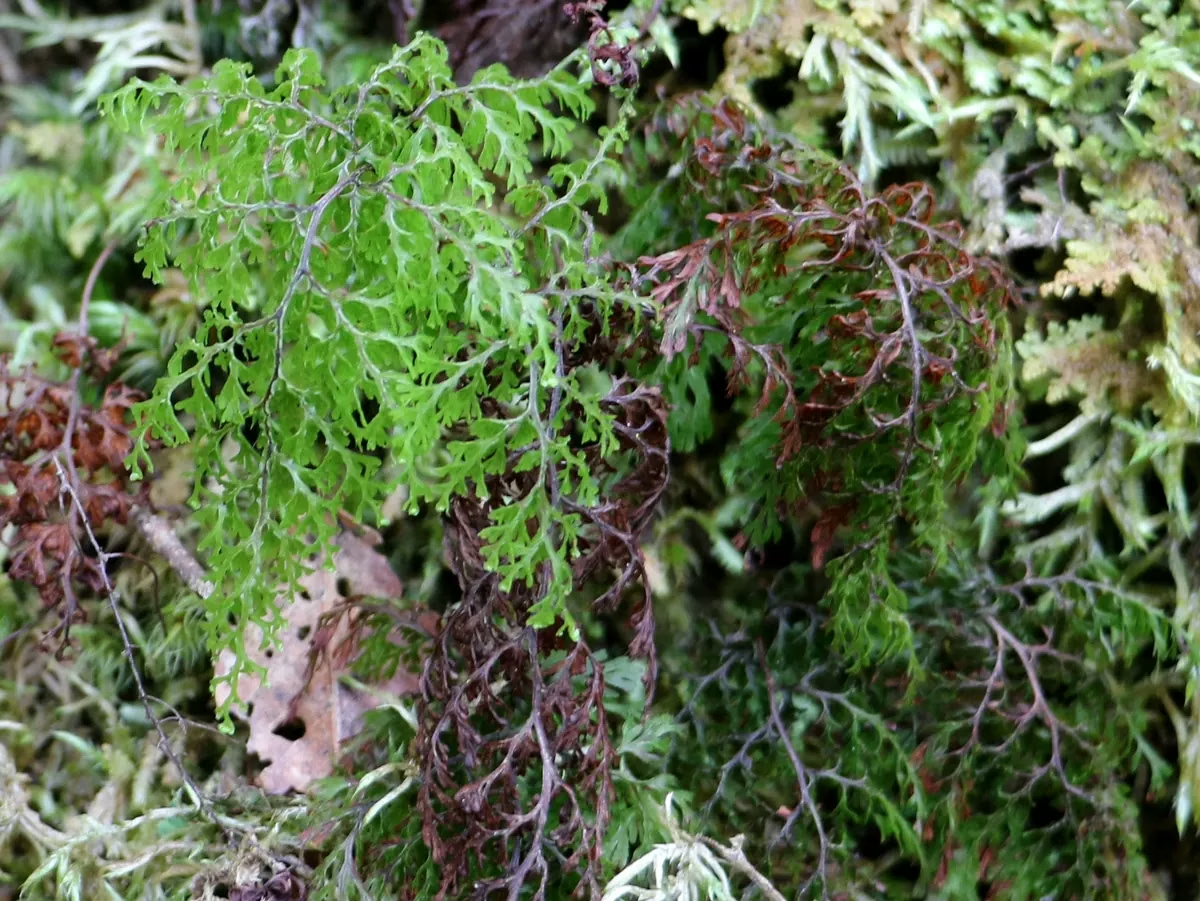
ferns profile: Filmy Fern (Hymenophyllum bivalve) is an indigenous, non-endemic New Zealand fern with delicate translucent fronds. conservation profile records it as a mat-forming terrestrial or low epiphytic fern of coastal to montane forest. It is nationally Not Threatened, although regional assessments can differ where local populations are sparse.
Plant Description
Identification and Physical Characteristics
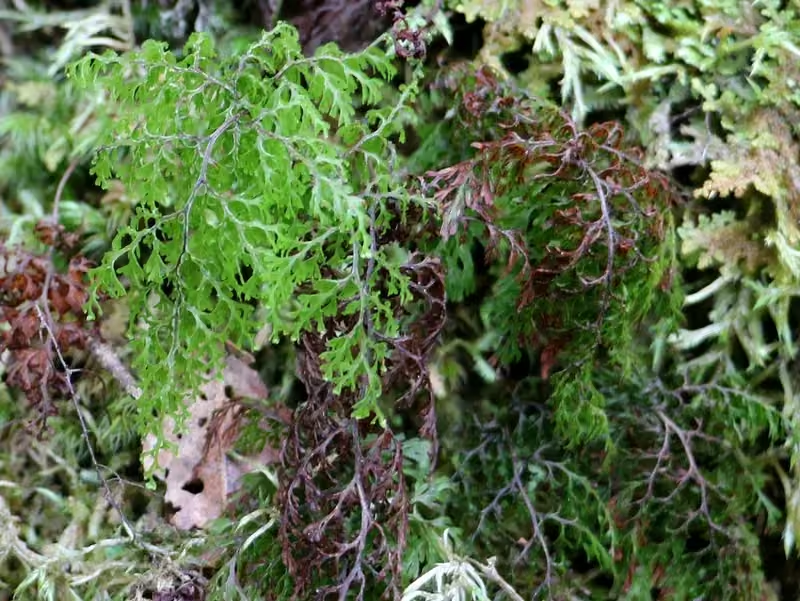
This species has long-creeping wiry rhizomes and light green fronds that may be pendulous on epiphytic plants or held horizontally from erect stipes on terrestrial plants. The lamina is broadly triangular to ovate and deeply divided, with fine linear ultimate segments. Fertile fronds carry many small sori at segment tips, each with a rounded to ovoid two-lipped involucre. Fertile plants are easier to separate from similar filmy ferns than sterile plants.
Quick Facts
| Scientific Name | Hymenophyllum bivalve |
|---|---|
| Height | Fronds about 60 - 200 millimetres long |
| Spread | Mat-forming colonies from long-creeping rhizomes |
| Water Needs | High |
| Light | Deep shade to filtered forest light |
| Frost Tolerance | Moderate in humid forest shelter |
| Salt Tolerance | Low |
| Growth Rate | Slow to moderate in constant humidity |
| Lifespan | Perennial filmy fern |
Climate Best Suited to
Filmy Fern needs humid forest air, regular moisture, and shelter from drying wind. It is best suited to damp coastal to montane forest climates rather than dry garden shade.
Regional Suitability
| City | Climate Suitability |
|---|---|
| Auckland | Medium in humid shaded forest remnants |
| Wellington | Medium to high in damp gullies and shaded trunks |
| Christchurch | Low except in protected humid ferneries |
| Nelson | Medium in damp forest and shaded gullies |
Plant Habitat
Natural Occurrence and Ecology
conservation profile records Hymenophyllum bivalve from the North Island, South Island, Stewart Island/Rakiura, Chatham Islands, and Auckland Islands, and also from eastern Australia. It grows from coastal to montane forest, either on the ground or as a low epiphyte on tree trunks and exposed roots. Its thin fronds depend on consistently humid air and shaded surfaces.
Growing Requirements
Soil Requirements
Moist humus, mossy bark, exposed roots, or damp forest litter with constant humidity.
- Mossy trunks
- Damp humus
- Exposed roots
Light Requirements
Low filtered light is best; direct sun quickly dries the filmy fronds.
- Deep shade
- Filtered forest light
- No direct sun
Water Requirements
Maintain humid air and never allow the root mat or bark surface to dry completely.
- High humidity
- Frequent mist
- No drying wind
Planting and Establishing
Establishment Guidance
Filmy ferns should not be removed from the wild. In cultivation, use legally sourced spore-grown material or fragments from cultivated stock. Establish plants on damp mossy bark, shaded fern slabs, or shallow humus trays where humidity remains high. Keep them away from heaters, dry air, and direct sun. The planting surface should stay moist but not stagnant.
Ecological Role
Biodiversity and Ecosystem Impact
Filmy Fern forms thin mats across damp forest surfaces, adding texture to trunks, roots, and shaded ground. Its rhizomes help hold moisture and fine organic matter, while its fronds provide microhabitat for tiny invertebrates. It is part of the humid forest layer that is easily lost when canopy opens, wind increases, or forest edges dry out.
Uses & Significance
Garden Uses
Use only in humid ferneries, terrariums, shaded fern slabs, or specialist native plant collections.
- Humid ferneries
- Terrariums
- Mossy slabs
Ecological Value
It indicates damp shaded forest microclimates and contributes to epiphytic diversity.
- Humid forest layer
- Epiphyte habitat
- Fine-scale biodiversity
Landscaping Uses
This is not a conventional landscape fern. Use it at close viewing distance in a humid fern house, shaded courtyard wall with misting, or enclosed native terrarium. In ordinary garden beds it will fail if humidity drops or the surface dries.
Seasonal Care Calendar
Spring
New fronds expand when humidity and mild temperatures rise.
Summer
Protect from hot dry air and keep surfaces moist.
Autumn
Good season to settle cultivated pieces onto damp slabs.
Winter
Maintain air movement while avoiding cold drying draughts.
When to Prune and How Much
Do not prune living mats. Remove only dead fragments with tweezers if they encourage mould in a terrarium. Avoid touching healthy fronds because filmy fern tissues are easily crushed.
- Avoid handling
- Remove dead fragments only
- Protect living mats
Always use clean, sharp tools and avoid disturbing new growth.
How to Grow Filmy Fern
From Spores
Filmy ferns can be raised from spores, but the process is slow and requires clean, stable humidity. Sow spores thinly onto sterile damp peat-free fern medium, milled sphagnum, or a prepared mossy slab. Seal the container to maintain humidity and keep it in cool bright shade. The gametophyte stage may persist before sporophytes develop, so patience is essential. Do not let condensation drip heavily onto the culture, and open the container only briefly when air exchange is needed.
- Use clean ripe spores
- Sow on sterile damp medium
- Keep sealed and shaded
- Wait for sporophytes before moving
From Cultivated Mat Pieces
Small pieces may be taken only from established cultivated mats, never from wild plants. Press the rhizome side gently onto damp mossy bark or humus and pin it lightly with biodegradable fibre if needed. Keep the piece in very high humidity with filtered light. New attachment is slow, and success depends on preventing drying during the first weeks. Once growth resumes, increase air movement gradually to prevent mould while keeping the surface damp.
- Use cultivated material only
- Press onto damp mossy surface
- Keep very humid
- Increase air movement slowly
Maintaining Humid Displays
The best way to grow Filmy Fern is to maintain the microclimate rather than push growth with fertiliser. Keep temperatures mild, light low, and humidity high. Mist with clean water, avoid mineral salts, and use rainwater if tap water leaves deposits. Do not feed heavily, because thin fronds are sensitive to salts. If the mat browns at the edge, improve humidity and shade before adding waterlogged substrate.
- Maintain mild humidity
- Use clean low-mineral water
- Avoid fertiliser salts
- Improve shade if edges brown
Pests & Diseases
Mould, algae, slugs, and tiny snails can affect cultivated plants if air is stagnant or surfaces are too wet. Dry air causes rapid frond collapse. Balanced humidity and gentle air movement are more important than chemical treatment.
Cultural Significance
Filmy ferns are part of the fine-textured forest flora that gives New Zealand gullies their damp, layered character. This species is not known for major direct cultural use, but it has educational value in showing how specialised thin fern tissues are adapted to saturated forest air.
- Humid forest character
- Fine-textured epiphyte
- Educational filmy fern
Bonus Tip
If the fronds curl or brown, treat it as an air-humidity problem first, not simply a watering problem.
This Filmy Fern note is specific to Hymenophyllum bivalve, connecting identification, habitat context, and practical care so the section remains useful for readers comparing New Zealand plant profiles.
Related Plants
Compare this filmy fern with other New Zealand Hymenophyllum species and damp forest ferns.

Flabellate Filmy Fern
Hymenophyllum flabellatum
Cupressiform Filmy Fern
Hymenophyllum cupressiforme
Drooping Filmy Fern
Hymenophyllum demissum

Kiokio
Blechnum novae-zelandiae
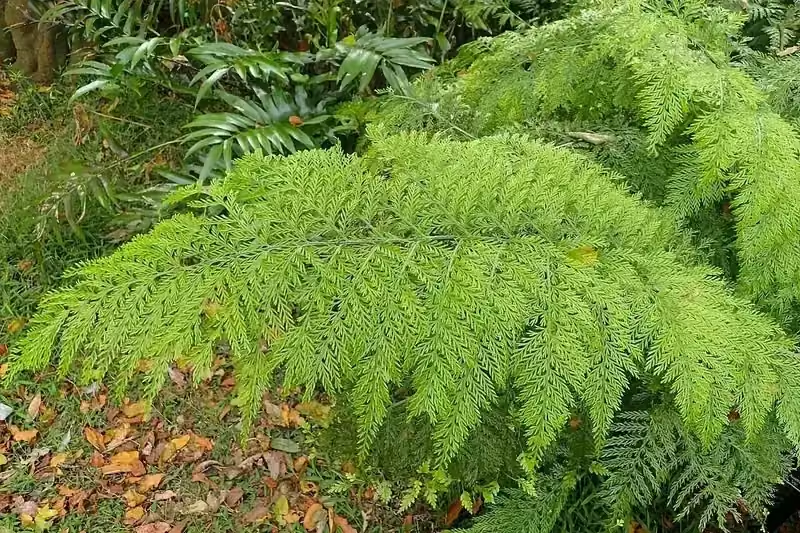
Hen and Chicken Fern
Asplenium bulbiferum
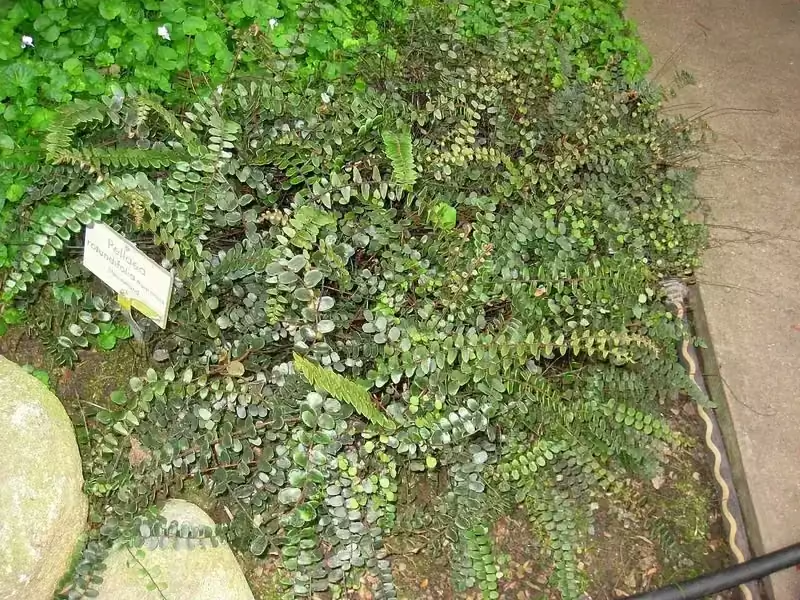
Button Fern
Pellaea rotundifolia

Rārahu
Pteridium esculentum

Prince of Wales Feathers
Leptopteris superba
Plant Conservation
Conservation Status and Threats
conservation profile lists Hymenophyllum bivalve as Not Threatened nationally with the SO qualifier. The species still depends on humid forest structure, so local populations can be reduced by canopy opening, edge drying, trunk removal, and disturbance to forest-root surfaces.
Frequently Asked Questions
Is Hymenophyllum bivalve native to New Zealand?
Yes. It is indigenous but not endemic.
Can it be grown in a normal garden bed?
Usually no. It needs constantly humid shaded surfaces and is best in a fernery or terrarium.
Should wild filmy ferns be collected?
No. Use cultivated or spore-raised material only.
Sources and Further Reading
The botanical, growing, and conservation details for Filmy Fern draw on authoritative New Zealand plant references and taxonomic databases.