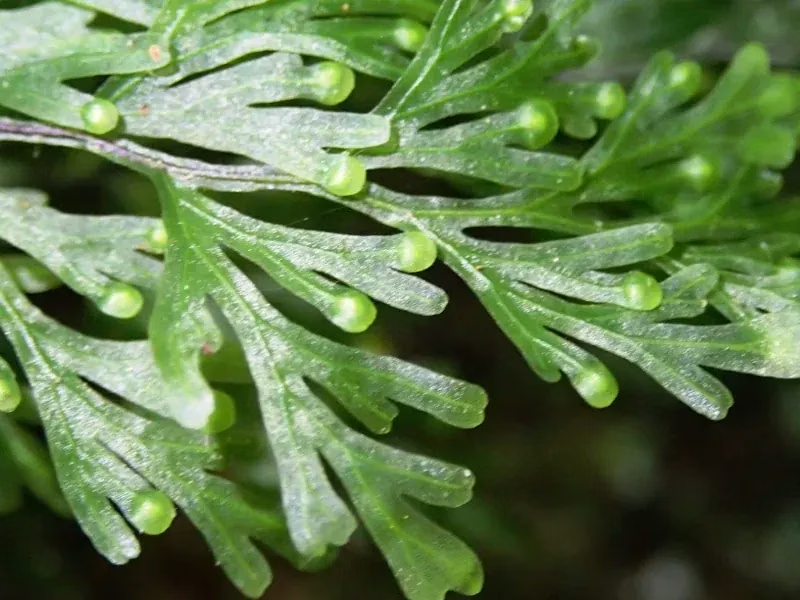
Fan Filmy Fern
Hymenophyllum flabellatum
Last updated:
ferns profile: Fan-Like Filmy Fern (Hymenophyllum flabellatum) is a delicate native fern with pendulous, fan-divided fronds that thrive in humid forest air. Biota NZ lists the name as current, indigenous, and Not Threatened, and the conservation profile records it from the Kermadec Islands through the main islands to the Chathams and subantarctic islands, as well as parts of the wider Pacific and Australia.

Plant Description
Identification and Physical Characteristics
This species has a slender, long-creeping, wiry rhizome with pale to yellow-brown hairs. Fronds are usually pendulous and can vary from small triangular forms to longer oblong or ovate-lanceolate fronds. The stipe is slender and unwinged, while the rachis is winged mainly in the upper part. The lamina is yellow-green to pale green, deeply divided, with fan-like pinnae or segments and narrow ultimate segments. Numerous small sori sit near the segment margins in rounded bivalved involucres.
Quick Facts
| Scientific Name | Hymenophyllum flabellatum |
|---|---|
| Height | Fronds commonly 2 - 27 cm long |
| Spread | Creeping patches on trunks, rocks, cliffs, and banks |
| Water Needs | High humidity |
| Light | Shade to filtered light |
| Frost Tolerance | Moderate in humid shelter |
| Salt Tolerance | Low |
| Growth Rate | Slow and moisture-dependent |
| Lifespan | Perennial creeping mats |
Climate Best Suited to
Fan-Like Filmy Fern suits humid coastal to montane climates where air moisture remains high around tree fern trunks, shaded rock faces, and overhanging banks.
Regional Suitability
| City | Climate Suitability |
|---|---|
| Auckland | High in humid gullies and shaded coastal forest |
| Wellington | High on damp banks, trunks, and shaded rocks |
| Christchurch | Medium in protected fernery conditions |
| Nelson | High in humid western forest; medium in dry eastern shelter |
Plant Habitat
Natural Occurrence and Ecology
This fern grows from coastal to montane forest. It is often epiphytic, especially on tree fern trunks, and also grows on shaded or sheltered damp rocks, cliff faces, and overhanging banks. Its wide New Zealand distribution excludes some drier eastern South Island areas, reflecting its dependence on humid microhabitats rather than broad climate alone.
Growing Requirements
Soil Requirements
Grow on moist fibrous surfaces, moss, humus, or damp rock rather than dry potting soil.
- Tree fern fibre
- Mossy rock
- Humus-rich shaded banks
Light Requirements
Filtered shade prevents scorching while still allowing the thin fronds enough light for steady growth.
- Forest shade
- Bright fernery shade
- No hot direct sun
Water Requirements
Humidity around the fronds matters as much as root moisture, so misting or naturally damp air is valuable.
- High air humidity
- Fine mist watering
- Consistent surface moisture
Planting and Establishing
Establishment Guidance
Plant small cultivated mats onto a damp shaded trunk, fern slab, rock crevice, or bank. Press the rhizome gently onto the surface, keep it humid, and avoid burying the fine creeping stems. This fern should never be stripped from wild trees or banks; use propagated material or divisions from established cultivated mats only.
Ecological Role
Biodiversity and Ecosystem Impact
Fan-Like Filmy Fern occupies the living skin of humid forest: tree fern trunks, shaded cliff faces, damp banks, and overhanging surfaces where thin fronds can remain hydrated. It adds epiphytic and rupestral diversity to the forest understorey and is part of the wind-dispersed fern flora that colonises suitable moist surfaces.
Uses & Significance
Garden Uses
Use in specialist ferneries, shaded trunk plantings, damp rock walls, and close-viewing native collections.
- Tree fern trunk planting
- Fernery walls
- Humid shaded rocks
Ecological Value
It enriches epiphytic and damp-rock microhabitats in mature native plantings.
- Epiphyte diversity
- Humid forest texture
- Wind-dispersed spores
Landscaping Uses
This is a fine-detail fern for intimate spaces. Plant it where visitors can look closely at the fan-shaped translucent fronds without touching them, such as beside a shaded boardwalk, fernery seat, or damp rock shelf. Surround it with mosses, small liverworts, and restrained ferns rather than vigorous groundcovers.
Seasonal Care Calendar
Spring
Fresh fronds extend in mild humid weather.
Summer
Protect from dry wind and maintain misting in ferneries.
Autumn
Small divisions attach well as humidity rises.
Winter
Keep mats clear of heavy leaf fall and silt.
When to Prune and How Much
Do not prune the fern itself except to remove dead fronds with tweezers or fine scissors. The main care task is clearing fallen leaves, liverwort mats, or larger fern growth that smothers the small fronds.
- Remove coarse litter
- Keep mats unburied
- Avoid tearing rhizomes
Always use clean, sharp tools and avoid disturbing new growth.
How to Grow Fan Filmy Fern
From Spores
Spore propagation is slow but gives the cleanest way to establish new plants without harming wild colonies. Collect mature fertile fronds from cultivated material, dry them in a clean envelope, and sow the spores thinly over sterile damp medium. Keep the container covered, warm, and in bright shade. The earliest stages are tiny and easily overgrown by algae, so use clean water and avoid rich fertiliser. Once sporophytes have formed small fronds, transfer little patches onto damp fibre or moss and maintain humidity while they attach. Growers should expect months of careful observation rather than quick nursery production.
- Collect mature fertile fronds
- Sow spores on sterile damp medium
- Maintain humid bright shade
- Transfer tiny patches carefully
From Cultivated Mat Division
Division works only where a cultivated mat is already vigorous. Lift a very small section with visible rhizome and fronds, keeping the fine stems intact. Press it onto a matching damp surface and secure gently with a sliver of fern fibre or a fine biodegradable pin. Mist regularly and keep the site shaded until new growth confirms attachment. Avoid large divisions, because the plant grows as a surface-hugging mat and recovers slowly from disturbance. Any division should be taken sparingly and never from wild forest material.
- Lift a small cultivated patch
- Keep rhizomes attached
- Press onto damp fibre
- Mist until active growth returns
Keeping Plants Alive
Success depends on maintaining the microclimate. Keep the fronds humid, shaded, and free from dust or fertiliser salts. Use rainwater where possible, water with a fine spray, and avoid heavy drips that dislodge the mat. If fronds brown at the tips, improve humidity and shelter before changing the soil. If mould builds up, increase gentle airflow without exposing the plant to drying wind. In outdoor plantings, use surrounding shrubs and tree ferns to buffer temperature and humidity swings.
- Mist with clean water
- Maintain filtered shade
- Avoid fertiliser salts
- Balance humidity and airflow
Pests & Diseases
Slugs and snails may graze mats in enclosed ferneries, but drying air, burial by litter, and algae from stale wet conditions are more common problems. Handle the fronds as little as possible.
Cultural Significance
Mauku is used for filmy ferns generally, reflecting the prominence of these thin-fronded ferns in damp New Zealand forests. This species shows how a tiny plant can make tree trunks and shaded banks visually rich when humidity is intact.
- Mauku association
- Humid forest epiphyte
- Fine native fern texture
Bonus Tip
A tree fern trunk in permanent shade is often a better home than a pot, because it holds moisture while draining freely.
This Fan Filmy Fern note is specific to Hymenophyllum flabellatum, connecting identification, habitat context, and practical care so the section remains useful for readers comparing New Zealand plant profiles.
Related Plants
Compare Fan-Like Filmy Fern with other humid-forest filmy ferns.
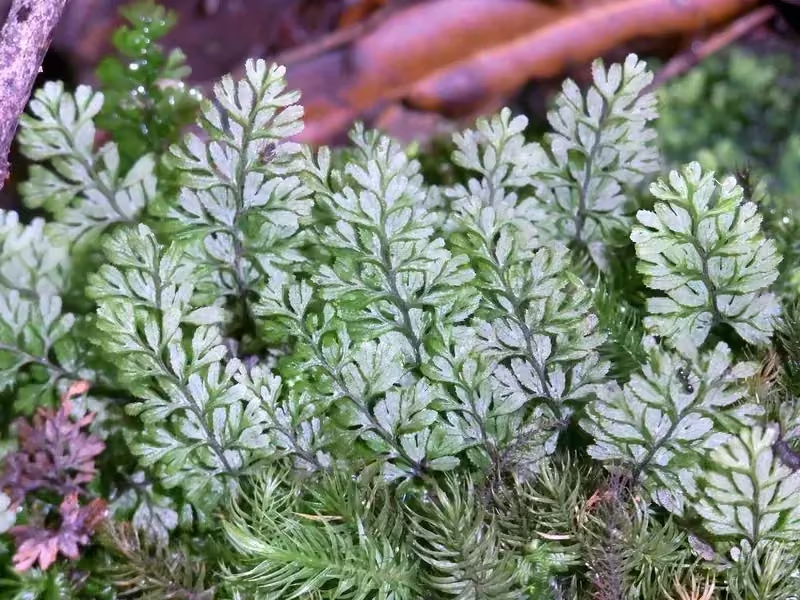
Cypress Filmy Fern
Hymenophyllum cupressiforme
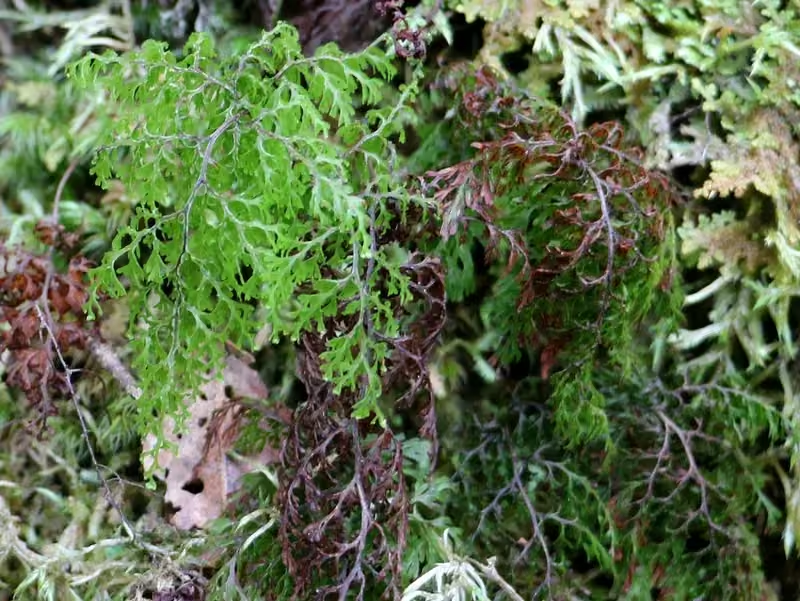
Filmy Fern
Hymenophyllum bivalve
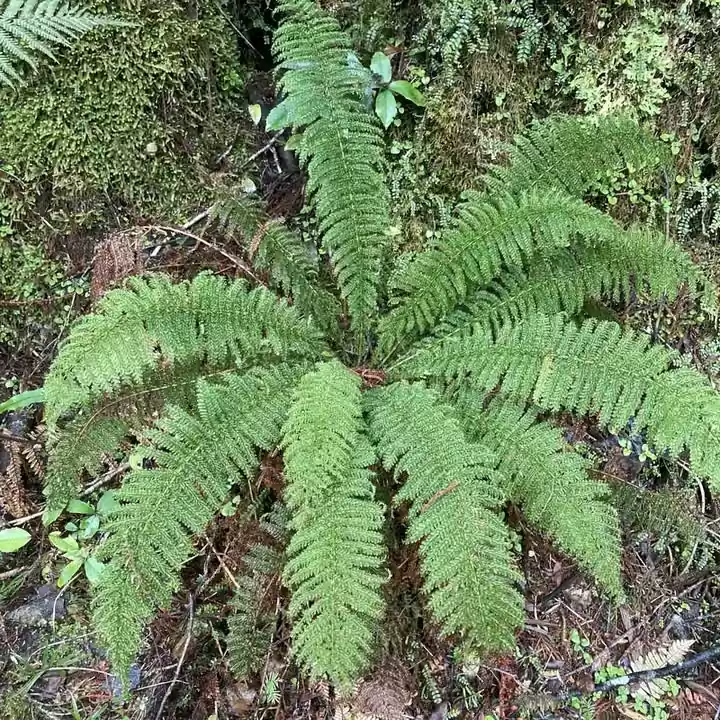
Single Crepe Fern
Leptopteris hymenophylloides

Kiokio
Blechnum novae-zelandiae
Hen and Chicken Fern
Asplenium bulbiferum
Button Fern
Pellaea rotundifolia

Rārahu
Pteridium esculentum

Prince of Wales Feathers
Leptopteris superba
Plant Conservation
Conservation Status and Threats
The species is assessed as Not Threatened nationally, but its local abundance depends on intact humid forest and scrub microhabitats. Track work, drying edges, trunk removal, and browsing that changes understorey humidity can reduce suitable surfaces.
Frequently Asked Questions
Is Hymenophyllum flabellatum native to New Zealand?
Yes. It is indigenous to New Zealand and also occurs in Australia and parts of the Pacific.
Can I take it from a tree fern trunk?
No. Use propagated material only; wild mats are easily damaged.
Does it need soil?
Not always. It often grows on tree fern trunks, rocks, cliffs, and damp banks where humidity is high.
Sources and Further Reading
The botanical, growing, and conservation details for Fan-Like Filmy Fern draw on authoritative New Zealand plant references and taxonomic databases.