Filmy Fern
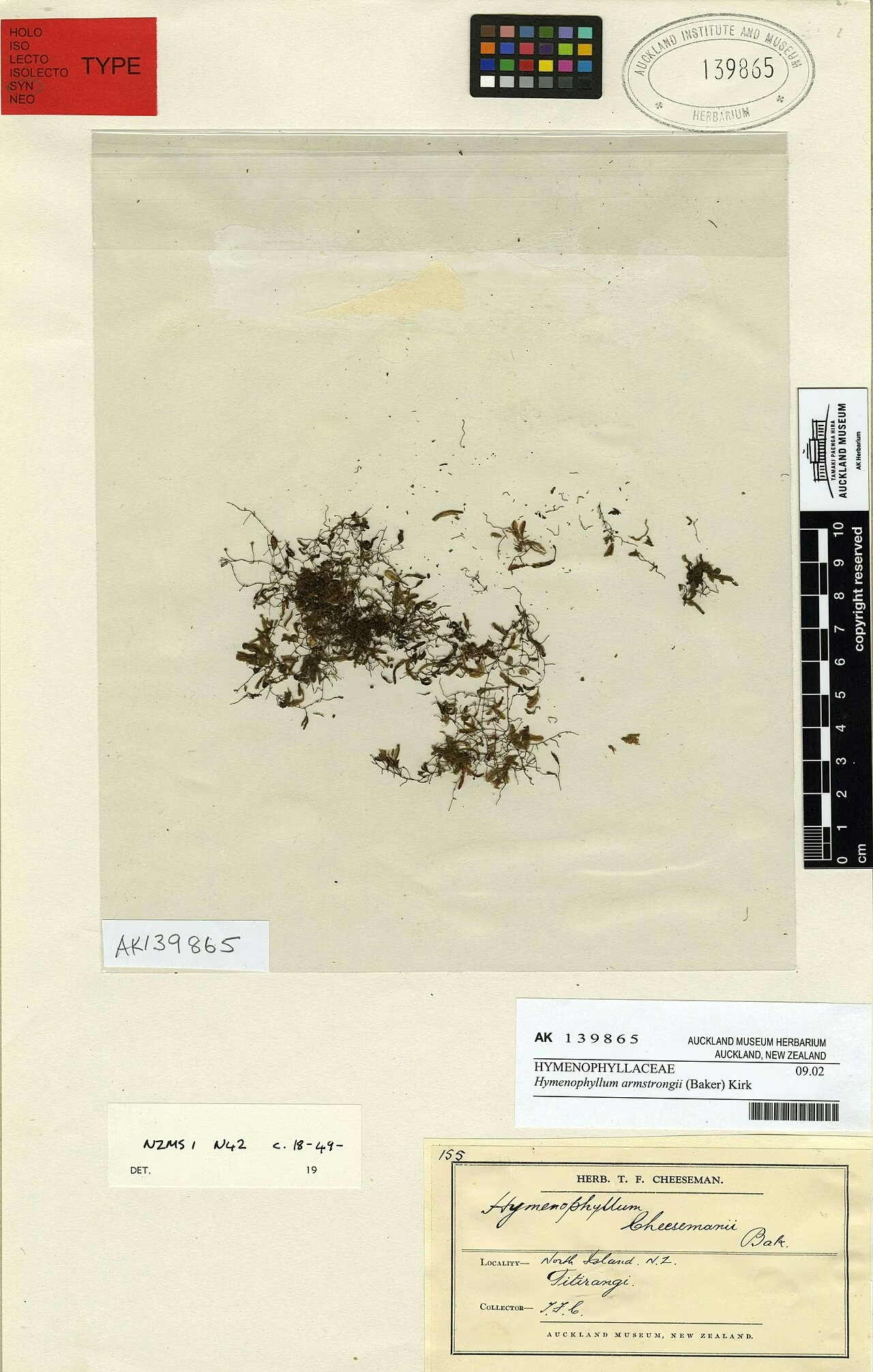
Hymenophyllum armstrongii
Last updated:
Hymenophyllum armstrongii is one of New Zealand's smallest ferns: an endemic filmy fern whose dark green, undivided or once to three times forked fronds are just 4-32 mm long, edged with tiny dark spines and marked by a dark brown midrib. It creeps on hair-thin rhizomes through mosses and liverworts high on the trunks and branches of forest trees, and at higher altitudes forms mats on damp rock. It ranges from Kaitaia to Fiordland, Stewart Island and the Auckland Islands, from sea level to 1450 m. Easily overlooked, it is ranked Not Threatened. Explore more native ferns in our native plant guide.
Plant Description
Hymenophyllum armstrongii is a diminutive, mat-forming epiphytic or rock-dwelling fern. Its rhizomes are long-creeping, brittle and thread-like, less than 0.1 mm in diameter. The fronds are 4-32 mm long on dark brown stipes, and the blades are either undivided or forked one to three times. As in all filmy ferns, the blade is membranous, only one cell thick between the veins, which is why the plant shrivels in dry weather and revives when wet.
The blades are dark green with conspicuous dark brown to blackish midribs, and the margins of the ultimate segments carry dark brown or blackish spines. The sori are solitary and conspicuous, each terminating a lamina segment and slightly sunken into it. The minute spores are dispersed by wind.
It is readily distinguished from other filmy ferns by its very small size, simple or sparingly forked fronds, dark midrib and spiny margins. Because it grows intertwined with mosses and liverworts, it is often overlooked, and searching mossy branches with a hand lens is the best way to find it.
Quick Facts
| Scientific Name | Hymenophyllum armstrongii |
|---|---|
| Height | Fronds 4-32 mm long |
| Spread | Mats on long-creeping, hair-thin rhizomes |
| Water Needs | Constantly humid and moist |
| Light | Shade to filtered light within forest |
| Frost Tolerance | Good; recorded to 1450 m |
| Salt Tolerance | Low; a plant of humid forest |
| Growth Rate | Slow |
| Lifespan | Perennial |
Climate Best Suited to
It needs a humid, high-rainfall forest climate with frequent mist and cloud, from lowland to subalpine; it avoids dry eastern districts.
Regional Suitability
| City | Climate Suitability |
|---|---|
| Auckland | Low |
| Wellington | Low |
| Christchurch | Low |
| Dunedin | Low |
Plant Habitat
Hymenophyllum armstrongii is endemic to New Zealand. In the North Island it is found from near Kaitaia south to the southern Remutaka Range, but is absent from Gisborne and the east coast. In the South Island it is mainly western, from the Marlborough Sounds to Fiordland, with an isolated occurrence near Dunedin. It also grows on Stewart Island/Rakiura and the Auckland Islands, from sea level to 1450 m.
At lower altitudes it is usually a high epiphyte on the trunks and branches of trees in closed forest, often intertwined with mosses and liverworts, under kauri, podocarp and beech forest. At higher altitudes it forms mats on damp rock, in crevices and on cliff faces, extending into subalpine vegetation. It has never been recorded on tree fern trunks.
Growing Requirements
Soil Requirements
It does not grow in soil. Its fine rhizomes creep through moss, liverworts and thin humus on bark or rock.
- Moss-covered bark of forest trees
- Damp rock faces and crevices
- No mineral soil required
Light Requirements
It grows in the dim, diffuse light of closed forest, typically higher on trees where light is somewhat brighter but humidity remains high.
- Shade to filtered light
- Never direct sun
- Closed-canopy forest conditions
Water Requirements
Like all filmy ferns it lacks a waxy cuticle and depends on near-constant humidity, rain, mist and cloud drip.
- Very high humidity at all times
- Frequent rain or misting
- Shrivels when dry and revives when wetted
Planting and Establishing
This is not a plant for gardens. NZPCN states that it is difficult to propagate, is not commercially available and should not be removed from the wild.
The best way to support it is to protect and restore humid native forest where mature trees carry rich moss and epiphyte growth. In terraria or specialist fern collections it would need a sealed, constantly humid environment and material obtained legally from cultivation.
Ecological Role
Hymenophyllum armstrongii is part of the dense community of mosses, liverworts, lichens and filmy ferns that cloaks branches in wet New Zealand forests. These epiphyte mats hold water, slowing runoff and providing microhabitat for small invertebrates.
It reproduces by minute wind-dispersed spores and spreads vegetatively by its long-creeping rhizomes. Its preference for high positions on trees, and avoidance of tree ferns, set it apart ecologically from many other filmy ferns.
Uses & Significance
Garden Uses
It has no practical garden use, but is a rewarding find for native plant enthusiasts in the bush.
- Botanical interest in protected forest
- Indicator of humid, intact forest
- Subject for close-up nature photography
Ecological Value
It contributes to the diversity of the epiphyte layer in humid forest and helps form moisture-holding mats on branches.
- Part of moss and liverwort mats on tree branches
- Endemic species within a diverse genus
- Indicator of high humidity and forest continuity
Landscaping Uses
Hymenophyllum armstrongii is not used in landscaping. Retaining old trees and closed-canopy forest remnants on a property is the only practical way to keep it.
Where it occurs on private land, avoid opening up the canopy around host trees, as increased light and wind dry out the epiphyte layer.
Seasonal Care Calendar
Spring
Fronds are fully hydrated and active in the wet spring forest.
- Good time to look for it on mossy branches
- Use a hand lens to see the spiny margins
Summer
Dry spells may shrivel the fronds, which recover after rain.
- Do not disturb shrivelled mats
- Fertile segments may show sori
Autumn
Rain returns and fronds rehydrate; spores continue to be released.
- Look for the terminal sori on segment tips
- Note host trees when recording
Winter
Persists in cold, wet conditions, including at subalpine levels.
- No action needed
- Fallen branches can reveal plants usually high in the canopy
When to Prune and How Much
No pruning is needed or appropriate. Leave plants undisturbed in their natural setting.
If a branch carrying the fern falls, it can be left in a shaded, moist spot in the forest where the epiphytes may survive longer.
How to Grow Filmy Fern
Hymenophyllum armstrongii is difficult to propagate, and NZPCN states clearly that it should not be removed from the wild and is not commercially available. No reliable propagation protocol for this species was found. The methods below describe the general approach used by fern specialists for filmy ferns, and anyone attempting them should use only material already in legal cultivation or salvaged under permit from fallen branches. Expect slow growth and high losses unless humidity is kept close to saturation at all times, since the one-cell-thick fronds dry out in minutes in ordinary air.
By Division of Rhizome Mats
The long-creeping, brittle rhizomes run through moss, so a small piece of the moss mat with rhizome attached can establish if conditions are right.
- Take a small piece of moss mat containing live rhizome and fronds from a cultivated plant or salvaged branch
- Lay it on a damp piece of bark or a sphagnum base without burying the rhizome
- Place in a sealed terrarium or propagating case in low, indirect light
- Mist with rainwater so the fronds never dry out
- Wait for new fronds before giving any ventilation
From Spores
The spores are green and short-lived in filmy ferns generally, so they must be sown very fresh. Success with this species is not documented.
- Collect fertile fronds with mature terminal sori
- Sow spores immediately onto sterile, moist sphagnum or fine peat in a sealed container
- Keep cool, shaded and saturated
- Be prepared for many months before any growth is visible
Pests & Diseases
No pests or diseases are recorded for Hymenophyllum armstrongii. Its main vulnerability is drying out.
In the wild, anything that lowers humidity in the forest, such as canopy loss from browsing animals, logging or storms, and the drying of forest edges, threatens the epiphyte communities it relies on.
Cultural Significance
No Māori name or traditional use specific to this species was found in the sources consulted, so none is given here.
The epithet honours J.B. Armstrong (1850-1926), a botanist at the Christchurch Botanic Gardens, according to the Flora of New Zealand; NZPCN notes it may honour either him or his father Joseph Francis Armstrong. The genus name Hymenophyllum comes from the Greek for membranous leaf.
Bonus Tip
The best place to find this tiny high-epiphyte fern is often on the ground: after a storm, check the mossy branches that have fallen from the canopy in wet forest. Look for dark green fronds no bigger than a fingernail with a blackish midrib, and use a hand lens to see the spiny margins.
Related Plants
Explore other native plants that share similar characteristics or habitats with Filmy Fern (Hymenophyllum armstrongii), offering further insights into New Zealand's diverse flora. These related species provide context and opportunities for complementary planting in your garden.
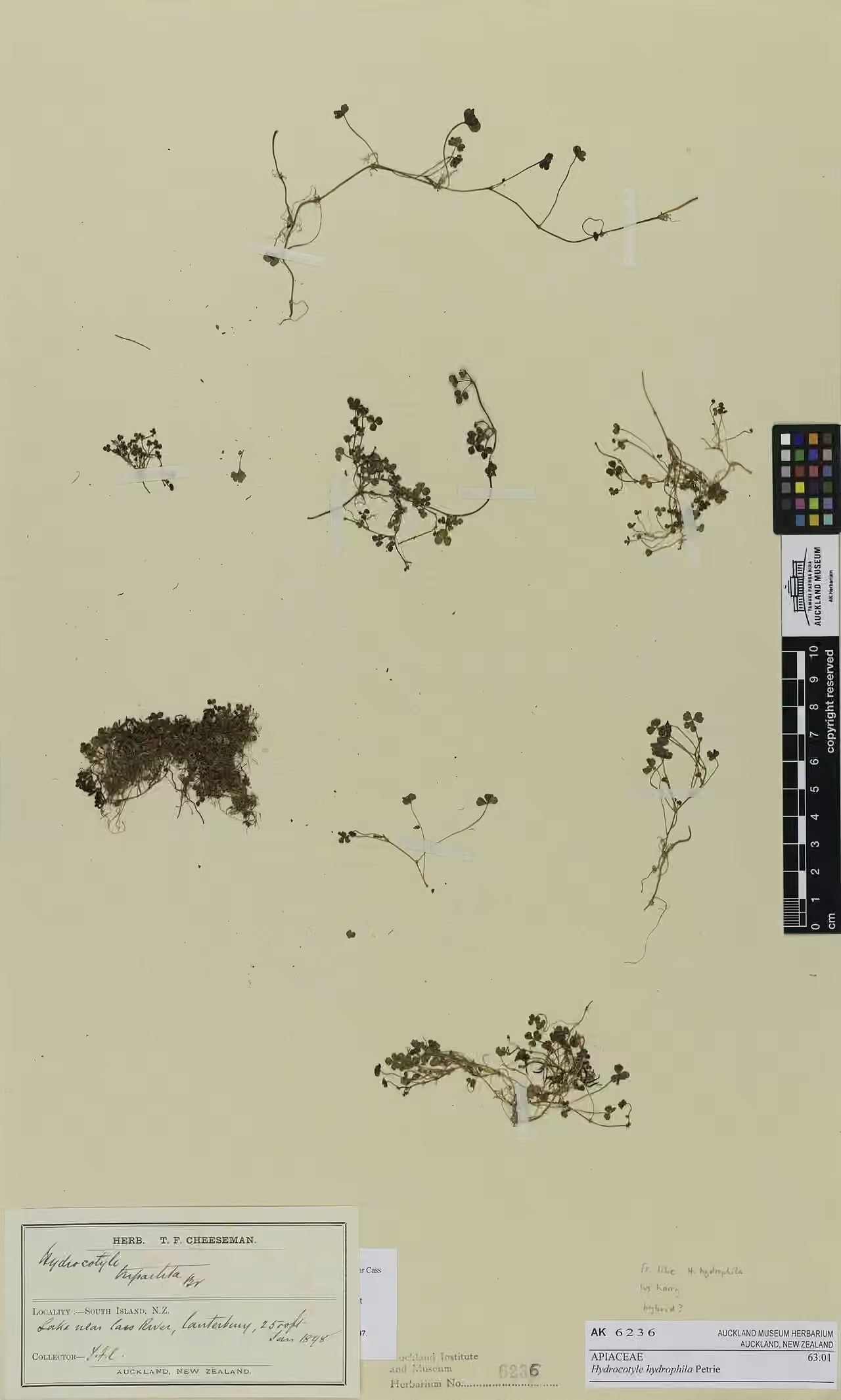
Hydrocotyle hydrophila
Hydrocotyle hydrophila
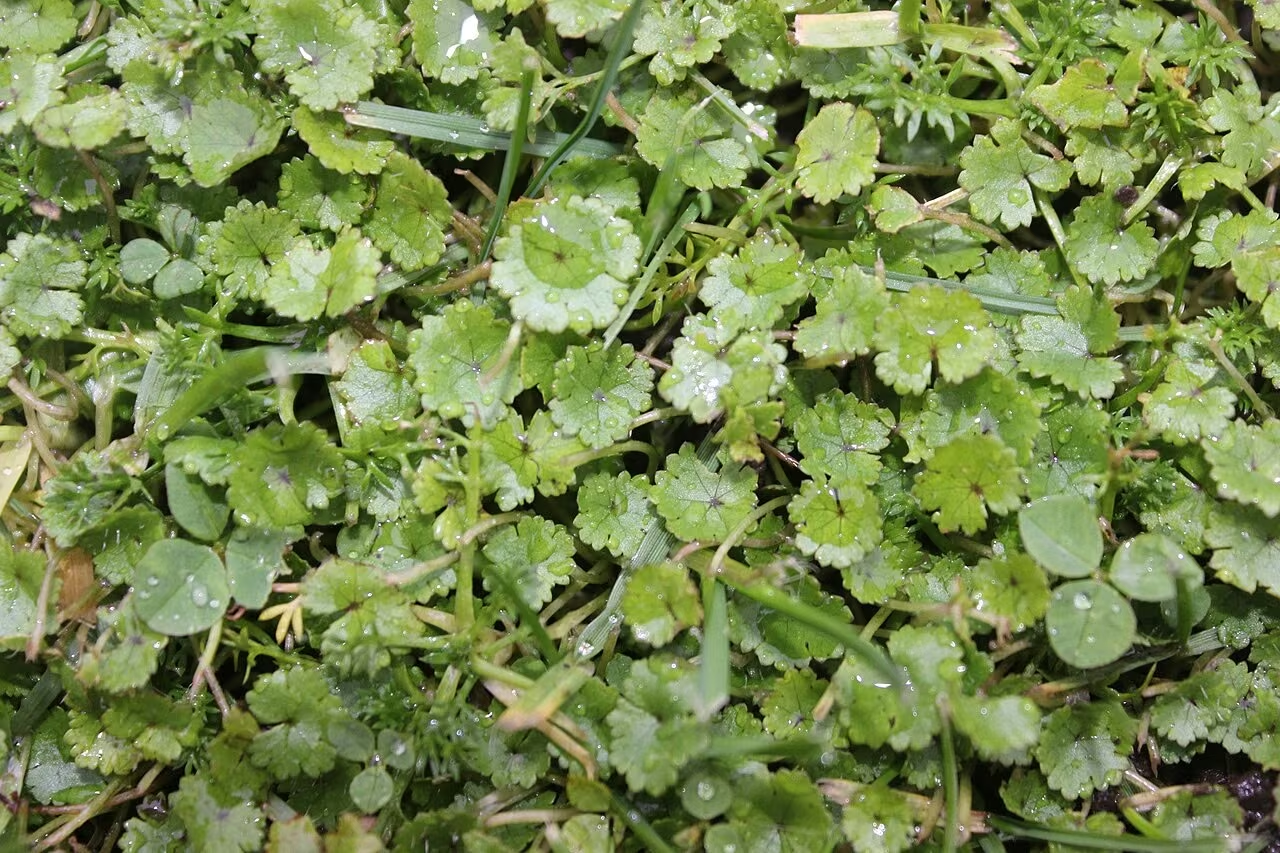
Hydrocotyle microphylla
Hydrocotyle microphylla
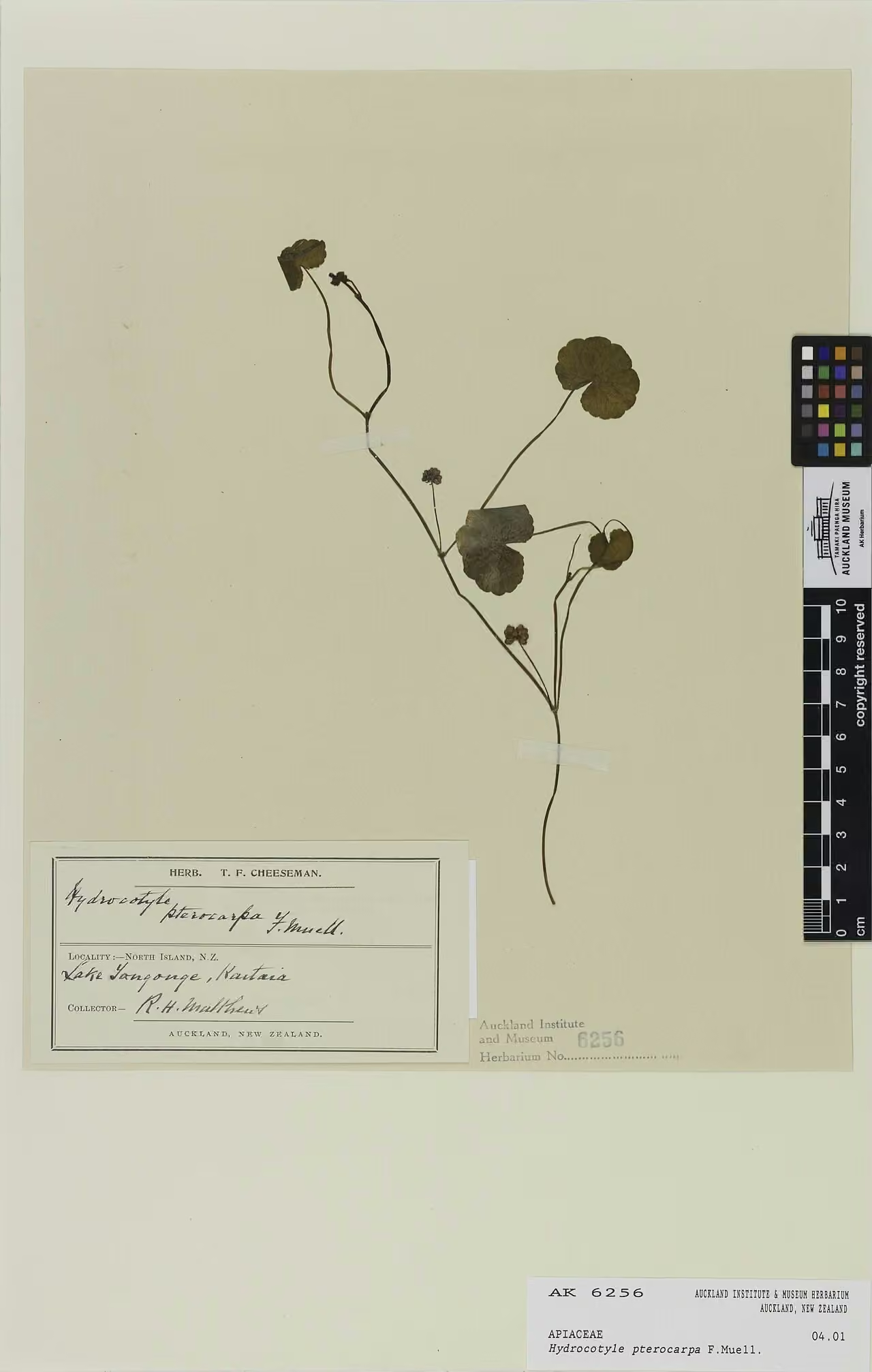
Hydrocotyle pterocarpa
Hydrocotyle pterocarpa
Hydrocotyle robusta agg
Hydrocotyle robusta agg
Hymenophyllum australe
Hymenophyllum australe
Matua Mauku
Hymenophyllum dilatatum
Hymenophyllum flexuosum
Hymenophyllum flexuosum
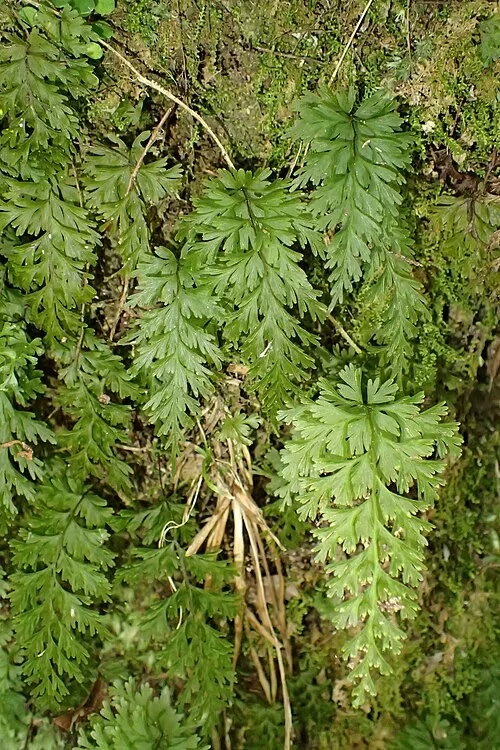
Drooping Filmy Fern
Drooping Filmy Fern
Plant Conservation
Hymenophyllum armstrongii is ranked Not Threatened nationally (2023). Regionally it is Endangered in Otago, where the Flora of New Zealand records an isolated population near Dunedin, and Naturally Uncommon in Northland, Auckland and Wellington.
Because it depends on humid, closed forest and old trees with well-developed epiphyte mats, protecting mature forest remnants, controlling browsing animals that open up the canopy and leaving plants undisturbed are the most helpful actions.
Frequently Asked Questions
How do you identify Hymenophyllum armstrongii?
Look for a tiny filmy fern with fronds under about 3 cm long that are undivided or forked, dark green, with a dark brown midrib and dark brown to blackish spines along the margins. Each segment ends in a single sorus.
Where does Hymenophyllum armstrongii grow?
It grows as a high epiphyte on trunks and branches in kauri, podocarp and beech forest, and on damp rock at higher altitudes. It occurs in the North Island south to the Remutaka Range, western South Island, near Dunedin, Stewart Island and the Auckland Islands.
Does Hymenophyllum armstrongii grow on tree ferns?
No. The Flora of New Zealand notes that it has never been recorded on tree fern trunks, unlike many other filmy ferns. It prefers the trunks and branches of forest trees.
Can you grow Hymenophyllum armstrongii in a garden?
NZPCN says it is difficult to propagate, is not commercially available and should not be removed from the wild. It needs constant humidity that few gardens can provide.
Sources and Further Reading
The botanical, growing, and conservation details for Filmy Fern (Hymenophyllum armstrongii) on this page draw on the New Zealand plant references below. Consult them for full technical records and the latest distribution data.